1443 Results for "

Cdk

" in MedChemExpress (MCE) Product Catalog:
Products (1443)

1443 Results for "Cdk" in MCE Product Catalog:

  • Categories Recommended:
    More
Cat. No.: HY-156470
CAS No.: 3009081-73-3
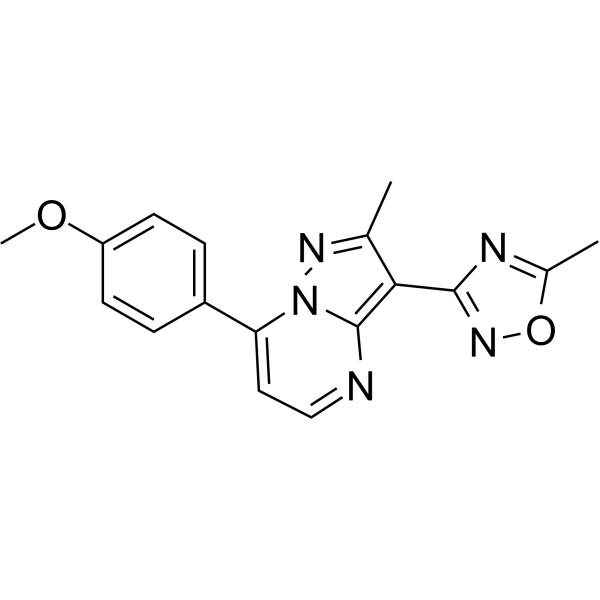
Multi-kinase-IN-6 (compound 10e) is a multikinase inhibitor that shows good enzyme inhibitory activity against TrkA, ALK2, c-KIT, EGFR, PIM1, CK2α, CHK1, and CDK2. Multi-kinase-IN-6 reveals antiproliferative activity against MCF7, HCT116 and EKVX with IC50 values of 3.36 μM, 1.40 μM and 3.49 μM, respectively. Multi-kinase-IN-6 shows cell cycle arrest at the G1/S phase and G1 phase in MCF7 and HCT116 cells with good apoptotic effect .
loading...
    loading...
Cat. No.: HY-181729
Research Areas:  

Cancer

PROTAC BET Degrader-15 is a BET PROTAC degrader with DC50 values of <0.10 nM, <0.01 nM, and <0.01 nM against BRD2, BRD3, and BRD4, respectively. PROTAC BET Degrader-15 induces significant G2/M phase cell cycle arrest and triggers apoptosis. PROTAC BET Degrader-15 causes marked downregulation of c-Myc, accompanied by upregulation of the cell cycle inhibitory protein p21, downregulation of CDK6, and an increase in the apoptosis marker cleaved PARP. PROTAC BET Degrader-15 is applicable to the research of hematologic malignancies and lung cancer .
loading...
    loading...
Cat. No.: HY-161826
Target:  

Wnt β-catenin HSP CDK c-Myc

Research Areas:  

Cancer

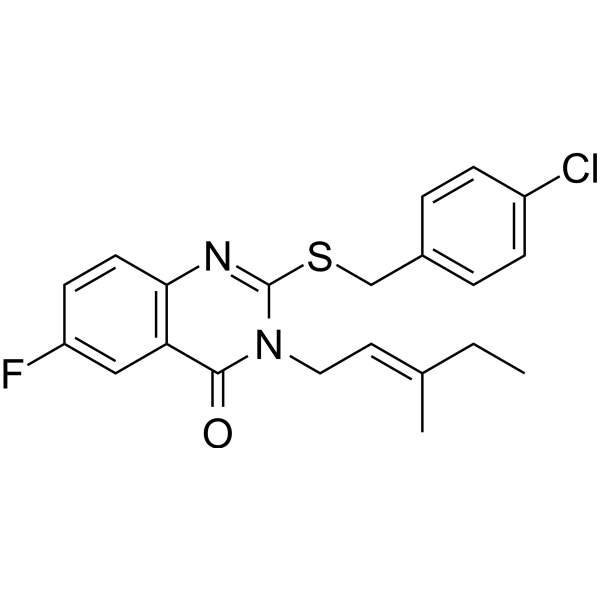
Antitumor agent-174 (Compound 10) directly engages the N-terminal site of Hsp90 and promotes the degradation of β-catenin, thereby suppressing the Wnt/β-catenin signaling. Antitumor agent-174 effectively inhibits proliferation, induce S and G2/M phases arrest and block the clonogenic ability in CRC cells. Antitumor agent-174 down-regulates CDK1, Cyclin D1, c-Myc, Cyclin B1, and Cyclin A2, and upregulaties P21 proteins. Antitumor agent-174 has significant anti-tumor efficacy against colorectal cancer (CRC) with excellent pharmacokinetics and low toxicity .
loading...
    loading...
Cat. No.: HY-175531
EGFR-IN-169 is an epidermal growth factor (EGFR) (IC50 = 5.19 μM) inhibitor form panaxadiol. EGFR-IN-169 interferes with the migration and growth of colorectal cancer cells by inhibiting EGFR-mediated RalA/EMT pathway. EGFR-IN-169 shows an IC50 value of 4.46 μM and SI of 16.92 for HCT-116 cells. EGFR-IN-169 inhibits CDKs activity, induces G0/G1 cycle arrest and inhibits migration and invasion. EGFR-IN-169 reduces mitochondrial membrane potential and induces apoptosis and ROS production. EGFR-IN-169 can be used for the research of cancer, such as colorectal cancer .
loading...
    loading...
Cat. No.: HY-P703011
Purity:  ≥ 95%, as determined by reducing SDS-PAGE.
Synonyms: AATK; Protein Phosphatase 1, Regulatory Subunit 77; Apoptosis Associated Tyrosine Kinase; Brain Apoptosis-Associated Tyrosine Kinase; AATYK; Serine/Threonine-Protein Kinase LMTK1; LMTK1; Cdk5-Binding Protein; LMR1; P35-Binding Protein; Lemur Tyrosine Kina
Species:  
Mouse
Source:  
Sf9 insect cells
loading...
    loading...
Cat. No.: HY-L004
3,522 compounds

DNA is prone to numerous forms of damage that can injure cells and impair fitness. Cells have developed an array of mechanisms to repair these injuries. Proliferating cells are especially vulnerable to DNA damage due to the added demands of cellular growth and division. Cell cycle checkpoints represent integral components of DNA repair that coordinate cooperation between the machinery of the cell cycle and several biochemical pathways that respond to damage and restore DNA structure. By delaying progression through the cell cycle, checkpoints provide more time for repair before the critical phases of DNA replication, when the genome is replicated, and of mitosis, when the genome is segregated. Loss or attenuation of checkpoint function may increase spontaneous and induced gene mutations and chromosomal aberrations by reducing the efficiency of DNA repair.

MCE owns a unique collection of 3,522 cell cycle/DNA damage-related compounds which can be used in the research of the same.

Cat. No.: HY-112454
CAS No.: 683775-59-9
Research Areas:  

Cancer

Bisindolylmaleimide III hydrochloride is a protein kinase C (PKC) inhibitor with IC50 values of 0.26, 5.7, and 6 μM against PKCα, PKCδ, and PKCμ, respectively. Bisindolylmaleimide III hydrochloride also exhibits inhibitory activity against other off-targets, with IC50 values of 0.17, 1, and 2 μM against SLK, adenosine kinase (AK), and CDK2, respectively; its Ki for NQO2 is 16.5 μM. Bisindolylmaleimide III hydrochloride selectively binds to activated Rsk1 following EGF stimulation, and serves as a tool for detecting the activation status of intracellular Rsk1 and PKCα, as well as for functional analysis of SLK. Bisindolylmaleimide III hydrochloride can be used in studies of signal transduction and colorectal cancer .
loading...
    loading...
Cat. No.: HY-149407
Research Areas:  

Cancer

Multi-kinase-IN-4 (compound 5d) is multi-targeted kinase inhibitor, including VEGFR2, EGFR, HER2, and CDK2, with IC50 values of 0.33, 0.22, 0.18 and 2.09 μM, respectively. Multi-kinase-IN-4 shows broad-spectrum anti-cancer activities against HepG2, MCF-7, MDA-231, and HeLa cell lines (IC50 = 1.94–7.1 µM), but exhibits lower toxicity in the WI-38 cells (IC50 = 40.85 µM). Multi-kinase-IN-4 induces apoptosis and arrests cell cycle at S phase in HepG2 cells. Multi-kinase-IN-4 has the potential for the research of cancer .
loading...
    loading...
Cat. No.: HY-164399A
CAS No.: 1202920-93-1
Target:  

HSP ERK CDK Akt

Research Areas:  

Cancer

SST0116CL1 free base is a HSP90 inhibitor (IC50: 0.21 μM). SST0116CL1 free base binds to the ATP binding pocket of Hsp90, and interferes with Hsp90 chaperone function thus resulting in client protein (EGFR, CDK4 and AKT) degradation. SST0116CL1 free base induces degradation of Her2 in BT-474 cell (IC50: 0.2 μM). SST0116CL1 free base has antiproliferative activity and inhibits tumor growth. SST0116CL1 free base has antiproliferative activity and inhibits tumor growth. SST0116CL1 free base can be used for the study of leukemia, gastric and ovarian carcinoma .
loading...
    loading...
Cat. No.: HY-187692
CAS No.: 3112339-39-3
Target:  

IRAK JAK EGFR CDK TNF Receptor

Research Areas:  

Inflammation/Immunology

IRAK4-IN-35 is an orally active IRAK4 inhibitor with an IRAK4 IC50 of 9.88 nM. IRAK4-IN-35 also inhibits JAK3, EGFR, CDK2 with IC50 values of 6.72 nM, 32.35 nM, and 39.08 nM, respectively. IRAK4-IN-35 inhibits the production of proinflammatory cytokines, blocks inflammatory signaling pathways, and reduces serum TNF-α levels and spleen index in mouse models of acute inflammation. IRAK4-IN-35 decreases the disease activity index, paw swelling degree, and spleen index in a collagen-induced arthritis mouse model. IRAK4-IN-35 can be used for the research of rheumatoid arthritis .
loading...
    loading...
Cat. No.: HY-N2199
CAS No.: 2608-21-1
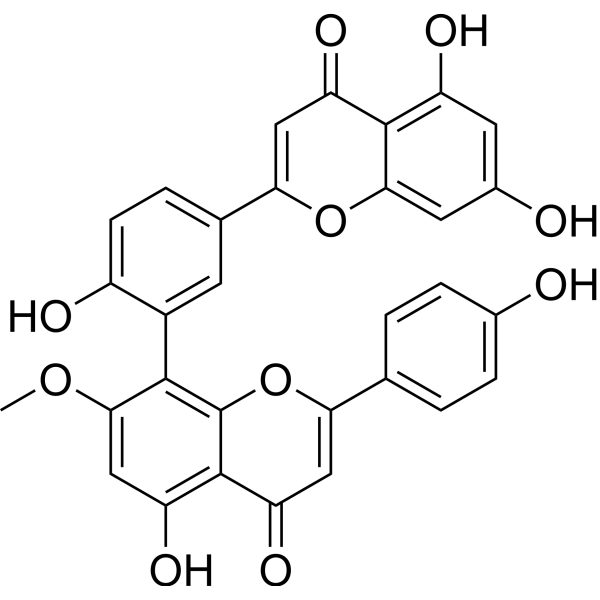
Sotetsuflavone is a flavonoid that can be isolated from Cycas revolute. Sotetsuflavone inhibits phosphorylation of PI3K, Akt, mTOR, JNK, and p38 MAPK; modulates expression of Cyclin D1, CDK4, Bcl-2, Bax, cleaved caspases 3/9, MMP-9, TGF-β, STAT3, and β-catenin. Sotetsuflavone induces G0/G1 cell cycle arrest, apoptosis, autophagy, and intracellular ROS elevation, inhibits cancer cell proliferation. Sotetsuflavone inhibits tumor growth in mouse tumor xenograft models. Sotetsuflavone can be used for the research of non-small cell lung cancer and Crohn’s disease .
loading...
    loading...
Cat. No.: HY-P80773A
Synonyms: CdkN1A; CAP20; CdkN1; CIP1; MDA6; PIC1; SDI1; WAF1; Cyclin-dependent kinase inhibitor 1; Cdk-interacting protein 1; Melanoma differentiation-associated protein 6; MDA-6; p21

Host:  

Rabbit

Application:  

WB

Reactivity:  

Human, Mouse

loading...
    loading...
Cat. No.: HY-P80774AA
Synonyms: CdkN1A; CAP20; CdkN1; CIP1; MDA6; PIC1; SDI1; WAF1; Cyclin-dependent kinase inhibitor 1; Cdk-interacting protein 1; Melanoma differentiation-associated protein 6; MDA-6; p21

Host:  

Rabbit

Application:  

WB, ICC/IF

Reactivity:  

Human, Mouse, Rat

loading...
    loading...
Cat. No.: HY-P76536
Purity:  ≥ 80%, as determined by reducing SDS-PAGE.
Synonyms: Cdk16; PCTAIRE-Motif Protein Kinase 1; Prev. PCTK1; FLJ16665; PCTAIRE1; Testis Secretory Sperm-Binding Protein Li 224n; PCTGAIRE; Serine/Threonine-Protein Kinase; PCTAIRE; PCTAIRE Protein Kinase 1; Serine/Threonine-Protein Kinase PCTAIRE-1; Cyclin-Depende
Species:  
Human
Source:  
Sf9 insect cells
loading...
    loading...
Cat. No.: HY-P703098
Purity:  ≥ 95%, as determined by reducing SDS-PAGE.
Synonyms: CCNT1; Cyclin-T1; Prev. HIVE1; Cyclin C-Related Protein; CYCT1; MLLT10/CCNT1 Fusion; CCNT; Cyclin-T; Human Immunodeficiency Virus Type 1 (HIV-1) Expression (Elevated) 1; CycT1; Cyclin T1; Cdk9-Associated C-Type Protein
Species:  
Human
Source:  
E. coli
loading...
    loading...
Cat. No.: HY-100977
CAS No.: 160096-59-3
Purity:  98.89%
Synonyms: DiMC; CHC 004; Di-O-methylcurcumin
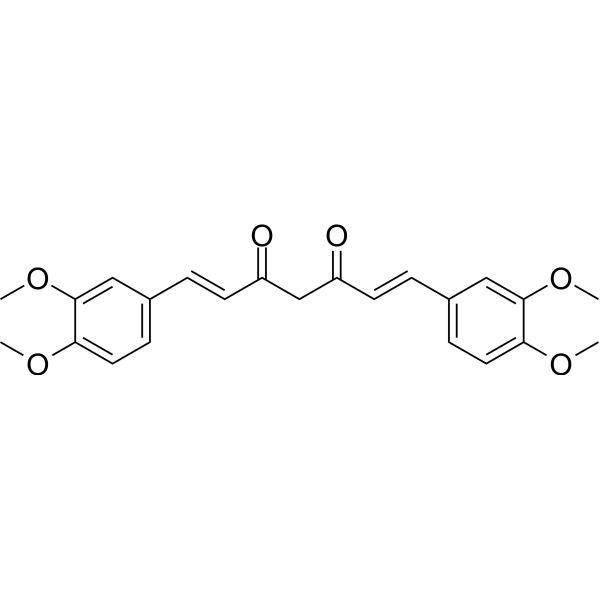
Dimethoxycurcumin (DiMC) is a curcuminoid compound found in Curcuma longa. Dimethoxycurcumin is also an orally active thioredoxin reductase inhibitor (IC50 = 5.4 μM) and androgen receptor antagonist. Dimethoxycurcumin inhibits thioredoxin reductase, leading to oxidized thioredoxin accumulation, ROS production, DNA damage, glutathione depletion, mitochondrial membrane potential decrease, ATP depletion, S phase arrest, and apoptosis. Dimethoxycurcumin inhibits NF-κB, NADPH oxidase subunits, ATP synthase subunits, CDK4, cyclin-D1, FASN, ACC, and the IRS2-PI3K-Akt pathway, while activating AMPK, ERK, and JNK. Dimethoxycurcumin can be used for research on cancer, arsenic-induced hepatotoxicity, and tuberculosis .
loading...
    loading...
Cat. No.: HY-119979
CAS No.: 501-26-8
Purity:  98.02%
Synonyms: Cardanol C15:1
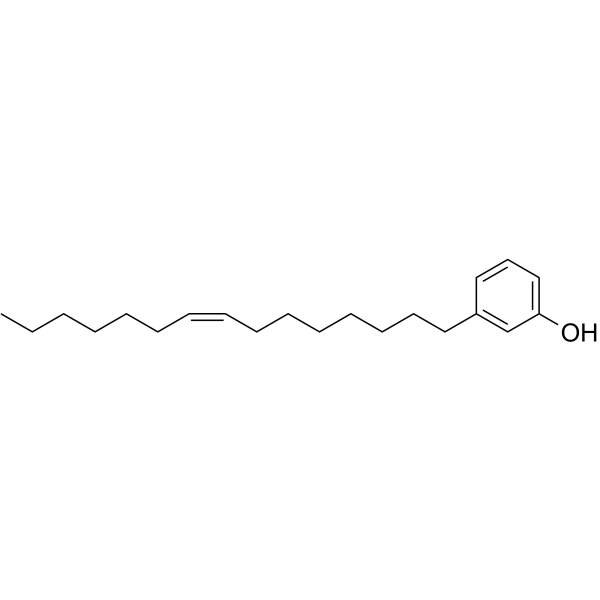
Cardanol monoene (Cardanol C15:1) is a phenolic compound which can be found in cashew nut shell liquid. Cardanol monoene can inhibit cancer cells proliferation, migration, cause S phase arrest, induce apoptosis, ROS production and mitochondrial depolarization. Cardanol monoene downregulates MMP-2, MMP-9, cyclinA1 expression, regulates CDK2, p53, Bax, cytochrome c, cleaved caspase-3, cleaved PARP, Apaf-1 expression and Bax/Bcl-2 ratio. Cardanol monoene shows weak DPPH radical scavenging activity and AChE inhibition activity. Cardanol monoene is lethal to Artemia salina nauplii. Cardanol monoene. Cardanol monoene can be used for the research of cancer, infection and inflamation .
loading...
    loading...
Cat. No.: HY-146095
CAS No.: 2338764-89-7
Research Areas:  

Cancer

p53 Activator 2 (compound 10ah) intercalats into DNA and results in significant DNA double-strand break.p53 Activator 2 increases the expression of p53, p-p53, CDK4, p21 to cause cell cycle arrest at G2/M phase.p53 Activator 2 induce apoptosis and significantly down-regulates the anti-apoptosis proteins Bcl-2, Bcl-xL and the levels of cyclin B1.p53 Activator 2 has anti-proliferation activity against MGC-803 cells, with an IC50 of 1.73 µM. p53 Activator 2 displays potent anticancer efficiency against MGC-803 xenograft tumors models .
loading...
    loading...
Cat. No.: HY-162802
Target:  

Apoptosis PI3K Akt PARP CDK

Research Areas:  

Cancer

PI3K/AKT-IN-4 (compound 3) is a diterpenoid that can be isolated from the roots and rhizomes of Salvia castanea Dielsf. PI3K/AKT-IN-4 has antitumor activity, inhibiting cell viability and proliferation (IC50=4.72 μM) and promoting apoptosis by blocking the G0/G1 phase of the Hep3B cell cycle, inducing mitochondrial dysfunction and oxidative stress. In addition, PI3K/AKT-IN-4 inhibits hepatocellular carcinoma by inhibiting the PI3K-Akt signaling pathway and binding to PARP1 and CDK2 targets .
loading...
    loading...
Cat. No.: HY-181838
CAS No.: 3064485-73-7
Target:  

CDK Apoptosis

Research Areas:  

Cancer

CIRc-014 is an orally active Cyclin A/B inhibitor with a Cyclin A IC50 of 0.05 μM, Cyclin A Kd of 2.7 nM, Cyclin B IC50 of less than 0.02 μM and Cyclin B Kd of 1.0 nM. CIRc-014 activates the spindle assembly checkpoint and promotes the formation of a complex between Cyclin B and CDK2 by blocking the RxL interaction of Cyclin A/B. CIRc-014 can induce replication stress, DNA damage, mitotic arrest and apoptosis in tumor cells. CIRc-014 showed tumor growth inhibition and regression in NCI-H69 and NCI-H446 small cell lung cancer xenograft models. CIRc-014 can be used for the research of small-cell lung cancer .
loading...
    loading...

