1443 Results for "

CDK

" in MedChemExpress (MCE) Product Catalog:
Products (1443)

1443 Results for "CDK" in MCE Product Catalog:

  • Categories Recommended:
    More
Cat. No.: HY-183456
CAS No.: 71308-35-5
Tyrphostin AG17 is an orally active CDK2 inhibitor and EGFR tyrosine kinase antagonist. Tyrphostin AG17 reduces the levels of p21 and p16. Tyrphostin AG17 induces G1 phase cell cycle arrest, Apoptosis, mitochondrial dysfunction, decreased ATP levels, and inhibits DNA, RNA and protein synthesis, adipogenesis, and lipid synthesis. Tyrphostin AG17 inhibits fat accumulation, white adipose tissue hypertrophy, and alterations of glycogen and lipid inclusions in hepatocytes in obese mice without changing their serum biochemical parameters. Tyrphostin AG17 exhibits anticancer effects. Tyrphostin AG17 can be used in research related to immunoblastic lymphoma, leukemia, ovarian cancer, glioblastoma, colon cancer, breast cancer, melanoma, obesity and hepatic steatosis .
loading...
    loading...
Cat. No.: HY-19471
CAS No.: 1010440-84-2
Research Areas:  

Cancer

(rac)-ZK-304709 is an isoform of ZK-304709 and is an orally active multi-targeted tumor growth inhibitor that inhibits multiple cell cycle-dependent kinases (CDKs), vascular endothelial growth factor receptor kinases (VEGF-RTKs), and platelet-derived growth factor receptor kinase β (PDGF-RTKβ). (rac)-ZK-304709 can dose-dependently inhibit the proliferation and colony formation of neuroendocrine tumor (NET) cells. (rac)-ZK-304709 directly acts on NET cells by inducing G2 cell cycle arrest and apoptosis, while reducing the expression of MCL1, survivin, and HIF1α. (rac)-ZK-304709 effectively controls tumor growth by inducing apoptosis and inhibiting tumor-induced angiogenesis, and may become a potential agent for inhibiting NET .
loading...
    loading...
Cat. No.: HY-208742
CAS No.: 2414418-56-5
ZNL-02-096 is a selective Wee1 PROTAC degrader. ZNL-02-096 binds to CRBN and Wee1 to form a ternary complex, inducing CRBN- and proteasome-dependent ubiquitination and proteasomal degradation of Wee1. ZNL-02-096 inhibits recombinant PLK1 with an IC50 of 102 nM, but does not induce its degradation in cells. ZNL-02-096 induces G2/M phase arrest, Apoptosis, transient integrated stress response, upregulation of ATF4, and phosphorylation of GCN2. ZNL-02-096 reduces Tyr15 phosphorylation of CDK1. ZNL-02-096 can be used in research related to ovarian cancer, acute lymphoblastic leukemia, triple-negative breast cancer, multiple myeloma, and pancreatic ductal adenocarcinoma .
loading...
    loading...
Cat. No.: HY-120227
CAS No.: 1610546-52-5
Target:  

HSP Apoptosis Caspase ERK Akt CDK

Research Areas:  

Cancer

SM253 is an Hsp90 inhibitor that inhibits Hsp90-dependent protein folding. SM253 blocks chaperone function by binding to the N-middle linker region and the C-terminal M domain, reducing co-chaperone and client protein binding and activation. SM253 induces cancer cell apoptosis, activates caspase 3/7, causes cell cycle arrest and reduces cell proliferation, while decreasing Hsp90 client proteins such as AR, FKBP51, PSA, Cdk4, AKT, ERK, and p23, and reducing Hsp27/Hsp70 expression without inducing heat shock proteins. SM253 causes dose-dependent fibronectin loss in cells expressing LRP1. SM253 can be used for research on colon cancer, pancreatic cancer, and prostate cancer .
loading...
    loading...
Cat. No.: HY-123859
CAS No.: 1454584-91-8
SR-2890 is a highly selective, ATP-competitive inhibitor of casein kinase CK1δ and CK1ε, with IC50 values ​​of 4 nM and 44 nM, respectively, and a Ki of 14 nM for CK1δ. SR-2890 exhibits antiproliferative effects. SR-2890 blocks the serine/threonine kinase activity of CK1δ and weakly inhibits a few off-target kinases such as FLT3, CDK4. SR-2890 has an oral bioavailability of 10% and a blood-brain barrier penetration rate of <1%. SR-2890 demonstrates stable in vitro metabolism and favorable in vivo pharmacokinetic properties, effectively inhibiting the growth of human A375 melanoma cells. SR-2890 can be used in melanoma research and is also a useful compound for studying CK1δ/ε-related diseases such as Alzheimer's disease .
loading...
    loading...
Cat. No.: HY-173007
CAS No.: 3050831-84-7
ALK/PI3K/AKT-IN-1 (Compound 45) inhibits the proliferation of cancer cell A549, H1975 and PC9 with an IC50 of 0.44, 0.83 and 1.51 μM. ALK/PI3K/AKT-IN-1 increases the expression of p21 and p27, inhibits the activity of CDK2 and p-Rb, arrests the cell cycle at G1 phase. ALK/PI3K/AKT-IN-1 inhibits the ALK/PI3K/AKT signaling pathway, promotes the depolarization of mitochondrial membrane potential, and inducing apoptosis in A549 cell. ALK/PI3K/AKT-IN-1 inhibits the formation and growth of A549 cell spheroids .
loading...
    loading...
Cat. No.: HY-186321
CAS No.: 501124-40-9
Synonyms: KF25706
Target:  

HSP Raf Src CDK MDM-2/p53 Ras

Research Areas:  

Cancer

Radicicol 6-oxime (KF25706) is an Hsp90 inhibitor with an EC50 of 5.5 nM against human Hsp90. Radicicol 6-oxime binds to Hsp90 and disrupts its chaperone function, leading to destabilization and depletion of Hsp90-associated signaling molecules. Radicicol 6-oxime depletes Hsp90-associated signaling proteins such as Raf-1, v-src, p185erbB2, Cdk4, and mutant p53, thereby inhibiting K-ras and v-src signaling pathways. Radicicol 6-oxime exhibits antiproliferative activity against various tumor cells. Radicicol 6-oxime inhibits tumor growth in mouse tumor xenograft models. Radicicol 6-oxime can be used for research on breast cancer, colon cancer, and vulvar epidermoid carcinoma .
loading...
    loading...
Cat. No.: HY-P82229
Synonyms: SKP1; EMC19; OCP2; SKP1A; TCEB1L; S-phase kinase-associated protein 1; Cyclin-A/CDK2-associated protein p19; Organ of Corti protein 2; OCP-2; Organ of Corti protein II; OCP-II; RNA polymerase II elongation factor-like protein; SIII; Transcr

Host:  

Rabbit

Application:  

WB, ICC/IF

Reactivity:  

Human, Mouse, Rat

loading...
    loading...
Cat. No.: HY-P703014
Purity:  ≥ 80%, as determined by reducing SDS-PAGE.
Synonyms: LMTK2; Apoptosis-Associated Tyrosine Kinase 2; Lemur Tyrosine Kinase 2; Serine/Threonine-Protein Kinase LMTK2; AATYK2; Serine/Threonine-Protein Kinase KPI-2; KPI2; Kinase/Phosphatase/Inhibitor 2; LMR2; CDK5/P35-Regulated Kinase; BREK; Brain-Enriched Kinas
Species:  
Human
Source:  
Sf9 insect cells
loading...
    loading...
Cat. No.: HY-102069R
CAS No.: 956025-83-5
Research Areas:  

Others

3MB-PP1 (Standard) is the analytical standard of 3MB-PP1 (HY-102069). This product is intended for research and analytical applications. 3MB-PP1, a bulky purine analog, is a Polo-like kinase 1 (Plk1) inhibitor. 3MB-PP1 blocks mitotic progression and cell division arise through target Plk1 in in cells expressing analog-sensitive Plk1 alleles. 3MB-PP1 specifically inhibits the activity of analog-sensitive Ssn3 (Cdk8). 3MB-PP1 inhibits Leu93 Mutant Zipper-interacting protein kinase (Leu93-ZIPK; IC50=2 μM). 3MB-PP1 can be used for the research of hypha formation of Candida albicans and cell division .
loading...
    loading...
Cat. No.: HY-180485
Target:  

PROTACs Wee1 CDK

Research Areas:  

Cancer

PROTAC D16-M1P2 is an orally active CRBN-mediated selective PKMYT1 PROTAC degrader, with a DC50 of 0.7 nM in CCNE1-amplified HCC1569 breast cancer cells. PROTAC D16-M1P2 induces PKMYT1 degradation via the ubiquitin-proteasome system, directly inhibits PKMYT1 kinase activity, suppresses Thr14 phosphorylation of CDK1, and depends on functional CRBN and ubiquitination-like modification processes. PROTAC D16-M1P2 can be used for the research of CCNE1-amplified breast cancer, FBXW7-mutated cholangiocarcinoma, and PPP2R1A-deficient cancers .
loading...
    loading...
Cat. No.: HY-181062
Research Areas:  

Cancer

VWK147 is a second-generation HSP90 C-terminal domain (CTD) inhibitor. VWK147 targets the CTD dimerization interface, prevents HSP90 CTD dimerization, disrupts co-chaperone PPID binding to HSP90 CTD, and inhibits HSP90 chaperone function dependent on dimerization. VWK147 reduces protein levels of HSP90 client proteins ULK1, RIPK1, and CDK4 without inducing a heat shock response. VWK147 induces cell death, including apoptosis, in Cisplatin (HY-17394)-sensitive and -resistant urothelial carcinoma cells. VWK147 induces LC3-II accumulation, inhibits autophagosome-lysosome fusion to block canonical autophagy, and induces non-canonical LC3 lipidation independent of ULK1 and PIK3C3 complexes. VWK147 can be used for the research of urothelial carcinoma .
loading...
    loading...
Cat. No.: HY-181687
Target:  

HSP CDK

Research Areas:  

Cancer

Hsp90-IN-46 is a Hsp90 inhibitor. Hsp90-IN-46 exhibits broad-spectrum antiproliferative activity against tumor cell lines. Hsp90-IN-46 inhibits breast cancer cell proliferation by reducing colony formation and downregulating the proliferation marker Ki-67. Hsp90-IN-46 inhibits Hsp90 and its ATPase activity, downregulates the downstream substrate oncoproteins HER2 and CDK4, and moderately induces the heat shock response. Hsp90-IN-46 shows significant antitumor activity in a mouse model of triple-negative breast cancer tumor xenografts. Hsp90-IN-46 can be used for research on various cancers including triple-negative breast cancer, leukemia, non-small cell lung cancer, colon cancer, ovarian cancer, renal cancer, prostate cancer .
loading...
    loading...
Cat. No.: HY-183273
CAS No.: 3087270-50-3
Research Areas:  

Cancer

BRD4/AKT-IN-1 is a BRD4/AKT inhibitor with BRD4 IC50 66.12 nM and AKT1 IC50 143.81 nM. BRD4/AKT-IN-1 blocks BRD4-mediated c-Myc transcriptional regulation, modulates AKT1 signaling, decouples AKT phosphorylation from pro-survival effectors. BRD4/AKT-IN-1 induces G0/G1 cell cycle arrest via downregulated phosphorylated RB, cyclin E1, CDK2. BRD4/AKT-IN-1 elevates LC3B levels to promote autophagy. BRD4/AKT-IN-1 promotes apoptosis in cancer cells. BRD4/AKT-IN-1 can be used for the research of metastatic castration-resistant prostate cancer .
loading...
    loading...
Cat. No.: HY-P74659
Purity:  ≥ 95%, as determined by reducing SDS-PAGE.
Synonyms: CDKN2D; Cell Cycle Inhibitor, Nur77 Associating Protein; Cyclin Dependent Kinase Inhibitor 2D; Cyclin-Dependent Kinase 4 Inhibitor D P19; INK4D; Inhibitor Of Cyclin-Dependent Kinase 4d; P19; CDK Inhibitor P19INK4d; Cyclin-Dependent Kinase Inhibitor 2D (P1
Species:  
Human
Source:  
E. coli
loading...
    loading...
Cat. No.: HY-P82229A
Synonyms: SKP1; EMC19; OCP2; SKP1A; TCEB1L; S-phase kinase-associated protein 1; Cyclin-A/CDK2-associated protein p19; Organ of Corti protein 2; OCP-2; Organ of Corti protein II; OCP-II; RNA polymerase II elongation factor-like protein; SIII; Transcr

Host:  

Rabbit

Application:  

WB, ICC/IF

Reactivity:  

Human, Mouse, Rat

loading...
    loading...
Cat. No.: HY-100977S
CAS No.: 3006902-95-7
Synonyms: DiMC-d6; CHC 004-d6; Di-O-methylcurcumin-d6
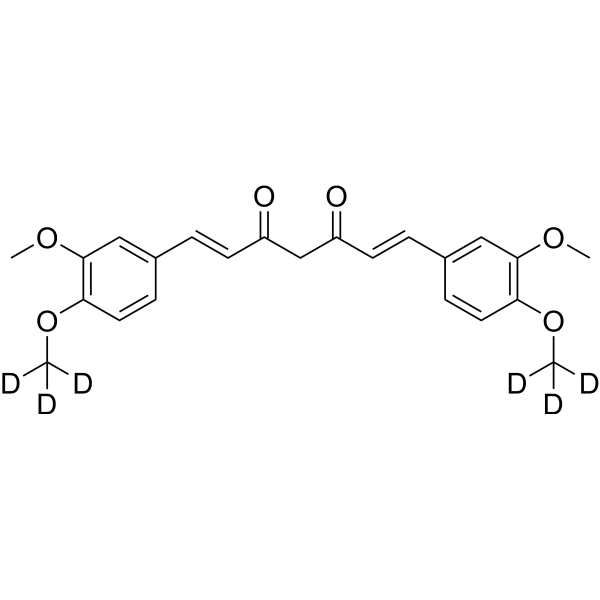
Dimethoxycurcumin-d6 (DiMC-d6; CHC 004-d6; Di-O-methylcurcumin-d6) is the deuterated-labeled Dimethoxycurcumin (HY-100977). Dimethoxycurcumin (DiMC) is a curcuminoid compound found in Curcuma longa. Dimethoxycurcumin is also an orally active thioredoxin reductase inhibitor (IC50 = 5.4 μM) and androgen receptor antagonist. Dimethoxycurcumin inhibits thioredoxin reductase, leading to oxidized thioredoxin accumulation, ROS production, DNA damage, glutathione depletion, mitochondrial membrane potential decrease, ATP depletion, S phase arrest, and apoptosis. Dimethoxycurcumin inhibits NF-κB, NADPH oxidase subunits, ATP synthase subunits, CDK4, cyclin-D1, FASN, ACC, and the IRS2-PI3K-Akt pathway, while activating AMPK, ERK, and JNK. Dimethoxycurcumin can be used for research on cancer, arsenic-induced hepatotoxicity, and tuberculosis .
loading...
    loading...
Cat. No.: HY-N17617
CAS No.: 70238-51-6
S-Petasin is a phosphodiesterase (PDE) inhibitor with IC50 values of 25.5 μM and 17.5 μM for PDE3 and PDE4, respectively. S-Petasin inhibits cholesterol side-chain cleavage enzyme, 11β-hydroxylase, PPAR-γ, and iNOS induction at RNA and protein levels. S-Petasin induces apoptosis, activates caspases, cleaves PARP, modulates mitochondrial membrane permeability, and regulates BCL2/BAX, p53, Bcl-XL, MMP-2, MMP-9, p21, CDK4, and cyclin D1 expression. S-Petasin reduces inflammatory cell accumulation, cytokine and IgE levels, and enhances serum IgG2a levels. S-Petasin relaxes isolated sensitized guinea pig trachealis and exhibits gastrointestinal anti-spasmodic activity. S-Petasin reduces tonsillitis severity and asthmatic attack frequency. S-Petasin can be used for the research of prostate cancer, obesity, melanoma, allergic asthma, asthma, and peritonitis .
loading...
    loading...
Cat. No.: HY-101488R
CAS No.: 1010100-07-8
CC-885 (Standard) is the analytical standard of CC-885 (HY-101488). This product is intended for research and analytical applications. CC-885, a cereblon (CRBN) modulator, acts as a molecular glue degrader targeting GSPT1 with a Kd of 350 nM. CC-885 binds to CRBN to alter the substrate specificity of the CRL4 E3 ligase, promoting the ubiquitination and proteasomal degradation of GSPT1, BNIP3L, PLK1, CDK4, IKZF1/3, GSPT2, WIZ, CHD7, GOLM1, CK1α and ETS1. CC-885 induces apoptosis, cell cycle arrest, transcriptional downregulation and antiproliferation in cancer cells. CC-885 is applicable to research related to relapsed/refractory acute myeloid leukemia, MYC-driven tumors, metastatic castration-resistant prostate cancer, multiple myeloma, hepatocellular carcinoma, glioblastoma, VHL-deficient clear cell renal cell carcinoma and non-small cell lung cancer .
loading...
    loading...
Cat. No.: HY-103019R
CAS No.: 1610408-97-3
Synonyms: (+)-BAY-1251152 (Standard); (+)-VIP152 (Standard); (S)-Enitociclib (Standard)
Enitociclib (Standard) is the analytical standard of Enitociclib (HY-103019). This product is intended for research and analytical applications. Enitociclib ((+)-BAY-1251152; (+)-VIP152) is a selective CDK9 inhibitor (IC50=3 nM) that inhibits transcriptional elongation by blocking Ser2/Ser5 phosphorylation of RNA polymerase II. Enitociclib specifically depletes key short-lived proteins such as c-MYC, MCL-1 and induces tumor cell apoptosis. Enitociclib also interferes with the production of enhancer RNAs (eRNA) and enhancer-promoter interactions, and downregulates oncogene expression at the epigenetic level. Enitociclib exerts synergistic effects with agents including Bortezomib (HY-10227), Lenalidomide (HY-A0003), Pomalidomide (HY-10984), Venetoclax (HY-15531) and Paclitaxel (HY-B0015), and even reverses paclitaxel resistance. Enitociclib serves as a vital research tool for various malignancies such as double-hit diffuse large B-cell lymphoma, multiple myeloma and pancreatic ductal adenocarcinoma .
loading...
    loading...

