153 Results for "

lac repressor

" in MedChemExpress (MCE) Product Catalog:
Products (153)

153 Results for "lac repressor" in MCE Product Catalog:

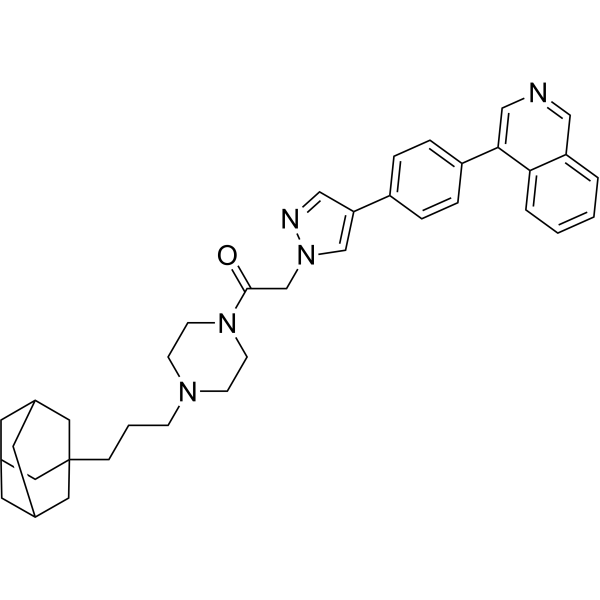
Cat. No.: HY-187178
CAS No.: 1966932-74-0
Target:  

Histone Demethylase

Research Areas:  

Cancer

KDM2A/7-IN-1 is a lysine demethylase 2A (KDM2A) inhibitor with a human IC50 of 11 nM. KDM2A/7-IN-1 requires co-factor 2-oxoglutarate (2OG) for binding and occupies the H3K36me2 substrate pocket via a dimethylated lysine 36-mimicking group. KDM2A/7-IN-1 represses E2F-regulated genes, induces epithelial-mesenchymal transition, DNA repair, and mTOR pathways in specific cells, and selectively inhibits proliferation of ALT-positive cancer cell lines. KDM2A/7-IN-1 can be used for the research of ALT-positive cancers .
loading...
    loading...
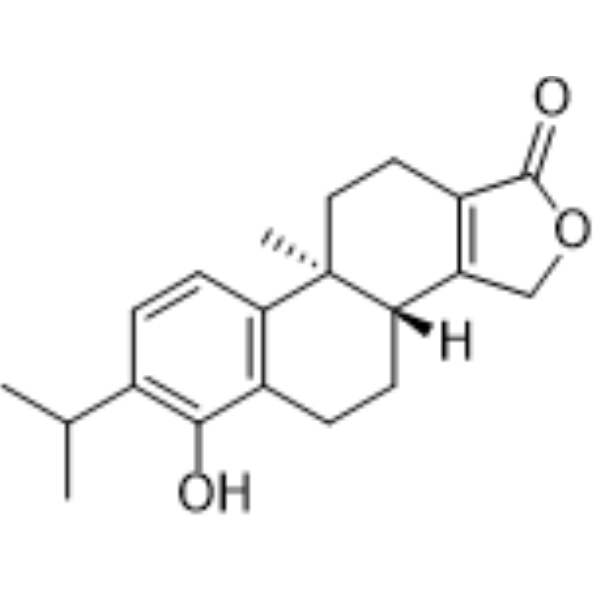
Cat. No.: HY-N0475
CAS No.: 74285-86-2
Synonyms: Hypolide; (+)-Triptophenolide
Triptophenolide (Hypolide) is a colorless crystal isolated from the ethyl acetate extract of Tripterygium wilfordii. Triptophenolide is an orally active pan‑antagonist of the androgen receptor (AR) with an IC50 of 467 nM against human wild‑type AR. Triptophenolide reduces AR expression, inhibits AR nuclear translocation, downregulates prostate‑specific antigen mRNA levels, and suppresses the growth of AR‑positive prostate cancer cells. Triptophenolide shows anti-tumor effects against breast cancer by inhibiting cell proliferation and migration, inducing G1-phase arrest and apoptosis, repressing xenograft tumor growth. Triptophenolide inhibits pyroptosis, alleviates tissue inflammation, and ameliorates synovial injury. Triptophenolide can be used for the study of prostate cancer, rheumatoid arthritis and breast cancer .
loading...
    loading...
Cat. No.: HY-W698249R
CAS No.: 299-29-6
Ferrous gluconate (Standard) is the analytical standard of Ferrous gluconate. This product is intended for research and analytical applications. Ferrous gluconate is a highly water-soluble iron-containing agent with high bioavailability and bactericidal activity. As a non-heme iron, Ferrous gluconate is used for meat product fortification and improvement of iron deficiency anemia. Ferrous gluconate induces ferroptosis in E. coli through Fe 2+ infiltration, reactive oxygen species burst, lipid peroxidation and direct interaction with DNA. Ferrous gluconate also downregulates the SOS responsive transcriptional repressor LexA. In addition, Ferrous gluconate regulates multiple key pathways in E. coli such as fatty acid metabolism, iron-sulfur cluster assembly and pyruvate metabolism, and is applied in studies related to *E. coli* infection and iron deficiency anemia .
loading...
    loading...
Cat. No.: HY-P83222A
Synonyms: Histone deacetylase 9; HD9; Histone deacetylase 7B; HD7; HD7b; Histone deacetylase-related protein; MEF2-interacting transcription repressor MITR; HDAC9; HDAC7; HDAC7B; HDRP; KIAA0744; MITR

Host:  

Rabbit

Application:  

WB, IHC-P

Reactivity:  

Human

loading...
    loading...
Cat. No.: HY-149209
CAS No.: 3034487-84-5
Purity:  99.76%
Research Areas:  

Metabolic Disease Cancer

LL-K8-22 is a dual degrader of CDK8 and cyclin C HyT, with DC50 values of 2.52 μM and 2.64 μM, respectively. LL-K8-22 inhibits phosphorylation of STAT1 Ser 727, phosphorylation of the C-terminal domain Ser 2/5 of RNA polymerase II, and phosphorylation of Rb. LL-K8-22 represses E2F- and MYC-driven transcriptional programs and exhibits antiproliferative effects. LL-K8-22 synchronously induces proteasome-dependent selective degradation of CDK8 and cyclin C without degrading CDK19, other CDK family members, or other cyclins. LL-K8-22 can be used in the research of triple-negative breast cancer and colon cancer .
loading...
    loading...
Cat. No.: HY-179498
ROCK2-IN-13 is a selective ROCK2 inhibitor. ROCK2-IN-13 reduces nuclear expression by disrupting the interaction of ROCK2 with transcriptional co activators p300> and PGC 1α, repressing oncogenic transcription. ROCK2-IN-13 activates FOXO1 driven PTEN expression, leading to suppression of the PI3K/Akt pathway, induction of G2/M cell cycle arrest, and promotion of apoptosis. ROCK2-IN-13 ablates the nuclear transcriptional function of ROCK2 that sustains oncogenic signaling and restores the tumor suppressive PTEN/FOXO1 axis. ROCK2-IN-13 can be used for prostate cancer reseach .
loading...
    loading...
Cat. No.: HY-184415
Syk/HDAC6-IN-1 is a dual SYK/HDAC6 selective inhibitor with IC50 values of 0.19 nM (SYK) and 0.66 nM (HDAC6). Syk/HDAC6-IN-1 downregulates p-SYK to block downstream AKT/FOXO1 signaling, elevates acetylated histone H3 and α-tubulin via HDAC suppression, represses SREBF1 -mediated lipid biosynthetic pathways, triggers G0/G1 cell cycle arrest and robust mitochondrial-dependent caspase-3-mediated apoptosis in leukemia cells. Syk/HDAC6-IN-1 can be used for the research of FLT3-mutant acute myeloid leukemia .
loading...
    loading...
Cat. No.: HY-173523
CAS No.: 3054009-82-1
Target:  

PROTACs CDK c-Myc

Research Areas:  

Cancer

KI-CDK9d-32 is a selective CDK9 PROTAC degrader (IC50 = 3 nM; DC50 = 0.89 nM). KI-CDK9d-32 induces CDK9 degradation via the ubiquitin-proteasome pathway to abrogates CDK9 enzymatic and scaffolding functions, downregulates MYC expression and MYC-dependent signaling, represses TNF-alpha signaling pathways activity and pre-rRNA levels. KI-CDK9d-32 disrupts nucleolar homeostasis, blocks cell cycle progression and cellular translation by reducing 4EBP1 phosphorylation, and elicits cancer cell cytotoxicity in a CRBN-dependent manner, while high ABCB1 activity attenuates the efficacy. KI-CDK9d-32 can be used for the research of acute lymphoblastic leukemia, rhabdomyosarcoma, pancreatic adenocarcinoma .
loading...
    loading...
Cat. No.: HY-N0475R
CAS No.: 74285-86-2
Synonyms: Hypolide (Standard); (+)-Triptophenolide (Standard)
Triptophenolide (Standard) (Hypolide) is the analytical standard of Triptophenolide (HY-N0475). This product is intended for research and analytical applications. Triptophenolide is a colorless crystal isolated from the ethyl acetate extract of Tripterygium wilfordii. Triptophenolide is an orally active pan‑antagonist of the androgen receptor (AR) with an IC50 of 467 nM against human wild‑type AR. Triptophenolide reduces AR expression, inhibits AR nuclear translocation, downregulates prostate‑specific antigen mRNA levels, and suppresses the growth of AR‑positive prostate cancer cells. Triptophenolide shows anti-tumor effects against breast cancer by inhibiting cell proliferation and migration, inducing G1-phase arrest and apoptosis, repressing xenograft tumor growth. Triptophenolide inhibits pyroptosis, alleviates tissue inflammation, and ameliorates synovial injury. Triptophenolide can be used for the study of prostate cancer, rheumatoid arthritis and breast cancer .
loading...
    loading...
Cat. No.: HY-P810836
Synonyms: DRIP5, RAP1, PP8000, TERF2IP, Telomeric repeat-binding factor 2-interacting protein 1, TERF2-interacting telomeric protein 1, TRF2-interacting telomeric protein 1, Dopamine receptor-interacting protein 5, repressor/activator protein 1 homolog, RAP1 homolog, hRap1

Host:  

Mouse

Application:  

WB, IHC-P, FC

Reactivity:  

Human

loading...
    loading...
Cat. No.: HY-P810838
Synonyms: DRIP5; RAP1; Telomeric repeat-binding factor 2-interacting protein 1; TERF2-interacting telomeric protein 1; TRF2-interacting telomeric protein 1; Dopamine receptor-interacting protein 5; repressor/activator protein 1 homolog; RAP1 homolog; hRap1

Host:  

Mouse

Application:  

WB

Reactivity:  

Human, Mouse

loading...
    loading...
Cat. No.: HY-W517092
CAS No.: 55673-89-7
Synonyms: 1,2,3,4,7,8,9-HpCDF
1,2,3,4,7,8,9-Heptachlorodibenzofuran (1,2,3,4,7,8,9-HpCDF) is a compound that induces the expression of CYP1A1 and CYP1B1 genes in human peripheral blood lymphocytes, while also promoting the expression of the aryl hydrocarbon receptor repressor (AhRR). 1,2,3,4,7,8,9-Heptachlorodibenzofuran can increase ethoxyresorufin-O-deethylase (EROD) activity in isolated human peripheral blood lymphocytes in a concentration-dependent manner, which serves as a marker of CYP1A1 activity. Furthermore, 1,2,3,4,7,8,9-Heptachlorodibenzofuran exhibits immunosuppressive effects by reducing the number of splenic plaque-forming cells in mice and increasing aryl hydrocarbon hydroxylase (AHH) activity in liver microsomes of mice injected with sheep red blood cells. 1,2,3,4,7,8,9-Heptachlorodibenzofuran can be used in research in the fields of immunology, metabolic diseases, and environmental toxicology .
loading...
    loading...
Cat. No.: HY-P86816
Synonyms: BTG1 binding factor 1 antibody; BTG1-binding factor 1 antibody; CAF 1 antibody; CAF-1 antibody; CAF1 antibody; Carbon catabolite repressor protein (CCR4) associative factor 1 antibody; CCR4 associated factor 1 antibody; CCR4 NOT transcription complex subunit 7 antibody; CCR4-associated factor 1 antibody; CCR4-NOT transcription complex subunit 7 antibody; BTG1 binding factor 1 antibody; BTG1-binding factor 1 antibody; CAF 1 antibody; CAF-1 antibody; CAF1 antibody; Carbon catabolite repressor protein (CCR4) associative factor 1 antibody; CCR4 associated factor 1 antibody; CCR4 NOT transcription complex subunit 7 antibody; CCR4-associated factor 1 antibody; CCR4-NOT transcription complex subunit 7 antibody; CNOT 7 antibody; Cnot7 antibody; CNOT7_HUMAN antibody; hCAF 1 antibody; hCAF1 antibody;

Host:  

Rabbit

Application:  

WB, ICC/IF, FC

Reactivity:  

Human, Mouse, Rat

loading...
    loading...

