161 Results for "

Fluorescent compounds

" in MedChemExpress (MCE) Product Catalog:
Products (161)

161 Results for "Fluorescent compounds" in MCE Product Catalog:

Cat. No.: HY-I0259
CAS No.: 118-46-7
8-Amino-2-naphthol is a photoactive charge transfer compounds, which can be used as fluorescent probe. 8-Amino-2-naphthol undergoes excited-state proton transfer (ESPT) to form a zwitterion under acidic conditions, where the photoacidity of its hydroxyl group is regulated by the protonation state of the amino group, enabling pH to act as an on/off switch for photoacidity. 8-Amino-2-naphthol is also utilized as chiral organocatalyst .
loading...
    loading...
Cat. No.: HY-P11455
Target:  

Liposome

Research Areas:  

Others

Lipopeptide CPE4 is a PEG-modified peptide E4 [(EIAALEK) 4]. Lipopeptide CPE4 is capable of coiled-coil formation when attached to liposomes. Lipopeptide CPE4 triggers membrane fusion between liposomes and living cells with concomitant efficient cytosolic delivery of a variety of compounds such as fluorescent dyes Propidium Iodide (PI) (HY-D0815) and TO-PRO-3 iodide (HY-117070), and Doxorubicin (DOX) (HY-15142A). Lipopeptide CPE4 can be used for drug delivery research .
loading...
    loading...
Cat. No.: HY-W540972
CAS No.: 8064-60-6
Synonyms: Primuline
Primulin is a versatile fluorescent dye and bioactive compound widely used in analytical, biological, botanical and virological studies. Primulin acts as a versatile stain that labels plant cell walls and differentiates live and dead spermatozoa via distinct fluorescence patterns. Primulin exhibits strong albumin‑binding capacity. Primulin acts as a retrograde axonal tracer in neurobiological investigations. Primulin and its derivatives inhibit HCV NS3, block dengue virus NS3-mediated ATP hydrolysis, and disrupt HCV replicase assembly .
loading...
    loading...
Cat. No.: HY-D1272
CAS No.: 2183440-43-7
Synonyms: Sulfo-Cyanine3 amine
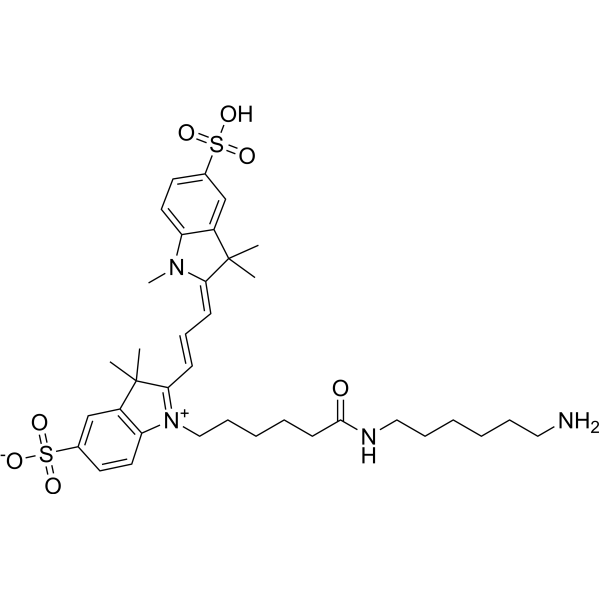
Sulfo-Cy3 amine is a dye derivative of Cyanine 3 (Cy3) (HY-D0822) bearing an amine group. The sulfonate ion increases the water solubility of the compound, making it suitable for use in aqueous solutions. Cy3 is a fluorescent dye with a fluorescence spectrum typically in the green to orange wavelength range. The amine functionality of Sulfo-Cy3 amine can react with carboxyl groups to form covalent bonds. Sulfo-Cy3 amine can bind to biological molecules such as proteins and antibodies to track their location and dynamic changes in biological samples.
loading...
    loading...
Cat. No.: HY-D1864
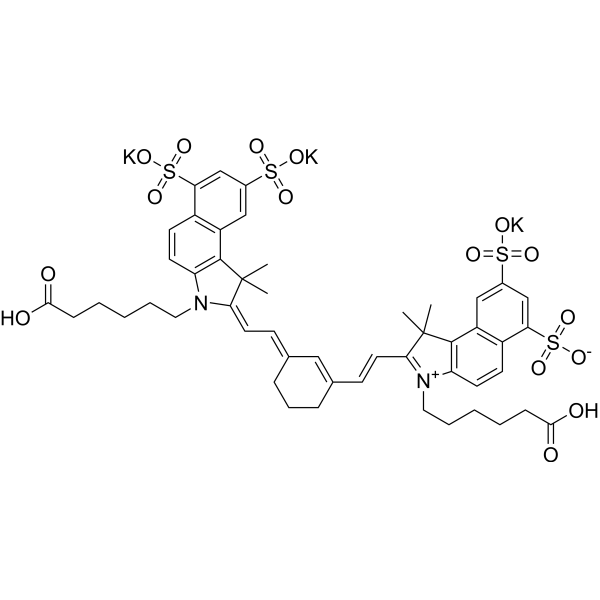
Sulfo-Cy7.5 dicarboxylic acid is a dye derivative of Cyanine 7.5 (Cy7.5) (HY-D0926) with carboxylic acid and sulfonate functional groups. The sulfonate ion increases the water solubility of the compound, making it suitable for use in aqueous solutions. Cy7.5 is a near-infrared fluorescent dye commonly used in biomedical research areas such as biomarkers and cell imaging. Sulfo-Cy7.5 dicarboxylic acid can be covalently bound to some biomolecules (especially antibodies, proteins, etc.) to track their location and dynamic changes in biological samples.
loading...
    loading...
Cat. No.: HY-D3226
CAS No.: 2417345-13-0
Zinc (II) probe-1 (Compound DNP) is a dual-color Fluorescent probe that can simultaneously monitor Zn 2+ and H +. Upon interaction with Zn 2+, Zinc (II) probe-1 produces bright blue fluorescence (excitation wavelength: 405 nm; blue channel wavelength: 420-500 nm). Upon interaction with H +, Zinc (II) probe-1 exhibits red fluorescence (excitation wavelength: 561 nm; red channel emission wavelength: 630-730 nm). Zinc (II) probe-1 can be used in studies related to depression .
loading...
    loading...
Cat. No.: HY-P11455A
Target:  

Liposome

Research Areas:  

Others

Lipopeptide CPE4 TFA is a PEG-modified peptide E4 [(EIAALEK) 4]. Lipopeptide CPE4 TFA is capable of coiled-coil formation when attached to liposomes. Lipopeptide CPE4 TFA triggers membrane fusion between liposomes and living cells with concomitant efficient cytosolic delivery of a variety of compounds such as fluorescent dyes Propidium Iodide (PI) (HY-D0815) and TO-PRO-3 iodide (HY-117070), and Doxorubicin (DOX) (HY-15142A). Lipopeptide CPE4 TFA can be used for drug delivery research .
loading...
    loading...
Cat. No.: HY-W008425
CAS No.: 10160-24-4
Synonyms: 7-Bromoheptan-1-ol
Research Areas:  

Cancer

7-Bromo-1-heptanol (7-Bromoheptan-1-ol) acts as a HaloTag-GPSM2 inhibitor and an organic synthesis intermediate. It forms a covalent irreversible bond with HaloTag-GPSM2, thereby blocking the subsequent labeling effect of fluorescent HaloTag ligands and enabling pulse-chase analysis of protein turnover. 7-Bromo-1-heptanol can be used to synthesize PROTAC BET degraders and multivalent glycoporphyrin antiviral compounds. It is applicable to cancer-related research .
loading...
    loading...
Cat. No.: HY-D1861
CAS No.: 2144762-62-7
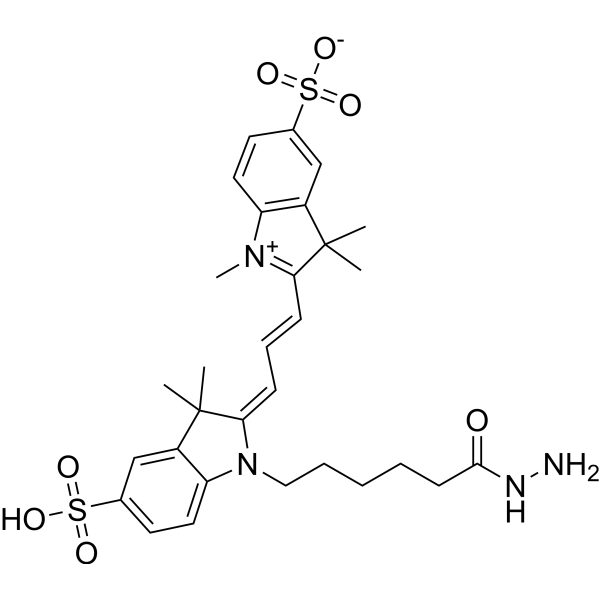
Sulfo-Cy3 hydrazide is a Cyanine 3 (Cy3) (HY-D0822) dye derivative with hydrazine functionality. The sulfonate ion increases the water solubility of the compound, making it suitable for use in aqueous solutions. Cy3 is a fluorescent dye with a fluorescence spectrum typically in the green to orange wavelength range. The hydrazide group of Sulfo-Cy3 hydrazide can form hydrazinone coupling with molecules containing aldehydes or ketones to form covalent bonds. Therefore, Cy3 azide plus can bind to biomolecules such as proteins and antibodies to track their location and dynamic changes in biological samples.
loading...
    loading...
Cat. No.: HY-D1866
CAS No.: 2760599-02-6
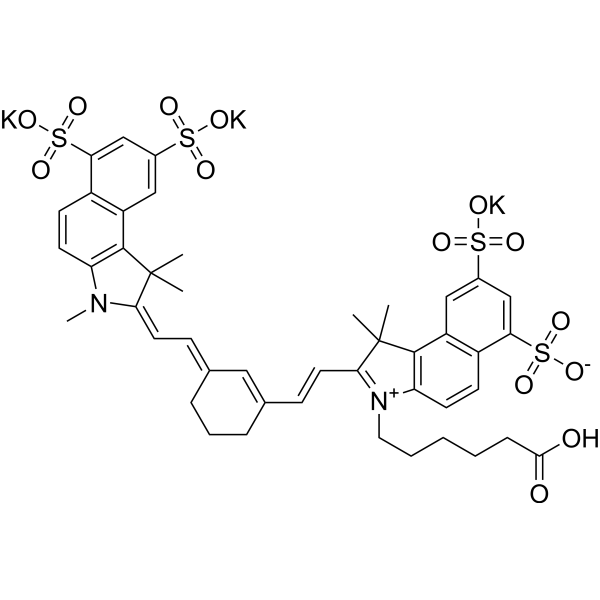
Sulfo-Cy7.5 carboxylic acid is a dye derivative of Cyanine 7.5 (Cy7.5) (HY-D0926) with carboxylic acid and sulfonate ion (sulfonate) functional groups. The sulfonate ion increases the water solubility of the compound, making it suitable for use in aqueous solutions. Cy7.5 is a near-infrared fluorescent dye commonly used in biomedical research areas such as biomarkers and cell imaging. Sulfo-Cy7.5 carboxylic acid can be covalently bound to some biomolecules (especially antibodies, proteins, etc.) to track their location and dynamic changes in biological samples.
loading...
    loading...
Cat. No.: HY-P11456
Target:  

Liposome

Research Areas:  

Others

Lipopeptide CPK4 is a Cholesterol (HY-N0322)-modified peptide K4 [(KIAALKE) 3]. Lipopeptide CPK4 is capable of coiled-coil formation when attached to liposomes. Lipopeptide CPK4 triggers membrane fusion between liposomes and living cells with concomitant efficient cytosolic delivery of a variety of compounds such as fluorescent dyes Propidium Iodide (PI) (HY-D0815) and TO-PRO-3 iodide (HY-117070), and Doxorubicin (DOX) (HY-15142A). Lipopeptide CPK4 can be used for drug delivery research .
loading...
    loading...
Cat. No.: HY-D1863
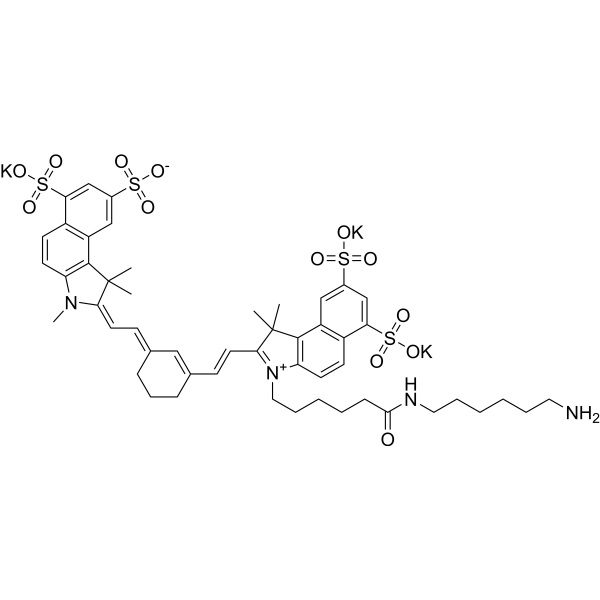
sulfo-Cy7.5 amine is a dye derivative of Cyanine 7.5 (Cy7.5) (HY-D0926) bearing an amine group. The sulfonate ion increases the water solubility of the compound, making it suitable for use in aqueous solutions. Cy7.5 is a near-infrared fluorescent dye commonly used for biolabeling and cell imaging. The amine functionality of sulfo-Cy7.5 amine can react with carboxyl groups to form covalent bonds. Sulfo-Cy7.5 amine can bind to biomolecules such as proteins and antibodies to track their location and dynamic changes in biological samples.
loading...
    loading...
Cat. No.: HY-P11456A
Target:  

Liposome

Research Areas:  

Others

Lipopeptide CPK4 TFA is a Cholesterol (HY-N0322)-modified peptide K4 [(KIAALKE) 3]. Lipopeptide CPK4 TFA is capable of coiled-coil formation when attached to liposomes. Lipopeptide CPK4 TFA triggers membrane fusion between liposomes and living cells with concomitant efficient cytosolic delivery of a variety of compounds such as fluorescent dyes Propidium Iodide (PI) (HY-D0815) and TO-PRO-3 iodide (HY-117070), and Doxorubicin (DOX) (HY-15142A). Lipopeptide CPK4 TFA can be used for drug delivery research .
loading...
    loading...
Cat. No.: HY-D1859
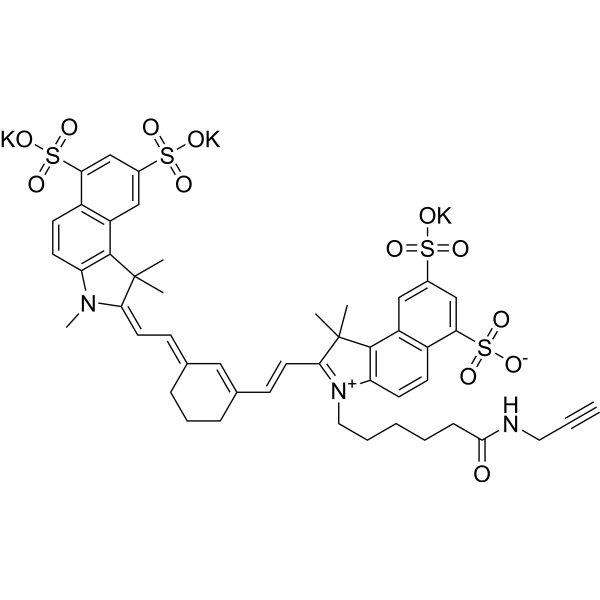
Sulfo-Cy7.5 alkyne is a dye derivative of Cyanine 7.5 (Cy7.5) (HY-D0926) containing a sulfonate ion and an alkyne functional group. The sulfonate ion increases the water solubility of the compound, making it suitable for use in aqueous solutions. Cy7.5 is a near-infrared fluorescent dye commonly used for biolabeling and cell imaging. The alkyne functionality of Sulfo-Cy7.5 alkyne can react with molecules containing the azide functionality to form covalent bonds. Sulfo-Cy7.5 alkyne can bind to biomolecules such as proteins and antibodies to track their location and dynamic changes in biological samples.
loading...
    loading...
Cat. No.: HY-W073013
CAS No.: 14172-90-8
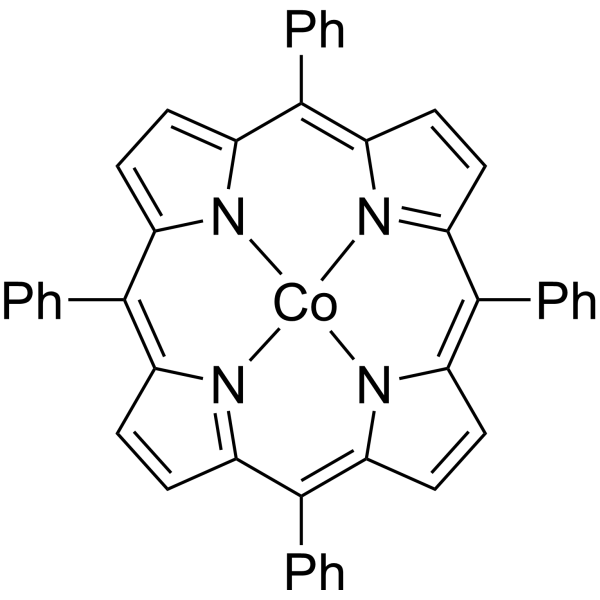
5,10,15,20-Tetraphenyl-21H,23H-porphine cobalt(II), commonly known as CoTPP or cobalt porphyrin, is a coordination compound. 5,10,15,20-Tetraphenyl-21H,23H-porphine cobalt(II) is widely used in various fields such as catalysis, sensing, and organic electronics because of its unique electronic and optical properties. An efficient catalyst for reactions including oxidation, reduction, and CH bond activation, moreover, it has been used as a fluorescent probe for detecting oxygen content in biological systems and as an active material in organic solar cells.
loading...
    loading...
Cat. No.: HY-160116
CAS No.: 1565797-17-2
α-Synuclein aggregate binder 1 (Compound C05-05) is a specific binder for α-synuclein aggregates and can inhibit α-synuclein aggregation. α-Synuclein aggregate binder 1 can be used as a fluorescent probe (excitation wavelength 900 nm, detection wavelength 500-550 nm) for optical imaging, and can also inhibit α-synuclein fibril formation by blocking the aggregation process. α-Synuclein aggregate binder 1 can be used for positron emission tomography (PET) imaging after being labeled with 18F. α-Synuclein aggregate binder 1 can be used for visual diagnosis of brain lesions and mechanism research of neurodegenerative diseases such as Parkinson's disease and Lewy body dementia .
loading...
    loading...
Cat. No.: HY-W251144
CAS No.: 76372-75-3
Synonyms: PTCDI-C5
N,N′-Dipentyl-3,4,9,10-perylenedicarboximide (PTCDI-C5) is an organic semiconductor compound with excellent electron transport activity. N,N′-Dipentyl-3,4,9,10-perylenedicarboximide exhibits high performance in organic field effect transistors (OFETs) and can effectively improve the carrier mobility of the device. The application of N,N′-Dipentyl-3,4,9,10-perylenedicarboximide in organic photovoltaic (OPV) materials enhances the light absorption performance, thereby improving the photoelectric conversion efficiency. N,N′-Dipentyl-3,4,9,10-perylenedicarboximide has also been widely studied for the development of high-performance sensors and fluorescent materials.
loading...
    loading...
Cat. No.: HY-DY1081
CAS No.: 28718-90-3
Synonyms: 4',6-Diamidino-2-phenylindole dihydrochloride (solution)
DAPI (4',6-Diamidino-2-phenylindole) dihydrochloride (solution) is a DAPI dye. DAPI is a fluorescent dye that binds strongly to DNA. It binds to the AT base pair of the double-stranded DNA minor groove, and one DAPI molecule can occupy three base pair positions. The fluorescence intensity of DAPI molecules bound to double-stranded DNA is increased by about 20 times, and it is commonly observed with fluorescence microscopy, and the amount of DNA can be determined based on the intensity of fluorescence. DAPI cannot penetrate intact cell membranes and is commonly used for staining damaged and fixed cells . DAPI (Compound 3) is an acid-sensing ion channel 3 (ASIC3) inhibitor. DAPI binds to ASIC3 and blocks the channel function. DAPI can be used in the study of chronic pain treatment (Ex/Em = 356/451 nm).
Solvent and concentration: ddH2O: 5 mg/mL
loading...
    loading...
Cat. No.: HY-D1850
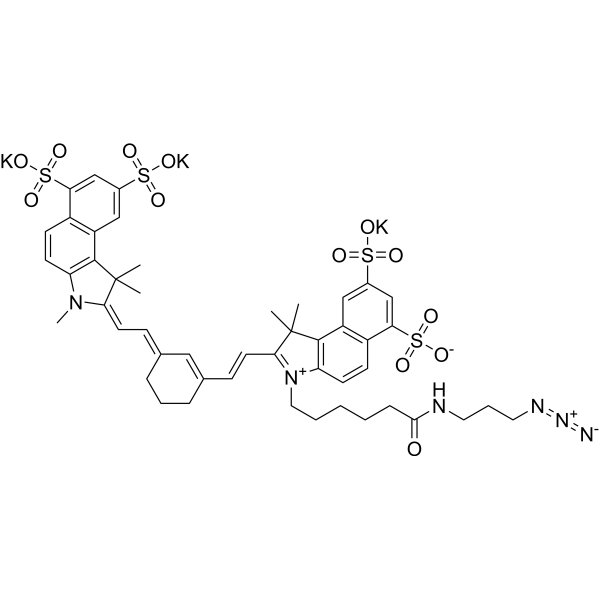
Sulfo-Cy7.5 azide is a Cyanine 7.5 (Cy7.5) (HY-D0926) dye derivative with azide and sulfonate functional groups. The sulfonate ion increases the water solubility of the compound, making it suitable for use in aqueous solutions. Cy7.5 is a near-infrared fluorescent dye commonly used for biolabeling and cell imaging. The azide group of Sulfo-Cy7.5 azide can react chemically with molecules containing alkyne functionality, such as alkyne or cyclooctyne, to form covalent bonds. Therefore, Sulfo-Cy7.5 azide can bind to biomolecules such as proteins and antibodies to track their location and dynamic changes in biological samples. It contains an azide group and can undergo copper-catalyzed azide-alkyne cycloaddition (CuAAc) with molecules containing alkyne groups. It can also undergo ring strain-promoted alkyne-azide cycloaddition (SPAAC) with molecules containing DBCO or BCN groups.
loading...
    loading...
Cat. No.: HY-W327027
CAS No.: 314742-00-2
Target:  

Fluorescent Dye

Research Areas:  

Others

7-(2,4-Dinitrophenoxy)-4-methyl-2H-chromen-2-one (Compound 1) is a fluorescent probe for the detection of hydrogen sulfide (H2S). 7-(2,4-Dinitrophenoxy)-4-methyl-2H-chromen-2-one has a low detection limit (4×10 -6 mol/L), good selectivity and high sensitivity. 7-(2,4-Dinitrophenoxy)-4-methyl-2H-chromen-2-one shows almost no cytotoxicity at concentrations of 150 µg/mL. 7-(2,4-Dinitrophenoxy)-4-methyl-2H-chromen-2-one has the excitation peak of 331 nm, and the emission peak about 385 nm in DMSO solvent. Upon the addition of increasing amounts of HS -, the fluorescence intensity increases obviously at about 392 nm .
loading...
    loading...

