

200 Results for "

tissue factor

" in MedChemExpress (MCE) Product Catalog:
Products (200)

200 Results for "tissue factor" in MCE Product Catalog:

Cat. No.: HY-P5107A
Synonyms: LMWP acetate; TDSP5 acetate
Target:  

VEGFR

Research Areas:  

Cancer

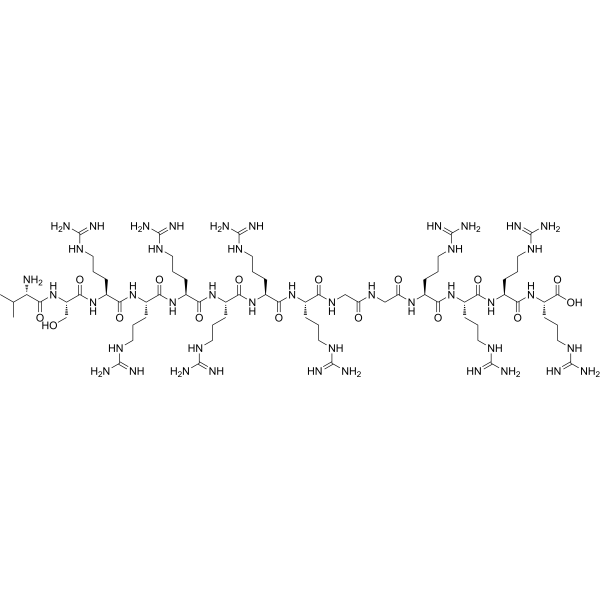
Low molecular weight protamine acetate (LMWP acetate;TDSP5 acetate) is a truncated arginine-rich protamine peptide, which also acts as an antidote for heparin/low molecular weight heparin and a cell-penetrating delivery vector. Low molecular weight protamine acetate neutralizes heparin-induced anticoagulant activities, including aPTT, anti-Xa and anti-IIa activities. Low molecular weight protamine acetate translocates across mammalian cell membranes, delivers conjugated impermeable molecules through tumor tissues, enhances the skin permeability of conjugated epidermal growth factor, and accelerates wound healing when conjugated with epidermal growth factor. Low molecular weight protamine acetate retains the in vitro cell proliferation activity of conjugated EGF, and also enables site-specific conjugation with peptides or proteins via genetic recombination. Low molecular weight protamine acetate can be used in studies related to colon cancer, skin wounds and diabetic skin wounds .
loading...
    loading...
Cat. No.: HY-P991169
CAS No.: 2955620-21-8
Synonyms: NXT007; RG6512; RO7589655
Target:  

Factor Xa Thrombin

Research Areas:  

Cardiovascular Disease

Zemocimig (NXT007) is an activated factor VIII mimetic antibody. Zemocimig binds to FX, FIXa and their activated forms to form a ternary complex, bridges FIXa and FX on the phospholipid surface, and restores intrinsic prothrombinase activity. Zemocimig induces thrombin generation, acts as a procoagulant, antifibrinolytic agent and hemostatic agent, and can shorten aPTT, increase fibrin deposition, correct clotting time, and reduce bleeding parameters. Zemocimig is applicable to the research of hemophilia A .
loading...
    loading...
Cat. No.: HY-P78713
Purity:  ≥ 90%, as determined by reducing SDS-PAGE.
Synonyms: CCN2; CCN Family Member 2; Prev. CTGF; IBP-8; IGFBP8; SEMDLSL; Connective tissue Growth factor; IGFBP-8; Hypertrophic Chondrocyte-Specific Protein 24; NOV2; Insulin-Like Growth factor-Binding Protein 8; KMD; IGF-Binding Protein 8; Cellular Communication N
Species:  
Rhesus Macaque
Source:  
HEK293
loading...
    loading...
Cat. No.: HY-P79369
Purity:  ≥ 95%, as determined by reducing SDS-PAGE.
Synonyms: CCN2; CCN Family Member 2; Prev. CTGF; IBP-8; IGFBP8; SEMDLSL; Connective tissue Growth factor; IGFBP-8; Hypertrophic Chondrocyte-Specific Protein 24; NOV2; Insulin-Like Growth factor-Binding Protein 8; KMD; IGF-Binding Protein 8; Cellular Communication N
Species:  
Rat
Source:  
HEK293
loading...
    loading...
Cat. No.: HY-P704310
Purity:  ≥ 90%, as determined by reducing SDS-PAGE.
Synonyms: CCN2; CCN Family Member 2; Prev. CTGF; IBP-8; IGFBP8; SEMDLSL; Connective tissue Growth factor; IGFBP-8; Hypertrophic Chondrocyte-Specific Protein 24; NOV2; Insulin-Like Growth factor-Binding Protein 8; KMD; IGF-Binding Protein 8; Cellular Communication N
Species:  
Mouse
Source:  
HEK293
loading...
    loading...
Cat. No.: HY-181513
Research Areas:  

Inflammation/Immunology

DPP-1-IN-2 is a DPP-I inhibitor with a human IC50 of 36.8 nM and oral efficacy. DPP-1-IN-2 binds to intracellular DPP-I, increases its thermal stability, and reduces the activity and expression levels of downstream neutrophil serine proteases by inhibiting its enzymatic activity. DPP-1-IN-2 regulates the secretion of inflammatory factors and chemokines to exert anti-inflammatory effects. DPP-1-IN-2 reverses joint inflammation and tissue damage in adjuvant-induced arthritis rat models. DPP-1-IN-2 is applicable to research related to arthritis .
loading...
    loading...
Cat. No.: HY-P5875A
P4pal10 TFA is the TFA salt form of P4pal10 (HY-P5875). P4pal10 TFA is an antagonist for protease-activated receptor 4 (PAR4). P4pal10 TFA inhibits the platelet aggregation, inhibits tissue factor (TF)-induced thrombin generation, and exhibits anticoagulant and antithrombotic activities. P4pal10 TFA reduces the oedema and the granulocyte infiltration induced by Carrageenan (HY-125474). P4pal10 TFA ameliorates the injury in rats myocardial ischemia/reperfusion (I/R) models .
loading...
    loading...
Cat. No.: HY-P5107
CAS No.: 121052-30-0
Synonyms: LMWP; TDSP5
Target:  

VEGFR

Research Areas:  

Cancer

Low molecular weight protamine (LMWP;TDSP5) is a truncated arginine-rich protamine peptide, as well as a heparin/low-molecular-weight heparin antidote and a cell-penetrating delivery carrier. Low molecular weight protamine neutralizes heparin-induced anticoagulant activities, including aPTT, anti-Xa and anti-IIa activities, and also neutralizes anti-Xa activity of commercially available low-molecular-weight heparin preparations. Low molecular weight protamine translocates across mammalian cell membranes, delivers conjugated impermeable molecules across tumor tissues, enhances skin permeability of conjugated epidermal growth factor, and accelerates wound healing when conjugated with epidermal growth factor. Low molecular weight protamine retains the in vitro cell proliferation activity of conjugated EGF, and also enables site-specific conjugation with peptides or proteins via genetic recombination. Low molecular weight protamine can be used in studies related to colon adenocarcinoma, skin wounds and diabetic skin wounds .
loading...
    loading...
Cat. No.: HY-135435
CAS No.: 515821-11-1
Target:  

VEGFR PDGFR FGFR

SU10944 is a selective, orally active VEGFR inhibitor, with an IC50 of 6 nM against VEGFR-1, an IC50 of 96 nM and a Ki of 21 nM against VEGFR-2. SU10944 only exhibits weak inhibitory activity against PDGFRβ (IC50 = 1 μM), SCFR (IC50 = 1.58 μM) and FGFR-1 (IC50 = 1.6 μM). SU10944 selectively inhibits VEGFR receptor downstream signaling, neovascularization, vascular permeability, VEGF-mediated tissue factor production, and induces tumor growth delay. SU10944 can be used in research related to diabetic retinopathy, exudative age-related macular degeneration or cancer .
loading...
    loading...
Cat. No.: HY-112499R
CAS No.: 2124-57-4
Synonyms: Vitamin K2-7(Standard); Vitamin K2(35)(Standard); Vitamin MK-7 (Standard)
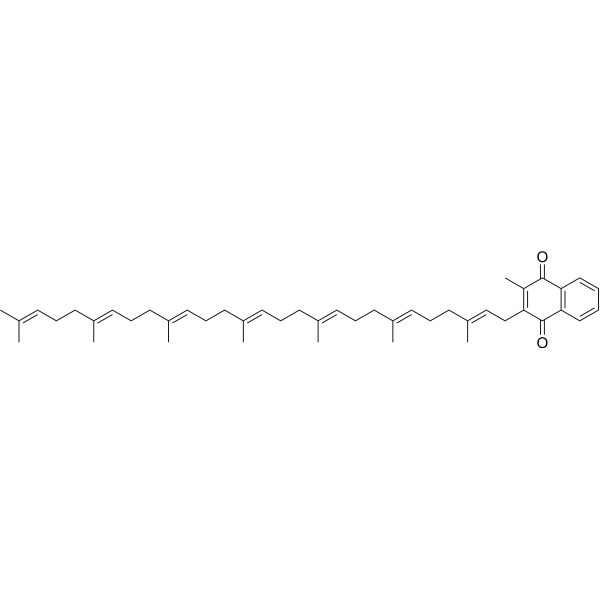
Menaquinone-7 (Standard) is the analytical standard of Menaquinone-7. This product is intended for research and analytical applications. Menaquinone-7 (Vitamin K2-7), belongs to a class of K2-vitamin homologs (orally active), is originally discovered as the anti-hemorrhagic factors. Menaquinone-7 inhibits osteoclast bone resorption in vitro and stimulates bone formation in femoral tissue of aged female rats. Menaquinone-7 has a well-researched potential in the prevention of aging-induced bone degeneration. Menaquinone-7 is also a pharmacological option for activating Gla matrix protein and intervening in the progression of calcific aortic stenosis (CAVS) .
loading...
    loading...
Cat. No.: HY-100573S
CAS No.: 1795144-22-7
Purity:  99.26%
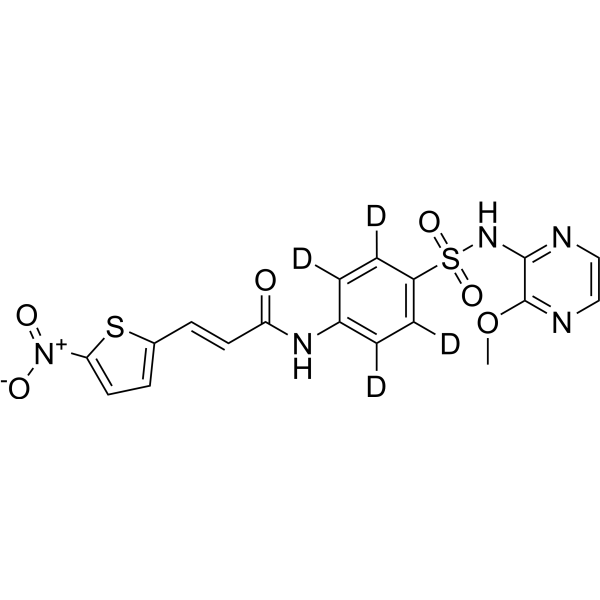
Necrosulfonamide-d4 is the deuterium labeled Necrosulfonamide (HY-100573). Necrosulfonamide is a MLKL and Gasdermin D (GSDMD) inhibitor, capable of separately inhibiting necroptosis and pyroptosis of cells. Necrosulfonamide does not affect the activation of upstream signals, but specifically inhibits the downstream executor oligomerization step. Necrosulfonamide reduces the expression of the key kinases NLRP3 and caspase-1 involved in necroptosis and pyroptosis, activate the Nrf2 pathway and the downstream antioxidant enzymes, and also downregulates a variety of inflammatory factors. Necrosulfonamide plays significant roles in various diseases such as neurodegenerative diseases (such as Parkinson’s disease), tissue damage and ischemia-reperfusion injury, inflammatory bowel disease, osteoarthritis and fracture repair, and hair loss by regulating two important programmed necrosis pathways.
loading...
    loading...
Cat. No.: HY-167262
CAS No.: 156691-86-0
Target:  

RAR/RXR

Research Areas:  

Metabolic Disease Cancer

AGN-191659 is an orally active RAR/RXR agonist with EC50 values of 11 nM, 23 nM, and 37 nM for RXRα, RARβ, and RARγ, respectively. AGN-191659 activates RXRα, RARβ and RARγ to induce gene transcription. AGN-191659 induces tissue transglutaminase activity, inhibits ornithine decarboxylase activity induced by tumor promoters, and suppresses chondrogenesis. AGN-191659 reverses basic fibroblast growth factor-induced endothelial cell proliferation. AGN-191659 induces hypertriglyceridemia in rat models. AGN-191659 inhibits total heparin-releasable lipase activity. AGN-191659 can be used in research related to promyelocytic leukemia and hypertriglyceridemia .
loading...
    loading...
Cat. No.: HY-B1016
CAS No.: 15421-84-8
Synonyms: AR-12008
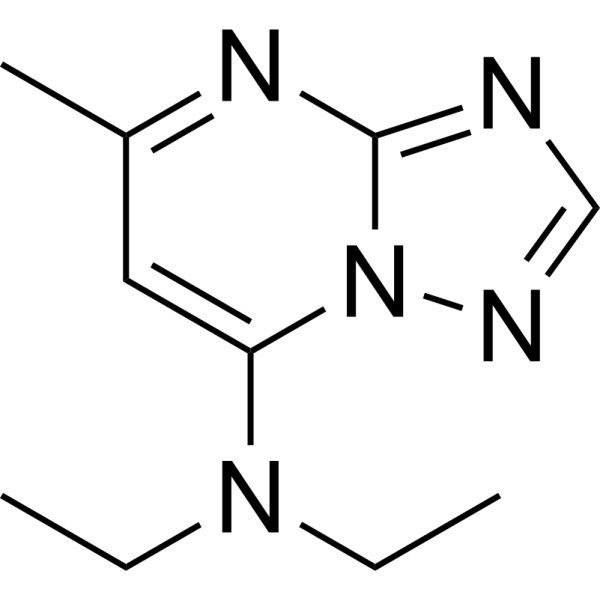
Trapidil (AR-12008) is an orally active vasodilator and antiplatelet agent. Trapidil antagonizes platelet-derived growth factor (PDGF), inhibits phosphodiesterase, thromboxane A2 synthesis and pro-inflammatory cytokine production. Trapidil promotes prostacyclin biosynthesis, reduces lipid peroxidation, regulates nitric oxide metabolism, and inhibits cell proliferation and migration. Trapidil exerts tissue-protective effects, regulates bone turnover, and inhibits pyroptosis via the GPX3/Nrf2 pathway. Trapidil is applicable to research related to renal ischemia-reperfusion injury, chronic stable angina, restenosis, meningioma, diabetic cardiomyopathy and peripheral nerve crush injury .
loading...
    loading...
Cat. No.: HY-P11328
CAS No.: 245120-10-9
Target:  

Integrin

Research Areas:  

Others

GFOGER peptide is an artificially synthesized collagen-mimetic sequence. GFOGER peptide acts as a ligand for α2β1, α11β1 and α1β1 integrins, thereby supporting integrin-mediated cell adhesion to collagen. GFOGER peptide triggers signaling pathways mediated by the α2β1 integrin receptor and upregulates osteoblast differentiation. GFOGER peptide accelerates and enhances bone formation at sites of refractory femoral defects. GFOGER peptide can be passively adsorbed onto polymer scaffolds for cell-free/growth factor-free bone formation. GFOGER peptide is used in biomaterials such as hydrogels and 3D bioinks for tissue engineering research including bone formation .
loading...
    loading...
Cat. No.: HY-P2917
CAS No.: 9030-66-4
Synonyms: GyK
Glycerol kinase, microorganism (GyK) acts as a NR4A1 inhibitor with enzymatic activity. It directly binds to and inhibits the transcription factor NR4A1, thereby negatively regulating hepatic gluconeogenesis and reducing blood glucose levels. Glycerol kinase, microorganism positively regulates UCP1 expression via partial dependence on the β-adrenergic receptor-cAMP-CREB pathway, promotes browning of white adipose tissue and thermogenesis, and further modulates intracellular fatty acid composition and energy metabolism. In diabetic mouse models, overexpression of Glycerol kinase effectively antagonizes NR4A1-induced hyperglycemia, demonstrating potential for improving glucose homeostasis. Glycerol kinase, microorganism can be used for studies on diabetes and obesity .
loading...
    loading...
Cat. No.: HY-P99488
CAS No.: 2574591-89-0
Synonyms: JSP-191; AMG-191

Target:  

c-Kit

Research Areas:  

Inflammation/Immunology Cancer

Briquilimab (JSP-191 or AMG-191) is a humanized IgG1 monoclonal antibody that binds human CD117 (c-Kit). Briquilimab blocks the interaction between CD117 receptor and stem cell factor on various CD117 expressing tissues. Briquilimab can lead to inhibition of SCF/c-Kit signaling and MC apoptosis. Briquilimab is a non-toxic approach to target and deplete HSC, enabling blood and immune reconstitution with minimal toxicity with the other agents being used for transient immune suppression to prevent immunologic rejection. Briquilimab can be used in various disease research such as severe combined immunodeficiency (SCID), myelodyplastic syndromes (MDS), acute myeloid leukemia (AML), chronic spontaneous urticarial (CSU), chronic inducible urticarial (CIndU) and asthema .
loading...
    loading...
Cat. No.: HY-P73431
Purity:  ≥ 95%, as determined by reducing SDS-PAGE.
Synonyms: TXN; TRDX; TRX; TRX1; Thioredoxin; Trx; ATL-derived factor; ADF; Surface-associated sulphydryl protein; SASP; TXN Delta 3; Thioredoxin-2; Allergen Hom S Trx; Thioredoxin Delta 3; Thioredoxin, Mitochondrial; Testicular tissue Protein Li 199; ADF; Surface-A
Species:  
Human
Source:  
E. coli
loading...
    loading...
Cat. No.: HY-100573R
CAS No.: 1360614-48-7
Necrosulfonamide (Standard) is the analytical standard of Necrosulfonamide (HY-100573). This product is intended for research and analytical applications. Necrosulfonamide is a MLKL and Gasdermin D (GSDMD) inhibitor, capable of separately inhibiting necroptosis and pyroptosis of cells. Necrosulfonamide does not affect the activation of upstream signals, but specifically inhibits the downstream executor oligomerization step. Necrosulfonamide reduces the expression of the key kinases NLRP3 and caspase-1 involved in necroptosis and pyroptosis, activate the Nrf2 pathway and the downstream antioxidant enzymes, and also downregulates a variety of inflammatory factors. Necrosulfonamide plays significant roles in various diseases such as neurodegenerative diseases (such as Parkinson’s disease), tissue damage and ischemia-reperfusion injury, inflammatory bowel disease, osteoarthritis and fracture repair, and hair loss by regulating two important programmed necrosis pathways .
loading...
    loading...
Cat. No.: HY-B1016R
CAS No.: 15421-84-8
Synonyms: AR-12008 (Standard)
Trapidil (Standard) (AR-12008 (Standard)) is the analytical standard of Trapidil (HY-B1016R). This product is intended for research and analytical applications. Trapidil (AR-12008) is an orally active vasodilator and antiplatelet agent. Trapidil antagonizes platelet-derived growth factor (PDGF), inhibits phosphodiesterase, thromboxane A2 synthesis and pro-inflammatory cytokine production. Trapidil promotes prostacyclin biosynthesis, reduces lipid peroxidation, regulates nitric oxide metabolism, and inhibits cell proliferation and migration. Trapidil exerts tissue-protective effects, regulates bone turnover, and inhibits pyroptosis via the GPX3/Nrf2 pathway. Trapidil is applicable to research related to renal ischemia-reperfusion injury, chronic stable angina, restenosis, meningioma, diabetic cardiomyopathy and peripheral nerve crush injury.
loading...
    loading...
Cat. No.: HY-P7802
Purity:  ≥ 90%, as determined by reducing SDS-PAGE.
Synonyms: TXN; TRDX; TRX; TRX1; Thioredoxin; Trx; ATL-derived factor; ADF; Surface-associated sulphydryl protein; SASP; TXN Delta 3; Thioredoxin-2; Allergen Hom S Trx; Thioredoxin Delta 3; Thioredoxin, Mitochondrial; Testicular tissue Protein Li 199; ADF; Surface-A
Species:  
E.coli
Source:  
E. coli
loading...
    loading...

