2126 Results for "

Cell level

" in MedChemExpress (MCE) Product Catalog:
Products (2126)

2126 Results for "Cell level" in MCE Product Catalog:

Referencia número: HY-133968S1
Synonyms: Ostreasterol-13C
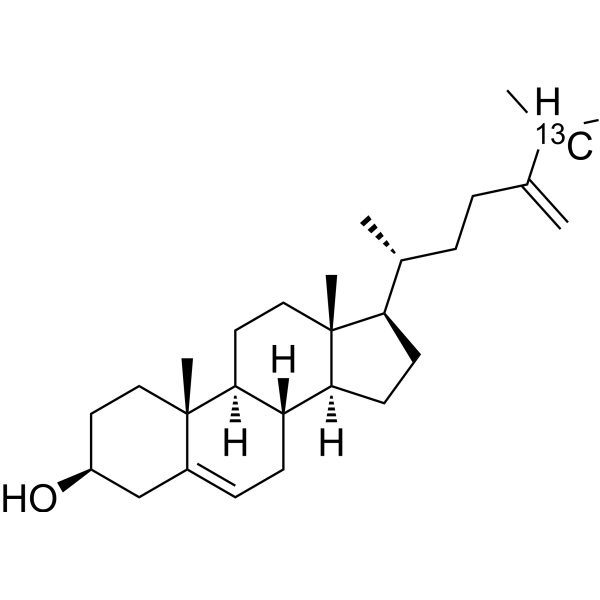
24-Methylenecholesterol- 13C (Ostreasterol- 13C) is the 13C labeled 24-Methylenecholesterol (HY-133968) . 24-Methylenecholesterol (Ostreasterol) is a regulator targeting acyl-CoA cholesterol acyltransferase (ACAT) with anti-aging and neuroprotective effects. 24-Methylenecholesterol mimics the effects of nerve growth factor (NGF), can extend yeast lifespan through an anti-oxidative stress mechanism, and exhibits neuroprotective activity in PC12 cells. 24-Methylenecholesterol can reduce intracellular reactive oxygen species (ROS) and malondialdehyde (MDA) levels, activate anti-oxidative stress pathways (such as UTH1, SOD-related genes), and promote synaptic growth .
loading...
    loading...
Referencia número: HY-149091
No. CAS: 3046228-11-6
Pureza:  99.68%
Target:  

Histone Demethylase

Áreas de investigación:  

Cancer

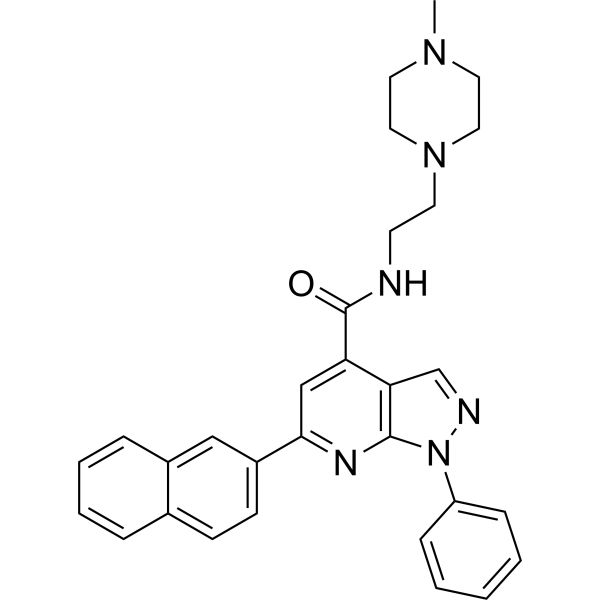
KDM5B-IN-4 (compound 11ad) is a lysine demethylase 5B (KDM5B) inhibitor with an IC50 of 0.025 μM KDM5B-IN-4 increases substrate H3K4me1/2/3 level by inhibiting KDM5B in PC-3 cells. KDM5B-IN-4 downregulates PI3K/AKT. KDM5B-IN-4 reduces tumor volume in mice and shows less toxic to organs .
loading...
    loading...
Referencia número: HY-151500
No. CAS: 3026599-90-3
Pureza:  99.20%
Áreas de investigación:  

Metabolic Disease

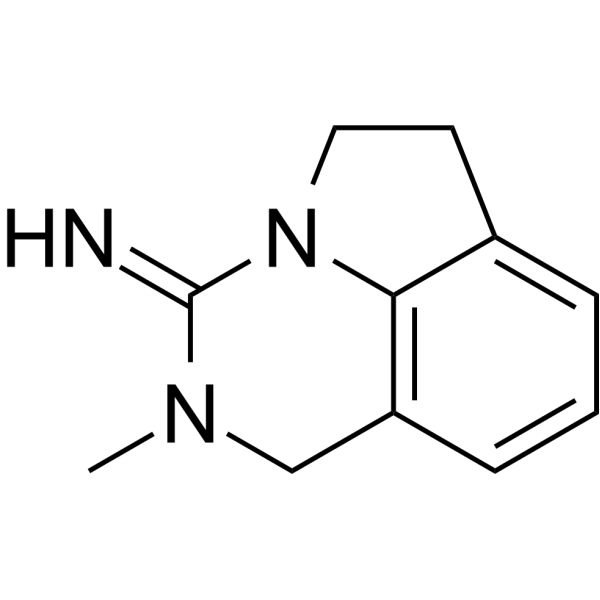
JBSNF-00002 free base is an orally active small molecule inhibitor of the tricyclic nicotinamide N-methyltransferase (NNMT) with IC50 values for human, mouse and monkey sources of NNMT of 33, 210 and 190 nM respectively. JBSNF-00002 free base can reduce endogenous MNA levels in U2OS osteosarcoma cells, with its EC50 being 2.5 μM. JBSNF-00002 free base exhibits significant anti-obesity and anti-diabetic activities in the diet-induced obesity (DIO) model. JBSNF-00002 free base can be used for the study of metabolic diseases such as obesity, type 2 diabetes and non-alcoholic fatty liver disease .
loading...
    loading...
Referencia número: HY-156584
No. CAS: 1626364-18-8
Target:  

Endogenous Metabolite

Áreas de investigación:  

Infection

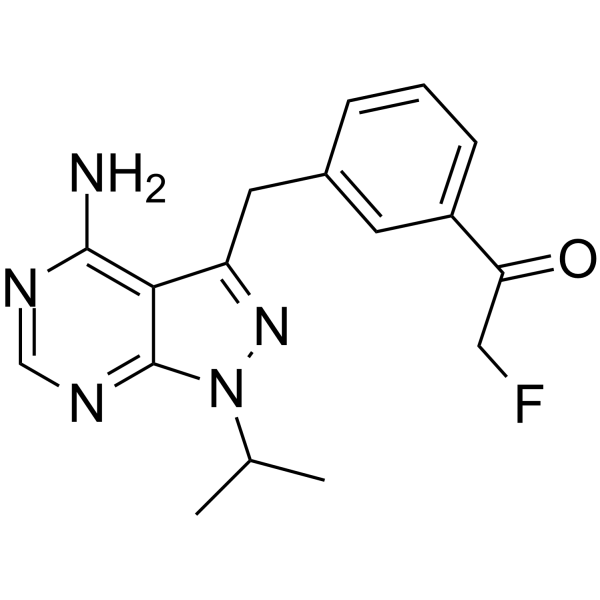
ODE-Bn-PMEG is an antiviral compound with strong inhibitory activity against HPV-11, -16, and -18. ODE-Bn-PMEG effectively reduced transient amplification of viral DNA in transfected cells at concentrations well below its cytotoxic levels. ODE-Bn-PMEG showed increased uptake in human foreskin fibroblasts and was able to be efficiently converted to the active antiviral metabolite PMEG diphosphate in vitro. The P-chiral enantiomer of ODE-Bn-PMEG showed comparable antiviral activity, indicating its potential application against multiple HPV types. ODE-Bn-PMEG is a promising candidate for local inhibition of HPV-16, HPV-18, and other high-risk types .
loading...
    loading...
Referencia número: HY-164159
No. CAS: 130603-71-3
Áreas de investigación:  

Inflammation/Immunology

α-Glucosylrutin, a flavonoid, is a potent antioxidant with free radical scavenging activity. α-Glucosylrutin reduces MMP-1 gene expression, protein expression, and enzyme activity, and reduces MMP-2 protein expression and enzyme activity in UVA-irradiated human dermal fibroblasts. α-Glucosylrutin prevents oxidative stress-induced intracellular tyrosine residue phosphorylation and counteracts intracellular thiol level depletion in human skin cells. α-Glucosylrutin is effective in the prevention of dermatologic diseases in which oxidative stress is of pathogenetic relevance, e.g. in polymorphous light eruption (PLE). α-Glucosylrutin can be used for the research of UV-induced skin photodamage/photoaging .
loading...
    loading...
Referencia número: HY-16906
No. CAS: 1351927-00-8
Target:  

Src

Áreas de investigación:  

Cancer

T338C Src-IN-2 is a mutant c-Src kinase inhibitor, with an IC50 of 317 nM against T338C c-Src, 57 nM against T338C/V323A c-Src, and 19 nM against T338C/V323S c-Src. T338C Src-IN-2 inhibits the kinase activity of endogenous cysteine gatekeeper MOK. T338C Src-IN-2 reduces global phosphotyrosine levels in v-Src-ES1-transformed NIH-3T3 cells .
loading...
    loading...
Referencia número: HY-175850
Target:  

GSK-3 Apoptosis NF-κB c-Myc

Áreas de investigación:  

Cancer

GSK-3β inhibitor 28 is selective and non-competitivea glycogen synthase kinase-3β (GSK-3β) inhibitor with an IC50 of 14.82 nM. GSK-3β inhibitor 28 can upregulate the expression level of phosphorylated GSK-3β and downregulate the expression of p-NF-κB, P65, C-myc and Cyclin D1. GSK-3β inhibitor 28 can induce cells apoptosis, G1 phase arrest and inhibit migration. GSK-3β inhibitor 28 can be used for the research of cancer, such as colorectal cancer .
loading...
    loading...
Referencia número: HY-179044
No. CAS: 3100092-62-1
Áreas de investigación:  

Cancer

MKK7-JNK activator 1 (Compound 10) is a MKK7-JNK pathway activator. MKK7-JNK activator 1 effectively inhibits the proliferation and migration of MDA-MB-468 cells, induces G2/M phase arrest and caspase -dependent apoptosis (independent of ROS production). MKK7-JNK activator 1 significantly increases the levels of p-MKK7 and p-JNK, but does not affect p-ERK or p-p38. MKK7-JNK activator 1 can be used for the study of triple-negative breast cancer (TNBC) .
loading...
    loading...
Referencia número: HY-179501
PDK1-IN-5 is a selective PDK1 inhibitor. PDK1-IN-5 activaties PDH by diminishing phosphorylation level via PDK1 inhibition. PDK1-IN-5 effectively reverses the Warburg effect and shifts cellular energy metabolism from glycolysis toward oxidative phosphorylation by increased acetyl-CoA, reduced lactate, elevated mitochondrial ROS, and subsequent induction of apoptosis. PDK1-IN-5 robustly inhibits tumor growth in vivo without inducing systemic toxicity. PDK1-IN-5 can be used for lung adenocarcinoma, human non-small cell lung adenocarcinoma and gastric colorectal .
loading...
    loading...
Referencia número: HY-181077
Target:  

AMPK

Áreas de investigación:  

Endocrinology

AMPKα1 activator 1 is a selective and orally active AMPKα1 activator with an EC50 of 35.1 nM. AMPKα1 activator 1 shows 176-fold selectivity over AMPKα2. AMPKα1 activator 1 can be used as a cell protectant and a kidney protectant. AMPKα1 activator 1 attenuates elevation of serum creatinine and blood urea nitrogen levels, alleviates kidney damage, and reduces cellular infiltration in renal ischemia-reperfusion injury contexts. AMPKα1 activator 1 can be associated with renal ischemia-reperfusion injury research .
loading...
    loading...
Referencia número: HY-181514
No. CAS: 3113051-34-3
Target:  

STAT CDK c-Myc Apoptosis

Áreas de investigación:  

Cancer

STAT3-IN-53 (Compound L20) is a STAT3 inhibitor with a Kd value of 6.16 μM. STAT3-IN-53 binds directly to the SH2 domain of STAT3, inhibits phosphorylation at the Y705 site without affecting the total STAT3 protein level, and suppresses the IL-6/JAK/STAT3 pathway. STAT3-IN-53 downregulates the transcription and expression of cyclin-D1 and c-Myc. STAT3-IN-53 induces cell cycle arrest and promotes Apoptosis. STAT3-IN-53 exhibits anticancer activity against colorectal cancer .
loading...
    loading...
Referencia número: HY-181557
No. CAS: 3077714-09-8
Áreas de investigación:  

Cancer

SY-589 is an orally active DNA polymerase Polθ helicase domain inhibitor (IC50=2.29 nM) and DNA damage inducer. SY-589 inhibits the ATPase activity of the Polθ helicase domain and blocks the Polθ-mediated microhomology-mediated end joining (MMEJ) DNA repair pathway (IC50=0.85 nM). SY-589 also induces the accumulation of DNA double-strand breaks by increasing γ-H2AX levels. SY-589 exerts antiproliferative effects on BRCA2-deficient cells and is used in the research of HR-deficient tumors .
loading...
    loading...
Referencia número: HY-182302
No. CAS: 1695550-43-6
Target:  

Drug Derivative HSP

Áreas de investigación:  

Cancer

SMTIN-P01 is a TRAP1 inhibitor that is selective for cytosolic Hsp90 and accumulates in mitochondria. SMTIN-P01 binds to the ATP-binding site of TRAP1 as an ATP mimic, thereby inhibiting ATPase and foldase activities. SMTIN-P01 induces mitochondrial membrane depolarization and proteolytic degradation in cancer cells. SMTIN-P01 exhibits significant cytotoxicity, but shows extremely low toxicity to primary mouse hepatocytes, and does not interfere with SIRT3-related functions or the levels of cytosolic Hsp90 substrates. SMTIN-P01 has important application value in cancer-related research .
loading...
    loading...
Referencia número: HY-182743
No. CAS: 2803349-61-1
Target:  

AMPK MARK YAP

Áreas de investigación:  

Cancer

OICR19451 is an orally active dual NUAK1/NUAK2 and MARK2/MARK3 kinase inhibitor, with IC50 values of 12 nM and 10 nM against NUAK1 and NUAK2, and 101 nM and 124 nM against MARK2 and MARK3, respectively. OICR19451 modulates the Hippo signaling pathway, increases the phosphorylation level of YAP, enhances the cytoplasmic localization of YAP/TAZ, and inhibits the expression of oncogenes. OICR19451 inhibits cancer cell growth, reduces metastasis, promotes tumor capsule formation, and improves mouse survival in an orthotopic breast cancer model. OICR19451 can be used for research related to triple-negative breast cancer .
loading...
    loading...
Referencia número: HY-183257
No. CAS: 1242983-93-2
Áreas de investigación:  

Cancer

ATI-1 is an autophagy initiation inhibitor. ATI-1 targets valosin-containing protein (VCP/p97, disrupts its interaction with UFL1, impairs UFMylation homeostasis associated with VCP, promotes polyubiquitination and degradation of Beclin1, and blocks the formation of early autophagosomes. ATI-1 induces synergistic death of autophagy-dependent malignant tumor cells under nutrient deprivation conditions, accompanied by decreased mitochondrial membrane potential, reduced ROS levels and lysosomal stress. ATI-1 exhibits anti-tumor efficacy in a pancreatic adenocarcinoma xenograft mouse model. ATI-1 can be used for the research of pancreatic adenocarcinoma and lung cancer .
loading...
    loading...
Referencia número: HY-184284
No. CAS: 2798832-23-0
Antibacterial agent 351 is a broad-spectrum antibacterial agent. Antibacterial agent 351 binds to the allosteric site of PBP2a, induces conformational changes, and reduces the level of PBP2a in MRSA. Antibacterial agent 351 acts as a DNA intercalator to interfere with bacterial DNA function. Antibacterial agent 351 disrupts bacterial redox homeostasis via excessive production of ROS and RNS, depletes intracellular GSH, induces lipid peroxidation, and triggers bacterial cell death. Antibacterial agent 351 enhances the activity of Metronidazole (HY-B0318) against anaerobic bacteria and extends the antibacterial spectrum of Metronidazole to aerobic bacteria. Antibacterial agent 351 can be used in the research of bacterial infections (including MRSA infections) .
loading...
    loading...
Referencia número: HY-184449
PHGDH-IN-7 is an orally active Cys281-targeted covalent noncompetitive PHGDH inhibitor with an enzymatic IC50 of 0.8 μM, MST Kd of 3.4 μM, and Ki of 2.82 μM. PHGDH-IN-7 disrupts PHGDH homodimer formation. PHGDH-IN-7 blocks cellular de novo serine synthesis. PHGDH-IN-7 elevates intracellular ROS levels and inhibits DNA replication. PHGDH-IN-7 resensitizes EGFR-TKI-resistant lung adenocarcinoma cells. PHGDH-IN-7 suppresses triple-negative breast tumor growth with no obvious systemic toxicity. PHGDH-IN-7 serves as a tool compound for PHGDH-dependent tumor research .
loading...
    loading...
Referencia número: HY-184986
No. CAS: 2901868-37-7
PIPE-791 is an orally active, blood-brain barrier-permeable selective antagonist of LPAR1. PIPE-791 inhibits LPA-induced calcium mobilization, collagen expression, histamine release, and the activation of fibroblasts, microglia and macrophages. PIPE-791 induces oligodendrocyte precursor cell differentiation, myelination and remyelination, and increases the number of microglia in the retina of normotensive rats. PIPE-791 protects mature oligodendrocytes from cytokine-induced death, reduces the levels of pulmonary fibrosis markers and alleviates neuroinflammation in preclinical models. PIPE-791 can be used in the research of glaucoma, neuroinflammatory diseases, chronic osteoarthritis pain, idiopathic pulmonary fibrosis and multiple sclerosis .
loading...
    loading...
Referencia número: HY-189372
No. CAS: 3117572-66-1
Target:  

Drug Derivative Fungal

Áreas de investigación:  

Infection

Antifungal agent 180 is a pyrazole-oxadiazole-linked 1,2,4-triazole derivative and a broad-spectrum antifungal agent. Antifungal agent 180 disrupts fungal cellular homeostasis through multiple pathways, damaging the integrity of fungal hyphal cell membranes, increasing membrane permeability, and causing leakage of intracellular nucleic acids and proteins; it induces hyphal shrinkage, collapse, and organelle disintegration; and it causes widespread dysregulation of sterol/lipid metabolism, carbohydrate utilization, mitochondrial respiration, and stress response pathways at both the transcriptomic and proteomic levels. Antifungal agent 180 exhibits protective and curative efficacy against rice blast in vivo. Antifungal agent 180 can be used in research on rice blast and gray mold .
loading...
    loading...
Referencia número: HY-19205A
No. CAS: 193739-23-0
Synonyms: LDP-392
CMI-392 (LDP-392) is an orally active dual 5-lipoxygenase inhibitor and platelet-activating factor receptor (PAFR) antagonist, with an IC50 of 10 nM for human PAF receptor and an IC50 of 100 nM for rat 5-lipoxygenase. CMI-392 blocks PAF receptor binding, inhibits leukotriene synthesis, attenuates PAF-induced hemoconcentration, and suppresses arachidonic acid- and TPA-induced ear swelling in mice. CMI-392 reduces inflammatory cell infiltration, decreases MPO levels, alleviates ocular inflammation, and improves dextran sulfate sodium-induced colitis. CMI-392 can be used in the research of inflammatory and immune-related diseases such as colitis and atopic dermatitis .
loading...
    loading...

