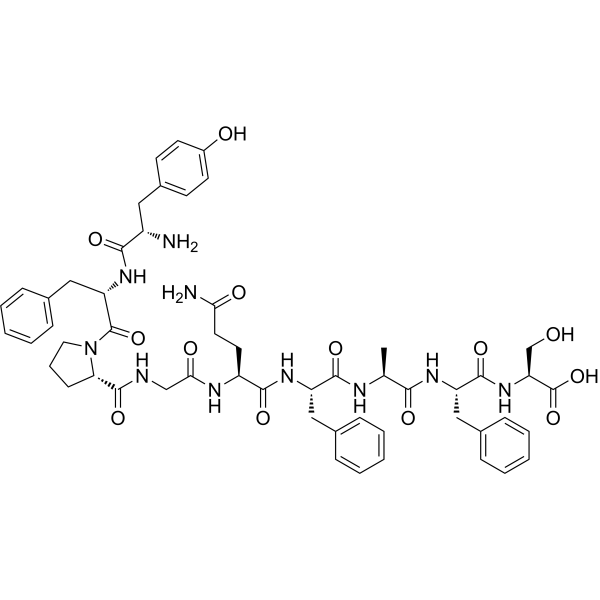
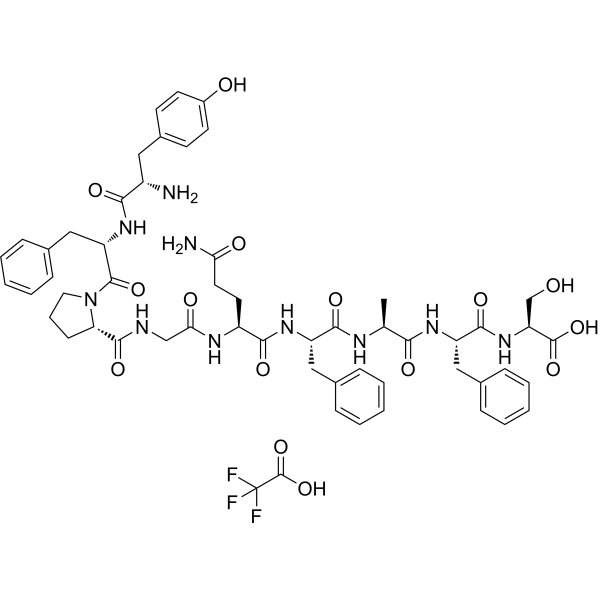
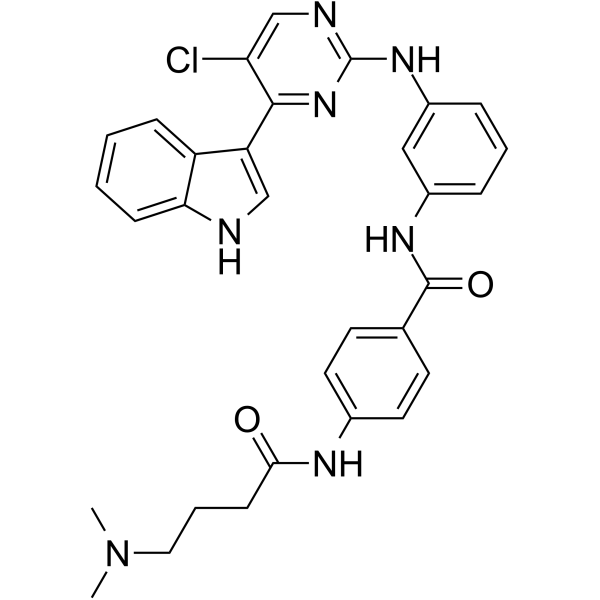
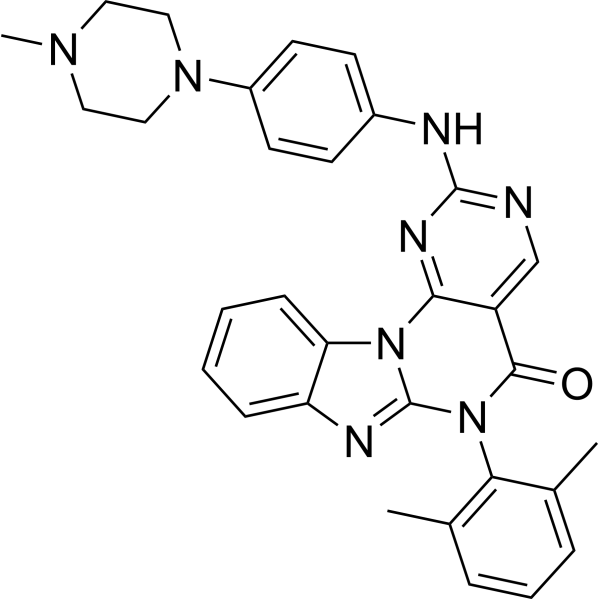
1. Search Result
Search Result
Results for "

1-42

" in MedChemExpress (MCE) Product Catalog:

302

Inhibitors & Agonists

1

Screening Libraries

3

Fluorescent Dye

3

Biochemical Assay Reagents

60

Peptides

10

Inhibitory Antibodies

22

Natural
Products

10

Recombinant Proteins

11

Isotope-Labeled Compounds

13

Antibodies

3

Click Chemistry

20

Oligonucleotides

1

GMP Molecules

Cat. No. Product Name Target Research Areas Chemical Structure
  • HY-NP142

    MA-BSA

    Biochemical Assay Reagents Neurological Disease
    Methamphetamine-BSA is a protein consists of Methamphetamine and Bovine Serum Albumin (BSA). Methamphetamine-BSA is an antigen to generate specific antibodies for the detection of Methamphetamine in biological samples .
    Methamphetamine-BSA
  • HY-P1363A
    β-Amyloid (1-42), human
    Maximum Cited Publications
    24 Publications Verification

    Amyloid β-peptide (1-42) (human)

    Amyloid-β Neurological Disease
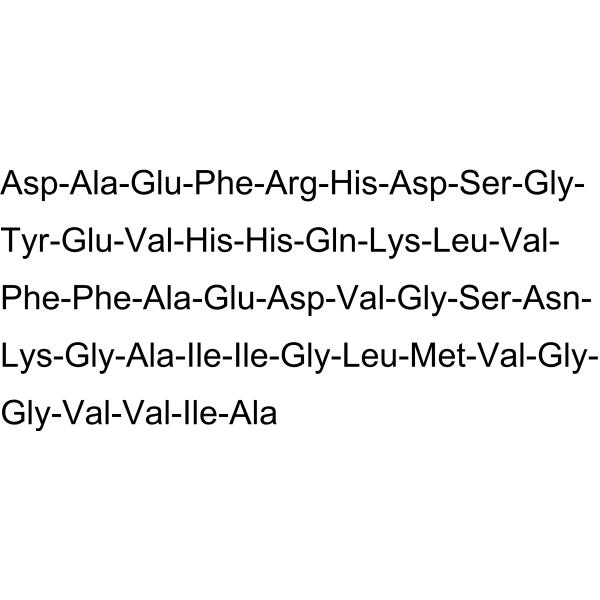
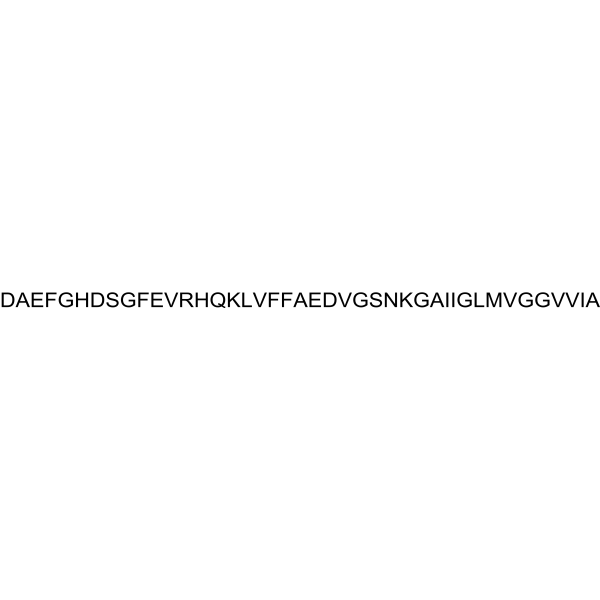
    β-Amyloid (1-42) (Amyloid β-peptide (1-42)), human, a 42-amino acid peptide that has not been treated with HFIP, is a brain-penetrant amyloid protein fragment, which can be used in research on Alzheimer's disease and Down’s syndrome. β-Amyloid (1-42), human remaining as a monomer exhibits antioxidant and neuroprotective effects. β-Amyloid (1-42), human, after being monomericized by HFIP and dissolved in DMSO to form the stock solution, on the one hand, can form soluble oligomers (AβOs) when incubated at 4 °C, which have synaptic toxicity and neurotoxicity; on the other hand, it can be incubated at 37 °C to form insoluble fibrils, with lower neurotoxicity, and participating in the oxidative damage process. Aβ42 oligomers bind to various neuronal surface receptors (such as PrPc, mGluR5, NMDA receptors, etc.), triggering oxidative stress, calcium homeostasis imbalance, and synaptic toxicity via activating downstream signaling pathways, leading to neuronal dysfunction and death .
    β-Amyloid (1-42), human
  • HY-P1363
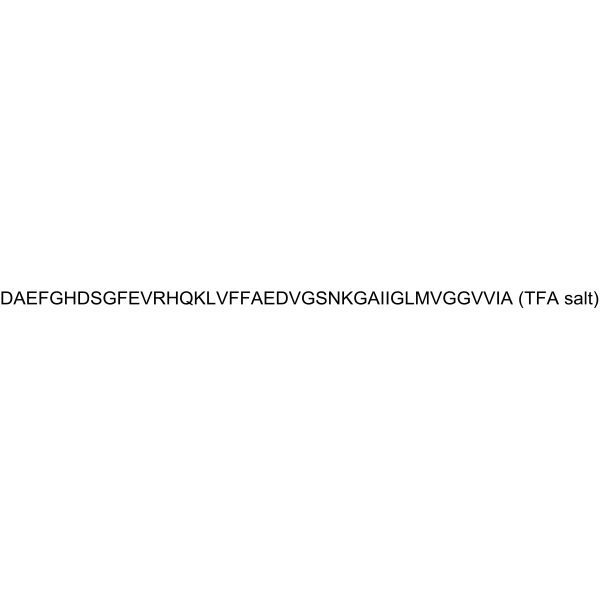
    β-Amyloid (1-42), human TFA
    Maximum Cited Publications
    24 Publications Verification

    Amyloid β-peptide (1-42) (human) TFA

    Amyloid-β Neurological Disease
    β-Amyloid (1-42) (Amyloid β-peptide (1-42), human TFA, a 42-amino acid peptide that has not been treated with HFIP, is a brain-penetrant amyloid protein fragment, which can be used in research on Alzheimer's disease and Down’s syndrome. β-Amyloid (1-42), human TFA remaining as a monomer exhibits antioxidant and neuroprotective effects. β-Amyloid (1-42), human TFA, after being monomericized by HFIP and dissolved in DMSO to form the stock solution, on the one hand, can form soluble oligomers (AβOs) when incubated at 4 °C, which have synaptic toxicity and neurotoxicity; on the other hand, it can be incubated at 37 °C to form insoluble fibrils, with lower neurotoxicity, and participating in the oxidative damage process. Aβ42 oligomers bind to various neuronal surface receptors (such as PrPc, mGluR5, NMDA receptors, etc.), triggering oxidative stress, calcium homeostasis imbalance, and synaptic toxicity via activating downstream signaling pathways, leading to neuronal dysfunction and death .
    β-Amyloid (1-42), human TFA
  • HY-P1363B
    β-Amyloid (1-42), human, HFIP-treated
    Maximum Cited Publications
    24 Publications Verification

    Amyloid-β Neurological Disease
    β-Amyloid (1-42), human, HFIP-treated, a 42-amino acid peptide that has been treated with HFIP from β-Amyloid (1-42), human (HY-P1363A), is a brain-penetrant amyloid protein fragment, which can be used in research on Alzheimer's disease and Down’s syndrome. β-Amyloid (1-42), human, HFIP-treated remaining as a monomer exhibits antioxidant and neuroprotective effects. β-Amyloid (1-42), human, HFIP-treated, after being dissolved in DMSO to form the stock solution, on the one hand, can form soluble oligomers (AβOs) when incubated at 4°C, which have synaptic toxicity and neurotoxicity; on the other hand, it can be incubated at 37°C to form insoluble fibrils, with lower neurotoxicity, and participating in the oxidative damage process. Aβ42 oligomers bind to various neuronal surface receptors (such as PrPc, mGluR5, NMDA receptors, etc.), triggering oxidative stress, calcium homeostasis imbalance, and synaptic toxicity via activating downstream signaling pathways, leading to neuronal dysfunction and death .
    β-Amyloid (1-42), human, HFIP-treated
  • HY-P1388
    β-Amyloid (1-42), (rat/mouse)
    5+ Cited Publications

    Amyloid β-peptide (1-42) (rat/mouse)

    Amyloid-β Neurological Disease
    β-Amyloid (1-42), (rat/mouse) is a 42-aa peptide, shows cytotoxic effect on acute hippocampal slices, and used in the research of Alzheimer's disease.
    β-Amyloid (1-42), (rat/mouse)
  • HY-139559

    ORN-0829; TS-142

    Orexin Receptor (OX Receptor) Neurological Disease
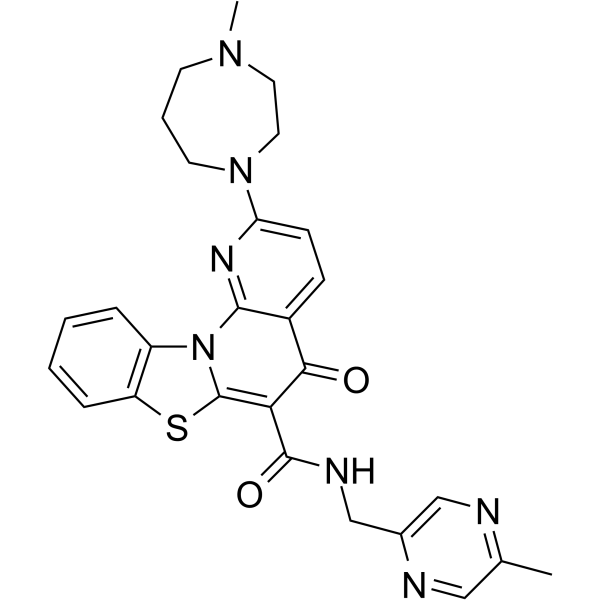
    Vornorexant (ORN-0829; TS-142) is a potent dual OX1R and OX2R antagonist with IC50 values of 1.05 nM and 1.27 nM, respectively. Vornorexant exhibits potent sleep-promoting effects in vivo and can be used for insomnia research research.
    Vornorexant
  • HY-P1362
    β-Amyloid (42-1), human
    1 Publications Verification

    Amyloid β Peptide (42-1)(human)

    Amyloid-β Neurological Disease
    β-Amyloid (42-1), human is the inactive form of Amyloid β Peptide (1-42). Its active form, β-Amyloid (1-42), may play a key role in the pathogenesis of Alzheimer's disease .
    β-Amyloid (42-1), human
  • HY-132580
    Tofersen
    2 Publications Verification

    BIIB067; ISIS-SOD1Rx; ISIS 333611

    SOD Neurological Disease
    Tofersen (BIIB067) is an antisense oligonucleotide and SOD1 mRNA inhibitor with an IC50 of 320 pM. Tofersen mediates RNase H-dependent degradation of SOD1 mRNA to reduce SOD1 protein levels in cerebrospinal fluid and serum. Tofersen downregulates cerebrospinal fluid neurofilament light chain, neurofilament heavy chain, amyloid-beta 1-40, amyloid-beta 1-42, neuropeptide Y, ubiquitin C-terminal hydrolase L1, neuropentraxins 1, 2, R, corticotropin-releasing hormone, IL-15, and serum neurofilament light chain, neurofilament heavy chain. Tofersen can be used for the research of superoxide dismutase 1-associated amyotrophic lateral sclerosis .
    Tofersen
  • HY-P1363F3

    5-FAM-Amyloid β-peptide (1-42) (human) Tris

    Amyloid-β Neurological Disease
    5-FAM-β-Amyloid (1-42), human (5-FAM-Amyloid β-peptide (1-42) (human) TFA is a5-FAM labeled β-Amyloid (1-42), human TFA (HY-P1363).
    5-FAM-β-Amyloid (1-42), human Tris
  • HY-100398
    PF-04979064
    2 Publications Verification

    PI3K mTOR Cancer
    PF-04979064 is a potent and selective PI3K/mTOR dual kinase inhibitor with Kis of 0.13 nM and 1.42 nM for PI3Kα and mTOR, respectively.
    PF-04979064
  • HY-P5096

    Amyloid-β Neurological Disease
    FITC-β-Ala-Amyloid β-Protein (1-42) is a FITC tagged Aβ1-42 peptide. Aβ1-42 plays a key role in the pathogenesis of Alzheimer’s disease .
    FITC-β-Ala-Amyloid β-Protein (1-42)
  • HY-P3908

    Amyloid-β Neurological Disease
    FITC-β-Ala-Amyloid β-Protein (1-42) ammonium is a FITC tagged Aβ1-42 peptide. Aβ1-42 plays a key role in the pathogenesis of Alzheimer’s disease .
    FITC-β-Ala-Amyloid β-Protein (1-42) ammonium
  • HY-P990195

    MHC Others
    Anti-Mouse MHC Class I (H-2) Antibody (M1/42.3.9.8) is a rat-derived IgG2a κ type antibody inhibitor, targeting to mouse MHC Class I. Anti-Mouse MHC Class I (H-2) Antibody (M1/42.3.9.8) reacts with the mouse H-2 MHC class I alloantigen (all haplotypes). Anti-Mouse MHC Class I (H-2) Antibody (M1/42.3.9.8) can be used for the flow cytometry and immunofluorescence experiments .
    Anti-Mouse MHC Class I (H-2) Antibody (M1/42.3.9.8)
  • HY-15528
    kb NB 142-70
    2 Publications Verification

    PKD Cancer
    kb NB 142-70 is a potent PKD inhibitor, with IC50s of 28.3, 58.7 and 53.2 nM for PKD1, PKD2, and PKD3, respectively. kb NB 142-70 also has antitumor activity.
    kb NB 142-70
  • HY-P1363F1

    Biotin-amyloid β-peptide (1-42) (human) TFA

    Amyloid-β Neurological Disease
    Biotin-β-Amyloid (1-42), human TFA (Biotin-Amyloid β-Peptide (1-42) (human) TFA) is the botin labeled β-Amyloid (1-42), human TFA (HY-P1363). β-Amyloid (1-42), human TFA is a 42-amino acid peptide which plays a key role in the pathogenesis of Alzheimer disease .
    Biotin-β-Amyloid (1-42), human TFA
  • HY-W127558

    Amyloid-β Neurological Disease
    Cholesterol-PEG 600 is a synthetic cholesterol derivative and also a (1-42) binder. Cholesterol-PEG 600 promotes the fibrillogenesis of (1-42). Cholesterol-PEG 600 is applicable to the research of Alzheimer's disease .
    Cholesterol-PEG 600
  • HY-P1388A

    Amyloid β-peptide (1-42) (rat/mouse) TFA

    Amyloid-β Neurological Disease
    β-Amyloid (1-42), (rat/mouse) TFA is a 42-aa peptide, shows cytotoxic effect on acute hippocampal slices, and used in the research of Alzheimer's disease.
    β-Amyloid (1-42), (rat/mouse) TFA
  • HY-P3579

    GIP (1-42), porcine

    Insulin Receptor Metabolic Disease
    Gastric Inhibitory Peptide (GIP (1-42)), porcine is a porcine glucose-dependent insulinotropic polypeptide and inhibitor of pentagastrin-stimulated gastric acid secretion. Gastric Inhibitory Peptide, porcine stimulates endogenous somatostatin release. Gastric Inhibitory Peptide, porcine acts in a dose- and time-dependent manner in conscious, chronic gastric fistula-equipped rats .
    Gastric Inhibitory Peptide, porcine
  • HY-P3688A

    Aβ (1-38) TFA; Aβ38 TFA

    Amyloid-β Neurological Disease
    β-Amyloid (1-38) (Aβ (1-38)) TFA is a β-Amyloid (Aβ) peptide. β-Amyloid (1-38) TFA interferes with the conversion of Aβ(1-42) to a β-sheet-rich aggregate. β-Amyloid (1-38)TFA reverses the negative impact of Aβ(1-42) on long-term potentiation in acute hippocampal slices and on membrane conductance in primary neurons, and mitigates an Aβ(1-42) phenotype in Caenorhabditis elegans .
    β-Amyloid (1-38) TFA
  • HY-105252A

    Amyloid-β Neurological Disease
    BF 227 is a candidate for an amyloid imaging probe for PET, with a Ki of 4.3 nM for Aβ1-42 fibrils.
    BF 227
  • HY-P5905

    Citrullinated Aβ (1-42); Citrullinated Aβ42

    Amyloid-β Neurological Disease
    Citrullinated amyloid-β (1-42) peptide (human) (Citrullinated Aβ (1-42)) is a modified form of β-Amyloid (1-42) (HY-P1363) with a citrullination at the Arg5 site. Compared to the unmodified β-Amyloid (1-42), its formation of soluble low-molecular-weight oligomers is enhanced, the rate of fibril formation is reduced, and like unmodified Aβ42, it forms protofibrils comprised of parallel β-sheets .
    Citrullinated amyloid-β (1-42) peptide (human)
  • HY-P4867A

    Amyloid-β Neurological Disease
    β Amyloid (1-42) (scrambled) TFA is a negative control of β-Amyloid (1-42), human TFA (HY-P1363) .
    β Amyloid (1-42) (scrambled) TFA
  • HY-N3883

    Autophagy Neurological Disease Cancer
    Euxanthone, a xanthone derivative, attenuates Aβ1-42-induced oxidative stress and apoptosis by triggering autophagy. Euxanthone exhibits anti-neoplastic and neuroprotective activities .
    Euxanthone
  • HY-110259
    HFI-142
    1 Publications Verification

    Aminopeptidase Neurological Disease
    HFI-142 is an insulin-regulated aminopeptidase (IRAP) inhibitor with a Ki of 2.01 μM .
    HFI-142
  • HY-148542

    SD-142

    Endogenous Metabolite Cardiovascular Disease Cancer
    EpoY (SD-142) acts as an irreversible inhibitor of the brain's primary tubulin tyrosine carboxypeptidase (TCP), a complex formed by vasohibin-1 (VASH1) and the small vasohibin binding protein (SVBP). By inhibiting TCP with an IC50 value of approximately 500 nM, EpoY effectively decreases levels of detyrosinated alpha-tubulin, which is crucial for microtubule dynamics and neuronal differentiation. This inhibition leads to significant differentiation defects and has been linked to underlying issues associated with cancer and cardiomyopathies.
    EpoY
  • HY-12994

    MDT-637

    RSV Infection
    MDT-637 (VP 14637) is a novel respiratory syncytial virus (RSV) fusion inhibitor with an IC50 of 1.42 ng/mL.
    VP-14637
  • HY-160831
    PQQ-trimethylester
    1 Publications Verification

    PQQ-TME

    α-synuclein Neurological Disease
    PQQ-trimethylester (PQQ-TME) is a synthetic compound that is a trimethylester derivative of pyrroloquinoline quinone (PQQ). PQQ-trimethylester has twice the blood-brain barrier permeability of PQQ (HY-100196) in vitro. In addition, PQQ-trimethylester shows strong inhibitory activity against α-synuclein, amyloid β1-42 (Aβ1-42) and prion protein fibrillation. PQQ-trimethylester can be used in the study of neurodegenerative diseases .
    PQQ-trimethylester
  • HY-150003

    Cholinesterase (ChE) Amyloid-β Neurological Disease
    Aβ1-42 aggregation inhibitor 1 inhibits AChE (acetylcholinesterase) and BuChE (butyrylcholinesterase) with the IC50 value of 2.64 μM and 1.29 μM, respectively. Aβ1-42 aggregation inhibitor 1 inhibits self-mediated Aβ1-42 aggregation by 51.29% at a concentration of 25 μM. Aβ1-42 aggregation inhibitor 1 has the potential for the research of anti-Alzheimer's disease .
    Aβ1–42 aggregation inhibitor 1
  • HY-P4867

    Amyloid-β Neurological Disease
    β Amyloid (1-42) (scrambled) is a negative control of β-Amyloid (1-42), human (HY-P1363A) .
    β Amyloid (1-42) (scrambled)
  • HY-P1363S

    Amyloid β-peptide-15N (1-42) (human) TFA

    Amyloid-β Neurological Disease
    β-Amyloid- 15N (1-42), human (TFA) is the 15N-labledβ-Amyloid (1-42) (TFA). β-Amyloid (1-42), human TFA (Amyloid β-Peptide (1-42) (human) TFA) is a 42-amino acid peptide which plays a key role in the pathogenesis of Alzheimer disease .
    β-Amyloid-15N (1-42), human TFA
  • HY-R00277

    MicroRNA Cancer
    hsa-miR-142-5p mimics are small, chemically synthesized double-stranded RNAs that mimic endogenous miRNAs and enable miRNA functional analysis by up-regulation of miRNA activity.
    hsa-miR-142-5p mimic
    hsa-miR-142-5p mimic
  • HY-RI00276

    MicroRNA Cancer
    hsa-miR-142-3p inhibitors are chemically-modified oligonucleotides that hybridize with mature miRNAs. The miRNA inhibitors have full-length nucleotide 2'-methoxy modification. The miRNA inhibitors strongly compete with mature miRNAs to prevent the complementary pairing of miRNAs and their target genes, thereby inhibiting miRNAs from functioning.
    hsa-miR-142-3p inhibitor
    hsa-miR-142-3p inhibitor
  • HY-144389

    Cholinesterase (ChE) Amyloid-β Neurological Disease
    hAChE/Aβ1-42-IN-1 (Compound 16) is a potent inhibitor of hAChE and Aβ1-42 aggregation. hAChE/Aβ1-42-IN-1 shows acceptable relative safety upon hepG2 cell line and excellent BBB penetration with wide safety margin. hAChE/Aβ1-42-IN-1 has the potential for the research of Alzheimer disease (AD) .
    hAChE/Aβ1-42-IN-1
  • HY-122610

    Natriuretic Peptide Receptor (NPR) Cardiovascular Disease
    VUT-MK142 is a potent new cardiomyogenic synthetic agent promoting the differentiation of pre-cardiac mesoderm into cardiomyocytes, which may be useful to differentiate stem cells into cardiomyocytes for cardiac repair .
    VUT-MK142
  • HY-139865

    Apoptosis Cancer
    142I5 is a potent ML-IAP Lys-covalent inhibitor with an IC50 value of 11 nM.
    142I5
  • HY-R00276

    MicroRNA Cancer
    hsa-miR-142-3p mimics are small, chemically synthesized double-stranded RNAs that mimic endogenous miRNAs and enable miRNA functional analysis by up-regulation of miRNA activity.
    hsa-miR-142-3p mimic
    hsa-miR-142-3p mimic
  • HY-P3688

    Aβ (1-38); Aβ38

    Amyloid-β Neurological Disease
    β-Amyloid (1-38) (Aβ (1-38)) is a β-Amyloid (Aβ) peptide. β-Amyloid (1-38) interferes with the conversion of Aβ(1-42) to a β-sheet-rich aggregate. β-Amyloid (1-38) reverses the negative impact of Aβ(1-42) on long-term potentiation in acute hippocampal slices and on membrane conductance in primary neurons, and mitigates an Aβ(1-42) phenotype in Caenorhabditis elegans .
    β-Amyloid (1-38)
  • HY-P4391

    Amyloid-β Neurological Disease
    (Asp37)-Amyloid β-Protein (1-42) is the G37D mutant of wild-type Amyloid-beta (1-42) peptide .
    (Asp37)-Amyloid β-Protein (1-42)
  • HY-141661

    Amyloid-β Neurological Disease
    Aβ/tau aggregation-IN-1 is a potent Aβ1-42 β-sheets formation and tau aggregation inhibitor. The KD values of Aβ/tau aggregation-IN-1 with Aβ1-42 and tau are 160 μM and 337 μM, respectively. Aβ/tau aggregation-IN-1 can permeate the blood-brain barrier .
    Aβ/tau aggregation-IN-1
  • HY-P4886A

    Amyloid-β Neurological Disease
    Amyloid β-Protein (3-42) TFA is a precursor of Pyr peptide. Pyroglutamic acid-modified Aβ (pEAβ) (3-42) is the core of the amyloid plaque in Alzheimer's disease. pEAβ (3-42) accelerates the aggregation of Aβ(1-42), while Aβ(1-42) significantly slows down the primary and secondary nucleation of pEAβ(3-42).
    Amyloid β-Protein (3-42) TFA
  • HY-P1388F

    FITC-Ahx-Amyloid β-peptide (1-42) (rat/mouse) tris

    Amyloid-β Neurological Disease
    FITC-Ahx-β-Amyloid (1-42), (rat/mouse) (tris) is a fluorescently labeled (FITC) form of β-Amyloid (1-42), (rat/mouse) (HY-P1388), which can be used in Alzheimer's disease-related research, such as aggregation, fiber formation, cellular uptake or imaging experiments. This product is provided in the form of Tris salt.
    FITC-Ahx-β-Amyloid (1-42), (rat/mouse) tris
  • HY-P3859

    Amyloid-β Neurological Disease
    Cys-Gly-Lys-Arg-Amyloid β-Protein (1-42) is a peptide fragment of amyloid β-protein (Aβ). Cys-Gly-Lys-Arg-Amyloid β-Protein (1-42) can be used in research of Alzheimer's disease .
    Cys-Gly-Lys-Arg-Amyloid β-Protein (1-42)
  • HY-P1363S1

    Isotope-Labeled Compounds Amyloid-β Neurological Disease
    β-Amyloid (1-42), human, Ala( 13C3, 15N) TFA is the 13C and 15N-labeled β-Amyloid (1-42), human (HY-P1363A). β-Amyloid (1-42) (Amyloid β-peptide (1-42)), human, a 42-amino acid peptide that has not been treated with HFIP, is a brain-penetrant amyloid protein fragment, which can be used in research on Alzheimer's disease and Down’s syndrome. β-Amyloid (1-42), human remaining as a monomer exhibits antioxidant and neuroprotective effects. β-Amyloid (1-42), human, after being monomericized by HFIP and dissolved in DMSO to form the stock solution, on the one hand, can form soluble oligomers (AβOs) when incubated at 4 °C, which have synaptic toxicity and neurotoxicity; on the other hand, it can be incubated at 37 °C to form insoluble fibrils, with lower neurotoxicity, and participating in the oxidative damage process. Aβ42 oligomers bind to various neuronal surface receptors (such as PrPc, mGluR5, NMDA receptors, etc.), triggering oxidative stress, calcium homeostasis imbalance, and synaptic toxicity via activating downstream signaling pathways, leading to neuronal dysfunction and death .
    β-Amyloid (1-42), human, Ala(13C3,15N) TFA
  • HY-P3846

    Amyloid-β Neurological Disease
    (Glu20)-Amyloid β-Protein (1-42) is a slower fibrillizing variant of amyloid β-protein (Aβ). The Glu20 mutation reduces the aggregation propensity of Aβ42 and prevents accumulation of the slowly fibrillizing peptide. Amyloid β-protein is the primary component of both vascular and parenchymal amyloid deposits in Alzheimer's disease .
    (Glu20)-Amyloid β-Protein (1-42)
  • HY-134779

    PD-1/PD-L1 Cancer
    BMS-142 is a PDL1 inhibitor (IC50 = 96.7 nM) (kd = 13.2 nM). BMS-142 can reduce the survival rate of acute T-lymphoblastic leukemia cells and ovarian cancer cells. BMS-142 can be used in research on cancers such as acute T-lymphoblastic leukemia and ovarian cancer .
    BMS-142
  • HY-P990411

    Transmembrane Glycoprotein Inflammation/Immunology
    Anti-F3/Factor III/Tissue Factor/CD142 Antibody is a CHO-expressed human antibody targeting F3/Factor III/Tissue Factor/CD142. The Anti-F3/Factor III/Tissue Factor/CD142 Antibody has a huIgG4SP type heavy chain and a huκ type light chain, with a predicted molecular weight (MW) of 150 kDa. The isotype control for the Anti-F3/Factor III/Tissue Factor/CD142 Antibody can be referred to as Human IgG4 kappa, Isotype Control (HY-P99003).
    Anti-F3/Factor III/Tissue Factor/CD142 Antibody
  • HY-P990966

    JR-142

    GHR IGF-1R Others
    Redalsomatropin alfa (JR-142) is a recombinant long-acting growth hormone. Redalsomatropin alfa extends its half-life through fusion with modified serum albumin. Redalsomatropin alfa is well-tolerated and can maintain IGF-1 levels. Redalsomatropin alfa can be used in research related to growth hormone deficiency .
    Redalsomatropin alfa
  • HY-P3860

    Amyloid-β Neurological Disease
    Biotinyl-Amyloid β-Protein (1-42) ammonium is a biotinylated Amyloid β-Protein (1-42) (HY-P1363). Biotinyl-Amyloid β-Protein (1-42) ammonium can be used for the research of Aβ1-42 converts to Aβ1-40 in brain .
    Biotinyl-Amyloid β-Protein (1-42) ammonium
  • HY-144324

    Cholinesterase (ChE) Neurological Disease
    AChE-IN-6 (Compound 12a) is an optimal multifunctional ligand with significant inhibition of AChE (EeAChE, IC50 = 0.20 μM; HuAChE, IC50 = 37.02 nM) and anti-Aβ activity (IC50 = 1.92 μM for self-induced Aβ1-42 aggregation; IC50 = 1.80 μM for disaggregation of Aβ1-42 fibrils; IC50 = 2.18 μM for Cu2+-induced Aβ1-42 aggregation; IC50 = 1.17 μM for disaggregation of Cu2+-induced Aβ1-42 fibrils). AChE-IN-6 has the potential for the research of Alzheimer's disease .
    AChE-IN-6
  • HY-RI00277

    MicroRNA Cancer
    hsa-miR-142-5p inhibitors are chemically-modified oligonucleotides that hybridize with mature miRNAs. The miRNA inhibitors have full-length nucleotide 2'-methoxy modification. The miRNA inhibitors strongly compete with mature miRNAs to prevent the complementary pairing of miRNAs and their target genes, thereby inhibiting miRNAs from functioning.
    hsa-miR-142-5p inhibitor
    hsa-miR-142-5p inhibitor

Inquiry Online

Your information is safe with us. * Required Fields.

Salutation


Country or Region *

Applicant Name *


Organization Name *

Department *


Email Address *


Product Name *

Cat. No.


Requested quantity *

Phone Number *


Remarks

Inquiry Online

Inquiry Information

Product Name:
Cat. No.:
Quantity:
MCE Japan Authorized Agent:

