10 Results for "

5hmC

" in MedChemExpress (MCE) Product Catalog:
Products (10)

10 Results for "5hmC" in MCE Product Catalog:

2
2 Cited Publications
Cat. No.: HY-W008091
CAS No.: 554-01-8
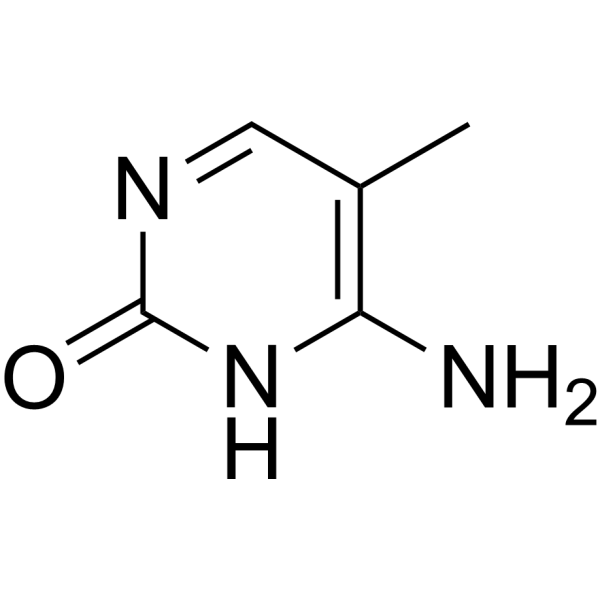
5-Methylcytosine is a well-characterized DNA modification in prokaryotes and eukaryotes. 5-Methylcytosine forms symmetrical methylation on CpG dinucleotides in DNA, stabilizes tRNA/rRNA structure in RNA, and affects mRNA translation. 5-Methylcytosine can be oxidized to generate 5hmC, 5fC, and 5caC. 5-Methylcytosine can be used in epigenetics, developmental biology, and the study of diseases such as colorectal cancer and hepatocellular carcinoma .
loading...
    loading...
2
2 Cited Publications
Cat. No.: HY-W008091R
CAS No.: 554-01-8
5-Methylcytosine (Standard) is the analytical standard of 5-Methylcytosine (HY-W008091). This product is intended for research and analytical applications. 5-Methylcytosine is a well-characterized DNA modification in prokaryotes and eukaryotes. 5-Methylcytosine forms symmetrical methylation on CpG dinucleotides in DNA, stabilizes tRNA/rRNA structure in RNA, and affects mRNA translation. 5-Methylcytosine can be oxidized to generate 5hmC, 5fC, and 5caC. 5-Methylcytosine can be used in epigenetics, developmental biology, and the study of diseases such as colorectal cancer and hepatocellular carcinoma .
loading...
    loading...
2
2 Cited Publications
Cat. No.: HY-W008091A
CAS No.: 58366-64-6
Research Areas:  

Cancer

5-Methylcytosine hydrochloride is a well-characterized DNA modification in prokaryotes and eukaryotes. 5-Methylcytosine hydrochloride forms symmetrical methylation on CpG dinucleotides in DNA, stabilizes tRNA/rRNA structure in RNA, and affects mRNA translation. 5-Methylcytosine hydrochloride can be oxidized to generate 5hmC, 5fC, and 5caC. 5-Methylcytosine hydrochloride can be used in epigenetics, developmental biology, and the study of diseases such as colorectal cancer and hepatocellular carcinoma .
loading...
    loading...
1
1 Cited Publications
Cat. No.: HY-122258
CAS No.: 116409-29-1
Purity:  99.27%
Target:  

STAT TET Protein

Research Areas:  

Cancer

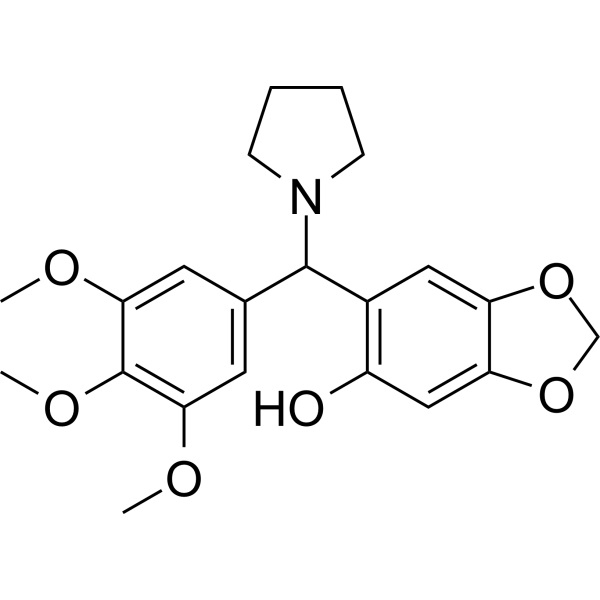
NSC-370284 is a selective inhibitor of ten-eleven translocation 1 (TET1) and 5-hydroxymethylcytosine (5hmC). NSC-370284 significantly inhibits the level of TET1 expression via targets STAT3/5 .
loading...
    loading...
1
1 Cited Publications
Cat. No.: HY-160638
CAS No.: 73768-68-0
Target:  

TET Protein

Research Areas:  

Cancer

NSC-311068 is TET1 inhibitor. NSC-311068 selectively suppress TET1 transcription and 5-hydroxymethylcytosine (5hmC) modification. NSC-311068 represses the level of TET1 expression and the global 5hmC level. NSC-311068 effectively inhibits cell viability in AML cells with high expression of TET1 .
loading...
    loading...
Cat. No.: HY-W018324
CAS No.: 1123-95-1
Synonyms: 5hmC
5-Hydroxymethylcytosine (5hmC) is an oxidized forms of 5-methylcytosine (5mC) in mammalian DNA. 5-Hydroxymethylcytosine is produced from 5mC in an enzymatic pathway involving three 5mC oxidases, Ten-eleven translocation (TET)1, TET2, and TET3. The conversion of 5mC into 5hmC can be the first step in a pathway leading towards DNA demethylation. 5-Hydroxymethylcytosine is associated with gene transcription and frequently used as a mark to investigate dynamic DNA methylation conversion during mammalian development. 5-Hydroxymethylcytosine can be used for the study of non-small cell lung cancer (NSCLC), neurodegenerative diseases (Alzheimer’s, Parkinson’s) and hematological malignancies (acute myeloid leukemia, myelodysplastic syndromes) .
loading...
    loading...
Cat. No.: HY-W008091S
CAS No.: 1219795-15-9
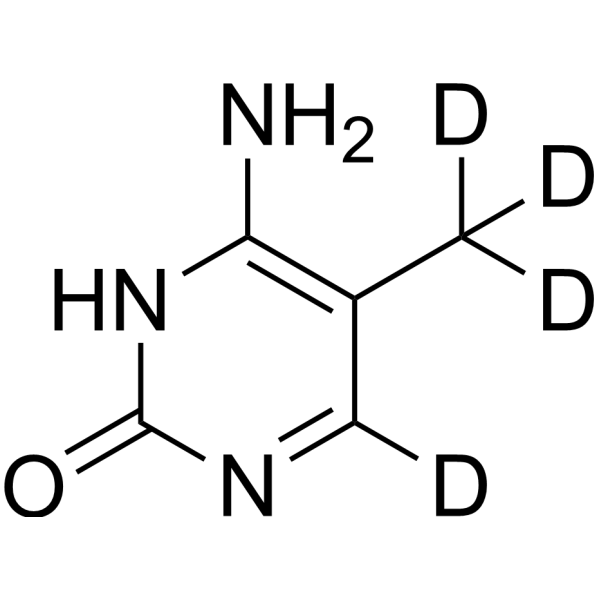
5-Methylcytosine-d4 is the deuterium labeled 5-Methylcytosine (HY-W008091). 5-Methylcytosine is a well-characterized DNA modification in prokaryotes and eukaryotes. 5-Methylcytosine forms symmetrical methylation on CpG dinucleotides in DNA, stabilizes tRNA/rRNA structure in RNA, and affects mRNA translation. 5-Methylcytosine can be oxidized to generate 5hmC, 5fC, and 5caC. 5-Methylcytosine can be used in epigenetics, developmental biology, and the study of diseases such as colorectal cancer and hepatocellular carcinoma .
loading...
    loading...
Cat. No.: HY-134902
CAS No.: 537039-67-1
Synonyms: UDP-α-6N3-glucose; 6-Azidoglucose-UDP
Research Areas:  

Others

UDP-6-azido-6-Deoxy-D-Glc (UDP-α-6N3-glucose) is a nucleotide sugar. UDP-α-6 N3-glucoside can be used in the selective labeling of 5-hmC in genomic DNA .
loading...
    loading...
Cat. No.: HY-W018324S
Synonyms: 5hmC-13C,d2
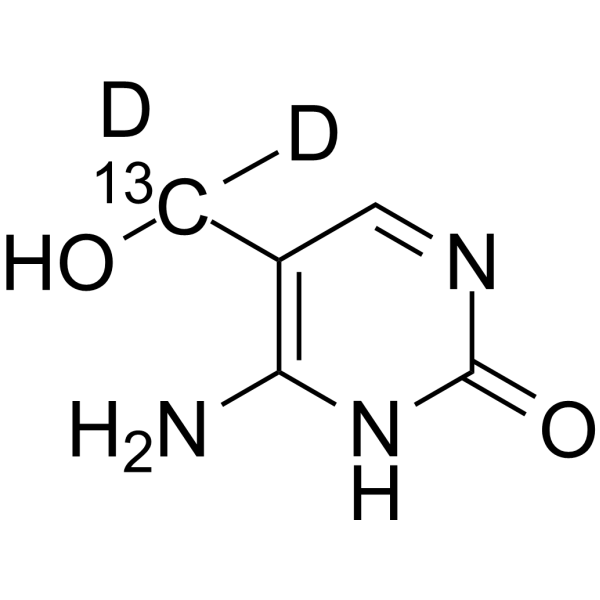
5-Hydroxymethylcytosine- 13C,d2 is the 13C and deuterium labeled 5-Hydroxymethylcytosine (HY-W018324). 5-Hydroxymethylcytosine (5hmC) is an oxidized forms of 5-methylcytosine (5mC) in mammalian DNA. 5-Hydroxymethylcytosine is produced from 5mC in an enzymatic pathway involving three 5mC oxidases, Ten-eleven translocation (TET)1, TET2, and TET3. The conversion of 5mC into 5hmC can be the first step in a pathway leading towards DNA demethylation. 5-Hydroxymethylcytosine is associated with gene transcription and frequently used as a mark to investigate dynamic DNA methylation conversion during mammalian development. 5-Hydroxymethylcytosine can be used for the study of non-small cell lung cancer (NSCLC), neurodegenerative diseases (Alzheimer’s, Parkinson’s) and hematological malignancies (acute myeloid leukemia, myelodysplastic syndromes) .
loading...
    loading...
Cat. No.: HY-E70583
Target:  

TET Protein

Research Areas:  

Others

Recombinant Ten-Eleven Translocase is a recombinant Fe(II)- and α-ketoglutarate-dependent dioxygenase. Recombinant Ten-Eleven Translocase converts 5-methylcytosine (5mC) to 5-hydroxymethylcytosine (5hmC), and then to 5-formylcytosine (5fC) and 5-carboxycytosine (5caC) through a series of oxidation reactions. Then, 5caC is further converted into uracil (U) through the action of a conversion agent or enzyme, and uracil (U) is converted into thymine (T) through PCR, thereby achieving single-base resolution and high-accuracy identification of DNA methylation sites .
loading...
    loading...

