26 Results for "

ADME properties

" in MedChemExpress (MCE) Product Catalog:
Products (26)

26 Results for "ADME properties" in MCE Product Catalog:

8
8 Cited Publications
Cat. No.: HY-12341
CAS No.: 1532593-30-8
Purity:  98.11%
Target:  

Lipoxygenase

Research Areas:  

Inflammation/Immunology

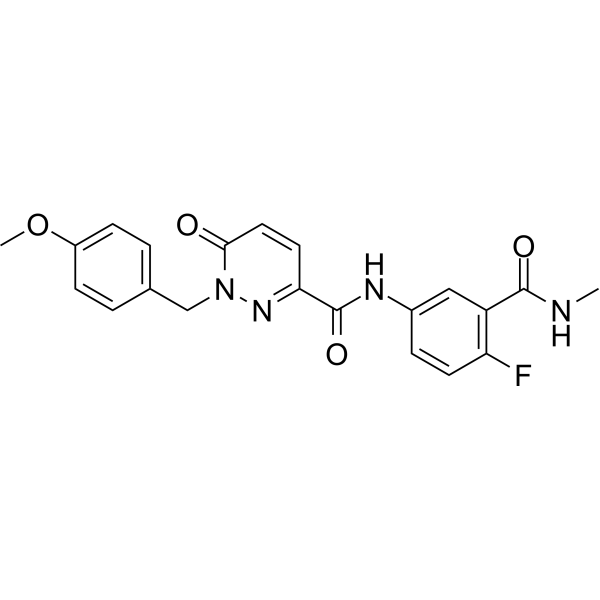
ML355 is a potent and selective inhibitor of 12-Lipoxygenase (12-LOX) with an IC50 of 0.34 μM, shows excellent selectivity over related lipoxygenases and cyclooxygenases, and possesses favorable ADME properties.
loading...
    loading...
Cat. No.: HY-12522
CAS No.: 1436391-86-4
Purity:  99.47%
Synonyms: Aur0101; Auristatin-0101
Research Areas:  

Cancer

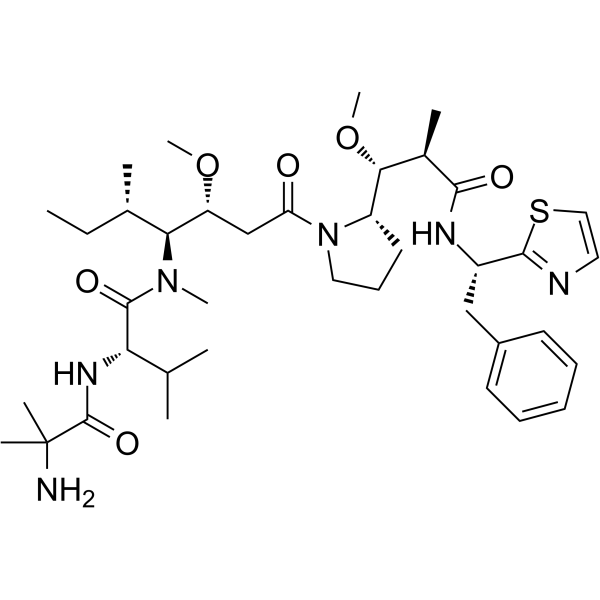
PF-06380101 (Aur0101), an auristatin microtubule inhibitor, is a cytotoxic Dolastatin 10 analogue. PF-06380101 (Aur0101) shows excellent potencies in tumor cell proliferation assays and differential ADME properties when compared to other synthetic auristatin analogues that are used in the preparation of ADCs.
loading...
    loading...
Cat. No.: HY-12410
CAS No.: 1557232-32-2
Purity:  ≥95.0%
Target:  

Itk

Research Areas:  

Inflammation/Immunology

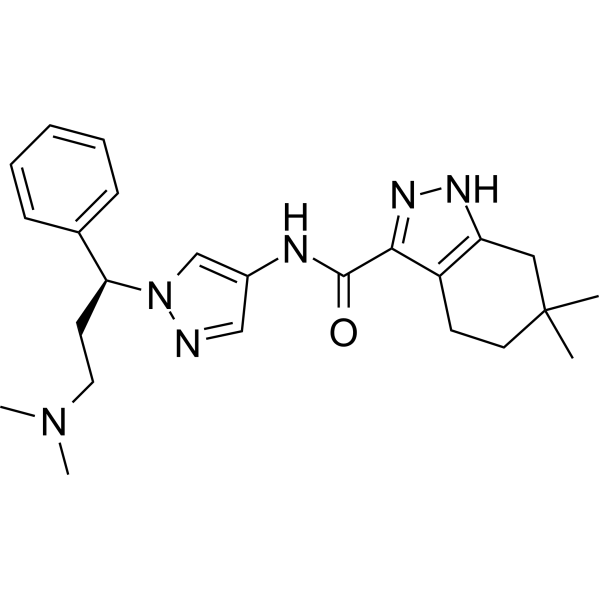
GNE-9822 is a potent, orally active and selective ITK inhibitor with a Ki value of 0.7 nM, and an EC50 value of 354.5 nM. GNE-9822 has good ADME properties. GNE-9822 can be used in research of asthma .
loading...
    loading...
Cat. No.: HY-154630
CAS No.: 25231-21-4
Purity:  99.92%
Research Areas:  

Others

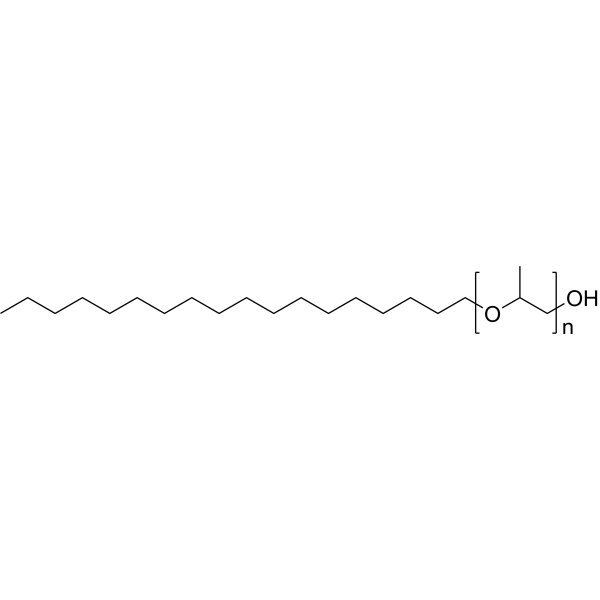
Polyoxypropylene stearyl ether can be used as an excipient, such as surfactant, softener, lubricating, wetting, plasticizing, solubilizing and dispersing properties. Pharmaceutical excipients, or pharmaceutical auxiliaries, refer to other chemical substances used in the pharmaceutical process other than pharmaceutical ingredients. Pharmaceutical excipients generally refer to inactive ingredients in pharmaceutical preparations, which can improve the stability, solubility and processability of pharmaceutical preparations. Pharmaceutical excipients also affect the absorption, distribution, metabolism, and elimination (ADME) processes of co-administered drugs .
loading...
    loading...
Cat. No.: HY-175741
CAS No.: 3094992-69-2
Target:  

Topoisomerase Parasite

Research Areas:  

Infection

IID432 is a potent, orally active, and covalent inhibitor of Trypanosoma cruzi topoisomerase II. IID432 shows an EC50 of 8 nM against T. cruzi intracellular amastigotes, exhibits excellent oral bioavailability (52% in rats), favorable ADME properties, and no S1P pathway modulation. IID432 achieves relapse-free cure in a chronic T. cruzi infection mouse model, can be used for the study of Chagas disease .
loading...
    loading...
Cat. No.: HY-149767
CAS No.: 2882934-64-5
Target:  

SARS-CoV

Research Areas:  

Infection

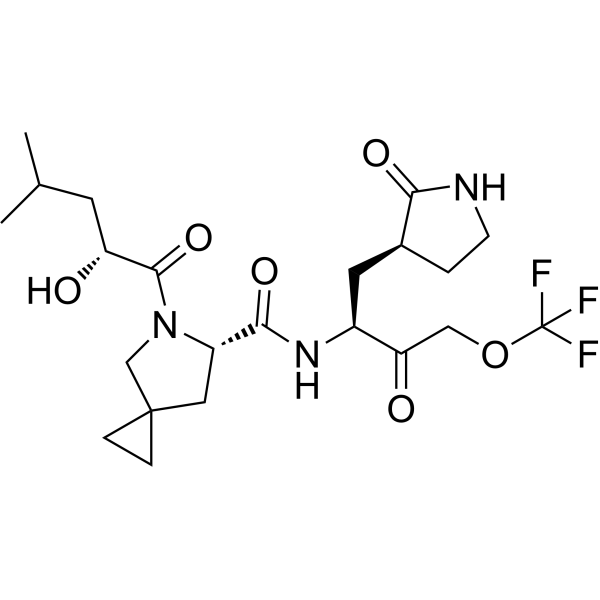
CMX990 is a SARS-CoV-2 3CL protease inhibitor. The EC90s for inhibiting SARS-CoV-2 were 9.6 nM and 101 nM in human bronchial epithelial cells (HBECs) and HeLa-ACE2 cells, respectively. CMX990 has good ADME and pharmacokinetic properties .
loading...
    loading...
Cat. No.: HY-10486
CAS No.: 361444-66-8
Target:  

Opioid Receptor

Research Areas:  

Neurological Disease

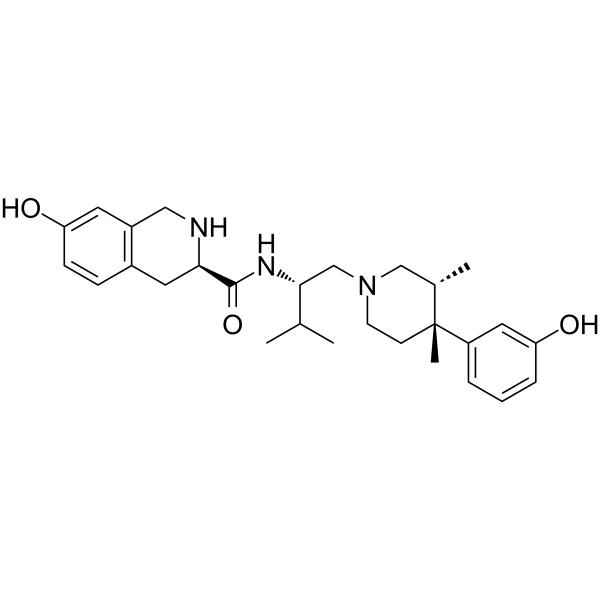
JDTic is a blood-brain barrier-permeable κ-opioid receptor antagonist (Ki=0.02 nM) with favorable in vitro ADME properties. JDTic blocks agonist-mediated Gi and β-arrestin signaling pathways as well as analgesic effects by stabilizing the inactive conformation of hKOR and activating JNK. JDTic may also induce transient asymptomatic ventricular tachycardia. JDTic is widely applicable to studies related to depression, anxiety, stress-induced addictive behaviors, and nicotine withdrawal .
loading...
    loading...
Cat. No.: HY-176287
ARN25657 is a dual-acting D3R/GSK-3β modulator. ARN25657 has both partial D3R agonist activity (EC50 = 15.2 nM, Ki =1.5 nM) and potent GSK-3β inhibitor activity (IC50 = 19.3 nM). ARN25657 exhibits excellent GSK-3β selectivity over FYN, PKA, and CDK5/p35. ARN25657 inhibits P-glycoprotein (P-gP)-mediated acetoxymethyl calcein efflux and improves in vitro ADME properties while maintaining a balanced dual-target profile. ARN25657 is useful for studying bipolar disorder and related neuropsychiatric disorders .
loading...
    loading...
Cat. No.: HY-143295
CAS No.: 2803505-57-7
Target:  

Pim Apoptosis

Research Areas:  

Cancer

Pim-1 kinase inhibitor 1 is a Pim-1 kinase inhibitor with an IC50 of 0.11 μM for Pim-1 kinase. Pim-1 kinase inhibitor 1 shows anticancer activity to several cancer cell lines by promotes cell apoptosis. Pim-1 kinase inhibitor 1 can be used for the research of cancer .
loading...
    loading...
Cat. No.: HY-178171
Target:  

AMPK CDK

Research Areas:  

Neurological Disease

ARUK2010489 (Compound 23) is a potent, selective and brain-penetrant NUAK1 inhibitor with a pIC50 of 8.7. ARUK2010489 also inhibits CDK2, CDK4 and CDK6 activity, with inhibitory rate of 7%, 39% and 26% at 1 μM. ARUK2010489 can be used for the research of neurological disease, such as Alzheimer’s disease (AD) .
loading...
    loading...
Cat. No.: HY-16622A
CAS No.: 1005407-76-0
Target:  

LPL Receptor

Research Areas:  

Others

GSK1842799, an alkyl-substituted biaryl amino alcohol, is a selective S1P1 modulator developed for multiple sclerosis (MS). Upon phosphorylation, GSK1842799-P exhibited subnanomolar S1P1 agonist activity with over 1000-fold selectivity over S1P3. The compound showed good oral bioavailability, rapid in vivo conversion to GSK1842799-P, and significant lymphocyte count reduction at 0.1 mg/kg. It matched FTY720 efficacy at 3 mg/kg in the mouse EAE model and achieved comparable plasma levels to FTY-720 phosphate in cynomolgus monkeys. With favorable ADME, PK/PD properties, and toxicology, GSK1842799 advanced to further clinical development .
loading...
    loading...
Cat. No.: HY-106016
CAS No.: 119229-64-0
Target:  

Cholinesterase (ChE)

Research Areas:  

Others

HP 184 is an acetylcholine release (ChE) stimulator whose ADME properties can be altered by replacing hydrogen with deuterium .
loading...
    loading...
Cat. No.: HY-157041
CAS No.: 3017151-83-3
Target:  

MAGL

Research Areas:  

Cancer

MAGL-IN-10 is areversible monoacylglycerol lipase (MAGL) inhibitor with very good ADME properties and low in vivo toxicity.MAGL-IN-10 can be used for the research ofcancer, neurological disorders and inflammatory pathologies .
loading...
    loading...
Cat. No.: HY-155103
CAS No.: 2961381-94-0
Target:  

Proteasome Parasite

Research Areas:  

Infection

Antitrypanosomal agent 15 (compound 26) is an orally active, brain-penetrant, selective inhibitor against Trypanosoma cruzi proteasome, with an pIC50 of 7.4 and <4 for T. cruzi and human proteasome, respectively. Antitrypanosomal agent 15 has favorable ADME properties and can be used for Chagas disease study .
loading...
    loading...
Cat. No.: HY-178168
Target:  

AMPK CDK

Research Areas:  

Neurological Disease

ARUK2010694 (Compound 20) is a potent and selective NUAK1 inhibitor with a pIC50 of 8.7. ARUK2010694 also inhibits CDK2, CDK4 and CDK6 activity, with inhibitory rate of 13%, 63% and 32% at 1 μM. ARUK2010694 can be used for the research of neurological disease, such as Alzheimer’s disease (AD) .
loading...
    loading...
Cat. No.: HY-147549
CAS No.: 2492436-35-6
Target:  

Parasite

Research Areas:  

Infection

Antitrypanosomal agent 6 (compound 18a) is a potent and antitrypanosomal agent with favorable ADME properties. Antitrypanosomal agent 6 is > 2-fold more potent against Trypanosoma brucei (T. brucei) than Nifurtimox, with an IC50 value of 0.47 μM. Antitrypanosomal agent 6 has strong interaction to DNA and can bind with high selectivity to AT-rich DNA .
loading...
    loading...
Cat. No.: HY-147550
CAS No.: 2492436-38-9
Target:  

Parasite

Research Areas:  

Infection

Antitrypanosomal agent 7 (compound 18c) is a potent and antitrypanosomal agent with favorable ADME properties. Antitrypanosomal agent 7 is > 2-fold more potent against Trypanosoma brucei (T. brucei) than Nifurtimox, with an IC50 value of 0.71 μM. Antitrypanosomal agent 7 has strong interaction to DNA and can bind with high selectivity to AT-rich DNA .
loading...
    loading...
Cat. No.: HY-133031A
CAS No.: 474084-56-5
Research Areas:  

Others

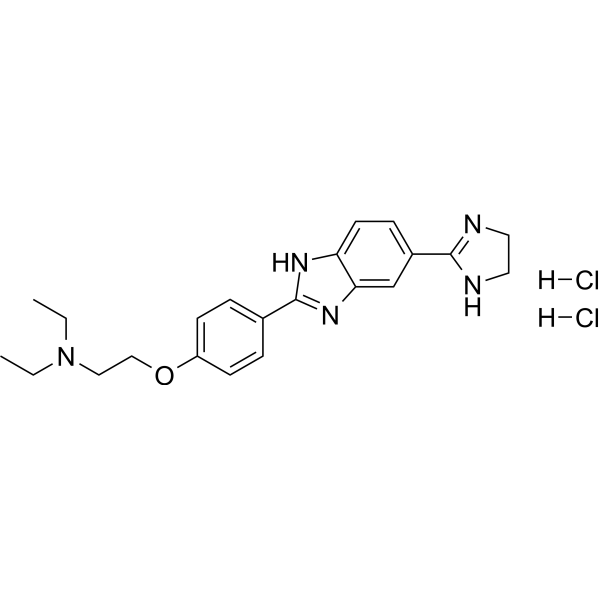
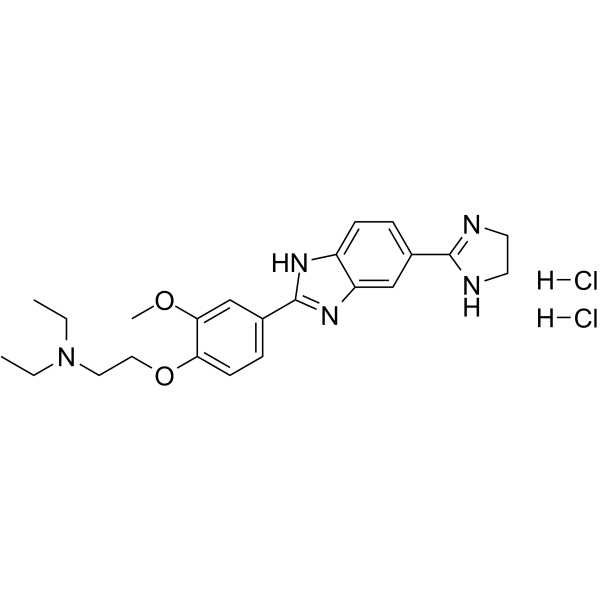
CSV0C018875 hydrochloride is a G9a (EHMT2) inhibitor that inhibits G9a activity. CSV0C018875 can effectively inhibit G9a activity in both enzyme and cell-based assays, and its toxicity is much lower than that of the known G9a inhibitor BIX-01294. CSV0C018875 binds tightly to the active site cavity of G9a, thereby improving the binding firmness and prolonging the residence time of the compound, further enhancing the inhibitory effect of G9a. CSV0C018875 has the potential to improve its ADME (absorption, distribution, metabolism and excretion) and pharmacodynamic properties through further optimization .
loading...
    loading...
Cat. No.: HY-181110
MAO-A-IN-4 is a highly selective and reversible inhibitor of monoamine oxidase A (MAO-A), with an IC50 of 0.06 μM against hMAO-A. MAO-A-IN-4 exhibits anti-inflammatory, antioxidant, neuroprotective, and antidepressant activities. MAO-A-IN-4 possesses favorable ADME properties and is suitable for research related to depression .
loading...
    loading...
Cat. No.: HY-180369
CAS No.: 2694123-92-5
Target:  

SARS-CoV Virus Protease

Research Areas:  

Infection

SIMR-2418 is an effective inhibitor of the main protease (M pro) of SARS-CoV-2, with an IC50 value of 20.7 μM. SIMR-2418 can be used for research on SARS-CoV-2 virus infection .
loading...
    loading...

