14 Results for "

ALK-positive cancers

" in MedChemExpress (MCE) Product Catalog:
Products (14)

14 Results for "ALK-positive cancers" in MCE Product Catalog:

Cat. No.: HY-13464
CAS No.: 1197958-12-5
Purity:  99.94%
Synonyms: Brigatinib analog
Research Areas:  

Cancer

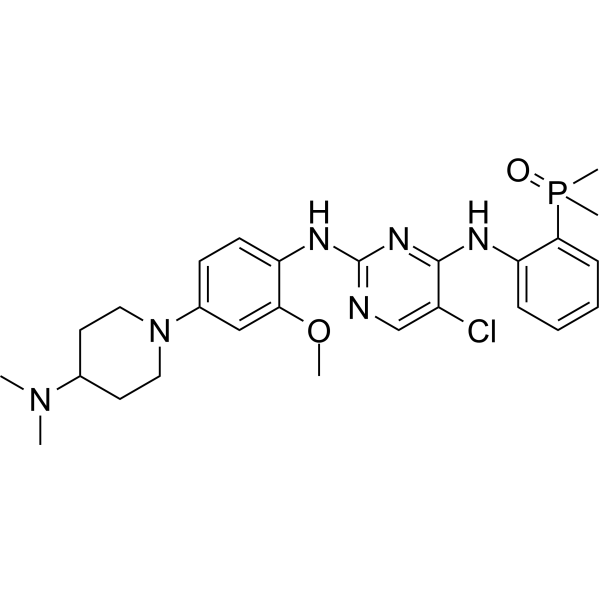
ALK-IN-1 is an orally active, blood-brain barrier-permeable ALK and EGFR inhibitor. ALK-IN-1 binds to and inhibits ALK kinase, ALK fusion proteins, and wild-type and mutant EGFR variants, thereby disrupting their corresponding signaling pathways. ALK-IN-1 can suppress the growth and proliferation of tumor cells and exhibits potential inhibitory activity against mutant EGFR. ALK-IN-1 can be used in the research of non-small-cell lung cancer .
loading...
    loading...
Cat. No.: HY-18030A
CAS No.: 2070009-30-0
Research Areas:  

Cancer

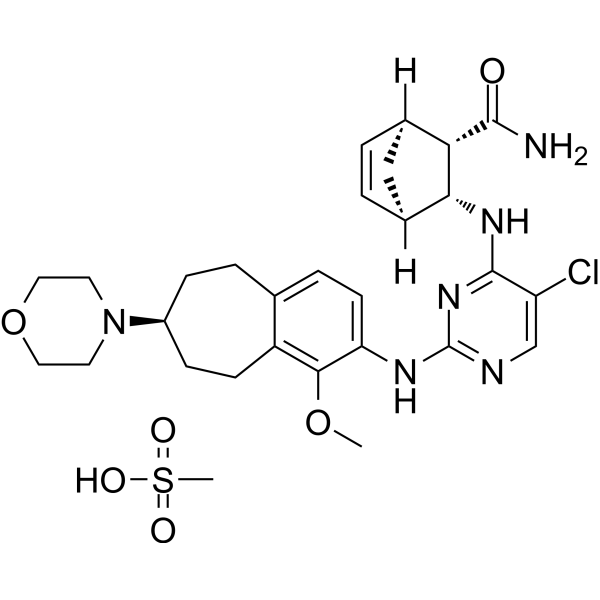
CEP-28122 mesylate salt, a diaminopyrimidine derivative, is a potent, selective, and orally active ALK inhibitor with an IC50 value of 1.9 nM. CEP-28122 mesylate salt has antitumor activity in experimental models of ALK-positive human cancers. CEP-28122 mesylate salt has good pharmacodynamic and pharmacokinetic activity. CEP-28122 mesylate salt can be used for the study of ALK-positive anaplastic large-cell lymphoma (ALCL), non-small cell lung cancer (NSCLC), and neuroblastoma cells .
loading...
    loading...
Cat. No.: HY-18030
CAS No.: 1022958-60-6
Research Areas:  

Cancer

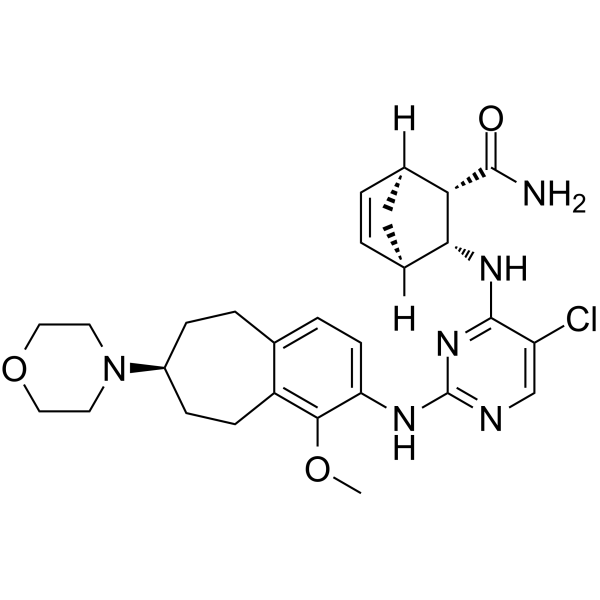
CEP-28122, a diaminopyrimidine derivative, is a potent, selective, and orally active ALK inhibitor with an IC50 value of 1.9 nM. CEP-28122 has antitumor activity in experimental models of ALK-positive human cancers. CEP-28122 has good pharmacodynamic and pharmacokinetic activity. CEP-28122 can be used for the study of ALK-positive anaplastic large-cell lymphoma (ALCL), non-small cell lung cancer (NSCLC), and neuroblastoma cells .
loading...
    loading...
Cat. No.: HY-174368
Synonyms: Pro-BA
Research Areas:  

Cancer

PROTAC EML4-ALK Degrader-1 (Pro-BA) is an orally active EML4-ALK PROTAC degrader that recruits GID4, with a Kd value of 144 nM against human EML4-ALK and a DC50 of 74 nM in H3122 cells. PROTAC EML4-ALK Degrader-1 promotes EML4-ALK ubiquitination and proteasomal degradation, reduces cancer cell viability, inhibits cancer cell and tumor growth, induces apoptosis, and alters cell cycle distribution. PROTAC EML4-ALK Degrader-1 can be used in studies related to EML4-ALK-positive cancers and non-small cell lung cancer .
loading...
    loading...
Cat. No.: HY-169481
CAS No.: 3027918-96-0
Research Areas:  

Neurological Disease Cancer

AP-1 is a targeted ALK PROTAC degrader. AP-1 effectively degrades various ALK fusion/mutation forms, including degradation of NPM-ALK (DC50 = 4.6 nM) and EML4-ALK (DC50 = 357.6 nM), and exhibits a typical hook effect at high concentrations. AP-1 inhibits phosphorylation of downstream STAT3, downregulates gene expression in the JAK-STAT pathway, and kills ALK-positive tumor cells via activating the caspase-3-dependent apoptosis pathway. AP-1 shows cytotoxicity against a variety of cancer cells and possesses anti-tumor activity. AP-1 can be used in research related to non-small cell lung cancer, neuroblastoma, and anaplastic large cell lymphoma .
loading...
    loading...
Cat. No.: HY-105369
CAS No.: 154015-73-3
Research Areas:  

Cancer

KF-20444 is an orally active ALK inhibitor with blood-brain barrier penetration. KF-20444 exhibits strong inhibitory activity against ALK fusion proteins (EML4-ALK) and ALK resistance mutations (including L1196M, G1202R, and F1174L). KF-20444 effectively suppresses the phosphorylation of ALK in ALK-driven cancer cell lines, thereby inhibiting cancer cell proliferation and inducing apoptosis. KF-20444 demonstrates anti-tumor efficacy in mouse models bearing ALK-positive non-small cell lung cancer (NSCLC) or neuroblastoma. KF-20444 can be used for the study of ALK-driven malignancies .
loading...
    loading...
Cat. No.: HY-18030B
CAS No.: 1354545-57-5
Research Areas:  

Others

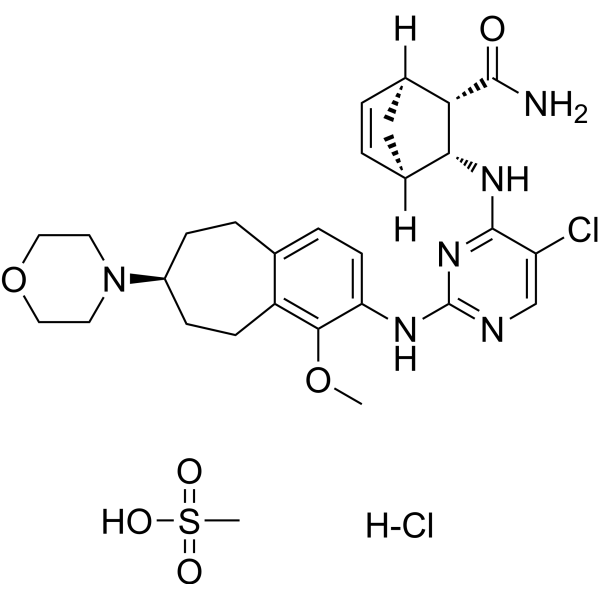
CEP-28122 mesylate hydrochloride, a diaminopyrimidine derivative, is a potent, selective, and orally active ALK inhibitor with an IC50 value of 1.9 nM. CEP-28122 mesylate hydrochloride has antitumor activity in experimental models of ALK-positive human cancers. CEP-28122 mesylate hydrochloride has good pharmacodynamic and pharmacokinetic activity. CEP-28122 mesylate hydrochloride can be used for the study of ALK-positive anaplastic large-cell lymphoma (ALCL), non-small cell lung cancer (NSCLC), and neuroblastoma cells .
loading...
    loading...
Cat. No.: HY-168551
Research Areas:  

Cancer

PROTAC ALK degrader-3 is an orally active ALK PROTAC degrader with a DC50 of 119.33 nM in Karpas 299 cells. PROTAC ALK degrader-3 induces the degradation of ALK fusion proteins via the ubiquitin-proteasome system. PROTAC ALK degrader-3 induces NPM-ALK degradation and inhibits the expression of p-ALK and p-STAT3. PROTAC ALK degrader-3 inhibits cancer cell proliferation and suppresses the growth of xenografts in vivo. PROTAC ALK degrader-3 can be used for the research of ALK-positive cancers (e.g., anaplastic large cell lymphoma) .
loading...
    loading...
Cat. No.: HY-146022
CAS No.: 2353494-84-3
Research Areas:  

Cancer

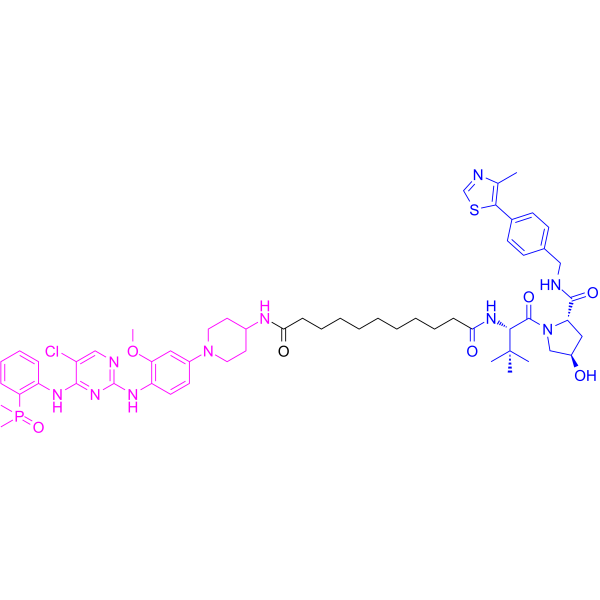
SIAIS117 is an ALK PROTAC degrader constructed based on Brigatinib (HY-12857) and VHL-1. SIAIS117 exhibits activity not only against wild-type ALK fusion proteins, but also effectively degrades the highly drug-resistant ALK G1202R mutant fusion protein. SIAIS117 significantly inhibits the proliferation of non-small cell lung cancer, small cell lung cancer, anaplastic large cell lymphoma, and drug-resistant cells expressing EML4-ALK G1202R. SIAIS117 can be used in relevant research on the above-mentioned malignant tumors .
loading...
    loading...
Cat. No.: HY-116636
CAS No.: 1845711-03-6
Research Areas:  

Cancer

KRCA-0377 is an orally active ALK inhibitor with an IC50 of 0.001 μM. KRCA-0377 also inhibits mutant ALK enzyme with IC50 values ≤0.01 μM. KRCA-0377 shows cytotoxicity against cancer cells and inhibits tumor growth in xenograft mice models. KRCA-0377 can be used for the research of ALK-positive non-small-cell lung cancer .
loading...
    loading...
Cat. No.: HY-187801
Research Areas:  

Cancer

SH-CER-6 is a double-warhead C 2-COUPL derived from Ceritinib (HY-187801) that targets the EML4-ALK fusion protein complex and induces its degradation. SH-CER-6 simultaneously binds to structures near the ALK inhibitor-binding region and forms a covalent conjugate with a protein cysteine, thereby promoting ubiquitination and proteasome-dependent degradation of the EML4-ALK complex, which in turn inhibits the ALK signaling pathway. SH-CER-6 is useful for research related to ALK-positive non-small cell lung cancer .
loading...
    loading...
Cat. No.: HY-179732
Research Areas:  

Cancer

PROTAC ALK degrader-4 is a ALK PROTAC degrader with a DC50 of 445.25 nM. PROTAC ALK degrader-4 induces concentration- and time-dependent degradation of EML4-ALK, as well as concentration-dependent degradation of ALK F1174L. PROTAC ALK degrader-4 downregulates 390 proteins in NCI-H3122 cells, including the targets of ceritinib (ALK, IGF-1R) and downstream molecules ERK1/2 and STAT3. PROTAC ALK degrader-4 exerts antiproliferative activity in ALK-positive cancer cells. ALK degrader-4 can be used in studies related to lung adenocarcinoma .
loading...
    loading...
Cat. No.: HY-180818
Research Areas:  

Cancer

ALK-IN-33 (Compound 8q) is an orally active ALK inhibitor with an IC50 of 1.61 nM. ALK-IN-33 exhibits significant selective killing effect on ALK-positive cancer cells. ALK-IN-33 induces cell cycle arrest and apoptosis, effectively weakening the migration, invasion and long-term survival ability of cancer cells. ALK-IN-33 can be used for research on non-small cell lung cancer
loading...
    loading...
Cat. No.: HY-180970
CAS No.: 2162120-55-8
Research Areas:  

Cancer

TD-004 is a potent ALK PROTAC degrader. TD-004 exhibits anti-ALK inhibitory activity with an IC50 of 0.11 µM and selectively inhibits the proliferation of SU-DHL-1 and H3122 cells (ALK-positive cancer cells) with IC50s of 0.058 µM and 0.28 µM, respectively. TD-004 induces degradation of ALK fusion proteins (NPM-ALK and EML4-ALK) via recruitment of the VHL E3 ligase and the proteasome pathway. TD-004 demonstrates significant tumor growth inhibition with a favorable safety profile in vivo. TD-004 can be used for the research of anaplastic large cell lymphoma and non-small cell lung cancer .
loading...
    loading...
  • 1

