14 Results for "

APNEA

" in MedChemExpress (MCE) Product Catalog:
Products (14)

14 Results for "APNEA" in MCE Product Catalog:

Cat. No.: HY-B0551
CAS No.: 309-29-5
Target:  

Potassium Channel

Research Areas:  

Neurological Disease

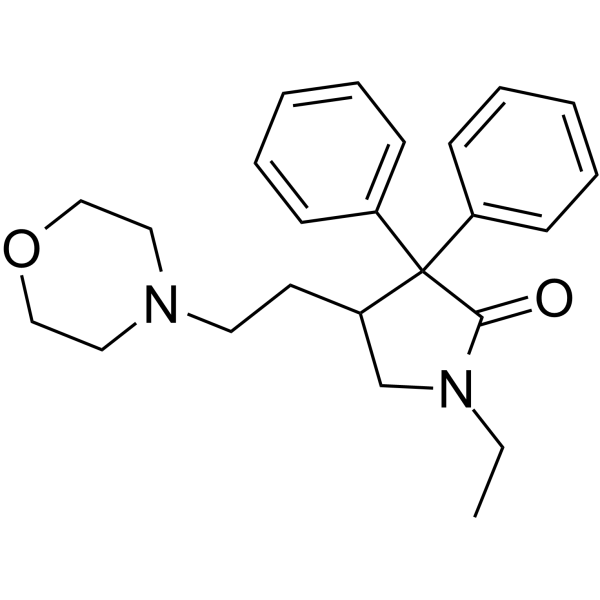
Doxapram is a respiratory stimulant. Doxapram increases breathing rate and depth by acting on the brain's respiratory centers and peripheral chemoreceptors. Doxapram inhibits TASK-1, TASK-3, TASK-1/TASK-3 heterodimeric channel function with EC50s of 410 nM, 37 μM, 9 μM, respectively. Doxapram inhibits the Ca²⁺-activated potassium current (IC50 ≈ 13 μM) and Ca²⁺-independent potassium current (IC50 ≈ 20 μM) in type I cells of the carotid body. Doxapram significantly prolongs the effective refractory period of the atrium and has an anti-arrhythmic effect. Doxapram can be used for the study of respiratory depression such as post-anesthesia respiratory depression, chronic obstructive pulmonary disease and apnea of prematurity .
loading...
    loading...
Cat. No.: HY-B0551A
CAS No.: 7081-53-0
Target:  

Potassium Channel

Research Areas:  

Neurological Disease

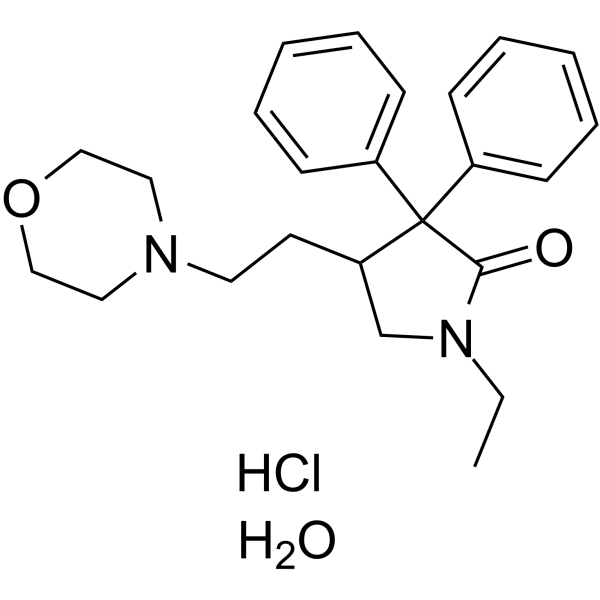
Doxapram hydrochloride hydrate is a respiratory stimulant. Doxapram hydrochloride hydrate increases breathing rate and depth by acting on the brain's respiratory centers and peripheral chemoreceptors. Doxapram hydrochloride hydrate inhibits TASK-1, TASK-3, TASK-1/TASK-3 heterodimeric channel function with EC50s of 410 nM, 37 μM, 9 μM, respectively. Doxapram hydrochloride hydrate inhibits the Ca²⁺-activated potassium current (IC50 ≈ 13 μM) and Ca²⁺-independent potassium current (IC50 ≈ 20 μM) in type I cells of the carotid body. Doxapram hydrochloride hydrate significantly prolongs the effective refractory period of the atrium and has an anti-arrhythmic effect. Doxapram hydrochloride hydrate can be used for the study of respiratory depression such as post-anesthesia respiratory depression, chronic obstructive pulmonary disease and apnea of prematurity .
loading...
    loading...
Cat. No.: HY-110190
CAS No.: 1630936-95-6
Purity:  99.94%
Synonyms: ML396
Target:  

mGluR

Research Areas:  

Neurological Disease

VU0422288 (ML396) is a positive allosteric modulator of group III mGluRs. VU0422288 inhibits mGluRs with EC50s of 125 nM, 146 nM, and 108 nM for mGluR4, mGluR7, and mGluR8, respectively in calcium mobilization assays. VU0422288 reverses deficits in contextual fear memory, social recognition, and apneas in Rett syndrome (RTT) model mice .
loading...
    loading...
Cat. No.: HY-159639
CAS No.: 2642235-06-9
Target:  

Androgen Receptor

Research Areas:  

Neurological Disease

BAY-2925976 is an α2C adrenergic receptor (ARα2C) antagonist that can be used for the study of obstructive sleep apnea (OSA) .
loading...
    loading...
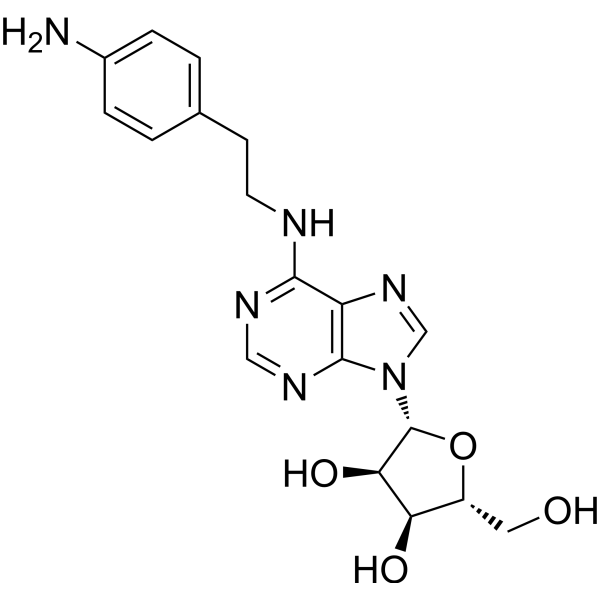
Cat. No.: HY-18687
CAS No.: 89705-21-5
Synonyms: N6-[2-(4-Aminophenyl)ethyl]adenosine
Target:  

Adenosine Receptor

Research Areas:  

Neurological Disease

APNEA (N6-[2-(4-Aminophenyl)ethyl]adenosine) is a potent, non-selective A3 adenosine receptor agonist.
loading...
    loading...
Cat. No.: HY-175873
Research Areas:  

Inflammation/Immunology

AD109 is a combination of the selective norepinephrine reuptake inhibitor Atomoxetine (HY-107370) and the antimuscarinic agent Aroxybutynin (HY-B0267C). AD109 shows orally active significantly and reduces the apnea-hypopnea index .
loading...
    loading...
Cat. No.: HY-145554
CAS No.: 2256770-44-0
Purity:  99.67%
Target:  

Drug Derivative

Research Areas:  

Others

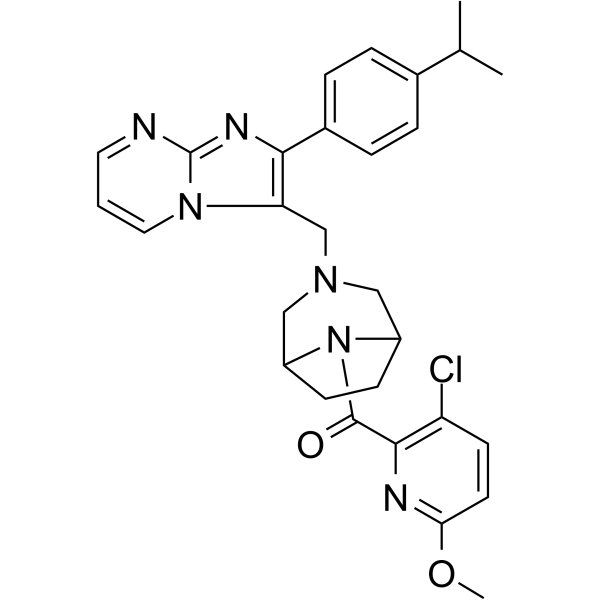
Bafrekalant is a diazabicyclic substituted imidazo[l,2-a]pyrimidine-derivative. Bafrekalant has the potential for the research of breathing disorders, including sleep-related breathing disorders such as obstructive and central sleep apnea and snoring (extracted from patent WO2018228907A1).
loading...
    loading...
Cat. No.: HY-123836
CAS No.: 936626-07-2
Target:  

Histamine Receptor

Research Areas:  

Neurological Disease

MK-7288 is a histamine H3 receptor inverse agonist. MK-7288 can prolong sleep latency in the Maintain Wake Test (MWT). MK-7288 can be used in research on obstructive sleep apnea (OSA) and excessive daytime sleepiness (EDS) .
loading...
    loading...
Cat. No.: HY-129146S
Purity:  ≥99.0%
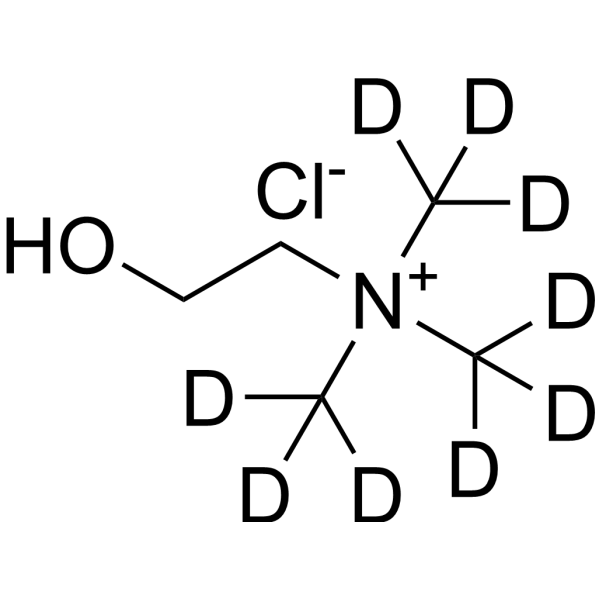
Doxapram-d5 hydrochloride is deuterium labeled Doxapram hydrochloride. Doxapram hydrochloride is a respiratory stimulant. Doxapram hydrochloride increases breathing rate and depth by acting on the brain's respiratory centers and peripheral chemoreceptors. Doxapram hydrochloride inhibits TASK-1, TASK-3, TASK-1/TASK-3 heterodimeric channel function with EC50s of 410 nM, 37 μM, 9 μM, respectively. Doxapram hydrochloride inhibits the Ca²⁺-activated potassium current (IC50 ≈ 13 μM) and Ca²⁺-independent potassium current (IC50 ≈ 20 μM) in type I cells of the carotid body. Doxapram hydrochloride significantly prolongs the effective refractory period of the atrium and has an anti-arrhythmic effect. Doxapram hydrochloride can be used for the study of respiratory depression such as post-anesthesia respiratory depression, chronic obstructive pulmonary disease and apnea of prematurity.
loading...
    loading...
Cat. No.: HY-B0551S
Doxapram-d8 is deuterated labeled Doxapram (HY-B0551). Doxapram is a respiratory stimulant. Doxapram increases breathing rate and depth by acting on the brain's respiratory centers and peripheral chemoreceptors. Doxapram inhibits TASK-1, TASK-3, TASK-1/TASK-3 heterodimeric channel function with EC50s of 410 nM, 37 μM, 9 μM, respectively. Doxapram inhibits the Ca²⁺-activated potassium current (IC50 ≈ 13 μM) and Ca²⁺-independent potassium current (IC50 ≈ 20 μM) in type I cells of the carotid body. Doxapram significantly prolongs the effective refractory period of the atrium and has an anti-arrhythmic effect. Doxapram can be used for the study of respiratory depression such as post-anesthesia respiratory depression, chronic obstructive pulmonary disease and apnea of prematurity.
loading...
    loading...
Cat. No.: HY-B0551AR
CAS No.: 7081-53-0
Doxapram hydrochloride hydrate (Standard) is the analytical standard of Doxapram hydrochloride hydrate (HY-B0551A). This product is intended for research and analytical applications. Doxapram hydrochloride hydrate is a respiratory stimulant. Doxapram hydrochloride hydrate increases breathing rate and depth by acting on the brain's respiratory centers and peripheral chemoreceptors. Doxapram hydrochloride hydrate inhibits TASK-1, TASK-3, TASK-1/TASK-3 heterodimeric channel function with EC50s of 410 nM, 37 μM, 9 μM, respectively. Doxapram hydrochloride hydrate inhibits the Ca²⁺-activated potassium current (IC50 ≈ 13 μM) and Ca²⁺-independent potassium current (IC50 ≈ 20 μM) in type I cells of the carotid body. Doxapram hydrochloride hydrate significantly prolongs the effective refractory period of the atrium and has an anti-arrhythmic effect. Doxapram hydrochloride hydrate can be used for the study of respiratory depression such as post-anesthesia respiratory depression, chronic obstructive pulmonary disease and apnea of prematurity.
loading...
    loading...
Cat. No.: HY-129146
CAS No.: 113-07-5
Target:  

Potassium Channel

Research Areas:  

Others

Doxapram (hydrochloride) is a ventilatory stimulant. Doxapram (hydrochloride) inhibits TASK Tandem Pore (K2P) potassium channel function. Doxapram (hydrochloride) inhibits TASK-1 and TASK-3 with an EC50 values of 410 and 37 nM, respectively. Doxapram (hydrochloride) inhibits TASK-1/TASK-3 heterodimeric channel function with an EC50 value of 9 μM. Doxapram (hydrochloride) can be studied in research on apnea in preterm infants .
loading...
    loading...
Cat. No.: HY-L087
3,678 compounds

Obesity is widely recognized as the largest and fastest growing public health problem and is associated with numerous chronic disorders including osteoarthritis, obstructive sleep apnea, gallstones, fatty liver disease, reproductive and gastrointestinal cancers, dyslipidemia, hypertension, type 2 diabetes, heart failure, coronary artery disease, stroke, etc. Although obesity has long been associated with serious health issues, it has only recently been regarded as a disease in the sense of being a specific target for medical therapy. Obesity may be viewed as the dysregulation of two physiological functions, appetite regulation and energy metabolism, which combine to create disordered energy balance. Consequently, developing obesity treatments that target novel pathways is a growing focus for both biopharmaceutical industries.

MCE Anti-Obesity Compound Library owns a unique collection of 3,678 compounds, which mainly target signaling pathway of controlling appetite, fatty acid metabolism and energy expenditure, etc. This library is a useful tool for discovery anti-obesity drugs.

Cat. No.: HY-184098
CAS No.: 2770252-94-1
Synonyms: Lomasemtivum
Target:  

Calcium Channel

Research Areas:  

Neurological Disease

Lomasemtiv (Lomasemtivum) is a Troponin activator. Lomasemtiv activates skeletal muscle myofibrils. Lomasemtiv is applicable to sarcopenia research .
loading...
    loading...
  • 1

