

1. Search Result
Search Result
Results for "

C-terminal domain

" in MedChemExpress (MCE) Product Catalog:

45

Inhibitors & Agonists

8

Peptides

3

Inhibitory Antibodies

3

Recombinant Proteins

5

Antibodies

Cat. No. Product Name Target Research Areas Chemical Structure
  • HY-P0175
    740 Y-P
    240+ Cited Publications

    740YPDGFR; PDGFR 740Y-P

    PI3K Autophagy Cancer
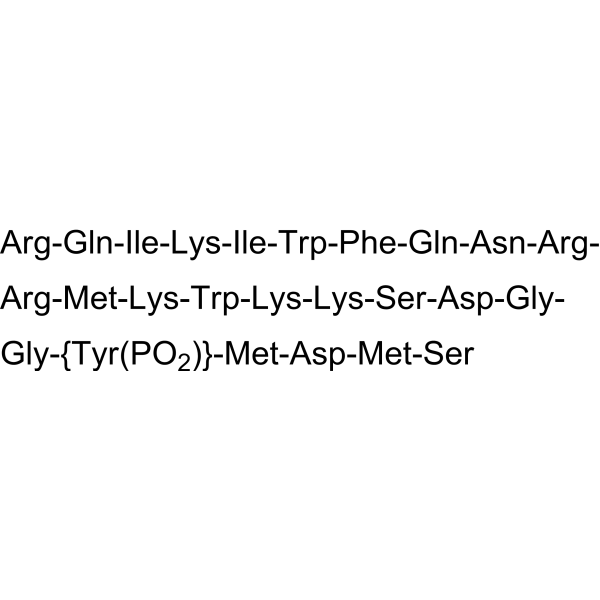
    740 Y-P (740YPDGFR; PDGFR 740Y-P) is a potent and cell-permeable PI3K activator. 740 Y-P readily binds GST fusion proteins containing both the N- and C- terminal SH2 domains of p85 but fails to bind GST alone .
    740 Y-P
  • HY-148673
    Laroprovstat
    1 Publications Verification

    AZD0780; PCSK9-IN-12

    PCSK9 Cardiovascular Disease Metabolic Disease
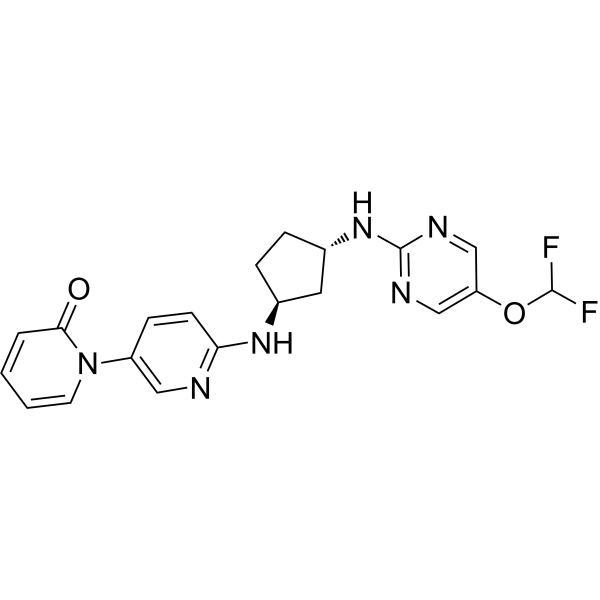
    Laroprovstat (AZD0780) is an orall active PCSK9 inhibitor. PCSK9-IN-12 has bind affinity for PCSK9 with a Kd value of <200 nM. Laroprovstat binds to a pocket in the PCSK9 C-terminal domain and does not affect the PCSK9-LDL receptor (LDLR) interaction. Laroprovstat inhibits lysosomal trafficking of PSCK9-LDLR complexes and prevents PCSK9-induced LDLR degradation. Laroprovstat can be used for the research of hypercholesterolemia .
    Laroprovstat
  • HY-120821
    Endosidin-2
    2 Publications Verification

    ES2

    Exosomes Others
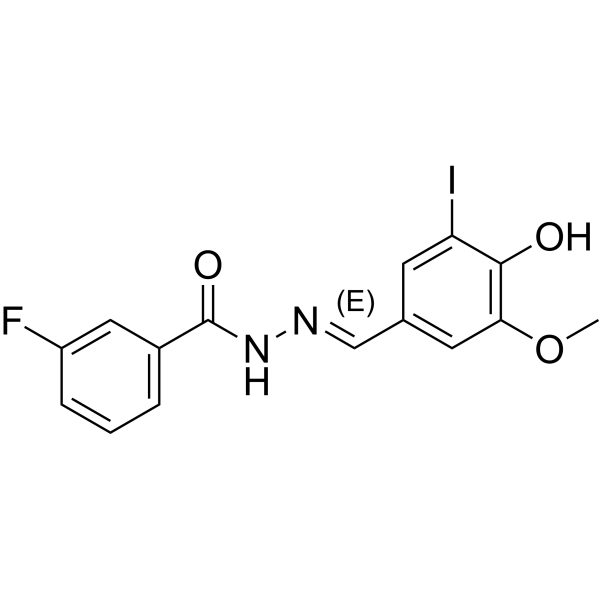
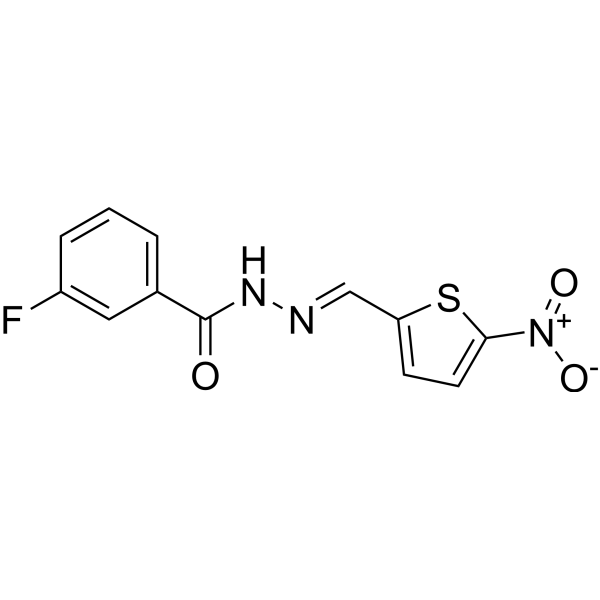
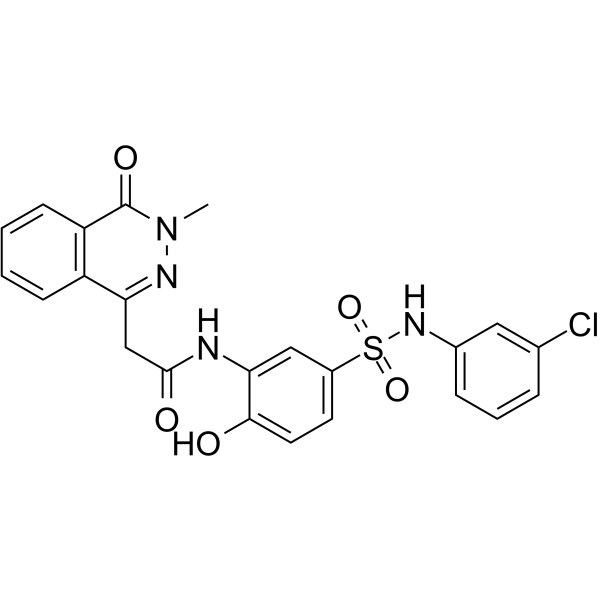
    Endosidin-2 (ES2) is a selective inhibitor targeting the conserved exosome subunit EXO70. Endosidin-2 binds to the C-terminal domain of EXO70, inhibiting exocytosis and endosomal recycling, while promoting vacuolar trafficking in plant cells. Endosidin-2 interferes with the EXO70-mediated vesicle-to-plasma membrane anchoring process, leading to abnormal aggregation of auxin transporters (such as PIN2) in the cytoplasm and redirected to vacuolar degradation, while causing abnormal Golgi structure (such as cup-shaped or ring-shaped vesicles cisternae formation). Endosidin-2 can inhibit exocytosis in plant and mammalian cells and is mainly used to study the dynamic regulation of membrane trafficking (such as polar growth, vesicle sorting) .
    Endosidin-2
  • HY-P2917

    GyK

    Nuclear Hormone Receptor 4A/NR4A Metabolic Disease Inflammation/Immunology
    Glycerol kinase, microorganism (GyK) acts as a NR4A1 inhibitor with enzymatic activity. It directly binds to and inhibits the transcription factor NR4A1, thereby negatively regulating hepatic gluconeogenesis and reducing blood glucose levels. Glycerol kinase, microorganism positively regulates UCP1 expression via partial dependence on the β-adrenergic receptor-cAMP-CREB pathway, promotes browning of white adipose tissue and thermogenesis, and further modulates intracellular fatty acid composition and energy metabolism. In diabetic mouse models, overexpression of Glycerol kinase effectively antagonizes NR4A1-induced hyperglycemia, demonstrating potential for improving glucose homeostasis. Glycerol kinase, microorganism can be used for studies on diabetes and obesity .
    Glycerol kinase, microorganism
  • HY-173432

    ACSL Family Ferroptosis Neurological Disease Cancer
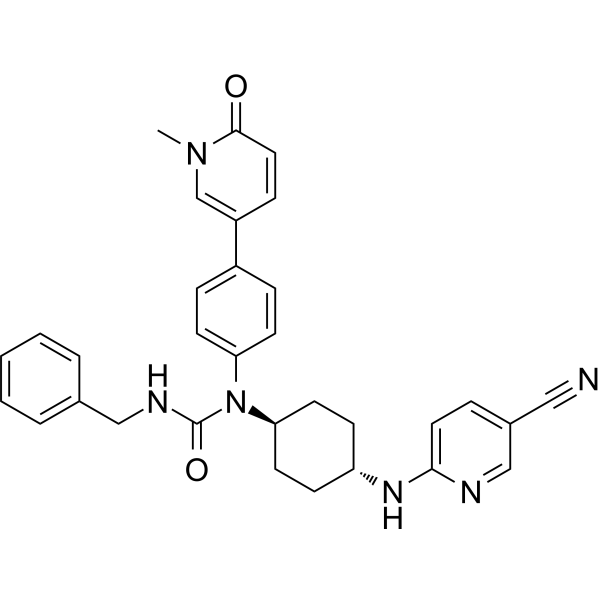
    LIBX-A401 is a selective long-chain acyl-CoA synthetase 4 (ACSL4) inhibitor with a human IC50 values of 0.38 μM and a Kd of 0.72 μM. LIBX-A401 binds to ACSL4 in an ATP-dependent manner, stabilizes the C-terminal domain, alters the fatty acid gate region, and interacts with residues A329 and Q302 within the fatty acid binding site. LIBX-A401 exhibits anti-ferroptosis properties in cells. LIBX-A401 can be used for the researches of cancer and parkinson's disease .
    LIBX-A401
  • HY-115467
    MitoBloCK-10
    2 Publications Verification

    HSP Metabolic Disease
    MitoBloCK-10 (MB-10) is the first small molecule modulator to attenuate protein-associated motor (PAM) complex activity. MitoBloCK-10 (MB-10) inhibits Tim44 (C-terminal domain) binding to the precursor and to Hsp70 .
    MitoBloCK-10
  • HY-103076
    EZ-482
    1 Publications Verification

    Apolipoprotein Neurological Disease
    EZ-482, a novel ligand of apolipoprotein (apoE), binds to sites on apoE in the C-terminal domain with Kds of 5-10 μM for apoE3 and apoE4. EZ-482 binds to apoE4 by a unique N-terminal allosteric effect. EZ482 has the potential for Alzheimer’s diseas .
    EZ-482
  • HY-175238

    ATP Synthase DNA/RNA Synthesis Neurological Disease Cancer
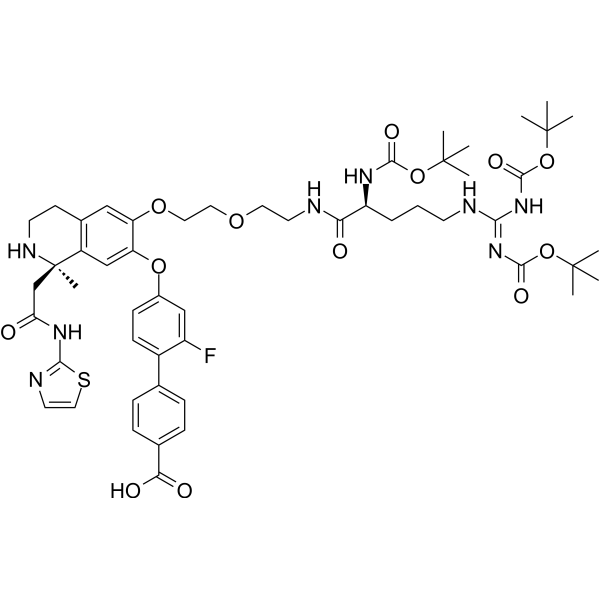
    KI-DX-014 is a DDX21 inhibitor with high RNA-binding inhibitory activity (IC50 of 3.31 μM). KI-DX-014 targets DDX21’s intrinsically disordered C-terminal domain, inhibits DDX21-structured RNA interaction, modulates DDX21’s RNA-dependent ATPase activity, and disrupts DDX21 biomolecular condensate formation. KI-DX-014 attenuates in vitro P-TEFb release from the 7SK snRNP complex, suppresses P-TEFb-dependent RNA polymerase II CTD phosphorylation, and induces developmental defects in zebrafish embryos. KI-DX-014 acts as a chemical probe for dissecting DDX21 functions in normal physiology and disease states. KI-DX-014 can be used for cancers and neurodegenerative disorders research .
    KI-DX-014
  • HY-162919

    CDK Apoptosis c-Myc Cancer
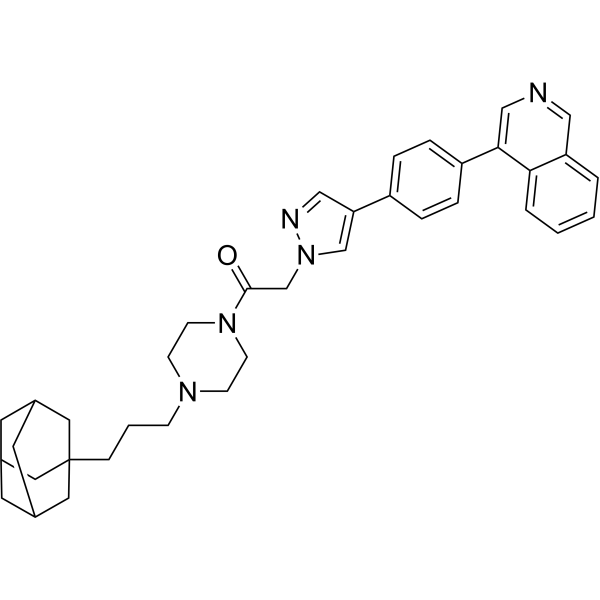
    YK-2168 is a potent and selective CDK9 inhibitor with an IC50 of 5.9 nM. YK-2168 inhibits phosphorylation of the CDK9 substrate pS2-RNA Pol II C-terminal domain. YK-2168 induces apoptosis in tumor cells, suppresses expression of CDK9-regulated genes including MYC and Mcl1, and inhibits tumor growth in CDX mice models. YK-2168 can be used for the research of cancer, such as leukemia .
    YK-2168
  • HY-112626
    CDK12-IN-2
    1 Publications Verification

    CDK Cancer
    CDK12-IN-2 is a potent, selective and nanomolar CDK12 inhibitor (IC50=52 nM) with good physicochemical properties. CDK12-IN-2 is also a strong CDK13 inhibitor due to CDK13 is the closest homologue of CDK12. CDK12-IN-2 shows excellent kinase selectivity for CDK12 over CDK2, 9, 8, and 7. CDK12-IN-2 inhibits the phosphorylation of Ser2 in the C-terminal domain of RNA polymerase II. CDK12-IN-2 can be used an excellent chemical probe for functional studies of CDK12 .
    CDK12-IN-2
  • HY-163944

    DNA/RNA Synthesis Molecular Glues CDK Apoptosis RAD51 ATM/ATR PARP Cancer
    LL-K12-18 is a CDK12 kinase inhibitor and a dual-site molecular glue. LL-K12-18 inhibits human CDK12 with an IC50 value of 283.9 nM, and selectively degrades cyclin K via the ubiquitin-proteasome system by stabilizing the CDK12-DDB1 complex. LL-K12-18 downregulates DNA damage response genes, reduces the phosphorylation level of CTD Ser2 in RNA polymerase II, and modulates biomarkers such as ATM, RAD51, γ-H2AX and cleaved PARP, thereby effectively inducing apoptosis and inhibiting proliferation of breast cancer cells. LL-K12-18 exhibits high target selectivity and serves as a research tool for studies on triple-negative breast cancer .
    LL-K12-18
  • HY-52101A
    FMK
    4 Publications Verification

    Ribosomal S6 Kinase (RSK) Cancer
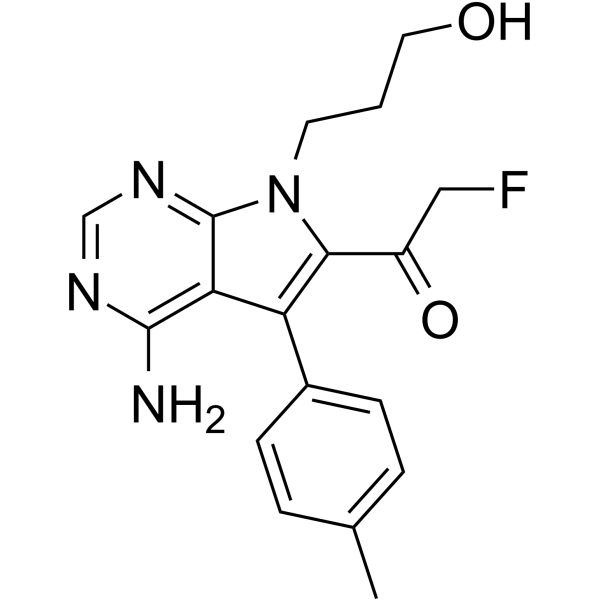
    FMK is a an irreversible RSK2 kinase inhibitor, that covalently modifies the C-terminal kinase domain of RSK.
    FMK
  • HY-161781

    HSP EGFR Akt Survivin Apoptosis Infection Neurological Disease Metabolic Disease Inflammation/Immunology Cancer
    HVH-2930 is a HSP90 C-terminal domain inhibitor with high oral bioavailability. HVH-2930 downregulates HSP90 client proteins, inhibits the HER2 signaling pathway, induces apoptosis, and suppresses the proliferation of breast cancer cells. HVH-2930 inhibits the proliferation of tumors sensitive or resistant to Trastuzumab (HY-P9907). HVH-2930 is applicable to relevant research on breast cancer .
    HVH-2930
  • HY-115539

    Wnt β-catenin Histone Acetyltransferase Cancer
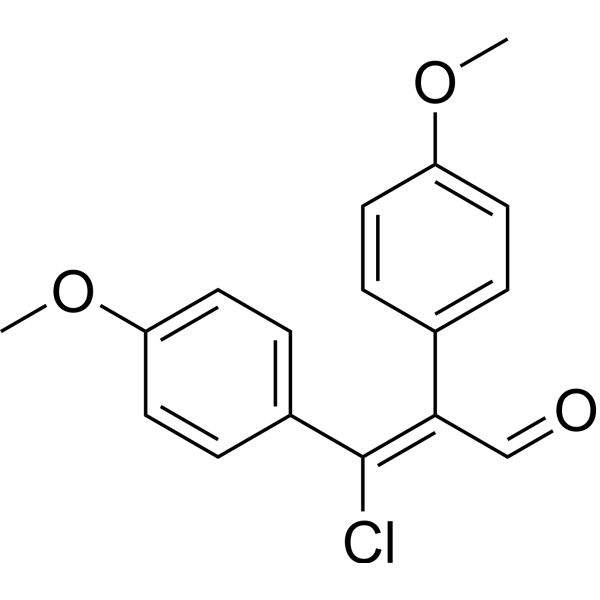
    Windorphen is a Wnt/β-catenin signal inhibitor that specifically targets the function of the c-terminal transactivation domain of β-catenin-1 but not β-catenin-2. Windorphen selectively targets p300, disrupting the association of the mammalian β-catenin with p300 but not CBP .
    Windorphen
  • HY-P5391

    Bacterial Others
    LL-37(17-32) is a biological active peptide. (This peptide is an active segment of LL-37, a peptide derived from the C-terminal domain of human cathelicidin antimicrobial peptide. It has been reported that the LL17-32 peptide exhibits reversal effect on ABCG2-mediated multidrug resistance in cancer cell lines.)
    LL-37(17-32)
  • HY-153244
    MFH290
    1 Publications Verification

    CDK Cancer
    MFH290 is a potent and highly selective cyclin-dependent kinase 12/13 (CDK12/13) covalent inhibitor. MFH290 forms a covalent bond with Cys-1039 of CDK12 and exhibits excellent kinome selectivity and inhibits the phosphorylation of serine-2 in the C-terminal domain (CTD) of RNA-polymerase II (Pol II). MFH290 is used for cancer research .
    MFH290
  • HY-133512

    Phosphatase Cancer
    NCGC00249987 is a highly selective and allosteric Tyr phosphatase activity of Eya2 inhibitor with IC50s of 3 μM and 6.9 μM for Eya2 ED and MBP-Eya2 FL. NCGC00249987 specifically targets migration, invadopodia formation, and invasion of lung cancer cells .
    NCGC00249987
  • HY-P4933

    Tau-F protein (255-314)

    Tau Protein Neurological Disease
    Tau Peptide (255-314) (Repeat 2 Domain) (human) (Tau-F protein (255-314)) is a polypeptide. Tau Peptide (255-314) (human) is the 255-314 fragment of Tau-F (also known as Tau-4, the 2N4 isoform), a major isoform of the Tau protein. Tau Peptide (255-314) (human) contains two core driving sequences for Tau aggregation, namely PHF6* (275-280, VQIINK) and PHF6 (306-311, VQIVYK), and spans the C-terminal half of repeat domain R1, the entire repeat domain R2, and the N-terminal half of repeat domain R3 within the microtubule-binding region (MTBR).
    Tau Peptide (255-314) (Repeat 2 Domain) (human)
  • HY-103078

    HIV Reverse Transcriptase Infection
    I-XW-053 is a specific anti-HIV-1 capsid inhibitor (IC50=164.2 μM). By binding to the CA NTD-NTD hexamerization interface and the R173 region of CTD (Kd=66.3 μM), I-XW-053 disrupts capsid function and reduces polymerization levels. I-XW-053 effectively blocks HIV-1 uncoating, inhibits reverse transcription and early replication, and exhibits broad-spectrum activity against primary HIV-1 isolates in peripheral blood mononuclear cells. I-XW-053 can be widely used in studies related to HIV-1 infection .
    I-XW-053
  • HY-18205

    Angiotensin-converting Enzyme (ACE) Cardiovascular Disease
    RXPA 380 is a C-terminal specific angiotensin-converting enzyme (ACE) inhibitor with a Ki of 3 nM. RXPA 380 inhibits C-domain mutants of human recombinant ACE with an IC50 of 2.5 nM .
    RXPA 380
  • HY-E70660

    CDK Cancer
    CDK13/CycK Recombinant Human Active Protein Kinase is a RNA polymerase II C-terminal domain kinases. CDK13 interacts with the splicing factor SRSF1 and to regulate alternative splicing of HIV .
    CDK13/CycK Recombinant Human Active Protein Kinase
  • HY-E70659

    CDK Cancer
    CDK12/CycK Recombinant Human Active Protein Kinase is a cyclin-dependent kinase that phosphorylates the C-terminal domain (CTD) of RNA polymerase II (Pol II), thereby regulating different phases of the transcription cycle from transcription initiation to elongation and termination .
    CDK12/CycK Recombinant Human Active Protein Kinase
  • HY-P3431

    iGluR Neurological Disease
    VSGLNPSLWSIFGLQFILLWLVSGSRHYLW is a 30-amino-acid peptide mimicking the C-terminal domain of α2δ-1, termed as α2δ-1Tat peptide. VSGLNPSLWSIFGLQFILLWLVSGSRHYLW can effectively interrupt the α2δ-1 - NMDAR interaction in vitro and in vivo. VSGLNPSLWSIFGLQFILLWLVSGSRHYLW can be used for researching neuropathic pain .
    VSGLNPSLWSIFGLQFILLWLVSGSRHYLW
  • HY-155191

    Galectin Inflammation/Immunology Cancer
    Galectin-3/galectin-8-IN-1 (Compound 53) is a dual Galectin-3 and galectin-8 C-terminal domain inhibitor, with Kd values of 4.12 μM and 6.04 μM respectively. Galectin-3/galectin-8-IN-1 inhibits the MRC-5 lung fibroblast cells migration. Galectin-3/galectin-8-IN-1 can be used for research of cancer and tissue fibrosis .
    Galectin-3/galectin-8-IN-1
  • HY-155192

    Galectin Inflammation/Immunology Cancer
    Galectin-3/galectin-8-IN-2 (Compound 57) is a dual Galectin-3 and galectin-8 C-terminal domain inhibitor, with Kd values of 12.8 μM and 2.06 μM respectively. Galectin-3/galectin-8-IN-2 inhibits the MRC-5 lung fibroblast cells migration. Galectin-3/galectin-8-IN-2 can be used for research of cancer and tissue fibrosis .
    Galectin-3/galectin-8-IN-2
  • HY-112393

    HIV Src PKA PKC Infection
    TX-1918 is an inhibitor for eukaryotic elongation factor 2 kinase (eEF2-K) and Src kinase with IC50 of 0.44 and 4.4 μM, respectively. TX-1918 exhibits cytotoxicity in cell HepG2 and HCT116, with IC50 of 2.07 and 230 μM, respectively. TX-1918 inhibits the C-terminal domain of HIV-1 CA (CA CTD)(IC50 =3.81 μM), and inhibits the viral replication (IC50 =15.16 μM) .
    TX-1918
  • HY-171786

    CDK Cancer
    CDK12-IN-8 (Compound Cpd143) is an orally active and highly selective inhibitor of cyclin-dependent kinase 12 (CDK12). CDK12-IN-8 inhibits CDK12-mediated phosphorylation of the C-terminal domain (CTD) serine 2 of RNA polymerase II, interfering with gene transcription elongation and DNA damage repair pathways. CDK12-IN-8 is promising for research of cancers with high CDK12 expression such as small cell lung cancer and triple-negative breast cancer .
    CDK12-IN-8
  • HY-P0175A

    740YPDGFR TFA; PDGFR 740Y-P TFA

    PI3K Autophagy Cancer
    740 Y-P TFA is a potent and cell-permeable PI3K activator. 740 Y-P TFA readily binds GST fusion proteins containing both the N- and C- terminal SH2 domains of p85 but fails to bind GST alone .
    740 Y-P TFA
  • HY-P11185

    HSP Cancer
    Hsp90β decapeptide is a C-terminal peptide of Hsp90β, which contains conserved TPR-domain MEEVD. Hsp90β decapeptide is able to bind tightly the Tah1 protein with a Kd of 1.0 μM .
    Hsp90β decapeptide
  • HY-162478

    Phosphatase Cancer
    GR-28 is an inhibitor for small C-terminal domain phosphatase 1 (SCP1). GR-28 inhibits the transcriptional activity of repressor element-1 silencing transcription factor (REST), inhibits the proliferation of glioblastoma cells (IC50 is 2.9 and 10.1 µM, for cells A172 and T98G) .
    GR-28
  • HY-P990986

    Interleukin Related Inflammation/Immunology Cancer
    Efdelikofusp alfa is a bispecific Fc fusion protein. Efdelikofusp alfa is formed by fusing the N-terminal extracellular domain of human CD80 (B7.1) with the Fc fragment of human immunoglobulin G4 (IgG4), and is linked to an interleukin-2 variant (IL-2v) as the C-terminal part. Efdelikofusp alfa exhibits potential immunostimulatory, immune checkpoint inhibitory, and antitumor activities.
    Efdelikofusp alfa
  • HY-P990992

    GI-102

    Interleukin Related Inflammation/Immunology Cancer
    Efzilonkofusp alfa is a bispecific Fc fusion protein. Efzilonkofusp alfa is formed by fusing the N-terminal extracellular domain of human CD80 (B7.1) with the Fc fragment of human immunoglobulin G4 (IgG4), and is linked to an interleukin-2 variant (IL-2v) as the C-terminal part. Efzilonkofusp alfa exhibits potential immunostimulatory, immune checkpoint inhibitory, and antitumor activities.
    Efzilonkofusp alfa
  • HY-178366

    Influenza Virus Infection
    PAC/NP-IN-1 (Compound 30) is a dual-target anti-influenza agent that specifically binds to nucleoprotein (NP) and the C-terminal domain of PA protein (PAc). PAC/NP-IN-1 inhibits influenza A virus A/WSN/33 (H1N1) (EC50 = 3.63 μM, IC50 = 3.08 μM). PAC/NP-IN-1 can be used for the study of influenza infection .
    PAC/NP-IN-1
  • HY-P5947

    HIV Neurological Disease
    Tat-HA-NR2B9 contains a fragment of the cellmembrane transduction domain of HIV-1 Tat, a influenza virus hemagglutinin (HA) epitope-tag, and the C-terminal 9 amino acids of NR2B (NR2B9c). Tat-HA-NR2B9 reduces infarct size and improves neurological functions in ischemia-induced cerebral injury in the rats
    Tat-HA-NR2B9c
  • HY-P3431A

    iGluR Neurological Disease
    VSGLNPSLWSIFGLQFILLWLVSGSRHYLW (TFA) is a 30-amino-acid peptide mimicking the C-terminal domain of α2δ-1, termed as α2δ-1Tat peptide. VSGLNPSLWSIFGLQFILLWLVSGSRHYLW can effectively interrupt the α2δ-1 - NMDAR interaction in vitro and in vivo. VSGLNPSLWSIFGLQFILLWLVSGSRHYLW can be used for researching neuropathic pain .
    VSGLNPSLWSIFGLQFILLWLVSGSRHYLW TFA
  • HY-103076R

    Apolipoprotein Reference Standards Neurological Disease
    EZ-482 (Standard) is the analytical standard of EZ-482 (HY-103076). This product is intended for research and analytical applications. EZ-482, a novel ligand of apolipoprotein (apoE), binds to sites on apoE in the C-terminal domain with Kds of 5-10 μM for apoE3 and apoE4. EZ-482 binds to apoE4 by a unique N-terminal allosteric effect. EZ482 has the potential for Alzheimer’s diseas .
    EZ-482 (Standard)
  • HY-182277

    HIV Integrase HIV Infection
    GSK-1264 is an HIV-1 integrase inhibitor. GSK-1264 binds to a site spanning the HIV-1 integrase catalytic core domain and C-terminal domain, mediates formation of an open polymer of HIV-1 integrase dimers via inhibitor-bridged contacts between adjacent dimers. GSK-1264 disrupts late-stage HIV replication by interfering with viral particle assembly. GSK-1264 stimulates inappropriate polymerization of HIV-1 integrase. GSK-1264 can be used for the research of HIV infection .
    GSK-1264
  • HY-E70981

    Biochemical Assay Reagents Metabolic Disease
    Alanine Racemase, Bacillus stearothermophilus (EC 5.1.1.1) is involved in alanine, aspartate and D-alanine metabolism. Alanine Racemase, Bacillus stearothermophilus (EC 5.1.1.1) monomer is composed of two domains, an eight-stranded α/β barrel at the N-terminus and a C-terminal domain.
    Alanine Racemase, Bacillus stearothermophilus
  • HY-183941

    PAK Cancer
    SPU-106 is a p21 activated kinase 4 (PAK4) inhibitor with a target IC50 of 21.36 μM. SPU-106 selectively binds to the C-terminal kinase domain of PAK4 to inhibit its kinase activity. SPU-106 inhibits the PAK4/LIMK1/cofilin and PAK4/SCG10 signaling pathways. SPU-106 inhibits invasion of gastric cancer cells and lacks cytotoxicity against cancer cells. SPU-106 can be used for the research of gastric cancer .
    SPU-106
  • HY-181062

    HSP Apoptosis Autophagy ULK RIP kinase CDK Cancer
    VWK147 is a second-generation HSP90 C-terminal domain (CTD) inhibitor. VWK147 targets the CTD dimerization interface, prevents HSP90 CTD dimerization, disrupts co-chaperone PPID binding to HSP90 CTD, and inhibits HSP90 chaperone function dependent on dimerization. VWK147 reduces protein levels of HSP90 client proteins ULK1, RIPK1, and CDK4 without inducing a heat shock response. VWK147 induces cell death, including apoptosis, in Cisplatin (HY-17394)-sensitive and -resistant urothelial carcinoma cells. VWK147 induces LC3-II accumulation, inhibits autophagosome-lysosome fusion to block canonical autophagy, and induces non-canonical LC3 lipidation independent of ULK1 and PIK3C3 complexes. VWK147 can be used for the research of urothelial carcinoma .
    VWK147
  • HY-117192

    HSP Fungal Infection
    NSC145366 monohydrochloride is a Hsp90 C-terminal inhibitor. NSC145366 monohydrochloride directly interacts with the C-terminus of Hsp90 and inhibits its chaperone activity. NSC145366 monohydrochloride strongly inhibits the growth of Saccharomyces cerevisiae cog7Δ and cog8Δ strains .
    NSC145366 monohydrochloride
  • HY-165413

    HIF/HIF Prolyl-Hydroxylase VEGFR Cancer
    KST012174 hydrochloride is a potent HIF-1α-p300/CBP interaction inhibitor with an IC50 of 107 μM. KST012174 hydrochloride completely blocks the binding of HIF-1α to p300 protein at a concentration of 100 μM, without affecting the expression stability of HIF-1α protein itself. By directly interfering with the binding between the C-terminal transactivation domain (C-TAD) of HIF-1α and the CH1 domain of p300, KST012174 inhibits the transcriptional activation function of HIF-1α, thereby significantly downregulating the mRNA expression level of its downstream target gene VEGF and exerting core activity in inhibiting tumor angiogenesis. KST012174 hydrochloride is applicable for research on cancer occurrence and development as well as hypoxia pathway-targeted strategies .
    KST012174 hydrochloride
  • HY-177192

    DMPS

    Biochemical Assay Reagents Others
    1,2-Dimyristoyl-sn-glycero-3-phosphoserine (DMPS) is an anionic, negatively charged phosphatidylserine phospholipid. 1,2-Dimyristoyl-sn-glycero-3-phosphoserine acts as an internal standard for liquid chromatography/mass spectrometry analyses .
    1,2-Dimyristoyl-sn-glycero-3-phosphoserine
  • HY-182312

    CDK Apoptosis Cancer
    CTX-439 is an orally active, ATP-competitive small-molecule inhibitor of CDK12 and CDK13, with an IC50 of 3.1 nM and a Kd of 0.38 nM against CDK12, and an IC50 of 9.2 nM against CDK13. CTX-439 induces DNA damage and apoptosis in tumor cells. CTX-439 is applicable for the research of breast cancer and ovarian cancer .
    CTX-439
  • HY-P992484

    Tau Protein Neurological Disease
    VY7523 is a monoclonal antibody and a selective inhibitor of pathological Tau. VY7523 reduces the propagation of pathogenic Tau in transgenic mouse models. VY7523 can be used in the research of Alzheimer's disease. The isotype control is Human IgG4 (S228P) kappa, Isotype Control (HY-P99003) .
    VY7523

Inquiry Online

Your information is safe with us. * Required Fields.

Salutation


Country or Region *

Applicant Name *


Organization Name *

Department *


Email Address *


Product Name *

Cat. No.


Requested quantity *

Phone Number *


Remarks

Inquiry Online

Inquiry Information

Product Name:
Cat. No.:
Quantity:
MCE Japan Authorized Agent:

