18 Results for "

Chronic constriction injury

" in MedChemExpress (MCE) Product Catalog:
Products (18)

18 Results for "Chronic constriction injury" in MCE Product Catalog:

2
2 Cited Publications
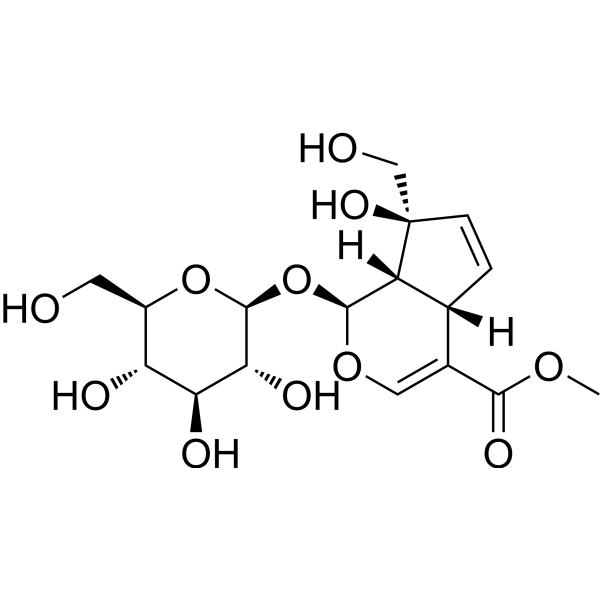
Cat. No.: HY-N1478
CAS No.: 24512-62-7
Gardenoside is an orally active natural compound found in Gardenia fruits. Gardenoside reliefs chronic constriction injury (CCI)-induced neuropathic pain by regulating the P2X3 and P2X7 receptors. Gardenoside has an inhibitory effect on free fatty acids (FFA)-induced cellular steatosis. Gardenoside reduces reactive oxygen species (ROS). Gardenoside can be used for anti-inflammatory, antinociceptive and hepatoprotective study .
loading...
    loading...
1
1 Cited Publications
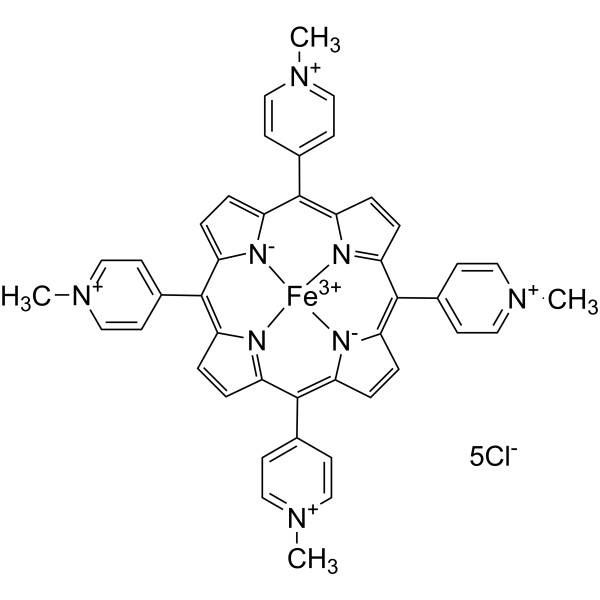
Cat. No.: HY-120380
CAS No.: 133314-07-5
Purity:  99.8%
Target:  

MOFs PARP

Research Areas:  

Neurological Disease

FeTMPyP is an orally active poly (ADP-ribose) polymerase (PARP) inhibitor. FeTMPyP inhibits cell death, nitrotyrosine formation, and depolarization of mitochondrial transmembrane potential. FeTMPyP reduces homocysteine-induced nitrosative stress and partially restores TFEB protein and mRNA levels. FeTMPyP improves functional and behavioral deficits caused by chronic constriction injury in rats. FeTMPyP alleviates acute cerebral infarction in a rat model of middle cerebral artery occlusion with mild hyperglycemia. FeTMPyP can be used in studies related to neuropathic pain, renal aging, ischemic penumbra, and hyperglycemic stroke .
loading...
    loading...
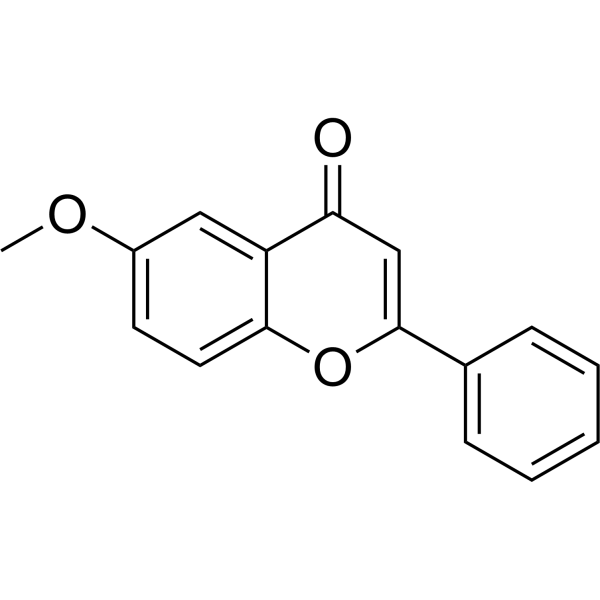
Cat. No.: HY-W097625
CAS No.: 26964-24-9
6-Methoxyflavone is an orally active methoxyflavone. 6-Methoxyflavone suppresses neuroinflammation in microglia through the inhibition of TLR4/MyD88/p38 MAPK/NF-κB dependent pathways and the activation of HO-1/NQO-1 signaling. 6-Methoxyflavone induces S-phase arrest through the CCNA2/CDK2/p21CIP1 signaling pathway in HeLa cells. 6-Methoxyflavone inhibits NFAT Translocation into the nucleus and suppresses T cell activation. 6-Methoxyflavone partially restores chronic ethanol-induced behavioral deficits in mice. 6-Methoxyflavone antagonizes chronic constriction injury and diabetes associated neuropathic nociception expression. 6-Methoxyflavone can be used for the study of cancer, inflammation and neurological diseases .
loading...
    loading...
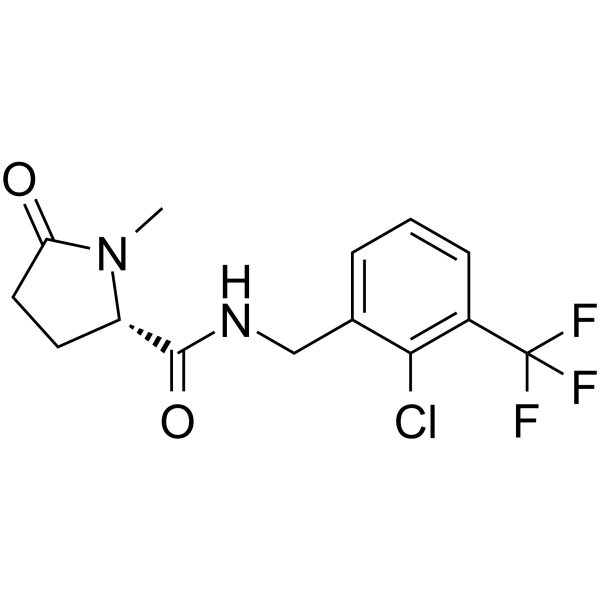
Cat. No.: HY-178281
CAS No.: 931928-13-1
Research Areas:  

Neurological Disease

E0199 is a novel potent dual-target KV7/NaV modulator that activates the KV7 channel (KV7.2/7.3 (EC50 = 12.78 nM), KV7.2 (EC50 = 0.50 μM), and KV7.5 (EC50 = 27.14 nM) channels) while simultaneously blocks the NaV1.7 (IC50 = 0.52 μM), NaV1.8 (IC50 = 0.24 μM), and NaV1.9 (IC50 = 0.16 μM) channels. E0199 shows a potent analgesic effect without affecting heart and skeletal muscle ion channels critically in a chronic constriction injury (CCI) mouse model. E0199 can be used for Neuropathic pain (NP) research .
loading...
    loading...
Cat. No.: HY-19888
CAS No.: 1001389-72-5
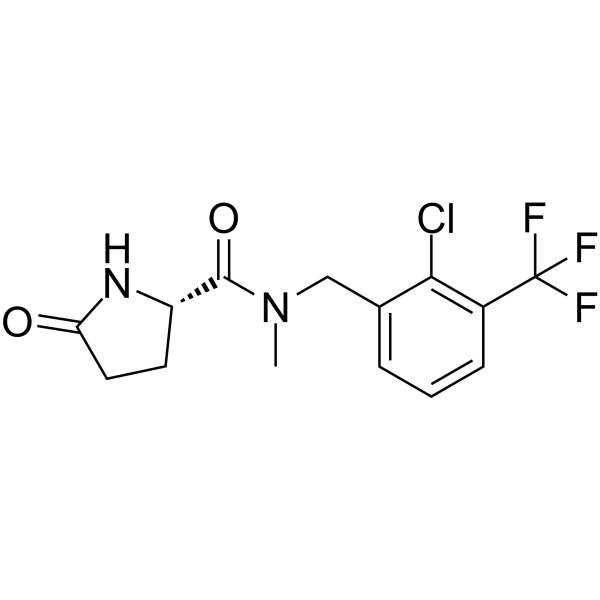
GSK-1482160 is an orally active and blood-brain barrier penetrant P2X7 receptor (P2X7R) negative allosteric modulator with pIC50s of 8.5 (human) and 6.5 (rat). GSK-1482160 reduces the efficacy of ATP at the P2X7 receptor without affecting its affinity, thereby inhibiting the release of IL-1β. GSK-1482160 is an effective radioligand and can be labeled with radioactive isotopes like 11C or 18F to image P2X7R. GSK-1482160 can be used for the studies of chronic joint pain and chronic constriction injury (CCI) .
loading...
    loading...
Cat. No.: HY-119304
CAS No.: 221148-46-5
Purity:  ≥99.0%
Target:  

COX

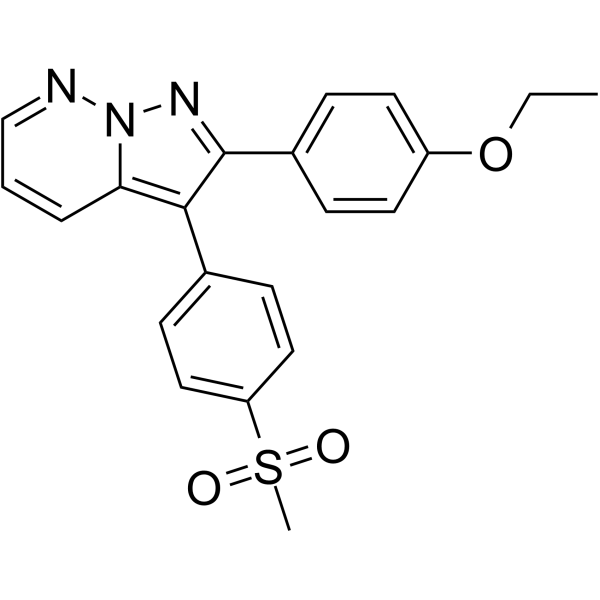
GW406381, a highly selective cyclooxygenase-2 (COX-2) inhibitor, attenuates spontaneous ectopic discharge in sural nerves of rats following chronic constriction injury .
loading...
    loading...
Cat. No.: HY-178006
Target:  

P2Y Receptor

Research Areas:  

Neurological Disease

MRS4917 is an orally active, potent selective P2Y14 receptor (hP2Y14R) antagonist (IC50 = 2.88 nM, Ki = 1.67 nM) that shows >18,000 fold selectivity against P2Y6R (IC50 = 54 μM). MRS4917 demonstrates oral efficacy in reversing established mechanoallodynia in the chronic constriction injury (CCI) mouse model, while having no effect on thermoregulation. MRS4917 can be used for neurological diseases research .
loading...
    loading...
Cat. No.: HY-P10898
CAS No.: 2900996-95-2
Research Areas:  

Neurological Disease

GeX-2 is a truncated analogue of αO-conotoxin. GeX-2 activates GABAB receptor. GeX-2 inhibits α9α10 nAChR and CaV2.2 channels. GeX-2 alleviates pain in the rat model of chronic constriction injury .
loading...
    loading...
Cat. No.: HY-159931
CAS No.: 2920698-73-1
Target:  

AAK1

Research Areas:  

Neurological Disease

HW161023 (compound 5) is an orally active AP2-associated protein kinase 1 (AAK1) inhibitor with IC50 values of 5.4 nM and 11.9 μM aganist of AAK1and hERG, respectively. HW161023 inhibits the pain in chronic constriction injury of the sciatic nerve rat model .
loading...
    loading...
Cat. No.: HY-W115558
CAS No.: 17436-02-1
Target:  

Serine Racemase (SR)

Research Areas:  

Neurological Disease

L-Serine-O-sulfate potassium is a serine racemase (Srr) inhibitor. L-Serine-O-sulfate potassium attenuates the chronic constriction injury (CCI)-induced increases in NO levels, nNOS phosphorylation at Ser847, PKC-dependent GluN1 phosphorylation at Ser896, and the development of mechanical allodynia in mice. L-Serine-O-sulfate potassium can be used for the research of peripheral neuropathy .
loading...
    loading...
Cat. No.: HY-120484
CAS No.: 1219624-62-0
Target:  

Calcium Channel

Research Areas:  

Neurological Disease

A-1048400 is an orally active and selective calcium channel inhibitor with an IC50 value of 1.4 μM for N-type channels, 1.2 μM for T-type channel. A-1048400 inhibits neurotransmitter release and reduces membrane hyperexcitability, exerting potent analgesic activity. A-1048400 is promising for research of neuropathic pain (e.g., pain induced by spinal nerve ligation and chronic constriction injury) .
loading...
    loading...
Cat. No.: HY-N1478R
CAS No.: 24512-62-7
Gardenoside is an orally active natural compound found in Gardenia fruits. Gardenoside reliefs chronic constriction injury (CCI)-induced neuropathic pain by regulating the P2X3 and P2X7 receptors. Gardenoside has an inhibitory effect on free fatty acids (FFA)-induced cellular steatosis. Gardenoside reduces reactive oxygen species (ROS). Gardenoside can be used for anti-inflammatory, antinociceptive and hepatoprotective study .
loading...
    loading...
Cat. No.: HY-19202
CAS No.: 152362-51-1
Synonyms: rac-EMA401; rac-PD-126055; EMA400
Target:  

Angiotensin Receptor

Research Areas:  

Neurological Disease

rac-Olodanrigan (rac-EMA401; EMA400) is a racemic mixture of the S-enantiomer (EMA401; HY-13106) and R-enantiomer (EMA402). rac-Olodanrigan is a potent and selective AT2 receptor antagonist with IC50s of 75.2 nM and 2918 nM for AT2R and AT1R, respectively. rac-Olodanrigan evokes dose-dependent relief of mechanical allodynia in the ipsilateral hind paws of rats with a chronic constriction injury (CCI) of the sciatic nerve .
loading...
    loading...
Cat. No.: HY-168214
CAS No.: 2315450-35-0
Target:  

Potassium Channel

Research Areas:  

Neurological Disease

Kv7.2/Kv7.3 agonist 1 (Compound 16) is an orally active agonist for KV7.2/7.3 channel (KCNQ2/3) with an EC50 of 1.03 μM. Kv7.2/Kv7.3 agonist 1 exhibits analgesic efficacy in mice chronic constriction injury (CCI) model and mice Streptozotocin (HY-13753)-induced diabetic peripheral neuropathic pain (DPNP) model, with ED50 of 12.02 and 9.63 mg/kg .
loading...
    loading...
Cat. No.: HY-123382
CAS No.: 1695551-19-9
Target:  

Drug Isomer

GSK-1482160 isomer is the isomer of GSK-1482160 (HY-19888). GSK-1482160 is an orally active and blood-brain barrier penetrant P2X7 receptor (P2X7R) negative allosteric modulator with pIC50s of 8.5 (human) and 6.5 (rat). GSK-1482160 reduces the efficacy of ATP at the P2X7 receptor without affecting its affinity, thereby inhibiting the release of IL-1β. GSK-1482160 is an effective radioligand and can be labeled with radioactive isotopes like 11C or 18F to image P2X7R. GSK-1482160 can be used for the studies of chronic joint pain and chronic constriction injury (CCI).
loading...
    loading...
Cat. No.: HY-165571
CAS No.: 378242-00-3
Target:  

Carboxypeptidase

Research Areas:  

Neurological Disease

E2072 is a selective, orally active competitive inhibitor of glutamate carboxypeptidase II (GCPII) with a Ki of 10 nM. E2072 alleviates established thermal hyperalgesia in a rat model of chronic constriction injury. E2072 prevents oxaliplatin-induced reductions in nerve conduction velocity and amplitude in mice. E2072 is applicable to research related to neuropathic pain and neuropathy .
loading...
    loading...
Cat. No.: HY-110268
CAS No.: 1029521-30-9
Target:  

CXCR

Research Areas:  

Inflammation/Immunology

NVP CXCR2 20 is a selective CXCR2 inhibitor with analgesic and antinociceptive activities. NVP CXCR2 20 selectively blocks CXCR2 signaling and attenuates mechanical and thermal hypersensitivity in rat chronic constriction injury (CCI) models. NVP CXCR2 20 inhibits CXCL3-induced hypersensitivity in naive mice and reduces elevated CXCL3 protein levels in the spinal cord and dorsal root ganglia (DRG) of CCI-exposed rats. NVP CXCR2 20 can be used for the research of neuropathic pain and chronic obstructive pulmonary disease (COPD) .
loading...
    loading...
Cat. No.: HY-W097625R
CAS No.: 26964-24-9
6-Methoxyflavone (Standard) is the analytical standard of 6-Methoxyflavone (HY-W097625). This product is intended for research and analytical applications. 6-Methoxyflavone is an orally active methoxyflavone. 6-Methoxyflavone suppresses neuroinflammation in microglia through the inhibition of TLR4/MyD88/p38 MAPK/NF-κB dependent pathways and the activation of HO-1/NQO-1 signaling. 6-Methoxyflavone induces S-phase arrest through the CCNA2/CDK2/p21CIP1 signaling pathway and activates the PERK/EIF2a/ATF4/CHOP pathway in HeLa cells. 6-Methoxyflavone acts as a Flumazenil (HY-B0009)-insensitive positive allosteric modulator at human recombinant α1β2γ2L and α2β2γ2L GABAα receptors. 6-Methoxyflavone inhibits NFAT Translocation into the nucleus and suppresses T cell activation. 6-Methoxyflavone partially restores chronic ethanol-induced behavioral deficits in mice. 6-Methoxyflavone antagonizes chronic constriction injury and diabetes associated neuropathic nociception expression. 6-Methoxyflavone can be used for the study of cancer, inflammation and neurological diseases .
loading...
    loading...
  • 1

