
1. Search Result
Search Result
Results for "

Control peptide

" in MedChemExpress (MCE) Product Catalog:

119

Inhibitors & Agonists

2

Screening Libraries

2

Fluorescent Dye

5

Biochemical Assay Reagents

122

Peptides

1

Inhibitory Antibodies

1

Natural
Products

2

Oligonucleotides

Cat. No. Product Name Target Research Areas Chemical Structure
  • HY-Y1703

    Biochemical Assay Reagents Others
    HATU is a third-generation uronium salt peptide coupling reagent. HATU increases the rate of peptide coupling reactions, activates amino acids, promotes peptide bond formation in both solution-phase and solid-phase synthesis, and also facilitates peptide assembly, fragment coupling, and linear peptide cyclization. HATU can promote the N-acylation of chitosan to generate amide-linked cationic derivatives with a controllable degree of substitution. HATU is commonly used in amine acylation reactions .
    HATU
  • HY-W010712
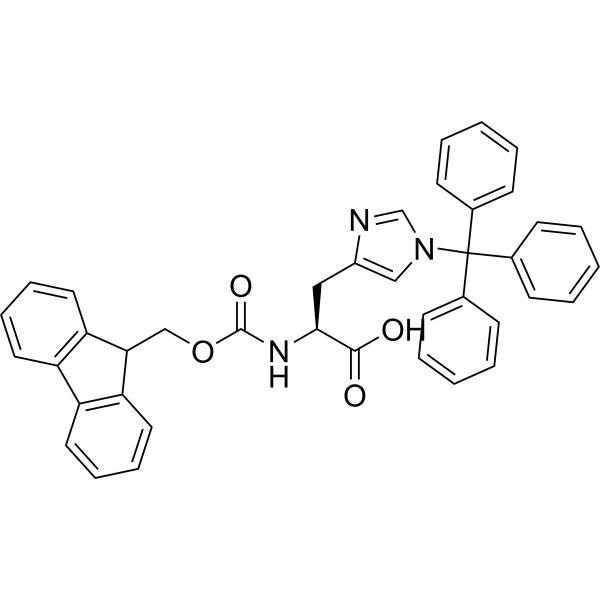
    Fmoc-His(Trt)-OH
    1 Publications Verification

    Amino Acid Derivatives Others
    Fmoc-His(Trt)-OH is a histidine derivative with a trityl (Trt) group protecting the His side chain. Fmoc-His(Trt)-OH also has an Fmoc group protecting the α-NH2 group. Fmoc-His(Trt)-OH can be used in solid-phase peptide synthesis to prevent racemization and byproduct formation. Fmoc-His(Trt)-OH acts as a protected histidine precursor in solid-phase peptide synthesis (SPPS), participating in peptide chain construction through amide bond formation. Fmoc-His(Trt)-OH can be precisely incorporated into the target peptide sequence, ensuring correct peptide chain synthesis and reducing impurity formation. Fmoc-His(Trt)-OH is mainly used in the solid-phase synthesis research of pharmaceutical peptides and bioactive peptides, and is particularly suitable for the preparation of peptide drugs requiring precise control of histidine configuration .
    Fmoc-His(Trt)-OH
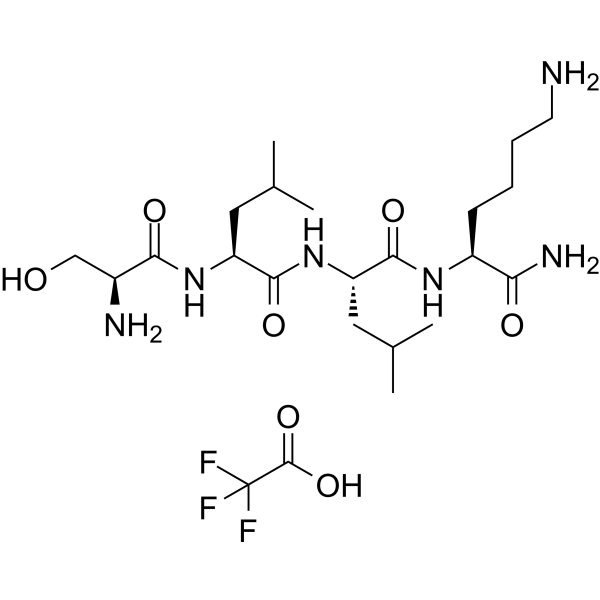
  • HY-P0301A

    TGF-β Receptor Cancer
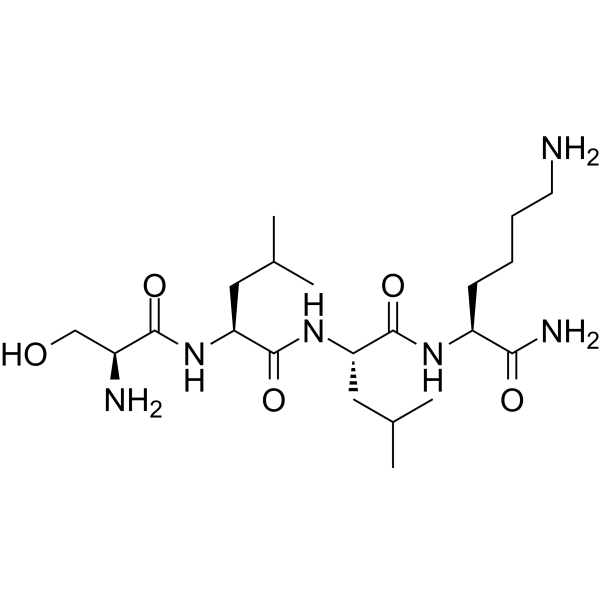
    SLLK, Control Peptide for TSP1 Inhibitor (TFA) is a control peptide for LSKL, which is a Thrombospondin (TSP-1) inhibitor.
    SLLK, Control Peptide for TSP1 InhibitorTFA
  • HY-P3211B
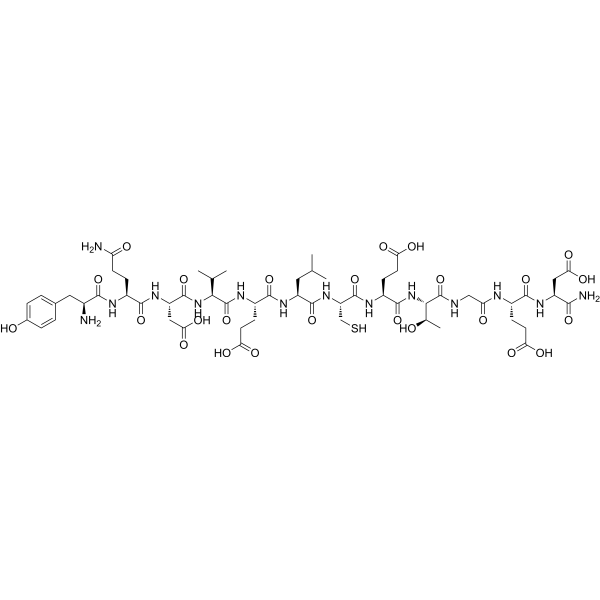
    Nangibotide scrambled peptide
    2 Publications Verification

    LR12-scr

    TREM receptor Inflammation/Immunology
    Nangibotide scrambled peptide (LR12-scr) is a scrambled control peptide composed of the same amino acids from LR12 (Nangibotide; HY-P3211) but in a random sequence (YQDVELCETGED) .
    Nangibotide scrambled peptide
  • HY-P2231
    Cotadutide
    1 Publications Verification

    MEDI0382

    GCGR Metabolic Disease
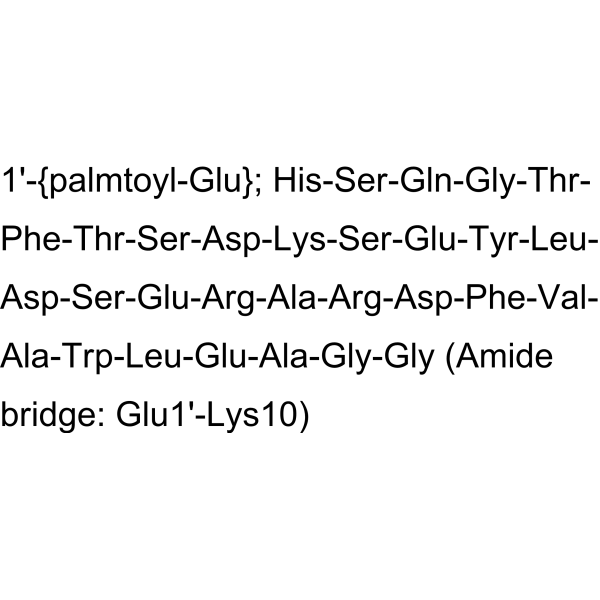
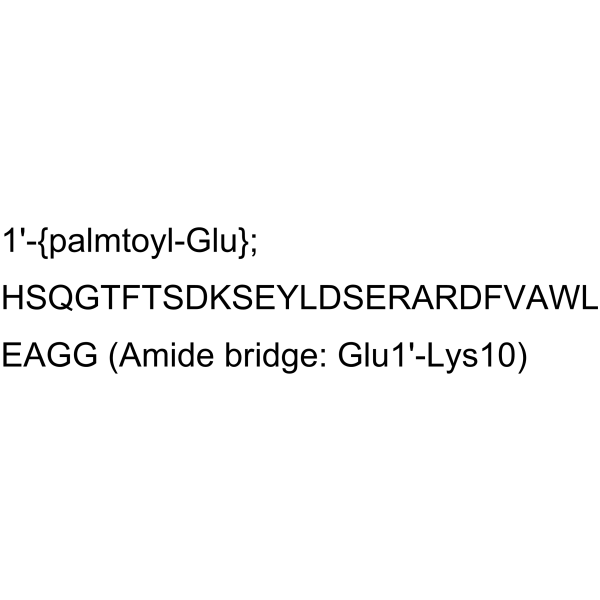
    Cotadutide (MEDI0382) is a potent dual agonist of glucagon-like peptide-1 (GLP-1) and GCGR with EC50 values of 6.9 pM and 10.2 pM, respectively. Cotadutide exhibits ability to facilitate both weight loss and glycaemic control, and alleviate fibrosis. Cotadutide can be used in the research of obesity and type 2 diabetes (T2D) .
    Cotadutide
  • HY-P2231A
    Cotadutide acetate
    1 Publications Verification

    MEDI0382 acetate

    GCGR Metabolic Disease
    Cotadutide (MEDI0382) acetate is a potent dual agonist of glucagon-like peptide-1 (GLP-1) and GCGR with EC50 values of 6.9 pM and 10.2 pM, respectively. Cotadutide acetate exhibits ability to facilitate both weight loss and glycaemic control, and alleviate fibrosis. Cotadutide acetate can be used in the research of obesity and type 2 diabetes (T2D) .
    Cotadutide acetate
  • HY-P2198

    Mas-related G-protein-coupled Receptor (MRGPR) Cardiovascular Disease
    PAMP-12(human, porcine) is a major component of immunoreactive (ir)-PAMP, is processed from the adrenomedullin precursor, is a potent hypotensive peptide and participates in cardiovascular control .
    PAMP-12(human, porcine)
  • HY-P1513A

    Bacterial Infection
    LL-37 scrambled peptide acetate is a scrambled version of cathelicidin anti-microbial peptide LL-37. LL-37 scrambled peptide acetate can be used as a negative control of LL-37 peptide studies.
    LL-37 scrambled peptide acetate
  • HY-133803

    Amino Acid Derivatives Others
    Z-Ala-Ala-OH is an N-benzyloxycarbonyl (Z) dipeptide containing small nonpolar amino acids. Z-Ala-Ala-OH is used for enzymatic peptide synthesis .
    Z-Ala-Ala-OH
  • HY-P10018

    SAR425899

    GLP Receptor GCGR Metabolic Disease
    Bamadutide (SAR425899) is a potent dual glucagon-like peptide-1 receptor/glucagon receptor (GLP-1R/GCGR) agonist. Bamadutide improves post-meal blood glucose control by significantly enhancing β-cell function and slowing down the rate of glucose absorption in the body. Bamadutide can be used for the research of metabolic diseases such as type 2 diabetes .
    Bamadutide
  • HY-114174
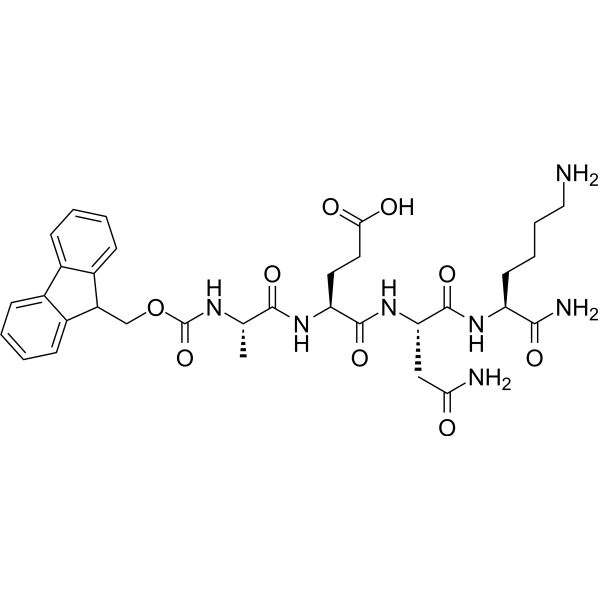
    Fmoc-Ala-Glu-Asn-Lys-NH2
    3 Publications Verification

    Amyloid-β Neurological Disease
    Fmoc-Ala-Glu-Asn-Lys-NH2 is a selective asparagine endopeptidase (AEP) inhibitor peptide and suppresses amyloid precursor protein (APP) cleavage. AEP, a pH-controlled cysteine proteinase, is activated during ageing and mediates APP proteolytic processing .
    Fmoc-Ala-Glu-Asn-Lys-NH2
  • HY-117912

    Endogenous Metabolite Cardiovascular Disease
    TRC210258 is a TGR5 agonist with activity to improve diabetes-associated hyperglycemia and dyslipidemia. TRC210258 promotes energy expenditure by enhancing the release of glucagon-like peptide-1. TRC210258 is able to improve glucose metabolic control in high-fat diet-induced obese mice. TRC210258 also showed improvement in lipid parameters in high-fat-fed hamsters, including reductions in plasma triglyceride and low-density lipoprotein cholesterol levels. TRC210258 improved emerging lipid-related cardiovascular risk parameters including remnant cholesterol and triglyceride clearance .
    TRC210258
  • HY-P0301

    TGF-β Receptor Cancer
    SLLK, Control Peptide for TSP1 Inhibitor is a control peptide for LSKL (leucine-serine-lysine-leucine).
    SLLK, Control Peptide for TSP1 Inhibitor
  • HY-139201E

    PDLHB (MW 150000-300000)

    CaSR 5-HT Receptor Metabolic Disease
    Poly-D-lysine hydrobromide (MW 150000-300000) is a synthetic polymer composed of D-lysine residues and is one of the most widely used matrices in neural cell culture applications. Poly-D-lysine hydrobromide (MW 150000-300000) can be used as a non-specific cell adhesion enhancer. Poly-D-lysine hydrobromide (MW 30000-70000) is an orally active CaSR agonist peptide that indirectly activates the 5-HT₃ receptor signaling pathway, delaying gastric emptying and thereby slowing the rate at which glucose enters the small intestine and is absorbed .
    Poly-D-lysine hydrobromide (MW 150000-300000)
  • HY-P4232

    Amino Acid Derivatives Others
    H-Gly-Arg-Ala-Asp-Ser-Pro-OH (GRADSP) is a negative control peptide of GRGDSPK .
    H-Gly-Arg-Ala-Asp-Ser-Pro-OH
  • HY-P10341

    GCGR Metabolic Disease
    ZP3022 is a dual agonist of glucagon-like peptide-1 (GLP-1) and gastrin that has the ability to sustainably improve glycemic control. Additionally, ZP3022 can effectively increase β-cell mass, promote β-cell proliferation, and enhance the function of pancreatic islets. ZP3022 can be used in anti-diabetic research .
    ZP3022
  • HY-P1310
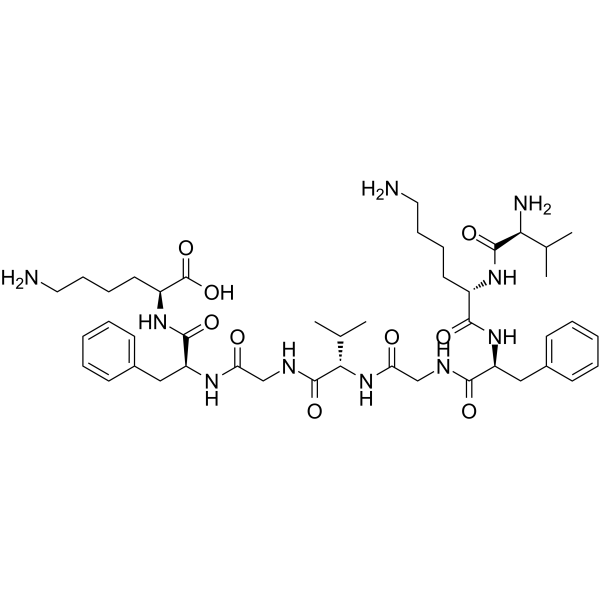
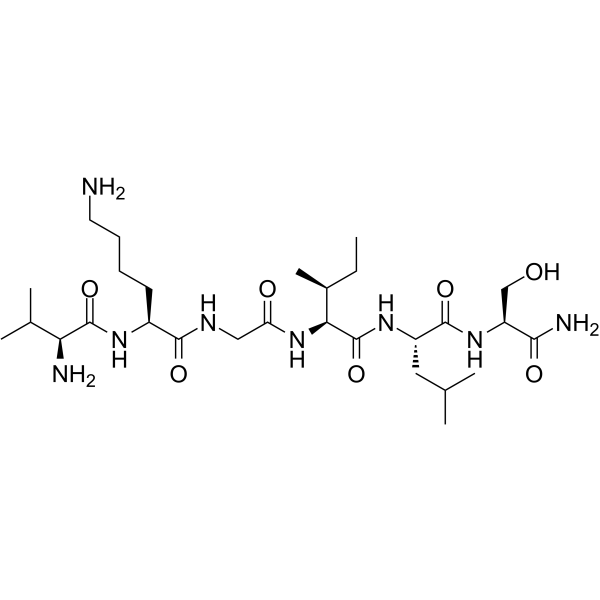
    VKGILS-NH2
    1 Publications Verification

    Protease Activated Receptor (PAR) Inflammation/Immunology
    VKGILS-NH2 is a reversed amino acid sequence control peptide for SLIGKV-NH2 (protease-activated receptor 2 (PAR2) agonist). VKGILS-NH2 has no effect on DNA synthesis in cells .
    VKGILS-NH2
  • HY-P10471E

    MARCKS-ED Control peptide TFA

    MARCKS Others
    MPSD control peptide (MARCKS-ED control peptide) TFA is the control peptide of MPSD (HY-P10471). MPSD (MARCKS-ED) is a 25-amino acid peptide based on the effector domain sequence of the intracellular membrane protein myristoylated alanine-rich C-kinase substrate (MARCKS) .
    MPSD control peptide TFA
  • HY-P1398

    Complement System Inflammation/Immunology
    Compstatin control peptide is a negative control of Compstatin (HY-P1036). Compstatin is a potent complement system C3 inhibitor .
    Compstatin control peptide
  • HY-P0121B

    MDM-2/p53 Cancer
    ReACp53 scrambled peptide TFA is a negative control for ReACp53 (HY-P0121). ReACp53 scrambled peptide can be used in the study of ovarian cancer .
    ReACp53 scrambled peptide TFA
  • HY-P3970D

    TGF-β Receptor Inflammation/Immunology
    KQFK TFA is the TFA salt form of KQFK (HY-P3970C). KQFK TFA is an inactive control of KRFK (HY-P3970). KRFK is a peptide derived from TSP-1 that can activate TGF-β .
    KQFK TFA
  • HY-P3708

    E1/E2/E3 Enzyme p62 Others
    TRAF6 control peptide is a control peptide for TRAF6 .
    TRAF6 control peptide
  • HY-P10168

    Phosphatase Others
    11R-CaN-CON is a control inactive peptide and can be used as a negative control for 11R-CaN-AID (HY-P10167) .
    11R-CaN-CON
  • HY-P10638A

    CaMK Cardiovascular Disease Neurological Disease
    TAT-CN21 (scrambled) is a nonsense sequence control peptide fused with the TAT cell-penetrating sequence. It exerts no inhibitory effect on CaMKII activity and serves as a negative control for TatCN21 (HY-P10638) .
    TAT-CN21 (scrambled)
  • HY-P1402

    PKC Others
    [Glu27]-PKC (19-36) is an inactive control for protein kinase C (PKC) (19-36). PKC (19-36) is a pseudosubstrate peptide inhibitor of protein kinase C, it may be responsible for maintaining the enzyme in the inactive form in the absence of allosteric activators such as phospholipids .
    [Glu27]-PKC (19-36)
  • HY-P1513

    Bacterial Infection
    LL-37 scrambled peptide is a scrambled version of cathelicidin anti-microbial peptide LL-37. LL-37 scrambled peptide can be used as a negative control of LL-37 peptide studies.
    LL-37 scrambled peptide
  • HY-P5023A

    c(RADyK) TFA

    Biochemical Assay Reagents Cancer
    Cyclo (ARG-ALA-ASP- (D-Tyr) -LYS) (TFA) (C (Radyk) (TFA)) is a control peptide for c(RGDyK) .
    Cyclo(Arg-Ala-Asp-(D-Tyr)-Lys) TFA
  • HY-P11208A

    GABA Receptor Inflammation/Immunology
    mNLS-CPP-scramble is a negative control peptide of mNLS-CPP-WSTF. mNLS-CPP-scramble is promising for research of chronic inflammatory diseases (e.g., MASH, osteoarthritis) .
    mNLS-CPP-scramble
  • HY-P5325A

    Bcl-2 Family Others
    Bid BH3 (80-99) acetate is a biological active peptide. (BID is a pro-apoptotic member of the 'BH3-only' (BOPS) subset of the BCL-2 family of proteins that constitute a critical control point in apoptosis. Bid is the first of the BOPs reported to bind and activate Bcl-2, Bax, and Bak. Bid serves as a death-inducing ligand that moves from the cytosol to the mitochondrial membrane to inactivate Bcl-2 or to activate Bax.Pyroglutamyl (pGlu) peptides may spontaneously form when either Glutamine (Q) or Glutamic acid (E) is located at the sequence N-terminus. The conversion of Q or E to pGlu is a natural occurrence and in general it is believed that the hydrophobic γ-lactam ring of pGlu may play a role in peptide stability against gastrointestinal proteases. Pyroglutamyl peptides are therefore considered a normal subset of such peptides and are included as part of the peptide purity during HPLC analysis.)
    Bid BH3 (80-99) acetate
  • HY-P5325

    Bcl-2 Family Others
    Bid BH3 (80-99) is a biological active peptide. (BID is a pro-apoptotic member of the 'BH3-only' (BOPS) subset of the BCL-2 family of proteins that constitute a critical control point in apoptosis. Bid is the first of the BOPs reported to bind and activate Bcl-2, Bax, and Bak. Bid serves as a death-inducing ligand that moves from the cytosol to the mitochondrial membrane to inactivate Bcl-2 or to activate Bax.Pyroglutamyl (pGlu) peptides may spontaneously form when either Glutamine (Q) or Glutamic acid (E) is located at the sequence N-terminus. The conversion of Q or E to pGlu is a natural occurrence and in general it is believed that the hydrophobic γ-lactam ring of pGlu may play a role in peptide stability against gastrointestinal proteases. Pyroglutamyl peptides are therefore considered a normal subset of such peptides and are included as part of the peptide purity during HPLC analysis.)
    Bid BH3 (80-99)
  • HY-P4114

    HIV Others
    TAT-NSF700scr consists the intact TAT domain and glycine linker, followed by the NSF amino acids in a random order. TAT-NSF700scr is used as a control peptide that does not inhibit SNAREmediated exocytosis .
    TAT-NSF700scr
  • HY-P11208B

    GABA Receptor Inflammation/Immunology
    mNLS-CPP-scramble (TFA) is the trifluoroacetate salt of mNLS-CPP-scramble (HY-P11208A). mNLS-CPP-scramble is a negative control peptide of mNLS-CPP-WSTF. mNLS-CPP-scramble is promising for research of chronic inflammatory diseases (e.g., MASH, osteoarthritis) .
    mNLS-CPP-scramble TFA
  • HY-P10471D

    MARCKS-ED Control peptide

    MARCKS PKC Others
    MPSD control peptide (MARCKS-ED control peptide) is a control peptide for MPSD peptide (HY-P10471). MPSD (MARCKS-ED) is a 25-amino acid peptide based on the effector domain sequence of the intracellular membrane protein myristoylated alanine-rich C-kinase substrate (MARCKS). MPSD can sense membrane curvature and recognize phosphatidylserine. MPSD can be utilized as biological probe to study membrane shape and lipid composition .
    MPSD control peptide
  • HY-P10169

    Proteasome Others
    Acetyl-Calpastatin(184-210)(human), Negative Control is a control scramble peptide of Acetyl-Calpastatin(184-210)(human) (HY-P1081). Acetyl-Calpastatin(184-210)(human) is a potent, selective and reversible calpain inhibitor .
    Acetyl-Calpastatin(184-210)(human), Negative Control
  • HY-P1383A

    Ras Others
    Rac1 Inhibitor F56, control peptide TFA is a peptide containing residues 45-60 of Rac1. Rac1 Inhibitor F56, control peptide TFA contains a Trp 56 to Phe 56 mutation. Rac1 Inhibitor F56, control peptide TFA has no effect on Rac1 interaction with its guanine nucleotide exchange factors (GEFs) .
    Rac1 Inhibitor F56, control peptide TFA
  • HY-177632B

    IFNAR Cancer
    Frenlosirsen scrambled control is a scrambled control antisense oligonucleotide of Frenlosirsen (HY-177632) with a scrambled sequence in the target binding region.
    Frenlosirsen scrambled control
  • HY-P10737

    Biochemical Assay Reagents Neurological Disease
    CGGK is a control peptide of CAQK peptide (HY-P10216) .
    CGGK
  • HY-P0121A

    MDM-2/p53 Cancer
    ReACp53 scrambled peptide is a negative control for ReACp53 (HY-P0121). ReACp53 scrambled peptide can be used in the study of ovarian cancer .
    ReACp53 scrambled peptide
  • HY-P2360

    Ras 5-17

    Ras Others
    G12 (Ras 5-17) is a wild-type Ras peptide consisted of amino acids 5-17 (KLVVVGAGGVGKS). G12 can be used as a control of mutant Ras peptides studies (such V12) .
    G12
  • HY-P1311

    Drug Isomer Others
    RLLFT-NH2 is a reversed amino acid sequence negative control peptide for TFLLR-NH2 .
    RLLFT-NH2
  • HY-P1138

    FSVYWAQADR

    Gap Junction Protein Others
    Scrambled 10Panx (FSVYWAQADR) is a random sequence variant of a specific inhibitory peptide 10Panx targeted at the half-channel of Pannexin-1 (Panx1). Scrambled 10Panx is used as a control peptide to determine whether other experimental conditions or peptides act through specific molecular mechanisms. Scrambled 10Panx can be used for research in neurobiology and cell biology .
    Scrambled 10Panx
  • HY-P2243

    JNK Neurological Disease
    D-JBD19 is an impermeable peptide that serves as an inactive control for the JNK inhibitor D-JNKI1 (HY-P0069). D-JNKI1 has neuroprotective effects .
    D-JBD19
  • HY-P10497

    Bacterial Infection Inflammation/Immunology
    EBV BZLF1 (190-197) is an immunodominant CEF-controlling peptide derived from Epstein-Barr virus (EBV). EBV BZLF1 (190-197) is a suitable epitope for CD8+ T cells to stimulate the release of IFNg. CTL responses to EBV BZLF1 (190-197) are diverse and cross-recognize similar peptides from both host self-proteins and bacterial proteins. EBV BZLF1 (190-197) can be used to study autoimmune diseases .
    EBV BZLF1 (190-197)
  • HY-P10497A

    Bacterial Infection Inflammation/Immunology
    EBV BZLF1 (190-197) TFA is an immunodominant CEF-controlling peptide derived from Epstein-Barr virus (EBV). EBV BZLF1 (190-197) TFA is a suitable epitope for CD8+ T cells to stimulate the release of IFNg. CTL responses to EBV BZLF1 (190-197) TFA are diverse and cross-recognize similar peptides from both host self-proteins and bacterial proteins. EBV BZLF1 (190-197) TFA can be used to study autoimmune diseases .
    EBV BZLF1 (190-197) TFA
  • HY-103271

    Bcl-2 Family Cancer
    Bax inhibitor peptide, negative control is a inhibitor of Bax. Bax inhibitor peptide, negative control inhibits Bax translocation to mitochondria and Bax-mediated apoptosis in vitro .
    Bax inhibitor peptide, negative control
  • HY-P10088

    TREM receptor Inflammation/Immunology Cancer
    Mouse TREM-1 SCHOOL peptide, control is a negative control of Mouse TREM-1 SCHOOL peptide .
    Mouse TREM-1 SCHOOL peptide, control
  • HY-P1398A

    Complement System Inflammation/Immunology
    Compstatin control peptide TFA is a negative control of Compstatin (HY-P1036). Compstatin is a potent complement system C3 inhibitor .
    Compstatin control peptide TFA
  • HY-P10471B

    MARCKS PKC Others
    Ala-MPSD is a control peptide for MPSD (HY-P10471). In Ala-MPSD, the four serine residues of MPSD are substituted by alanines .
    Ala-MPSD
  • HY-P5986

    ERK Others
    mSIRK (L9A) is a cell-permeable, N-myristoylated G-Protein Binding Peptide (mSIRK). mSIRK (L9A) contains a single point mutation (Leu9 to Ala). mSIRK (L9A) cannot enhance ERK1/2 phosphorylation. mSIRK (L9A) can be used as a control peptide .
    mSIRK (L9A)
  • HY-P2670

    NF-κB Others
    SN50M, a mutant peptide of SN50 (HY-P0151), is a cell membrane-permeable inactive control peptide .
    SN50M

Inquiry Online

Your information is safe with us. * Required Fields.

Salutation


Country or Region *

Applicant Name *


Organization Name *

Department *


Email Address *


Product Name *

Cat. No.


Requested quantity *

Phone Number *


Remarks

Inquiry Online

Inquiry Information

Product Name:
Cat. No.:
Quantity:
MCE Japan Authorized Agent:

