1. Search Result
Search Result
Results for "

DHAP

" in MedChemExpress (MCE) Product Catalog:

11

Inhibitors & Agonists

7

Natural
Products

Cat. No. Product Name Target Research Areas Chemical Structure
  • HY-113128A

    Endogenous Metabolite Metabolic Disease
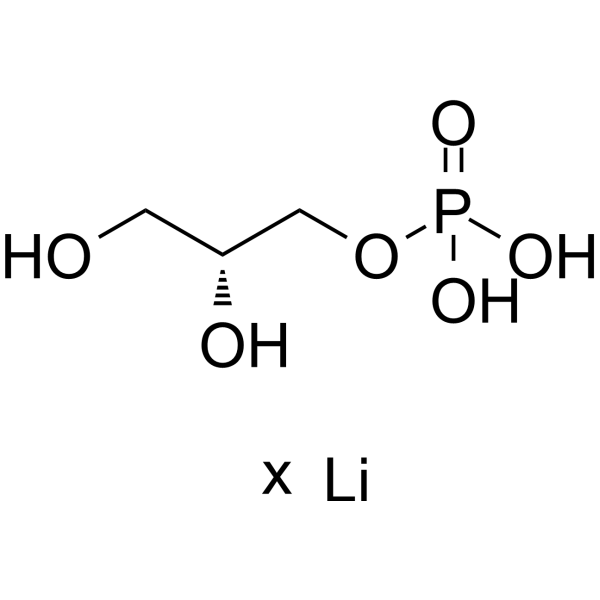
    sn-Glycerol 3-phosphate lithium is an important intermediate in glycolysis and lipid metabolism. The cytosolic sn-Glycerol 3-phosphate dehydrogenase (GPDH) consumes NADH to generate sn-Glycerol 3-phosphate lithium from dihydroxyacetone phosphate (DHAP). Glyceroneogenesis is an important supplier of sn-Glycerol 3-phosphate lithium for lipid metabolism .
    sn-Glycerol 3-phosphate lithium
  • HY-113131

    DHAP

    Endogenous Metabolite Biochemical Assay Reagents Metabolic Disease
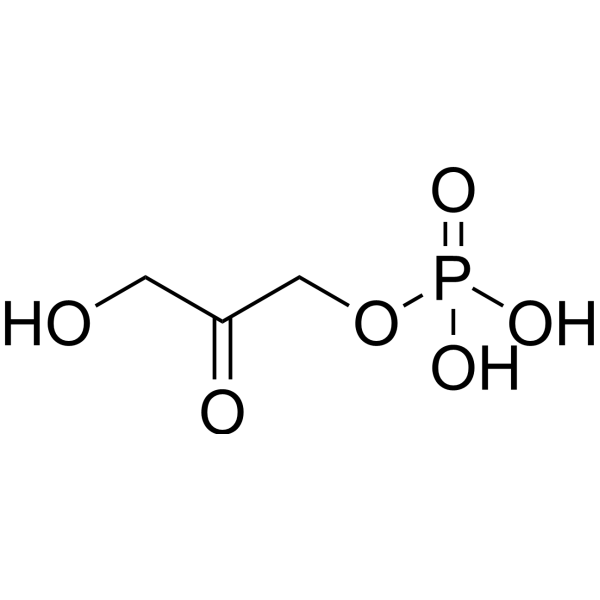
    Dihydroxyacetone phosphate (DHPA), a derivative of Dihydroxyacetone (DHA), is an important intermediate that participates in key pathways including glycolysis, lipid biosynthesis, and the plant Calvin cycle. Dihydroxyacetone phosphate can be used as a substrate and metabolic marker in biochemical research .
    Dihydroxyacetone phosphate
  • HY-113128

    Endogenous Metabolite Metabolic Disease
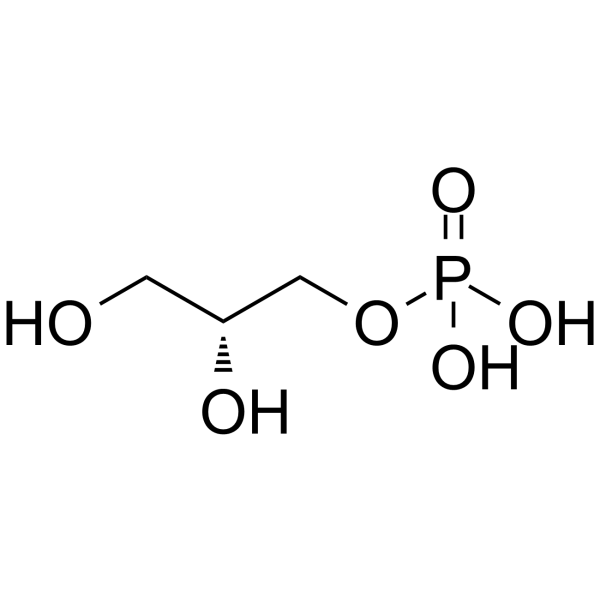
    sn-Glycerol 3-phosphate is an important intermediate in glycolysis and lipid metabolism. The cytosolic sn-Glycerol 3-phosphate dehydrogenase (GPDH) consumes NADH to generate sn-Glycerol 3-phosphate from dihydroxyacetone phosphate (DHAP). Glyceroneogenesis is an important supplier of sn-Glycerol 3-phosphate for lipid metabolism .
    sn-Glycerol 3-phosphate
  • HY-113131A

    DHAP hemimagnesium hydrate

    Endogenous Metabolite Biochemical Assay Reagents Metabolic Disease
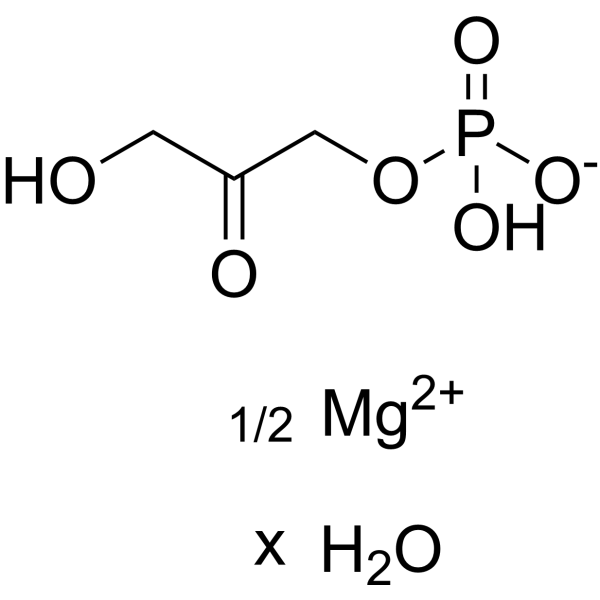
    Dihydroxyacetone phosphate (DHPA) hemimagnesium hydrate, a derivative of Dihydroxyacetone (DHA), is an important intermediate that participates in key pathways including glycolysis, lipid biosynthesis, and the plant Calvin cycle. Dihydroxyacetone phosphate hemimagnesium hydrate can be used as a substrate and metabolic marker in biochemical research .
    Dihydroxyacetone phosphate hemimagnesium hydrate
  • HY-N1775

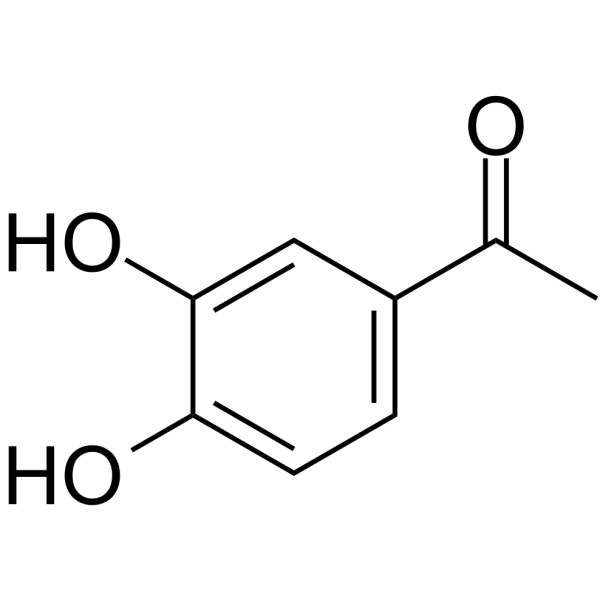
    3,4-DHAP

    Tyrosinase Reactive Oxygen Species (ROS) Keap1-Nrf2 PARP Autophagy Apoptosis Cardiovascular Disease Neurological Disease Metabolic Disease Inflammation/Immunology Cancer
    3',4'-Dihydroxyacetophenone (3,4-DHAP) is a phenolic compound with oral bioavailability, possessing potent antioxidant, anti-inflammatory, anticancer and cardiovascular protective activities. 3',4'-Dihydroxyacetophenone inhibits mushroom Tyrosinase activity with an IC50 of 10 μM, thereby suppressing melanogenesis . 3',4'-Dihydroxyacetophenone inhibits platelet aggregation in platelet-rich plasma. 3',4'-Dihydroxyacetophenone reduces ROS levels in human umbilical vein endothelial cells treated with high glucose, upregulates the expression of Nrf2, HO-1 and PARP-1 in cells, and promotes the nuclear translocation of Nrf2 . 3',4'-Dihydroxyacetophenone induces autophagy and apoptosis. 3',4'-Dihydroxyacetophenone inhibits seed germination/growth in most plants. 3',4'-Dihydroxyacetophenone can be used in the research of cancer, neurodegenerative diseases, non-alcoholic steatohepatitis, diabetes, obesity, skin pigmentation disorders, and cardiovascular and cerebrovascular diseases .
    3',4'-Dihydroxyacetophenone
  • HY-113131B

    DHAP dilithium

    Biochemical Assay Reagents Endogenous Metabolite Metabolic Disease
    Dihydroxyacetone phosphate (DHPA) dilithium, a derivative of Dihydroxyacetone (DHA), is an important intermediate that participates in key pathways including glycolysis, lipid biosynthesis, and the plant Calvin cycle. Dihydroxyacetone phosphate dilithium can be used as a substrate and metabolic marker in biochemical research .
    Dihydroxyacetone phosphate dilithium
  • HY-N1775R

    3,4-DHAP (Standard)

    Reference Standards Tyrosinase Cancer
    3',4'-Dihydroxyacetophenone (3,4-DHAP), isolated from Picea Schrenkiana Needles exhibits a strong suppressive action against tyrosinase activity, with an IC50 of 10 μM. 3',4'-Dihydroxyacetophenone (3,4-DHAP) is a vasoactive agent and antioxidant .
    3',4'-Dihydroxyacetophenone (Standard)
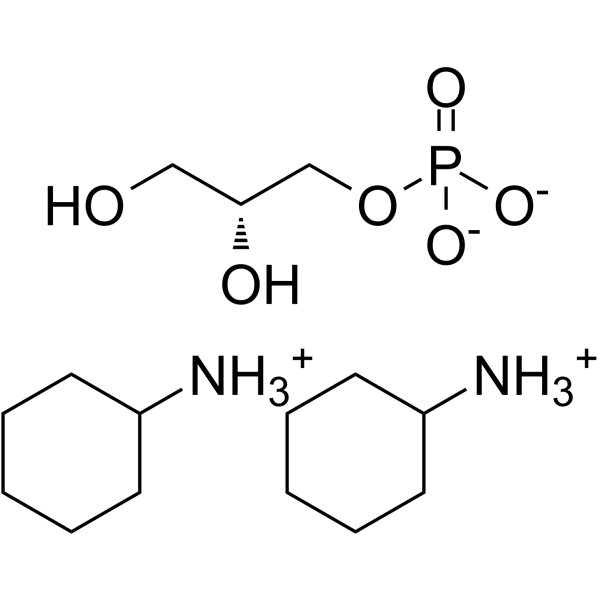
  • HY-113128B

    Endogenous Metabolite Metabolic Disease
    sn-Glycerol 3-phosphate biscyclohexylammonium salt is an important intermediate in glycolysis and lipid metabolism. The cytosolic sn-Glycerol 3-phosphate dehydrogenase (GPDH) consumes NADH to generate sn-Glycerol 3-phosphate biscyclohexylammonium salt from dihydroxyacetone phosphate (DHAP). Glyceroneogenesis is an important supplier of sn-Glycerol 3-phosphate biscyclohexylammonium salt for lipid metabolism .
    sn-Glycerol 3-phosphate biscyclohexylammonium salt
  • HY-171229

    mTOR Others
    1-Acetyl-DHA (Compound 7) is a substrate of the phosphotriesterase homology protein (PHP) and can be hydrolyzed by PHP with a kcat/km value of 100 M -1s -1. The level of 1-Acetyl-DHA is regulated by mTORC1 and is negatively correlated with the nuclear acetate level. 1-Acetyl-DHA plays an important role in cellular metabolism and the regulation of histone acetylation .
    1-Acetyl-DHAP
  • HY-P2726A

    Endogenous Metabolite Fructose-1,6-bisphosphate aldolase Metabolic Disease
    Aldolase, Spinach (EC 4.1.2.13) is an enzyme catalyzing a reversible reaction that splits the aldol, fructose 1,6-bisphosphate, into the triose phosphates dihydroxyacetone phosphate (DHAP) and glyceraldehyde 3-phosphate (G3P). Aldolase, Spinach (EC 4.1.2.13) can also produce DHAP from other (3S,4R)-ketose 1-phosphates such as fructose 1-phosphate and sedoheptulose 1,7-bisphosphate.
    Aldolase, Spinach
  • HY-E70417

    GPDH, Saccharomyces cerevisiae

    Endogenous Metabolite Others
    Glycerol-3-phosphate dehydrogenase, Saccharomyces cerevisiae, is an enzyme involved in glycerol metabolism and energy production, responsible for catalyzing the oxidation of glycerol-3-phosphate (G3P) to dihydroxyacetone phosphate (DHAP). Glycerol-3-phosphate dehydrogenase, Saccharomyces cerevisiae, is the rate-limiting enzyme in glycerol production in Saccharomyces cerevisiae, and helps Saccharomyces cerevisiae adapt to high osmotic environments by regulating glycerol production and accumulation. Glycerol-3-phosphate dehydrogenase, Saccharomyces cerevisiae, can be used in research within the field of metabolic engineering .
    Glycerol-3-phosphate dehydrogenase, Saccharomyces cerevisiae

Inquiry Online

Your information is safe with us. * Required Fields.

Salutation


Country or Region *

Applicant Name *


Organization Name *

Department *


Email Address *


Product Name *

Cat. No.


Requested quantity *

Phone Number *


Remarks

Inquiry Online

Inquiry Information

Product Name:
Cat. No.:
Quantity:
MCE Japan Authorized Agent:

