

9 Results for "

Fibrillization

" in MedChemExpress (MCE) Product Catalog:
Products (9)

9 Results for "Fibrillization" in MCE Product Catalog:

Cat. No.: HY-34596
CAS No.: 2380-94-1
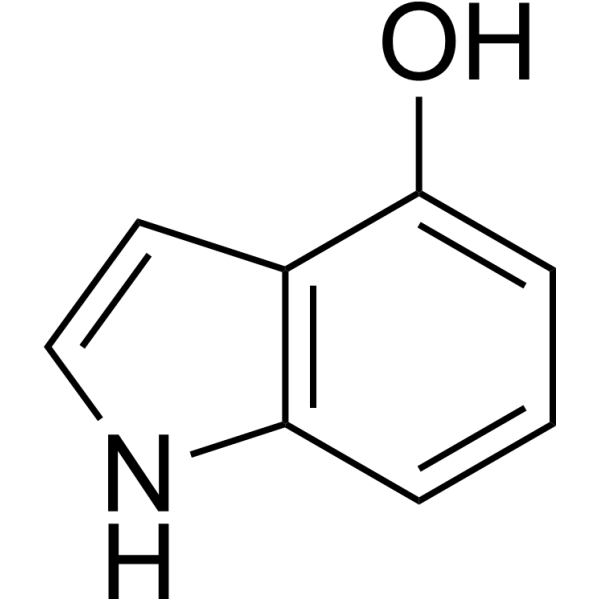
4-Hydroxyindole is a type of hydroxyindole in which the 1H-indole at position 4 is substituted by a hydroxyl group. 4-Hydroxyindole serves as an important raw material or intermediate in the synthesis of pharmaceutical products and industrial polymers. 4-Hydroxyindole inhibits amyloid fibrillization and induces liver function impairment, thyroid abnormalities, and blood glucose fluctuations in mice. 4-Hydroxyindole holds potential for research in neurodegenerative diseases and metabolic disorders .
loading...
    loading...
Cat. No.: HY-P1889
CAS No.: 721885-31-0
Target:  

Bcl-2 Family Amyloid-β

Research Areas:  

Neurological Disease

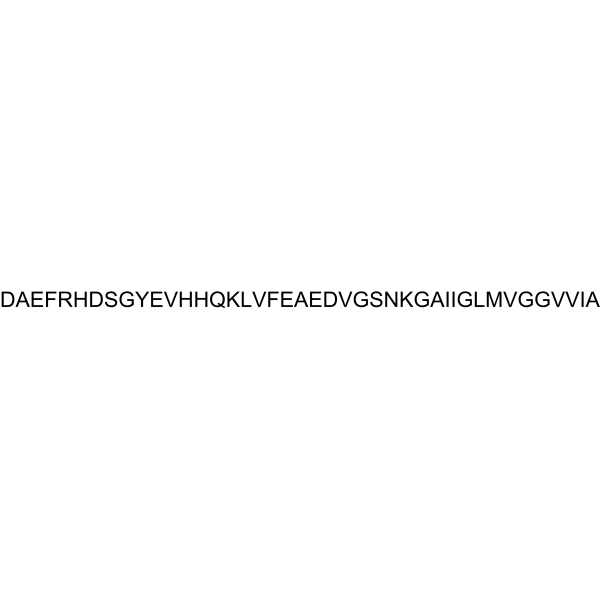
Bim BH3, Peptide IV is an Aβ42-binding peptide and the pro-apoptotic BH3 domain of the BIM protein. Bim BH3, Peptide IV binds Aβ42 with a Kd of 7.1 μM. Bim BH3, Peptide IV modulates Aβ42 structure, fibrillization pathways, aggregate morphology, and membrane interactions, inhibiting fibril formation while enhancing protofibril assembly. Bim BH3, Peptide IV promotes Aβ42 β-sheet formation and accelerates aggregation. Bim BH3, Peptide IV enhances Aβ42 membrane internalization and bilayer stiffening. Bim BH3, Peptide IV induces neuronal cell death by enhancing BH3-induced membrane interactions of Aβ42 prefibrillar species. Bim BH3, Peptide IV can be used for research on Alzheimer's disease .
loading...
    loading...
Cat. No.: HY-P3846
CAS No.: 1802086-22-1
Target:  

Amyloid-β

Research Areas:  

Neurological Disease

(Glu20)-Amyloid β-Protein (1-42) is a slower fibrillizing variant of amyloid β-protein (Aβ). The Glu20 mutation reduces the aggregation propensity of Aβ42 and prevents accumulation of the slowly fibrillizing peptide. Amyloid β-protein is the primary component of both vascular and parenchymal amyloid deposits in Alzheimer's disease .
loading...
    loading...
Cat. No.: HY-139740
CAS No.: 2847131-53-5
Target:  

Amyloid-β

Research Areas:  

Neurological Disease

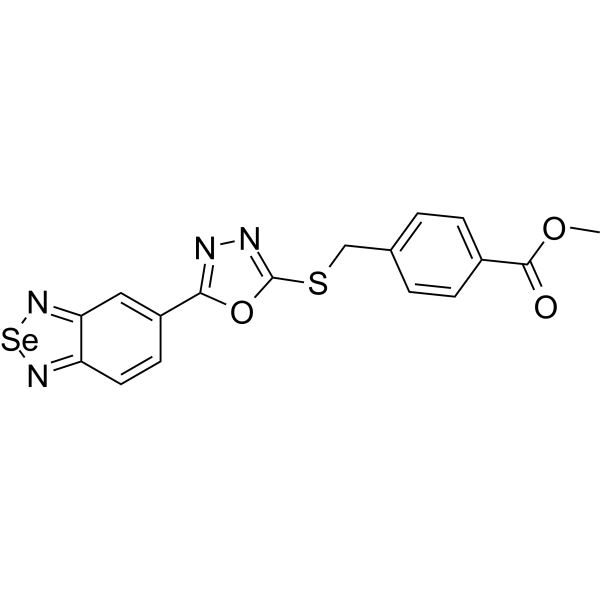
Aβ Fibrillization modulator 1 stabilizes Aβ monomers.
loading...
    loading...
Cat. No.: HY-156179
Target:  

Amyloid-β

Research Areas:  

Neurological Disease

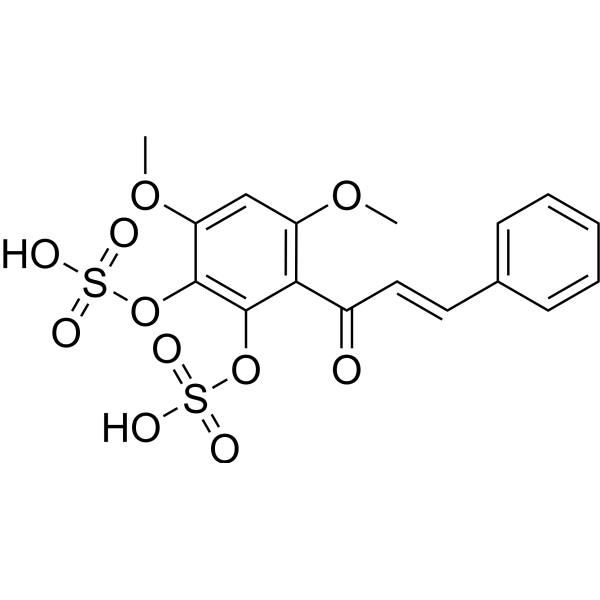
DDC 2′,3′-O-disulfate (compound 4) prevents the fibrillization and oligomerization of Aβ42. DDC 2′,3′-O-disulfate has the potential for Alzheimer's disease (AD) research .
loading...
    loading...
Cat. No.: HY-156180
Target:  

Drug Metabolite

Research Areas:  

Neurological Disease

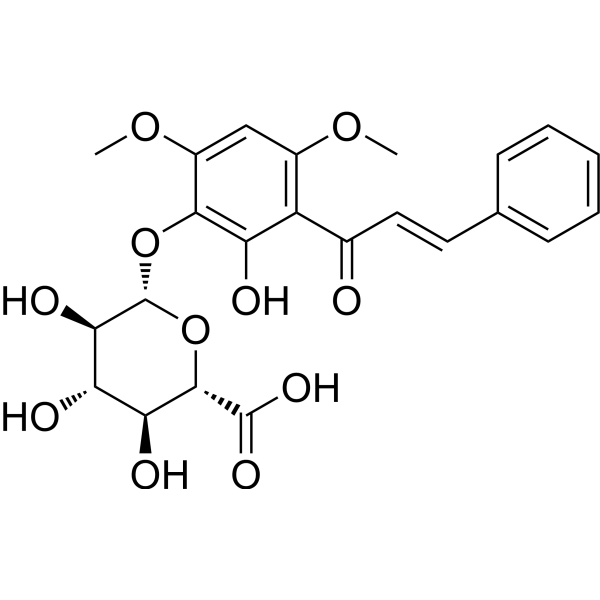
DDC 3′-O-β-D glucuronide (compound 5) is a drug metabolite that can prevent the fibrillization and oligomerization of Aβ42. DDC 3′-O-β-D glucuronide has potential for the research of Alzheimer's disease .
loading...
    loading...
Cat. No.: HY-N12321
CAS No.: 54299-64-8
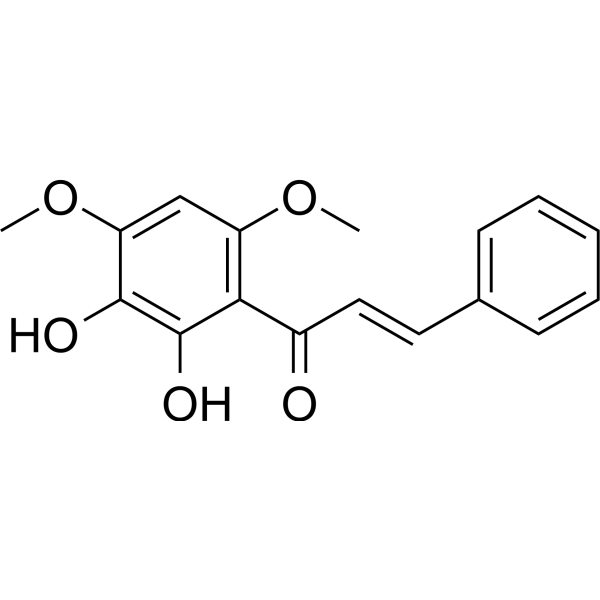
2',3'-Dihydroxy-4',6'-dimethoxychalcone (compound 1) can inhibit Amyloid β-protein (Aβ42) fibrillization and aggregation. 2',3'-Dihydroxy-4',6'-dimethoxychalcone has oral activity and can be detected in the brain .
loading...
    loading...
Cat. No.: HY-P1889A
Target:  

Bcl-2 Family Amyloid-β

Research Areas:  

Neurological Disease

Bim BH3, Peptide IV TFA is an Aβ42-binding peptide and the pro-apoptotic BH3 domain of the BIM protein. Bim BH3, Peptide IV TFA binds Aβ42 with a Kd of 7.1 μM. Bim BH3, Peptide IV TFA modulates Aβ42 structure, fibrillization pathways, aggregate morphology, and membrane interactions, inhibiting fibril formation while enhancing protofibril assembly. Bim BH3, Peptide IV TFA promotes Aβ42 β-sheet formation and accelerates aggregation. Bim BH3, Peptide IV TFA enhances Aβ42 membrane internalization and bilayer stiffening. Bim BH3, Peptide IV TFA induces neuronal cell death by enhancing BH3-induced membrane interactions of Aβ42 prefibrillar species. Bim BH3, Peptide IV TFA can be used for research on Alzheimer's disease .
loading...
    loading...
Cat. No.: HY-119416
CAS No.: 21763-71-3
Sequoiaflavone is a biflavonoid compound with multiple activities. Sequoiaflavone suppresses hepatic CYP1A1/(7-Ethoxycoumarin O-deethylase) ECOD, prevents Aβ1-42 fibrillization (IC50 = 0.29 μM) and disaggregates amyloid fibrils (EC50 = 2.04 μM), inhibits Alternaria alternata and inhibits human recombinant PDE5A1 overexpressed in COS-7 cells (IC50 = 19.9 μM) to exert NO-independent vasodilation. Sequoiaflavone can be used in Alzheimer's disease, peripheral circulatory disorder, and antifungal research .
loading...
    loading...

