1. Search Result
Search Result
Results for "

GCLC

" in MedChemExpress (MCE) Product Catalog:

12

Inhibitors & Agonists

4

Natural
Products

1

Isotope-Labeled Compounds

3

Antibodies

3

Oligonucleotides

Cat. No. Product Name Target Research Areas Chemical Structure
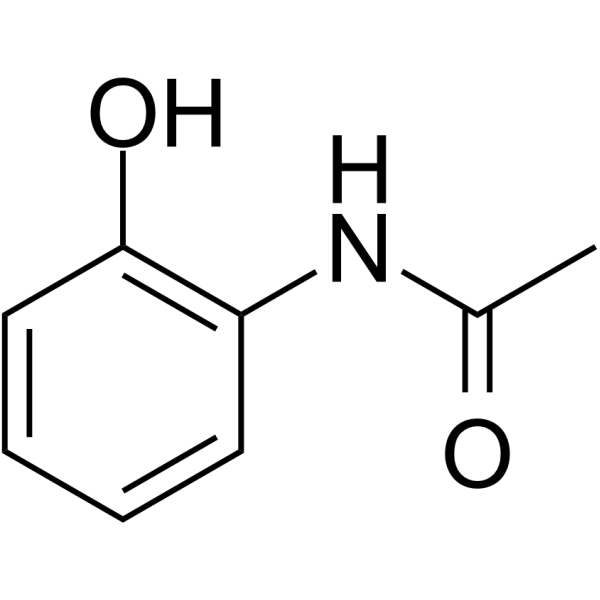
  • HY-W015600

    Orthocetamol

    Ferroptosis Glutathione Peroxidase Reactive Oxygen Species (ROS) LDLR Cardiovascular Disease Inflammation/Immunology
    2-Acetamidophenol (Orthocetamol) is a regulator that targets ferroptosis and glutathione metabolic pathways, is the ortho-regioisomer of Paracetamol (HY-66005). 2-Acetamidophenol has anti-atherosclerotic activity, and inhibiting total cholesterol (TC) and triglyceride (TG) in a zebrafish hyperlipidemia model with IC50s for 30 μM and 40 μM, respectively. 2-Acetamidophenol upregulates the expression of glutathione synthesis-related genes (such as GCLC, GCLM, GSS) and iron ion transport genes (such as FPN1, FTH), reduces the accumulation of intracellular reactive oxygen species (ROS) and ferrous ions (Fe 2+), and enhances the activity of glutathione peroxidase GPX4, thereby inhibiting macrophage phagocytosis of oxidized low-density lipoprotein (ox-LDL) and foam cell formation .
    2-Acetamidophenol
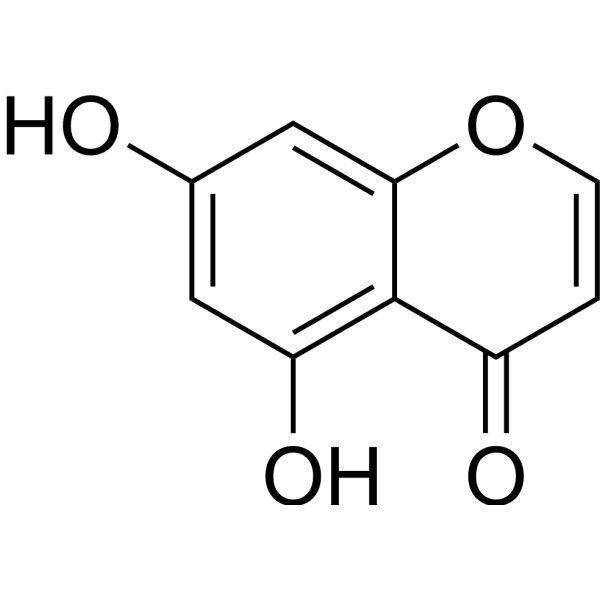
  • HY-N1970
    5,7-Dihydroxychromone
    2 Publications Verification

    Keap1-Nrf2 Caspase PARP Fungal Infection Neurological Disease Metabolic Disease Inflammation/Immunology Cancer
    5,7-Dihydroxychromone is a flavonoid compound with antioxidant properties. 5,7-Dihydroxychromone induces Nrf2 nuclear translocation, increases Nrf2/ARE binding activity, and up-regulates Nrf2-dependent antioxidant genes HO-1, NQO1, GCLc. 5,7-Dihydroxychromone attenuates excessive ROS generation, inhibits activated caspase-3, caspase-9, cleaved PARP expression, and prevents neuronal apoptosis and cell death. 5,7-Dihydroxychromone increases LXRα and PPARγ mRNA expression, induces preadipocyte differentiation, and regulates blood glucose levels. 5,7-Dihydroxychromone inhibits radial growth of soil pathogenic fungi, radicle elongation of select seedlings, and transiently inhibits Bradyrhizobium sp. growth in high mannitol medium. 5,7-Dihydroxychromone can be used for the research of Parkinson’s disease, type 2 diabetes mellitus and pathogenic fungal infection .
    5,7-Dihydroxychromone
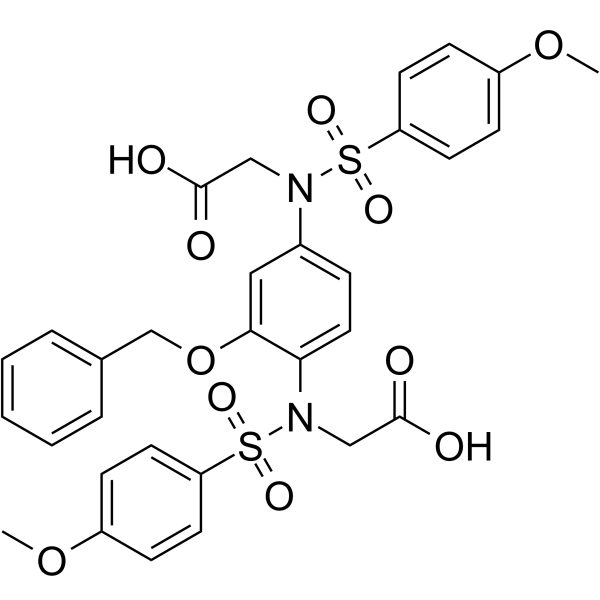
  • HY-147517

    Keap1-Nrf2 Neurological Disease Inflammation/Immunology
    Keap1-Nrf2-IN-9 (Compound 11) is a potent Keap1-Nrf2 PPI (Keap1-Nrf2 protein-protein interaction) inhibitor with an IC50 of 0.575 μM. Keap1-Nrf2-IN-9 increases the expression of Nrf2 target genes including heme oxygenase 1 (Hmox1), glutathione S-transferase P (GstP), and glutamate-cysteine ligase catalytic (Gclc) and modulatory (Gclm) subunits. Keap1-Nrf2-IN-9 shows no cytotoxic activity in ARPE19 cells .
    Keap1-Nrf2-IN-9
  • HY-171705

    Keap1-Nrf2 AMPK JNK IKK p38 MAPK NO Synthase α-synuclein Interleukin Related Neurological Disease
    KMS99220 is an orally active, blood-brain barrier-permeable activator of the Nrf2 inhibitory protein Keap-1. KMS99220 enhances the activity of AMPK, activates the Nrf2 signaling pathway, and reduces the phosphorylation of IκB, nuclear translocation of NFκB, as well as the phosphorylation levels of JNK, IKK and p38 MAPK via HO-1. KMS99220 binds to Keap1 to trigger the nuclear translocation of Nrf2, induces the expression of HO-1, NQO1, GCLC, GCLM and proteasome subunits; enhances proteasomal enzymatic activity; inhibits iNOS expression, nitric oxide production and IL-1β generation; attenuates microglial activation; reduces α-synuclein aggregation; and prevents dopaminergic neuron degeneration and motor dysfunction. KMS99220 prevents the degeneration of dopaminergic neurons in the substantia nigra, induces the expression of Nrf2 downstream target genes, and effectively ameliorates associated motor dysfunction in a mouse model of Parkinson's disease. KMS99220 is applicable to research related to Parkinson's disease .
    KMS99220
  • HY-W015600R

    Orthocetamol (Standard)

    Reference Standards Ferroptosis Glutathione Peroxidase Reactive Oxygen Species (ROS) LDLR Cardiovascular Disease Inflammation/Immunology
    2-Acetamidophenol (Standard) is the analytical standard of 2-Acetamidophenol. This product is intended for research and analytical applications. 2-Acetamidophenol (Orthocetamol) is a regulator that targets ferroptosis and glutathione metabolic pathways, is the ortho-regioisomer of Paracetamol (HY-66005). 2-Acetamidophenol has anti-atherosclerotic activity, and inhibiting total cholesterol (TC) and triglyceride (TG) in a zebrafish hyperlipidemia model with IC50s for 30 μM and 40 μM, respectively. 2-Acetamidophenol upregulates the expression of glutathione synthesis-related genes (such as GCLC, GCLM, GSS) and iron ion transport genes (such as FPN1, FTH), reduces the accumulation of intracellular reactive oxygen species (ROS) and ferrous ions (Fe 2+), and enhances the activity of glutathione peroxidase GPX4, thereby inhibiting macrophage phagocytosis of oxidized low-density lipoprotein (ox-LDL) and foam cell formation .
    2-Acetamidophenol (Standard)
  • HY-RS05333

    Small Interfering RNA (siRNA) Others

    GCLC Human Pre-designed siRNA Set A contains three designed siRNAs for GCLC gene (Human), as well as a negative control, a positive control, and a FAM-labeled negative control.

    GCLC Human Pre-designed siRNA Set A
    GCLC Human Pre-designed siRNA Set A
  • HY-W015600S

    Orthocetamol-d3

    Isotope-Labeled Compounds Ferroptosis Glutathione Peroxidase Reactive Oxygen Species (ROS) LDLR Cardiovascular Disease Inflammation/Immunology
    2-Acetamidophenol-d3 (Orthocetamol-d3) is the deuterium labeled 2-Acetamidophenol (HY-W015600). 2-Acetamidophenol (Orthocetamol) is a regulator that targets ferroptosis and glutathione metabolic pathways, is the ortho-regioisomer of Paracetamol (HY-66005). 2-Acetamidophenol has anti-atherosclerotic activity, and inhibiting total cholesterol (TC) and triglyceride (TG) in a zebrafish hyperlipidemia model with IC50s for 30 μM and 40 μM, respectively. 2-Acetamidophenol upregulates the expression of glutathione synthesis-related genes (such as GCLC, GCLM, GSS) and iron ion transport genes (such as FPN1, FTH), reduces the accumulation of intracellular reactive oxygen species (ROS) and ferrous ions (Fe2+), and enhances the activity of glutathione peroxidase GPX4, thereby inhibiting macrophage phagocytosis of oxidized low-density lipoprotein (ox-LDL) and foam cell formation .
    2-Acetamidophenol-d3
  • HY-RS17688

    Small Interfering RNA (siRNA) Others

    Gclc Mouse Pre-designed siRNA Set A contains three designed siRNAs for Gclc gene (Mouse), as well as a negative control, a positive control, and a FAM-labeled negative control.

    Gclc Mouse Pre-designed siRNA Set A
    Gclc Mouse Pre-designed siRNA Set A
  • HY-N1970R

    Reference Standards Keap1-Nrf2 Caspase PARP Fungal Infection Neurological Disease Metabolic Disease Inflammation/Immunology Cancer
    5,7-Dihydroxychromone (Standard) is the analytical standard of 5,7-Dihydroxychromone (HY-N1970). This product is intended for research and analytical applications. 5,7-Dihydroxychromone is a flavonoid compound with antioxidant properties. 5,7-Dihydroxychromone induces Nrf2 nuclear translocation, increases Nrf2/ARE binding activity, and up-regulates Nrf2-dependent antioxidant genes HO-1, NQO1, GCLc. 5,7-Dihydroxychromone attenuates excessive ROS generation, inhibits activated caspase-3, caspase-9, cleaved PARP expression, and prevents neuronal apoptosis and cell death. 5,7-Dihydroxychromone increases LXRα and PPARγ mRNA expression, induces preadipocyte differentiation, and regulates blood glucose levels. 5,7-Dihydroxychromone inhibits radial growth of soil pathogenic fungi, radicle elongation of select seedlings, and transiently inhibits Bradyrhizobium sp. growth in high mannitol medium. 5,7-Dihydroxychromone can be used for the research of Parkinson’s disease, type 2 diabetes mellitus and pathogenic fungal infection .
    5,7-Dihydroxychromone (Standard)
  • HY-RS24150

    Small Interfering RNA (siRNA) Others

    Gclc Rat Pre-designed siRNA Set A contains three designed siRNAs for Gclc gene (Rat), as well as a negative control, a positive control, and a FAM-labeled negative control.

    Gclc Rat Pre-designed siRNA Set A
    Gclc Rat Pre-designed siRNA Set A
  • HY-N17855

    Glycosidase Reactive Oxygen Species (ROS) Metabolic Disease
    Guavinoside B is an orally active α-glucosidase inhibitor with an IC50 of 0.21 mM. Guavinoside B upregulates the expressions of Nrf2, GCLC and NQO1 induced by Acetaminophen (HY-66005), downregulates the expression of p-JNK, and reduces intracellular ROS levels. Guavinoside B decreases serum TNF-α levels induced by Acetaminophen, alleviates hepatocellular infiltration and necrosis, and improves liver-related biochemical parameters. Guavinoside B is applicable to the research of diabetes and Acetaminophen-induced liver injury .
    Guavinoside B
  • HY-N17732

    Drug Derivative Inflammation/Immunology
    7-Hydroxy-5,3',4'-trimethoxyflavanone (Compound AG2) is a key flavanone derivative obtained from the hydrolysis of Methyl-Hesperidin (HY-N0165). 7-Hydroxy-5,3',4'-trimethoxyflavanone exhibits only weak Nrf2-ARE activation activity and is insufficient to initiate the cellular antioxidant defense system .
    7-Hydroxy-5,3'4'-trimethoxyflavanone

Inquiry Online

Your information is safe with us. * Required Fields.

Salutation


Country or Region *

Applicant Name *


Organization Name *

Department *


Email Address *


Product Name *

Cat. No.


Requested quantity *

Phone Number *


Remarks

Inquiry Online

Inquiry Information

Product Name:
Cat. No.:
Quantity:
MCE Japan Authorized Agent:

