
1. Search Result
Search Result
Results for "

Gram-negative lipid A

" in MedChemExpress (MCE) Product Catalog:

15

Inhibitors & Agonists

3

Peptides

2

Natural
Products

Cat. No. Product Name Target Research Areas Chemical Structure
  • HY-103251

    LpxC-4

    Antibiotic Bacterial Infection
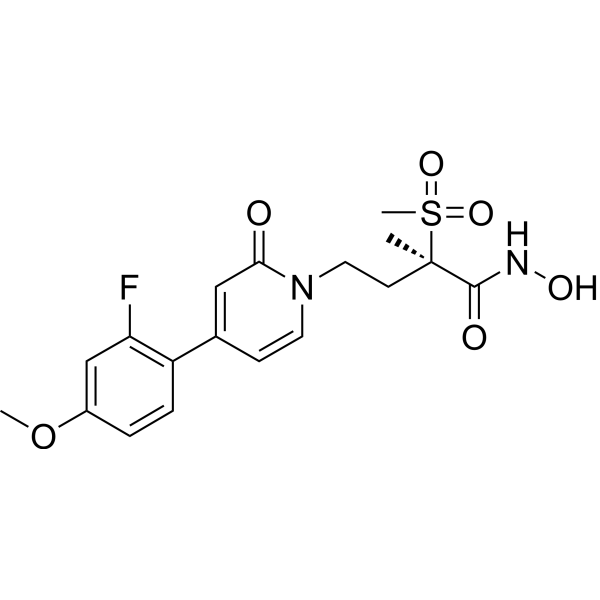
    PF-5081090 (LpxC-4) is a potent LpxC inhibitor, is a rapidly bactericidal with broad-spectrum activity. PF-5081090 serves as a regulator of lipid A biosynthesis in Gram-negative pathogens .
    PF-5081090
  • HY-133685

    C6-HSL

    Bacterial Infection Metabolic Disease
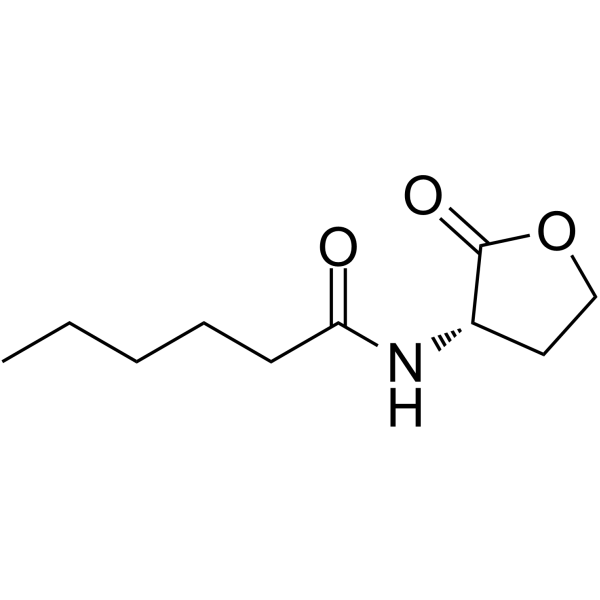
    N-Hexanoyl-L-homoserine lactone is a short-chained N-acyl homoserine lactone (AHL). N-hexanoyl-L-homoserine lactone is also a mediator of bacterial quorum-sensing regulation. N-hexanoyl-L-homoserine lactone promotes lipid accumulation in algae. AHL is an intercellular communication signal molecule in the quorum sensing system of Gram-negative bacteria and a medium for mediating information exchange between eukaryotic plants and prokaryotic bacteria. AHL can affect bacteria activities, such as biofilm formation, pigment synthesis, and antibiotic synthesis .
    N-Hexanoyl-L-homoserine lactone
  • HY-P0230

    Antibiotic Bacterial Infection
    Teixobactin is a potent antibiotic. Teixobactin shows antibacterial activity for gram-negative bacteria. Teixobactin inhibits cell wall synthesis by binding to a highly conserved motif of lipid II and lipid III .
    Teixobactin
  • HY-W984782

    GLUT Bacterial Fungal AMPK PPAR Reactive Oxygen Species (ROS) Apoptosis SOD Infection Metabolic Disease Cancer
    Flindersine is an alkaloid with multiple activities including antibacterial, antifungal, antitumor, and antidiabetic properties. Flindersine increases the activity of antioxidant enzymes, restores the levels of renal biomarkers, and reduces blood glucose, blood lipid, and insulin levels in diabetic rats. Flindersine inhibits the growth of Gram-positive bacteria, Gram-negative bacteria, drug-resistant bacteria, as well as dermatophytes, filamentous fungi, and yeasts. Flindersine reduces the viability of cancer cells and induces apoptosis. Flindersine can be used in research related to breast cancer, type 2 diabetes, bacterial infections, and fungal infections .
    Flindersine
  • HY-P3512

    IB-367

    Bacterial Fungal Parasite Infection Cancer
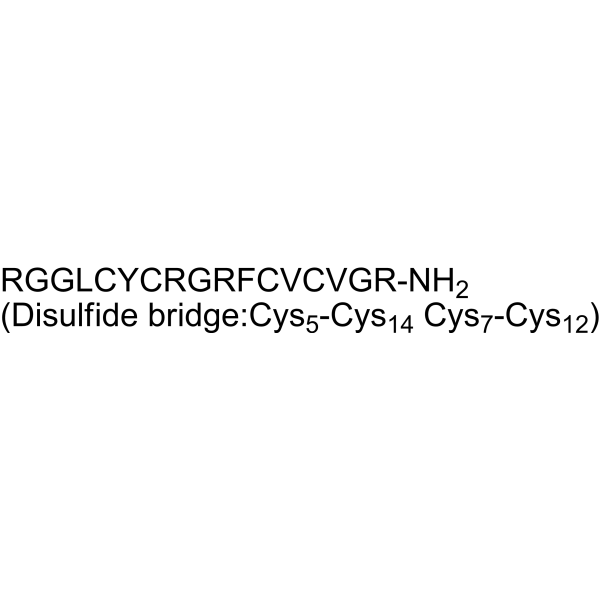
    Iseganan is an anti-microbial peptide that is active against both Gram-positive and Gram-negative bacteria and fungi. Iseganan kills a broad-spectrum of bacteria and fungi by attaching to and destroying the integrity of the lipid cell membranes. Iseganan can be used for oral mucositis research .
    Iseganan
  • HY-130581

    Bacterial Cardiovascular Disease Inflammation/Immunology
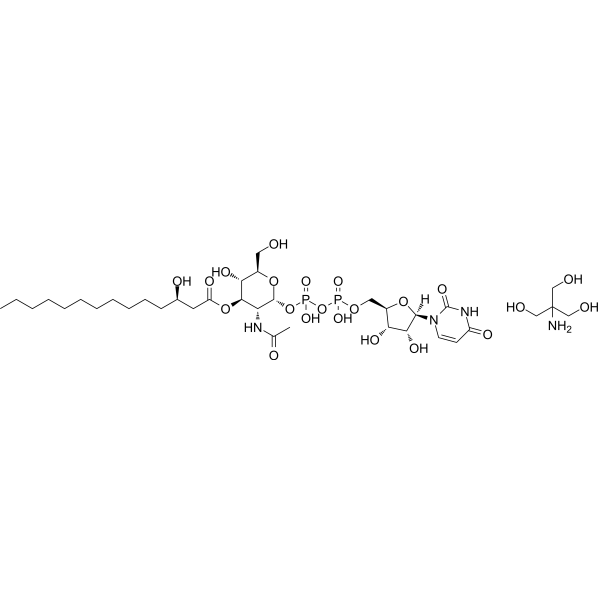
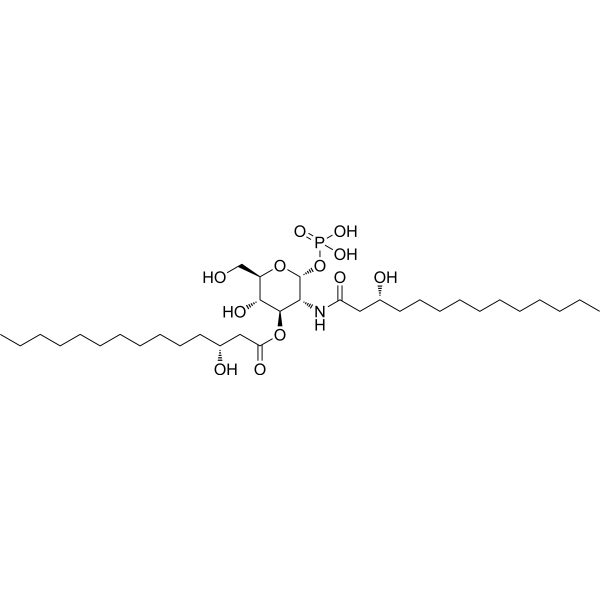
    Lipid X is a 2,3-diacylglucosamine-1-phosphate that serves as the monosaccharide precursor of lipid A, possessing both LPS antagonist and weak agonist activities. Lipid X exerts protective effects by inhibiting tumor necrosis factor production, monocyte procoagulant activity, and neutrophil priming. Lipid X may induce transient pulmonary hypertension, neutropenia, and mild pyrogenic effects in laboratory animals. Lipid X has low toxicity and no in vitro antibacterial activity, but it significantly reduces mortality following Gram-negative bacterial infection and endotoxin exposure. Lipid X tends to accumulate in liver tissue, binds to circulating cellular components, and can be converted to lipid Y through transesterification. Lipid X can be used in research on Gram-negative bacterial sepsis, endotoxemia, and associated pulmonary hypertension .
    Lipid X
  • HY-N12851

    (E)-4-Oxo-2-hexenal

    Bacterial Apoptosis Infection
    4-OHE ((E)-4-Oxo-2-hexenal) is a mutagen formed by omega-3 lipid peroxidation. 4-OHE reacts with deoxyguanosine, deoxycytidine and 5-methyldeoxycytidine to form covalent adducts. 4-OHE induces apoptosis and exhibits genotoxicity. 4-OHE inhibits the growth of Gram-positive and Gram-negative bacteria, which correlates with its electrophilic reactivity towards nucleophilic biomolecules. 4-OHE is a chemical defense component of Dolycoris baccarum (sloe bug), and acts as a deterrent and toxin against insect predators .
    4-OHE
  • HY-133685R

    C6-HSL (Standard)

    Reference Standards Bacterial Infection Metabolic Disease
    N-Hexanoyl-L-homoserine lactone (Standard) is the analytical standard of N-Hexanoyl-L-homoserine lactone (HY-133685). This product is intended for research and analytical applications. N-Hexanoyl-L-homoserine lactone is a short-chained N-acyl homoserine lactone (AHL). N-hexanoyl-L-homoserine lactone is also a mediator of bacterial quorum-sensing regulation. N-hexanoyl-L-homoserine lactone promotes lipid accumulation in algae. AHL is an intercellular communication signal molecule in the quorum sensing system of Gram-negative bacteria and a medium for mediating information exchange between eukaryotic plants and prokaryotic bacteria. AHL can affect bacteria activities, such as biofilm formation, pigment synthesis, and antibiotic synthesis.
    N-Hexanoyl-L-homoserine lactone (Standard)
  • HY-P10536

    Bacterial Infection
    Temporin SHF is a broad-spectrum antimicrobial peptide that is active against Gram-positive and Gram-negative bacteria and yeasts, but does not have hemolytic activity. Temporin SHF disrupts the acyl chain stacking of anionic lipid bilayers, leading to cracks and disintegration of microbial membranes. Temporin SHF can be used in the development of antimicrobial drugs .
    Temporin SHF
  • HY-19428A

    RBx-7644

    Antibiotic Bacterial Infection Cardiovascular Disease
    Ranbezolid (RBx7644 free base) is an orally active, oxazolidinone antibiotic against Gram-positive and Gram-negative anaerobes including Staphylococcus aureus, Staphylococcus epidermidis and Bacteroides fragilis. Ranbezolid can inhibit the 50s ribosomal subunit with an IC50 of 17 μM for bacterial ribosomes. Ranbezolid interferes cell wall and lipid synthesis. Ranbezolid can rapidly kill bacteria, significantly reduce bacterial load, and has better cardiovascular safety. Ranbezolid can be used for the study of antibiotics for anaerobic bacteria .
    Ranbezolid hydrochloride
  • HY-19428

    RBx7644 free base

    Antibiotic Bacterial Infection Cardiovascular Disease
    Ranbezolid (RBx7644 free base) is an orally active, oxazolidinone antibiotic against Gram-positive and Gram-negative anaerobes including Staphylococcus aureus, Staphylococcus epidermidis and Bacteroides fragilis. Ranbezolid can inhibit the 50s ribosomal subunit with an IC50 of 17 μM for bacterial ribosomes. Ranbezolid interferes cell wall and lipid synthesis. Ranbezolid can rapidly kill bacteria, significantly reduce bacterial load, and has better cardiovascular safety. Ranbezolid can be used for the study of antibiotics for anaerobic bacteria .
    Ranbezolid
  • HY-103251R

    LpxC-4 (Standard)

    Reference Standards Antibiotic Bacterial Infection
    Cefalonium (dihydrate) (Standard) is the analytical standard of Cefalonium (dihydrate). This product is intended for research and analytical applications. Cefalonium dihydrate is a cephalosporin antibiotic. Cefalonium (dihydrate) is effective against Staphylococcus aureus. Cefalonium (dihydrate) has anti-inflammatory and antibacterial activities .
    PF-5081090 (Standard)
  • HY-158682

    Bacterial Infection
    LpxC-IN-13 (Compound 13) is a LpxC inhibitor, with an IC50 18.06 nM. LpxC-IN-13 effectively inhibits Gram-negative bacterial infection .
    LpxC-IN-13
  • HY-179038

    Bacterial Infection
    PYO12 is a 3-phenyl-4-phenoxypyrazole type antibacterial compound. PYO12 exhibits selective activity against Gram-positive bacteria with MIC for S. aureus, B. subtilis, S. pneumoniae, and MRSA of 1, 1, 1, and 4 μg/mL respectively. PYO12 has no activity against Gram-negative bacteria. PYO12 can significantly increase bacterial membrane permeability and significantly upregulate cell wall stress-related genes, possibly by binding to the C55-PP part of lipid II. PYO12 shows a concentration-dependent bactericidal effect, has low toxicity to mammalian cells, and does not cause hemolysis. PYO12 can be used to develop new antibiotics targeting bacterial cell wall synthesis .
    PYO12
  • HY-186020

    L-4-Aminoarabinose-BP

    Endogenous Metabolite Infection
    L-4-Aminoarabinose-bactoprenyl phosphate (L-4-Aminoarabinose-BP) is a substrate of the ArnT enzyme and participates in lipid A modification through covalent bonding. L-4-Aminoarabinose-bactoprenyl phosphate transfers L-4-aminoarabinose (Ara4N) to the lipid A portion of lipopolysaccharide (LPS), mediating cationic modification of lipid A, thereby conferring resistance to cationic antimicrobial peptides (CAMPs) in Gram-negative bacteria. L-4-Aminoarabinose-bactoprenyl phosphate is an endogenous intermediate synthesized in vivo by a series of enzymes such as ArnC and ArnD encoded by the arn operon in Gram-negative bacteria such as Escherichia coli .
    L-4-Aminoarabinose-bactoprenyl phosphate

Inquiry Online

Your information is safe with us. * Required Fields.

Salutation


Country or Region *

Applicant Name *


Organization Name *

Department *


Email Address *


Product Name *

Cat. No.


Requested quantity *

Phone Number *


Remarks

Inquiry Online

Inquiry Information

Product Name:
Cat. No.:
Quantity:
MCE Japan Authorized Agent:

