
1. Search Result
Search Result
Results for "

HDL-C

" in MedChemExpress (MCE) Product Catalog:

26

Inhibitors & Agonists

1

Inhibitory Antibodies

1

Recombinant Proteins

2

Antibodies

Cat. No. Product Name Target Research Areas Chemical Structure
  • HY-B0388
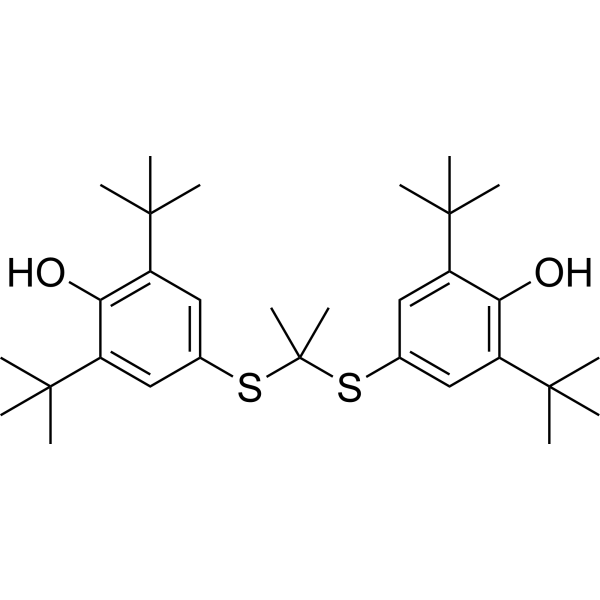
    Probucol
    2 Publications Verification

    DH-581

    Virus Protease Apoptosis Reactive Oxygen Species (ROS) Glutathione Peroxidase Caspase Infection Neurological Disease Metabolic Disease Inflammation/Immunology Cancer
    Probucol (DH-581) is an anti-hyperlipidemic agent. Probucol activates glutathione peroxidase. Probucol promotes low density lipoprotein (LDL) catabolism, inhibits ABCA1-dependent cholesterol efflux, and decreases HDL-C levels. Probucol also has anti-inflammatory, antioxidant and neuroprotective properties. Probucol can be used for researches on bone, cardiovascular, cancer, neurological, and metabolism-related diseases .
    Probucol
  • HY-19900
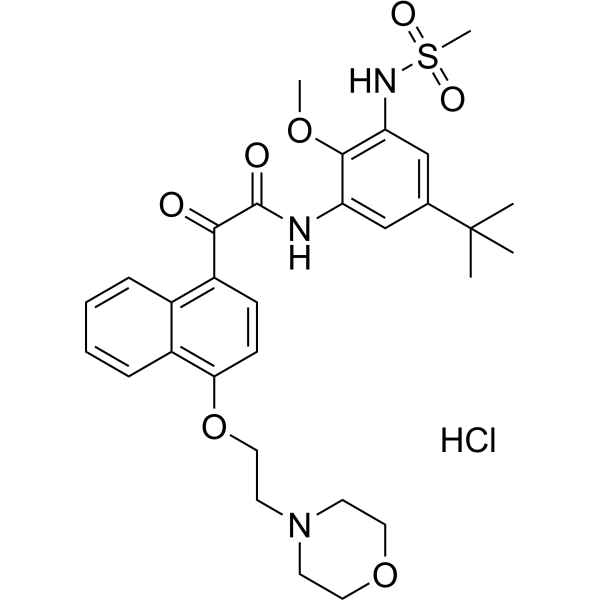
    ITX5061
    3 Publications Verification

    p38 MAPK Scavenger Receptor Class B type I (SR-BI) Inflammation/Immunology
    ITX5061 is an orally active type II non-competitive p38 MAPK inhibitor. ITX5061 increases HDL-C levels by inhibiting SR-BI activity. ITX5061 also moderately elevates ApoA-I levels. ITX5061 reduces early atherosclerotic lesions in the aortic arch of mice fed an atherogenic diet. ITX5061 can be used in the research of atherosclerosis .
    ITX5061
  • HY-18778

    TA-8995; DEZ-001; AMG-899

    CETP Apolipoprotein LPL Receptor LDLR Cardiovascular Disease
    Obicetrapib (TA-8995; DEZ-001) is an orally active cholesteryl ester transfer protein (CETP) inhibitor. Obicetrapib potently reduces atherogenic lipoproteins (such as LDL-C, ApoB, Lp (a)) and increases HDL-C. Obicetrapib can be used for the research of dyslipidemia and atherosclerotic cardiovascular disease (ASCVD) .
    Obicetrapib
  • HY-109567

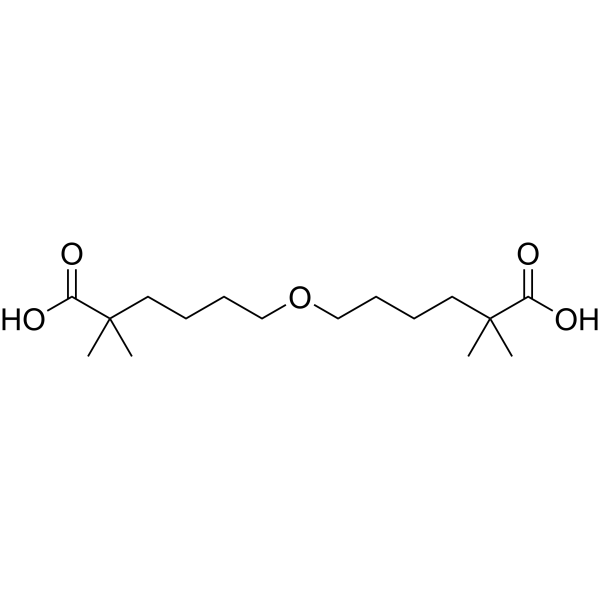
    PD-72953

    LDLR Metabolic Disease Inflammation/Immunology
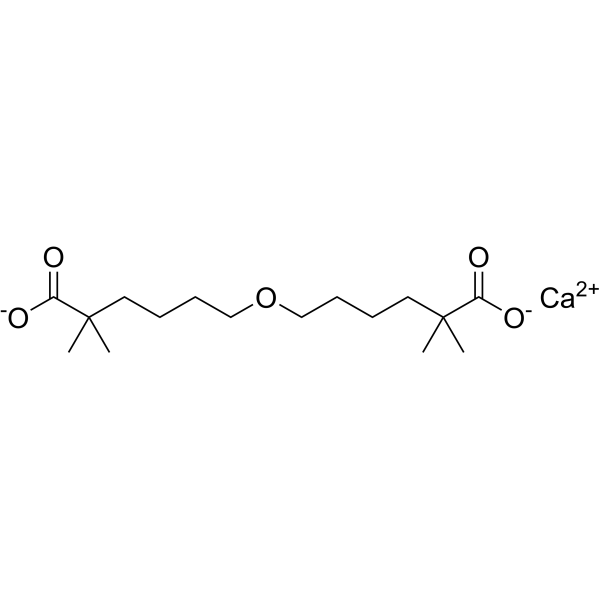
    Gemcabene (PD-72953), a first-in-class lipid-lowering agent, lowers low-density lipoprotein cholesterol (LDL-C), decreases triglycerides, and raises high-density lipoprotein cholesterol (HDL-C) and lowers pro-inflammatory acute-phase protein, C-reactive protein (CRP), exerting anti-inflammatory activity .
    Gemcabene
  • HY-P99822

    SHR-1209

    PCSK9 Metabolic Disease
    Recaticimab (SHR-1209) is a humanized IgG1 mAb that selectively targets PCSK9. Recaticimab reduces low-density lipoprotein cholesterol (LDL-C), non-high-density lipoprotein cholesterol (non-HDL-C), apolipoprotein B (ApoB), triglyceride (TG), and lipoprotein(a) levels. Recaticimab can be used for hyperlipidemia research .
    Recaticimab
  • HY-117549

    NO-1886

    Lipase Cardiovascular Disease
    Ibrolipim (NO-1886) is an orally active lipoprotein lipase (LPL)-promoting agent. Ibrolipim decreases plasma triglycerides, increases high-density lipoprotein cholesterol levels. Ibrolipim has renoprotective and hypolipidemic effects .
    Ibrolipim
  • HY-50665

    LY-674

    PPAR Metabolic Disease
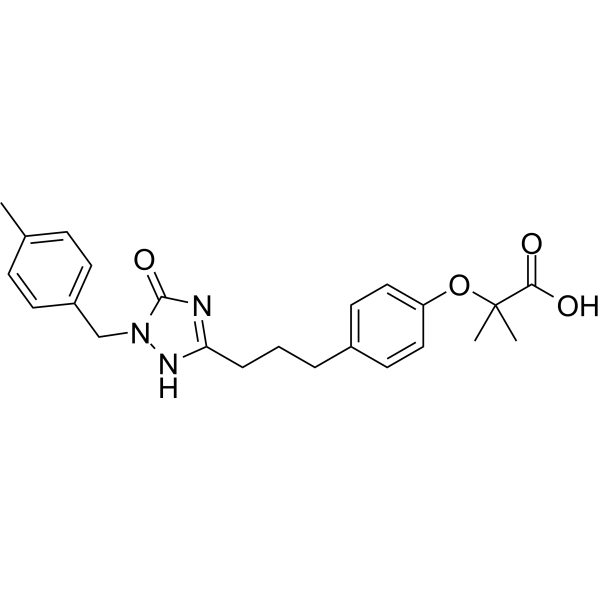
    LY518674 is a potent, selective PPARα agonist, with an EC50 of 42 nM for human PPARα. LY518674 reduces triglycerides in and increased HDL-C and is used for the treatment of atherosclerosis .
    LY518674
  • HY-121212

    LDLR Metabolic Disease Inflammation/Immunology
    Icosabutate, an orally active ω-3 polyunsaturated fatty acid, is an aeicosapentaenoic acid (EPA) derivative. Icosabutate overcomes the drawbacks of unmodified EPA for liver targeting and improves insulin sensitivity, hepatic inflammation and fibrosis . Icosabutate is well tolerated, and efficacious in lowering non-high-density lipoprotein cholesterol (non-HDL-C) levels in persistent hypertriglyceridemia .
    Icosabutate
  • HY-105285
    Piromelatine
    2 Publications Verification

    Neu-P11

    Melatonin Receptor 5-HT Receptor P2X Receptor TRP Channel Sodium Channel Neurological Disease
    Piromelatine (Neu-P11) is a melatonin MT1/MT2 receptor agonist, serotonin 5-HT1A/5-HT1D agonist, and serotonin 5-HT2B antagonist. Piromelatine (Neu-P11) possesses sleep promoting, analgesic, anti-neurodegenerative, anxiolytic and antidepressant potentials. Piromelatine (Neu-P11) also possesses pain-related P2X3, TRPV1, and Nav1.7 channel-inhibition capacities .
    Piromelatine
  • HY-143239

    PPAR Metabolic Disease
    PPARα/γ agonist 1 (compound 5b) is a potent and dual PPARα/γ partial agonist with EC50 values of 28 nM and 69 nM for PPARα and PPARγ, respectively. PPARα/γ agonist 1 is a promising prototype for dyslipidemia and diabetes research .
    PPARα/γ agonist 1
  • HY-100469

    LXR Inflammation/Immunology
    LXRβ agonist-2 is an orally active and selective LXRβ agonist. LXRβ agonist-2 increases high-density lipoprotein cholesterol levels without elevating plasma triglyceride levels. LXRβ agonist-2 decreases lipid accumulation area in the aortic arch. LXRβ agonist-2 can be used for the research of atherosclerosis .
    LXRβ agonist-2
  • HY-171883

    Cannabinoid Receptor CETP MHC Metabolic Disease Inflammation/Immunology Cancer
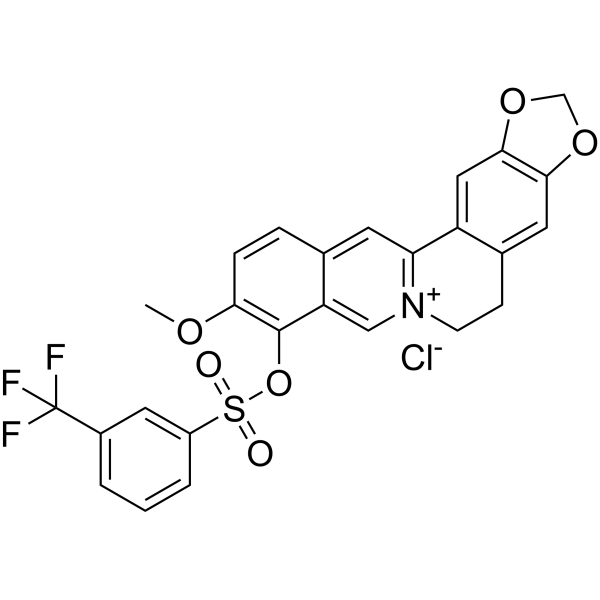
    BI-5756 is a CETP inhibitor and cannabinoid receptor 1 (CB1) agonist. BI-5756 can significantly increase HDL-C levels and reduce LDL-C levels. BI-5756 can also enhance the function of regulatory T cells while maintaining T cell-mediated anti-tumor activity. BI-5756 can directly inhibit the growth of tumor cells and upregulate the expression of MHC I, MHC II, and CD80 on tumor cells. BI-5756 has a protective effect in graft-versus-host disease models. BI-5756 can be used in research on tumors, graft-versus-host disease, and metabolic diseases .
    BI-5756
  • HY-176817

    GPR109A Cardiovascular Disease Metabolic Disease
    GPR109 receptor agonist-3 is an orally active GPR109 receptor agonist, with an IC50 of 310 nM. GPR109 receptor agonist-3 retains the antioxidation and cytoprotection of Lipoic acid (HY-18733). GPR109 receptor agonist-3 reduces total cholesterol (TC), triglyceride (TG), low-density lipoprotein cholesterol (LDL-C) and increases high-density lipoprotein cholesterol (HDL-C) in high-fat diet-fed rats. GPR109 receptor agonist-3 can be used for the study of atherosclerosis .
    GPR109 receptor agonist-3
  • HY-123039

    CETP Metabolic Disease
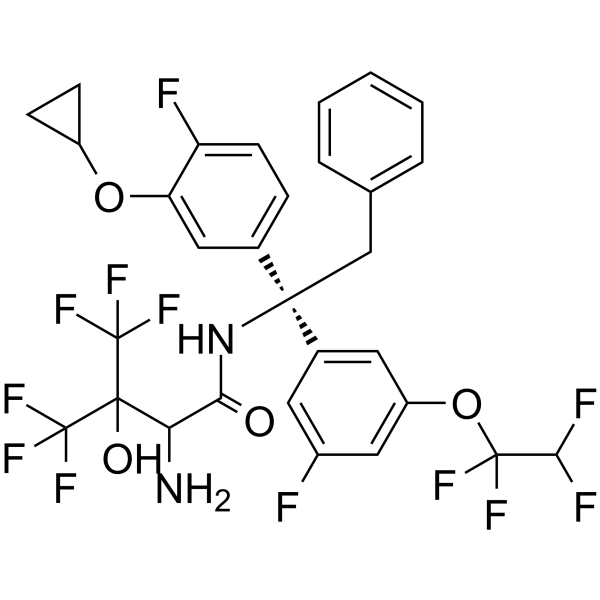
    CP-532623 is a CETP inhibitor and elevates high-density lipoprotein cholesterolion. CP-532623 is a close structural analogue of Torcetrapib. CP-532623 has highly lipophilic properties .
    CP-532623
  • HY-19614

    CETP Cardiovascular Disease
    BMS-795311 is a potent and orally bioavailable inhibitor of cholesteryl ester transfer protein (CETP), with IC50s of 4 nM in an enzyme-based scintillation proximity assay (SPA) and 0.22 μM in a human whole plasma assay (hWPA), respectively .
    BMS-795311
  • HY-121776

    Drug Derivative Cardiovascular Disease
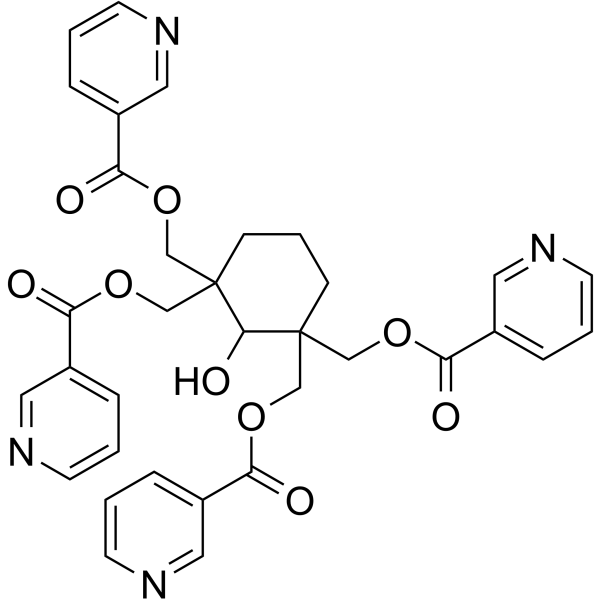
    Nicomol is an orally active hypolipidemic agent that can increase the high density lipoprotein cholesterol (HDL-C) level. Nicomol inhibits the rapid rise of plasma free fatty acids .
    Nicomol
  • HY-121776R

    Drug Derivative Reference Standards Cardiovascular Disease
    Nicomol (Standard) is the analytical standard of Nicomol. This product is intended for research and analytical applications. Nicomol is an orally active hypolipidemic agent that can increase the high density lipoprotein cholesterol (HDL-C) level. Nicomol inhibits the rapid rise of plasma free fatty acids .
    Nicomol (Standard)
  • HY-109567A

    PD-72953 calcium

    LDLR Metabolic Disease Inflammation/Immunology
    Gemcabene calcium (PD-72953 calcium), a first-in-class lipid-lowering agent, lowers low-density lipoprotein cholesterol (LDL-C), decreases triglycerides, and raises high-density lipoprotein cholesterol (HDL-C) and lowers pro-inflammatory acute-phase protein, C-reactive protein (CRP), exerting anti-inflammatory activity .
    Gemcabene calcium
  • HY-128338

    CETP Cardiovascular Disease
    CETP-IN-3 (Compound 13) is an small molecule inhibitor of the plasma glycoprotein cholesterol ester transfer protein (CETP), elevating HDL-C through inhibition of CETP. CETP-IN-3 for the CETP inhibitory activity in the scintillation proximity (SPA) and whole plasma assay (WPA) with IC50s of 0.002 μM and 0.06 μM, respectively .
    CETP-IN-3
  • HY-105285R

    Neu-P11 (Standard)

    Reference Standards Melatonin Receptor 5-HT Receptor P2X Receptor TRP Channel Sodium Channel Neurological Disease
    Piromelatine (Standard) is the analytical standard of Piromelatine. This product is intended for research and analytical applications. Piromelatine (Neu-P11) is a melatonin MT1/MT2 receptor agonist, serotonin 5-HT1A/5-HT1D agonist, and serotonin 5-HT2B antagonist. Piromelatine (Neu-P11) possesses sleep promoting, analgesic, anti-neurodegenerative, anxiolytic and antidepressant potentials. Piromelatine (Neu-P11) also possesses pain-related P2X3, TRPV1, and Nav1.7 channel-inhibition capacities .
    Piromelatine (Standard)
  • HY-115914

    LDLR Others
    Lipid-lowering agent-1 is a potent lipid-lowering agent. Lipid-lowering agent-1 has significant pharmacological effects on the inhibition of low-density lipoprotein cholesterol (LDLC) and promotion of high-density lipoprotein cholesterol (HDLC) production. Lipid-lowering agent-1 shows potent hypolipidemic effect in high-fat diet rats .
    Lipid-lowering agent-1
  • HY-18778B

    TA-8995 potassium; DEZ-001 potassium; AMG-899 potassium

    Apolipoprotein CETP LPL Receptor LDLR Metabolic Disease
    Obicetrapib (TA-8995; DEZ-001) potassium is an orally active cholesteryl ester transfer protein (CETP) inhibitor. Obicetrapib potassium potently reduces atherogenic lipoproteins (such as LDL-C, ApoB, Lp (a)) and increases HDL-C. Obicetrapib potassium can be used for the research of dyslipidemia and atherosclerotic cardiovascular disease (ASCVD) .
    Obicetrapib potassium
  • HY-122068

    p38 MAPK Scavenger Receptor Class B type I (SR-BI) Inflammation/Immunology
    ITX5061 free base is an orally active type II non-competitive p38 MAPK inhibitor. ITX5061 free base increases HDL-C levels by inhibiting SR-BI activity. ITX5061 free base also moderately elevates ApoA-I levels. ITX5061 free base reduces early atherosclerotic lesions in the aortic arch of mice fed an atherogenic diet. ITX5061 free base can be used in the research of atherosclerosis .
    ITX5061 free base
  • HY-18778A

    TA-8995 sodium; DEZ-001 sodium; AMG-899 sodium

    Apolipoprotein CETP LPL Receptor LDLR Cardiovascular Disease
    Obicetrapib (TA-8995; DEZ-001) sodium is an orally active cholesteryl ester transfer protein (CETP) inhibitor. Obicetrapib sodium potently reduces atherogenic lipoproteins (such as LDL-C, ApoB, Lp (a)) and increases HDL-C. Obicetrapib sodium can be used for the research of dyslipidemia and atherosclerotic cardiovascular disease (ASCVD) .
    Obicetrapib sodium
  • HY-109567R

    PD-72953 (Standard)

    Others Reference Standards Metabolic Disease Inflammation/Immunology
    Gemcabene (Standard) is the analytical standard of Gemcabene. This product is intended for research and analytical applications. Gemcabene (PD-72953), a first-in-class lipid-lowering agent, lowers low-density lipoprotein cholesterol (LDL-C), decreases triglycerides, and raises high-density lipoprotein cholesterol (HDL-C) and lowers pro-inflammatory acute-phase protein, C-reactive protein (CRP), exerting anti-inflammatory activity .
    Gemcabene (Standard)
  • HY-182469

    Lactate Dehydrogenase AMPK FOXO Interleukin Related Reactive Oxygen Species (ROS) TNF Receptor Bcl-2 Family Caspase Apoptosis Neurological Disease
    FuBIG is an iminoguanidine derivative with neuroprotective effects. FuBIGL inhibits L-LDH activation and reduces lactate production. FuBIGL exerts protective effects on inflammatory nerve cells, upregulates the expressions of AMPK, pAMPK and FOXO3, and activates the AMPK pathway in cells. FuBIG exerts anti-inflammatory effects by reducing pro-inflammatory cytokines (IL-6, IL-1β, TNF-α) and increasing the anti-inflammatory cytokine IL-10. FuBIG maintains mitochondrial membrane potential, alleviates mitochondrial dysfunction, reduces ROS production, and relieves oxidative stress. FuBIG upregulates Bcl-2, downregulates Bax and Caspase-3, and inhibits cell apoptosis (apoptosis). FuBIG improves metabolic disorders in diabetic mice, decreases the levels of LDL-C, ALT and AST, and increases HDL-C level simultaneously. FuBIG can be used in the research of diabetic neuroinflammation .
    FuBIG

Inquiry Online

Your information is safe with us. * Required Fields.

Salutation


Country or Region *

Applicant Name *


Organization Name *

Department *


Email Address *


Product Name *

Cat. No.


Requested quantity *

Phone Number *


Remarks

Inquiry Online

Inquiry Information

Product Name:
Cat. No.:
Quantity:
MCE Japan Authorized Agent:

