33 Results for "

IMR-32

" in MedChemExpress (MCE) Product Catalog:
Products (33)

33 Results for "IMR-32" in MCE Product Catalog:

41
41 Publications Verification
Cat. No.: HY-N0293
CAS No.: 23180-57-6
Synonyms: Peoniflorin
Paeoniflorin is a heat shock protein-inducing compound and commonly exists in the plants of Paeoniaceae family, with various biological activities, including anticancer activity, anti-inflammatory activity, enhancing cognition and attenuating learning impairment, anti-oxidative stress, antiplatelet aggregation, expansion of blood vessels, and reducing blood viscosity .
loading...
    loading...
16
16 Cited Publications
Cat. No.: HY-14608
CAS No.: 56-86-0
Purity:  99.81%
L-Glutamic acid is an excitatory amino acid neurotransmitter that acts as an agonist for all subtypes of glutamate receptors (metabolic rhodophylline, NMDA, and AMPA). L-Glutamic acid has an agonist effect on the release of DA from dopaminergic nerve endings. L-Glutamic acid can be used in the study of neurological diseases. L-Glutamic acid acts at ionotropic and metabotropic glutamate receptors .
loading...
    loading...
15
15 Cited Publications
Cat. No.: HY-14608A
CAS No.: 142-47-2
Purity:  ≥98.0%
L-Glutamic acid monosodium salt is an excitatory amino acid neurotransmitter that acts as an agonist for all subtypes of glutamate receptors (metabolic rhodophylline, NMDA, and AMPA). L-Glutamic acid monosodium salt has an agonist effect on the release of DA from dopaminergic nerve endings. L-Glutamic acid monosodium salt can be used in the study of neurological diseases. L-Glutamic acid monosodium salt acts at ionotropic and metabotropic glutamate receptors .
loading...
    loading...
13
13 Cited Publications
Cat. No.: HY-W419700
CAS No.: 7558-63-6
L-Glutamic acid ammonium is an excitatory amino acid neurotransmitter that acts as an agonist for all subtypes of glutamate receptors (metabolic rhodophylline, NMDA, and AMPA). L-Glutamic acid ammonium has an agonist effect on the release of DA from dopaminergic nerve endings. L-Glutamic acid can be used in the study of neurological diseases. L-Glutamic acid ammonium acts at ionotropic and?metabotropic glutamate receptors .
loading...
    loading...
3
3 Cited Publications
Cat. No.: HY-103318
CAS No.: 217171-01-2
Purity:  99.88%
Target:  

Calcium Channel

Research Areas:  

Neurological Disease

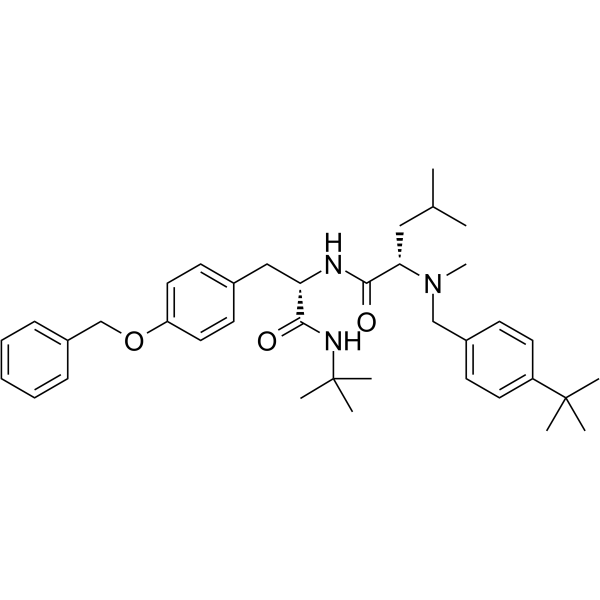
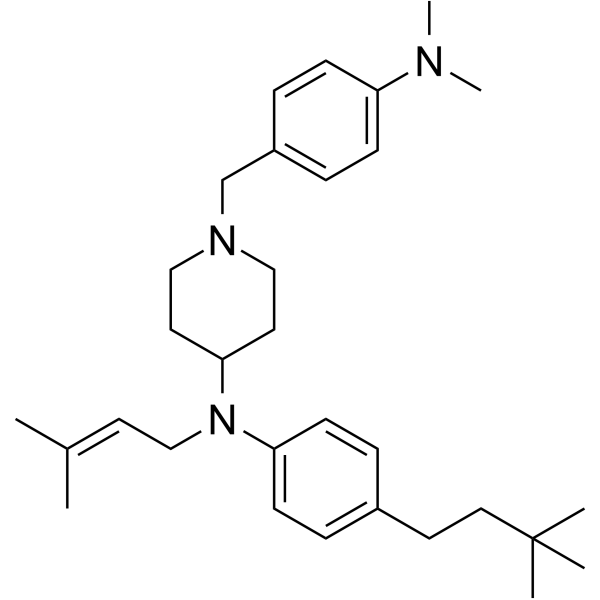
PD173212 is a selective N-type voltage sensitive calcium channel (VSCC) blocker, with an IC50 of 36 nM in IMR-32 assays.
loading...
    loading...
1
1 Cited Publications
Cat. No.: HY-14608R
CAS No.: 56-86-0
L-Glutamic acid (Standard) is the analytical standard of L-Glutamic acid. This product is intended for research and analytical applications. L-Glutamic acid is an excitatory amino acid neurotransmitter that acts as an agonist for all subtypes of glutamate receptors (metabolic rhodophylline, NMDA, and AMPA). L-Glutamic acid has an agonist effect on the release of DA from dopaminergic nerve endings. L-Glutamic acid can be used in the study of neurological diseases . IC50 & Target:DA . In Vitro: L-Glutamic acid (120, 500, 750, 1000 mg/dL) can reduce the harmful effect of lithium on the embryonic development of Xenopus Xenopus .
L-Glutamic acid (2, 5, 10, 20 mM, 24-48 h) can induce neuroexcitotoxicity in neuroblastoma .
In Vivo: L-Glutamic acid (3 g/kg, subcutaneous injection) can promote excitotoxic degeneration of retinal ganglion cells in mice .
L-Glutamic acid (750 mg/kg, intraperitoneal injection) can reduce and inhibit oxidative stress induced by chlorpyrifos (CPF) in rats .
loading...
    loading...
1
1 Cited Publications
Cat. No.: HY-103472
CAS No.: 329691-12-5
Purity:  99.90%
Research Areas:  

Neurological Disease

FPR-A14 is a potent formyl peptide receptor (FPR) agonist. FPR-A14 is a potent activator of neutrophil Ca 2+ mobilization and chemotaxis with EC50s of 630 nM and 42 nM, respectively. FPR-A14 induces cell differentiation .
loading...
    loading...
Cat. No.: HY-157396
CAS No.: 2899209-55-1
Purity:  98.11%
Research Areas:  

Cancer

JAB-2485 is an orally active and selective Aurora kinase A (AURKA) inhibitor with an IC50 value of 0.327 nM. JAB-2485 exhibits inhibitory activity against various tumor cell lines such as neuroblastoma, triple-negative breast cancer, small cell lung cancer, and epithelial ovarian cancer. JAB-2485 can induce cell cycle arrest and apoptosis in tumor cells. JAB-2485 has antitumor activity .
loading...
    loading...
Cat. No.: HY-W016145
CAS No.: 6106-04-3
L-Glutamic acid monosodium hydrate is an excitatory amino acid neurotransmitter that acts as an agonist for all subtypes of glutamate receptors (metabolic rhodophylline, NMDA, and AMPA). L-Glutamic acid monosodium hydrate has an agonist effect on the release of DA from dopaminergic nerve endings. L-Glutamic acid monosodium hydrate can be used in the study of neurological diseases. L-Glutamic acid monosodium hydrate acts at ionotropic and?metabotropic glutamate receptors .
loading...
    loading...
Cat. No.: HY-100321
CAS No.: 863115-70-2
Purity:  98.27%
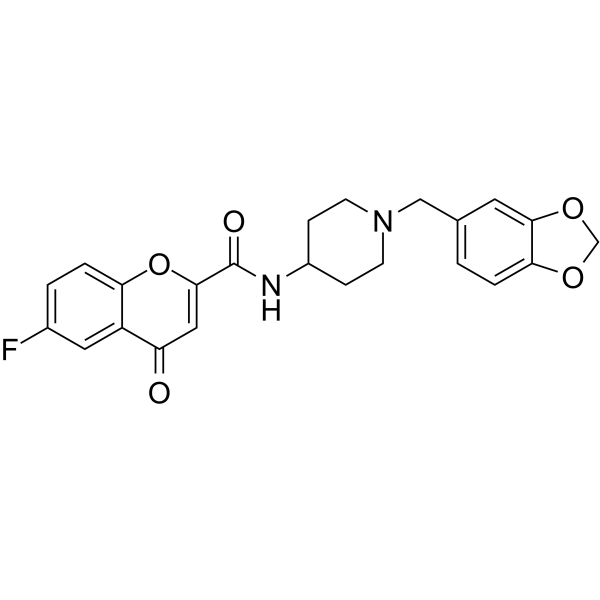
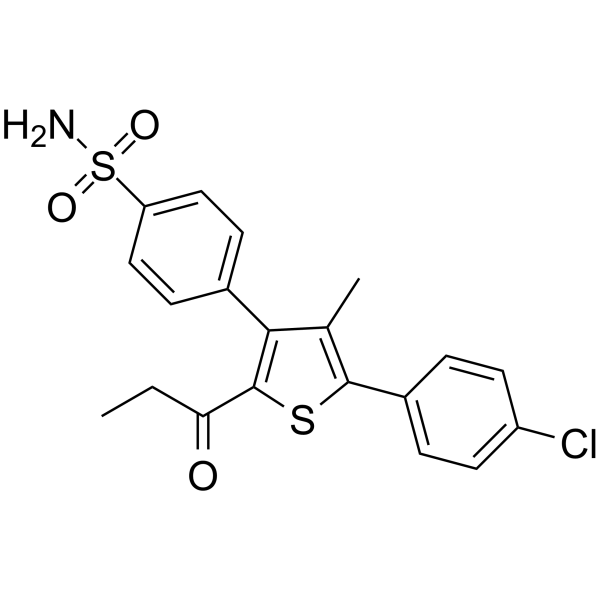
MCHR1 antagonist 2 is an antagonist of melanin concentrating hormone receptor 1, with an IC50 of 65 nM; MCHR1 antagonist 2 also inhibits hERG, with an IC50 of 4.0 nM in IMR-32 cells .
loading...
    loading...
Cat. No.: HY-171770
CAS No.: 3115765-45-9
dAurAB5 is a dual Aurora-A (DC50 = 8.8 nM) and Aurora-B (DC50 = 6.1 nM) PROTAC degrader. dAurAB5 induces degradation of Aurora-A and Aurora-B, reduces N-Myc levels, and decreases viability in IMR32 neuroblastoma cells. dAurAB5 downregulates the levels of AAK1, PTK2, GAK, and TTK. dAurAB5 can be used to study cancers such as neuroblastoma. (Pink: TTK ligand 2: HY-168542, Blue: Thalidomide-O-COOH: HY-103597, Black: 6-Aminocaproic acid: HY-B0236) .
loading...
    loading...
Cat. No.: HY-171769
CAS No.: 3115765-38-0
Target:  

PROTACs Aurora Kinase

Research Areas:  

Cancer

dAurAB2 is a dual-degrading PROTAC that potently degrades Aurora-A and Aurora-B with DC50s of 59 nM and 39 nM, respectively. dAurAB2 reduces N-Myc levels in MYCN-amplified IMR32 neuroblastoma cells. dAurAB2 can be used for the study of neuroblastoma. (Pink, Aurora ligand (HY-10804); Blue, E3 ligand: (HY-103597); Black, linker (HY-W105740)) .
loading...
    loading...
Cat. No.: HY-W011762
CAS No.: 255906-59-3
Target:  

Apoptosis

Research Areas:  

Cancer

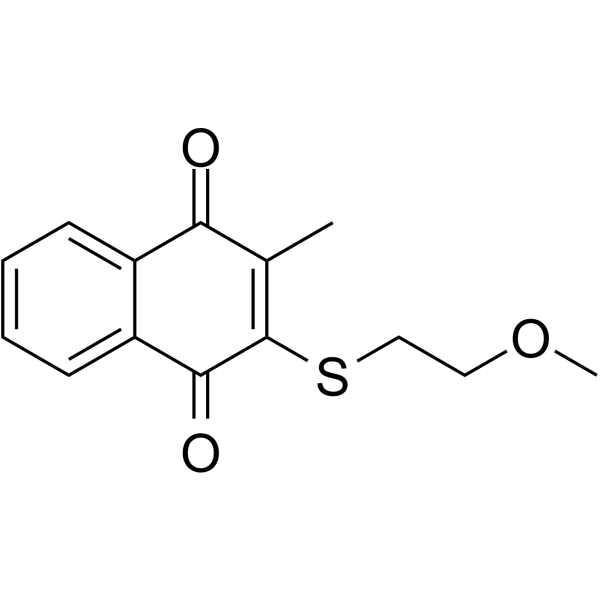
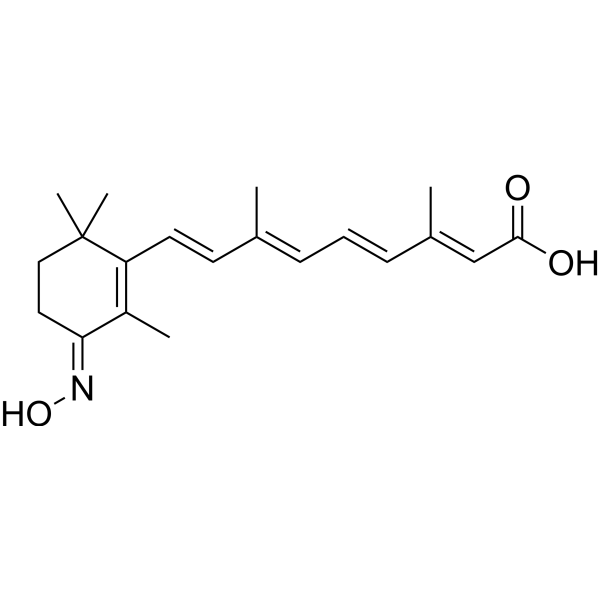
VK3-OCH3 is a potent antitumor agent. VK3-OCH3 shows cytotoxicity for neuroblastoma cell lines and low cytotoxicity for normal cell lines. VK3-OCH3 induces apoptosis and cell cycle arrest at G2/M phase in IMR-32 cells. VK3-OCH3 shows antitumor activity .
loading...
    loading...
Cat. No.: HY-N0293R
CAS No.: 23180-57-6
Synonyms: Peoniflorin (Standard)
Paeoniflorin (Standard) is the analytical standard of Paeoniflorin. This product is intended for research and analytical applications. Paeoniflorin is a heat shock protein-inducing compound and commonly exists in the plants of Paeoniaceae family, with various biological activities, including anticancer activity, anti-inflammatory activity, enhancing cognition and attenuating learning impairment, anti-oxidative stress, antiplatelet aggregation, expansion of blood vessels, and reducing blood viscosity .
loading...
    loading...
Cat. No.: HY-136479
CAS No.: 361198-09-6
Target:  

Sirtuin

Research Areas:  

Cancer

F0911-7667 is a SIRT1 activator that induces autophagic cell death in U87MG and T98G cells by activating the AMPK-mTOR-ULK complex. CWR tripeptide was also identified as a SIRT1 activator that reduced p53 acetylation in IMR32 neuroblastoma cells and protected cells from cell death induced by Aβ fragments .
loading...
    loading...
Cat. No.: HY-172609
CAS No.: 1809556-48-6
SL-176 is a PPM1D (Wip1) inhibitor. SL-176 inhibits lipid droplet formation, downregulates the mRNA and protein expression of PPARγ and C/EBPα, and blocks adipocyte differentiation. SL-176 induces G2/M cell cycle arrest, apoptosis and inhibits cell proliferation in breast cancer cells overexpressing PPM1D, and activates components of the p53 pathway. SL-176 suppresses tumor growth in a zebrafish model of neuroblastoma. SL-176 is applicable to research related to obesity, breast cancer and neuroblastoma .
loading...
    loading...
Cat. No.: HY-179149
Research Areas:  

Cancer

PLK4-IN-6 (compound C05) is an PLK4 inhibitor (IC50 < 0.1 nM). PLK4-IN-6 has anti proliferative activity against various tumor cells, such as IMR-32 (IC50 = 0.948 μM), MCF-7 (IC50 = 0.979 μM), H460 (IC50 = 1.679 μM) cells. PLK4-IN-6 can significantly induce cell apoptosis and block the cell cycle. PLK4-IN-6 can be used for research on various types of cancer .
loading...
    loading...
Cat. No.: HY-N10890
CAS No.: 1041740-13-9
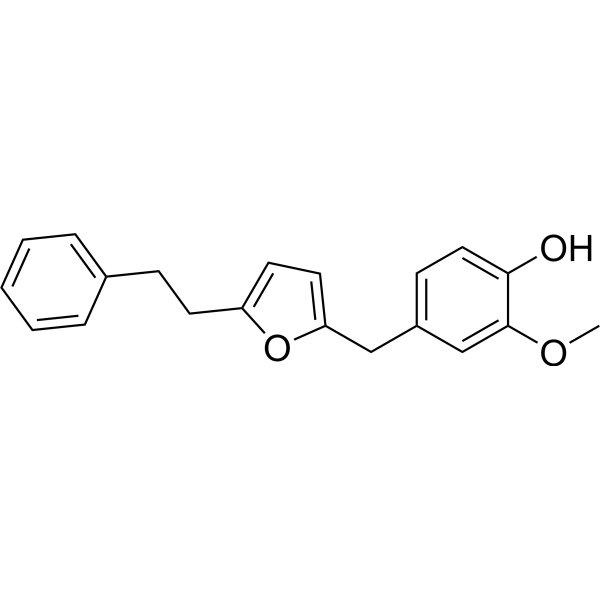
Alpinoid D, a diarylheptanoid, can be isolated from the MeOH extract from the rhizomes of Alpinia officinarum Hance. Alpinoid D shows cytotoxic effect against IMR-32 human neuroblastoma cell line .
loading...
    loading...
Cat. No.: HY-114901
CAS No.: 186141-75-3
Target:  

Adenosine Kinase

Research Areas:  

Neurological Disease

A-134974 is a selective adenosine kinase (ADK) inhibitor, with an IC50 of 0.06 nM and 45 nM in rat brain cytoplasmic ADK enzyme assays and intact IMR-32 cells, respectively . A-134974 inhibits adenosine phosphorylation and elevates intracellular and extracellular adenosine levels, alleviates neuropathic tactile allodynia and inflammatory thermal hyperalgesia via endogenous adenosine signaling in the spinal cord, and shows favorable dose separation between its analgesic effects and motor function impairment . A-134974 can be used in research on neuropathic pain, inflammatory pain, RNA silencing and thermoregulation .
loading...
    loading...
Cat. No.: HY-100310
CAS No.: 241499-17-2
Target:  

Calcium Channel

Research Areas:  

Neurological Disease

N-type calcium channel blocker-1 is an orally active compound which shows high affinity to functionally block N-type calcium channels with an IC50 of 0.7 μM in the IMR32 assay.
loading...
    loading...

