8 Results for "

Inositol hexaphosphate

" in MedChemExpress (MCE) Product Catalog:
Products (8)

8 Results for "Inositol hexaphosphate" in MCE Product Catalog:

  • Targets Recommended:
1
1 Cited Publications
Cat. No.: HY-N2581
CAS No.: 14306-25-3
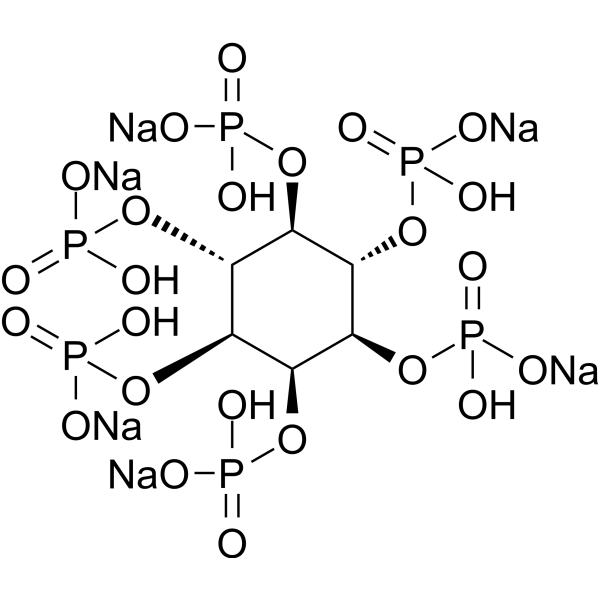
Synonyms: myo-Inositol, hexakisdihydrogen phosphate sodium salt; Inositol hexaphosphate sodium salt
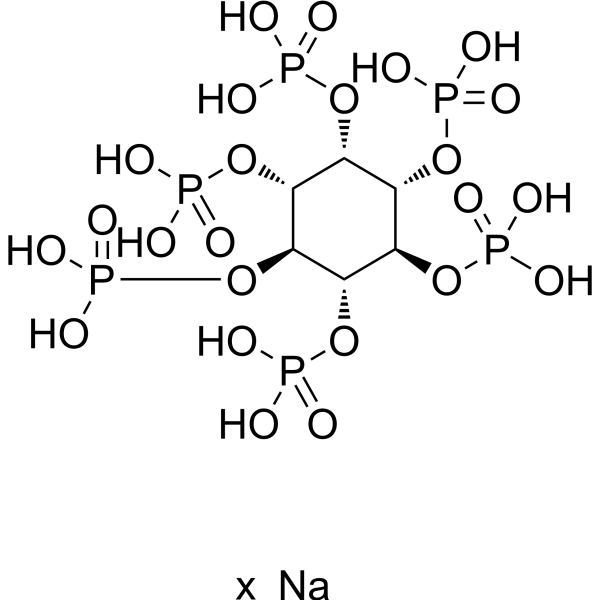
Phytic acid (myo-Inositol; hexakis dihydrogen phosphate; Inositol hexaphosphate) sodium salt is an orally active compound. Phytic acid sodium salt can be derived from the seeds of legumes. Phytic acid sodium salt is a [PO4] 3- storage depot and precursor for other inositol phosphates and pyrophosphates. Phytic acid sodium salt attenuates oligomers and upregulates autophagy protein. Phytic acid sodium salt can be used in cardiovascular disease, metabolic disease, nervous system disease and cancer research .
loading...
    loading...
1
1 Cited Publications
Cat. No.: HY-N0814
CAS No.: 83-86-3
Synonyms: Inositol hexaphosphate; SNF472 free acid
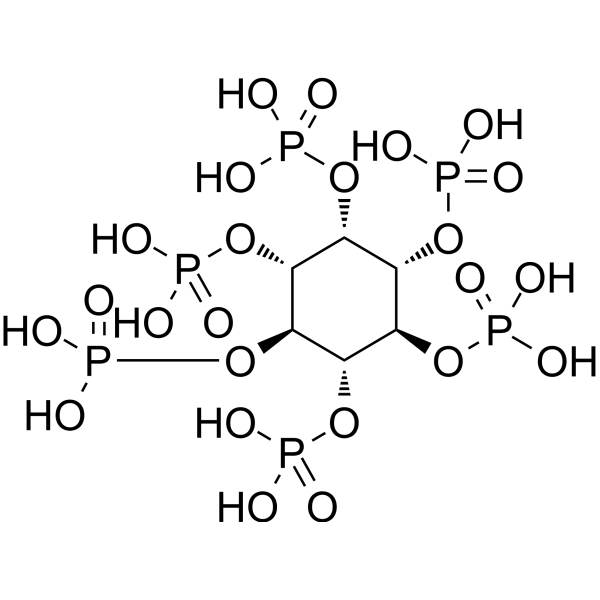
Phytic acid (myo-Inositol; hexakis dihydrogen phosphate; Inositol hexaphosphate) is an orally active compound. Phytic acid can be derived from the seeds of legumes. Phytic acid is a [PO4] 3- storage depot and precursor for other inositol phosphates and pyrophosphates. Phytic acid attenuates oligomers and upregulates autophagy protein. Phytic acid can be used in cardiovascular disease, metabolic disease, nervous system disease and cancer research .
loading...
    loading...
1
1 Cited Publications
Cat. No.: HY-N0814A
CAS No.: 123408-98-0
Synonyms: Inositol hexaphosphate dodecasodium hydrate; SNF472 dodecasodium hydrate
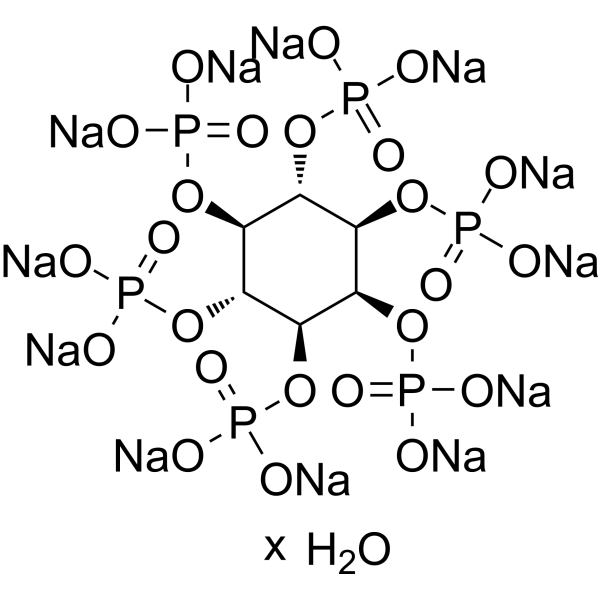
Phytic acid (Inositol hexaphosphate) dodecasodium hydrate is a phosphorus storage compound of seeds and cereal grains. Phytic acid dodecasodium hydrate is known as a food inhibitor, which has a strong ability to chelate multivalent metal ions, specially zinc, calcium, iron and as with protein residue. Phytic acid dodecasodium hydrate inhibits the enzymatic superoxide source xanthine oxidase (XO), and has antioxidative, neuroprotective, anti-inflammatory effects .
loading...
    loading...
1
1 Cited Publications
Cat. No.: HY-W018059
CAS No.: 129832-03-7
Phytic acid (myo-Inositol) potassium is an orally active compound. Phytic acid potassium can be derived from the seeds of legumes. Phytic acid potassium is a [PO4] 3- storage depot and precursor for other inositol phosphates and pyrophosphates. Phytic acid potassium attenuates oligomers and upregulates autophagy protein. Phytic acid potassium can be used in cardiovascular disease, metabolic disease, nervous system disease and cancer research .
loading...
    loading...
1
1 Cited Publications
Cat. No.: HY-N2580
CAS No.: 63903-51-5
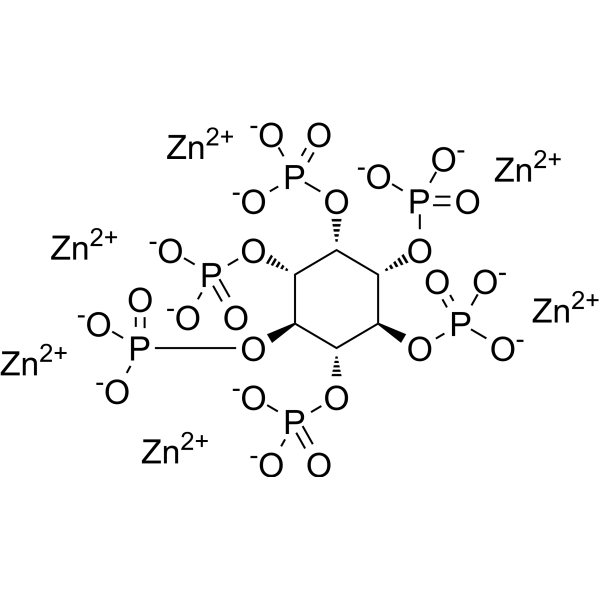
Zinc Phytate (myo-Inositol; hexakis dihydrogen phosphate; Inositol hexaphosphate) is an orally active compound. Zinc Phytate can be derived from the seeds of legumes. Zinc Phytate is a [PO4] 3- storage depot and precursor for other inositol phosphates and pyrophosphates. Zinc Phytate attenuates oligomers and upregulates autophagy protein. Zinc Phytate can be used in cardiovascular disease, metabolic disease, nervous system disease and cancer research .
loading...
    loading...
Cat. No.: HY-P2808
CAS No.: 9001-89-2
Target:  

Endogenous Metabolite

Research Areas:  

Metabolic Disease

4-Phytase is a phosphohydrolase of inositol hexaphosphate .
loading...
    loading...
Cat. No.: HY-N0814B
CAS No.: 34367-89-0
Synonyms: Inositol hexaphosphate hexasodium; SNF472
Phytic acid (Inositol hexaphosphate) hexasodium is a phosphorus storage compound of seeds and cereal grains. Phytic acid hexasodium has a strong ability to chelate multivalent metal ions, specially zinc, calcium, iron and as with protein residue. Phytic acid hexasodium inhibits the enzymatic superoxide source xanthine oxidase (XO), and has antioxidative, neuroprotective, anti-inflammatory effects.
loading...
    loading...
Cat. No.: HY-181448
Synonyms: Inositol hexaphosphate hexalithium; SNF472 hexalithium
Phytic acid (Inositol hexaphosphate hexalithium) hexalithium is an orally active compound. Phytic acid hexalithium can be derived from the seeds of legumes. Phytic acid is a [PO4] 3- storage depot and precursor for other inositol phosphates and pyrophosphates. Phytic acid hexalithium attenuates oligomers and upregulates Autophagy protein. Phytic acid hexalithium can be used in cardiovascular disease, metabolic disease, nervous system disease and cancer research .
loading...
    loading...

