1. Search Result
Search Result
Pathways Recommended: Stem Cell/Wnt Cell Cycle/DNA Damage
Results for "

K562 human leukemia cells

" in MedChemExpress (MCE) Product Catalog:

28

Inhibitors & Agonists

2

Fluorescent Dyes

2

Peptides

10

Natural
Products

2

Isotope-Labeled Compounds

Cat. No. Product Name Target Research Areas Chemical Structure
  • HY-G0017
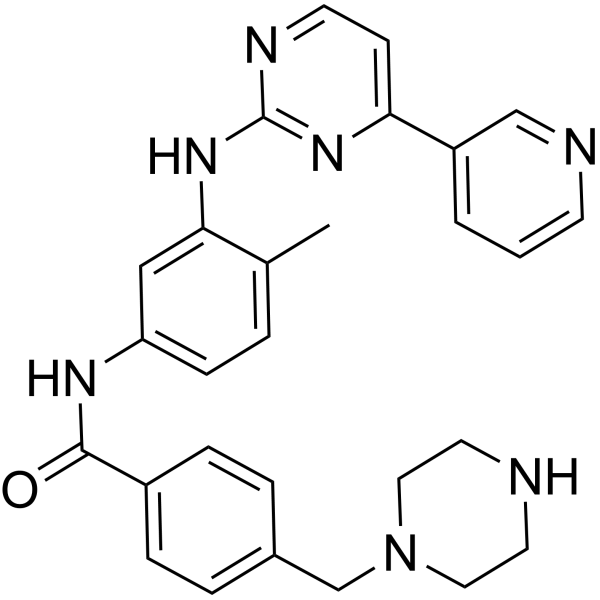
    N-Desmethyl imatinib
    1 Publications Verification

    Norimatinib; Imatinib metabolite N-Desmethyl imatinib; CGP 74588

    Drug Metabolite P-glycoprotein Apoptosis Neurological Disease Cancer
    N‑Desmethyl imatinib (Norimatinib) is an active metabolite of Imatinib (HY-15463), a selective c‑Abl inhibitor, and a substrate of P‑glycoprotein. N-Desmethyl imatinib binds to the c-Abl catalytic domain to prevent substrate phosphorylation, inhibits c-Abl-mediated α-synuclein activation and downstream inflammatory signaling pathways. N-Desmethyl imatinib induces apoptosis in K562 human leukemia cells. N-Desmethyl imatinib shows significantly elevated plasma levels in gastrointestinal stromal tumor (GIST) models with mild SARS-CoV-2 infection. N-Desmethyl imatinib can be used for the research of Parkinson’s disease, gastrointestinal stromal tumor, and chronic myeloid leukemia .
    N-Desmethyl imatinib
  • HY-125834

    PROTACs Bcr-Abl Apoptosis STAT JAK Cancer
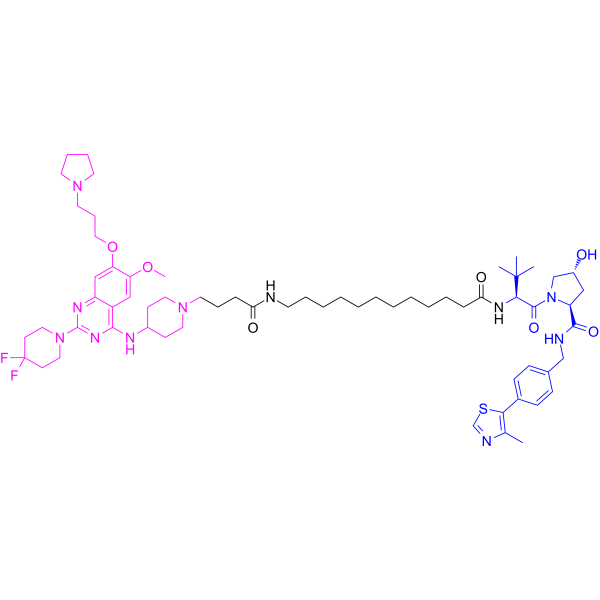
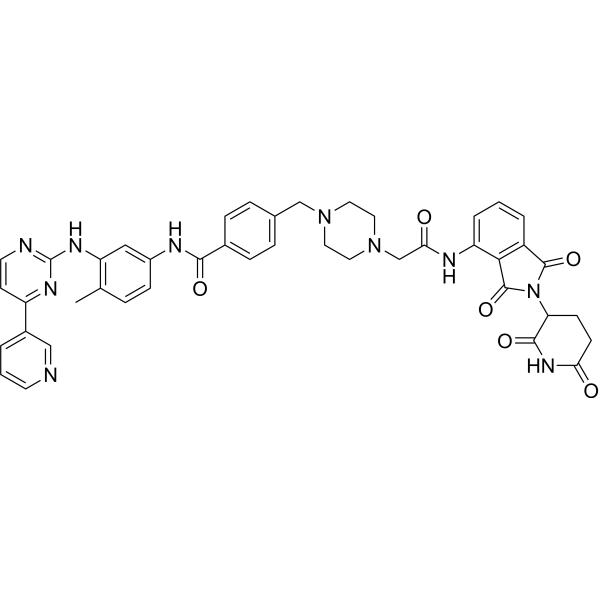
    GMB-475 is a potent BCR-ABL1 PROTAC based on Von Hippel-Lindau (VHL). GMB-475 targets the nutmeg pocket of ABL1 in an ectopic manner and degrades BCR-ABL1 protein through the ubiquitin proteasome pathway. GMB-475 inhibits the proliferation of human K562 cells and mouse Ba/F3 cells, and is used for the study of chronic myeloid leukemia. (Blue: VHL ligand (HY-125845); Black: Linker; Pink: BCR-ABL1 ligand (HY-11007)) .
    GMB-475
  • HY-175287

    Integrin Cancer
    α5β1 integrin agonist-2 (Compound 2) is a selective α5β1 integrin agonist (EC50 = 45.98 nM). α5β1 integrin agonist-2 induces integrin activation. α5β1 integrin agonist-2 is applicable to the research of leukemia .
    α5β1 integrin agonist-2
  • HY-Y0030

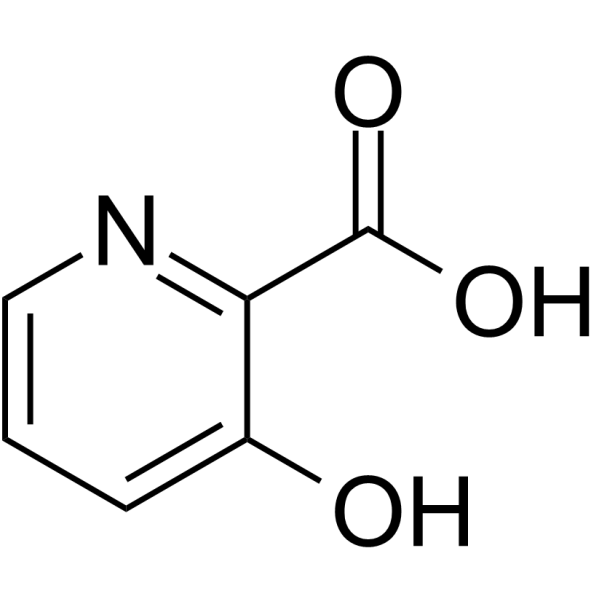
    3-hydroxypyridine-2-carboxylic acid

    Biochemical Assay Reagents Drug Intermediate Infection Cancer
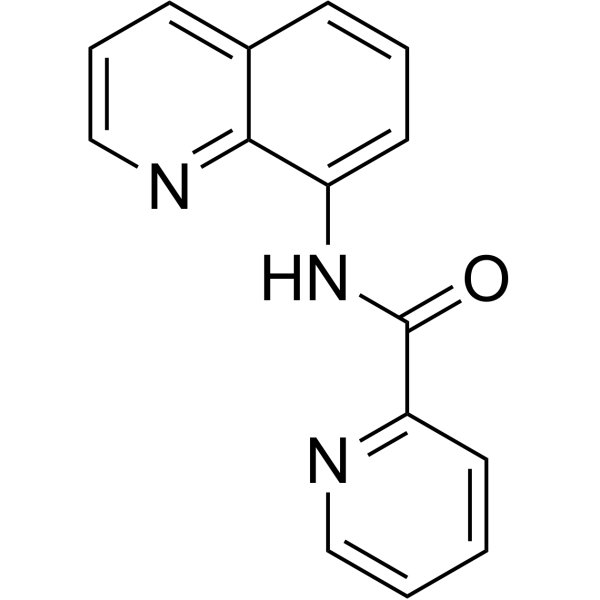
    3-Hydroxypicolinic acid is a heterocyclic carboxylic acid ligand and cytotoxin, with a MIC90 of >25 μg/mL against Mycobacterium tuberculosis H37Rv. 3-Hydroxypicolinic acid inhibits the growth of cancer cells and normal fibroblasts. 3-Hydroxypicolinic acid is applicable to research related to chronic myeloid leukemia, human lung adenocarcinoma, and tuberculosis .
    3-Hydroxypicolinic acid
  • HY-162386

    Cuproptosis Mitochondrial Metabolism Cancer
    UM4118 is a potent copper-selective non-genotoxic copper ionophore that induces cuproptosis in acute myeloid leukemia cells. UM4118 exhibits stronger activity against SF3B1G12C mutant acute myeloid leukemia cells. UM4118 transports extracellular copper into cells, elevates intracellular and mitochondrial copper levels, and triggers lipoylated DLAT aggregation, proteotoxic stress, iron-sulfur cluster protein depletion, reduced lipoylated protein levels, and maximal mitochondrial respiratory damage. UM4118 cytotoxicity can be enhanced by supplementation with extracellular copper, abolished by copper chelation, and shows synthetic lethal effects in the absence of iron-sulfur cluster biosynthesis/transport genes. UM4118 can be used for the study of acute myeloid leukemia .
    UM4118
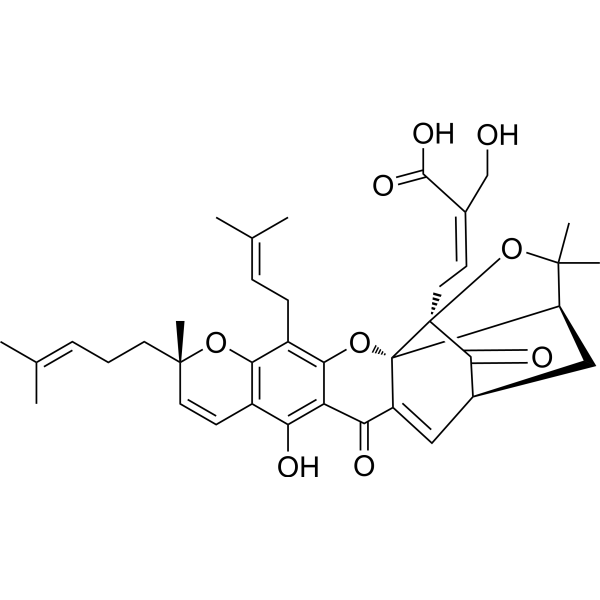
  • HY-N10678

    Others Cancer
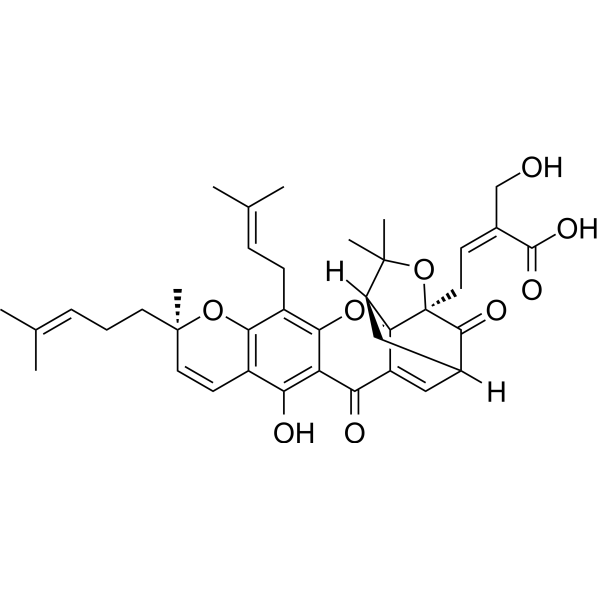
    R-30-Hydroxygambogic acid is polyprenylated xanthone epimer that can be isolated from gamboges of Garcinia hanburyi. R-30-Hydroxygambogic acid shows cytotoxicities to Human Leukemia K562 cell lines of IC50 values of 2.89 and 1.27 μM for K562/R and K562/S, respectively. R-30-Hydroxygambogic acid can be used for the research of cancer .
    R-30-Hydroxygambogic acid
  • HY-162608

    PROTACs JAK STAT Cancer
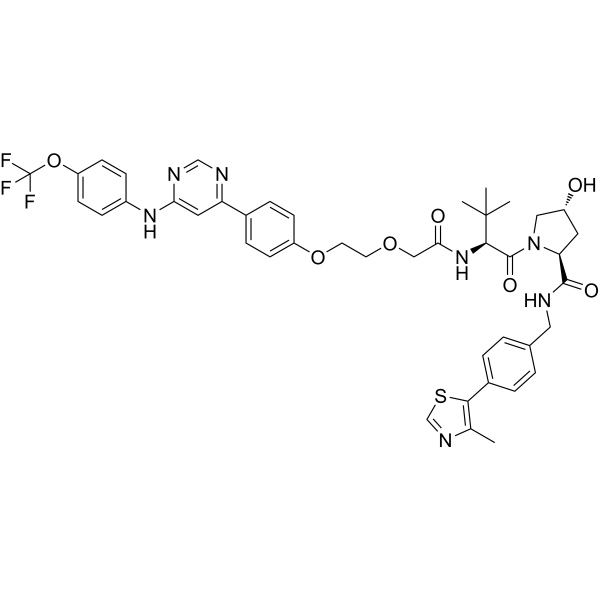
    PROTAC JAK1 degrader 1 is a JAK1 PROTAC degrader with a DC50 of 214 nM and an IC50 of 5.2 nM. PROTAC JAK1 degrader 1 inhibits the downstream JAK-STAT signaling pathway by degrading JAK1. PROTAC JAK1 degrader 1 exhibits antiproliferative activity in cells. PROTAC JAK1 degrader 1 can be used for research on leukemia .
    PROTAC JAK1 degrader 1
  • HY-G0017S

    Norimatinib-d8; Imatinib metabolite N-Desmethyl imatinib-d8; CGP 74588-d8

    Isotope-Labeled Compounds Drug Metabolite P-glycoprotein Apoptosis Neurological Disease Cancer
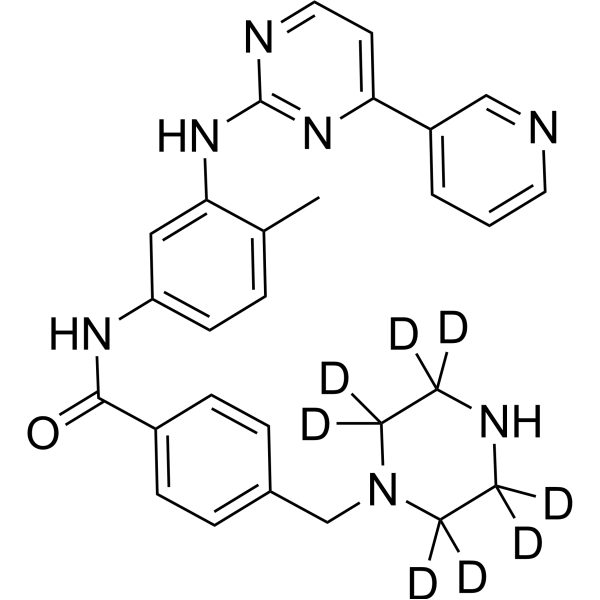
    N-Desmethyl imatinib-d8 is a deuterium labeled Imatinib metabolite N-Desmethyl Imatinib (HY-G0017). N‑Desmethyl imatinib (Norimatinib) is an active metabolite of Imatinib (HY-15463), a selective c‑Abl inhibitor, and a substrate of P‑glycoprotein. N-Desmethyl imatinib binds to the c-Abl catalytic domain to prevent substrate phosphorylation, inhibits c-Abl-mediated α-synuclein activation and downstream inflammatory signaling pathways. N-Desmethyl imatinib induces apoptosis in K562 human leukemia cells. N-Desmethyl imatinib exhibits significantly elevated plasma levels in gastrointestinal stromal tumor (GIST) settings following mild SARS CoV 2 infection. N-Desmethyl imatinib can be used for the research of Parkinson’s disease, gastrointestinal stromal tumor, and chronic myeloid leukemia .
    N-Desmethyl imatinib-d8
  • HY-147342

    Drug Metabolite IMPDH Cancer
    β-Benzamide adenine dinucleotide is a biologically active metabolite of benzamide riboside. β-Benzamide adenine dinucleotide is a competitive inhibitor of human NAD kinase with a Ki value of 90 μM, and inhibits human IMPDH with IC50 values of 0.787 μM and 0.884 μM for type I and type II, respectively. β-Benzamide adenine dinucleotide exhibits inhibitory activities against lactate dehydrogenase, glutamate dehydrogenase, and malate dehydrogenase. β-Benzamide adenine dinucleotide can be used for the study of chronic myelogenous leukemia .
    β-Benzamide adenine dinucleotide
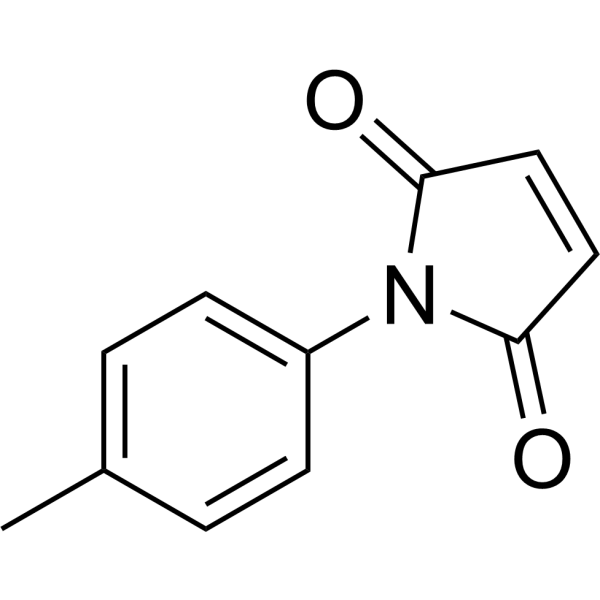
  • HY-129592

    Apoptosis Cancer
    p-Tolylmaleimide (compound 9) is a naphthalimide derivative that has cytotoxic effects on cancer cells. p-Tolylmaleimide can arrest the cell cycle of human acute myeloid leukemia cells K562 in the sub-G0/G1 phase and induce apoptosis .
    p-Tolylmaleimide
  • HY-N10677

    Others Cancer
    S-30-Hydroxygambogic acid is polyprenylated xanthone epimer that can be isolated from gamboges of Garcinia hanburyi. S-30-Hydroxygambogic acid shows cytotoxicities to Human Leukemia K562 cell lines of IC50 values of 4.49 and 3.61 μM for K562/R and K562/S, respectively. S-30-Hydroxygambogic acid can be used for the research of cancer .
    S-30-Hydroxygambogic acid
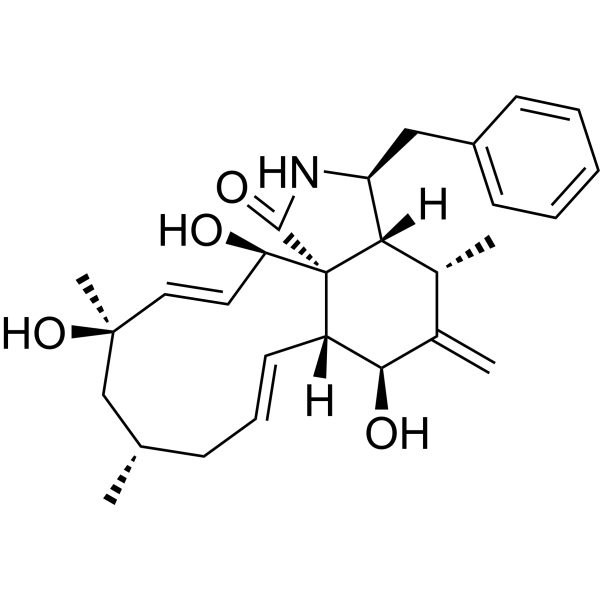
  • HY-126556

    Microtubule/Tubulin Cancer
    Cytochalasin J is a cytochalasin detivative. Cytochalasin J affects mitotic spindel microtubule organization and kinetochore structure, and exhibits cytotoxicity in human leukemia K562 cell with IC50 of 1.5 μM .
    Cytochalasin J
  • HY-N15582

    Apoptosis Inflammation/Immunology Cancer
    Perezone is a sesquiterpenoid benzoquinone found in the roots of Acourtia species. Perezone inhibits the activity of leukemia cell line K-562 and human glioma cell line U-251 (IC50: 6.83 μM). Perezone increases the expression of caspase 3, 8, and 9 genes associated with apoptosis. Perezone has antioxidant and anti-inflammatory activities .
    Perezone
  • HY-N14774

    Antibiotic Bacterial Infection
    Lactoquinomycin B is a quinone antibiotic. Lactoquinomycin B has the activity of anti-Gram-positive bacteria and some Gram-negative bacteria, but the effect of anti-Gram-negative bacteria is weak and has no effect on fungi. Lactoquinomycin B inhibits a variety of cell lines including lymphoma L5178Y progenitor, Adriamycin resistant, Bleomycin-resistant, human leukemia K562, mouse leukemia L-1210 and mouse leukemia P 388 with ID50 (μg/mL) of 0.43, 0.21, 0.19, 0.16, 0.2 and 0.12, respectively .
    Lactoquinomycin B
  • HY-117285

    Lactoquinomycin A; LQM-A

    Antibiotic Bacterial Infection Cancer
    Lactoquinomycin A is a quinone antibiotic. Lactoquinomycin A has the activity of anti-Gram-positive bacteria and some Gram-negative bacteria, but the effect of anti-Gram-negative bacteria is weak and has no effect on fungi. Lactoquinomycin A inhibits a variety of cell lines including lymphoma L5178Y progenitor, Adriamycin resistant, Bleomycin-resistant, human leukemia K562, mouse leukemia L-1210 and mouse leukemia P 388 with ID50 (μg/mL) of 0.02, 0.006, 0.008, 0.033, 0.013 and 0.03, respectively .
    Medermycin
  • HY-128634

    Apoptosis PI3K MEK Cancer
    CML-IN-1 (compound 7) is a potent anticancer agent. CML-IN-1 displays very good induced-apoptosis effect for human chronic myeloid leukemia (CML) cell line K562. CML-IN-1 exerts its effect via a significantly reduced protein phosphorylation of PI3K/Akt signal pathway. CML-IN-1 (compound 4) also inhibits cell proliferation by suppressing the MEK/ERK signaling pathway in colorectal cancer .
    Anticancer agent 164
  • HY-125322

    Bacterial Infection
    Reveromycin C is a polyketide originally isolated from Streptomyces that has antifungal activity against C. albicans (MICs=2.0 and >500 μg/mL at pH 3 and 7.4, respectively). Reveromycin C inhibits EGF-induced mitogenic activity in the Balb/MK mouse epidermal cell line. It also reverses the morphology of sarcoma-virus-transformed NRK rat kidney cells (EC50=1.58 μg/mL) and inhibits proliferation of KB cells and K562 human chronic myelogenous leukemia cells (IC50=2.0 μg/mL for both).
    Reveromycin C
  • HY-G0017A

    Norimatinib mesylate; Imatinib metabolite N-Desmethyl imatinib mesylate; CGP 74588 mesylate

    Drug Metabolite P-glycoprotein Apoptosis Neurological Disease Cancer
    N-Desmethyl imatinib mesylate (Norimatinib mesylate) is an active metabolite of Imatinib (HY-15463), a selective c‑Abl inhibitor, and a substrate of P‑glycoprotein. N-Desmethyl imatinib mesylate binds to the c-Abl catalytic domain to prevent substrate phosphorylation, inhibits c-Abl-mediated α-synuclein activation and downstream inflammatory signaling pathways. N-Desmethyl imatinib mesylate induces apoptosis in K562 human leukemia cells. N-Desmethyl imatinib mesylate exhibits significantly elevated plasma levels in gastrointestinal stromal tumor (GIST) settings following mild SARS CoV 2 infection. N-Desmethyl imatinib mesylate can be used for the research of Parkinson’s disease, gastrointestinal stromal tumor, and chronic myeloid leukemia .
    N-Desmethyl imatinib mesylate
  • HY-G0017S1

    Norimatinib-d4; Imatinib metabolite N-Desmethyl imatinib-d4; CGP 74588-d4

    Isotope-Labeled Compounds Drug Metabolite P-glycoprotein Apoptosis Neurological Disease Cancer
    N-Desmethyl imatinib-d4 is the deuterium-labeled N-Desmethyl imatinib (HY-G0017). N‑Desmethyl imatinib (Norimatinib) is an active metabolite of Imatinib (HY-15463), a selective c‑Abl inhibitor, and a substrate of P‑glycoprotein. N-Desmethyl imatinib binds to the c-Abl catalytic domain to prevent substrate phosphorylation, inhibits c-Abl-mediated α-synuclein activation and downstream inflammatory signaling pathways. N-Desmethyl imatinib induces apoptosis in K562 human leukemia cells. N-Desmethyl imatinib exhibits significantly elevated plasma levels in gastrointestinal stromal tumor (GIST) settings following mild SARS CoV 2 infection. N-Desmethyl imatinib can be used for the research of Parkinson’s disease, gastrointestinal stromal tumor, and chronic myeloid leukemia .
    N-Desmethyl imatinib-d4
  • HY-G0017R

    Norimatinib (Standard); Imatinib metabolite N-Desmethyl imatinib (Standard); CGP 74588 (Standard)

    Reference Standards Drug Metabolite P-glycoprotein Apoptosis Others
    N‑Desmethyl imatinib (Standard) is the analytical standard of N‑Desmethyl imatinib (Norimatinib) (HY-G0017R). This product is intended for research and analytical applications. N‑Desmethyl imatinib (Norimatinib) is an active metabolite of Imatinib (HY-15463), a selective c‑Abl inhibitor, and a substrate of P‑glycoprotein. N-Desmethyl imatinib binds to the c-Abl catalytic domain to prevent substrate phosphorylation, inhibits c-Abl-mediated α-synuclein activation and downstream inflammatory signaling pathways. N-Desmethyl imatinib induces apoptosis in K562 human leukemia cells. N-Desmethyl imatinib exhibits significantly elevated plasma levels in gastrointestinal stromal tumor (GIST) settings following mild SARS CoV 2 infection. N-Desmethyl imatinib can be used for the research of Parkinson’s disease, gastrointestinal stromal tumor, and chronic myeloid leukemia .
    N-Desmethyl imatinib (Standard)
  • HY-N16684

    P-glycoprotein Cancer
    Clausarin is a selective inhibitor of P-glycoprotein (P-gp), inhibiting P-gp-mediated drug efflux. Clausarin significantly inhibits Daunorubicin (HY-13062A) efflux in K562/R7 human leukemia cells overexpressing P-gp (with Cyclosporin A (HY-B0579) as a positive control). Clausarin can be naturally extracted from the roots of Citrus sinensis (sweet orange) and can be used in research related to overcoming multidrug resistance (MDR) in tumors .
    Clausarin
  • HY-402815

    Drug Intermediate Cancer
    (E)-4-(Naphthalen-2-yl)but-3-en-2-one (Compound 7) is a small active molecule that can be used as building block. (E)-4-(Naphthalen-2-yl)but-3-en-2-one exhibits anti-leukemic activity, that inhibits the proliferation of human chronic myeloid leukemia cell K562 with an IC50 of 7.6 μM .
    (E)-4-(Naphthalen-2-yl)but-3-en-2-one
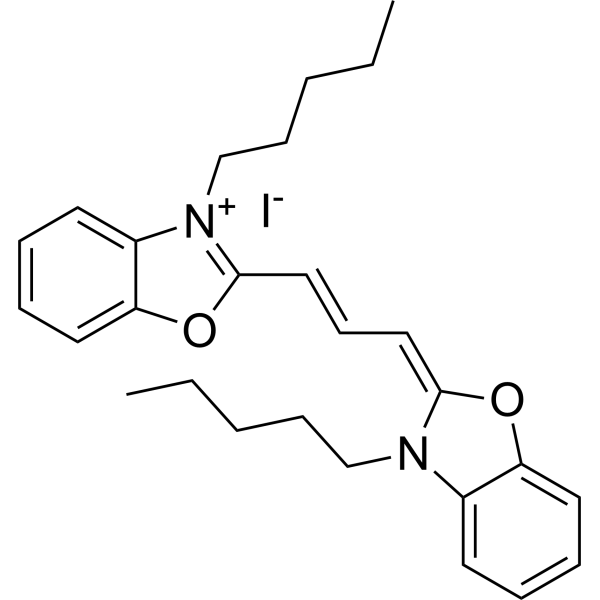
  • HY-D3183

    Fluorescent Dye Aldehyde Dehydrogenase (ALDH) Others
    AldRed 659-A is a red-shifted fluorescent substrate for aldehyde dehydrogenase (ALDH). AldRed 659-A exhibits only minimal fluorescent uptake shift in comparison with DEAB (ALDH inhibitor)-treated control .
    AldRed 659-A
  • HY-P2044

    HDAC Cancer
    Azumamide E is a HDAC inhibitor, with an IC50 of 0.064 μM against HDAC, 1.22 μM against HDAC1, and 2.28 μM against HDAC4. Azumamide E inhibits HDAC activity in nuclear extracts of leukemia cells and cervical adenocarcinoma cells. Azumamide E suppresses angiogenesis. Azumamide E is applicable for research on leukemia, cervical adenocarcinoma, and anti-angiogenesis .
    Azumamide E
  • HY-119159

    NAMPT Caspase Apoptosis Cancer
    AS1604498 is a highly specific competitive inhibitor of human NAMPT, with an IC50 of 44.4 nM. AS1604498 functionally inhibits NAMPT enzymatic activity, reduces nicotinamide mononucleotide production, decreases intracellular NAD levels, activates caspase 3/7 and induces cancer cell apoptosis. AS1604498 is applicable to research related to chronic myeloid leukemia .
    AS1604498
  • HY-N16806

    Drug Derivative Others
    Yunnancoronarin B is a natural diterpene.
    Yunnancoronarin B
  • HY-D3185

    Fluorescent Dye Aldehyde Dehydrogenase (ALDH) Cancer
    AlDeSense AM is a cell-permeable ALDH1A1-selective fluorescent reporter. AlDeSense AM is oxidized by ALDH1A1, which eliminates photoinduced electron transfer quenching and enhances the fluorescent signal. AlDeSense AM can be used to detect cells with cancer stem cell properties, as well as to monitor the plasticity of cancer stem cells in cell culture systems and animal models. AlDeSense AM is applicable to the study of cancers associated with cancer stem cells, including chronic myeloid leukemia, melanoma, and breast cancer .
    AlDeSense AM
  • HY-P11705

    Biochemical Assay Reagents Cancer
    PUMA2A is a PUMA BH3-only peptide. PUMA2A can be used as a negative control in Cytochrome C release assays and BH3 profiling. PUMA2A can be used in the research of chronic myeloid leukemia .
    PUMA2A

Inquiry Online

Your information is safe with us. * Required Fields.

Salutation


Country or Region *

Applicant Name *


Organization Name *

Department *


Email Address *


Product Name *

Cat. No.


Requested quantity *

Phone Number *


Remarks

Inquiry Online

Inquiry Information

Product Name:
Cat. No.:
Quantity:
MCE Japan Authorized Agent:

