




52 Results for "

MHC Class II

" in MedChemExpress (MCE) Product Catalog:
Products (52)

52 Results for "MHC Class II" in MCE Product Catalog:

68
68 Publications Verification
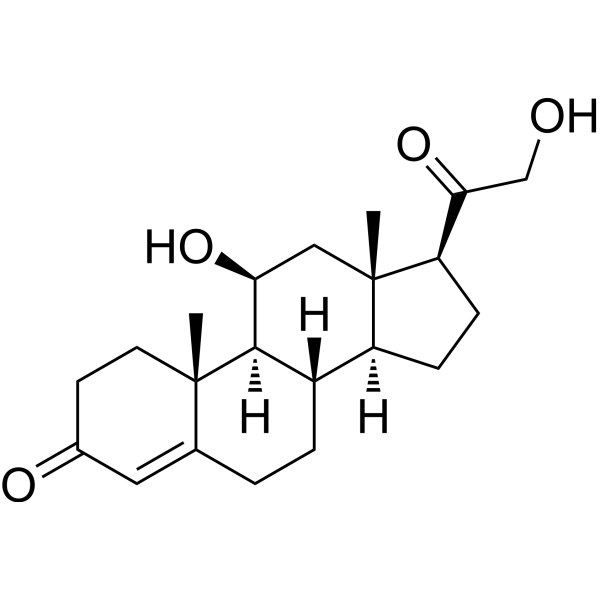
Cat. No.: HY-B1618
CAS No.: 50-22-6
Synonyms: 17-Deoxycortisol; 11β,21-Dihydroxyprogesterone; Kendall's compound B
Corticosterone (17-Deoxycortisol) is an orally active and adrenal cortex-produced glucocorticoid, which plays an important role in regulating neuronal functions of the limbic system (including hippocampus, prefrontal cortex, and amygdala). Corticosterone increases the Rab-mediated AMPAR membrane traffic via SGK-induced phosphorylation of GDI. Corticosterone also interferes with the maturation of dendritic cells and shows a good immunosuppressive effect .
loading...
    loading...
1
1 Cited Publications
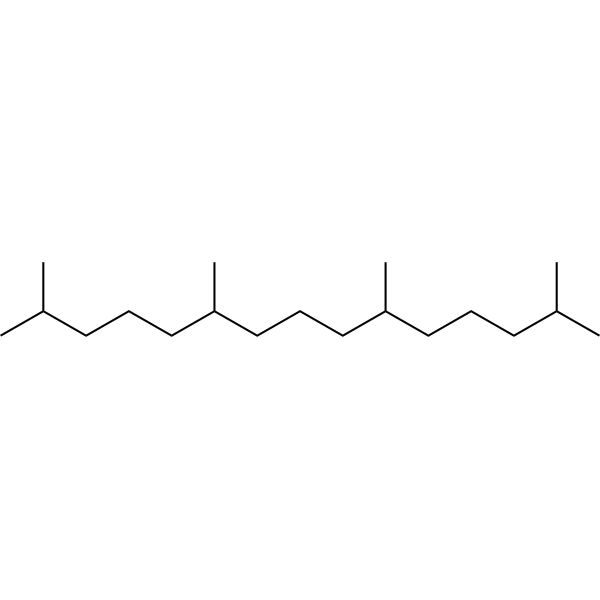
Cat. No.: HY-N7819
CAS No.: 1921-70-6
Synonyms: Norphytane
Pristane (Norphytane) is a naturally occurring hydrocarbon oil found in small quantities in many plants, in various marine organisms, and as the most active component of mineral oil . Pristane is a non-antigenic adjuvant, and induces MHC class II-restricted, arthritogenic T cells in the rat .
loading...
    loading...
1
1 Cited Publications
Cat. No.: HY-P83339
Synonyms: MLRW; HLA-DRA1; MHC Class II antigen DRA; HLA Class II histocompatibility antigen; DR alpha chain

Host:  

Rabbit

Application:  

WB, IHC-P, ICC/IF, FC

Reactivity:  

Human

loading...
    loading...
1
1 Cited Publications
Cat. No.: HY-P85898
Synonyms: CD 74 antibody; CD74 antibody; CD74 antigen; invariant polypeptide of major histocompatibility complex; Class II antigen-associated; antibody; CD74 antigen antibody; CD74 molecule antibody; CD74 molecule; major histocompatibility complex; Class II invariant chain antibody; CLIP antibody; DHLAG antibody; Gamma chain of Class II antigens antibody; HG2A_HUMAN antibody; HLA Class II histocompatibility antigen gamma chain antibody; HLA DR antigens associated invariant chain antibody; HLA DR gamma antibody; HLA-DR antigens-associated invariant chain antibody; HLA-DR-gamma antibody; HLADG antibody; HLADR antigens associated invariant chain antibody; Ia antigen associated invariant chain antibody; Ia antigen-associated invariant chain antibody; Ia associated invariant chain antibody; Ia gamma antibody; II antibody; Invariant polypeptide of major histocompatibility complex Class II antigen associated antibody; la-gamma antibody; Major histocompatibility complex Class II invariant chain antibody; MHC HLA DR gamma chain antibody; MHC HLA-DR gamma chain antibody; p33 antibody; p35 antibody; Protein 41 antibody;

Host:  

Mouse

Application:  

IHC-P, WB, ICC/IF, ELISA

Reactivity:  

Human

loading...
    loading...
Cat. No.: HY-P1924
CAS No.: 1977546-93-2
IRBP (651-670) human, mouse is an epitope and uveitis inducer naturally processed from the conserved region of native IRBP. IRBP (651-670) human, mouse increases the levels of proinflammatory cytokines in ocular tissues (IL-1β, IL-6, TNFα, IL-17A and IL-17F). IRBP (651-670) human, mouse is a IRBP fragment conserved among human, mouse and bovine species. IRBP (651-670) human, mouse induces experimental autoimmune uveitis. IRBP (651-670) human, mouse is applicable to research related to experimental autoimmune uveitis .
loading...
    loading...
Cat. No.: HY-P1745
CAS No.: 163364-16-7
Synonyms: Insulin B chain (9-23)
Target:  

MHC Insulin Receptor IFNAR

Research Areas:  

Inflammation/Immunology

InsB (9-23) (Insulin B chain (9-23)) is an HLA-DQ8-restricted insulin B-chain peptide composed of amino acid residues 9-23. InsB (9-23) serves as a major MHC II class-restricted antigen. InsB (9-23) supports the recognition and activation of T cells, stimulates the secretion of IFN-γ and cytokines, and induces cross-reactive immune responses. InsB (9-23)-specific CD4 T cells can initiate diabetes . InsB (9-23) can be used in research related to type 1 diabetes and autoimmune diabetes .
loading...
    loading...
Cat. No.: HY-P99613
CAS No.: 2231068-83-8
Synonyms: MK-4280; Mavezelimab

Target:  

LAG-3

Research Areas:  

Cancer

Favezelimab (MK-4280) is a humanized monoclonal antibody targeting LAG-3. Favezelimab blocks the interaction between LAG-3 and its ligand, MHC class II molecules. Favezelimab is applicable to research on relapsed/refractory classical Hodgkin lymphoma, relapsed/refractory diffuse large B-cell lymphoma, and relapsed/refractory indolent B-cell lymphoma . For the isotype control of Favezelimab, refer to Human IgG4 (S228P) kappa, Isotype Control (HY-P99003).
loading...
    loading...
Cat. No.: HY-P11303
CAS No.: 161147-59-7
Target:  

CD74 MHC

Research Areas:  

Neurological Disease Cancer

PADRE peptide is a pan-HLA-DR binding epitope and immunostimulant. PADRE peptide binds to the peptide-binding groove of MHC class II molecules for presentation to CD4 + T cells, thereby effectively stimulating specific immune responses. PADRE peptide not only enhances anti-tumor immune responses, inhibits tumor growth and prolongs survival; it also significantly increases the frequency of E7-specific CD8 + T cells and improves therapeutic efficacy against TC-1 tumors when used in combination with E7 peptide-based vaccines and poly (I:C). The intensity of the immune response induced by PADRE peptide is lower than that of the Ii-PADRE DNA vaccine, and it fails to enhance the immune effect of CRT-E7 DNA. PADRE peptide is widely applicable to research on related tumors such as melanoma, glioblastoma and cervical cancer .
loading...
    loading...
Cat. No.: HY-P990187

Target:  

MHC Influenza Virus

Research Areas:  

Infection Inflammation/Immunology

Anti-Mouse MHC Class II (I-A/I-E) Antibody (M5/114) is a rat-derived IgG2b type antibody inhibitor, targeting to mouse MHC Class II. Anti-Mouse MHC Class II (I-A/I-E) Antibody (M5/114) reacts with mouse MHC Class II haplotypes I-Ab, I-Ad, I-Aq, I-Ed, and I-Ek. Anti-Mouse MHC Class II (I-A/I-E) Antibody (M5/114) does not react with I-Af, I-Ak, or I-As haplotypes. Anti-Mouse MHC Class II (I-A/I-E) Antibody (M5/114) blocks MHC Class II and inhibit T cell generation. Anti-Mouse MHC Class II (I-A/I-E) Antibody (M5/114) can be used for the researches of infection and immunology, such as influenza A virus (IAV) infection .
loading...
    loading...
Cat. No.: HY-165613
CAS No.: 656831-18-4
Synonyms: Dipalmitoyl-S-glyceryl-cysteine; S-[2,3-Bis(palmitoyloxy)propyl]cysteine
Pam2Cys (Dipalmitoyl-S-glyceryl-cysteine; S-[2,3-Bis(palmitoyloxy)propyl]cysteine) is a TLR2 agonist and immunostimulant. Pam2Cys binds to TLR2 to activate dendritic cells and trigger the TLR2-dependent NF-κB signaling pathway. Pam2Cys also induces dendritic cell maturation by upregulating the expression of cell surface MHC II molecules. Pam2Cys activates innate immune signaling pathways, drives pro-inflammatory and antimicrobial responses, enhances the expression of macrophage activation markers, increases phagocytic activity, induces the release of IL-12 and pro-inflammatory cytokines, and polarizes macrophages into a pro-inflammatory, antimicrobial phenotype without interfering with IL-10-induced macrophage polarization. Pam2Cys also serves as the lipid moiety in synthetic lipopeptide vaccines and possesses self-adjuvant properties. Pam2Cys enhances the immunogenicity of conjugated peptide segments and induces cellular and humoral immune responses. However, it does not activate CD4 T cells in mouse splenocyte cultures when used alone. Pam2Cys activates pulmonary TLR2 signaling pathways, triggers innate immune responses, recruits neutrophils and macrophages, induces the secretion of various cytokines, alleviates symptoms and damages associated with influenza A virus infection in mice without impairing adaptive immunity. Pam2Cys can be used in studies related to tuberculosis and influenza A virus infection .
loading...
    loading...
Cat. No.: HY-P990188

Target:  

MHC

Research Areas:  

Inflammation/Immunology

Anti-Mouse MHC class II (I-A) Antibody (Y-3P) is a mouse-derived IgG2a κ type antibody inhibitor, targeting to mouse MHC class II. Anti-Mouse MHC class II (I-A) Antibody (Y-3P) reacts with mouse MHC Class II haplotypes I-Ab, I-Af, I-Ap, I-Aq, I-Ar, I-As, I-Au, I-Av, and weakly with I-Ak. Anti-Mouse MHC class II (I-A) Antibody (Y-3P) blocks MHC class II and inhibits expansion of regulate T cells. Anti-Mouse MHC class II (I-A) Antibody (Y-3P) can be used for the immunology research .
loading...
    loading...
Cat. No.: HY-P990189

Research Areas:  

Infection Cancer

Anti-Monkey/Human MHC class II (HLA-DR) Antibody (L243) is a mouse-derived IgG2a κ type antibody inhibitor, targeting to monkey/human MHC class II. Anti-Monkey/Human MHC class II (HLA-DR) Antibody (L243) can inhibits tumor cells proliferation and induce apoptosis. Anti-Monkey/Human MHC class II (HLA-DR) Antibody (L243) increases cellular reactive oxygen species (ROS) and loss of mitochondrial membrane potential in human endothelial cells. Anti-Monkey/Human MHC class II (HLA-DR) Antibody (L243) can be used for the researches of cancer and infection, such as lymphoma .
loading...
    loading...
Cat. No.: HY-P1826
CAS No.: 648881-58-7
Target:  

CD74

Research Areas:  

Inflammation/Immunology Cancer

CLIP (86-100) is amino acids 86 to 100 fragment of class II-associated invariant chain peptide (CLIP). CLIP is a small self-peptide and cleavage product of the invariant chain that resides in the HLA-II antigen binding groove and is believed to play a critical role in the assembly and transport of MHC class II alphabetaIi complexes through its interaction with the class II peptide-binding site .
loading...
    loading...
Cat. No.: HY-157269
CAS No.: 1069110-72-0
Target:  

Hapten

Research Areas:  

Inflammation/Immunology

J10-1 is a hapten small molecule. J10-1 accelerates peptide exchange in MHC class II molecules in an HLA-DM-independent manner, and its effect is not affected by the polymorphism of the P1 pocket of MHC class II molecules. J10-1 enhances the processes of peptide dissociation, peptide binding and peptide association of MHC class II molecules on the surface of B cells. J10-1 can be used for research on immunoregulation .
loading...
    loading...
Cat. No.: HY-P5412
CAS No.: 331941-87-8
Synonyms: Listeriolysin O 190 peptide
Target:  

Peptides

Research Areas:  

Others

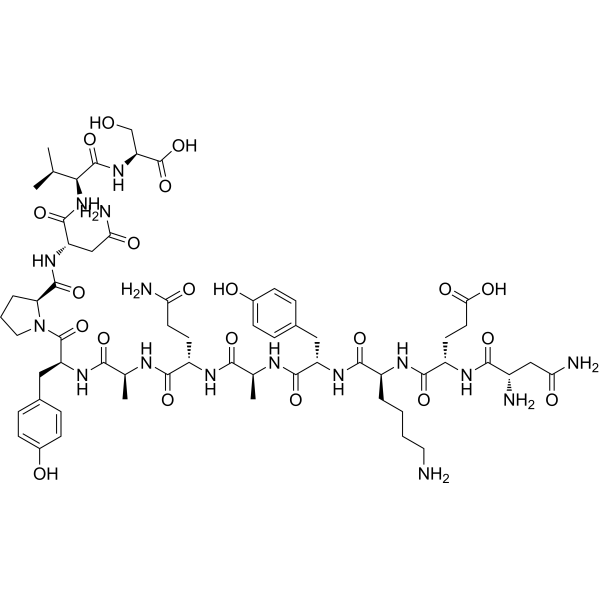
LLO (190-201) (Listeriolysin O 190 peptide) is a biological active peptide. (This peptide is a major histocompatibility complex class II (MHC-II)-restricted peptide, LLO190 (NEKYAQAYPNVS), from the listeriolysin O protein of Listeria monocytogenes, which generates an LLO190-specific Th response. This peptide subsequently challenge recombinant L. monocytogenes expressing the MHC-I-restricted epitope of ovalbumin (Ova257, SIINFEKL).)
loading...
    loading...
Cat. No.: HY-P5453
CAS No.: 646997-09-3
Target:  

CD3

Research Areas:  

Others

CFP10 (71–85) is a biological active peptide. (CFP1071–85, that elicited IFN-γ production and CTL activity by both CD4+ and CD8+ T cells from persons expressing multiple MHC class II and class I molecules)
loading...
    loading...
Cat. No.: HY-P990185

Target:  

MHC

Research Areas:  

Inflammation/Immunology Cancer

Anti-Mouse/Rat MHC Class II (I-Ek/RT1-D) Antibody (14-4-4S) is a mouse-derived IgG2a κ type antibody inhibitor, targeting to mouse/rat MHC Class II. Anti-Mouse/Rat MHC Class II (I-Ek/RT1-D) Antibody (14-4-4S) reacts with mouse MHC Class II alloantigen I-Ek and the rat MHC class II alloantigen RT1D. Anti-Mouse/Rat MHC Class II (I-Ek/RT1-D) Antibody (14-4-4S) blocks antigen presentation. Anti-Mouse/Rat MHC Class II (I-Ek/RT1-D) Antibody (14-4-4S) can be used for the research of immunology and cancer .
loading...
    loading...
Cat. No.: HY-P2525
CAS No.: 245124-26-9
Target:  

MHC

Research Areas:  

Inflammation/Immunology

GAD65 (206-220) is glutamic acid decarboxylase (GAD) 65-derived peptide, corresponding to residues 180-188. GAD65 is presented to T cells in association with I-Ag7 MHC class II molecules and a major pancreatic antigens targeted by self-reactive T cells in type I diabetes mellitus .
loading...
    loading...
Cat. No.: HY-P4984
CAS No.: 137593-46-5
Target:  

Endogenous Metabolite

Research Areas:  

Infection

Toxic Shock Syndrome Toxin-1 (TSST-1) (58-78) is a superantigen exotoxin produced by Staphylococcus aureus. Toxic Shock Syndrome Toxin-1 (TSST-1) (58-78) binds to TCR and MHC II outside the antigen-presenting site, thereby inducing unconventional polyclonal lymphocyte activation, excessive cytokine production, rapid shock, multiple organ failure syndrome and even death. Toxic Shock Syndrome Toxin-1 (TSST-1) (58-78) exacerbates mammary gland inflammation and further induces mastitis. Toxic Shock Syndrome Toxin-1 (TSST-1) (58-78) is thermostable and can be transmitted to humans via food, causing toxic shock syndrome. Toxic Shock Syndrome Toxin-1 (TSST-1) (58-78) can be used in studies related to toxic shock syndrome and staphylococcal food poisoning .
loading...
    loading...
Cat. No.: HY-P1924A
IRBP (651-670) human, mouse TFA is an epitope and uveitis inducer naturally processed from the conserved region of native IRBP. IRBP (651-670) human, mouse TFA increases the levels of proinflammatory cytokines in ocular tissues (IL-1β, IL-6, TNFα, IL-17A and IL-17F). IRBP (651-670) human, mouse TFA is a IRBP fragment conserved among human, mouse and bovine species. IRBP (651-670) human, mouse TFA induces experimental autoimmune uveitis. IRBP (651-670) human, mouse TFA is applicable to research related to experimental autoimmune uveitis .
loading...
    loading...

