26 Results for "

Neuroscience

" in MedChemExpress (MCE) Product Catalog:
Products (26)

26 Results for "Neuroscience" in MCE Product Catalog:

9
9 Cited Publications
Cat. No.: HY-114384B
CAS No.: 2639392-70-2
Purity:  ≥98.0%
Synonyms: NV-5138 hydrochloride
Target:  

mTOR

Research Areas:  

Neurological Disease

Mefluleucine (NV-513) hydrochloride, a leucine analog, is the first selective and orally active brain mTORC1 activator, binding to Sestrin2. Mefluleucine hydrochloride is used for antidepressant studies .
loading...
    loading...
2
2 Cited Publications
Cat. No.: HY-15796
CAS No.: 1374828-69-9
Purity:  99.81%
Target:  

LRRK2

Research Areas:  

Neurological Disease

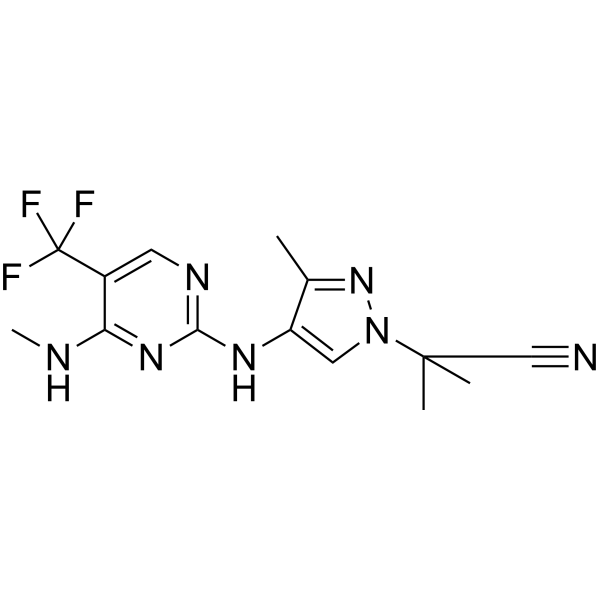
GNE0877 is a highly selective, orally active and brain-penetrant LRRK2 inhibitor with an IC50 of 3 nM and a Ki of 0.7 nM. GNE0877 can be used for the research of neuroscience .
loading...
    loading...
2
2 Cited Publications
Cat. No.: HY-100784
CAS No.: 52497-36-6
Purity:  ≥99.0%
Target:  

EAAT

Research Areas:  

Neurological Disease

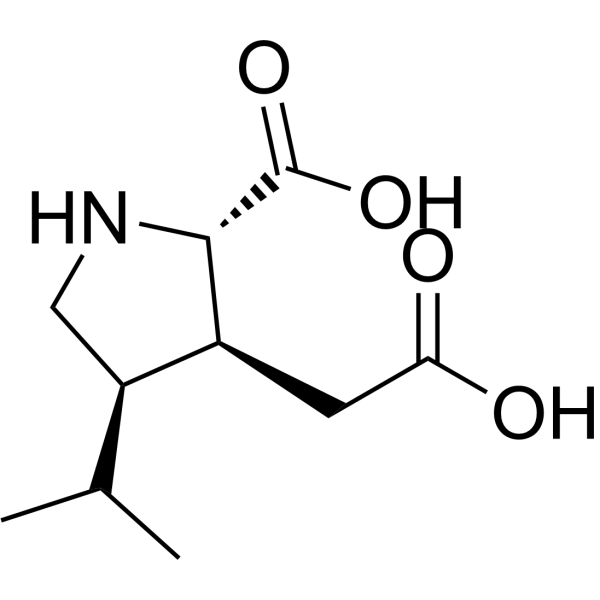
Dihydrokainic acid is a glutamate transporters (especially GLT1) inhibitor. Dihydrokainic acid targets GLT1 with high affinity, effectively inhibiting its transport function. Dihydrokainic acid exerts its effect by inhibiting the uptake of glutamate, leading to an increase in extracellular glutamate concentration, thereby affecting neuronal excitability and neurotransmission. Dihydrokainic acid is mainly applied in the field of neuroscience for research on glutamate-related neural functions, epilepsy, learning, and memory .
loading...
    loading...
Cat. No.: HY-100355
CAS No.: 2304-81-6
Purity:  99.95%
Synonyms: C18-Ceramide
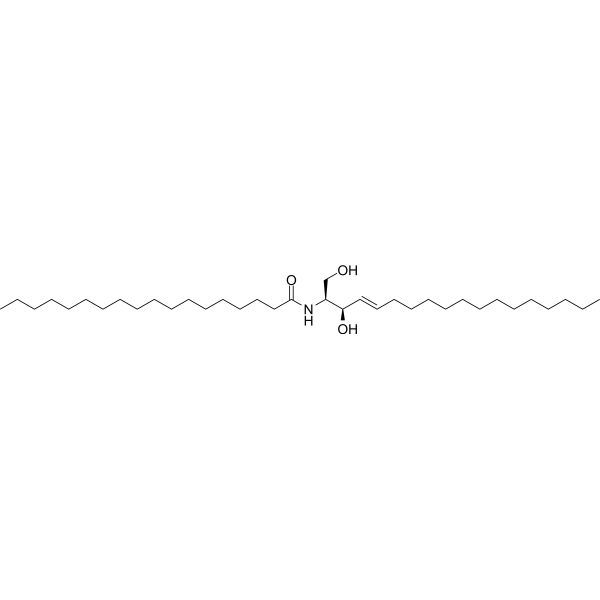
C18-Ceramide (d18:1/18:0) is a bioactive molecule with multiple functions in cells, not a traditional agonist or inhibitor targeting a single site. It can act on multiple cellular targets, such as proteins related to endoplasmic reticulum stress (e.g., ATF-4, XBP-1, CHOP), proteins in the PI3K/AKT signaling pathway, and SNARE complex proteins. It exerts activities like inducing cell death, promoting autophagy, and regulating exocytosis through mechanisms such as activating endoplasmic reticulum stress, inhibiting the PI3K/AKT signaling pathway, and affecting lipid raft - related functions. It can be used in research on the mechanism of neuronal injury in the field of neuroscience and in the treatment research of cancers such as glioma in the field of oncology .
loading...
    loading...
Cat. No.: HY-D0904
CAS No.: 1866-15-5
Synonyms: S-Acetylthiocholine iodide; ATCh iodide
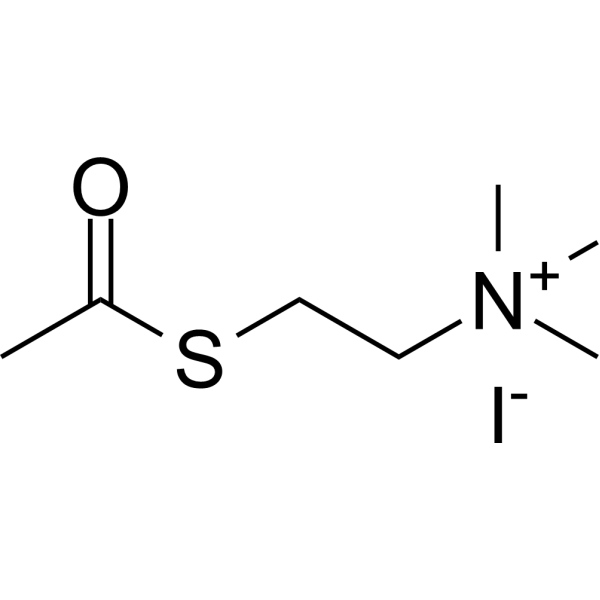
Acetylthiocholine iodide can be used as a substrate for certain enzymes, such as cholinesterase, etc., and can be used to determine the activity level of these enzymes. In addition, the compound is used in some medical research, for example in the fields of neuroscience and organ physiology.
loading...
    loading...
Cat. No.: HY-133527
CAS No.: 198139-51-4
Purity:  95.08%
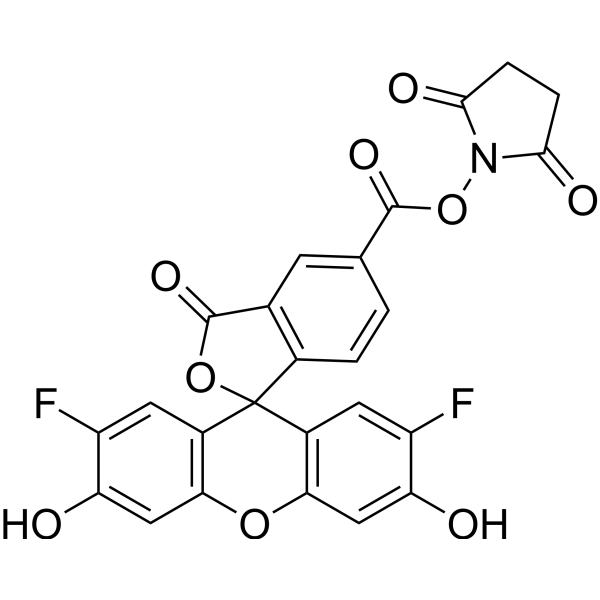
Synonyms: Oregon green 488 succinimidyl ester
OG 488, SE (Oregon green 488 succinimidyl ester), a fluorescent pH indicator, has many applications in biochemistry and neurosciences .
loading...
    loading...
Cat. No.: HY-D2906
CAS No.: 1825332-75-9
Alexa fluor 647 maleimide is a bright, far-red-emitting fluorescent dye for labeling of protein SH groups (Ex/Em = 656/670 nm). Alexa fluor 647 maleimide can be used to attach AF 647 fluorophore to proteins and peptides containing cysteine residues, as well as to other thiolated molecules (such as thiol-containing oligonucleotides). Alexa Fluor 647 maleimide is promising for research of cell biology, neuroscience, and disease diagnostics .
loading...
    loading...
Cat. No.: HY-W127702
CAS No.: 6106-46-3
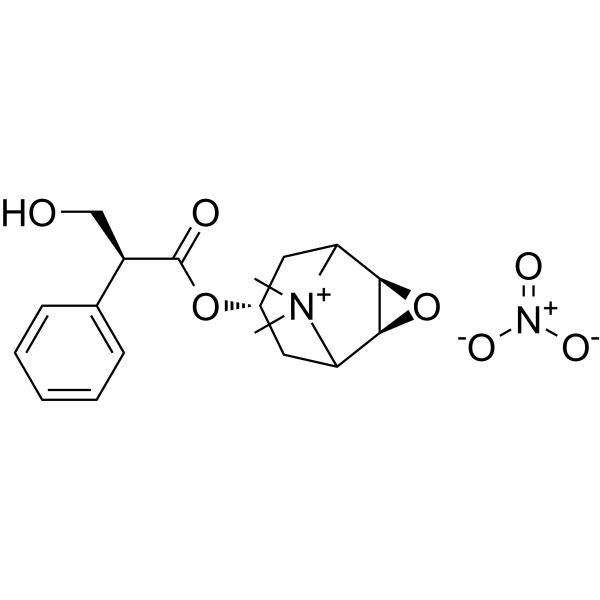
Synonyms: Methscopolamine nitrate
Scopolamine methyl nitrate is an organic compound commonly used in neuroscience research and pharmacology research. It can be used to study the role and structure of acetylcholine receptors, and is widely used in drug development and research in related fields. In addition, this compound is also used as a substrate or catalyst in certain biochemical reactions.
loading...
    loading...
Cat. No.: HY-155805
Purity:  99.85%
Target:  

CDK

Research Areas:  

Cancer

CAF-382 (compound B1) is an analog of SNS-032 and a CDKL5 and pan-CDK inhibitor with a weak GSK3α/β affinity (>1.8 μM) and inhibitory activity. CAF-382 inhibits CDKL5 and blocks the phosphorylation of the CDKL5 E2 domain .
loading...
    loading...
Cat. No.: HY-D1401
CAS No.: 195136-52-8
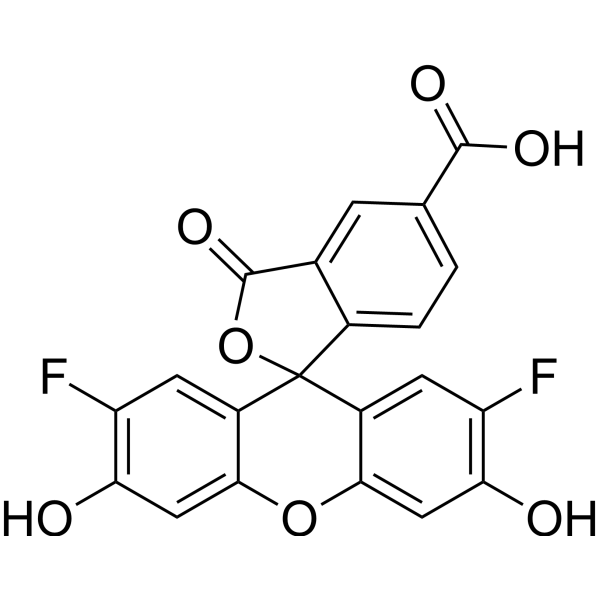
OG 488, acid, a fluorescent pH indicator, has many applications in biochemistry and neurosciences .
loading...
    loading...
Cat. No.: HY-W127699
CAS No.: 1866-13-3
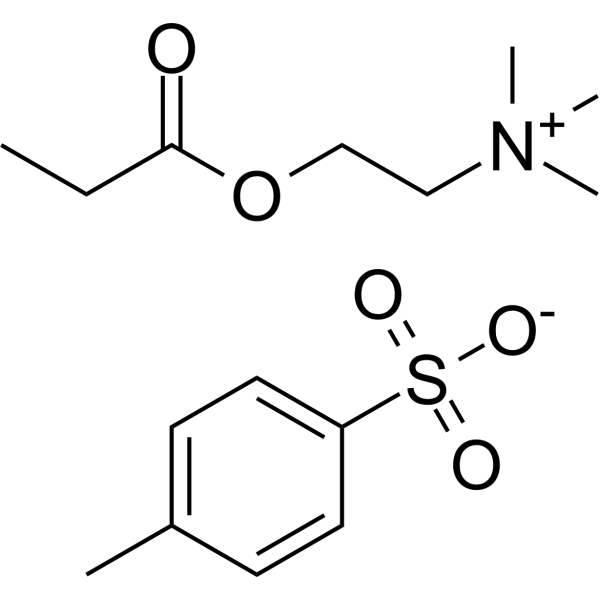
Synonyms: N,N,N-Trimethyl-2-(propionyloxy)ethanaminium (p-toluenesulfonate)
Propionylcholine (p-toluenesulfonate) is an organic compound commonly used in biochemical research and neuroscience research. It can be used to study cholinergic signal transduction and esterase activity, and is widely used in biomedical research and pharmacological research. In addition, this compound is also used as a substrate or catalyst in certain biochemical reactions.
loading...
    loading...
Cat. No.: HY-14157
CAS No.: 850176-30-6
Purity:  99.82%
Target:  

Opioid Receptor

Research Areas:  

Inflammation/Immunology

ADL-5747 is a selective and orally active agonist of the δ-opioid receptor (DOR). By binding to the δ-opioid receptors, ADL-5747 activates these receptors, thereby playing a role in pain management pathways. ADL-5747 can be used for research into pain management mechanisms .
loading...
    loading...
Cat. No.: HY-100939
CAS No.: 14279-91-5
Purity:  99.07%
Target:  

Sodium Channel

Research Areas:  

Neurological Disease

4-Chlorophenylguanidine hydrochloride is an urokinase-type plasminogen activator inhibitor. 4-Chlorophenylguanidine hydrochloride is a potent ASIC3 positive allosteric modulator and reverses the effects of ASIC3 desensitization. 4-Chlorophenylguanidine hydrochloride influences ASIC3 activity through directly activating the channel and increasing proton sensitivity. 4-Chlorophenylguanidine hydrochloride offers a chemical backbone for the design of new ASIC3 ligands to study ASIC3 in vivo .
loading...
    loading...
Cat. No.: HY-12237
CAS No.: 20012-10-6
Synonyms: (±)-SKF-38393 hydrobromide
Target:  

Dopamine Receptor

Research Areas:  

Neurological Disease

SKF 38393 ((±)-SKF-38393) hydrobromide is a selective agonist of the dopamine D1 receptor (D1DR) with an IC50 of 110 nM .
loading...
    loading...
Cat. No.: HY-114539
CAS No.: 1021868-80-3
Purity:  99.39%
Target:  

Dopamine Receptor

Research Areas:  

Neurological Disease

L-750667 triHydrochloride is a selective antagonist for the D4 dopamine receptor, with a Ki value of 0.51 nM. The radiolabeled form of L-750667, [ 125I]L-750,667, has a Kd value of 0.16 nM for the D4 receptor. L-750667 triHydrochloride can reverse dopamine-induced inhibition of cAMP accumulation. It can be used to study the distribution and function of D4 dopamine receptors in the central nervous system and has potential applications in the fields of neuroscience and psychiatry .
loading...
    loading...
Cat. No.: HY-P4742A
Synonyms: 6-FAM-AEEAC-SHK TFA
6-FAM-AEEAc-Stichodactyla helianthus Neurotoxin (ShK) TFA (6-FAM-AEEAC-SHK TFA) is a peptide neurotoxin conjugated with a fluorescent marker. 6-FAM-AEEAc-Stichodactyla helianthus Neurotoxin (ShK) TFA can block voltage-gated potassium channels (kv1.1 and kv1.2) to prolong the duration of action potentials, thereby affecting the conduction of neural signals. 6-FAM-AEEAc-Stichodactyla helianthus Neurotoxin (ShK) TFA can be used in neuroscience research .
loading...
    loading...
Cat. No.: HY-P5859
CAS No.: 202075-91-0
Synonyms: α-PMTX
Research Areas:  

Neurological Disease

α-Pompilidotoxin (α-PMTX) is a neurotoxin that can be obtained from the venom of Anoplius safnariensis. α-Pompilidotoxin reversibly and dose-dependently enhances excitatory postsynaptic currents (EPSCs). α-Pompilidotoxin is a useful tool in the field of neuroscience research .
loading...
    loading...
Cat. No.: HY-106180
CAS No.: 110299-05-3
Synonyms: GR 56072; RG 14202; Selodenoson
Target:  

Adenosine Receptor

Research Areas:  

Neurological Disease

DTI 0009 is a selective adenosine A1 receptor agonist used to reduce heart rate in patients with atrial fibrillation and to treat arrhythmias .
loading...
    loading...
Cat. No.: HY-106933
CAS No.: 118976-38-8
Target:  

Adrenergic Receptor

Research Areas:  

Neurological Disease

Dabelotine is an adrenergic receptor agonist used in the study of dementia .
loading...
    loading...
Cat. No.: HY-14793
CAS No.: 327026-93-7
Target:  

Dopamine Receptor

Research Areas:  

Neurological Disease

Lensiprazine is a potent dopamine D2 receptor (D2R) antagonist that acts as a serotonin reuptake inhibitor. Lensiprazine can be used to study bipolar disorder and schizophrenia .
loading...
    loading...

