Search Result
Results for "
Nitrophenyl
" in MedChemExpress (MCE) Product Catalog:
100
Biochemical Assay Reagents
16
Isotope-Labeled Compounds
| Cat. No. |
Product Name |
Target |
Research Areas |
Chemical Structure |
-
- HY-W011183
-
|
|
Biochemical Assay Reagents
|
Metabolic Disease
|
|
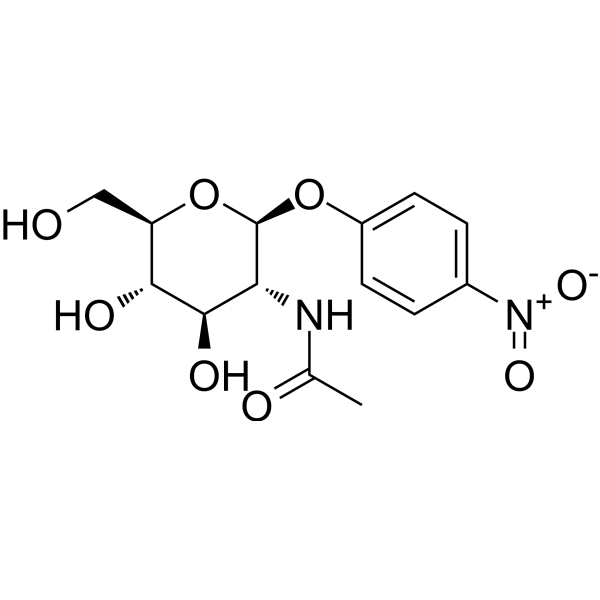
4-Nitrophenyl-N-acetyl-β-D-glucosaminide, an artificial substrate of N-acetyl-beta-D-hexosaminidase (NAGase), can be used in rapid and accurate rate assay for N-acetyl-beta-D-hexosaminidase. 4-Nitrophenyl-N-acetyl-β-D-glucosaminide is highly soluble and stable. 4-Nitrophenyl-N-acetyl-β-D-glucosaminide can be used for the study of renal tubular injury .
|
-
-
- HY-W011411
-
|
|
Glycosidase
|
Others
|
|
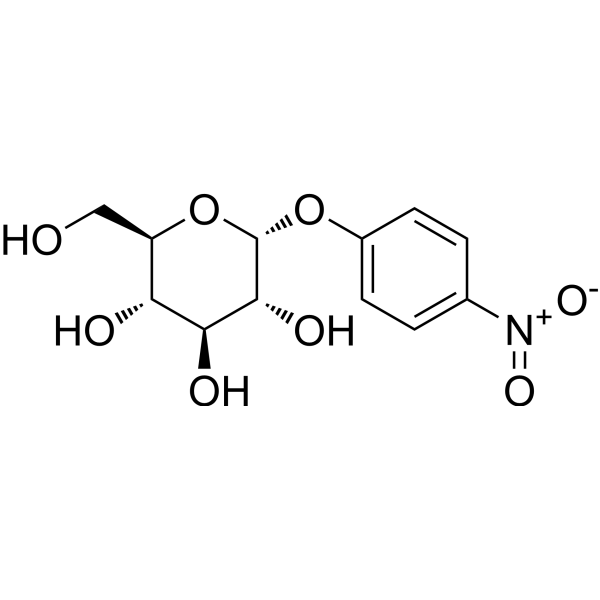
4-Nitrophenyl a-D-glucopyranoside is a chromogenic substrate for α-glucosidase. 4-Nitrophenyl a-D-glucopyranoside can be used to measure of α-glucosidase activity .
|
-
-
- HY-15928
-
|
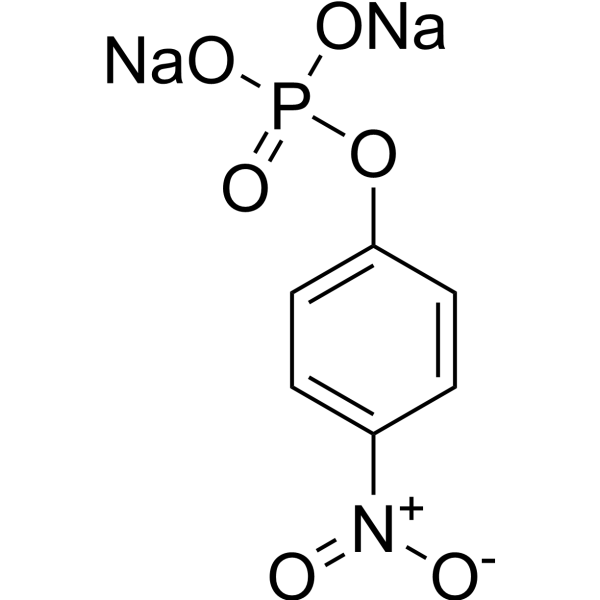
p-Nitrophenyl phosphate disodium
|
Fluorescent Dye
|
Others
|
|
4-Nitrophenyl phosphate (p-Nitrophenyl phosphate) disodium is a non-proteinaceous chromogenic substrate for alkaline and acid phosphatases used in ELISA and conventional spectrophotometric assays.
|
-
-
- HY-116022A
-
|
p-Nitrophenyl phosphate disodium hexahydrate
|
Biochemical Assay Reagents
|
Others
|
|
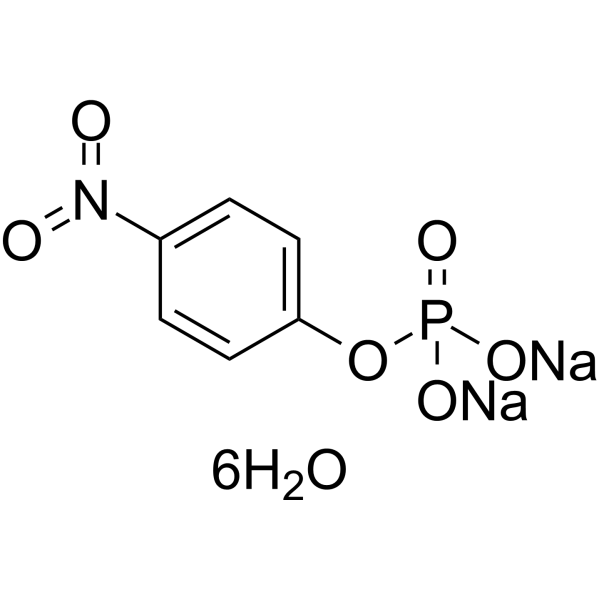
4-Nitrophenyl phosphate (p-nitrophenyl phosphate) disodium hexahydrate is widely used as a small molecule phosphotyrosine-like substrate in activity assays for protein tyrosine phosphatases. 4-Nitrophenyl phosphate disodium hexahydrate is a colorless substrate that upon hydrolysis is converted to a yellow 4-nitrophenolate ion that can be monitored by absorbance at 405 nm .
|
-
-
- HY-W014449
-
|
|
Biochemical Assay Reagents
|
Others
|
|
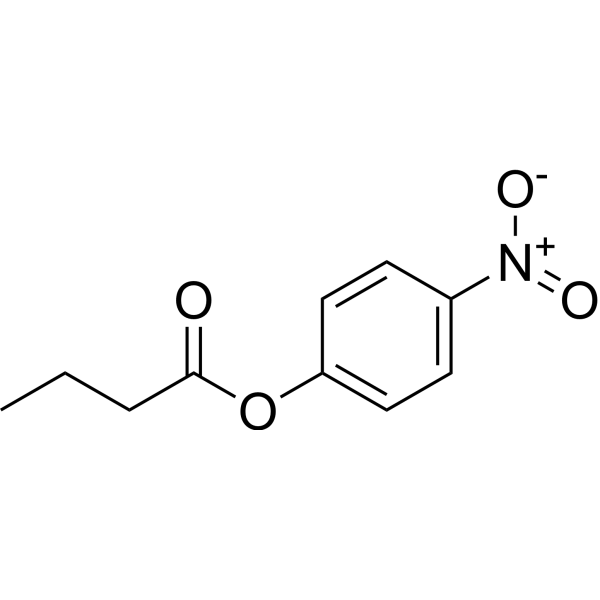
4-Nitrophenyl butyrate consists of butyric acid chains esterified with 4-nitrophenol groups, thus giving it a yellow color. This compound is commonly used as a substrate in enzyme assays to measure esterase and lipase activity. When these enzymes cleave the ester bond, the nitrophenol group is released and the color changes from yellow to orange. Thus, the rate of color change can be used to determine enzyme activity. In addition, 4-Nitrophenyl butyrate can also be used as organic synthesis reagent and dye intermediate.
|
-
-
- HY-15927
-
|
|
Biochemical Assay Reagents
|
Metabolic Disease
|
|
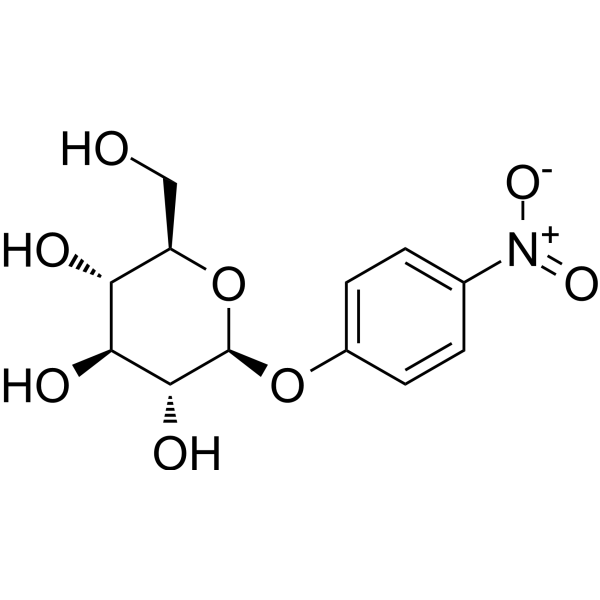
4-Nitrophenyl β-D-glucopyranoside is a chromogenic substrate for β-glucosidase. 4-Nitrophenyl β-D-glucopyranoside is converted to a colored product, p-nitrophenol that is easily detected spectrophotometrically at 405 nm when used in a β-glycosidase assay. 4-Nitrophenyl β-D-glucopyranoside is hydrolysed through intramolecular nucleophilic catalysis by the phosphate group in the 2-position. 4-Nitrophenyl β-D-glucopyranoside is promising for research of postmenopausal osteoporosis .
|
-
-
- HY-W013168
-
|
4-Nitrophenyl hexadecanoate; p-Nitrophenyl Palmitate; pNpp
|
Lipase
|
Others
|
|
4-Nitrophenyl palmitate (4-Nitrophenyl hexadecanoate) is a chromogenic substrate for lipases and esterases. Upon enzymatic hydrolysis, 4-Nitrophenyl palmitate releases p-nitrophenol, which can be quantified by colorimetric detection at 410 nm as a measure of enzymatic activity. 4-Nitrophenyl palmitate is used to characterize the activity of various bacterial and mammalian enzymes, including those from Burkholderia and porcine pancreatic lipase .
|
-
-
- HY-116022
-
|
p-Nitrophenyl phosphate
|
Biochemical Assay Reagents
|
Others
|
|
4-Nitrophenyl phosphate (p-Nitrophenyl phosphate) is widely used as a small molecule phosphotyrosine-like substrate in activity assays for protein tyrosine phosphatases.4-Nitrophenyl phosphate is a colorless substrate that upon hydrolysis is converted to a yellow 4-nitrophenolate ion that can be monitored by absorbance at 405 nm .
|
-
-
- HY-137822
-
|
4-Nitrophenyl a-D-mannopyranoside
|
Glycosidase
|
Others
|
|
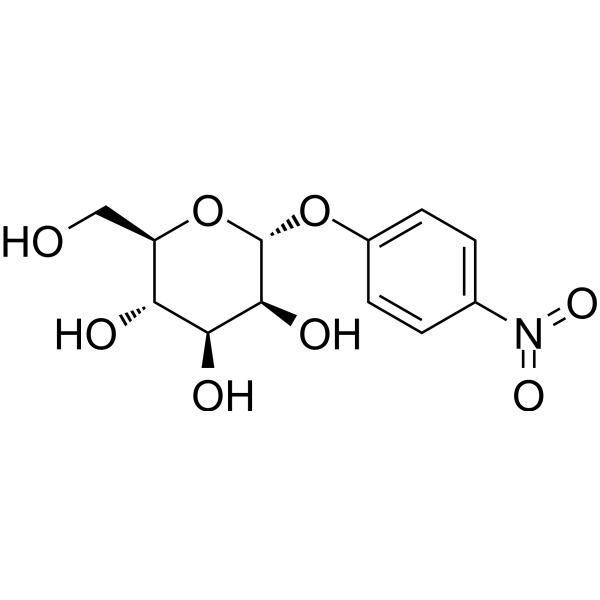
p-Nitrophenyl α-D-mannopyranoside (4-Nitrophenyl α-D-mannopyranoside) is a chromogenic glycosidic ligand. p-Nitrophenyl α-D-mannopyranoside features a sugar moiety (α-D-mannopyranose) with the mannose-characteristic axial hydroxyl group at the C2 position and a ligand portion (p-nitrophenol) that provides ultraviolet-visible light absorption properties. p-Nitrophenyl α-D-mannopyranoside can be used to determine glycosidase activity and characterize the sugar recognition properties of lectins (such as Concanavalin A (HY-P2149)) .
|
-
-
- HY-W039892
-
|
pNPG_1
|
β-glucuronidase
|
Others
|
|
4-Nitrophenyl β-D-glucuronide (pNPG_1) is aderivative of 4-Nitrophenol. 4-Nitrophenyl β-D-glucuronide is the chromogenic substrate for β-glucuronidase .
|
-
-
- HY-W039911
-
|
PNP-alpha-D-Gal; PNP-α-D-Gal
|
Biochemical Assay Reagents
|
Others
|
|
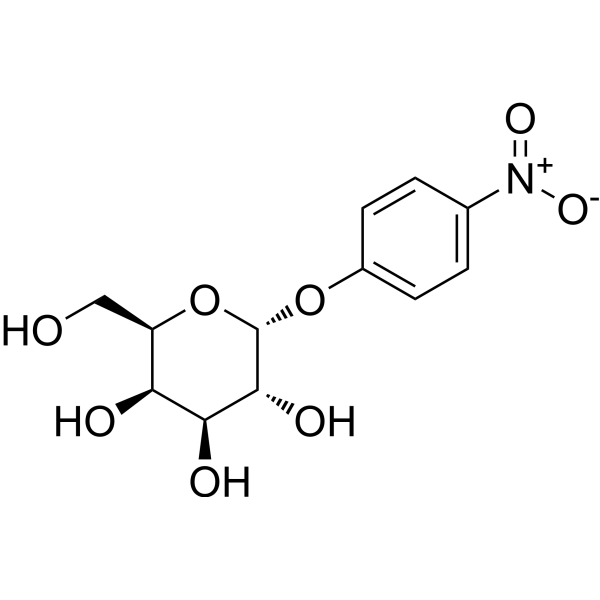
4-Nitrophenyl α-D-galactopyranoside (PNP-alpha-D-Gal) is an artificial substrate of 4-nitrophenyl (pNP) glycopyranoside for detecting α-galactosidase activity. The amount of released pNP is significantly increased when 4-Nitrophenyl α-D-galactopyranoside is used as substrates .
|
-
-
- HY-W013205
-
|
|
Biochemical Assay Reagents
|
Others
|
|
Bis(4-nitrophenyl) phosphate is a catalyst for metal micelles and can catalyze the hydrolysis of (4-nitrophenyl) phosphate. Bis(4-nitrophenyl) phosphate is also an effective catalyst for ring-opening polymerization (ROP), which can achieve controlled polymerization of β-butyrolactone (β-BL) ring-opening and can be used to prepare diembedded polymers without quenching. segment copolymer .
|
-
-
- HY-137550
-
|
|
Biochemical Assay Reagents
|
Others
|
|
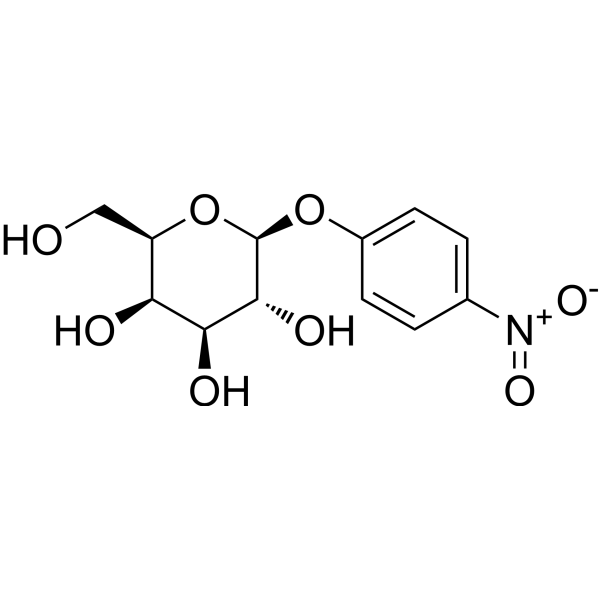
4-Nitrophenyl β-D-galactopyranoside is a derivative of beta-D-galactoside and monosaccharide. 4-Nitrophenyl β-D-galactopyranoside can be used for affinity label .
|
-
-
- HY-137827
-
|
p-Nitrophenyl β-D-Cellobioside
|
Glycosidase
|
Others
|
|
4-Nitrophenyl β-D-Cellobioside (p-Nitrophenyl β-D-cellobioside) is a cellotriose analog. 4-Nitrophenyl β-D-Cellobioside is hydrolyzed by β-glucosidases such as TxGH116 and ThCel7B. 4-Nitrophenyl β-D-Cellobioside can also be hydrolyzed by exoglucanases and endoglucanases to produce p-nitrophenol (PNP). 4-Nitrophenyl β-D-Cellobioside can be used to detect cellulase activity .
|
-
-
- HY-165836
-
-
-
- HY-137807
-
|
|
Endogenous Metabolite
|
Cancer
|
|
Thymidine 5′-monophosphate p-nitrophenyl ester sodium (Compound 2a) is the derivative of thymidine 5'-phosphate (TMP). Thymidine 5′-monophosphate p-nitrophenyl ester sodium is potential as an antitumor prodrug .
|
-
-
- HY-W039938
-
|
|
Fluorescent Dye
|
Others
|
|
4-Nitrophenyl β-D-xylopyranoside is a chromogenic β-xylosidase substrate. 4-Nitrophenyl β-D-xylopyranoside can be used to test β-xylosidase activity .
|
-
-
- HY-W009454
-
|
4-Nitopheyl Sulfate potassium
|
Fluorescent Dye
|
Others
|
|
Potassium p-nitrophenyl sulfate (4-Nitophenyl Sulfate potassium) serves as a chromogenic substrate for arylsulfatases. Potassium p-nitrophenyl sulfate releases nitrophenol under the cleavage action of arylsulfatases, and the activity of arylsulfatases can be quantitatively determined via colorimetric detection at 400 nm. Potassium p-nitrophenyl sulfate is commonly used in enzyme inhibition assays and metabolite analog-related studies .
|
-
-
- HY-W013205B
-
-
-
- HY-137814
-
|
NPGB hydrochloride
|
Ser/Thr Protease
|
Endocrinology
|
|
4-Nitrophenyl 4-guanidinobenzoate (NPGB) hydrochloride is a potent sperm acrosin inhibitor, and also a trypsin substrate .
|
-
-
- HY-141405
-
|
|
PROTAC Linkers
|
Cancer
|
|
m-PEG7-4-nitrophenyl carbonate is a PEG-based PROTAC linker that can be used in the synthesis of PROTACs .
|
-
-
- HY-W009213
-
|
Bis(3-Nitrophenyl) disulfide; Nitrophenide
|
Parasite
|
Infection
|
|
3-Nitrophenyl disulfide (Bis(3-Nitrophenyl) disulfide) is an inhibitor of mannitol-1-phosphate dehydrogenase (M1PDH) with IC50 of 3 μM. 3-Nitrophenyl disulfide has antiparasitic activity .
|
-
-
- HY-134459
-
|
|
Others
|
Others
|
|
4-Nitrophenyl Laurate is a class of 4-nitrophenyl ester, which can be used as enzyme substrate .
|
-
-
- HY-W011410
-
|
p-Nitrophenyl β-D-Mannopyranoside
|
Glycosidase
|
Others
|
|
4-Nitrophenyl β-D-mannopyranoside is a useful substrate for β-D-mannopyranosidase. 4-Nitrophenyl β-D-mannopyranoside is also a substrate for GH1-glucosidase (EaBgl1A) and α-L-rhamnosidase .
|
-
-
- HY-W111209
-
-
-
- HY-137815
-
|
|
Biochemical Assay Reagents
|
Metabolic Disease
|
|
4-Nitrophenyl α-L-rhamnopyranoside is a commonly used substrate in various biochemical assays to measure the activity of enzymes that hydrolyze rhamnose, such as α-L-rhamnosidase. 4-Nitrophenyl α-L-rhamnopyranoside has unique chemical properties that allow it to be hydrolyzed by these enzymes to form a yellow product called p-nitrophenol. This makes it a useful tool for detecting and quantifying rhamnohydrolase activity in biological samples or microbial cultures.
|
-
-
- HY-140858
-
|
|
PROTAC Linkers
|
Cancer
|
|
Azido-PEG4-4-nitrophenyl carbonate is a PEG-based PROTAC linker that can be used in the synthesis of PROTACs . Azido-PEG4-4-nitrophenyl carbonate is a click chemistry reagent, it contains an Azide group and can undergo copper-catalyzed azide-alkyne cycloaddition reaction (CuAAc) with molecules containing Alkyne groups. It can also undergo strain-promoted alkyne-azide cycloaddition (SPAAC) reactions with molecules containing DBCO or BCN groups.
|
-
-
- HY-W039859
-
-
-
- HY-137823
-
|
|
Endogenous Metabolite
|
Cancer
|
|
4-Nitrophenyl-N-acetyl-β-D-galactosaminide has inhibitory activity against GlcNAc and GalNAc with Kis of 1.15 mM and 0.51 mM, respectively. 4-Nitrophenyl-N-acetyl-β-D-galactosaminide is extracted from Trichomonas foetus (T. foetus)
|
-
-
- HY-120798
-
-
-
- HY-137421
-
-
-
- HY-W127404
-
|
|
Biochemical Assay Reagents
|
Others
|
|
4-Nitrophenyl decanoate is a biochemical reagent that can be used as a biological material or organic compound for life science related research.
|
-
-
- HY-W127326
-
|
|
Biochemical Assay Reagents
|
Others
|
|
2-Nitrophenyl stearate is a biochemical reagent that can be used as a biological material or organic compound for life science related research.
|
-
-
- HY-148672
-
|
|
Glycosidase
|
Others
|
|
2-Nitrophenyl a-D-glucopyranoside is a substrate of β-glucosidase .
|
-
-
- HY-134164
-
|
|
Biochemical Assay Reagents
|
Others
|
|
4-Nitrophenyl α-L-arabinofuranoside is a biochemical reagent that can be used as a biological material or organic compound for life science related research.
|
-
-
- HY-134455
-
|
|
Biochemical Assay Reagents
|
Others
|
|
4-Nitrophenyl β-D-fuco-pyran-oside is a biochemical reagent that can be used as a biological material or organic compound for life science related research.
|
-
-
- HY-137812
-
|
|
Biochemical Assay Reagents
Glycosidase
|
Others
|
|
p-Nitrophenyl β-D-lactoside is a substrate of β-lactosidase and can be used to determine β-lactosinase activity. p-Nitrophenyl β-D-lactoside is a substrate of cellobiohydrolase. p-Nitrophenyl β-D-lactoside is a class of biochemical reagents used in glycobiology research .
|
-
-
- HY-15911
-
|
2-Chloro-4-Nitrophenyl α-L-fucopyranoside
|
Biochemical Assay Reagents
|
Others
|
|
CNP-AFU (2-Chloro-4-nitrophenyl α-L-fucopyranoside) is a substrate for alpha-L-fucosidase(AFU).
|
-
-
- HY-135886
-
|
|
Biochemical Assay Reagents
|
Others
|
|
2-Nitrophenyl α-D-galactopyranoside, a nitrophenyl derivative, is a substrate to test for hydrolytic activity of glycosyl hydrolase .
|
-
-
- HY-138959
-
|
p-Nitrophenyl caprylate
|
Lipase
|
Others
|
|
4-Nitrophenyl octanoate (p-Nitrophenyl caprylate) is an aromatic ester compound which can be used as a substrate for pancreatic lipase.
4-Nitrophenyl octanoate contains an ester bond that can be hydrolyzed under the action of lipase, releasing p-nitrophenol as a yellow product.
4-Nitrophenyl octanoate can be used to assay the activities of lipases and esterases .
|
-
-
- HY-W099563
-
|
|
Biochemical Assay Reagents
|
Others
|
|
4-Nitrophenyl stearate, which is an ester formed by the condensation of stearic acid and 4-nitrophenol, is commonly used as a substrate for enzymatic assays, where the hydrolysis of ester bonds by esterase and lipase can be measured by absorbance or ratio In addition, 4-Nitrophenyl stearate has been used as a model compound to study the enzymatic activity and selectivity of lipases and esterases from various sources. The long hydrophobic tail of the molecule makes it suitable for use in lipophilic Good solubility in the environment makes it a useful probe for studying lipid metabolism.
|
-
-
- HY-117023
-
|
|
PROTAC Linkers
|
Cancer
|
|
m-PEG2-4-nitrophenyl carbonate is a PEG-based PROTAC linker that can be used in the synthesis of PROTACs .
|
-
-
- HY-137828
-
|
pNP-chitobiose
|
Biochemical Assay Reagents
|
Others
|
|
4-Nitrophenyl N,N′-diacetyl-β-D-chitobioside (pNP-chitobiose) is a fluorescent substrate that can be used to detect chitinase activity.
|
-
-
- HY-134430
-
|
Tetradecanoic acid, 4-Nitrophenyl ester
|
Biochemical Assay Reagents
|
Others
|
|
p-Nitrophenyl myristate (Tetradecanoic acid, 4-nitrophenyl ester) is a biochemical assay reagent.
|
-
-
- HY-116022C
-
-
-
- HY-W127526
-
|
2-Nitrophenyl myristate
|
Biochemical Assay Reagents
|
Others
|
|
2-Nitrophenyl myristate is a biochemical reagent that can be used as a biological material or organic compound for life science related research.
|
-
-
- HY-W013205R
-
|
|
Biochemical Assay Reagents
Reference Standards
|
Others
|
|
Bis(4-nitrophenyl) phosphate (Standard) is the analytical standard of Bis(4-nitrophenyl) phosphate. This product is intended for research and analytical applications. Bis(4-nitrophenyl) phosphate is a catalyst for metal micelles and can catalyze the hydrolysis of (4-nitrophenyl) phosphate. Bis(4-nitrophenyl) phosphate is also an effective catalyst for ring-opening polymerization (ROP), which can achieve controlled polymerization of β-butyrolactone (β-BL) ring-opening and can be used to prepare diembedded polymers without quenching. segment copolymer .
|
-
-
- HY-116022B
-
|
p-Nitrophenyl phosphate ditromethamine
|
Biochemical Assay Reagents
|
Others
|
|
4-Nitrophenyl phosphate ditromethamine is an enzyme substrate commonly used in biochemical assays to measure the activity of various phosphatases, including alkaline phosphatase. 4-Nitrophenylphosphate has unique chemical properties that allow it to be hydrolyzed by phosphatases, releasing a yellow product that can be detected spectrophotometrically.
|
-
-
- HY-W740068
-
-
-
- HY-W013254
-
|
|
Glycosidase
|
Others
|
|
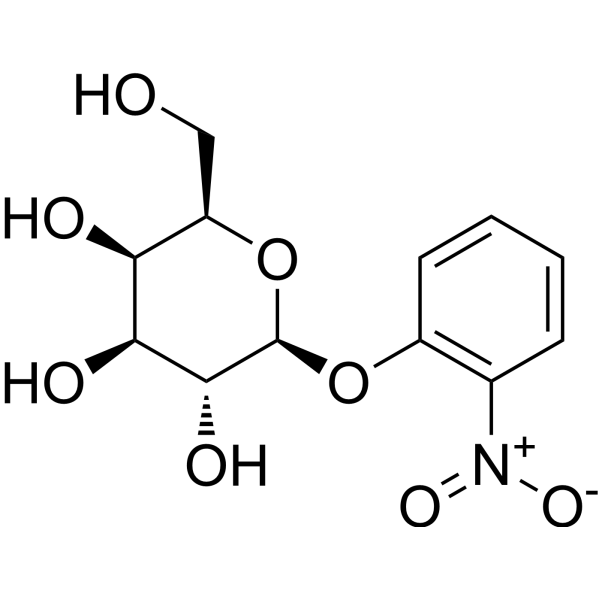
2-Nitrophenyl β-D-glucopyranoside is a substrate for β-glucosidase. 2-Nitrophenyl β-D-glucopyranoside can be used to test β-glucosidase activity .
|
-
- HY-W013865
-
|
|
Biochemical Assay Reagents
|
Others
|
|
2-Nitrophenyl β-D-xylopyranoside is a synthetic sugar derivative that can be used to study the interaction mechanisms between enzymes, proteins, and carbohydrates. 2-Nitrophenyl b-D-xylopyranoside is a kind of biological materials or organic compounds that are widely used in life science research .
|
-
- HY-W011655
-
|
p-Nitrophenyl alpha-D-xylopyranoside
|
Biochemical Assay Reagents
|
Others
|
|
p-Nitrophenyl α-D-xylopyranoside (p-Nitrophenyl alpha-D-xylopyranoside) is a chromogenic substrate for α-xylosidase .
|
-
- HY-W283245
-
-
- HY-76255
-
|
|
Drug Derivative
|
Others
|
|
4-Nitrophenyl (tert-butoxycarbonyl)-L-phenylalaninate is a phenylalanine derivative .
|
-
- HY-W416249
-
-
- HY-W039153S
-
-
- HY-140048
-
|
|
PROTAC Linkers
|
Cancer
|
|
Propargyl-PEG4-5-nitrophenyl carbonate is a PEG-based PROTAC linker that can be used in the synthesis of PROTACs . Propargyl-PEG4-5-nitrophenyl carbonate is a click chemistry reagent, it contains an Alkyne group and can undergo copper-catalyzed azide-alkyne cycloaddition (CuAAc) with molecules containing Azide groups.
|
-
- HY-W014103R
-
|
5-(4-Nitrophenyl)furfural (Standard)
|
Reference Standards
|
|
|
5-(4-Nitrophenyl)furan-2-carbaldehyde (Standard) is the analytical standard of 5-(4-Nitrophenyl)furan-2-carbaldehyde. This product is intended for research and analytical applications.
|
-
- HY-137198
-
-
- HY-W012294S
-
-
- HY-W191560S
-
|
4-Amino-N-(4-Nitrophenyl)benzenesulfonamide-d4
|
Isotope-Labeled Compounds
|
Others
|
|
N1-(4-Nitrophenyl)sulfanilamide-d4 is the deuterium labeled N1-(4-Nitrophenyl)sulfanilamide.
|
-
- HY-W145619
-
|
|
Biochemical Assay Reagents
|
Others
|
|
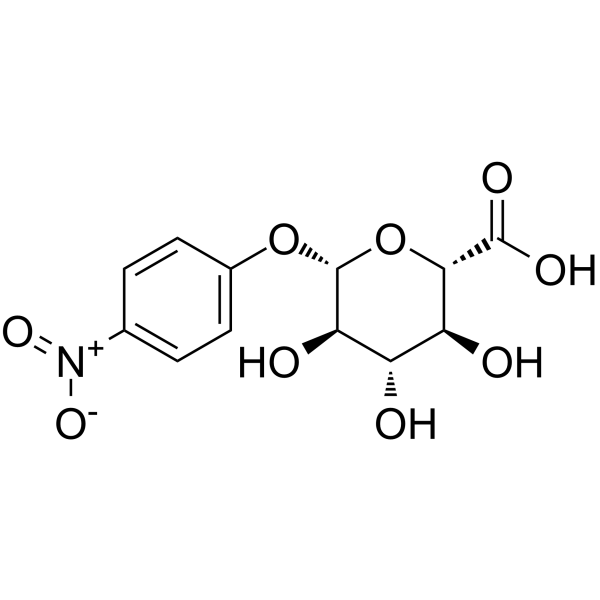
4-Nitrophenyl α-D-Glucuronide is a biochemical reagent that can be used as a biological material or organic compound for life science related research.
|
-
- HY-134429
-
|
|
Biochemical Assay Reagents
|
Others
|
|
p-Nitrophenyl α-L-arabinopyranoside is a biochemical reagent. p-Nitrophenyl α-L-arabinopyranoside can be hydrolyzed by recombinant BgaA (rBgaA, isolated from E. coli BL21 (DE3) strain harboring pEBGA29). p-Nitrophenyl α-L-arabinopyranoside has potential application in enzyme activity detection .
|
-
- HY-137826
-
-
- HY-W290273
-
|
2-Nitrophenyl-beta-D-thiogalactopyranoside
|
Biochemical Assay Reagents
|
Others
|
|
2-Nitrophenyl-β-D-thiogalactopyranoside is a chromogenic substrate used to detect the presence of galactosidase in various biological and biochemical assays.
|
-
- HY-W357150
-
-
- HY-139069
-
-
- HY-W416255
-
-
- HY-Z0007R
-
|
|
Reference Standards
|
|
|
2-Chloro-N-(4-nitrophenyl)acetamide (Standard) is the analytical standard of 2-Chloro-N-(4-nitrophenyl)acetamide. This product is intended for research and analytical applications.
|
-
- HY-138111
-
|
p-Nitopheyl β-D-cellotetaoside
|
Fluorescent Dye
|
Others
|
|
4-Nitrophenyl β-D-cellotetraoside (p-Nitopheyl β-D-cellotetaoside) is a small molecule cellulose mimetic consisting of a tetramer of D-glucose units linked by β-1-4 glycosidic bonds. The fragmentation pattern of 4-Nitrophenyl β-D-cellotetraoside after enzymatic hydrolysis can be analyzed by TLC or by the release of 4-nitrophenol, which has a strong absorbance at 395 nm in alkaline solutions. 4-Nitrophenyl β-D-cellotetraoside can be used in cellulose degradation studies to determine the specificity of cellulases .
|
-
- HY-W357161
-
-
- HY-W399188
-
-
- HY-W742982
-
|
|
Isotope-Labeled Compounds
|
Others
|
|
N,N-Dimethyl-N'-(4-nitrophenyl)acetimidamide-d6 is the deuterium labeled N,N-Dimethyl-N'-(4-nitrophenyl)acetimidamide (HY-W704907).
|
-
- HY-W416243
-
|
O-Nitrophenyl-N-acetyl-A-D-*galactosaminide
|
Biochemical Assay Reagents
|
Others
|
|
2-Nitrophenyl N-acetyl-α-D-galactosaminide (O-Nitrophenyl-N-acetyl-A-D-*galactosaminide) is a galactose derivativeand can be used in glycobiology research .
|
-
- HY-W127325
-
|
|
Biochemical Assay Reagents
|
Others
|
|
2-Nitrophenyl palmitate is a biochemical reagent that can be used as a biological material or organic compound for life science related research.
|
-
- HY-W800830
-
|
|
Biochemical Assay Reagents
|
Others
|
|
DMG-Nitrophenyl Carbonate is a short reagent featuring a DMG lipid headgroup and a nitrophenyl carbonate, which is readily displaced by amine nucleophiles to form carbamate bonds under mild conditions.
|
-
- HY-W791782
-
-
- HY-W342193
-
-
- HY-W039893
-
-
- HY-W154351
-
-
- HY-137268
-
-
- HY-W087930S
-
-
- HY-173303
-
|
|
Biochemical Assay Reagents
|
Others
|
|
PEG3-Bis-nitrophenyl carbonate is a PEG linker with two nitrophenyl carbonate groups that can react rapidly with primary amines.
|
-
- HY-W357132
-
-
- HY-172511
-
|
|
Biochemical Assay Reagents
|
Others
|
|
m-PEG9-4-nitrophenyl carbonate serves as a PEG linker containing a nitrophenyl carbonate, which is readily displaced by amine nucleophiles to form carbamate bonds under mild conditions. The PEG9 chain bolsters the water solublity of the compound.
|
-
- HY-W041486
-
|
4-Nitrophenyl-1,3-dicarboxylic acid
|
MOFs
|
Others
|
|
4-Nitroisophthalic acid(4-Nitrophenyl-1,3-dicarboxylic acid) is a metal-organic framework (MOF).
|
-
- HY-W1052829A
-
|
4-Arm-PEG10000-NPC
|
Biochemical Assay Reagents
|
Others
|
|
4-Arm-PEG10000-Nitrophenyl carbonate (4-Arm-PEG10000-NPC) is a four-arm PEG derivative. The core structure of 4-Arm-PEG10000-Nitrophenyl carbonate consists of four PEG chains, each modified at the end with a nitrophenyl carbonate group. 4-Arm-PEG10000-Nitrophenyl carbonate can be used for bioconjugation and drug delivery.
|
-
- HY-W1052829B
-
|
4-Arm-PEG20000-NPC
|
Biochemical Assay Reagents
|
Others
|
|
4-Arm-PEG20000-Nitrophenyl carbonate (4-Arm-PEG20000-NPC) is a four-arm PEG derivative. The core structure of 4-Arm-PEG20000-Nitrophenyl carbonate consists of four PEG chains, each modified at the end with a nitrophenyl carbonate group. 4-Arm-PEG20000-Nitrophenyl carbonate can be used for bioconjugation and drug delivery.
|
-
- HY-W1052829
-
|
4-Arm-PEG2000-NPC
|
Biochemical Assay Reagents
|
Others
|
|
4-Arm-PEG2000-Nitrophenyl carbonate (4-Arm-PEG2000-NPC) is a four-arm PEG derivative. The core structure of 4-Arm-PEG2000-Nitrophenyl carbonate consists of four PEG chains, each modified at the end with a nitrophenyl carbonate group. 4-Arm-PEG2000-Nitrophenyl carbonate can be used for bioconjugation and drug delivery.
|
-
- HY-W1052829C
-
|
4-Arm-PEG5000-NPC
|
Biochemical Assay Reagents
|
Others
|
|
4-Arm-PEG5000-Nitrophenyl carbonate (4-Arm-PEG5000-NPC) is a four-arm PEG derivative. The core structure of 4-Arm-PEG5000-Nitrophenyl carbonate consists of four PEG chains, each modified at the end with a nitrophenyl carbonate group. 4-Arm-PEG5000-Nitrophenyl carbonate can be used for bioconjugation and drug delivery.
|
-
- HY-W415806
-
-
- HY-166870
-
-
- HY-W909314
-
|
|
Biochemical Assay Reagents
|
Others
|
|
t-Butyoxycarboxy-PEG4-para-nitrophenyl carbonate is a PEG linker with a nitrophenyl group linked to a carbonate, four PEG units, and a t-butyl group that can be deprotected under acidic conditions. The PEG units enhance the solubility of the molecule in aqueous media. Nitrophenyl group is reactive towards the amino-bearing molecules.
|
-
- HY-W083821
-
|
1-(4-Nitrobenzyl)-1,4-diazepane
|
Bacterial
|
Infection
|
|
1-[(4-Nitrophenyl) methyl]-1,4-diazepane (1-(4-Nitrobenzyl)-1,4-diazepane) is an anti-biofilm agent. 1-[(4-Nitrophenyl) methyl]-1,4-diazepane reduces biofilm formation in Escherichia coli. 1-[(4-Nitrophenyl) methyl]-1,4-diazepane is used for the research of Escherichia coli biofilm-related infections .
|
-
- HY-W190972
-
|
|
Drug Derivative
|
Others
|
|
3-(3-Nitrophenyl)-5-phenyl-1,2,4-oxadiazole is a PEG derivative containing a tert-butyl ester and an azide group .
|
-
- HY-W746550
-
|
(2S)-2-Amino-3-(4-Nitrophenyl)-1-propanol-d6
|
Isotope-Labeled Compounds
|
Others
|
|
(S)-2-Amino-3-(4-nitrophenyl)propan-1-ol-d6 ((2S)-2-Amino-3-(4-nitrophenyl)-1-propanol-d6) is the deuterium labeled (S)-2-amino-3-(4-nitrophenyl)propan-1-ol (HY-W270163).
|
-
- HY-W416344
-
-
- HY-W103981R
-
|
4-(2-Nitroanilino)phenol (Standard)
|
Reference Standards
|
|
|
4-((2-Nitrophenyl)amino)phenol (Standard) is the analytical standard of 4-((2-Nitrophenyl)amino)phenol. This product is intended for research and analytical applications.
|
-
- HY-W009438R
-
|
5-Methyl-2-[(2-Nitrophenyl)amino]-3-thiophenecarbonitrile (Standard)
|
Reference Standards
|
|
|
5-Methyl-2-((2-nitrophenyl)amino)thiophene-3-carbonitrile (Standard) is the analytical standard of 5-Methyl-2-((2-nitrophenyl)amino)thiophene-3-carbonitrile. This product is intended for research and analytical applications.
|
-
- HY-W739747
-
|
|
Biochemical Assay Reagents
|
Others
|
|
Nitrophenyl 2-O-(2,3,4,6-Tri-O-acetyl-α-D-mannopyranosyl)-α-D-mannopyranoside is a class of biochemical reagents used in glycobiology research. Glycobiology studies the structure, synthesis, biology, and evolution of sugars. It involves carbohydrate chemistry, enzymology of glycan formation and degradation, protein-glycan recognition, and the role of glycans in biological systems. This field is closely related to basic research, biomedicine, and biotechnology .
|
-
- HY-W011137
-
|
|
Drug Derivative
|
Others
|
|
(S)-4-Nitrophenyl 4-amino-2-((tert-butoxycarbonyl)amino)-4-oxobutanoate is an asparagine derivative .
|
-
- HY-W334098
-
|
|
Biochemical Assay Reagents
|
Others
|
|
2-Nitrophenyl β-D-glucopyranosiduronic acid is a class of biochemical reagents used in glycobiology research. Glycobiology studies the structure, synthesis, biology, and evolution of sugars. It involves carbohydrate chemistry, enzymology of glycan formation and degradation, protein-glycan recognition, and the role of glycans in biological systems. This field is closely related to basic research, biomedicine, and biotechnology .
|
-
- HY-I0333
-
|
|
Drug Intermediate
|
Others
|
|
1-(2-Nitrophenyl)piperidin-2-one is a drug intermediate for synthesis of various active compounds.
|
-
- HY-133776
-
|
3-Nitrophenyl ethyl(methyl)carbamate
|
Cholinesterase (ChE)
|
Neurological Disease
|
|
Rivastigmine carbamate impurity (3-Nitrophenyl ethyl(methyl)carbamate) is an impurity of Rivastigmine. Rivastigmine is an orally active and potent cholinesterase (ChE) inhibitor and inhibits butyrylcholinesterase (BChE) and acetylcholinesteras (AChE) with IC50s of 0.037 μM, 4.15 μM, respectively .
|
-
- HY-W587779
-
|
|
Biochemical Assay Reagents
|
|
|
o-Nitrophenyl β-D-galactopyranoside-6-phosphate cyclohexylammonium is a chromogenic substrate with activity for β-galactosidase detection. The use of o-Nitrophenyl β-D-galactopyranoside-6-phosphate cyclohexylammonium can help researchers quickly identify and quantify β-galactosidase activity.
|
-
- HY-W698923
-
-
- HY-112835
-
|
pNP-G7
|
Amylases
Glycosidase
|
Inflammation/Immunology
|
|
Ethylidene-4-nitrophenyl-α-D-Maltoheptaoside (EPS; pNP-G7) serves as a substrate for α-amylase. In the presence of an auxiliary enzyme such as α-glucosidase (α-glucosidase), Ethylidene-4-nitrophenyl-α-D-Maltoheptaoside is degraded by amylase (Amylase) to release a chromophore, enabling the measurement of amylase activity. Ethylidene-4-nitrophenyl-α-D-Maltoheptaoside is applicable for the diagnosis of pancreatitis [2].
|
-
- HY-W009693
-
-
- HY-W050493
-
-
- HY-W050494
-
-
- HY-W014406
-
-
- HY-134420
-
|
PNP α-L-Fuc
|
Glycosidase
|
Others
|
|
p-Nitrophenyl α-L-fucoside (PNP α-L-Fuc) is a specific substrate of Pecten maximus α-L-fucosidase, with a Km value of 650 µM. p-Nitrophenyl α-L-fucoside serves as a substrate for ClAgl29A and ClAgl29B. Enzymatic hydrolysis of p-Nitrophenyl α-L-fucoside releases p-nitrophenol and α-L-fucose, where the latter undergoes mutarotation over time to form β-L-fucose. p-Nitrophenyl α-L-fucoside is not the preferred substrate for ClAgl29A and ClAgl29B .
|
-
- HY-124324
-
|
p-Nitopheyl β-D-cellotioside
|
Fluorescent Dye
|
Others
|
|
4-Nitrophenyl β-D-cellotrioside (p-Nitopheyl β-D-cellotioside) is a chromogenic substrate for endoglucanases and cellulose biohydrolases. As a fluorescent dye, nitrophenyl β-D-Cellotrioside can be hydrolyzed by enzymes to release 4-nitrophenol, producing a yellow color. The activity of the enzyme can be quantitatively analyzed by monitoring the change in absorbance at 405 nm .
|
-
- HY-403587
-
|
|
Others
|
Others
|
|
3-(4-Nitrophenyl)-1H-pyrazol-5(4H)-one is a natural product found in Caesalpinia sappan. Caesalpinia sappan contains various phytochemicals and is considered a plant with significant medicinal value .
|
-
- HY-W415809
-
-
- HY-32144
-
|
m-Nitroacetophenone
|
Others
|
Others
|
|
1-(3-Nitrophenyl)ethanone (m-Nitroacetophenone) is a Diterpenoids product that can be isolated from the leaves of Suregada glomerulata(Bl.) Baill. .
|
-
- HY-121549
-
|
4-Nitrophenyl-2S,3S-epoxy-3 phenylpropyl carbonate
|
Epoxide Hydrolase
|
Others
|
|
S-NEPC (4-Nitrophenyl-2S,3S-epoxy-3 phenylpropyl carbonate) is a colorimetric substrate used to measure epoxide hydrolase activity .
|
-
- HY-156146
-
-
- HY-400142
-
|
|
Drug Intermediate
|
Inflammation/Immunology
|
|
(E)-4-(2-Nitrophenyl)-4-oxobut-2-enoic acid is an intermediate that can be used to synthesize Phenyl-4-oxo-2-butenoic acid. Phenyl-4-oxo-2-butenoic acid has high antiulcer and antisecretory activities .
|
-
- HY-W015996
-
|
pNP-GalNAc
|
Fluorescent Dye
|
Others
|
|
4-Nitrophenyl-N-acetyl-α-D-galactosaminide (pNP-GalNAc) can be used as a chromogenic substrate for N-acetyl-D-galactosaminase. 4-Nitrophenyl-N-acetyl-α-D-galactosaminide is cleaved by N-acetyl-D-galactosaminase to generate a yellow solution. The enzyme activity is quantitatively determined by absorbance detection .
|
-
- HY-Z0085
-
|
|
Drug Intermediate
|
Others
|
|
2-Chloro-N-methyl-N-(4-nitrophenyl)acetamide is a synthetic intermediate useful for pharmaceutical synthesis.
|
-
- HY-W776848
-
-
- HY-137878
-
|
PNP-α-NeuNAc
|
Biochemical Assay Reagents
|
Others
|
|
2-O-(p-Nitrophenyl)-α-D-N-acetylneuraminic acid (PNP-α-NeuNAc) is a classic chromogenic substrate for neuraminidase. 2-O-(p-Nitrophenyl)-α-D-N-acetylneuraminic acid releases p-nitrophenol upon enzymatic hydrolysis, allowing quantification of enzyme activity and inhibitory effects via spectrophotometry. 2-O-(p-Nitrophenyl)-α-D-N-acetylneuraminic acid (PNP-α-NeuNAc) acts as a sialyl donor in the process of enzyme-catalyzed trans-sialylation .
|
-
- HY-164125
-
|
|
Ser/Thr Protease
SnRK
|
Others
|
|
6-O-Bis[1-(2-nitrophenyl)-ethoxyphosphoryl]-D-trehalose is an important signaling molecule that regulates carbon utilization and growth in plants. 6-O-Bis[1-(2-nitrophenyl)-ethoxyphosphoryl]-D-trehalose releases T6P through light activation, which can stimulate starch synthesis and promote plant growth by inhibiting SnRK1, a protein kinase involved in energy conservation and survival. 6-O-Bis[1-(2-nitrophenyl)-ethoxyphosphoryl]-D-trehalose can be used to study plant growth and metabolism .
|
-
- HY-131044
-
|
|
Bacterial
Fungal
|
Infection
|
|
5-[(2-Nitrophenyl)methylene]-2,4-thiazolidinedione (Compound 4) has antimicrobial, anti-diabetic and antioxidant activities. 5-[(2-Nitrophenyl)methylene]-2,4-thiazolidinedione inhibits B. subtilis, S. aureus, K. pneumonia, E. coli, and S. typhi with MICs of 4.5-9.9 μΜ/mL, and inhibits A. niger and C. albicans with MICs of 4.99 μΜ/mL .
|
-
- HY-137785
-
|
|
Biochemical Assay Reagents
|
Others
|
|
2-Chloro-4-nitrophenyl-β-D-maltotrioside is a chromogenic substrate used in bioluminescent and fluorescent assays to detect α-amylase.
|
-
- HY-W293502
-
|
2-Chloro-4-Nitrophenyl-beta-D-galactopyranoside
|
Biochemical Assay Reagents
|
Others
|
|
2-Chloro-4-nitrophenyl-β-D-galactopyranoside is a chromogenic substrate used for testing enzyme activity. It is commonly used in molecular biology research to detect and measure the activity of β-galactosidase (biosynth: EC03318).
|
-
- HY-W705457
-
|
|
Isotope-Labeled Compounds
|
Others
|
|
3,3-Dimethyl-1-(3-nitrophenyl)triaz-1-ene-d4 is the deuterium labeled 3,3-Dimethyl-1-(3-nitrophenyl)triaz-1-ene (HY-W510373).
|
-
- HY-W555915
-
|
|
Biochemical Assay Reagents
|
Others
|
|
4-Nitrophenyl 4,6-O-(phenylmethylene)-α-D-mannopyranoside is a class of biochemical reagents used in glycobiology research. Glycobiology studies the structure, synthesis, biology, and evolution of sugars. It involves carbohydrate chemistry, enzymology of glycan formation and degradation, protein-glycan recognition, and the role of glycans in biological systems. This field is closely related to basic research, biomedicine, and biotechnology .
|
-
- HY-W007679
-
-
- HY-W776875
-
-
- HY-W086270
-
|
2-(4-Nitro-phenyl)-3H-benzoimidazole-5-carboxylic acid
|
MOFs
|
Others
|
|
2-(4-Nitrophenyl)-1H-1,3-benzodiazole-6-carboxylic acid(2-(4-Nitro-phenyl)-3H-benzoimidazole-5-carboxylic acid) is a metal-organic framework (MOF).
|
-
- HY-W739586
-
|
|
Biochemical Assay Reagents
|
Others
|
|
4-Nitrophenyl 6-O-α-D-mannopyranosyl-α-D-mannopyranoside is a class of biochemical reagents used in glycobiology research. Glycobiology studies the structure, synthesis, biology, and evolution of sugars. It involves carbohydrate chemistry, enzymology of glycan formation and degradation, protein-glycan recognition, and the role of glycans in biological systems. This field is closely related to basic research, biomedicine, and biotechnology .
|
-
- HY-W416254
-
|
|
Biochemical Assay Reagents
|
Others
|
|
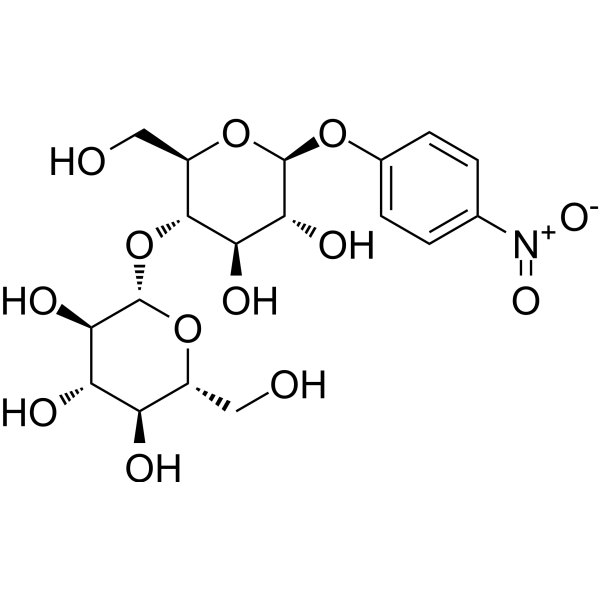
4-Nitrophenyl 2-O-β-D-glucopyranosyl-β-D-glucopyranoside is a class of biochemical reagents used in glycobiology research. Glycobiology studies the structure, synthesis, biology, and evolution of sugars. It involves carbohydrate chemistry, enzymology of glycan formation and degradation, protein-glycan recognition, and the role of glycans in biological systems. This field is closely related to basic research, biomedicine, and biotechnology .
|
-
- HY-W777046
-
|
|
Biochemical Assay Reagents
|
Others
|
|
4-Nitrophenyl 3-O-α-D-glucopyranosyl-α-D-glucopyranoside is a class of biochemical reagents used in glycobiology research. Glycobiology studies the structure, synthesis, biology, and evolution of sugars. It involves carbohydrate chemistry, enzymology of glycan formation and degradation, protein-glycan recognition, and the role of glycans in biological systems. This field is closely related to basic research, biomedicine, and biotechnology .
|
-
- HY-W699344
-
|
|
Biochemical Assay Reagents
|
Others
|
|
4-Nitrophenyl 2-O-α-D-glucopyranosyl-α-D-glucopyranoside is a class of biochemical reagents used in glycobiology research. Glycobiology studies the structure, synthesis, biology, and evolution of sugars. It involves carbohydrate chemistry, enzymology of glycan formation and degradation, protein-glycan recognition, and the role of glycans in biological systems. This field is closely related to basic research, biomedicine, and biotechnology .
|
-
- HY-W777041
-
|
|
Biochemical Assay Reagents
|
Others
|
|
4-Nitrophenyl 6-O-α-D-glucopyranosyl-α-D-glucopyranoside is a class of biochemical reagents used in glycobiology research. Glycobiology studies the structure, synthesis, biology, and evolution of sugars. It involves carbohydrate chemistry, enzymology of glycan formation and degradation, protein-glycan recognition, and the role of glycans in biological systems. This field is closely related to basic research, biomedicine, and biotechnology .
|
-
- HY-W152326R
-
|
N-(beta-Hydroxyethyl)-2-nitro-p-toluidine (Standard)
|
Reference Standards
|
|
|
2-[(4-Methyl-2-nitrophenyl)amino]ethanol (Standard) is the analytical standard of 2-[(4-Methyl-2-nitrophenyl)amino]ethanol. This product is intended for research and analytical applications.
|
-
- HY-W127824
-
|
(5Z,9Z,14Z)-5,10,15-Tris(4-Nitrophenyl)-22,24-dihydro-21H-corri
|
Biochemical Assay Reagents
|
Others
|
|
5,10,15-tris(4-nitrophenyl)corrole is a corrole derivative used as a trianionic ligand for transition metals.
|
-
- HY-W740337
-
|
|
Biochemical Assay Reagents
|
Others
|
|
4-Nitrophenyl 3,4-O-(1-methylethylidene)-α-D-galactopyranoside is a class of biochemical reagents used in glycobiology research. Glycobiology studies the structure, synthesis, biology, and evolution of sugars. It involves carbohydrate chemistry, enzymology of glycan formation and degradation, protein-glycan recognition, and the role of glycans in biological systems. This field is closely related to basic research, biomedicine, and biotechnology .
|
-
- HY-W699888
-
|
|
Biochemical Assay Reagents
|
Others
|
|
α-Neuraminic acid,N-acetyl-2-O-(4-nitrophenyl) (sodium) is a class of biochemical reagents used in glycobiology research. Glycobiology studies the structure, synthesis, biology, and evolution of sugars. It involves carbohydrate chemistry, enzymology of glycan formation and degradation, protein-glycan recognition, and the role of glycans in biological systems. This field is closely related to basic research, biomedicine, and biotechnology .
|
-
- HY-W416327
-
|
|
Biochemical Assay Reagents
|
Others
|
|
β-D-Galactopyranoside,4-nitrophenyl,3,4,6-triacetate is a class of biochemical reagents used in glycobiology research. Glycobiology studies the structure, synthesis, biology, and evolution of sugars. It involves carbohydrate chemistry, enzymology of glycan formation and degradation, protein-glycan recognition, and the role of glycans in biological systems. This field is closely related to basic research, biomedicine, and biotechnology .
|
-
- HY-W008919
-
|
N-Alpha,N-epsilon-di-Boc-L-lysine 4-Nitrophenyl ester
|
Amino Acid Derivatives
|
Others
|
|
Boc-Lys(Boc)-Onp (N-Alpha,N-epsilon-di-Boc-L-lysine 4-nitrophenyl ester) is a lysine with a Boc protecting group. Boc-Lys(Boc)-Onp was used as a substrate for a catalyst model to study its enzymatic hydrolysis reaction catalyzed by a copper(II) complex .
|
-
- HY-D1510
-
|
|
Biochemical Assay Reagents
|
Others
|
|
4-Nitrophenyl 2-O-(β-L-Fucopyranosyl)-β-D-Galactopyranoside is a synthetic chromogenic substrate and can be used in the assay of α-fucosidases which hydrolyze the glycosidic linkage Fuc α1-2Gal. The assay is based on the sequential action of α-fucosidase and an exogenously added exo-β-d-galactosidase to release the easily measurable p-nitrophenol moiety .
|
-
- HY-W112670
-
|
4-(4-Carboxy-2-Nitrophenyl)-3-nitrobenzoic acid
|
MOFs
|
Others
|
|
2,2'-Dinitro-[1,1'-biphenyl]-4,4'-dicarboxylic acid(4-(4-Carboxy-2-nitrophenyl)-3-nitrobenzoic acid) is a metal-organic framework (MOF).
|
-
- HY-W014552
-
|
|
Drug Intermediate
|
Cancer
|
|
1-(4-Nitrophenyl)piperazine (Compound 15) is a piperazine linker that can be used for the synthesis of HDAC3/6-IN-2 (HY-133147). HDAC3/6-IN-2 is an anti-cancer compound formed by connecting CDODA-Me and Vorinostat (HY-10221) through the piperazine linker .
|
-
- HY-W776979
-
|
|
Biochemical Assay Reagents
|
Others
|
|
4-Nitrophenyl 2-benzoyl-4,6-O-benzylidene-α-D-mannopyranoside is a class of biochemical reagents used in glycobiology research. Glycobiology studies the structure, synthesis, biology, and evolution of sugars. It involves carbohydrate chemistry, enzymology of glycan formation and degradation, protein-glycan recognition, and the role of glycans in biological systems. This field is closely related to basic research, biomedicine, and biotechnology .
|
-
- HY-W416364
-
|
|
Biochemical Assay Reagents
|
Others
|
|
β-D-Galactopyranoside,2-nitrophenyl,2,3,4,6-tetraacetate is a class of biochemical reagents used in glycobiology research. Glycobiology studies the structure, synthesis, biology, and evolution of sugars. It involves carbohydrate chemistry, enzymology of glycan formation and degradation, protein-glycan recognition, and the role of glycans in biological systems. This field is closely related to basic research, biomedicine, and biotechnology .
|
-
- HY-134218
-
|
|
Biochemical Assay Reagents
|
Others
|
|
4-Nitrophenyl-α-D-maltopyranoside is a class of biochemical reagents used in glycobiology research. Glycobiology studies the structure, synthesis, biology, and evolution of sugars. It involves carbohydrate chemistry, enzymology of glycan formation and degradation, protein-glycan recognition, and the role of glycans in biological systems. This field is closely related to basic research, biomedicine, and biotechnology .
|
-
- HY-166971
-
|
|
Biochemical Assay Reagents
|
Others
|
|
4-Nitrophenyl-α-D-maltoheptaoside is a class of biochemical reagents used in glycobiology research. Glycobiology studies the structure, synthesis, biology, and evolution of sugars. It involves carbohydrate chemistry, enzymology of glycan formation and degradation, protein-glycan recognition, and the role of glycans in biological systems. This field is closely related to basic research, biomedicine, and biotechnology .
|
-
- HY-W739581
-
|
|
Biochemical Assay Reagents
|
Others
|
|
β-D-Mannopyranoside,4-nitrophenyl 4,6-O-cyclohexylidene,3-benzoate is a class of biochemical reagents used in glycobiology research. Glycobiology studies the structure, synthesis, biology, and evolution of sugars. It involves carbohydrate chemistry, enzymology of glycan formation and degradation, protein-glycan recognition, and the role of glycans in biological systems. This field is closely related to basic research, biomedicine, and biotechnology .
|
-
- HY-W416325
-
-
- HY-W699174
-
|
|
Biochemical Assay Reagents
|
Others
|
|
2'-Nitrophenyl 2,3-di-O-acetyl-4-O-triethylsilyl-β-D-xylopyranoside is a class of biochemical reagents used in glycobiology research. Glycobiology studies the structure, synthesis, biology, and evolution of sugars. It involves carbohydrate chemistry, enzymology of glycan formation and degradation, protein-glycan recognition, and the role of glycans in biological systems. This field is closely related to basic research, biomedicine, and biotechnology .
|
-
- HY-41278
-
|
|
Drug Intermediate
|
Others
|
|
1-(1-(2-Methoxy-4-nitrophenyl)piperidin-4-yl)-4-methylpiperazine is a drug intermediate for synthesis of various active compounds.
|
-
- HY-W416311
-
|
|
Biochemical Assay Reagents
|
Others
|
|
β-D-Glucopyranoside,2-chloro-4-nitrophenyl,2,3,4,6-tetraacetate is a class of biochemical reagents used in glycobiology research. Glycobiology studies the structure, synthesis, biology, and evolution of sugars. It involves carbohydrate chemistry, enzymology of glycan formation and degradation, protein-glycan recognition, and the role of glycans in biological systems. This field is closely related to basic research, biomedicine, and biotechnology .
|
-
- HY-W302789
-
-
- HY-167906S
-
-
- HY-W330621
-
|
CNP-α-D-Glucopyaoside
|
Fluorescent Dye
|
Others
|
|
2-Chloro-4-nitrophenyl-α-D-glucopyranoside (CNP-α-D-Glucopyaoside) as a chromogenic substrate for the enzymatic activity assay of the enzyme that releases CNP from conjugated carbohydrates .
|
-
- HY-W707854
-
|
1-(3'-Pyridylmethyl)-3-(4'-Nitrophenyl)urea-d4
|
Isotope-Labeled Compounds
|
Others
|
|
Mieshuan-d4 (1-(3'-Pyridylmethyl)-3-(4'-nitrophenyl)urea-d4) is the deuterium labeled Mieshuan.
|
-
- HY-W699942
-
|
|
Isotope-Labeled Compounds
|
Others
|
|
3-(2-Hydroxy-2-(methyl-d3)propyl-3,3,3-d3) 5-methyl 2,6-dimethyl-4-(2-nitrophenyl)-1,4-dihydropyridine-3,5-dicarboxylate is deuterated labeled 3-(2-Hydroxy-2-(methyl-)propyl-3,3,3-) 5-methyl 2,6-dimethyl-4-(2-nitrophenyl)-1,4-dihydropyridine-3,5-dicarboxylate.
|
-
- HY-W739832
-
|
|
Biochemical Assay Reagents
|
Others
|
|
p-Nitrophenyl β-D-cellobioside heptacetate is a class of biochemical reagents used in glycobiology research. Glycobiology studies the structure, synthesis, biology, and evolution of sugars. It involves carbohydrate chemistry, enzymology of glycan formation and degradation, protein-glycan recognition, and the role of glycans in biological systems. This field is closely related to basic research, biomedicine, and biotechnology .
|
-
- HY-131489R
-
|
n,o-di(2-Hydroxyethyl)-2-amino-5-nitrophenol (Standard)
|
Reference Standards
|
|
|
2-((2-(2-Hydroxyethoxy)-4-nitrophenyl)amino)ethan-1-ol (Standard) is the analytical standard of 2-((2-(2-Hydroxyethoxy)-4-nitrophenyl)amino)ethan-1-ol. This product is intended for research and analytical applications.
|
-
- HY-177198
-
-
- HY-100045
-
|
4-Nitrophenylphosphorylcholine; 4-Nitrophenylphosphorylcholine; O-(4-Nitrophenylphosphoryl)choline
|
Endogenous Metabolite
|
Metabolic Disease
|
|
p-Nitrophenyl phosphorylcholine (4-Nitrophenylphosphorylcholine) is a chromogenic substrate that is used to measure phospholipase C (PLC) activity. Hydrolysis of p-nitrophenylphosphorylcholine by PLC results in the liberation of p-nitrophenol, which can be measured at 405 nm at pH 7.2-7.5.
|
-
- HY-W357145
-
|
|
Biochemical Assay Reagents
|
Others
|
|
(4-Nitrophenyl)methyl 1-thio-β-D-galactopyranoside is a class of biochemical reagents used in glycobiology research. Glycobiology studies the structure, synthesis, biology, and evolution of sugars. It involves carbohydrate chemistry, enzymology of glycan formation and degradation, protein-glycan recognition, and the role of glycans in biological systems. This field is closely related to basic research, biomedicine, and biotechnology .
|
-
- HY-167253
-
|
|
Biochemical Assay Reagents
|
Others
|
|
p-Nitrophenyl 4,6-benzylidene-β-D-glucopyranoside is a class of biochemical reagents used in glycobiology research. Glycobiology studies the structure, synthesis, biology, and evolution of sugars. It involves carbohydrate chemistry, enzymology of glycan formation and degradation, protein-glycan recognition, and the role of glycans in biological systems. This field is closely related to basic research, biomedicine, and biotechnology .
|
-
- HY-W039891
-
-
- HY-153196
-
|
|
ADC Linker
|
Others
|
|
Tetra-O-acetyl-β-D-galactopyranosyl-Ph-CH2-(4-nitrophenyl)carbonate-Fmoc (Example 2.28.6) is an ADC linker that can be used to synthesize antibody-conjugated active molecules (ADCs) .
|
-
- HY-Z7654R
-
|
|
Reference Standards
|
|
|
3-Isopropyl 5-(2-methoxyethyl) 2,6-dimethyl-4-(3-nitrophenyl)pyridine-3,5-dicarboxylate (Nimodipine Impurity) (Standard) is the analytical standard of 3-Isopropyl 5-(2-methoxyethyl) 2,6-dimethyl-4-(3-nitrophenyl)pyridine-3,5-dicarboxylate (Nimodipine Impurity). This product is intended for research and analytical applications.
|
-
- HY-W698765
-
|
|
Biochemical Assay Reagents
|
Others
|
|
Methyl p-nitrophenyl 2,3,4-tri-O-acetyl-β-D-glucouronate is a class of biochemical reagents used in glycobiology research. Glycobiology studies the structure, synthesis, biology, and evolution of sugars. It involves carbohydrate chemistry, enzymology of glycan formation and degradation, protein-glycan recognition, and the role of glycans in biological systems. This field is closely related to basic research, biomedicine, and biotechnology .
|
-
- HY-W396250
-
|
|
Biochemical Assay Reagents
|
Others
|
|
p-Nitrophenyl 2,3,4,6-tetra-O-acetyl-α-D-mannopyranoside is a class of biochemical reagents used in glycobiology research. Glycobiology studies the structure, synthesis, biology, and evolution of sugars. It involves carbohydrate chemistry, enzymology of glycan formation and degradation, protein-glycan recognition, and the role of glycans in biological systems. This field is closely related to basic research, biomedicine, and biotechnology .
|
-
- HY-W357155
-
|
Galactosyl-N-acetylglucosaminyl-β-p-Nitrophenyl
|
Biochemical Assay Reagents
|
Others
|
|
Gal1-β-3GlcNAc-β-PNP (Galactosyl-N-acetylglucosaminyl-β-p-nitrophenyl) is a class of biochemical reagents used in glycobiology research. Glycobiology studies the structure, synthesis, biology, and evolution of sugars. It involves carbohydrate chemistry, enzymology of glycan formation and degradation, protein-glycan recognition, and the role of glycans in biological systems. This field is closely related to basic research, biomedicine, and biotechnology .
|
-
- HY-W882740
-
|
|
Biochemical Assay Reagents
|
Others
|
|
4-Nitrophenyl 11,16-dioxo-14,14-bis(3-oxo-3-((2-(2-(prop-2-yn-1-yloxy)ethoxy)ethyl)amino)propyl)-4,7-dioxa-10,15-diazaicos-1-yn-20-oate is a biological molecule.
|
-
- HY-140339
-
|
|
Biochemical Assay Reagents
|
Others
Cancer
|
|
ANB-NOS is a heterobifunctional crosslinker with lipophilic, uncharged properties suitable for intracellular conjugation. ANB-NOS contains an amine-reactive Nhydroxysuccinimide (NHS) ester and a photoactivatable nitrophenyl azide. ANB-NOS can be used for the research of fibrosarcoma and mammary adenocarcinoma .
|
-
- HY-W699023
-
|
|
Biochemical Assay Reagents
|
Others
|
|
p-Nitrophenyl 2-acetamido-2-deoxy-3-O-(2,3,4,6-tetra-O-acetyl-β-D-galactopyranosyl)-α-D-galactopyranoside is a class of biochemical reagents used in glycobiology research. Glycobiology studies the structure, synthesis, biology, and evolution of sugars. It involves carbohydrate chemistry, enzymology of glycan formation and degradation, protein-glycan recognition, and the role of glycans in biological systems. This field is closely related to basic research, biomedicine, and biotechnology .
|
-
- HY-W593287
-
-
- HY-136456
-
|
|
Drug Metabolite
|
Others
|
|
2-NP-AMOZ is a 2-nitrophenyl derivative of AMOZ (a metabolite of antibiotic Furaltadone), can be used to detect protein bound AMOZ .
|
-
- HY-136457
-
|
|
Drug Metabolite
|
Others
|
|
2-NP-AHD is a 2-nitrophenyl derivative of AHD (a metabolite of nitrofurans type of antibiotics), can be used as indicator of the illegal usage of nitrofuran agents .
|
-
- HY-Z0127R
-
|
|
Reference Standards
|
|
|
tert-Butyl Methyl(4-nitrophenyl)carbamate (Standard) is the analytical standard of tert-Butyl Methyl(4-nitrophenyl)carbamate. This product is intended for research and analytical applications.
|
-
- HY-75562R
-
|
|
Reference Standards
|
|
|
4-(2-Nitrophenyl)morpholin-3-one (Standard) is the analytical standard of 4-(2-Nitrophenyl)morpholin-3-one. This product is intended for research and analytical applications.
|
-
- HY-136444
-
|
|
Drug Derivative
|
Others
|
|
2-NP-AOZ is a 2-nitrophenyl derivative of AOZ (HY-W012982, a tissue-bound metabolite of the Furazolidone). 2-NP-AOZ can be used to determination of the AOZ residues .
|
-
- HY-Z0138R
-
|
|
Reference Standards
|
|
|
N-Methyl-N-(4-nitrophenyl)acetamide (Nintedanib Impurity) (Standard) is the analytical standard of N-Methyl-N-(4-nitrophenyl)acetamide (Nintedanib Impurity). This product is intended for research and analytical applications.
|
-
- HY-136456S
-
|
|
Isotope-Labeled Compounds
|
Others
|
|
2-NP-AMOZ-d5 is deuterium labeled 2-NP-AMOZ. 2-NP-AMOZ is a 2-nitrophenyl derivative of AMOZ (a metabolite of antibiotic Furaltadone), can be used to detect protein bound AMOZ .
|
-
- HY-Z2343R
-
|
|
Reference Standards
|
|
|
N-(4-methoxy-2-nitrophenyl)acetamide (Omeprazole Impurity) (Standard) is the analytical standard of N-(4-methoxy-2-nitrophenyl)acetamide (Omeprazole Impurity). This product is intended for research and analytical applications.
|
-
- HY-P4561
-
|
|
Cathepsin
|
Others
|
|
H-Pro-Thr-Glu-Phe-p-nitro-Phe-Arg-Leu-OH is a water-soluble polypeptide that can serve as a substrate for cathepsin D, pepsin and pepsinogen. H-Pro-Thr-Glu-Phe-p-nitro-Phe-Arg-Leu-OH has potential applications in biochemical analysis .
|
-
- HY-130888
-
|
(+)-Biotin 4-Nitrophenyl ester
|
PROTAC Linkers
|
Cancer
|
|
(+)-Biotin-ONP is an alkyl chain-based PROTAC linker that can be used in the synthesis of PROTACs .
|
-
- HY-136456R
-
|
|
Drug Metabolite
Reference Standards
|
Others
|
|
2-NP-AMOZ (Standard) is the analytical standard of 2-NP-AMOZ. This product is intended for research and analytical applications. 2-NP-AMOZ is a 2-nitrophenyl derivative of AMOZ (a metabolite of antibiotic Furaltadone), can be used to detect protein bound AMOZ .
|
-
- HY-136444S
-
|
|
Isotope-Labeled Compounds
|
Others
|
|
2-NP-AOZ-d4 is a deuterium labeled 2-NP-AOZ. 2-NP-AOZ is a 2-nitrophenyl derivative of AOZ (a tissue-bound metabolite of the Furazolidone). 2-NP-AOZ can be used to determination of the AOZ residues .
|
-
- HY-136457R
-
|
|
Drug Metabolite
Reference Standards
|
Others
|
|
2-NP-AHD (Standard) is the analytical standard of 2-NP-AHD. This product is intended for research and analytical applications. 2-NP-AHD is a 2-nitrophenyl derivative of AHD (a metabolite of nitrofurans type of antibiotics), can be used as indicator of the illegal usage of nitrofuran agents .
|
-
- HY-136457S
-
|
|
Isotope-Labeled Compounds
|
Others
|
|
2-NP-AHD- 13C3 is the 13C labled 2-NP-AHD (HY-136457) . 2-NP-AHD is a 2-nitrophenyl derivative of AHD (a metabolite of nitrofurans type of antibiotics), can be used as indicator of the illegal usage of nitrofuran agents .
|
-
- HY-W079745R
-
|
|
Reference Standards
|
|
|
2-(2-Nitroanilino)ethanol (Standard) is the analytical standard of 2-(2-Nitroanilino)ethanol. This product is intended for research and analytical applications.
|
-
- HY-Z4093
-
-
- HY-N14194
-
|
|
Lipase
|
Others
|
|
Esterastin is a lipase inhibitor with an IC50 value of 2 ng/mL when p-nitrophenyl acetate is used as a substrate .
|
-
- HY-P4556
-
|
|
Biochemical Assay Reagents
|
Others
|
|
H-Phe-Gly-His-p-nitro-Phe-Phe-Ala-Phe-OMe is a polypeptide that can be hydrolyzed by Rennin (HY-P2810). H-Phe-Gly-His-p-nitro-Phe-Phe-Ala-Phe-OMe is commonly used as a biochemical reaction reagent .
|
-
- HY-136444R
-
|
|
Biochemical Assay Reagents
Reference Standards
|
Others
|
|
2-NP-AOZ (Standard) is the analytical standard of 2-NP-AOZ. This product is intended for research and analytical applications. 2-NP-AOZ is a 2-nitrophenyl derivative of AOZ (HY-W012982, a tissue-bound metabolite of the Furazolidone). 2-NP-AOZ can be used to determination of the AOZ residues .
|
-
- HY-15926
-
ONPG
Maximum Cited Publications
6 Publications Verification
2-Nitrophenyl β-D-galactopyranoside
|
Biochemical Assay Reagents
|
Others
|
|
ONPG is a colorimetric and spectrophotometric substrate for detection of β-galactosidase activity.
|
-
- HY-P4545
-
|
|
Angiotensin Receptor
|
Others
|
|
Abz-Gly-p-nitro-Phe-Pro-OH is the fluorescent substrate angiotensin I converting enzyme (ACE-I) with 355 nm excitation and 405 nm emission wavelengths .
|
-
- HY-139143
-
|
|
FAAH
|
Others
|
|
WWL154, an analog of JZL184 that maintains the SH-reactive p-nitrophenyl carbamate group, is a FAAH-4 inhibitor .
|
-
- HY-N8246
-
|
Uridine-2', 3'-cyclic monophosphate sodium salt
|
Others
|
Others
|
|
2',3'-cUMP sodium (Uridine-2', 3'-cyclic monophosphate sodium salt) is a competitive inhibitor of dip-nitrophenyl diphosphate hydrolysis .
|
-
- HY-P4725
-
|
|
Fluorescent Dye
|
Others
|
|
Abz-Thr-Ile-Nle-p-nitro-Phe-Gln-Arg-NH2 is a fluorogenic substrate, that can be used for the fluorescence screening assay .
|
-
- HY-W739389
-
-
- HY-W700578
-
-
- HY-W416322
-
-
- HY-136513
-
-
- HY-P3350
-
|
|
Bacterial
|
Infection
|
|
LS-BF1 is a stable and low toxic cationic antimicrobial peptide. LS-BF1 displays broad spectrum of antibacterial activity, including the challenging ESKAPE pathogens, by cell membrane disruptive mechanism. LS-BF1 shows good in vivo efficacy for elimination of bacteria in a mouse infection model[1].
|
-
- HY-W416326
-
-
- HY-W776843
-
-
- HY-136513S
-
-
- HY-77055R
-
-
- HY-15926S
-
|
2-Nitrophenyl β-D-galactopyranoside-13C
|
Isotope-Labeled Compounds
|
Others
|
|
ONPG- 13C is the 13C labeled ONPG. ONPG is a colorimetric and spectrophotometric substrate for detection of β-galactosidase activit .
|
-
- HY-W699276
-
-
- HY-W018854R
-
-
- HY-W416323
-
-
- HY-20336
-
|
Maleimidocaproyl-L-valine-L-citrulline-p-aminobenzyl alcohol p-Nitrophenyl carbonate
|
ADC Linker
|
Others
Inflammation/Immunology
Cancer
|
|
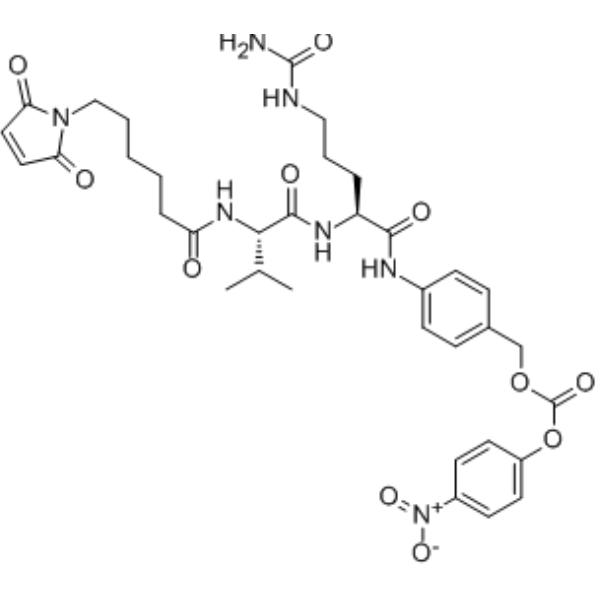
Mc-Val-Cit-PABC-PNP is a cathepsin cleavable linker for antibody-drug conjugates (ADCs) which couples the antibody element to the effecting compound. Mc-Val-Cit-PABC-PNP can be used in the synthesis of ADCs .
|
-
- HY-P2863A
-
|
|
Endogenous Metabolite
|
Metabolic Disease
|
|
Deoxyribonuclease II, Bovine (EC 3.1.22.1) hydrolyzes deoxyribonucleotide linkages in native and denatured DNA yielding products with 3'-phosphates. In vitro, its optimum pH range is 4.5-5.0. Deoxyribonuclease II, Bovine (EC 3.1.22.1) also acts upon p-nitrophenyl-phosphodiesters at pH 5.6-5.9.
|
-
- HY-Y0469
-
|
|
Drug Metabolite
|
Others
|
|
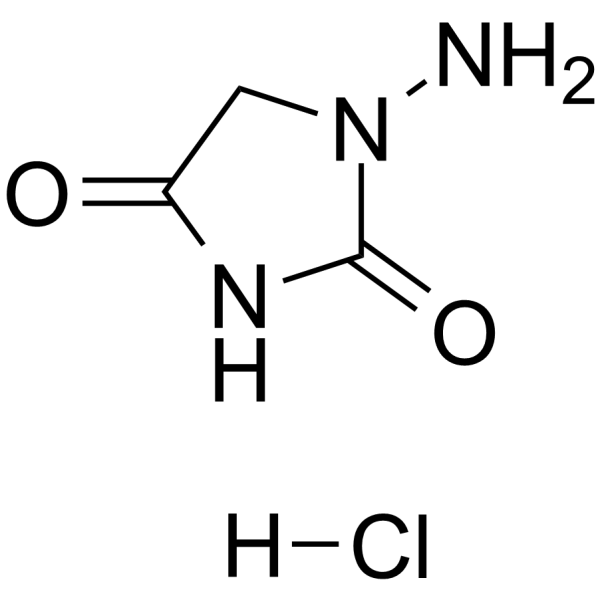
1-Aminohydantoin hydrochloride is a major metabolite of nitrofurantoin in animal tissues and can be used as a standard for the determination of residues of veterinary agents in meat, milk et.al. 1-Aminohydantoin hydrochloride covalently binds to tissue proteins and is released from the tissues under slightly acidic conditions and derivatized with 2-nitrobenzaldehyde to form nitrophenyl derivatives of AHD before detection .
|
-
- HY-E71168
-
|
|
Biochemical Assay Reagents
|
Others
|
|
1,6-α-D-Mannosidase (EC 3.2.1.163) is specific for (1→6)-linked mannobiose and has no activity towards any other linkages, or towards p-nitrophenyl-α-D-mannopyranoside or baker's yeast mannan. It is strongly inhibited by Mn2+ but does not require Ca2+ or any other metal cofactor for activity.
|
-
- HY-158199
-
|
|
ADC Linker
|
Cancer
|
|
BCN-HS-PEG2-bis(PNP) (Compound 62) is a p-nitrophenyl-containing ADC linker that can be used to further couple ADC cytotoxins with peptide linkers. BCN-HS-PEG2-bis(PNP) can conjugate with vc-PABC-MMAE (HY-15162) to form Drug-Linker Conjugates for ADC .
|
-
- HY-P2999B
-
|
|
Endogenous Metabolite
|
Metabolic Disease
|
|
β-N-Acetylglucosaminidase, Canavalia ensiformis (EC 3.2.1.52), can release terminally β-linked N-acetylglucosamine and N-acetylgalactosamine from a variety of substrates. The activity of β-N-Acetylglucosaminidase can be determined using the chromogenic substrate p-nitrophenyl-N-acetyl-β-D-glucosinolate. β-N-Acetylglucosaminidase degrades the terminal non-reducing N-acetyl-D-aminohexose residue.
|
-
- HY-P2999C
-
|
|
Endogenous Metabolite
|
Metabolic Disease
|
|
β-N-Acetylglucosaminidase, Human (EC 3.2.1.52), can release terminally β-linked N-acetylglucosamine and N-acetylgalactosamine from a variety of substrates. The activity of β-N-Acetylglucosaminidase can be determined using the chromogenic substrate p-nitrophenyl-N-acetyl-β-D-glucosinolate. β-N-Acetylglucosaminidase degrades the terminal non-reducing N-acetyl-D-aminohexose residue.
|
-
- HY-P2999A
-
|
|
Endogenous Metabolite
|
Metabolic Disease
|
|
β-N-Acetylglucosaminidase, Bovine (EC 3.2.1.52), can release terminally β-linked N-acetylglucosamine and N-acetylgalactosamine from a variety of substrates. The activity of β-N-Acetylglucosaminidase can be determined using the chromogenic substrate p-nitrophenyl-N-acetyl-β-D-glucosinolate. β-N-Acetylglucosaminidase degrades the terminal non-reducing N-acetyl-D-aminohexose residue.
|
-
- HY-105168
-
|
|
Endothelin Receptor
|
Cardiovascular Disease
|
|
TAK 044 is an antagonist of Endothelin Receptor. TAK 044 strongly inhibits ET-induced deterioration in various animal models. TAK 044 can be used in study ET-related diseases such as acute myocardial infarction,acute renal failure, acute hepatic malfunction, and subarachnoid hemorrhage .
|
-
- HY-Y0469R
-
|
|
Reference Standards
Drug Metabolite
|
Cancer
|
|
1-Aminohydantoin hydrochloride (Standard) is the analytical standard of 1-Aminohydantoin hydrochloride (HY-Y0469). This product is intended for research and analytical applications. 1-Aminohydantoin hydrochloride is a major metabolite of Nitrofurantoin (HY-A0090) in animal tissues and can be used as a standard for the determination of residues of veterinary agents in meat, milk et.al. 1-Aminohydantoin hydrochloride covalently binds to tissue proteins and is released from the tissues under slightly acidic conditions and derivatized with 2-nitrobenzaldehyde to form nitrophenyl derivatives of 1-Aminohydantoin hydrochloride before detection .
|
-
- HY-P4948
-
|
|
Biochemical Assay Reagents
|
Others
|
|
Coumarin-phalloidin is a kind of phalloidin labeled with Coumarin (HY-N0709). Coumarin-phalloidin is a new type of actin probe that can be used for triple immunofluorescence microscopic observation of the cell skeleton .
|
-
- HY-P10563
-
|
BHV-1100
|
CD38
|
Cancer
|
|
Noraramtide (BHV-1100) is an antibody recruitment molecule. Noraramtide can specifically bind to CD38 molecules to recruit natural killer (NK) cells. Noraramtide enhances the ability of NK cells to kill tumor cells through antibody-dependent cellular cytotoxicity (ADCC). This mechanism allows NK cells to more effectively recognize and eliminate tumor cells while avoiding mutual killing between NK cells. Noraramtide can be used for the study of autologous cancer immunity .
|
-
| Cat. No. |
Product Name |
Type |
-
- HY-15928
-
|
p-Nitrophenyl phosphate disodium
|
Fluorescent Dyes
|
|
4-Nitrophenyl phosphate (p-Nitrophenyl phosphate) disodium is a non-proteinaceous chromogenic substrate for alkaline and acid phosphatases used in ELISA and conventional spectrophotometric assays.
|
-
- HY-W013168
-
|
4-Nitrophenyl hexadecanoate; p-Nitrophenyl Palmitate; pNpp
|
Fluorescent Dyes
|
|
4-Nitrophenyl palmitate (4-Nitrophenyl hexadecanoate) is a chromogenic substrate for lipases and esterases. Upon enzymatic hydrolysis, 4-Nitrophenyl palmitate releases p-nitrophenol, which can be quantified by colorimetric detection at 410 nm as a measure of enzymatic activity. 4-Nitrophenyl palmitate is used to characterize the activity of various bacterial and mammalian enzymes, including those from Burkholderia and porcine pancreatic lipase .
|
-
- HY-100045
-
|
4-Nitrophenylphosphorylcholine; 4-Nitrophenylphosphorylcholine; O-(4-Nitrophenylphosphoryl)choline
|
Fluorescent Dyes
|
|
p-Nitrophenyl phosphorylcholine (4-Nitrophenylphosphorylcholine) is a chromogenic substrate that is used to measure phospholipase C (PLC) activity. Hydrolysis of p-nitrophenylphosphorylcholine by PLC results in the liberation of p-nitrophenol, which can be measured at 405 nm at pH 7.2-7.5.
|
-
- HY-W015996
-
|
pNP-GalNAc
|
Fluorescent Dyes
|
|
4-Nitrophenyl-N-acetyl-α-D-galactosaminide (pNP-GalNAc) can be used as a chromogenic substrate for N-acetyl-D-galactosaminase. 4-Nitrophenyl-N-acetyl-α-D-galactosaminide is cleaved by N-acetyl-D-galactosaminase to generate a yellow solution. The enzyme activity is quantitatively determined by absorbance detection .
|
-
- HY-124324
-
|
p-Nitopheyl β-D-cellotioside
|
Fluorescent Dyes
|
|
4-Nitrophenyl β-D-cellotrioside (p-Nitopheyl β-D-cellotioside) is a chromogenic substrate for endoglucanases and cellulose biohydrolases. As a fluorescent dye, nitrophenyl β-D-Cellotrioside can be hydrolyzed by enzymes to release 4-nitrophenol, producing a yellow color. The activity of the enzyme can be quantitatively analyzed by monitoring the change in absorbance at 405 nm .
|
-
- HY-138111
-
|
p-Nitopheyl β-D-cellotetaoside
|
Fluorescent Dyes
|
|
4-Nitrophenyl β-D-cellotetraoside (p-Nitopheyl β-D-cellotetaoside) is a small molecule cellulose mimetic consisting of a tetramer of D-glucose units linked by β-1-4 glycosidic bonds. The fragmentation pattern of 4-Nitrophenyl β-D-cellotetraoside after enzymatic hydrolysis can be analyzed by TLC or by the release of 4-nitrophenol, which has a strong absorbance at 395 nm in alkaline solutions. 4-Nitrophenyl β-D-cellotetraoside can be used in cellulose degradation studies to determine the specificity of cellulases .
|
-
- HY-W330621
-
|
CNP-α-D-Glucopyaoside
|
Fluorescent Dyes
|
|
2-Chloro-4-nitrophenyl-α-D-glucopyranoside (CNP-α-D-Glucopyaoside) as a chromogenic substrate for the enzymatic activity assay of the enzyme that releases CNP from conjugated carbohydrates .
|
| Cat. No. |
Product Name |
Type |
-
- HY-W011183
-
|
|
Biochemical Assay Reagents
|
|
4-Nitrophenyl-N-acetyl-β-D-glucosaminide, an artificial substrate of N-acetyl-beta-D-hexosaminidase (NAGase), can be used in rapid and accurate rate assay for N-acetyl-beta-D-hexosaminidase. 4-Nitrophenyl-N-acetyl-β-D-glucosaminide is highly soluble and stable. 4-Nitrophenyl-N-acetyl-β-D-glucosaminide can be used for the study of renal tubular injury .
|
-
- HY-116022A
-
|
p-Nitrophenyl phosphate disodium hexahydrate
|
Biochemical Assay Reagents
|
|
4-Nitrophenyl phosphate (p-nitrophenyl phosphate) disodium hexahydrate is widely used as a small molecule phosphotyrosine-like substrate in activity assays for protein tyrosine phosphatases. 4-Nitrophenyl phosphate disodium hexahydrate is a colorless substrate that upon hydrolysis is converted to a yellow 4-nitrophenolate ion that can be monitored by absorbance at 405 nm .
|
-
- HY-W014449
-
|
|
Biochemical Assay Reagents
|
|
4-Nitrophenyl butyrate consists of butyric acid chains esterified with 4-nitrophenol groups, thus giving it a yellow color. This compound is commonly used as a substrate in enzyme assays to measure esterase and lipase activity. When these enzymes cleave the ester bond, the nitrophenol group is released and the color changes from yellow to orange. Thus, the rate of color change can be used to determine enzyme activity. In addition, 4-Nitrophenyl butyrate can also be used as organic synthesis reagent and dye intermediate.
|
-
- HY-15927
-
|
|
Biochemical Assay Reagents
|
|
4-Nitrophenyl β-D-glucopyranoside is a chromogenic substrate for β-glucosidase. 4-Nitrophenyl β-D-glucopyranoside is converted to a colored product, p-nitrophenol that is easily detected spectrophotometrically at 405 nm when used in a β-glycosidase assay. 4-Nitrophenyl β-D-glucopyranoside is hydrolysed through intramolecular nucleophilic catalysis by the phosphate group in the 2-position. 4-Nitrophenyl β-D-glucopyranoside is promising for research of postmenopausal osteoporosis .
|
-
- HY-15926
-
ONPG
Maximum Cited Publications
6 Publications Verification
2-Nitrophenyl β-D-galactopyranoside
|
Biochemical Assay Reagents
|
|
ONPG is a colorimetric and spectrophotometric substrate for detection of β-galactosidase activity.
|
-
- HY-137822
-
|
4-Nitrophenyl a-D-mannopyranoside
|
Biochemical Assay Reagents
|
|
p-Nitrophenyl α-D-mannopyranoside (4-Nitrophenyl α-D-mannopyranoside) is a chromogenic glycosidic ligand. p-Nitrophenyl α-D-mannopyranoside features a sugar moiety (α-D-mannopyranose) with the mannose-characteristic axial hydroxyl group at the C2 position and a ligand portion (p-nitrophenol) that provides ultraviolet-visible light absorption properties. p-Nitrophenyl α-D-mannopyranoside can be used to determine glycosidase activity and characterize the sugar recognition properties of lectins (such as Concanavalin A (HY-P2149)) .
|
-
- HY-W039911
-
|
PNP-alpha-D-Gal; PNP-α-D-Gal
|
Biochemical Assay Reagents
|
|
4-Nitrophenyl α-D-galactopyranoside (PNP-alpha-D-Gal) is an artificial substrate of 4-nitrophenyl (pNP) glycopyranoside for detecting α-galactosidase activity. The amount of released pNP is significantly increased when 4-Nitrophenyl α-D-galactopyranoside is used as substrates .
|
-
- HY-137550
-
|
|
Biochemical Assay Reagents
|
|
4-Nitrophenyl β-D-galactopyranoside is a derivative of beta-D-galactoside and monosaccharide. 4-Nitrophenyl β-D-galactopyranoside can be used for affinity label .
|
-
- HY-137878
-
|
PNP-α-NeuNAc
|
Biochemical Assay Reagents
|
|
2-O-(p-Nitrophenyl)-α-D-N-acetylneuraminic acid (PNP-α-NeuNAc) is a classic chromogenic substrate for neuraminidase. 2-O-(p-Nitrophenyl)-α-D-N-acetylneuraminic acid releases p-nitrophenol upon enzymatic hydrolysis, allowing quantification of enzyme activity and inhibitory effects via spectrophotometry. 2-O-(p-Nitrophenyl)-α-D-N-acetylneuraminic acid (PNP-α-NeuNAc) acts as a sialyl donor in the process of enzyme-catalyzed trans-sialylation .
|
-
- HY-134420
-
|
PNP α-L-Fuc
|
Biochemical Assay Reagents
|
|
p-Nitrophenyl α-L-fucoside (PNP α-L-Fuc) is a specific substrate of Pecten maximus α-L-fucosidase, with a Km value of 650 µM. p-Nitrophenyl α-L-fucoside serves as a substrate for ClAgl29A and ClAgl29B. Enzymatic hydrolysis of p-Nitrophenyl α-L-fucoside releases p-nitrophenol and α-L-fucose, where the latter undergoes mutarotation over time to form β-L-fucose. p-Nitrophenyl α-L-fucoside is not the preferred substrate for ClAgl29A and ClAgl29B .
|
-
- HY-W013205B
-
-
- HY-W011410
-
|
p-Nitrophenyl β-D-Mannopyranoside
|
Biochemical Assay Reagents
|
|
4-Nitrophenyl β-D-mannopyranoside is a useful substrate for β-D-mannopyranosidase. 4-Nitrophenyl β-D-mannopyranoside is also a substrate for GH1-glucosidase (EaBgl1A) and α-L-rhamnosidase .
|
-
- HY-137815
-
|
|
Biochemical Assay Reagents
|
|
4-Nitrophenyl α-L-rhamnopyranoside is a commonly used substrate in various biochemical assays to measure the activity of enzymes that hydrolyze rhamnose, such as α-L-rhamnosidase. 4-Nitrophenyl α-L-rhamnopyranoside has unique chemical properties that allow it to be hydrolyzed by these enzymes to form a yellow product called p-nitrophenol. This makes it a useful tool for detecting and quantifying rhamnohydrolase activity in biological samples or microbial cultures.
|
-
- HY-W039859
-
|
|
Biochemical Assay Reagents
|
|
2-Chloro-4-nitrophenyl β-D-glucopyranoside, 98% is a substrate for β-glucosidase, used as a bacterial growth medium.
|
-
- HY-W127404
-
|
|
Biochemical Assay Reagents
|
|
4-Nitrophenyl decanoate is a biochemical reagent that can be used as a biological material or organic compound for life science related research.
|
-
- HY-W127326
-
|
|
Biochemical Assay Reagents
|
|
2-Nitrophenyl stearate is a biochemical reagent that can be used as a biological material or organic compound for life science related research.
|
-
- HY-134164
-
|
|
Biochemical Assay Reagents
|
|
4-Nitrophenyl α-L-arabinofuranoside is a biochemical reagent that can be used as a biological material or organic compound for life science related research.
|
-
- HY-134455
-
|
|
Biochemical Assay Reagents
|
|
4-Nitrophenyl β-D-fuco-pyran-oside is a biochemical reagent that can be used as a biological material or organic compound for life science related research.
|
-
- HY-137812
-
|
|
Biochemical Assay Reagents
|
|
p-Nitrophenyl β-D-lactoside is a substrate of β-lactosidase and can be used to determine β-lactosinase activity. p-Nitrophenyl β-D-lactoside is a substrate of cellobiohydrolase. p-Nitrophenyl β-D-lactoside is a class of biochemical reagents used in glycobiology research .
|
-
- HY-15911
-
|
2-Chloro-4-Nitrophenyl α-L-fucopyranoside
|
Biochemical Assay Reagents
|
|
CNP-AFU (2-Chloro-4-nitrophenyl α-L-fucopyranoside) is a substrate for alpha-L-fucosidase(AFU).
|
-
- HY-W593287
-
-
- HY-W099563
-
|
|
Biochemical Assay Reagents
|
|
4-Nitrophenyl stearate, which is an ester formed by the condensation of stearic acid and 4-nitrophenol, is commonly used as a substrate for enzymatic assays, where the hydrolysis of ester bonds by esterase and lipase can be measured by absorbance or ratio In addition, 4-Nitrophenyl stearate has been used as a model compound to study the enzymatic activity and selectivity of lipases and esterases from various sources. The long hydrophobic tail of the molecule makes it suitable for use in lipophilic Good solubility in the environment makes it a useful probe for studying lipid metabolism.
|
-
- HY-137828
-
|
pNP-chitobiose
|
Biochemical Assay Reagents
|
|
4-Nitrophenyl N,N′-diacetyl-β-D-chitobioside (pNP-chitobiose) is a fluorescent substrate that can be used to detect chitinase activity.
|
-
- HY-W699888
-
|
|
Biochemical Assay Reagents
|
|
α-Neuraminic acid,N-acetyl-2-O-(4-nitrophenyl) (sodium) is a class of biochemical reagents used in glycobiology research. Glycobiology studies the structure, synthesis, biology, and evolution of sugars. It involves carbohydrate chemistry, enzymology of glycan formation and degradation, protein-glycan recognition, and the role of glycans in biological systems. This field is closely related to basic research, biomedicine, and biotechnology .
|
-
- HY-166971
-
|
|
Biochemical Assay Reagents
|
|
4-Nitrophenyl-α-D-maltoheptaoside is a class of biochemical reagents used in glycobiology research. Glycobiology studies the structure, synthesis, biology, and evolution of sugars. It involves carbohydrate chemistry, enzymology of glycan formation and degradation, protein-glycan recognition, and the role of glycans in biological systems. This field is closely related to basic research, biomedicine, and biotechnology .
|
-
- HY-134430
-
|
Tetradecanoic acid, 4-Nitrophenyl ester
|
Biochemical Assay Reagents
|
|
p-Nitrophenyl myristate (Tetradecanoic acid, 4-nitrophenyl ester) is a biochemical assay reagent.
|
-
- HY-116022C
-
|
p-Nitrophenyl phosphate cyclohexylammonium
|
Biochemical Assay Reagents
|
|
4-Nitrophenyl phosphate (cyclohexylammonium) is a biochemical assay reagent.
|
-
- HY-W127526
-
|
2-Nitrophenyl myristate
|
Biochemical Assay Reagents
|
|
2-Nitrophenyl myristate is a biochemical reagent that can be used as a biological material or organic compound for life science related research.
|
-
- HY-116022B
-
|
p-Nitrophenyl phosphate ditromethamine
|
Biochemical Assay Reagents
|
|
4-Nitrophenyl phosphate ditromethamine is an enzyme substrate commonly used in biochemical assays to measure the activity of various phosphatases, including alkaline phosphatase. 4-Nitrophenylphosphate has unique chemical properties that allow it to be hydrolyzed by phosphatases, releasing a yellow product that can be detected spectrophotometrically.
|
-
- HY-W013865
-
|
|
Biochemical Assay Reagents
|
|
2-Nitrophenyl β-D-xylopyranoside is a synthetic sugar derivative that can be used to study the interaction mechanisms between enzymes, proteins, and carbohydrates. 2-Nitrophenyl b-D-xylopyranoside is a kind of biological materials or organic compounds that are widely used in life science research .
|
-
- HY-W011655
-
|
p-Nitrophenyl alpha-D-xylopyranoside
|
Biochemical Assay Reagents
|
|
p-Nitrophenyl α-D-xylopyranoside (p-Nitrophenyl alpha-D-xylopyranoside) is a chromogenic substrate for α-xylosidase .
|
-
- HY-W283245
-
-
- HY-W416249
-
-
- HY-137198
-
-
- HY-W145619
-
|
|
Biochemical Assay Reagents
|
|
4-Nitrophenyl α-D-Glucuronide is a biochemical reagent that can be used as a biological material or organic compound for life science related research.
|
-
- HY-134429
-
|
|
Biochemical Assay Reagents
|
|
p-Nitrophenyl α-L-arabinopyranoside is a biochemical reagent. p-Nitrophenyl α-L-arabinopyranoside can be hydrolyzed by recombinant BgaA (rBgaA, isolated from E. coli BL21 (DE3) strain harboring pEBGA29). p-Nitrophenyl α-L-arabinopyranoside has potential application in enzyme activity detection .
|
-
- HY-137826
-
-
- HY-W290273
-
|
2-Nitrophenyl-beta-D-thiogalactopyranoside
|
Biochemical Assay Reagents
|
|
2-Nitrophenyl-β-D-thiogalactopyranoside is a chromogenic substrate used to detect the presence of galactosidase in various biological and biochemical assays.
|
-
- HY-W357150
-
-
- HY-139069
-
-
- HY-W416255
-
-
- HY-W357161
-
-
- HY-W399188
-
-
- HY-W334098
-
|
|
Biochemical Assay Reagents
|
|
2-Nitrophenyl β-D-glucopyranosiduronic acid is a class of biochemical reagents used in glycobiology research. Glycobiology studies the structure, synthesis, biology, and evolution of sugars. It involves carbohydrate chemistry, enzymology of glycan formation and degradation, protein-glycan recognition, and the role of glycans in biological systems. This field is closely related to basic research, biomedicine, and biotechnology .
|
-
- HY-W698923
-
-
- HY-156146
-
-
- HY-137785
-
|
|
Biochemical Assay Reagents
|
|
2-Chloro-4-nitrophenyl-β-D-maltotrioside is a chromogenic substrate used in bioluminescent and fluorescent assays to detect α-amylase.
|
-
- HY-W293502
-
|
2-Chloro-4-Nitrophenyl-beta-D-galactopyranoside
|
Biochemical Assay Reagents
|
|
2-Chloro-4-nitrophenyl-β-D-galactopyranoside is a chromogenic substrate used for testing enzyme activity. It is commonly used in molecular biology research to detect and measure the activity of β-galactosidase (biosynth: EC03318).
|
-
- HY-W555915
-
|
|
Biochemical Assay Reagents
|
|
4-Nitrophenyl 4,6-O-(phenylmethylene)-α-D-mannopyranoside is a class of biochemical reagents used in glycobiology research. Glycobiology studies the structure, synthesis, biology, and evolution of sugars. It involves carbohydrate chemistry, enzymology of glycan formation and degradation, protein-glycan recognition, and the role of glycans in biological systems. This field is closely related to basic research, biomedicine, and biotechnology .
|
-
- HY-W776875
-
- HY-W416254
-
|
|
Biochemical Assay Reagents
|
|
4-Nitrophenyl 2-O-β-D-glucopyranosyl-β-D-glucopyranoside is a class of biochemical reagents used in glycobiology research. Glycobiology studies the structure, synthesis, biology, and evolution of sugars. It involves carbohydrate chemistry, enzymology of glycan formation and degradation, protein-glycan recognition, and the role of glycans in biological systems. This field is closely related to basic research, biomedicine, and biotechnology .
|
- HY-W777046
-
|
|
Biochemical Assay Reagents
|
|
4-Nitrophenyl 3-O-α-D-glucopyranosyl-α-D-glucopyranoside is a class of biochemical reagents used in glycobiology research. Glycobiology studies the structure, synthesis, biology, and evolution of sugars. It involves carbohydrate chemistry, enzymology of glycan formation and degradation, protein-glycan recognition, and the role of glycans in biological systems. This field is closely related to basic research, biomedicine, and biotechnology .
|
- HY-W777041
-
|
|
Biochemical Assay Reagents
|
|
4-Nitrophenyl 6-O-α-D-glucopyranosyl-α-D-glucopyranoside is a class of biochemical reagents used in glycobiology research. Glycobiology studies the structure, synthesis, biology, and evolution of sugars. It involves carbohydrate chemistry, enzymology of glycan formation and degradation, protein-glycan recognition, and the role of glycans in biological systems. This field is closely related to basic research, biomedicine, and biotechnology .
|
- HY-W127824
-
|
(5Z,9Z,14Z)-5,10,15-Tris(4-Nitrophenyl)-22,24-dihydro-21H-corri
|
Biochemical Assay Reagents
|
|
5,10,15-tris(4-nitrophenyl)corrole is a corrole derivative used as a trianionic ligand for transition metals.
|
- HY-W416364
-
|
|
Biochemical Assay Reagents
|
|
β-D-Galactopyranoside,2-nitrophenyl,2,3,4,6-tetraacetate is a class of biochemical reagents used in glycobiology research. Glycobiology studies the structure, synthesis, biology, and evolution of sugars. It involves carbohydrate chemistry, enzymology of glycan formation and degradation, protein-glycan recognition, and the role of glycans in biological systems. This field is closely related to basic research, biomedicine, and biotechnology .
|
- HY-134218
-
|
|
Biochemical Assay Reagents
|
|
4-Nitrophenyl-α-D-maltopyranoside is a class of biochemical reagents used in glycobiology research. Glycobiology studies the structure, synthesis, biology, and evolution of sugars. It involves carbohydrate chemistry, enzymology of glycan formation and degradation, protein-glycan recognition, and the role of glycans in biological systems. This field is closely related to basic research, biomedicine, and biotechnology .
|
- HY-W739581
-
|
|
Biochemical Assay Reagents
|
|
β-D-Mannopyranoside,4-nitrophenyl 4,6-O-cyclohexylidene,3-benzoate is a class of biochemical reagents used in glycobiology research. Glycobiology studies the structure, synthesis, biology, and evolution of sugars. It involves carbohydrate chemistry, enzymology of glycan formation and degradation, protein-glycan recognition, and the role of glycans in biological systems. This field is closely related to basic research, biomedicine, and biotechnology .
|
- HY-W699174
-
|
|
Biochemical Assay Reagents
|
|
2'-Nitrophenyl 2,3-di-O-acetyl-4-O-triethylsilyl-β-D-xylopyranoside is a class of biochemical reagents used in glycobiology research. Glycobiology studies the structure, synthesis, biology, and evolution of sugars. It involves carbohydrate chemistry, enzymology of glycan formation and degradation, protein-glycan recognition, and the role of glycans in biological systems. This field is closely related to basic research, biomedicine, and biotechnology .
|
- HY-W416311
-
|
|
Biochemical Assay Reagents
|
|
β-D-Glucopyranoside,2-chloro-4-nitrophenyl,2,3,4,6-tetraacetate is a class of biochemical reagents used in glycobiology research. Glycobiology studies the structure, synthesis, biology, and evolution of sugars. It involves carbohydrate chemistry, enzymology of glycan formation and degradation, protein-glycan recognition, and the role of glycans in biological systems. This field is closely related to basic research, biomedicine, and biotechnology .
|
- HY-W357145
-
|
|
Biochemical Assay Reagents
|
|
(4-Nitrophenyl)methyl 1-thio-β-D-galactopyranoside is a class of biochemical reagents used in glycobiology research. Glycobiology studies the structure, synthesis, biology, and evolution of sugars. It involves carbohydrate chemistry, enzymology of glycan formation and degradation, protein-glycan recognition, and the role of glycans in biological systems. This field is closely related to basic research, biomedicine, and biotechnology .
|
- HY-167253
-
|
|
Biochemical Assay Reagents
|
|
p-Nitrophenyl 4,6-benzylidene-β-D-glucopyranoside is a class of biochemical reagents used in glycobiology research. Glycobiology studies the structure, synthesis, biology, and evolution of sugars. It involves carbohydrate chemistry, enzymology of glycan formation and degradation, protein-glycan recognition, and the role of glycans in biological systems. This field is closely related to basic research, biomedicine, and biotechnology .
|
- HY-W698765
-
|
|
Biochemical Assay Reagents
|
|
Methyl p-nitrophenyl 2,3,4-tri-O-acetyl-β-D-glucouronate is a class of biochemical reagents used in glycobiology research. Glycobiology studies the structure, synthesis, biology, and evolution of sugars. It involves carbohydrate chemistry, enzymology of glycan formation and degradation, protein-glycan recognition, and the role of glycans in biological systems. This field is closely related to basic research, biomedicine, and biotechnology .
|
- HY-W396250
-
|
|
Biochemical Assay Reagents
|
|
p-Nitrophenyl 2,3,4,6-tetra-O-acetyl-α-D-mannopyranoside is a class of biochemical reagents used in glycobiology research. Glycobiology studies the structure, synthesis, biology, and evolution of sugars. It involves carbohydrate chemistry, enzymology of glycan formation and degradation, protein-glycan recognition, and the role of glycans in biological systems. This field is closely related to basic research, biomedicine, and biotechnology .
|
- HY-W700578
-
- HY-W416322
-
- HY-W416326
-
- HY-W416323
-
- HY-W416243
-
|
O-Nitrophenyl-N-acetyl-A-D-*galactosaminide
|
Biochemical Assay Reagents
|
|
2-Nitrophenyl N-acetyl-α-D-galactosaminide (O-Nitrophenyl-N-acetyl-A-D-*galactosaminide) is a galactose derivativeand can be used in glycobiology research .
|
- HY-W127325
-
|
|
Biochemical Assay Reagents
|
|
2-Nitrophenyl palmitate is a biochemical reagent that can be used as a biological material or organic compound for life science related research.
|
- HY-W791782
-
- HY-W342193
-
- HY-W039893
-
- HY-W154351
-
- HY-137268
-
- HY-W357132
-
- HY-W1052829A
-
|
4-Arm-PEG10000-NPC
|
Biochemical Assay Reagents
|
|
4-Arm-PEG10000-Nitrophenyl carbonate (4-Arm-PEG10000-NPC) is a four-arm PEG derivative. The core structure of 4-Arm-PEG10000-Nitrophenyl carbonate consists of four PEG chains, each modified at the end with a nitrophenyl carbonate group. 4-Arm-PEG10000-Nitrophenyl carbonate can be used for bioconjugation and drug delivery.
|
- HY-W1052829B
-
|
4-Arm-PEG20000-NPC
|
Biochemical Assay Reagents
|
|
4-Arm-PEG20000-Nitrophenyl carbonate (4-Arm-PEG20000-NPC) is a four-arm PEG derivative. The core structure of 4-Arm-PEG20000-Nitrophenyl carbonate consists of four PEG chains, each modified at the end with a nitrophenyl carbonate group. 4-Arm-PEG20000-Nitrophenyl carbonate can be used for bioconjugation and drug delivery.
|
- HY-W1052829
-
|
4-Arm-PEG2000-NPC
|
Biochemical Assay Reagents
|
|
4-Arm-PEG2000-Nitrophenyl carbonate (4-Arm-PEG2000-NPC) is a four-arm PEG derivative. The core structure of 4-Arm-PEG2000-Nitrophenyl carbonate consists of four PEG chains, each modified at the end with a nitrophenyl carbonate group. 4-Arm-PEG2000-Nitrophenyl carbonate can be used for bioconjugation and drug delivery.
|
- HY-W1052829C
-
|
4-Arm-PEG5000-NPC
|
Biochemical Assay Reagents
|
|
4-Arm-PEG5000-Nitrophenyl carbonate (4-Arm-PEG5000-NPC) is a four-arm PEG derivative. The core structure of 4-Arm-PEG5000-Nitrophenyl carbonate consists of four PEG chains, each modified at the end with a nitrophenyl carbonate group. 4-Arm-PEG5000-Nitrophenyl carbonate can be used for bioconjugation and drug delivery.
|
- HY-W415806
-
- HY-166870
-
- HY-W416344
-
- HY-W587779
-
|
|
Biochemical Assay Reagents
|
|
o-Nitrophenyl β-D-galactopyranoside-6-phosphate cyclohexylammonium is a chromogenic substrate with activity for β-galactosidase detection. The use of o-Nitrophenyl β-D-galactopyranoside-6-phosphate cyclohexylammonium can help researchers quickly identify and quantify β-galactosidase activity.
|
- HY-W415809
-
- HY-W776848
-
- HY-W739586
-
|
|
Biochemical Assay Reagents
|
|
4-Nitrophenyl 6-O-α-D-mannopyranosyl-α-D-mannopyranoside is a class of biochemical reagents used in glycobiology research. Glycobiology studies the structure, synthesis, biology, and evolution of sugars. It involves carbohydrate chemistry, enzymology of glycan formation and degradation, protein-glycan recognition, and the role of glycans in biological systems. This field is closely related to basic research, biomedicine, and biotechnology .
|
- HY-W699344
-
|
|
Biochemical Assay Reagents
|
|
4-Nitrophenyl 2-O-α-D-glucopyranosyl-α-D-glucopyranoside is a class of biochemical reagents used in glycobiology research. Glycobiology studies the structure, synthesis, biology, and evolution of sugars. It involves carbohydrate chemistry, enzymology of glycan formation and degradation, protein-glycan recognition, and the role of glycans in biological systems. This field is closely related to basic research, biomedicine, and biotechnology .
|
- HY-W740337
-
|
|
Biochemical Assay Reagents
|
|
4-Nitrophenyl 3,4-O-(1-methylethylidene)-α-D-galactopyranoside is a class of biochemical reagents used in glycobiology research. Glycobiology studies the structure, synthesis, biology, and evolution of sugars. It involves carbohydrate chemistry, enzymology of glycan formation and degradation, protein-glycan recognition, and the role of glycans in biological systems. This field is closely related to basic research, biomedicine, and biotechnology .
|
- HY-W416327
-
|
|
Biochemical Assay Reagents
|
|
β-D-Galactopyranoside,4-nitrophenyl,3,4,6-triacetate is a class of biochemical reagents used in glycobiology research. Glycobiology studies the structure, synthesis, biology, and evolution of sugars. It involves carbohydrate chemistry, enzymology of glycan formation and degradation, protein-glycan recognition, and the role of glycans in biological systems. This field is closely related to basic research, biomedicine, and biotechnology .
|
- HY-W776979
-
|
|
Biochemical Assay Reagents
|
|
4-Nitrophenyl 2-benzoyl-4,6-O-benzylidene-α-D-mannopyranoside is a class of biochemical reagents used in glycobiology research. Glycobiology studies the structure, synthesis, biology, and evolution of sugars. It involves carbohydrate chemistry, enzymology of glycan formation and degradation, protein-glycan recognition, and the role of glycans in biological systems. This field is closely related to basic research, biomedicine, and biotechnology .
|
- HY-W416325
-
- HY-W302789
-
- HY-W739832
-
|
|
Biochemical Assay Reagents
|
|
p-Nitrophenyl β-D-cellobioside heptacetate is a class of biochemical reagents used in glycobiology research. Glycobiology studies the structure, synthesis, biology, and evolution of sugars. It involves carbohydrate chemistry, enzymology of glycan formation and degradation, protein-glycan recognition, and the role of glycans in biological systems. This field is closely related to basic research, biomedicine, and biotechnology .
|
- HY-W039891
-
|
|
Biochemical Assay Reagents
|
|
β-D-Glucopyranosiduronic acid,2-formyl-4-nitrophenyl,methyl ester,2,3,4-triacetate can be used in glycobiology research.
|
- HY-W357155
-
|
Galactosyl-N-acetylglucosaminyl-β-p-Nitrophenyl
|
Biochemical Assay Reagents
|
|
Gal1-β-3GlcNAc-β-PNP (Galactosyl-N-acetylglucosaminyl-β-p-nitrophenyl) is a class of biochemical reagents used in glycobiology research. Glycobiology studies the structure, synthesis, biology, and evolution of sugars. It involves carbohydrate chemistry, enzymology of glycan formation and degradation, protein-glycan recognition, and the role of glycans in biological systems. This field is closely related to basic research, biomedicine, and biotechnology .
|
- HY-W739747
-
|
|
Biochemical Assay Reagents
|
|
Nitrophenyl 2-O-(2,3,4,6-Tri-O-acetyl-α-D-mannopyranosyl)-α-D-mannopyranoside is a class of biochemical reagents used in glycobiology research. Glycobiology studies the structure, synthesis, biology, and evolution of sugars. It involves carbohydrate chemistry, enzymology of glycan formation and degradation, protein-glycan recognition, and the role of glycans in biological systems. This field is closely related to basic research, biomedicine, and biotechnology .
|
- HY-W699023
-
|
|
Biochemical Assay Reagents
|
|
p-Nitrophenyl 2-acetamido-2-deoxy-3-O-(2,3,4,6-tetra-O-acetyl-β-D-galactopyranosyl)-α-D-galactopyranoside is a class of biochemical reagents used in glycobiology research. Glycobiology studies the structure, synthesis, biology, and evolution of sugars. It involves carbohydrate chemistry, enzymology of glycan formation and degradation, protein-glycan recognition, and the role of glycans in biological systems. This field is closely related to basic research, biomedicine, and biotechnology .
|
- HY-W739389
-
- HY-W776843
-
- HY-W699276
-
| Cat. No. |
Product Name |
Target |
Research Area |
-
- HY-W050494
-
-
- HY-W009693
-
-
- HY-P4545
-
|
|
Angiotensin Receptor
|
Others
|
|
Abz-Gly-p-nitro-Phe-Pro-OH is the fluorescent substrate angiotensin I converting enzyme (ACE-I) with 355 nm excitation and 405 nm emission wavelengths .
|
-
- HY-W111209
-
-
- HY-P4561
-
|
|
Cathepsin
|
Others
|
|
H-Pro-Thr-Glu-Phe-p-nitro-Phe-Arg-Leu-OH is a water-soluble polypeptide that can serve as a substrate for cathepsin D, pepsin and pepsinogen. H-Pro-Thr-Glu-Phe-p-nitro-Phe-Arg-Leu-OH has potential applications in biochemical analysis .
|
-
- HY-P4725
-
|
|
Fluorescent Dye
|
Others
|
|
Abz-Thr-Ile-Nle-p-nitro-Phe-Gln-Arg-NH2 is a fluorogenic substrate, that can be used for the fluorescence screening assay .
|
-
- HY-P10563
-
|
BHV-1100
|
CD38
|
Cancer
|
|
Noraramtide (BHV-1100) is an antibody recruitment molecule. Noraramtide can specifically bind to CD38 molecules to recruit natural killer (NK) cells. Noraramtide enhances the ability of NK cells to kill tumor cells through antibody-dependent cellular cytotoxicity (ADCC). This mechanism allows NK cells to more effectively recognize and eliminate tumor cells while avoiding mutual killing between NK cells. Noraramtide can be used for the study of autologous cancer immunity .
|
-
- HY-W011137
-
|
|
Drug Derivative
|
Others
|
|
(S)-4-Nitrophenyl 4-amino-2-((tert-butoxycarbonyl)amino)-4-oxobutanoate is an asparagine derivative .
|
-
- HY-W014406
-
-
- HY-W007679
-
-
- HY-W008919
-
|
N-Alpha,N-epsilon-di-Boc-L-lysine 4-Nitrophenyl ester
|
Amino Acid Derivatives
|
Others
|
|
Boc-Lys(Boc)-Onp (N-Alpha,N-epsilon-di-Boc-L-lysine 4-nitrophenyl ester) is a lysine with a Boc protecting group. Boc-Lys(Boc)-Onp was used as a substrate for a catalyst model to study its enzymatic hydrolysis reaction catalyzed by a copper(II) complex .
|
-
- HY-P3350
-
|
|
Bacterial
|
Infection
|
|
LS-BF1 is a stable and low toxic cationic antimicrobial peptide. LS-BF1 displays broad spectrum of antibacterial activity, including the challenging ESKAPE pathogens, by cell membrane disruptive mechanism. LS-BF1 shows good in vivo efficacy for elimination of bacteria in a mouse infection model[1].
|
-
- HY-105168
-
|
|
Endothelin Receptor
|
Cardiovascular Disease
|
|
TAK 044 is an antagonist of Endothelin Receptor. TAK 044 strongly inhibits ET-induced deterioration in various animal models. TAK 044 can be used in study ET-related diseases such as acute myocardial infarction,acute renal failure, acute hepatic malfunction, and subarachnoid hemorrhage .
|
-
- HY-76255
-
|
|
Drug Derivative
|
Others
|
|
4-Nitrophenyl (tert-butoxycarbonyl)-L-phenylalaninate is a phenylalanine derivative .
|
-
- HY-W050493
-
-
- HY-P4556
-
|
|
Biochemical Assay Reagents
|
Others
|
|
H-Phe-Gly-His-p-nitro-Phe-Phe-Ala-Phe-OMe is a polypeptide that can be hydrolyzed by Rennin (HY-P2810). H-Phe-Gly-His-p-nitro-Phe-Phe-Ala-Phe-OMe is commonly used as a biochemical reaction reagent .
|
-
- HY-P4147
-
|
|
Peptides
|
Others
|
|
Ac-IHIHIQI-NH2 is a fibril-forming heptapeptide with high catalytic activity to laccase mimics. Ac-IHIHIQI-NH2 exhibits selectivity for hydrophobic p-nitrophenyl (ONp) ester substrates in the process of self-assembly .
|
-
- HY-P4948
-
|
|
Biochemical Assay Reagents
|
Others
|
|
Coumarin-phalloidin is a kind of phalloidin labeled with Coumarin (HY-N0709). Coumarin-phalloidin is a new type of actin probe that can be used for triple immunofluorescence microscopic observation of the cell skeleton .
|
| Cat. No. |
Product Name |
Category |
Target |
Chemical Structure |
| Cat. No. |
Product Name |
Chemical Structure |
-
- HY-136457S
-
|
|
|
2-NP-AHD- 13C3 is the 13C labled 2-NP-AHD (HY-136457) . 2-NP-AHD is a 2-nitrophenyl derivative of AHD (a metabolite of nitrofurans type of antibiotics), can be used as indicator of the illegal usage of nitrofuran agents .
|
-
-
- HY-15926S
-
|
|
|
ONPG- 13C is the 13C labeled ONPG. ONPG is a colorimetric and spectrophotometric substrate for detection of β-galactosidase activit .
|
-
-
- HY-W740068
-
|
|
|
tert-Butyl 4-Nitrophenyl Carbonate-d9 is the deuterium labeled Tert-Butyl (4-nitrophenyl) carbonate (HY-W683522).
|
-
-
- HY-W039153S
-
|
|
|
(3-Nitrophenyl)methanol-d6 is the deuterium labeled (3-Nitrophenyl)methanol .
|
-
-
- HY-W012294S
-
|
|
|
(4-Nitrophenyl)(phenyl)methanone-d5 is the deuterium labeled (4-Nitrophenyl)(phenyl)methanone .
|
-
-
- HY-W191560S
-
|
|
|
N1-(4-Nitrophenyl)sulfanilamide-d4 is the deuterium labeled N1-(4-Nitrophenyl)sulfanilamide.
|
-
-
- HY-W742982
-
|
|
|
N,N-Dimethyl-N'-(4-nitrophenyl)acetimidamide-d6 is the deuterium labeled N,N-Dimethyl-N'-(4-nitrophenyl)acetimidamide (HY-W704907).
|
-
-
- HY-W705457
-
|
|
|
3,3-Dimethyl-1-(3-nitrophenyl)triaz-1-ene-d4 is the deuterium labeled 3,3-Dimethyl-1-(3-nitrophenyl)triaz-1-ene (HY-W510373).
|
-
-
- HY-167906S
-
|
|
|
Hexadecyl 2-((4-Nitrophenyl)thio)acetate- 13C2 is the 13C-labeled Lunamarine (HY-167906). Lunamarine is a inhibitor of PDE5 with BBB permeability. Lunamarine can be used in the reseach of Pulmonary Arterial Hypertension (PAH) and Erectile Dysfunction (ED) .
|
-
-
- HY-136513S
-
|
|
|
Bifenox-d3 is the deuterium labeled Bifenox. Bifenox (MC-4379) is a nitrophenyl ether herbicide. Bifenox disrupts cellular membrane, inhibits photosynthesis and inhibits the protoporphyrinogen oxidase. Bifenox increases the ROS production in the microalgae Chlamydomonas reinhardtii .
|
-
-
- HY-W087930S
-
|
|
|
N-(4-Nitrophenyl)acetamide-d4 is the deuterium labeled N-(4-Nitrophenyl)acetamide .
|
-
-
- HY-W746550
-
|
|
|
(S)-2-Amino-3-(4-nitrophenyl)propan-1-ol-d6 ((2S)-2-Amino-3-(4-nitrophenyl)-1-propanol-d6) is the deuterium labeled (S)-2-amino-3-(4-nitrophenyl)propan-1-ol (HY-W270163).
|
-
-
- HY-W707854
-
|
|
|
Mieshuan-d4 (1-(3'-Pyridylmethyl)-3-(4'-nitrophenyl)urea-d4) is the deuterium labeled Mieshuan.
|
-
-
- HY-W699942
-
|
|
|
3-(2-Hydroxy-2-(methyl-d3)propyl-3,3,3-d3) 5-methyl 2,6-dimethyl-4-(2-nitrophenyl)-1,4-dihydropyridine-3,5-dicarboxylate is deuterated labeled 3-(2-Hydroxy-2-(methyl-)propyl-3,3,3-) 5-methyl 2,6-dimethyl-4-(2-nitrophenyl)-1,4-dihydropyridine-3,5-dicarboxylate.
|
-
-
- HY-136456S
-
|
|
|
2-NP-AMOZ-d5 is deuterium labeled 2-NP-AMOZ. 2-NP-AMOZ is a 2-nitrophenyl derivative of AMOZ (a metabolite of antibiotic Furaltadone), can be used to detect protein bound AMOZ .
|
-
-
- HY-136444S
-
|
|
|
2-NP-AOZ-d4 is a deuterium labeled 2-NP-AOZ. 2-NP-AOZ is a 2-nitrophenyl derivative of AOZ (a tissue-bound metabolite of the Furazolidone). 2-NP-AOZ can be used to determination of the AOZ residues .
|
-
| Cat. No. |
Product Name |
|
Classification |
-
- HY-140858
-
|
|
|
PROTAC Synthesis
Azide
|
|
Azido-PEG4-4-nitrophenyl carbonate is a PEG-based PROTAC linker that can be used in the synthesis of PROTACs . Azido-PEG4-4-nitrophenyl carbonate is a click chemistry reagent, it contains an Azide group and can undergo copper-catalyzed azide-alkyne cycloaddition reaction (CuAAc) with molecules containing Alkyne groups. It can also undergo strain-promoted alkyne-azide cycloaddition (SPAAC) reactions with molecules containing DBCO or BCN groups.
|
-
- HY-140339
-
|
|
|
PROTAC Synthesis
Azide
|
|
ANB-NOS is a heterobifunctional crosslinker with lipophilic, uncharged properties suitable for intracellular conjugation. ANB-NOS contains an amine-reactive Nhydroxysuccinimide (NHS) ester and a photoactivatable nitrophenyl azide. ANB-NOS can be used for the research of fibrosarcoma and mammary adenocarcinoma .
|
-
- HY-158199
-
|
|
|
BCN
|
|
BCN-HS-PEG2-bis(PNP) (Compound 62) is a p-nitrophenyl-containing ADC linker that can be used to further couple ADC cytotoxins with peptide linkers. BCN-HS-PEG2-bis(PNP) can conjugate with vc-PABC-MMAE (HY-15162) to form Drug-Linker Conjugates for ADC .
|
-
- HY-140048
-
|
|
|
Alkynes
PROTAC Synthesis
|
|
Propargyl-PEG4-5-nitrophenyl carbonate is a PEG-based PROTAC linker that can be used in the synthesis of PROTACs . Propargyl-PEG4-5-nitrophenyl carbonate is a click chemistry reagent, it contains an Alkyne group and can undergo copper-catalyzed azide-alkyne cycloaddition (CuAAc) with molecules containing Azide groups.
|
-
- HY-W882740
-
|
|
|
Alkynes
|
|
4-Nitrophenyl 11,16-dioxo-14,14-bis(3-oxo-3-((2-(2-(prop-2-yn-1-yloxy)ethoxy)ethyl)amino)propyl)-4,7-dioxa-10,15-diazaicos-1-yn-20-oate is a biological molecule.
|
-
- HY-W739389
-
|
|
|
Azide
|
|
Azocarmine G (Acid Red 101; Rosinduline) is a biochemical assay reagent.
|
Your information is safe with us. * Required Fields.
Inquiry Information
- Product Name:
- Cat. No.:
- Quantity:
- MCE Japan Authorized Agent:

