
34 Results for "

PH1

" in MedChemExpress (MCE) Product Catalog:
Products (34)

34 Results for "PH1" in MCE Product Catalog:

9
9 Publications Verification
Cat. No.: HY-W250110
CAS No.: 9002-98-6
Research Areas:  

Others

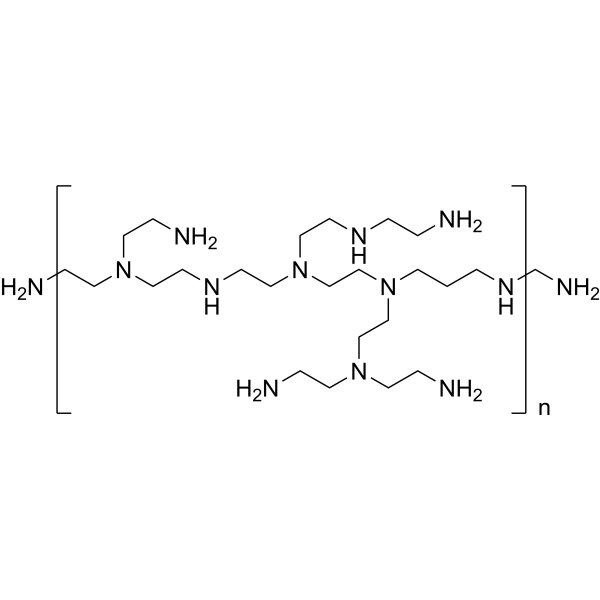
Polyethylenimine (branched) (30% in water) is a organic macromolecule with high cationic-charge-density potential. Polyethylenimine (branched) (30% in water) can ensnare DNA as well as attach to cell membrane. Polyethylenimine (branched) (30% in water) also retains a substantial buffering capacity at virtually any pH .
loading...
    loading...
8
8 Cited Publications
Cat. No.: HY-14818
CAS No.: 203120-17-6
Purity:  99.27%
Synonyms: R 125489
Target:  

Influenza Virus

Research Areas:  

Infection

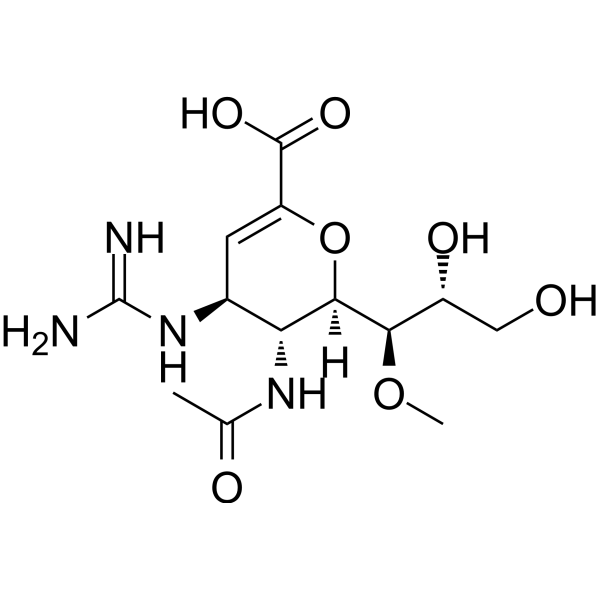
Laninamivir (R 125489) is a potent influenza neuraminidase (NA) inhibitor with IC50s of 0.90 nM, 1.83 nM and 3.12 nM for avian H12N5 NA (N5), pH1N1 N1 NA (p09N1) and A/RI/5+/1957 H2N2 N2 (p57N2), respectively [1].
loading...
    loading...
1
1 Cited Publications
Cat. No.: HY-132588
CAS No.: 1834610-13-7
Synonyms: ALN-G01
Lumasiran (ALN-G01), a siRNA product, reduces hepatic oxalate production by targeting glycolate oxidase. By silencing the gene encoding glycolate oxidase, Lumasiran depletes glycolate oxidase and thereby inhibits the synthesis of oxalate, which is the toxic metabolite that is directly associated with the clinical manifestations of Primary hyperoxaluria type 1 (PH1) [1] .
loading...
    loading...
1
1 Cited Publications
Cat. No.: HY-132613
CAS No.: 1834612-06-4
Purity:  99.21%
Lumasiran sodium, an investigational RNA interference (RNAi) therapeutic agent, reduces hepatic oxalate production by targeting glycolate oxidase. Lumasiran sodium reduces urinary oxalate excretion, the cause of progressive kidney failure in primary hyperoxaluria type 1 (PH1) [1] .
loading...
    loading...
1
1 Cited Publications
Cat. No.: HY-D1694
CAS No.: 1064123-31-4
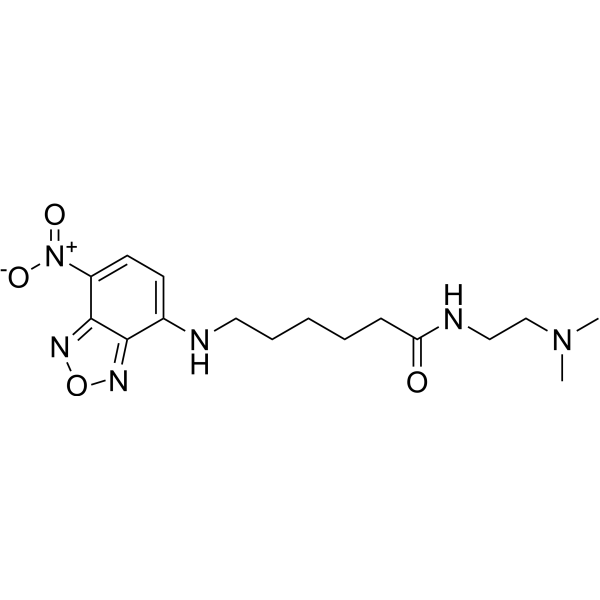
LysoTracker Yellow HCK 123 is a potent yellow membrane-permeable fluorescent probe. LysoTracker Yellow HCK 123 is a weakly basic amine that selectively accumulates in cellular compartments with low luminal pH .
loading...
    loading...
Cat. No.: HY-W134328
CAS No.: 87915-38-6
Synonyms: Dextran blue (MW 2000000)
Blue dextran (Dextran blue) (MW 2000000) is a high-molecular-weight long-chain polymer of D-glucose. Blue dextran (MW 2000000) serves as an important model macromolecular drug and molecular weight estimation marker, and can be used as a standard for gel permeation chromatography. The release of Blue dextran (MW 2000000) from alginate microspheres is regulated by preparation conditions; its release rate in a pH 6.8 environment is significantly faster than that in pH 1.2, and it exhibits release characteristics close to zero-order kinetics under this condition [1] .
loading...
    loading...
Cat. No.: HY-137873
CAS No.: 17833-43-1
Purity:  99.99%
Synonyms: 4-Methylumbelliferyl-α-D-Glucose; 4-Methylumbelliferyl-α-D-Glucoside; 4-MU-α-D-Glucopyranoside
Research Areas:  

Others

4-Methylumbelliferyl-α-D-Glucopyranoside (4-Methylumbelliferyl-α-D-Glucose) is a fluorescent substrate for α-glucosidase, which releases the fluorescent moiety 4-methylumbelliferyl (4-MU) upon cleavage. 4-MU has pH-dependent fluorescence excitation activity, with excitation wavelengths of 320 nm at low pH (1.97-6.72) and 360 nm at high pH (7.12-10.3), respectively. The emission wavelength of 4-Methylumbelliferyl-α-D-Glucopyranoside increases with decreasing pH, ranging from 445-455 nm. 4-Methylumbelliferyl-α-D-Glucopyranoside can be used as a biomarker for Fabry and Pompe diseases to quantify α-glucosidase activity in infant blood spot samples.
loading...
    loading...
Cat. No.: HY-D0219
CAS No.: 76-61-9
Synonyms: ThymolsulPHonePHthalein
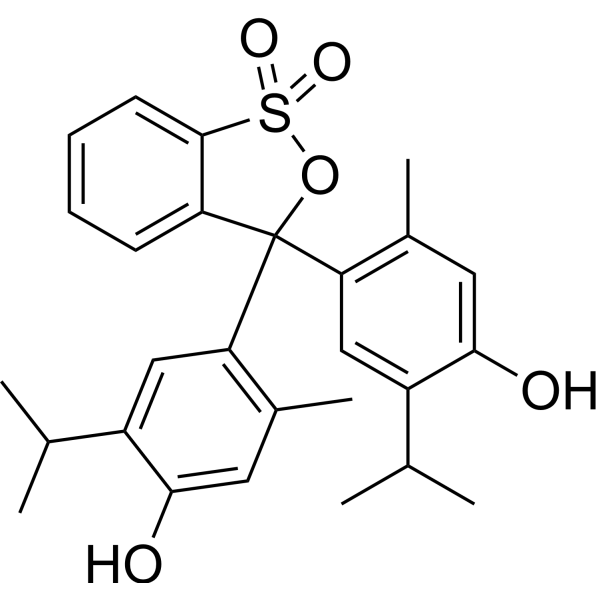
Thymol blue is a reversible pH indicator that responds to the pH of the solution through structural changes of protonation and deprotonation. Thymol blue is red (HI - form) under acidic conditions and blue (I 2- form) under alkaline conditions. Quantitative detection is achieved through the absorption peak shift (435 nm/596 nm) of the UV-visible spectrum. Thymol blue selectively responds to pH changes, changing from red to yellow at pH 1.2-2.8 and from yellow to blue at pH 8.0-9.6. Thymol blue can be fixed in a silica gel matrix through sol-gel technology to form a solid-state sensor for in-situ pH measurement in the marine environment and acid-base monitoring in the biomedical field[1][2].
loading...
    loading...
Cat. No.: HY-D1093
CAS No.: 126208-13-7
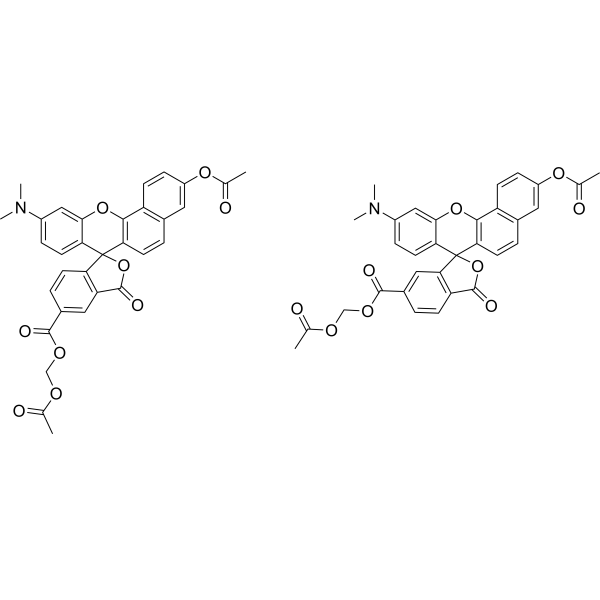
Carboxy SNARF-1, acetoxymethyl ester (5/6-mixture) is a fluorescent probe that is sensitive to pH. Carboxy SNARF-1, acetoxymethyl ester (5/6-mixture) can be used for measurement of intracellular pH .
loading...
    loading...
Cat. No.: HY-128369
CAS No.: 587-98-4
Purity:  ≥85.0%
Synonyms: Metanil Yellow
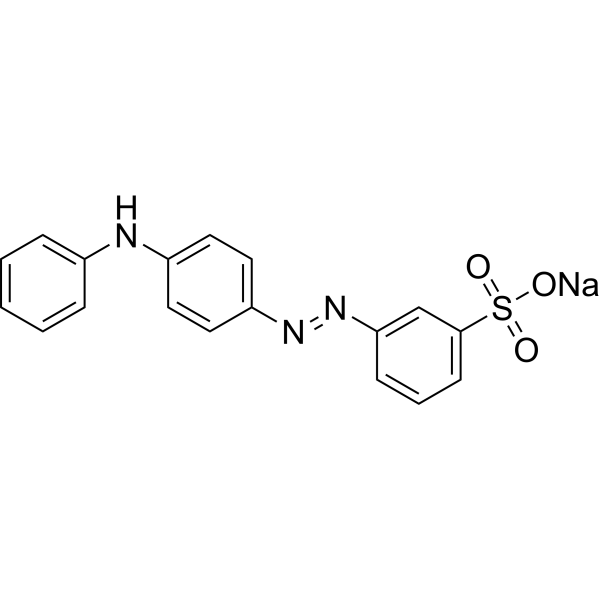
Acid Yellow 36 (Metanil Yellow) is an azo dye and a pH indicator. Acid Yellow 36 changes its color from red at pH 1.2 to yellow at pH 2.3. Acid Yellow 36 is used in the leather, paper and textile industries. Acid Yellow 36 acts as a bifunctional inducer of specific isozymes of P-450 and cytosolic enzymes [1] .
loading...
    loading...
Cat. No.: HY-113377
CAS No.: 28305-26-2
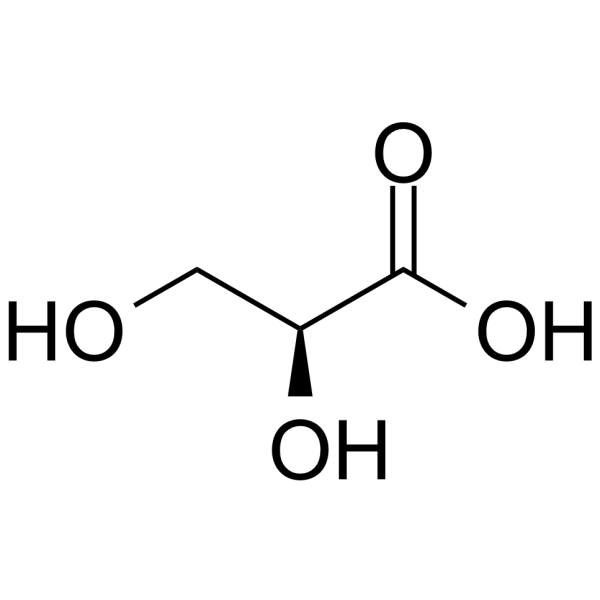
L-Glyceric acid is a mainly urinary metabolite accumulating in rare inherited metabolic disease L-glyceric aciduria. L-Glyceric acid can be used to diagnose primary hyperoxaluria type 2 (PH2). L-Glyceric acid excretion to distinguish PH1 from PH2 [1] .
loading...
    loading...
Cat. No.: HY-D0265
CAS No.: 125-20-2
Thymolphthalein is an electrochemically active dye due to the presence of thymol fragments. Thymolphthalein is a Phthalein dye used as an acid-base indicator. It is colourless in acid pH and is blue in basic pH .
loading...
    loading...
Cat. No.: HY-167545
CAS No.: 10015-88-0
Synonyms: POPE
1-Palmitoyl-2-oleoylphosphatidylethanolamine (POPE) is a PE-based synthetic phospholipid that can intercalate with other amphiphilic molecules to form stable bilayers at physiological pH. 1-Palmitoyl-2-oleoylphosphatidylethanolamine can be used in drug delivery research [1].
loading...
    loading...
Cat. No.: HY-148610
CAS No.: 893739-96-3
Target:  

Others

Research Areas:  

Metabolic Disease

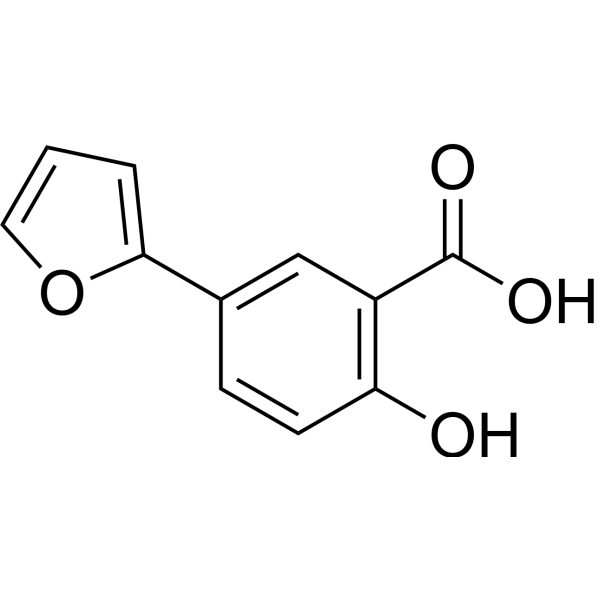
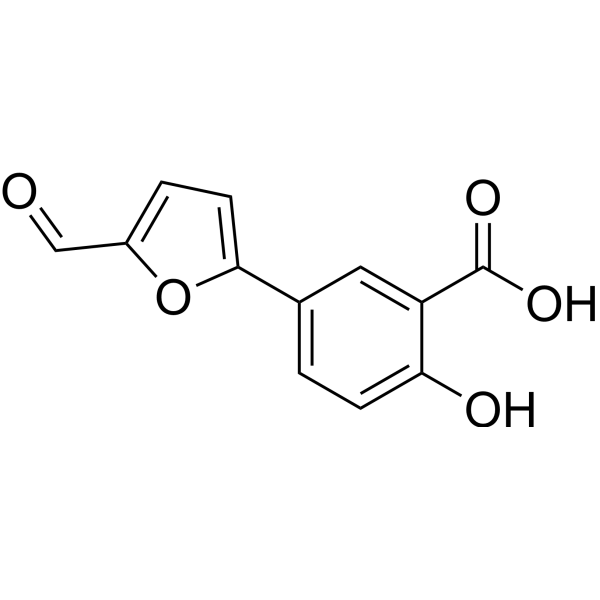
LDH-IN-2, a salicylic acid derivative, is an inhibitor of glycolate oxidase (GO). LDH-IN-2 decreases oxalate output in hyperoxaluric hepatocytes. LDH-IN-2 can be used for research of primary hyperoxaluria type 1 (PH1) [1].
loading...
    loading...
Cat. No.: HY-W193844
CAS No.: 455310-36-8
Synonyms: ZINC13684400
Target:  

GPR65

Research Areas:  

Inflammation/Immunology

MLS001006105 (ZINC13684400) is a GPR65 allosteric agonist. MLS001006105 displays GPR65 allosteric agonist activity at pH 8.40 but not at lower pH .
loading...
    loading...
Cat. No.: HY-D0219A
CAS No.: 62625-21-2
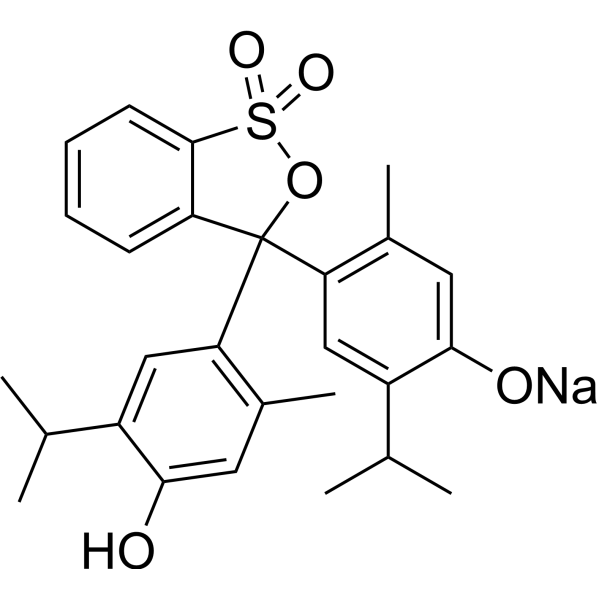
Thymol Blue sodium is an acid-base indicator used to indicate changes in pH. Thymol Blue sodium fades from red to yellow at pH 1.2 to 2.8 and from yellow to blue at pH 8.0 to 9.6. Quantitative detection is achieved through the absorption peak shift (435 nm/596 nm) of the UV-visible spectrum. Thymol blue sodium can be fixed in a silica gel matrix through sol-gel technology to form a solid-state sensor for in-situ pH measurement in the marine environment and acid-base monitoring in the biomedical field [1] .
loading...
    loading...
Cat. No.: HY-W176012
CAS No.: 330977-65-6
Target:  

Others

Research Areas:  

Metabolic Disease

Glycolate oxidase-IN-1(compound 26), a salicylic acid derivative, is a glycolate oxidase (GO) inhibitor with an IC50 of 38.2 μM. Glycolate oxidase-IN-1 has the ability to reduce oxalate production in hyperoxalate hepatocytes and can be used in the study of primary hyperoxaluria type 1 (PH1) [1].
loading...
    loading...
Cat. No.: HY-113377A
CAS No.: 146298-95-5
Purity:  ≥99.0%
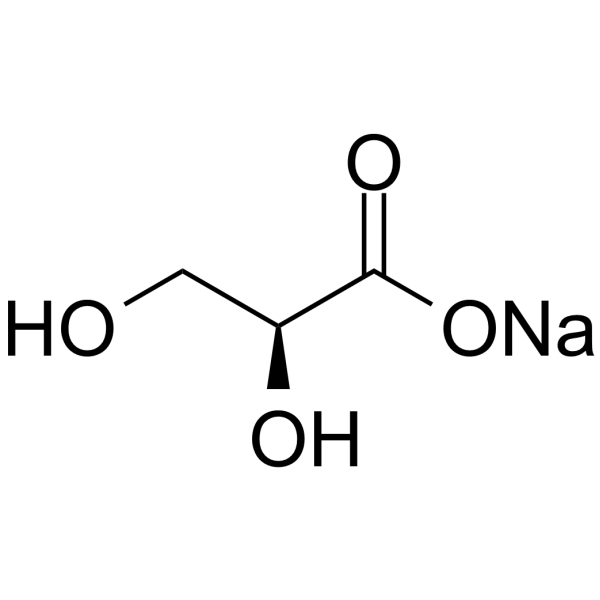
L-Glyceric acid sodium is a mainly urinary metabolite accumulating in rare inherited metabolic disease L-glyceric aciduria. L-Glyceric acid sodium can be used to diagnose primary hyperoxaluria type 2 (PH2). L-Glyceric acid sodium excretion to distinguish PH1 from PH2 [1] .
loading...
    loading...
Cat. No.: HY-W739372
CAS No.: 25704-18-1
Research Areas:  

Others

Poly (sodium 4-styrenesulfonate) is an anionic cation-exchange polyelectrolyte and metal ion binding/retention agent. It selectively retains Cr III and Fe II under pH 1 conditions, and its retention effect on all tested metal ions is enhanced under higher pH conditions. Poly (sodium 4-styrenesulfonate) inhibits nanosheet aggregation through edge-face interactions between aromatic rings and the graphite surface, thereby stabilizing the dispersion of reduced graphene oxide nanosheets. When incorporated into the mixed Nafion coating of bismuth film electrodes, Poly (sodium 4-styrenesulfonate) improves the reproducibility, stability, sensitivity, and anti-fouling capability for trace metal detection [1] .
loading...
    loading...
Cat. No.: HY-P82275
Synonyms: AGT; PH1; SPT; AGT1; SPAT; TLH6; AGXT1

Host:  

Rabbit

Application:  

WB

Reactivity:  

Mouse, Rat

loading...
    loading...

