11 Results for "

PS1/APP

" in MedChemExpress (MCE) Product Catalog:
Products (11)

11 Results for "PS1/APP" in MCE Product Catalog:

2
2 Cited Publications
Cat. No.: HY-N1414A
CAS No.: 76656-80-9
3′,6-Disinapoylsucrose is a type of oligosaccharide that's effective when taken orally, and it has antidepressant, anti-anxiety, and antioxidant properties. 3′,6-Disinapoylsucrose inhibits neuronal apoptosis by lowering the ratio of Bax to Bcl-2 in hippocampal neurons, and it enhances cognitive function in APP/PS1 transgenic mice by activating the CREB/BDNF signaling pathway .
loading...
    loading...
1
1 Cited Publications
Cat. No.: HY-P5381
CAS No.: 329902-61-6
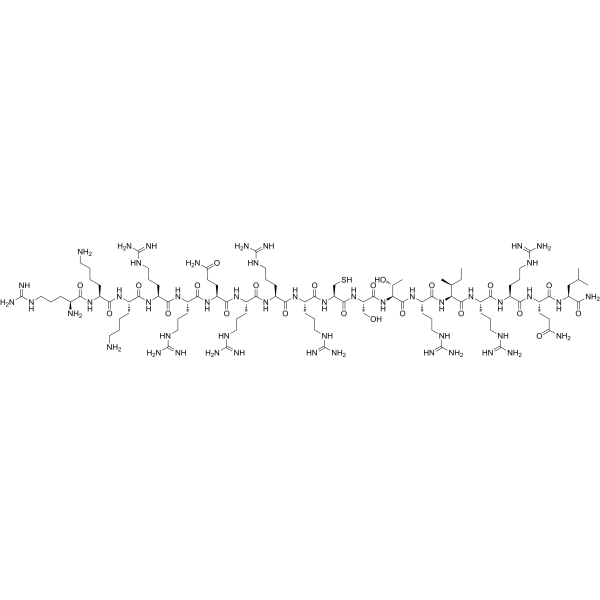
gp91 ds-tat, a biological active peptide, is a NADPH oxidase 2 (Nox2) inhibitor. gp91 ds-tat blocks NADPH oxidase-dependent superoxide production. gp91 ds-tat ameliorates high glucose-induced increase in total ROS, LPOs and iron levels. gp91 ds-tat inhibits homocysteine (Hcy)-induced activation of NLRP3 inflammasomes and restores Hcy-inhibited lysosomal TRPML1 channel activity. gp91 ds-tat improves cerebrovascular and cognitive function in APP/PS1 mice. gp91 ds-tat can be used for the study of Alzheimer’s disease (AD), glomerular inflammation and cardiovascular disease .
loading...
    loading...
1
1 Cited Publications
Cat. No.: HY-N3001
CAS No.: 957-66-4
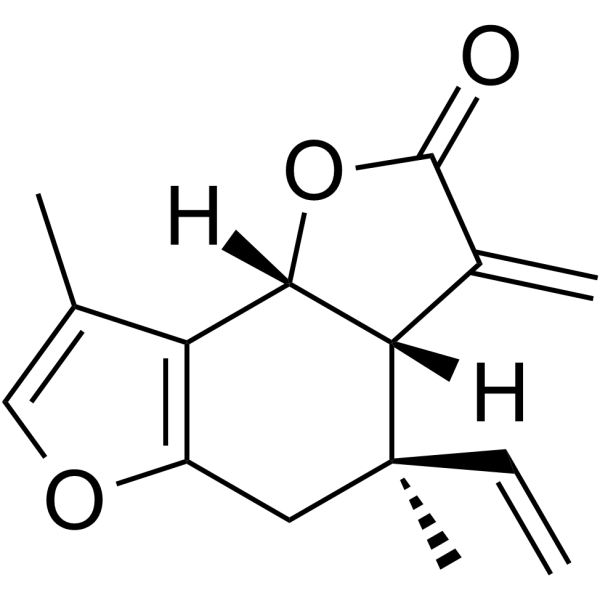
Isolinderalactone is a sesquiterpene that exhibits anti-cancer, anti-inflammatory, and neuroprotective effects. Isolinderalactone inhibits VEGF expression and tyrosine phosphorylation of VEGFR2. Isolinderalactone decreases viability and induces apoptosis in U-87 glioblastoma (GBM) cells and colorectal cancer (CRC) cells. Isolinderalactone induces G2/M phase cell cycle arrest, ROS generation, pJNK/p38 MAPK activation, in colorectal cancer (CRC) cells. Isolinderalactone blocks LPS (HY-D1056)-induced NF-κB activation while activating Nrf2-HMOX1 signaling in RAW264.7 macrophages. Isolinderalactone improves cognitive dysfunction in APP/PS1 mice. Isolinderalactone can be used for the study of Glioblastoma multiforme (GBM), colorectal cancer, Alzheimer’s disease and acute lung injury .
loading...
    loading...
Cat. No.: HY-50882
CAS No.: 851600-86-7
Target:  

γ-secretase

Research Areas:  

Neurological Disease

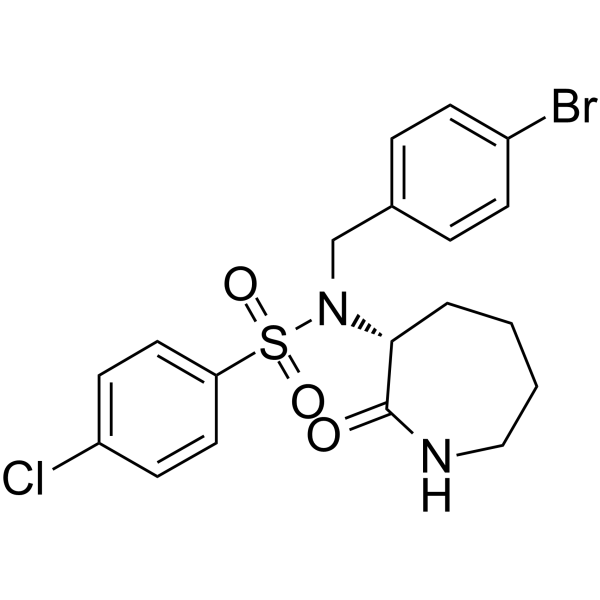
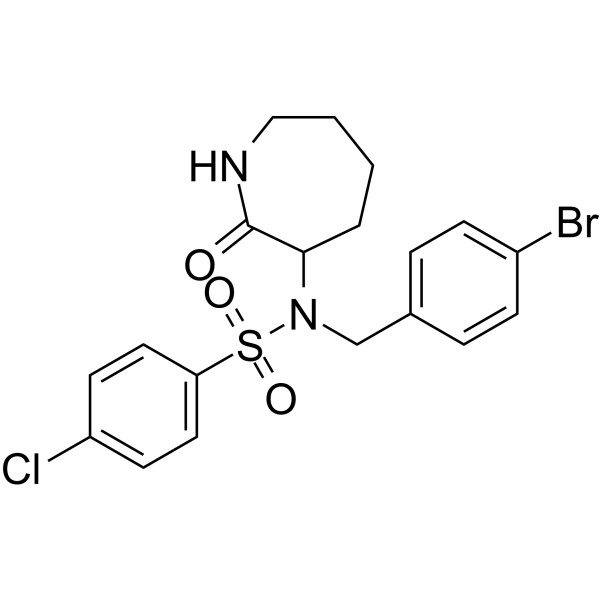
ELN318463 is an amyloid precursor protein (APP) selective γ-secretase inhibitor. ELN318463 shows differential inhibition of presenilin (PS1)- and PS2-comprised γ-secretase with EC50s of 12 nM and 656 nM for PS1 and PS2, respectively. ELN318463 is 51-fold more selective for PS1 .
loading...
    loading...
Cat. No.: HY-161723
CAS No.: 2358754-22-8
Research Areas:  

Neurological Disease

LH2-051, a lysosome-enhancing compound (LYEC), is a brain-penetrant dopamine transporter (DAT) inhibitor (Ki: 0.95 μM). LH2-051 inhibits DAT-mediated dopamine uptake with an IC50 of 3.0 μM. LH2-051 promotes nuclear translocation of TFEB and lysosome biogenesis. LH2-051 improves the memory of amyloid precursor protein (APP)/Presenilin 1 (PS1) mice. LH2-051 can be used for the study of Alzheimer’s disease .
loading...
    loading...
Cat. No.: HY-139973
CAS No.: 2140911-49-3
Purity:  99.21%
Target:  

Amyloid-β

Research Areas:  

Neurological Disease

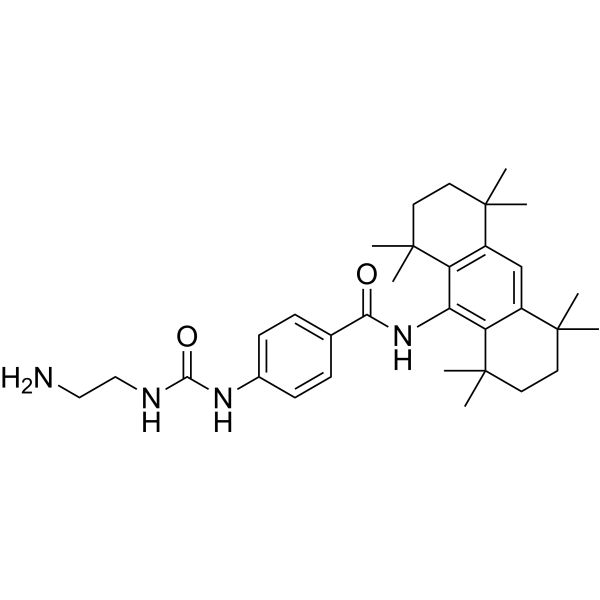
OAB-14, is a Bexarotene (HY-14171) derivative, improves Alzheimer's disease-related pathologies and cognitive impairments by increasing β-amyloid clearance in APP/PS1 mice. OAB-14 effectively ameliorates the dysfunction of the endosomal-autophagic-lysosomal pathway in APP/PS1 transgenic mice .
loading...
    loading...
Cat. No.: HY-50882A
CAS No.: 851599-82-1
Target:  

γ-secretase

Research Areas:  

Neurological Disease

ELN318463 racemate is the racemate of ELN318463. ELN318463 is an amyloid precursor protein (APP) selective γ-secretase inhibitor. ELN318463 shows differential inhibition of presenilin (PS1)- and PS2-comprised γ-secretase with EC50s of 12nM and 656 nM for PS1and PS2, respectively. ELN318463 is 51-fold more selective for PS1 .
loading...
    loading...
Cat. No.: HY-176271
CAS No.: 3069915-36-9
MAO-B-IN-45 is a dual inhibitor of ferroptosis and MAO-B. MAO-B-IN-45 shows selectivity towards MAO-B with an IC50 of 87.47 nM and selectivity exceeding 229-fold for MAO-B over MAO-A. MAO-B-IN-45 has excellent antiferroptosis activity through modulation of the iron metabolic pathway and GSH-GPX4 axis in vitro. MAO-B-IN-45 improves cognitive and behavioral impairments in 3×Tg (APP/Tau/Ps1) AD mouse and significantly reduced the levels of ferritin heavy chain 1 (FTH1), APP, and Tau phosphorylation (p-Tau) proteins in the brain.
loading...
    loading...
Cat. No.: HY-118243
CAS No.: 1089681-42-4
Target:  

Amyloid-β

Research Areas:  

Others

KMS88009 is a potent small molecule that directly interferes with the formation of amyloid-β oligomers, thereby preserving cognitive behavior when used preventively and reversing cognitive behavior decline when used therapeutically. Oral administration of KMS88009 around the onset of Alzheimer's disease symptoms significantly reduced the assembly of amyloid-β oligomers and improved cognitive behavior in the APP/PS1 double transgenic mouse model. This unique dual mode of action suggests that KMS88009 may be a powerful therapeutic candidate for the treatment of Alzheimer's disease. In an evaluation, the physicochemical properties, pharmacokinetics and toxicity of this anti-amyloidogenic small molecule KMS88009 were studied, as well as post-mortem analysis of APP/PS1 TG mice after behavioral testing.
loading...
    loading...
Cat. No.: HY-161953
Target:  

OGA

Research Areas:  

Neurological Disease

O-GlcNAcase-IN-2 (compound 81) is an orally effective, blood-brain barrier-permeable OGA inhibitor (IC50=4.93 nM). O-GlcNAcase-IN-2 can increase the O-GlcNAcylation level of proteins and phosphorylation of tau (p-Ser199, p-Thr205 and p-Ser396) in the OA-damaged SH-SY5Y cell model. O-GlcNAcase-IN-2 can also improve cognitive impairment in APP/PS1 mice and has potential anti-Alzheimer's disease (AD) effects .
loading...
    loading...
Cat. No.: HY-182367
Target:  

GPR39

Research Areas:  

Neurological Disease

TMN-OMe is a blood-brain barrier-permeable GPR39 agonist and a radiotracer for positron emission tomography (PET). TMN-OMe activates GPR39 by recruiting β-arrestin, exhibits highly selective binding ability in the mouse brain, and enables quantitative analysis of GPR39 at the in vivo level. TMN-OMe shows specific uptake in GPR39 knockout mice, Alzheimer's disease model (APP/PS1) mice, and blocking experiments. TMN-OMe facilitates in-depth exploration of changes in GPR39-related mechanisms in neurological diseases and is widely used in Alzheimer's disease research .
loading...
    loading...
  • 1

