
1. Search Result
Search Result
Results for "

Phosphocreatine

" in MedChemExpress (MCE) Product Catalog:

18

Inhibitors & Agonists

10

Natural
Products

4

Isotope-Labeled Compounds

Cat. No. 상품명 Target 연구분야 Chemical Structure
  • HY-W015828
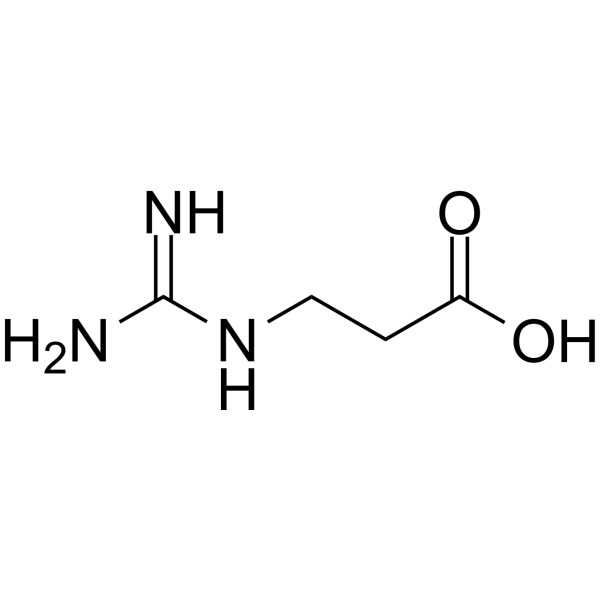
    Ompenaclid
    Maximum Cited Publications
    6 Publications Verification

    RGX-202; 3-Guanidinopropionic acid

    Apoptosis Endogenous Metabolite Cancer
    Ompenaclid (RGX-202) is an oral small-molecule SLC6A8 transporter inhibitor. Ompenaclid robustly inhibits creatine import in vitro and in vivo, reduces intracellular phosphocreatine and ATP levels, and induces tumor apoptosis. Ompenaclid can be used for the research of cancer and duchenne muscular dystrophy .
    Ompenaclid
  • HY-D0885
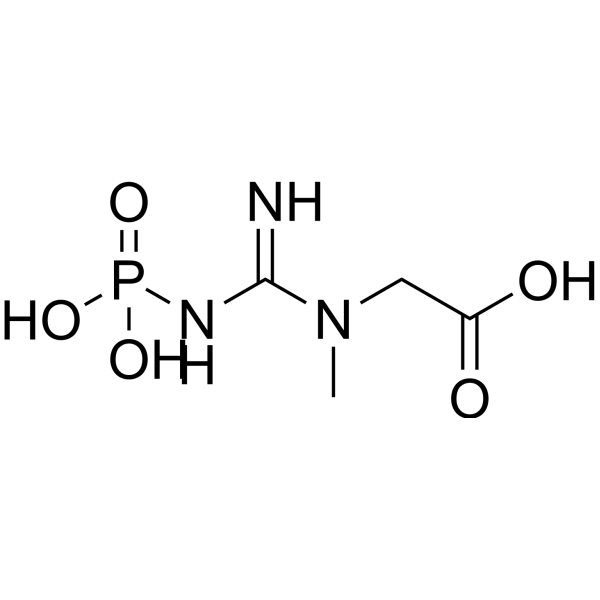
    Phosphocreatine
    3 Publications Verification

    Creatine phosphate; Creatinephosphoric acid

    Endogenous Metabolite MAP3K Akt Mitochondrial Metabolism ERK Apoptosis ROS Kinase Metabolic Disease
    Phosphocreatine (creatine phosphate) is an organic compound found in vertebrate skeletal muscles. Phosphocreatine enhances antioxidant activity, and activates the TAK1 pathway to protect the heart. Phosphocreatine normalizing mitochondrial function and reducing oxidative stress via Akt mediated Nrf2/HO-1 pathway. Phosphocreatine provides renal protection by suppressing Apoptosis and ROS (Reactive Oxygen Species) generation through ERK mediated mediated Nrf-2/HO-1 pathway. .
    Phosphocreatine
  • HY-D0885B
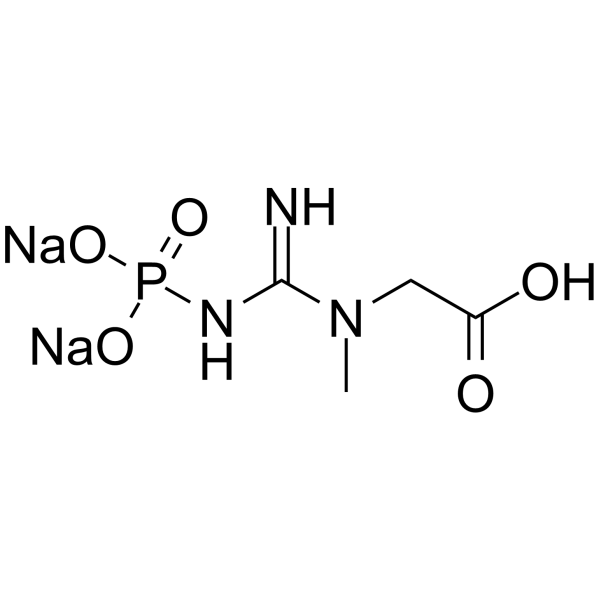
    Phosphocreatine disodium
    3 Publications Verification

    Disodium creatine phosphate

    Endogenous Metabolite MAP3K Akt Mitochondrial Metabolism ERK Apoptosis ROS Kinase Metabolic Disease
    Phosphocreatine (disodium) is an organic compound found in vertebrate skeletal muscles. Phosphocreatine (disodium) enhances antioxidant activity, and activates the TAK1 pathway to protect the heart. Phosphocreatine (disodium) normalizing mitochondrial function and reducing oxidative stress via Akt mediated Nrf2/HO-1 pathway. Phosphocreatine (disodium) provides renal protection by suppressing Apoptosis and ROS (Reactive Oxygen Species) generation through ERK mediated mediated Nrf-2/HO-1 pathway. .
    Phosphocreatine disodium
  • HY-B0504S
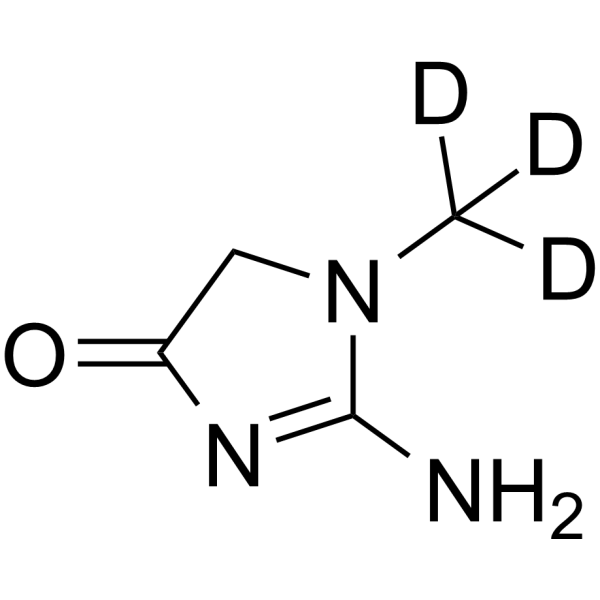
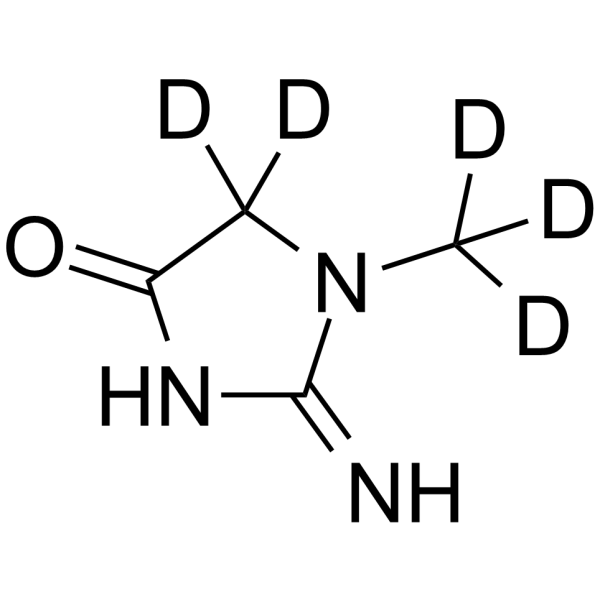
    Creatinine-d3
    5 Publications Verification

    NSC13123-d3

    Isotope-Labeled Compounds Endogenous Metabolite iGluR GABA Receptor Metabolic Disease Cancer
    Creatinine-d3 is a deuterium labeled Creatinine. Creatinine (NSC13123) is an orally active, blood-brain barrier-permeable modulator of GABAA and NMDA receptors, with activities of antioxidation and metabolic regulation. Creatinine is generated via non-enzymatic conversion of creatine and phosphocreatine in muscle. Creatinine serum levels correlate with muscle mass, glomerular filtration rate, and extrarenal clearance, serving as an evaluation biomarker for renal function, muscle mass, and clinical outcomes, and used for perioperative renal risk assessment. In addition, Creatinine can induce specific Cryptococcus species to produce creatinine deiminase and act as their nitrogen source, while it can be secreted via renal tubules. Creatinine is widely used in research related to various diseases such as neurodegenerative diseases, psychiatric disorders, acute kidney injury, chronic kidney disease, and renal failure .
    Creatinine-d3
  • HY-B0504
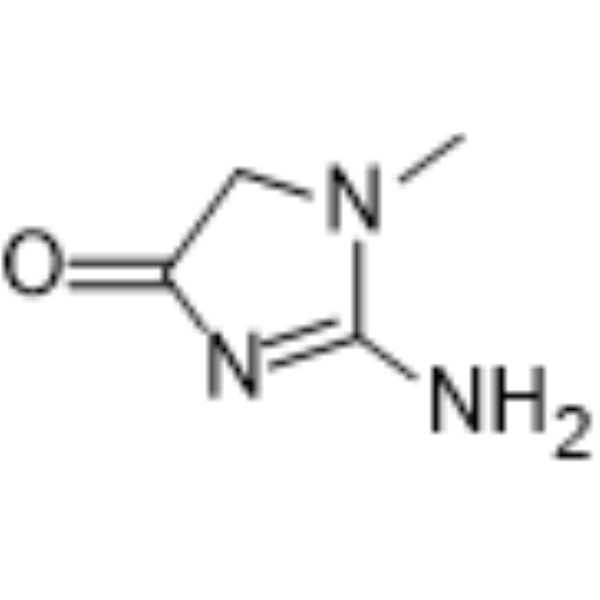
    Creatinine
    Maximum Cited Publications
    6 Publications Verification

    NSC13123

    Endogenous Metabolite GABA Receptor iGluR Infection Neurological Disease Metabolic Disease Cancer
    Creatinine (NSC13123) is an orally active, blood-brain barrier-permeable modulator of GABAA and NMDA receptors, with activities of antioxidation and metabolic regulation. Creatinine is generated via non-enzymatic conversion of creatine and phosphocreatine in muscle. Creatinine serum levels correlate with muscle mass, glomerular filtration rate, and extrarenal clearance, serving as an evaluation biomarker for renal function, muscle mass, and clinical outcomes, and used for perioperative renal risk assessment. In addition, Creatinine can induce specific Cryptococcus species to produce creatinine deiminase and act as their nitrogen source, while it can be secreted via renal tubules. Creatinine is widely used in research related to various diseases such as neurodegenerative diseases, psychiatric disorders, acute kidney injury, chronic kidney disease, and renal failure .
    Creatinine
  • HY-B0504S2

    NSC13123-d5

    Isotope-Labeled Compounds Endogenous Metabolite iGluR GABA Receptor Metabolic Disease
    Creatinine-d5 is the deuterium labeled Creatinine. Creatinine (NSC13123) is an orally active, blood-brain barrier-permeable modulator of GABAA and NMDA receptors, with activities of antioxidation and metabolic regulation. Creatinine is generated via non-enzymatic conversion of creatine and phosphocreatine in muscle. Creatinine serum levels correlate with muscle mass, glomerular filtration rate, and extrarenal clearance, serving as an evaluation biomarker for renal function, muscle mass, and clinical outcomes, and used for perioperative renal risk assessment. In addition, Creatinine can induce specific Cryptococcus species to produce creatinine deiminase and act as their nitrogen source, while it can be secreted via renal tubules. Creatinine is widely used in research related to various diseases such as neurodegenerative diseases, psychiatric disorders, acute kidney injury, chronic kidney disease, and renal failure .
    Creatinine-d5
  • HY-P2799
    Creatine phosphokinase, Rabbit muscle
    1 Publications Verification

    CPK

    Endogenous Metabolite Metabolic Disease Cancer
    Creatine phosphokinase, Rabbit muscle (CPK) catalyzes the reversible reaction of creatine and ATP to form phosphocreatine and ADP. Creatine phosphokinase is a key enzyme for maintaining a constant ATP/ADP ratio during rapid energy turnover .
    Creatine phosphokinase, Rabbit muscle
  • HY-D0885D
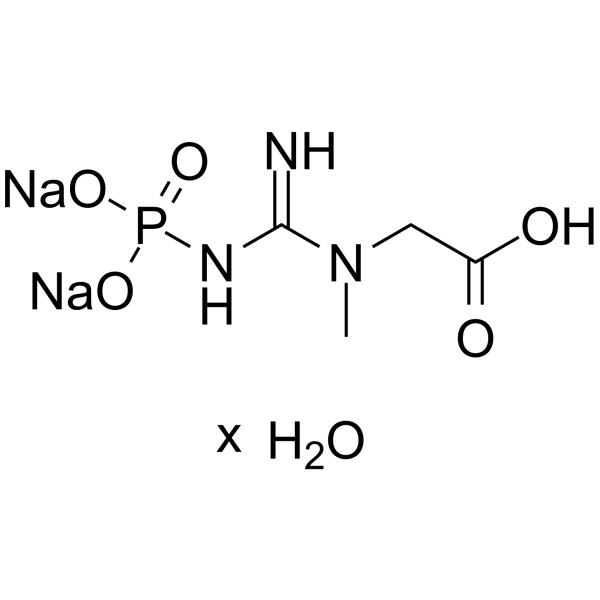
    Phosphocreatine disodium hydrate
    3 Publications Verification

    Endogenous Metabolite MAP3K Akt Mitochondrial Metabolism ERK Apoptosis ROS Kinase Metabolic Disease
    Phosphocreatine (disodium hydrate) is an organic compound found in vertebrate skeletal muscles. Phosphocreatine (disodium hydrate) enhances antioxidant activity, and activates the TAK1 pathway to protect the heart. Phosphocreatine (disodium hydrate) normalizing mitochondrial function and reducing oxidative stress via Akt mediated Nrf2/HO-1 pathway. Phosphocreatine (disodium hydrate) Phosphocreatine (disodium hydrate) provides renal protection by suppressing Apoptosis and ROS (Reactive Oxygen Species) generation through ERK mediated mediated Nrf-2/HO-1 pathway. .
    Phosphocreatine disodium hydrate
  • HY-B0504R

    NSC13123 (Standard)

    Reference Standards Endogenous Metabolite iGluR GABA Receptor Metabolic Disease Cancer
    Creatinine (Standard) is the analytical standard of Creatinine. This product is intended for research and analytical applications. Creatinine (NSC13123) is an orally active, blood-brain barrier-permeable modulator of GABAA and NMDA receptors, with activities of antioxidation and metabolic regulation. Creatinine is generated via non-enzymatic conversion of creatine and phosphocreatine in muscle. Creatinine serum levels correlate with muscle mass, glomerular filtration rate, and extrarenal clearance, serving as an evaluation biomarker for renal function, muscle mass, and clinical outcomes, and used for perioperative renal risk assessment. In addition, Creatinine can induce specific Cryptococcus species to produce creatinine deiminase and act as their nitrogen source, while it can be secreted via renal tubules. Creatinine is widely used in research related to various diseases such as neurodegenerative diseases, psychiatric disorders, acute kidney injury, chronic kidney disease, and renal failure .
    Creatinine (Standard)
  • HY-D0885A

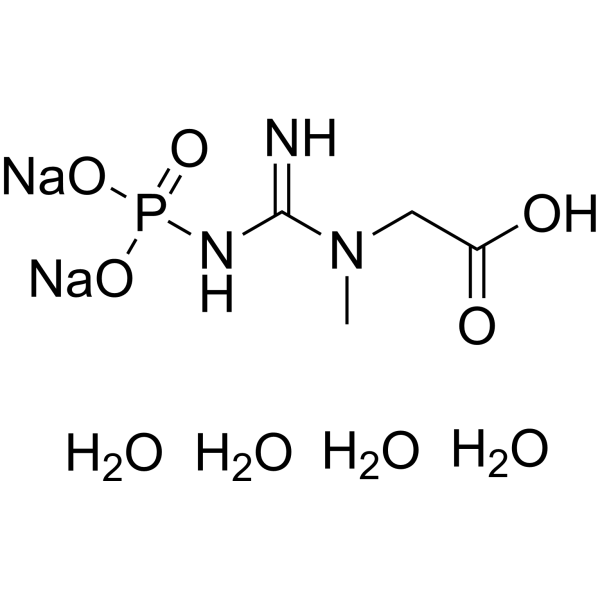
    Creatine phosphate disodium tetrahydrate; Creatinephosphoric acid disodium tetrahydrate

    Endogenous Metabolite Metabolic Disease
    Phosphocreatine disodium tetrahydrate, primarily found in the skeletal muscles of vertebrates and one of organic compounds known as alpha amino acids and derivatives, is a substrate for the determination of creatine kinase and used to regenerate ATP during skeletal muscle contraction .
    Sodium creatine phosphate dibasic tetrahydrate
  • HY-P2799A
    Creatine Kinase (CPK/CK), Bovine Heart
    1 Publications Verification

    CK, CPK, Creatine Phosphokinase

    Endogenous Metabolite Creatine Kinase Cardiovascular Disease
    Creatine Kinase (CPK/CK), Bovine Heart (CK) is a creatine kinase derived from bovine heart. Creatine Kinase (CPK/CK), Bovine Heart catalyzes the reversible phosphate transfer reaction between phosphocreatine and ADP, and is widely used in myocardial energy metabolism research and quality control of clinical biochemical tests .
    Creatine Kinase (CPK/CK), Bovine Heart
  • HY-B0504S1

    NSC13123-13C

    Isotope-Labeled Compounds Endogenous Metabolite iGluR GABA Receptor Metabolic Disease
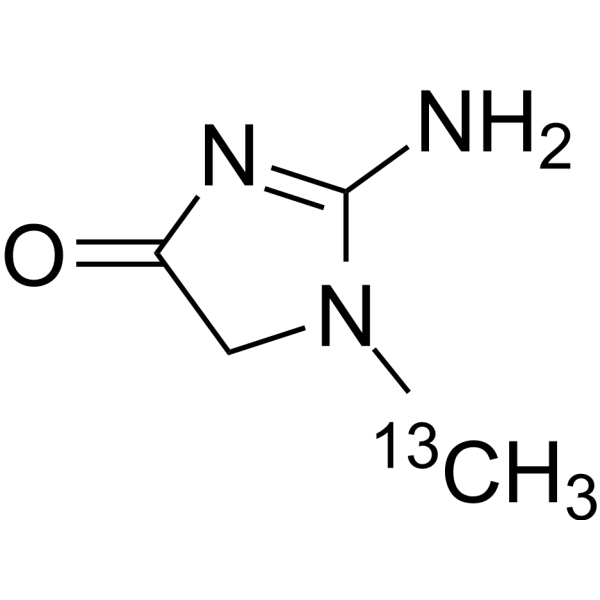
    Creatinine- 13C is the 13C-labeled Creatinine. Creatinine (NSC13123) is an orally active, blood-brain barrier-permeable modulator of GABAA and NMDA receptors, with activities of antioxidation and metabolic regulation. Creatinine is generated via non-enzymatic conversion of creatine and phosphocreatine in muscle. Creatinine serum levels correlate with muscle mass, glomerular filtration rate, and extrarenal clearance, serving as an evaluation biomarker for renal function, muscle mass, and clinical outcomes, and used for perioperative renal risk assessment. In addition, Creatinine can induce specific Cryptococcus species to produce creatinine deiminase and act as their nitrogen source, while it can be secreted via renal tubules. Creatinine is widely used in research related to various diseases such as neurodegenerative diseases, psychiatric disorders, acute kidney injury, chronic kidney disease, and renal failure .
    Creatinine-13C
  • HY-D0885C

    Creatine phosphate dipotassium; Creatinephosphoric acid dipotassium

    Endogenous Metabolite MAP3K Akt Mitochondrial Metabolism ERK Apoptosis ROS Kinase Metabolic Disease
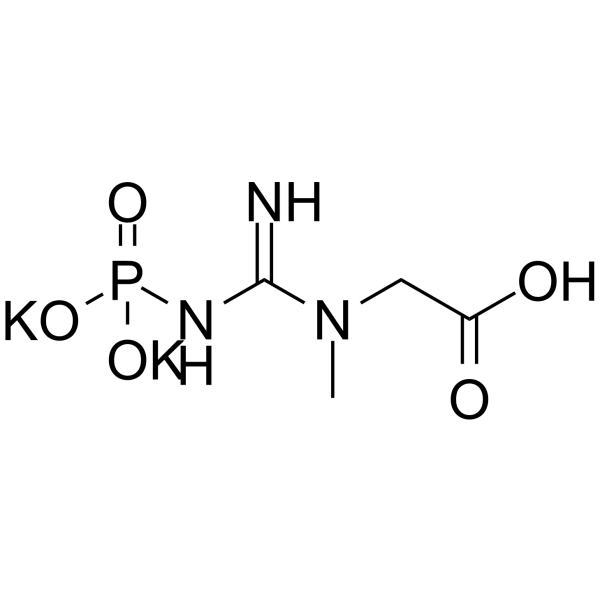
    Phosphocreatine (creatine phosphate) is an organic compound found in vertebrate skeletal muscles. Phosphocreatine enhances antioxidant activity, and activates the TAK1 pathway to protect the heart. Phosphocreatine normalizing mitochondrial function and reducing oxidative stress via Akt mediated Nrf2/HO-1 pathway. Phosphocreatine provides renal protection by suppressing Apoptosis and ROS (Reactive Oxygen Species) generation through ERK mediated mediated Nrf-2/HO-1 pathway. .
    Phosphocreatine dipotassium
  • HY-B0504S5

    NSC13123-15N

    Isotope-Labeled Compounds Endogenous Metabolite iGluR GABA Receptor Metabolic Disease Cancer
    Creatinine- 15N (NSC13123- 15N) is the 15N-labeled Creatinine (HY-B0504). Creatinine (NSC13123) is an orally active, blood-brain barrier-permeable modulator of GABAA and NMDA receptors, with activities of antioxidation and metabolic regulation. Creatinine is generated via non-enzymatic conversion of creatine and phosphocreatine in muscle. Creatinine serum levels correlate with muscle mass, glomerular filtration rate, and extrarenal clearance, serving as an evaluation biomarker for renal function, muscle mass, and clinical outcomes, and used for perioperative renal risk assessment. In addition, Creatinine can induce specific Cryptococcus species to produce creatinine deiminase and act as their nitrogen source, while it can be secreted via renal tubules. Creatinine is widely used in research related to various diseases such as neurodegenerative diseases, psychiatric disorders, acute kidney injury, chronic kidney disease, and renal failure .
    Creatinine-15N
  • HY-W015828R

    RGX-202 (Standard); 3-Guanidinopropionic acid (Standard)

    Reference Standards Apoptosis Endogenous Metabolite Cancer
    Ompenaclid (RGX-202) is an oral small-molecule SLC6A8 transporter inhibitor. Ompenaclid robustly inhibits creatine import in vitro and in vivo, reduces intracellular phosphocreatine and ATP levels, and induces tumor apoptosis. Ompenaclid can be used for the research of cancer and duchenne muscular dystrophy .
    Ompenaclid (Standard)
  • HY-D0885BR

    Disodium creatine phosphate (Standard)

    Endogenous Metabolite MAP3K Akt Mitochondrial Metabolism ERK Apoptosis ROS Kinase Reference Standards Metabolic Disease
    Phosphocreatine (disodium) (Standard) is the analytical standard of Phosphocreatine (disodium). This product is intended for research and analytical applications. Phosphocreatine (disodium) is an organic compound found in vertebrate skeletal muscles. Phosphocreatine (disodium) enhances antioxidant activity, and activates the TAK1 pathway to protect the heart. Phosphocreatine (disodium) normalizing mitochondrial function and reducing oxidative stress via Akt mediated Nrf2/HO-1 pathway. Phosphocreatine (disodium) provides renal protection by suppressing Apoptosis and ROS (Reactive Oxygen Species) generation through ERK mediated mediated Nrf-2/HO-1 pathway. .
    Phosphocreatine disodium (Standard)
  • HY-E70969

    Creatine Kinase Metabolic Disease
    Creatine Kinase, Porcine (EC 2.7.3.2) is an enzyme present in muscle, brain, and other tissues of vertebrates that catalyzes the reversible conversion of ADP and phosphocreatine into ATP and creatine.
    Creatine Kinase, Porcine
  • HY-148150A

    Creatine Kinase Cardiovascular Disease Inflammation/Immunology Cancer
    Cyclocreatine phosphate dilithium is a synthetic intracellular energy buffer. Cyclocreatine phosphate dilithium mediates antiproliferative activity in cells with high creatine kinase levels and inhibits solid tumor growth. Cyclocreatine phosphate dilithium maintains adenosine triphosphate (ATP) levels and protects tissues from hypoxia, cellular damage and inflammation during ischemic events. Cyclocreatine phosphate dilithium accumulates in skeletal muscle, reduces muscle phosphocreatine and total creatine levels, and acts both as a bioenergetic/anti-inflammatory agent and an experimental tool for the assessment of ischemic injury. Cyclocreatine phosphate dilithium can be used in studies related to solid tumors, heart failure and ischemia .
    Cyclocreatine phosphate dilithium

온라인 문의

Your information is safe with us. * Required Fields.

호칭


Country or Region *

고객명 *


회사명 *

Department *


메일주소 *


상품명 *

Cat. No.


Requested quantity *

전화번호 *


비고

온라인 문의

Inquiry Information

상품명:
Cat. No.:
수량:
MCE Japan Authorized Agent:

