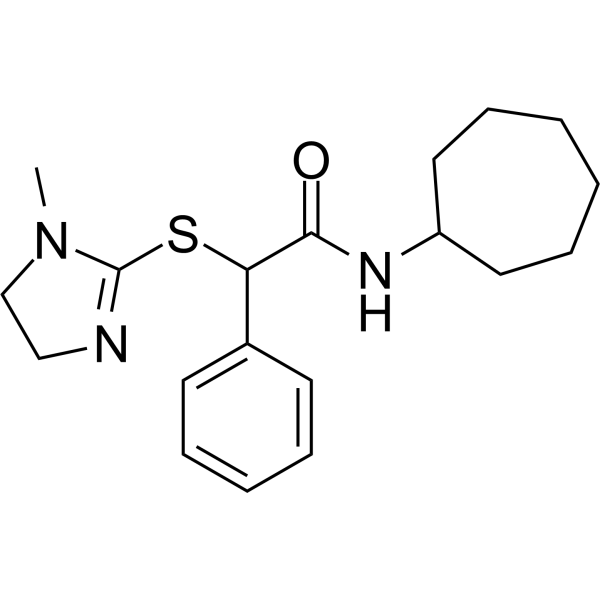
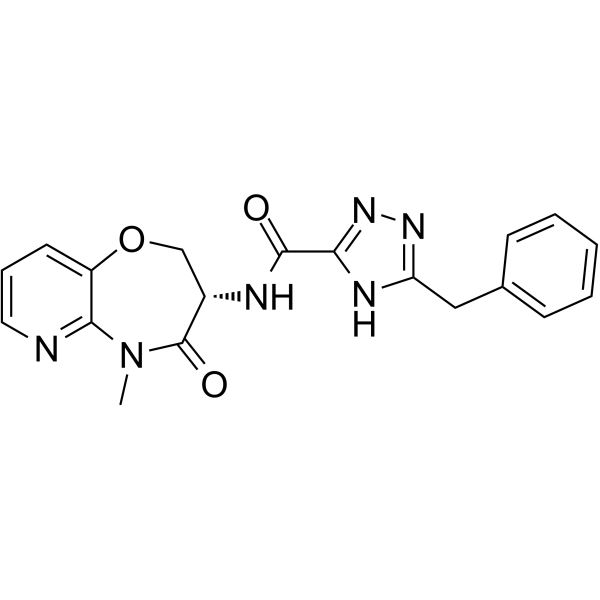
1. Search Result
Search Result
Results for "

RIPK inhibitor

" in MedChemExpress (MCE) Product Catalog:

126

Inhibitors & Agonists

1

Peptides

6

Natural
Products

1

Isotope-Labeled Compounds

Targets Recommended:
Cat. No. Nombre del producto Target Áreas de investigación Chemical Structure
  • HY-14622A
    Necrostatin 2 racemate
    25+ Cited Publications

    Necrostatin 1S; Nec-1S; 7-Cl-O-Nec1

    RIP kinase Cancer
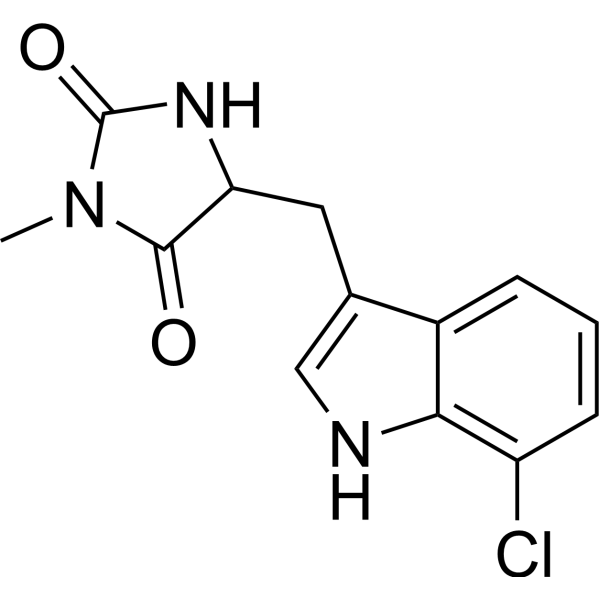
    Necrostatin 2 racemate (Nec-1S), the Necrostatin-1 (HY-15760) stable, is a potent and specific RIPK1 inhibitor lacking the IDO-targeting effect .
    Necrostatin 2 racemate
  • HY-101872
    GSK-872
    Maximum Cited Publications
    100 Publications Verification

    RIP kinase Inflammation/Immunology
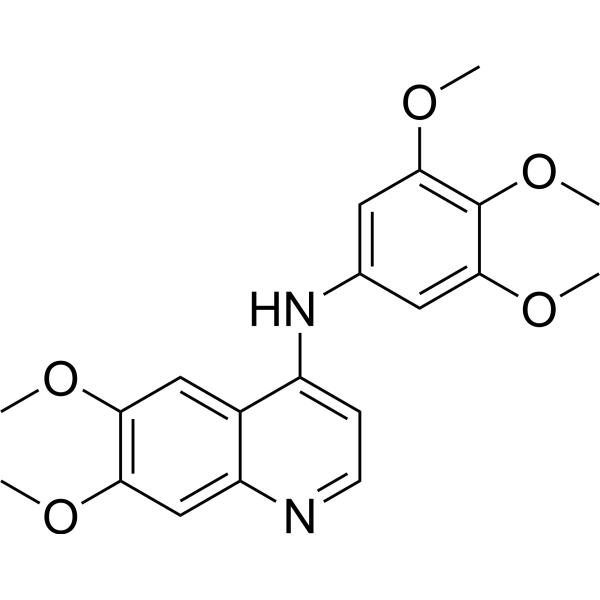
    GSK-872 is a RIPK3 inhibitor, which binds RIP3 kinase domain with an IC50 of 1.8 nM, and inhibits kinase activity with an IC50 of 1.3 nM. GSK-872 decreases the RIPK3-mediated necroptosis and subsequent cytoplasmic translocation and expression of HMGB1, as well as ameliorates brain edema and neurological deficits in early brain injury .
    GSK-872
  • HY-N2909

    NF-κB RIP kinase Mixed Lineage Kinase Cardiovascular Disease Neurological Disease Inflammation/Immunology
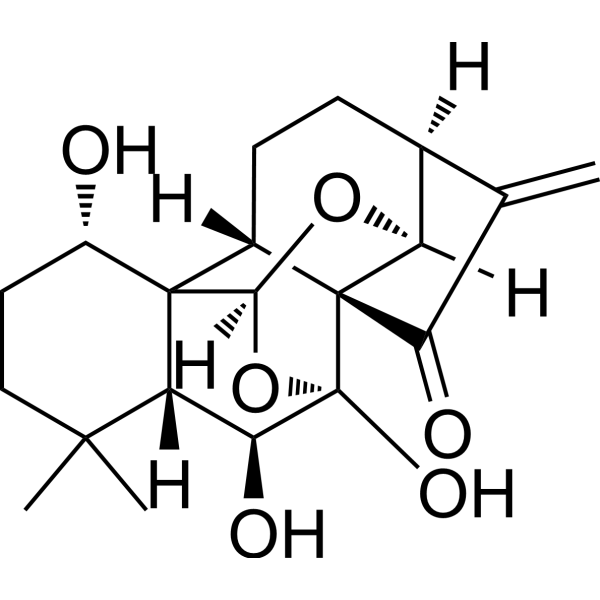
    Aurantiamide is a non-covalent, orally active, blood-brain-permeable GRPR selective antagonist with anti-inflammatory and neuroprotective effects. Aurantiamide reduces inflammation and oxidative stress in renal tissue by inhibiting GRPR-mediated renal necrosis pathways (such as RIPK3/MLKL signaling) and NF-κB inflammatory pathways, exerting anti-acute kidney injury and endothelial function activities. Aurantiamide also inhibits the M1 polarization of microglia and inhibits NLRP3 activation, thereby improving AD mouse models. Aurantiamide has in vivo inhibitory efficacy in acute kidney injury models such as ischemia/reperfusion, sepsis, and hypertension models .
    Aurantiamide
  • HY-101872A
    GSK-872 hydrochloride
    Maximum Cited Publications
    100 Publications Verification

    RIP kinase Inflammation/Immunology
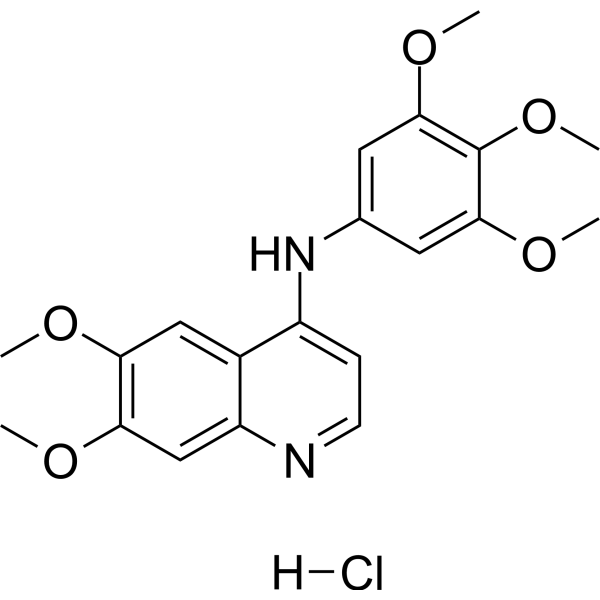
    GSK-872 hydrochloride is a RIPK3 inhibitor, which binds RIP3 kinase domain with an IC50 of 1.8 nM, and inhibits kinase activity with an IC50 of 1.3 nM. GSK-872 hydrochloride decreases the RIPK3-mediated necroptosis and subsequent cytoplasmic translocation and expression of HMGB1, as well as ameliorates brain edema and neurological deficits in early brain injury .
    GSK-872 hydrochloride
  • HY-114371

    DNL-758; SAR-443122

    RIP kinase Inflammation/Immunology
    Eclitasertib (DNL-758) is a potent receptor-interacting protein kinase 1 (RIPK1) inhibitor with an IC50 of 0.0375 µΜ .
    Eclitasertib
  • HY-114492

    GSK'547

    RIP kinase Cancer
    GSK547 (GSK'547) is a highly selective and potent inhibitor of receptor-interacting serine/threonine protein kinase 1 (RIPK1), inhibits macrophage-mediated adaptive immune tolerance in pancreatic cancer .
    GSK547
  • HY-111866
    PROTAC RIPK degrader-2
    1 Publications Verification

    PROTACs RIP kinase Metabolic Disease Cancer
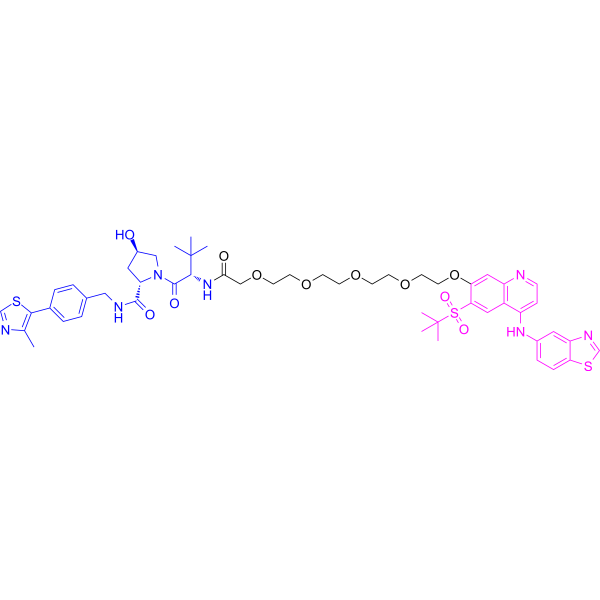
    PROTAC RIPK degraders -2 is a non-peptide PROTAC based on von Hippel-Lindau and targets serine-threonine kinase RIPK2, which is highly selective to the degradation of RIPK2. PROTAC RIPK degrader-2 acts as an activator to increase cell death and activate ion channels in cancer cells. PROTAC RIPK degrader-2 also can inhibit protein interactions, such as receptors and ligands, involved in a variety of diseases, such as cancer and diabetes .
    PROTAC RIPK degrader-2
  • HY-N0546
    Ligustroflavone
    2 Publications Verification

    Nuezhenoside

    CaSR RIP kinase Mixed Lineage Kinase TGF-beta/Smad Cardiovascular Disease Neurological Disease Metabolic Disease Endocrinology
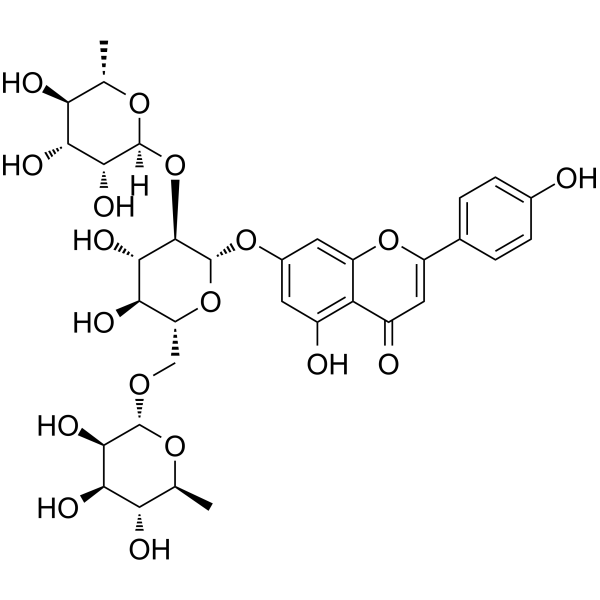
    Ligustroflavone is an orally active flavonoid compound. Ligustroflavone can be extracted from Ligustrum lucidum. Ligustroflavone antagonizes the calcium-sensing receptor (CaSR), inhibits the RIPK1/RIPK3/MLKL pathway, and downregulates TGF-β/Smad signaling. Ligustroflavone regulates calcium metabolism, protects bone tissue, reduces cerebral ischemic injury, and inhibits liver fibrosis. Ligustroflavone can be used in the study of diabetic osteoporosis, ischemic stroke, and liver fibrosis .
    Ligustroflavone
  • HY-18937
    WEHI-345
    3 Publications Verification

    RIP kinase Cancer
    WEHI-345 is a potent and selective RIPK2 kinase inhibitor with an IC50 of 0.13 μM, which delays RIPK2 ubiquitylation and NF-κB activation on oligomerization domain (NOD) stimulation .
    WEHI-345
  • HY-148297

    LY3871801; R 552

    RIP kinase Inflammation/Immunology
    Ocadusertib is a potent Serine/Threonine kinase receptor-interacting protein kinase 1 (RIPK1) inhibitor .
    Ocadusertib
  • HY-14622
    Necrostatin 2
    10+ Cited Publications

    RIP kinase Cancer
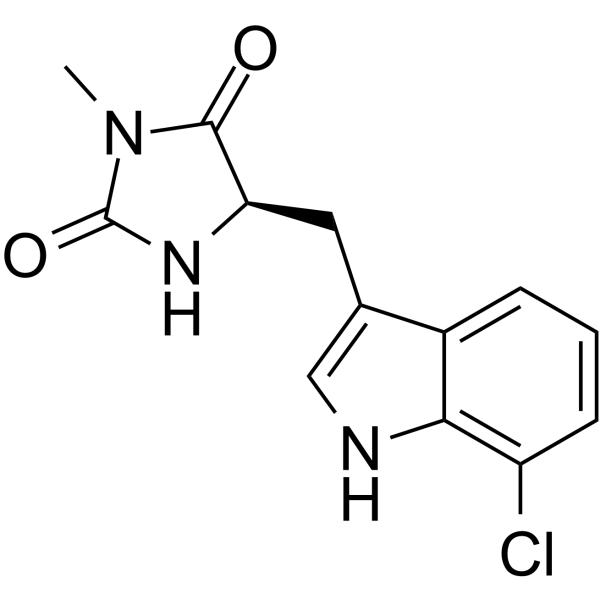
    Necrostatin 2 is a potent necroptosis inhibitor. EC50 for inhibition of necroptosis in FADD-deficient Jurkat T cells treated with TNF-α is 0.05 μM. Necrostatin 2 is also a RIPK1 inhibitor.
    Necrostatin 2
  • HY-104021
    GSK840
    1 Publications Verification

    GSK'840

    RIP kinase Inflammation/Immunology
    GSK840 (GSK'840) is a receptor-interacting protein kinase 3 (RIP3 or RIPK3) inhibitor, which binds RIP3 kinase domain with an IC50 of 0.9 nM, and inhibits kinase activity with an IC50 of 0.3 nM .
    GSK840
  • HY-131064
    RIPK3-IN-1
    1 Publications Verification

    RIP kinase Inflammation/Immunology
    RIPK3-IN-1 is a RIPK3 type II DFG-out inhibitor with an IC50 of 9.1 nM. RIPK3-IN-1 inhibits RIPK1 and RIPK2 with IC50s of 5.5 and >10 μM. RIPK3-IN-1 is also a c-Met kinase inhibitor with an IC50 of 1.1 μM .
    RIPK3-IN-1
  • HY-128348

    RIP kinase Inflammation/Immunology Cancer
    PK68 is a potent orally active and specifical type II inhibitor of receptor-interacting kinase 1 (RIPK1) with an IC50 of ~90 nM, displays inhibition of RIPK1-dependent necroptosis. PK68 powerfully ameliorates TNF-induced systemic inflammatory response syndrome, and can be used for the research of inflammatory disorders and cancer metastasis .
    PK68
  • HY-119933

    RIP kinase Cancer
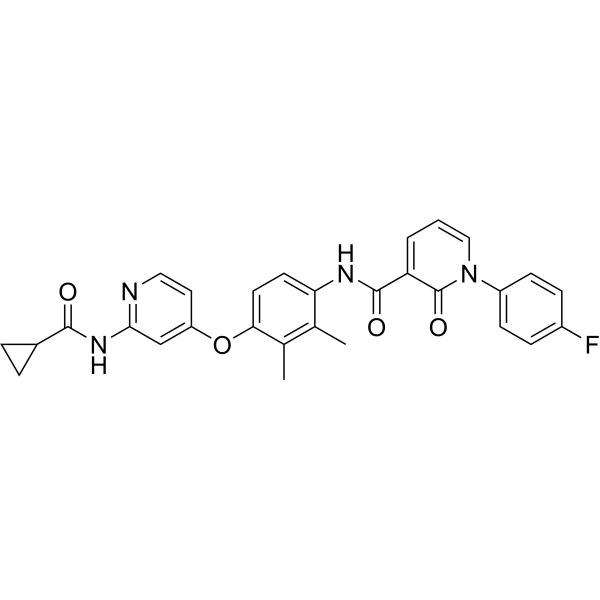
    RIPK1-IN-7 is a potent and selective RIPK1 inhibitor with a Kd of 4 nM and an enzymatic IC50 of 11 nM. RIPK1-IN-7 exhibits excellent antimetastasis activity in the experimental B16 melanoma lung metastasis model .
    RIPK1-IN-7
  • HY-132203

    RIP kinase Inflammation/Immunology Cancer
    Necrostatin-34 (Nec-34), a RIPK1 kinase inhibitor, stabilizes RIPK1 kinase in an inactive conformation by occupying a distinct binding pocket in the kinase domain .
    Necrostatin-34
  • HY-124793
    GAK inhibitor 49
    1 Publications Verification

    Cyclin G-associated Kinase (GAK) Infection
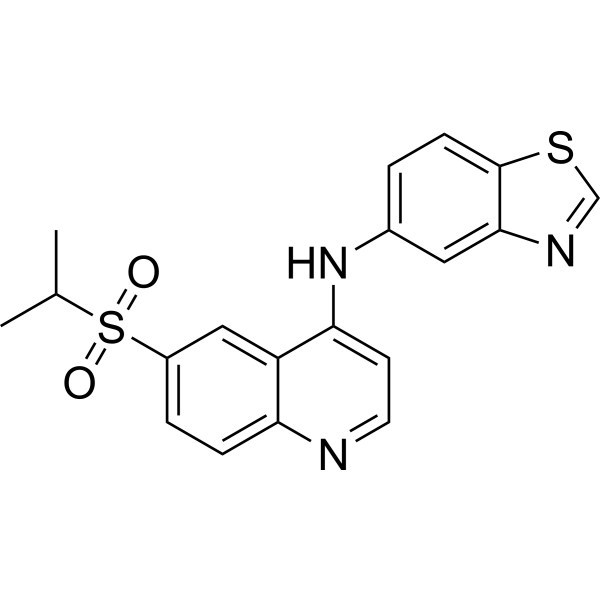
    GAK inhibitor 49 is a potent, ATP-competitive and highly selective cyclin G associated kinase (GAK) inhibitor with a Ki of 0.54 nM and a cell IC50 of 56 nM. GAK inhibitor 49 also shows binding to RIPK2 .
    GAK inhibitor 49
  • HY-148787

    SAR443820; DNL788

    RIP kinase Neurological Disease Inflammation/Immunology
    Oditrasertib (SAR443820) is an orally active, BBB-penetrable and selective reversible inhibitor of RIPK1. Oditrasertib can be used in the research of chronic inflammatory central nervous system diseases, such as amyotrophic lateral sclerosis and multiple sclerosis .
    Oditrasertib
  • HY-158312
    UH15-38
    1 Publications Verification

    Necroptosis RIP kinase Influenza Virus Infection Inflammation/Immunology
    UH15-38 is a potent RIPK3 inhibitor with an IC50 value of 20 nM. UH15-38 blocks IAV (influenza A virus)-activated necroptosis. UH15-38 dampens IAV-induced lung injury .
    UH15-38
  • HY-107978
    RIPK-IN-4
    2 Publications Verification

    RIP kinase Inflammation/Immunology
    RIPK-IN-4 is a selective RIPK2 inhibitor with an IC50 value of 3 nM. RIPK-IN-4 can be used for the research of inflammatory diseases .
    RIPK-IN-4
  • HY-18901

    RIP kinase Inflammation/Immunology
    RIPK1-IN-4 (compound 8) is a potent and selective type II kinase inhibitor of receptor interacting protein 1 (RIP1) kinase and binds to a DLG-out inactive form of RIP1 with an IC50s of 16 nM and 10 nM for RIP1 and ADP-Glo kinase .
    RIPK1-IN-4
  • HY-111870

    PROTACs RIP kinase Cancer
    PROTAC RIPK degrader-6 (example 1) is a Cereblon-based PROTAC targeting RIP Kinase degradation wherein the RIP2 kinase inhibitor is linked via a linker to a cereblon binder .
    PROTAC RIPK degrader-6
  • HY-19628

    RIP kinase TGF-β Receptor Inflammation/Immunology
    OD36 is a RIPK2 inhibitor with an IC50 of 5.3 nM. OD36 is a macrocyclic inhibitor with potent binding to the ALK2 kinase ATP pocket. OD36 shows ALK2-directed activity with KDs of 37 nM .
    OD36
  • HY-157456

    RIP kinase Inflammation/Immunology
    RIPK1-IN-19 is a selective RIPK1 inhibitor (IC50=15 nM). RIPK1-IN-19 does not show obvious activity against RIPK2, RIPK3, and RIPK4. RIPK1-IN-19 displays potent protective activity in TNFα-induced systemic inflammatory response syndrome (SIRS) model and Imiquimod (IMQ)-induced psoriasis model. RIPK1-IN-19 can be used in research on inflammation and immune system diseases .
    RIPK1-IN-19
  • HY-157325

    RIP kinase Inflammation/Immunology
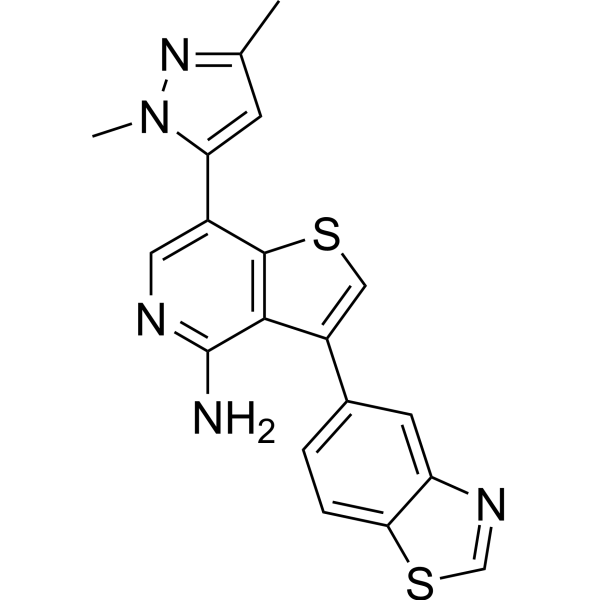
    RIPK2-IN-5 (compound 14) is a high affinity and excellent selectivity RIPK2 inhibitor with an IC50 value of 5.1nM. RIPK2-IN-5 has cellular anti-inflammatory effect and can reduce the secretion of MDP-induced TNF-α with a dose-dependent manner. RIPK2-IN-5 shows moderate stability in human liver microsome. RIPK2-IN-5 can be used for the research of immune diseases .
    RIPK2-IN-5
  • HY-151873

    RIP kinase Inflammation/Immunology Cancer
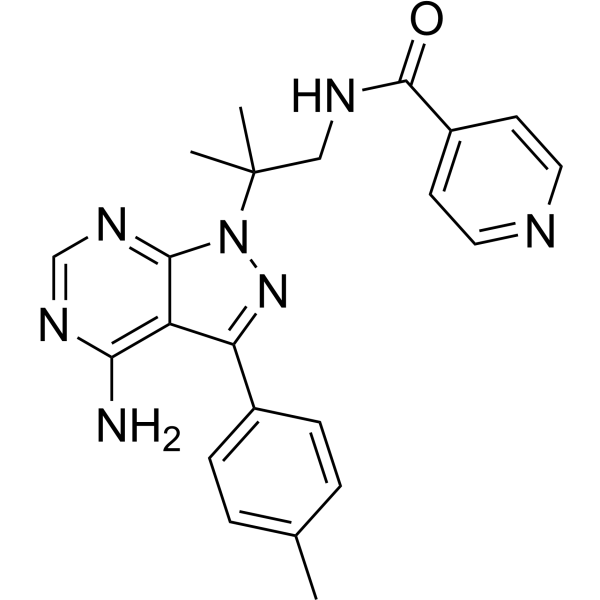
    SZM679 is a potent, orally active and selective RIPK1 inhibitor with Kd values of 8.6 nM and >5000 nM for RIPK1 and RIPK3, respectively. SZM679 reverses the tumor necrosis factor-induced systemic inflammatory response. SZM679 decreases the Tau hyperphosphorylation, neuroinflammation, and the RIPK1 phosphorylation level in the hippocampus and cortex. SZM679 can be used in research of Alzheimer's disease (AD) .
    SZM679
  • HY-148382

    RIP kinase Necroptosis Neurological Disease Inflammation/Immunology
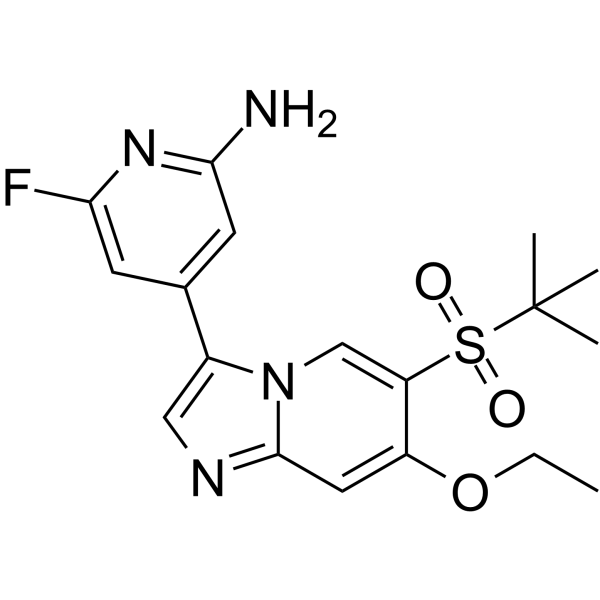
    RI-962 is a potent and selective receptor-interacting protein kinase 1 (RIPK1) inhibitor. RI-962 inhibits RIPK1 with an IC50 value of 35.0 nM. RI-962 can be used for the research of nervous system diseases and inflammatory diseases .
    RI-962
  • HY-148239

    RIP kinase Ser/Thr Protease Neurological Disease Inflammation/Immunology
    TP-030-2, a chemical probe, is a RIPK1 inhibitor (human Ki=0.43 nM; mouse IC50=100 nM) .
    TP-030-2
  • HY-149258

    Necroptosis RIP kinase Mixed Lineage Kinase Inflammation/Immunology
    KWCN-41 is a selective and efficient inhibitor of RIPK1 kinase with an IC50 value of 88 nM. KWCN-41 specifically inhibits cell necrosis but does not inhibit apoptosis. KWCN-41 also has anti-inflammatory effects .
    KWCN-41
  • HY-149393

    Mixed Lineage Kinase RIP kinase Cancer
    RIPK3-IN-3 (compound 20) is a selective inhibitor of RIP kinase RIPK3 (IC50=10 nM). RIPK3 mediates the phosphorylation of Mixed Lineage Kinase (MLKL) and causes necroptosis, while RIPK3-IN-3 inhibits p-MLKL oligomerization and thereby inhibits necroptosis. RIPK3-IN-3 also downregulates CXCL5 secretion and inhibits AsPC-1 cell migration and invasion .
    RIPK3-IN-3
  • HY-146694

    RIP kinase Anaplastic lymphoma kinase (ALK) Inflammation/Immunology
    RIPK2-IN-1 (compound 18f) is a potent RIPK2 inhibitor with an IC50 of 51 nM. RIPK2-IN-1 inhibits ALK2 with an IC50 of 5 nM. RIPK2-IN-1 has an IC50 of 390 nM on RIPK2/NOD2 in cell assay .
    RIPK2-IN-1
  • HY-136010

    RIP kinase PROTACs Inflammation/Immunology
    RIP2 Kinase Inhibitor 4 is a potent and selective RIPK2 PROTAC. RIP2 Kinase Inhibitor 4 effectively degrades RIPK2 (pIC50 of 8) and inhibits the release of related TNF-α .
    RIP2 Kinase Inhibitor 4
  • HY-100112

    RIP kinase Others
    WEHI-345 analog is the analog of WEHI-345. WEHI-345 is a potent and selective RIPK2 kinase inhibitor with an IC50 of 0.13 μM, which delays RIPK2 ubiquitylation and NF-κB activation on oligomerization domain (NOD) stimulation .
    WEHI-345 analog
  • HY-124793A
    GAK inhibitor 49 hydrochloride
    1 Publications Verification

    Cyclin G-associated Kinase (GAK) Infection
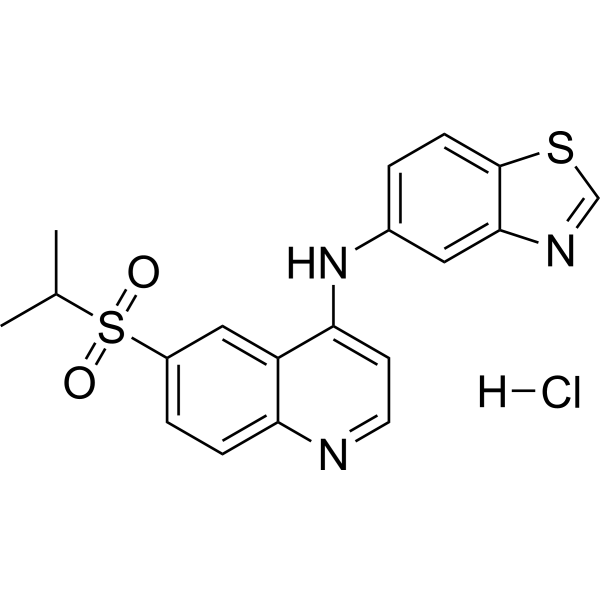
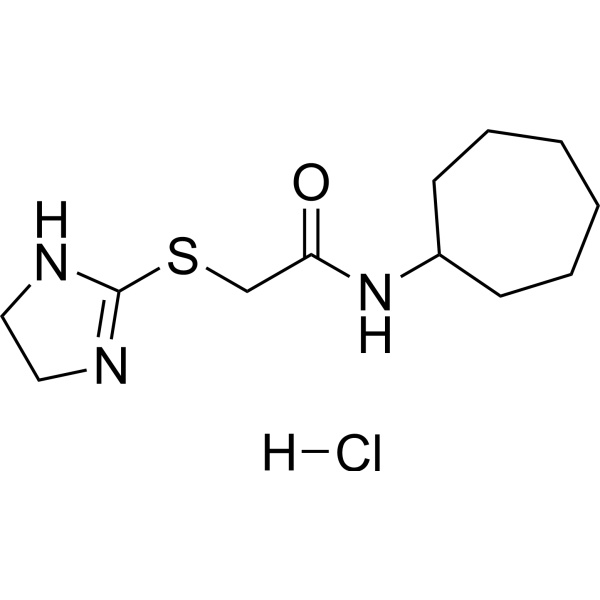
    GAK inhibitor 49 hydrochloride is a potent, ATP-competitive and highly selective cyclin G associated kinase (GAK) inhibitor with a Ki of 0.54 nM and a cell IC50 of 56 nM. GAK inhibitor 49 hydrochloride also shows binding to RIPK2 .
    GAK inhibitor 49 hydrochloride
  • HY-178163

    Ferroptosis Necroptosis RIP kinase Reactive Oxygen Species (ROS) Mixed Lineage Kinase Inflammation/Immunology
    Zharp1-163 is a dual inhibitor of ferroptosis and necroptosis. Zharp1-163 effectively blocks ferroptosis by reducing reactive oxygen species (ROS) levels and inhibits necroptosis by potently and selectively targeting RIPK1 kinase activity (KD = 240 nM; IC50 = 406.1 nM). Zharp1-163 inhibits the cellular activation of RIPK1, RIPK3 and MLKL in response to necroptotic stimulation. Zharp1-163 markedly attenuates TNF-α (HY-P1875)-induced systemic inflammatory syndrome, including the prevention of TNF-α-induced mortality and hypothermia in mice. Zharp1-163 significantly alleviates acute kidney injury associated with both necroptosis and ferroptosis in models induced by Cisplatin (HY-17394) and ischemia-reperfusion. Zharp1-163 can be used for the study of diseases associated with cell death pathways, such as kidney disease .
    Zharp1-163
  • HY-19628A

    RIP kinase TGF-β Receptor Inflammation/Immunology
    OD36hydrochloride is a RIPK2 inhibitor with an IC50 of 5.3 nM. OD36 hydrochloride is a macrocyclic inhibitor with potent binding to the ALK2 kinase ATP pocket. OD36 hydrochloride shows ALK2-directed activity with KDs of 37 nM .
    OD36 hydrochloride
  • HY-157039

    RIP kinase Necroptosis Mixed Lineage Kinase Inflammation/Immunology
    RIPK1-IN-17 is an orally active, selective RIPK1 inhibitor (Kd = 17 nM) and shows no significant inhibition to RIPK3. RIPK1-IN-17 specifically inhibits necroptosis rather than apoptosis by inhibiting RIPK1, RIPK3, and MLKL phosphorylation. RIPK1-IN-17 protects mice from hypothermia and death. RIPK1-IN-17 can be used for the study of necroptosis-related diseases such as inflammatory response syndrome (SIRS) .
    RIPK1-IN-17
  • HY-171986

    RIP kinase Cancer
    RIPK3-IN-6 (compound 1) is a type I RIPK3 inhibitor with poor selectivity for the RIPK family, especially for RIPK2 activity .
    RIPK3-IN-6
  • HY-178464

    RIP kinase Mixed Lineage Kinase Necroptosis Neurological Disease Inflammation/Immunology
    RIPK1-IN-34 is a selective, brain-penetrant RIPK1 inhibitor (IC50 = 126.70 nM) with almost no inhibitory effect on RIPK3 (IC50 > 10, 000 nM). RIPK1-IN-34 offers substantial neuroprotection by inhibiting the phosphorylation of RIPK1, RIPK3, and mixed lineage kinase domain-like pseudokinase (MLKL) within the necroptosis pathway. RIPK1-IN-34 shows the neuroprotective effect in a rat middle cerebral artery occlusion (MCAO) model. RIPK1-IN-34 can be used for the study of anti-acute ischemic stroke (AIS) .
    RIPK1-IN-34
  • HY-175026

    RIP kinase NF-κB p38 MAPK Interleukin Related Inflammation/Immunology
    RIPK2-IN-8 is an orally active and highly selective RIPK2 inhibitor (IC50 = 11 nM). RIPK2-IN-8 is highly selective for RIPK2 over RIPK1 (IC50 > 30,000 nM) and has a moderate inhibitory effect on RIPK3 (IC50 = 44.61 nM). RIPK2-IN-8 inhibits the NOD2-RIPK2 signaling pathway and the expression of the inflammatory cytokines IL-6 and TNFα, thereby exerting anti-inflammatory effects. RIPK2-IN-8 has demonstrated anti-inflammatory and hepatoprotective effects in an acute liver injury (ALI) model and can be used in ALI research .
    RIPK2-IN-8
  • HY-175371

    RIP kinase Ligands for Target Protein for PROTAC Cancer
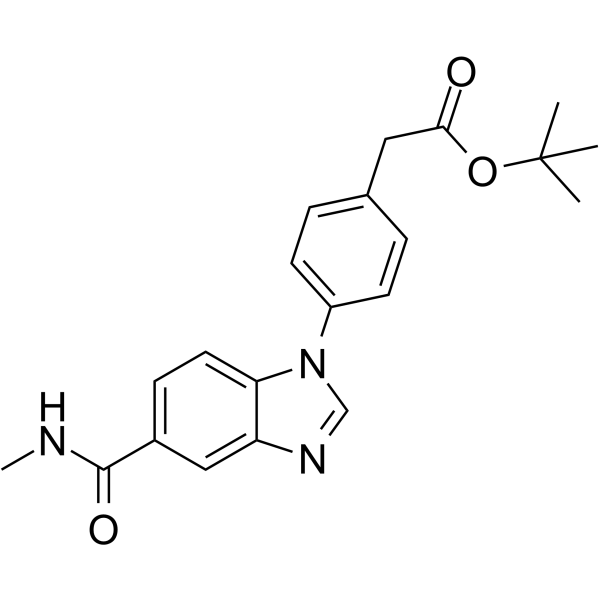
    RIPK1-ligand-2 is a RIPK1 inhibitor. RIPK1-ligand-2 can be used for synthesis of PROTAC RIPK1 Degrader-1 (HY-175370) .
    RIPK1-ligand-2
  • HY-143726

    RIP kinase Inflammation/Immunology
    RIPK1-IN-8 (example 16), an aminoimidazopyridine, is a potent and selective RIPK1 inhibitor with an IC50 of 4 nM. RIPK1-IN-8 has the potential for inflammatory diseases research .
    RIPK1-IN-8
  • HY-171592

    RIP kinase NOD-like Receptor (NLR) TNF Receptor Inflammation/Immunology
    RIPK2-IN-7 (Compound 10w) is an orally active, selective RIPK2 inhibitor (IC50: 0.6 nM). RIPK2-IN-7 inhibits RIPK2 kinase activity, blocks the nucleotide-binding oligomerization domain (NOD) signaling pathway, and reduces the production of inflammatory factors (such as TNFα). RIPK2-IN-7 can be used in the study of inflammatory bowel disease (IBD) .
    RIPK2-IN-7
  • HY-179235

    Ligands for Target Protein for PROTAC RIP kinase Cancer
    RIPK1-IN-37 is an RIPK1 inhibitor and a ligand for the target protein for PROTAC LD5097 (HY-179234). RIPK1-IN-37 can be used to synthesize PROTAC .
    RIPK1-IN-37
  • HY-157309

    RIP kinase Cancer
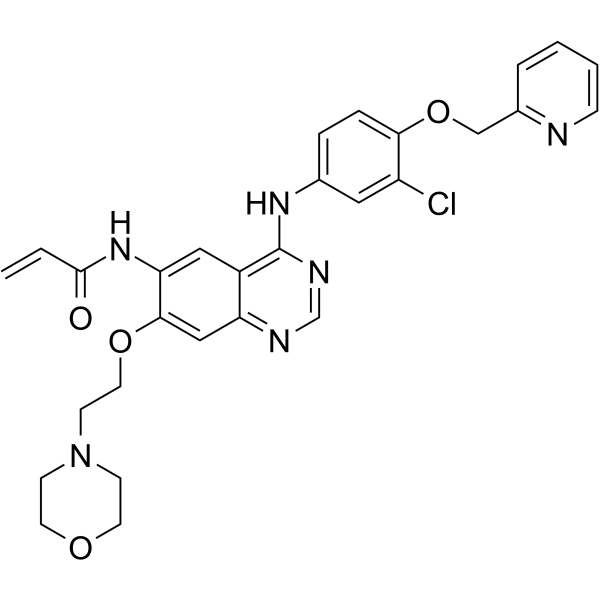
    RIPK2-IN-4 is a potent and specific RIPK2 inhibitor with an IC50 value of 5 nM .
    RIPK2-IN-4
  • HY-146758

    RIP kinase Neurological Disease Inflammation/Immunology
    RIPK1-IN-14 (Compound 41) is a potent inhibitor of RIPK1 with an IC50 value of 92 nM. RIPK1-IN-14 shows a significant anti-necroptotic effect in a necroptosis model in U937 cells .
    RIPK1-IN-14
  • HY-120600

    Necroptosis Apoptosis RIP kinase Inflammation/Immunology
    Sibiriline is a specific competitive inhibitor of RIPK1 that targets the RIPK1 ATP-binding site and locks it in an inactive conformation. Sibiriline inhibits TNF-induced RIPK1-dependent necroptosis and RIPK1-dependent apoptosis, but does not protect cells from caspase-dependent apoptosis. Sibiriline protects mice from concanavalin A-induced hepatitis and has the potential to inhibit immune-dependent hepatitis. .
    Sibiriline
  • HY-178762S

    RIP kinase Necroptosis Inflammation/Immunology
    RIPK1-IN-35 is a selective and orally active RIPK1 inhibitor with an IC50 of 5.33 nM. RIPK1-IN-35 has a potent protective effect against necroptosis in both human and murine cells. RIPK1-IN-35 shows good therapeutic effects in both TNF-α-induced systemic inflammatory response syndrome and DSS (HY-116282C)-induced inflammatory bowel disease models. RIPK1-IN-35 can be used to the study of inflammatory diseases related to necroptosis .
    RIPK1-IN-35
  • HY-147235

    RIP kinase PROTACs Infection
    RIPK2-IN-2 (example 25) is a RIP2 kinase PROTAC inhibitor. RIPK2-IN-2 can block RIP2-dependent proinflammatory signaling, regulated RIP2 kinase activity in auto inflammatory diseases .
    RIPK2-IN-2
  • HY-123924

    RIP kinase Inflammation/Immunology
    CSLP37 is a selective RIPK2 inhibitor with an IC50 of 16.3 nM. CSLP37 shows no inhibitory activity against RIPK1 and RIPK3. CSLP37 displays potent suppression of cellular NOD1 and NOD2 responses .
    CSLP37

Consulta en línea

Your information is safe with us. * Required Fields.

Saludo


Country or Region *

Nombre del solicitante *


Nombre de la Organizaciòn *

Department *


Direcciòn del E-mail *


Nombre del producto *

Cat. No.


Requested quantity *

Número de teléfono *


Observaciones

Consulta en línea

Inquiry Information

Nombre del producto:
Cat. No.:
Cantidad:
MCE Japan Authorized Agent:

