13 Results for "

RNA sequencing

" in MedChemExpress (MCE) Product Catalog:
Products (13)

13 Results for "RNA sequencing" in MCE Product Catalog:

4
4 Cited Publications
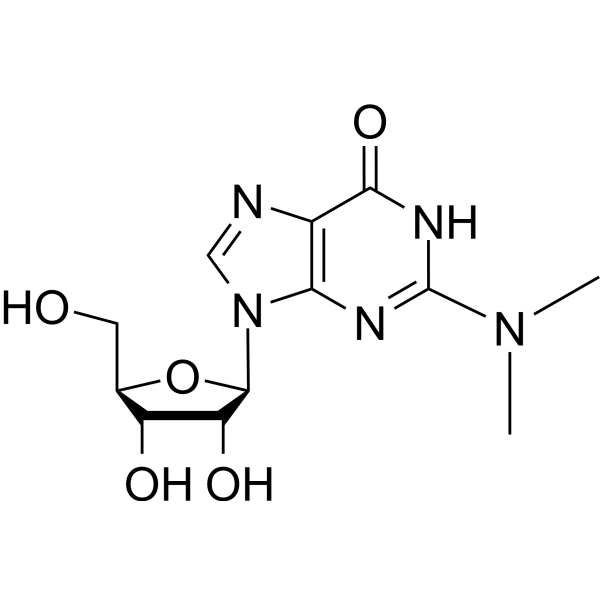
Art. -Nr.: HY-113137
CAS. Nr.: 2140-67-2
Reinheit:  99.40%
N2,N2-Dimethylguanosine is a methylated modified nucleoside present in RNA and serves as a structural modification component of tRNA. N2,N2-Dimethylguanosine inhibits reverse transcriptase-mediated cDNA synthesis and is one of the key modifications affecting sequencing efficiency in high-throughput RNA sequencing. N2,N2-Dimethylguanosine can be selectively demethylated at one methyl group by AlkB mutant enzymes (such as D135S/L118V) and converted to N2-methylguanosine, thereby reducing the inhibition of reverse transcription .
loading...
    loading...
2
2 Cited Publications
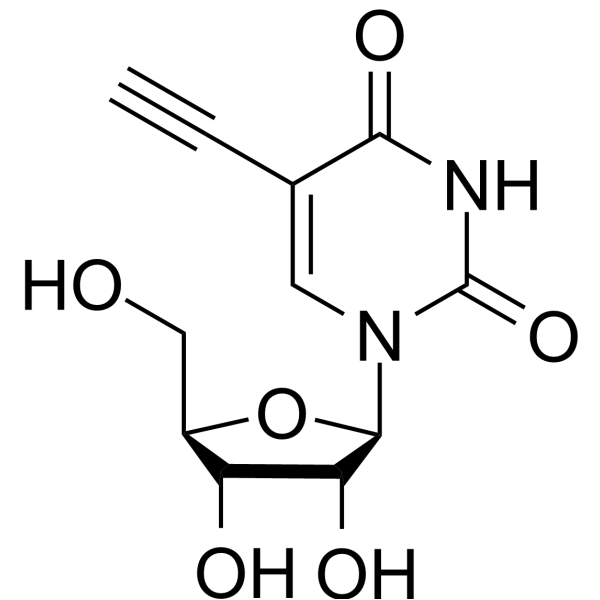
Art. -Nr.: HY-141140
CAS. Nr.: 69075-42-9
Reinheit:  98.19%
Synonyms: 5-EU
Forschungsgebiete:  

Others

5-Ethynyluridine (5-EU) is a potent cell-permeable nucleoside can be used to label newly synthesized RNA. 5-Ethynyluridine can be used for isolation and sequencing of nascent RNA from neuronal populations in vivo. 5-Ethynyluridine can be used to identify changes in transcription in vivo in nervous system disease models . 5-Ethynyluridine is a click chemistry reagent, it contains an Alkyne group and can undergo copper-catalyzed azide-alkyne cycloaddition (CuAAc) with molecules containing Azide groups.
loading...
    loading...
2
2 Cited Publications
Art. -Nr.: HY-122949
CAS. Nr.: 91590-76-0
Reinheit:  ≥97.0%
Momordicine I is a cucurbitane-type triterpenoids. Momordicine I suppresses glioma growth by promoting apoptosis and impairing mitochondrial oxidative phosphorylation. Momordicine I inhibits glycolysis, lipid metabolism, induces autophagy in HNC cells to suppress head and neck cancer growth. Momordicine I alleviates isoproterenol-induced cardiomyocyte hypertrophy through suppression of PLA2G6 and DGK-ζ. Momordicine I exerts its cardiovascular benefits by upregulating nitric oxide, inhibiting the activity of angiotensin-converting enzyme (ACE), activating the PI3K/Akt pathway, reducing oxidative stress and inflammation. Momordicine I inhibits AKT1, IL-6, and SRC, suggesting its potential application in type 2 diabetes .
loading...
    loading...
1
1 Cited Publications
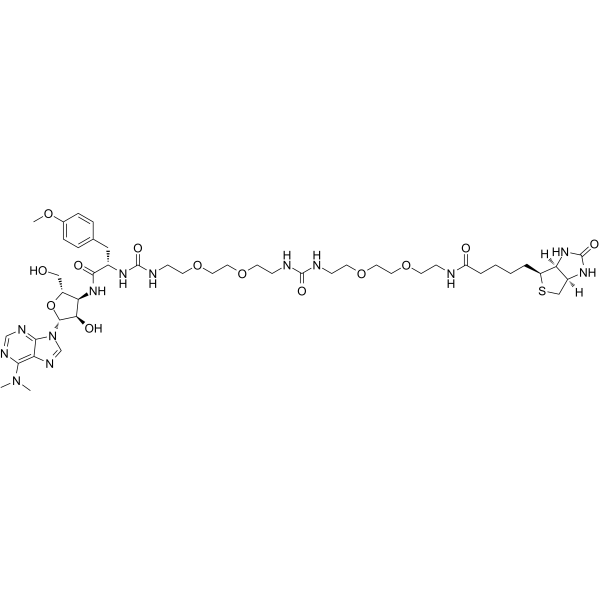
Art. -Nr.: HY-148865
CAS. Nr.: 2379889-82-2
Reinheit:  99.86%
Forschungsgebiete:  

Others

Puromycin-bis (PEG2-amide)-Biotin (Compound 3P) is a binding molecule. Puromycin-bis (PEG2-amide)-Biotin binds to ribosome-RNA complexes within single cells. Puromycin-bis (PEG2-amide)-Biotin is used for single-cell translatome sequencing .
loading...
    loading...
1
1 Cited Publications
Art. -Nr.: HY-12093
CAS. Nr.: 1025716-81-7
Target:  

MMP

Forschungsgebiete:  

Inflammation/Immunology

MMP408 is a selective and orally effective inhibitor of MMP-12 with IC50 values for human, mouse and rat MMP-12 of 2 nM, 160 nM and 3 μM respectively. MMP408 exhibits IC50 value for human MMP-13 of 120 nM, and its activity against other MMPs is weak. MMP408 can alleviate inflammation, fibrosis and tissue remodeling by inhibiting MMP-12. MMP408 can be used in the research of chronic obstructive pulmonary disease and chronic sinusitis with nasal polyps .
loading...
    loading...
1
1 Cited Publications
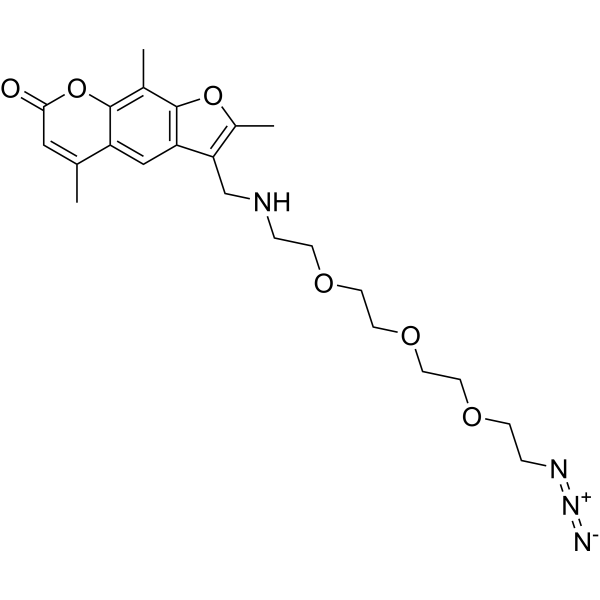
Art. -Nr.: HY-163213
CAS. Nr.: 1352815-11-2
Forschungsgebiete:  

Others

Psoralen-triepthylene glycol azide is a compound used to probe the structure and conformation of RNA in living cells, using matching RNA crosslinking and deep sequencing or comradery methods .
loading...
    loading...
1
1 Cited Publications
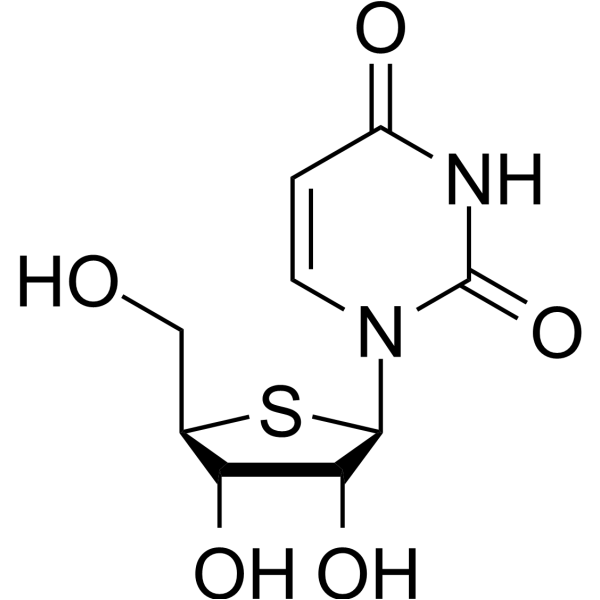
Art. -Nr.: HY-W113081
CAS. Nr.: 6741-73-7
Synonyms: 1-(4-Thio-beta-D-ribofuranosyl)uracil
Forschungsgebiete:  

Others

4′-Thiouridine (1-(4-Thio-beta-D-ribofuranosyl)uracil) is a thio analog of thymidine. 4′-Thiouridine can be used to synthesize 4'-thionucleosides with antiviral and anticancer activities. 4′-Thiouridine can be used for RNA-sequencing .
loading...
    loading...
Art. -Nr.: HY-164899
CAS. Nr.: 2765091-45-8
Synonyms: 2-aminopyridine-3-carboxylic acid imidazolide
Target:  

DNA/RNA Synthesis

Forschungsgebiete:  

Infection

2A3 (2-aminopyridine-3-carboxylic acid imidazolide) is a covalent probe reagent for Selective 2'-Hydroxyl Acylation analyzed by Primer Extension (SHAPE) that targets the RNA ribose 2'-OH group. 2A3 efficiently permeates the biological membranes of Gram-negative bacteria, Gram-positive bacteria, and mammalian cells. 2A3 exhibits no base bias and specifically labels conformationally flexible, unpaired regions within RNA. 2A3 forms covalent adducts by acylating the 2'-OH groups of flexible RNA residues. When combined with SHAPE-MaP (mutational profiling) sequencing technology, these modification sites are converted into detectable mutational signals, thereby accurately reflecting local RNA backbone flexibility and base-pairing status. 2A3 is primarily utilized in molecular biology and transcriptomics research, including the resolution of RNA structuromes in living cells, the study of RNA folding regulatory mechanisms, and the investigation of non-coding RNA functions .
loading...
    loading...
Art. -Nr.: HY-E70582
Target:  

Adenosine Deaminase

Forschungsgebiete:  

Others

E.coli tRNA adenosine deaminase is derived from E.coli and is an adenine deaminase that can deaminate adenine in single-stranded RNA (ssRNA, mainly the loop region within tRNA) or double-stranded RNA (dsRNA), but has no deamination activity on DNA. E.coli tRNA adenosine deaminase is a protein-modified mutant of adenine deaminase, which can efficiently deaminate adenine in ssDNA and can be applied to adenine base editors (ABE) and RNA m6A methylation sequencing .
loading...
    loading...
Art. -Nr.: HY-168066
Target:  

Fungal

Forschungsgebiete:  

Infection

Antifungal agent 117 is a bis-pyrazole carboxamide derivative with antifungal activity, exhibiting an EC50 value of 11.58 mg/L against Sclerotinia sclerotiorum. Antifungal agent 117 increases cell membrane permeability, causing an imbalance in osmotic pressure inside and outside the cell, and induces the accumulation of reactive oxygen species (ROS), leading to oxidative damage to the cell membrane, resulting in leakage of cellular contents and eventually cell death. RNA sequencing analysis reveals that Antifungal agent 117 downregulates catalase genes and upregulates neutral ceramidase genes, disrupting cell membrane structure, accelerating sphingolipid metabolism, and promoting cell death. Antifungal agent 117 shows great potential in the fields of plant protection and antifungal infection .
loading...
    loading...
Art. -Nr.: HY-E71730
Synonyms: RNA m1G Demethylase (D135S)
Forschungsgebiete:  

Others

AlkB (D135S), Nuclease-free (RNA m1G Demethylase (D135S)) is a nuclease-free N1-methylguanosine (m1G) demethylase that specifically removes the methyl group from m1G residues in small non-coding RNAs. AlkB (D135S), Nuclease-free effectively promotes the reverse transcription of small non-coding RNAs and supports high-throughput sequencing methods such as CPA-seq. AlkB (D135S), Nuclease-free can be used for the precise detection and quantitative analysis of methylated small non-coding RNAs that are easily missed by conventional methods .
loading...
    loading...
Art. -Nr.: HY-E71729
Synonyms: RNA m22G Demethylase (D135S/L118V)
Target:  

DNA/RNA Synthesis

Forschungsgebiete:  

Others

AlkB (D135S/L118V), Nuclease-free (RNA m22G Demethylase (D135S/L118V)) is a nuclease-free modified demethylase. AlkB (D135S/L118V), Nuclease-free exhibits catalytic activity toward N2,N2-dimethylguanosine (m22G), N1-methylguanosine (m1G) and N1-methyladenosine (m1A). AlkB (D135S/L118V), Nuclease-free efficiently removes m1G and m1A modifications on RNA, and can also selectively convert m22G to N2-methylguanosine (m2G), thereby significantly reducing the level of m22G in transfer RNA (tRNA). AlkB (D135S/L118V), Nuclease-free greatly reduces sequencing bias and improves the efficiency of high-throughput tRNA sequencing .
loading...
    loading...
Art. -Nr.: HY-16254
CAS. Nr.: 125-03-1
Target:  

Annexin A

Forschungsgebiete:  

Cardiovascular Disease

Hydrocortamate hydrochloride is a broad-spectrum immunosuppressant. Hydrocortamate hydrochloride has been identified as a potential inhibitor of T cell proliferation in ischemia-reperfusion injury (IRI), specifically targeting the ANXA1 gene. Hydrocortamate hydrochloride can be used in inflammation research .
loading...
    loading...
  • 1

