1. Search Result
Search Result
Pathways Recommended: Stem Cell/Wnt Cell Cycle/DNA Damage
Results for "

Rat aortic endothelial cells

" in MedChemExpress (MCE) Product Catalog:

6

Inhibitors & Agonists

1

Peptides

2

Natural
Products

Cat. No. Product Name Target Research Areas Chemical Structure
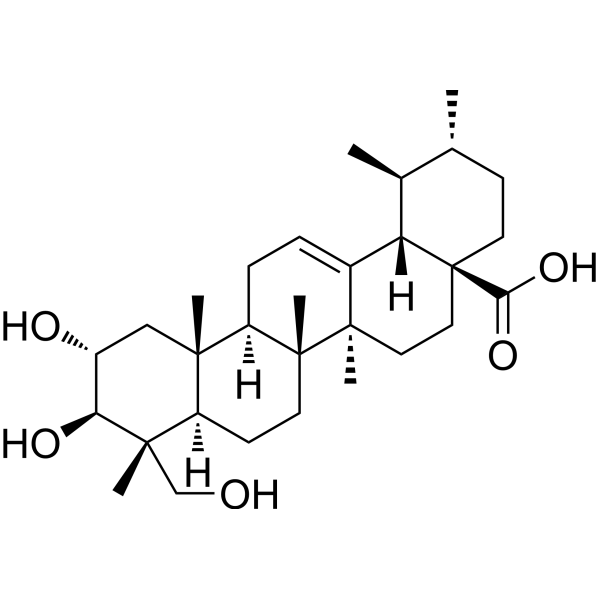
  • HY-N0194
    Asiatic acid
    4 Publications Verification

    Apoptosis Parasite Inflammation/Immunology Cancer
    Asiatic acid, a pentacyclic triterpene found in Centella asiatica (Centella asiatica), has anticancer activity. Asiatic acid induces apoptosis in melanoma cells and has barrier protective effects on human aortic endothelial cells (HAEC). Asiatic acid also has anti-inflammatory activity and inhibits tumor necrosis factor (TNF)-α-induced endothelial barrier dysfunction. Asiatic acid also inhibits NLRP3 inflammasome activation and NF-κB pathway, effectively inhibits inflammation in rats, and has neuroprotective effects in rat spinal cord injury (SCI) model .
    Asiatic acid
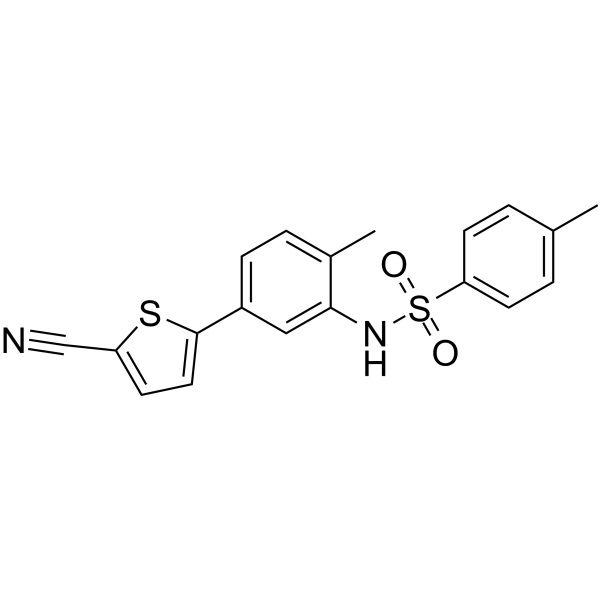
  • HY-122542B
    PPACK TFA
    2 Publications Verification

    Ligands for E3 Ligase Molecular Glues IKZF Family Cardiovascular Disease
    PPACK TFA is an orally active, selective molecular glue degrader targeting IKZF2. Through a molecular glue mechanism, PPACK TFA binds to CRBN, recruits IKZF2 to form a ternary complex, and promotes its ubiquitination and proteasomal degradation. This further converts inhibitory regulatory T cells (Treg) into effector-like T cells, enhances CD8 + T cell responses, and modulates the Teff:Treg balance. PPACK TFA also increases the production of the inflammatory cytokine IL-2 and reduces the suppressive activity of Treg. PPACK TFA can be used in cancer immunotherapy research, and exhibits a synergistic effect when combined with immune checkpoint inhibitors such as anti-PD1 .
    PPACK TFA
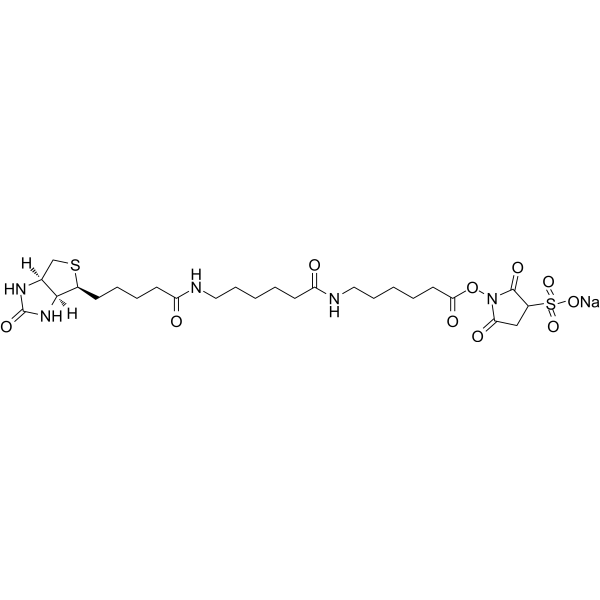
  • HY-D1635

    Biotin-XX-SSE

    Fluorescent Dye Exosomes Infection
    Sulfo-NHS-LC-LC-Biotin (Biotin-XX-SSE), a biotin reagent, is used to label the proteins exposed to the external leaflet of intact exosomes and contains a larger spacer arm between the biotin and amine reactive linker. The size of this linker helps to overcome steric hindrance and increases labeling efficiency at the crowded exosome surface .
    Sulfo-NHS-LC-LC-Biotin
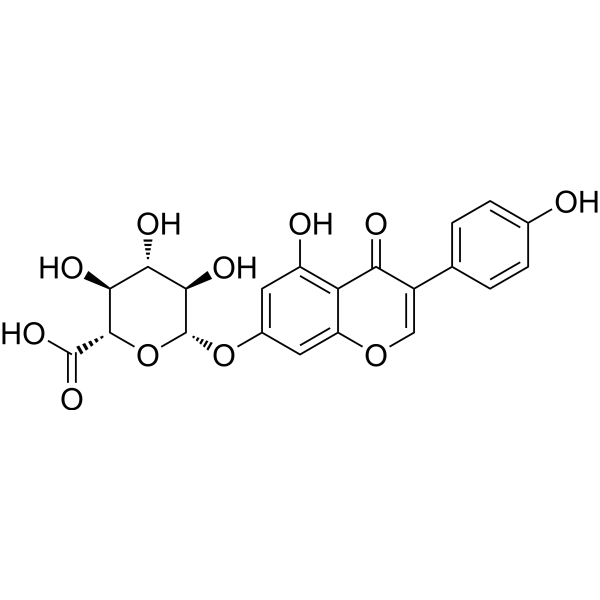
  • HY-137967

    Genistein 7-O-glucuronide

    Drug Metabolite Metabolic Disease
    Genistein 7-β-D-Glucuronide (Genistein 7-O-glucuronide) is the primary phase II metabolite of Genistein (HY-14596) in human and rat hepatocytes. Genistein 7-β-D-Glucuronide undergoes distinct deconjugation in different functional assays. Genistein 7-β-D-Glucuronide is produced via hepatic microsomal glucuronidation and shows a mild age-related increase in intrinsic clearance in male F344 rats. Genistein 7-β-D-Glucuronide can be used for research on metabolism .
    Genistein 7-β-D-Glucuronide
  • HY-N0194R

    Reference Standards Apoptosis Parasite Inflammation/Immunology Cancer
    Asiatic acid (Standard) is the analytical standard of Asiatic acid. This product is intended for research and analytical applications. Asiatic acid, a pentacyclic triterpene found in Centella asiatica (Centella asiatica), has anticancer activity. Asiatic acid induces apoptosis in melanoma cells and has barrier protective effects on human aortic endothelial cells (HAEC). Asiatic acid also has anti-inflammatory activity and inhibits tumor necrosis factor (TNF)-α-induced endothelial barrier dysfunction. Asiatic acid also inhibits NLRP3 inflammasome activation and NF-κB pathway, effectively inhibits inflammation in rats, and has neuroprotective effects in rat spinal cord injury (SCI) model .
    Asiatic acid (Standard)
  • HY-16191
    ELR510444
    1 Publications Verification

    Microtubule/Tubulin Apoptosis HIF/HIF Prolyl-Hydroxylase Mitosis Cancer
    ELR510444 is an orally active tubulin inhibitor with an IC50 of 10 μM. ELR510444 binds to the colchicine-binding site on β-tubulin, inhibits tubulin assembly, depolymerizes microtubules and blocks HIF activity. ELR510444 induces cellular microtubule loss, abnormal mitotic spindle, mitotic arrest, apoptosis, morphological changes in tumor endothelial cells, and inhibits cancer cell proliferation, angiogenesis and tumor growth. ELR510444 can be used in research related to various cancers such as renal cell carcinoma .
    ELR510444

Inquiry Online

Your information is safe with us. * Required Fields.

Salutation


Country or Region *

Applicant Name *


Organization Name *

Department *


Email Address *


Product Name *

Cat. No.


Requested quantity *

Phone Number *


Remarks

Inquiry Online

Inquiry Information

Product Name:
Cat. No.:
Quantity:
MCE Japan Authorized Agent:

