1. Search Result
Search Result
Results for "

Sarcoma 180

" in MedChemExpress (MCE) Product Catalog:

19

Inhibitors & Agonists

2

Peptides

16

Natural
Products

Cat. No. Product Name Target Research Areas Chemical Structure
  • HY-116073

    Acyltransferase Infection Cancer
    L-Penicillamine is an orally active serine palmitoyltransferase (SPT) inhibitor. L-Penicillamine inactivates the PLP cofactor by forming adducts, thereby inhibiting SPT activity and reducing sphingolipid biosynthesis. L-Penicillamine not only blocks tumor access to vitamin B6, but also stabilizes the human papillomavirus 16 E6 oncoprotein monomer and inhibits its polymerization, exhibiting a unique anticancer mechanism. L-Penicillamine effectively delays the growth of Sarcoma-180, induces tumor necrosis and prolongs survival (though long-term use may lead to Pyridoxine (HY-B1328) deficiency and weight loss) .
    L-Penicillamine
  • HY-116514

    Farnesyl Transferase Apoptosis Endogenous Metabolite Cancer
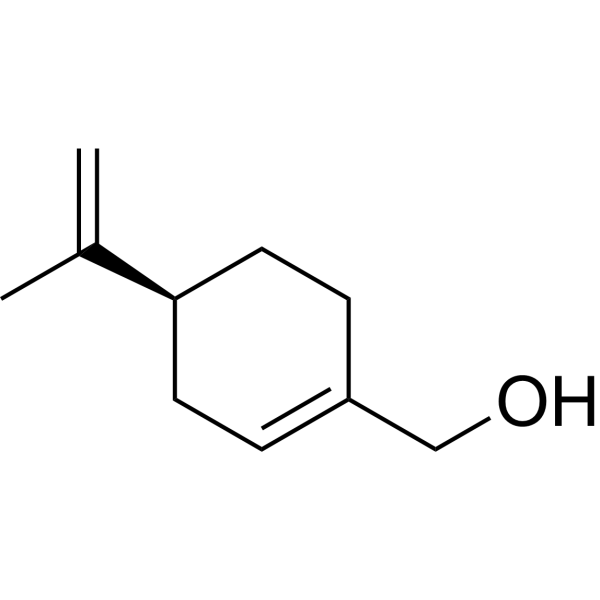
    (S)-(-)-Perillyl alcohol, a monoterpene, is an orally active farnesyl transferase and geranylgeranyl transferase inhibitor. (S)-(-)-Perillyl alcohol up-regulates the mannose-6-phosphate receptor, facilitating TGF-β1 activation and cytostasis,. (S)-(-)-Perillyl alcohol induces apoptosis in cancer cells, modulates cyclin D1 and AP-1 activity. (S)-(-)-Perillyl alcohol exhibits antitumor activity against sarcoma tumors in mice. (S)-(-)-Perillyl alcohol can be used for the research of squamous cell carcinoma of the esophagus and sarcoma 180 .
    (S)-(−)-Perillyl alcohol
  • HY-N4322
    Decursinol angelate
    1 Publications Verification

    PKC Inflammation/Immunology Cancer
    Decursinol angelate acts as a PKC activator and GDH inhibitor, with an IC50 of 1.432 μM against human GDH. Decursinol angelate activates PKC, downregulates PKCα and PKCβII isoforms, and exerts cytotoxic activity against cancer cells. Decursinol angelate binds to GDH and inhibits its enzymatic activity. Decursinol angelate inhibits VEGF-induced autophosphorylation of VEGFR2, downstream p42/44 ERK and JNK-MAPK signaling pathways, as well as the angiogenesis process. Decursinol angelate is applicable to research related to cancer and leukemia .
    Decursinol angelate
  • HY-N0891

    Tubeimoside-B

    EGFR TGF-β Receptor RIG-I-like receptor (RLR) SARS-CoV Infection Neurological Disease Cancer
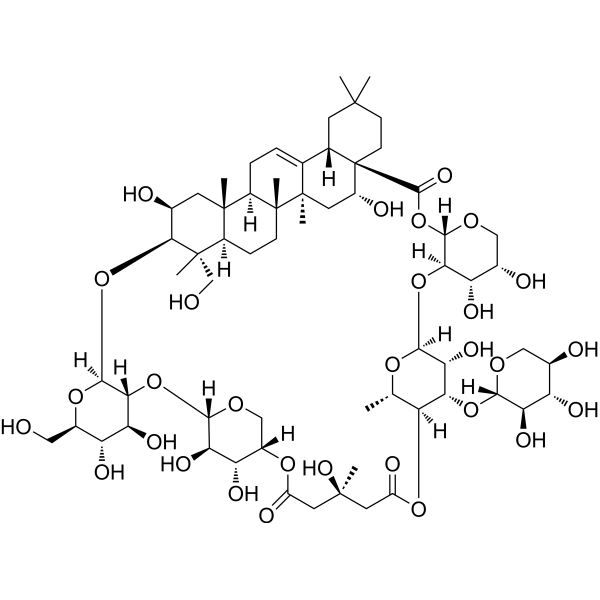
    Tubeimoside II is an orally active triterpenoid saponin and antiviral agent that binds to PACT/PRKRA with Kd values of 5.37 μM and 133.1 μM, respectively. Tubeimoside II inhibits oxidase-dependent EGFR activation and reduces TGF-β1-induced oxidative stress. Tubeimoside II activates the RIG-I signaling pathway and increases IFN-β secretion. Tubeimoside II suppresses TPA-induced ear edema, mouse sarcoma 180 growth, and TPA-induced skin tumor formation. Tubeimoside II exerts broad-spectrum antiviral activity against SARS-CoV-2, HCoV-OC43, and IAV-H1N1/FM1. Tubeimoside II can be used in research related to retinoblastoma, respiratory viral infections, skin tumors, and sarcoma 180 .
    Tubeimoside II
  • HY-W781133

    cis-[Pt(NH3)2N1-pyridineCl]Cl

    DNA Alkylator/Crosslinker Cancer
    cDPCP (cis-[Pt(NH3)2(N1-pyridine)Cl]Cl) is a DNA crosslinking agent and also a substrate for OCT1 and OCT2. DPCP exhibits anticancer activity and can improve the survival rate of sarcoma-180 mice. cDPCP is suitable for the research of colorectal cancer and cancers with appropriate cation transporters .
    cDPCP
  • HY-N0566

    Anemosapogenin

    Apoptosis Autophagy Bcl-2 Family Caspase Survivin p38 MAPK MMP Cancer
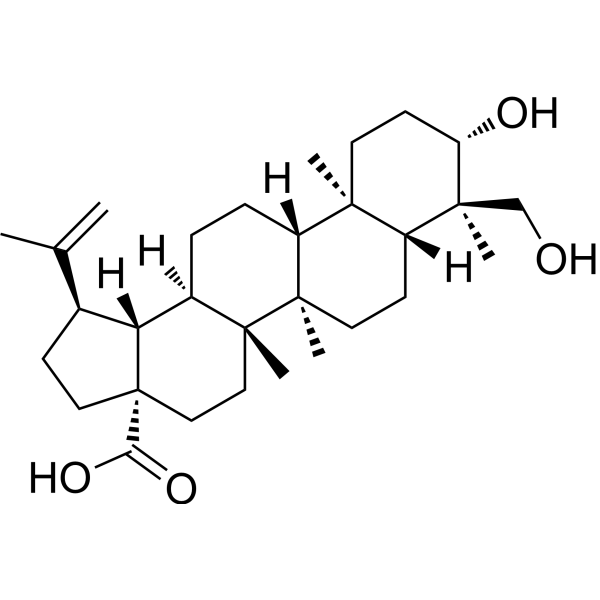
    23-Hydroxybetulinic acid (Anemosapogenin) is an orally active triterpenoid with broad-spectrum anticancer activity. 23-Hydroxybetulinic acid reduces the levels of Bcl-2 and survivin, elevates the level of Bax, promotes the cleavage/activation of caspase-3 and caspase-9, and induces apoptosis via the endogenous mitochondrial pathway involving cytochrome C release and mitochondrial membrane potential disruption. 23-Hydroxybetulinic acid arrests the cell cycle at S and G1 phases, inhibits cancer cell proliferation, blocks the MAPK signaling pathway, regulates MMP2, and induces autophagic apoptosis by upregulating beclin-1. 23-Hydroxybetulinic acid inhibits the activity and efflux function of P-gp, increases the intracellular accumulation of chemotherapeutic drugs, and synergistically enhances cytotoxicity with Doxorubicin (HY-15142). 23-Hydroxybetulinic acid inhibits the phosphorylation and nuclear translocation of STAT6, blocks M2 macrophage polarization, and reduces M2 macrophage-mediated apoptosis resistance of colon cancer cells. 23-Hydroxybetulinic acid can be used in related studies on chronic myeloid leukemia, hepatocellular carcinoma, sarcoma 180, multidrug-resistant breast cancer, leukemia, Doxorubicin-induced cardiotoxicity, and colorectal cancer .
    23-Hydroxybetulinic acid
  • HY-128514

    Oxazinomycin

    Antibiotic Bacterial Infection Cancer
    Minimycin (Oxazinomycin) is a nucleoside antibiotic with a broad-spectrum antibacterial activity. Minimycin has inhibitory effect on mouse Ehrlich ascites carcinoma, ascites type and solid type sarcoma-180 .
    Minimycin
  • HY-125443

    Others Cancer
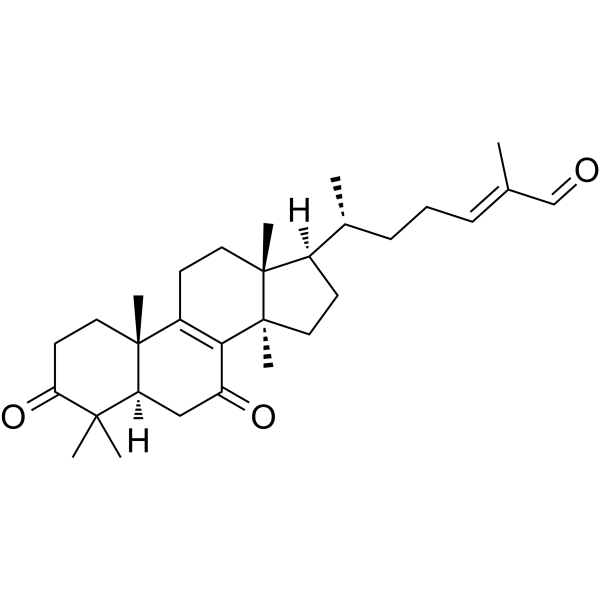
    Lucialdehydes A is a lanostante-type triterpene aldehydes, isolated from the fruiting bodies of Ganoderma lucidum. Lucialdehydes A shows cytotoxic effects on tumor cells, including Lewis lung carcinoma (LLC), T-47D, Sarcoma 180, and Meth-A tumor cell lines .
    Lucialdehyde A
  • HY-N14616

    Antibiotic Bacterial Infection
    Reumycin is a 7-azapteridine antibiotic. Reumycin is toxic to Airy carcinoma, sarcoma-180, sarcoma-37, lymphosarcoma and other tumor cells .
    Reumycin
  • HY-125664

    Antibiotic Cancer
    Lucialdehyde B is a tetracyclic triterpene isolated from the substrates of Ganoderma lucidum with antiviral and cytotoxic activities. Lucialdehyde B has cytotoxic effects against Lewis lung cancer (LLC), T-47D, Sarcoma 180 and Meth-A tumor cell lines .
    Lucialdehyde B
  • HY-N14853

    Bacterial Fungal Infection
    Ossamycin is a macrolide antibiotic. Ossamycin has anti-fungal effect, and it has weaker anti-Gram-positive bacterial effect. Ossamycin inhibits L cells, Epstein-Barr ascites cancer cells, KB cells, sarcoma-180 cells, L-1210 cells, HeLa cells in cell culture with IC50s (μg/mL) of 0.007, 0.008, 0.005, 0.008, 0.003, 0.005, respectively .
    Ossamycin
  • HY-N14522

    Bacterial Infection Cancer
    Gilvocarcin E has anti-Gram-positive bacterial activity and can inhibit sarcoma 180 and P388 leukemia cells .
    Gilvocarcin E
  • HY-N14178

    Bacterial Infection
    Cyclacidin has anti-individual Gram-positive bacteria (subtilis, Gambosia occidentalis) activity, and has inhibitory effect on sarcoma 180 and so on .
    Cyclacidin
  • HY-N15050

    Antibiotic Bacterial Infection Cancer
    Cervicarcin is an antitumor antibiotic with a strong inhibitory effect on sarcoma 180 and sarcoma NF, but has a weak effect on sarcoma 37, Ehrman's ascites cancer and Friend leukemia .
    Cervicarcin
  • HY-169596

    Aminopeptidase Cancer
    Arphamenine A is an aminopeptidase B inhibitor found in Chromobacteriuin violaceum HMG361-CF4. Arphamenine A can inhibit the activity of aminopeptidase B, and can inhibit sarcoma 180 and invasive micropapillary carcinoma (IMC) cancer .
    Arphamenine A
  • HY-117818

    Antibiotic DC 116

    Antibiotic Cancer
    Sapurimycin is an antitumor antibiotic isolated from Streptomyces DO-116 and belongs to the capramycin family. Sapurimycin exhibits potent activity against Gram-positive bacteria and exhibits significant antitumor effects against leukemia P388 and sarcoma 180 in mouse models. In vitro studies have shown that Sapurimycin can induce single-strand breaks in supercoiled plasmid DNA .
    Sapurimycin
  • HY-130596

    Antibiotic Bacterial Infection Cancer
    DC-86-M is an antibiotic, which can be isolated from Streptomyces luteogriseus. DC-86-M exhibits antibacterial activities against Bacillus subtilis, Staphylococcus aureus, Enterococcus faecalis, Vibrio anguillarum, and Proteus vulgaris, with MIC <1 μg/mL. DC-86-M exhibits antitumor activity against mouse sarcoma 180 with LD50 of 25 mg/kg .
    DC-86-M
  • HY-116514R

    Reference Standards Farnesyl Transferase Apoptosis Endogenous Metabolite Cancer
    (S)-(-)-Perillyl alcohol (Standard) is the analytical standard of (S)-(-)-Perillyl alcohol (HY-116514). This product is intended for research and analytical applications. (S)-(-)-Perillyl alcohol, a monoterpene, is an orally active farnesyl transferase and geranylgeranyl transferase inhibitor. (S)-(-)-Perillyl alcohol up-regulates the mannose-6-phosphate receptor, facilitating TGF-β1 activation and cytostasis,. (S)-(-)-Perillyl alcohol induces apoptosis in cancer cells, modulates cyclin D1 and AP-1 activity. (S)-(-)-Perillyl alcohol exhibits antitumor activity against sarcoma tumors in mice. (S)-(-)-Perillyl alcohol can be used for the research of squamous cell carcinoma of the esophagus and sarcoma 180.
    (S)-(-)-Perillyl alcohol (Standard)
  • HY-N0566R

    Anemosapogenin (Standard)

    Reference Standards Apoptosis Autophagy Bcl-2 Family Caspase Survivin p38 MAPK MMP Cancer
    23-Hydroxybetulinic acid (Standard) is the analytical standard of 23-Hydroxybetulinic acid (HY-N0566). This product is intended for research and analytical applications. 23-Hydroxybetulinic acid (Anemosapogenin) is an orally active triterpenoid with broad-spectrum anticancer activity. 23-Hydroxybetulinic acid reduces the levels of Bcl-2 and survivin, elevates the level of Bax, promotes the cleavage/activation of caspase-3 and caspase-9, and induces apoptosis via the endogenous mitochondrial pathway involving cytochrome C release and mitochondrial membrane potential disruption. 23-Hydroxybetulinic acid arrests the cell cycle at S and G1 phases, inhibits cancer cell proliferation, blocks the MAPK signaling pathway, regulates MMP2, and induces autophagic apoptosis by upregulating beclin-1. 23-Hydroxybetulinic acid inhibits the activity and efflux function of P-gp, increases the intracellular accumulation of chemotherapeutic drugs, and synergistically enhances cytotoxicity with Doxorubicin (HY-15142). 23-Hydroxybetulinic acid inhibits the phosphorylation and nuclear translocation of STAT6, blocks M2 macrophage polarization, and reduces M2 macrophage-mediated apoptosis resistance of colon cancer cells. 23-Hydroxybetulinic acid can be used in related studies on chronic myeloid leukemia, hepatocellular carcinoma, sarcoma 180, multidrug-resistant breast cancer, leukemia, Doxorubicin-induced cardiotoxicity, and colorectal cancer.
    23-Hydroxybetulinic acid (Standard)

Inquiry Online

Your information is safe with us. * Required Fields.

Salutation


Country or Region *

Applicant Name *


Organization Name *

Department *


Email Address *


Product Name *

Cat. No.


Requested quantity *

Phone Number *


Remarks

Inquiry Online

Inquiry Information

Product Name:
Cat. No.:
Quantity:
MCE Japan Authorized Agent:

