

17 Results for "

T cell exhaustion

" in MedChemExpress (MCE) Product Catalog:
Products (17)

17 Results for "T cell exhaustion" in MCE Product Catalog:

1
1 Cited Publications
Cat. No.: HY-P99117
CAS No.: 2394841-59-7
Synonyms: AK104

Target:  

PD-1/PD-L1 CTLA-4

Research Areas:  

Inflammation/Immunology Cancer

Cadonilimab (AK104) is a humanized tetravalent IgG1 bispecific antibody targeting PD1/CTLA4. Cadonilimab blocks both PD-1 and CTLA-4 pathways, thereby relieving their corresponding immunosuppressive effects and reversing tumor specific T cell exhaustion. Cadonilimab significantly downregulates Fc-mediated effector functions, including antibody-dependent cell-mediated cytotoxicity (ADCC), antibody-dependent cellular phagocytosis (ADCP), complement dependent cytotoxicity (CDC). Cadonilimab can be used for research of metastatic cervical cancer, as well as other malignancies such as gastric cancer, GEJ adenocarcinoma and non-small cell lung cancer (NSCLC) .
loading...
    loading...
1
1 Cited Publications
Cat. No.: HY-144987
CAS No.: 2597933-17-8
Purity:  98.84%
Target:  

CD38 LAG-3 Tim3 PD-1/PD-L1

Research Areas:  

Inflammation/Immunology Cancer

RBN013209 is an orally active small molecule inhibitor of CD38 with an IC50 of 0.01 to 0.1 μM for human CD38. RBN013209 prevents the conversion of extracellular NAD + to ADPR or cADPR in tumor cells and PBMCs. RBN013209 can be used in the study of tumor. In addition, RBN013209 enables CAR-T cells to maintain the naive state and central memory state, and decreases the expression of cell activation markers and exhaustion-related inhibitory receptors .
loading...
    loading...
Cat. No.: HY-176244
CAS No.: 1351116-34-1
Research Areas:  

Cancer

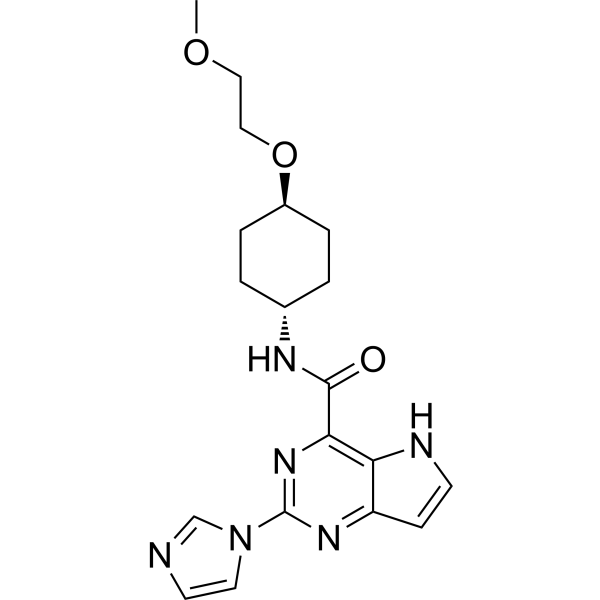
KI-TOX-A3 is a TOX protein-protein interaction inhibitor that blocks the TOX-KAT7 protein-protein interaction with an IC50 of 0.51 μM. KI-TOX-A3 induces proteasomal degradation of TOX, restores KAT7-mediated H3K14 acetylation, reverses exhaustion of CD8 + T cells, and inhibits the proliferation of T cell acute lymphoblastic leukemia (T-ALL) cells. KI-TOX-A3 shows promise for use in studies of hematological malignancies such as T-ALL .
loading...
    loading...
Cat. No.: HY-P99139
Anti-Mouse IL-1b Antibody (B122) is an anti-mouse IL-1b IgG monoclonal antibody. Anti-Mouse IL-1b Antibody (B122) enhances ferroptosis and increases levels of reactive oxygen species (ROS) combined with Sulfasalazine (SAS) (HY-14655). Anti-Mouse IL-1b Antibody (B122) can reduce monocyte infiltration and alleviate T cell exhaustion by blocking IL-1β signaling. Anti-Mouse IL-1b Antibody (B122) can be used for researches on cancer and cardiovascular conditions such as oral squamous cell carcinoma (OSCC), glioblastoma (GBM) and heart failure .
loading...
    loading...
Cat. No.: HY-N0600
CAS No.: 62025-50-7
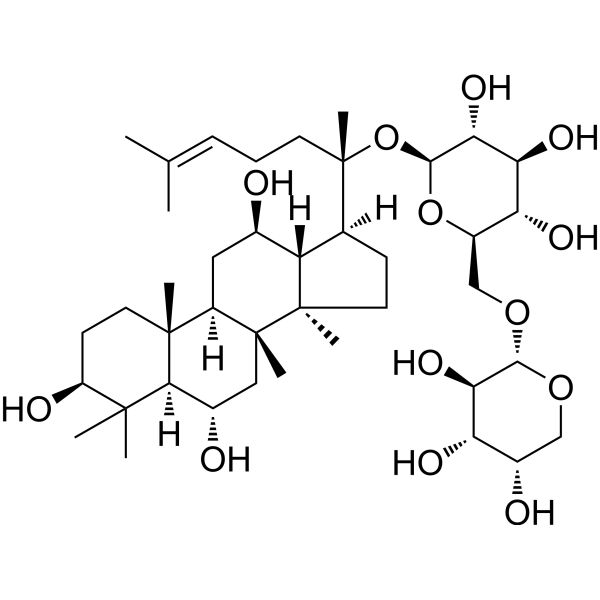
Ginsenoside F3 is a saponin extracted from the leaves of Panax ginseng with immunoenhancing and antitumor immunostimulatory activities. Ginsenoside F3 upregulates RIPOR2 with a Kd value of 3.77 μM. Ginsenoside F3 enhances NF‑κB activation, upregulates T‑bet and downregulates GATA‑3, increases the production of IL‑2 and IFN‑γ, decreases the production of IL‑4 and IL‑10, reverses CD8⁺ Tcell exhaustion, restores cytokine secretion, and enhances antitumor immunity in a mouse non‑small cell lung cancer model. Ginsenoside F3 can be used for the research of non-small cell lung cancer .
loading...
    loading...
Cat. No.: HY-150879
CAS No.: 1675202-20-6
Purity:  98.01%
Research Areas:  

Cancer

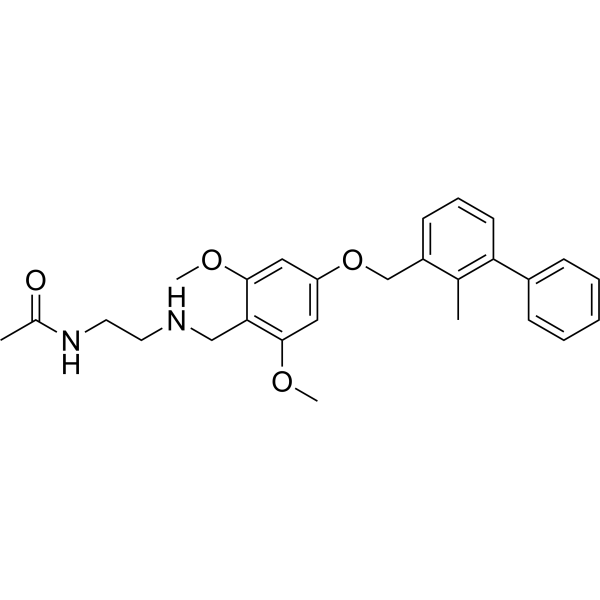
BMS-37 is a PD-1/PD-L1 immune checkpoint inhibitor with an IC50 towards the PD-L1/PD-1 complex in the range of 18 to 200 nM. BMS-37 shows unspecific toxicity against modified Jurkat T cells with an EC50 between 3 and 6 µM. BMS-37 can be used for the study of the PD-L1-induced exhaustion of T-cells or as PD-L1 ligand to synthesize PROTAC molecules .
loading...
    loading...
Cat. No.: HY-P991449

Target:  

PD-1/PD-L1 Tim3

Research Areas:  

Cancer

LY3415244 is a bispecific antibody that targets and inhibits TIM-3 and PD-L1. LY3415244 blocks the interaction between TIM-3 on immune cells and PD-L1 on the surface of tumor cells, establishes intercellular connections between TIM-3-positive immune cells and PD-L1-positive tumor cells, and blocks dual immunosuppressive signals. LY3415244 alleviates T cell exhaustion and restores T cell proliferation. LY3415244 induces broad-spectrum anti-drug antibodies, which impairs the binding capacity to soluble TIM-3 targets. LY3415244 can be used in research related to various advanced solid tumors .
loading...
    loading...
Cat. No.: HY-161982
CAS No.: 3079468-41-7
Target:  

TNF Receptor

Research Areas:  

Cancer

JNU-0921 is a potent and orally active CD137 agonist. JNU-0921 increases the mRNA expression of IFN-γ and GZMB. JNU-0921 induces luciferase activity with an EC50 value of 64.07 nM.JNU-0921 enhances effector and memory function of cytotoxic CD8 + T cells (CTLs) and alleviates their exhaustion. JNU-0921 also skews polarization of helper T cells toward T helper 1 type and enhances their activity to boost CTL function. JNU-0921 shows anticancer activity .
loading...
    loading...
Cat. No.: HY-P99027
CAS No.: 2137049-37-5
Synonyms: LAG525; IMP701; Hu5A8

Target:  

LAG-3

Research Areas:  

Cancer

Ieramilimab (LAG525; IMP701) is a humanized IgG4 monoclonal antibody that binds to LAG-3, resulting in inhibition of LAG-3 interaction with MHC-II molecules. Ieramilimab restores T-cell and NK-cell-mediated antileukemic immunity by reducing exhaustion and augmenting cytokine output and cytotoxicity. Ieramilimab increases the infiltration of cytotoxic T lymphocytes and reduces baseline densities of regulatory T cells (Tregs) and ADAM10-expressing tumor cells. Ieramilimab can be used for the study of various malignancies including melanoma, RCC, and advanced solid tumors .
loading...
    loading...
Cat. No.: HY-P990120

Target:  

Inhibitory Antibodies

Research Areas:  

Inflammation/Immunology

Anti-Rat Kappa Immunoglobulin Light Chain Antibody (MAR 18.5) is an anti-rat Kappa Immunoglobulin Light Chain IgG2a monoclonal antibody. Anti-Rat Kappa Immunoglobulin Light Chain Antibody (MAR 18.5) can enhance B cell depletion. Anti-Rat Kappa Immunoglobulin Light Chain Antibody (MAR 18.5) can enhance T cell exhaustion after the injection of CD4 mAb (HY-P990792) and CD8 mAb (HY-P99129). Anti-Rat Kappa Immunoglobulin Light Chain Antibody (MAR 18.5) can be used for research on immunology .
loading...
    loading...
Cat. No.: HY-141432G
CAS No.: 2573775-59-2
Synonyms: Cbl-b-IN-3 (GMP)
NX-1607 (Cbl-b-IN-3) (GMP) is a GMP-grade NX-1607 (HY-141432). GMP-grade small molecules can be used as adjuvant agents in cell therapy. NX-1607 (GMP) enhances antigen recall, reduces T cell exhaustion and increases cytokine production. NX-1607 is an inhibitor of Cbl-b (an E3 enzyme) .
loading...
    loading...
Cat. No.: HY-146740
CAS No.: 2891831-47-1
Target:  

PD-1/PD-L1

Research Areas:  

Cancer

PD-1/PD-L1-IN-27 is a potent PD-1/PD-L1 inhibitor with an IC50 value of 134 nM. PD-1/PD-L1-IN-27 shows antitumor effects with low T cell cytotoxicity. PD-1/PD-L1-IN-27 has the ability to activate CD8 + T cells and reduces T cell exhaustion .
loading...
    loading...
Cat. No.: HY-169480
CAS No.: 3003022-09-8
Target:  

Liposome

Research Areas:  

Infection Cancer

Lipid C2 is an ionizable cationic lipid that has been used in the formation of lipid nanoparticles (LNP) for mRNA delivery in vivo. LNPs containing Lipid C2 and encapsulating an mRNA reporter selectively accumulate in the liver and spleen but not the heart, lungs, or kidneys in mice. LNP containing Lipid C2 and encapsulating mRNA encoding the Epstein-Barr virus (EBV) protein latent membrane protein 2 (LMP-2), in combination with an anti-programmed cell death protein 1 (PD-1) antibody, decrease tumor volume and reverse T cell exhaustion, as well as increase the percentage of CD3 +CD8 + central and CD3 +CD8 + effector memory T cells and decrease the percentage of CD3 + T cells expressing Pd-1, in the spleen in a CT26 murine EBV-infected colon cancer model .
loading...
    loading...
Cat. No.: HY-184499
CAS No.: 2420554-24-9
Target:  

MHC Aminopeptidase

Research Areas:  

Cancer

GRWD5769 is an orally potent ERAP1 inhibitor. GRWD5769 regulates the peptide repertoire presented by MHC-I, alters TCR diversity/clonality, reprograms antigen-experienced T cells, induces novel T cell responses, drives tumor cell killing, and alleviates T cell exhaustion. GRWD5769 can be used in the research of advanced solid malignancies, microsatellite-stable colorectal cancer, non-small cell lung cancer, bladder cancer, hepatocellular carcinoma, head and neck squamous cell carcinoma, and cervical cancer .
loading...
    loading...
Cat. No.: HY-150879A
CAS No.: 2108101-94-4
Target:  

PD-1/PD-L1

Research Areas:  

Cancer

BMS-37 hydrochloride is a PD-1/PD-L1 immune checkpoint inhibitor with an IC50 towards the PD-L1/PD-1 complex in the range of 18 to 200 nM. BMS-37 hydrochloride shows unspecific toxicity against modified Jurkat T cells with an EC50 between 3 and 6 µM. BMS-37 hydrochloride can be used for the study of the PD-L1-induced exhaustion of T-cells or as PD-L1 ligand to synthesize PROTAC molecules .
loading...
    loading...
Cat. No.: HY-P11903
Research Areas:  

Cancer

dTBP-3 is a fully D-configured polypeptide competitive inhibitor that targets TIGIT. dTBP-3 can competitively occupy the binding interface between TIGIT and its ligand PVR, block TIGIT-mediated immunosuppressive signals, and reverse the immune exhaustion of NK cells and CD8 + T cells . dTBP-3 possesses anti-proteolytic activity and tumor tissue penetration ability, and can also enhance the tumor penetration capacity and cellular internalization efficiency of nanocarriers. dTBP-3 can be used in studies related to liver cancer, triple-negative breast cancer and non-small cell lung cancer .
loading...
    loading...
Cat. No.: HY-184299
Research Areas:  

Cancer

PD-1/PD-L1-IN-65 is a PD-1/PD-L1 checkpoint inhibitor, with an EC50 of 6.06 μM for blocking the PD-1/PD-L1 interaction and a Kd of 1.43 μM for PD-L1. PD-1/PD-L1-IN-65 upregulates pro-inflammatory cytokines IFN-γ, IL-1α, IL-1β and the cytolytic protein perforin, and reverses T cell exhaustion. PD-1/PD-L1-IN-65 enhances T cell-mediated cancer cell lysis. PD-1/PD-L1-IN-65 can be used in the research of breast cancer .
loading...
    loading...
  • 1

