30 Results for "

TARC

" in MedChemExpress (MCE) Product Catalog:
Products (30)

30 Results for "TARC" in MCE Product Catalog:

1
1 Cited Publications
Cat. No.: HY-P7759
Purity:  ≥ 95%, as determined by reducing SDS-PAGE.
Synonyms: CCL17; Chemokine (C-C Motif) Ligand 17; Prev. SCYA17; C-C Motif Chemokine 17; TARC; CC Chemokine TARC; ABCD-2; T Cell-Directed CC Chemokine; Small Inducible Cytokine Subfamily A (Cys-Cys), Member 17; A-152E5.3; Thymus And Activation-Regulated Chemokine; C
Species:  
Human
Source:  
HEK293
loading...
    loading...
1
1 Cited Publications
Cat. No.: HY-P71891A
Purity:  ≥ 95%, as determined by reducing SDS-PAGE.
Synonyms: CCL17; Chemokine (C-C Motif) Ligand 17; Prev. SCYA17; C-C Motif Chemokine 17; TARC; CC Chemokine TARC; ABCD-2; T Cell-Directed CC Chemokine; Small Inducible Cytokine Subfamily A (Cys-Cys), Member 17; A-152E5.3; Thymus And Activation-Regulated Chemokine; C
Species:  
Mouse
Source:  
E. coli
loading...
    loading...
Cat. No.: HY-P990774
CAS No.: 2768386-15-6
Synonyms: ASP-7266; TRAB-1; UPB-101

Target:  

Interleukin Related

Research Areas:  

Inflammation/Immunology

Verekitug (ASP-7266; TRAB-1; UPB-101) is a human monoclonal antibody targeting the thymic stromal lymphopoietin receptor (TSLPR), with a mean half-life of approximately 20 days. At doses of Verekitug ≥100 mg, complete and sustained TSLPR-specific occupancy is achieved, and the antibody does not bind to IL-7Rα. By inhibiting TSLP-driven inflammatory responses, Verekitug blocks TSLP-induced cell proliferation and TARC expression, while reducing fractional exhaled NO levels, blood eosinophil counts, and levels of IL-5 and IgE. Verekitug significantly improves scores for nasal polyps, nasal congestion and olfactory dysfunction, with favorable safety and good tolerability; potential adverse reactions include headache, upper respiratory tract infection, sinusitis and nasopharyngitis. Verekitug is used in relevant studies on asthma, chronic rhinosinusitis with nasal polyps and chronic obstructive pulmonary disease .
loading...
    loading...
Cat. No.: HY-B0640
CAS No.: 80012-43-7
Synonyms: WAL801
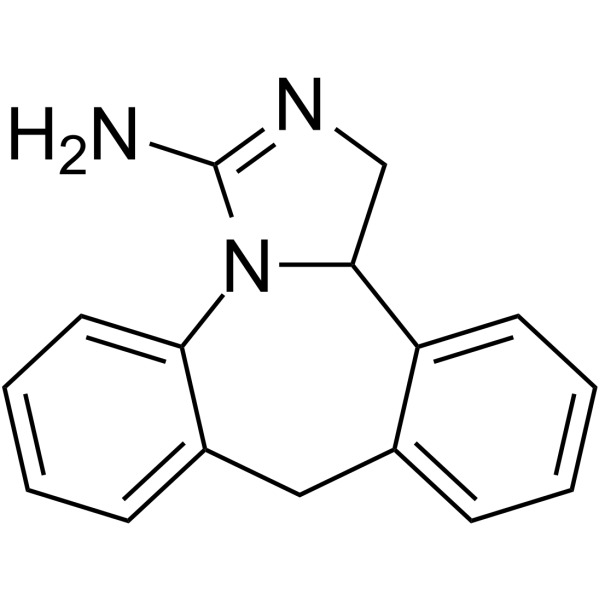
Epinastine (WAL801) is a selective and orally active histamine H1 receptor antagonist, CD96/PVR inhibitor and mast cell stabilizer. Epinastine has high affinity for neuronal octopamine receptors in locusts (Ki = 2 nM) and honeybees (Ki = 1.1 nM). Epinastine hydrochloride inhibits TARC, IL-8, and IL-4. Epinastine activates anti-colon cancer immunity and inhibits Substance P (HY-P0201)-induced scratching behavior and increased vascular permeability. Epinastine can be used in the research of allergic diseases .
loading...
    loading...
Cat. No.: HY-100183
CAS No.: 1240516-71-5
Purity:  99.81%
Target:  

CCR

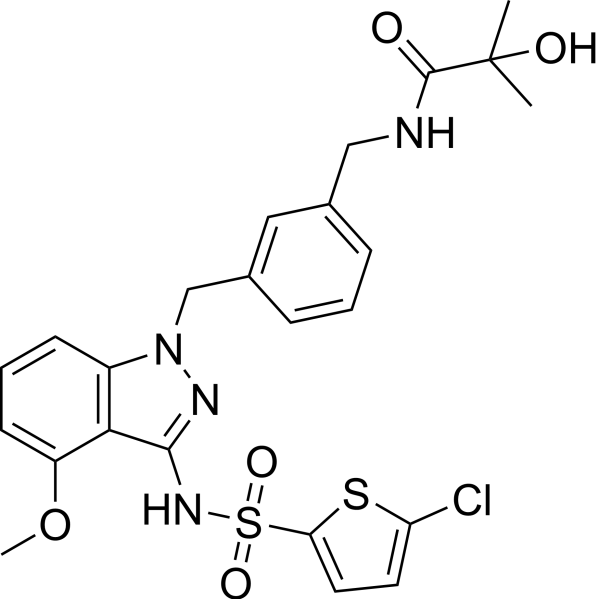
GSK2239633A is a CC-chemokine receptor 4 (CCR4) antagonist, which inhibits the binding of [ 125I]-TARC to human CCR4 with a pIC50 of 7.96.
loading...
    loading...
Cat. No.: HY-B0640A
CAS No.: 108929-04-0
Synonyms: WAL801 hydrochloride
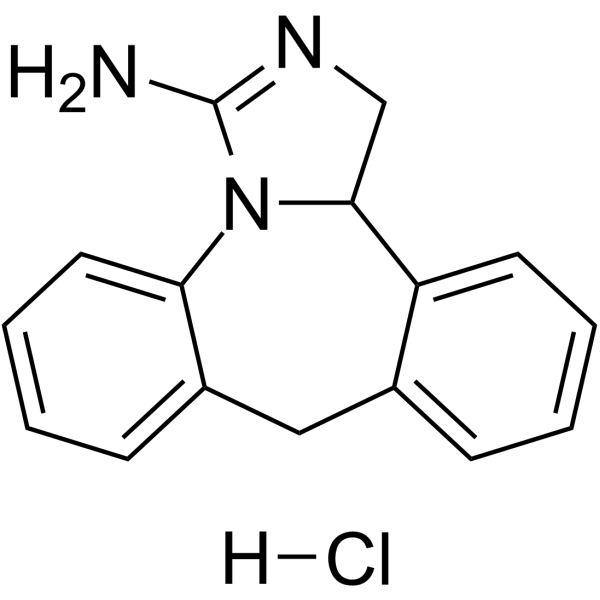
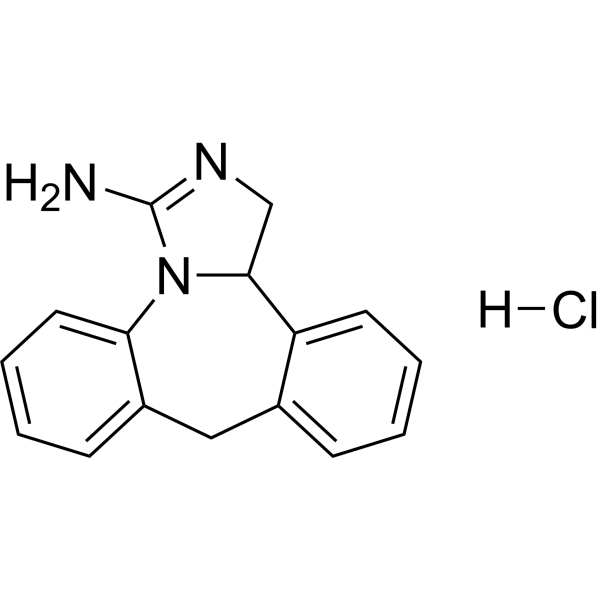
Epinastine hydrochloride (WAL801 hydrochloride) is a selective and orally active histamine H1 receptor antagonist, CD96/PVR inhibitor and mast cell stabilizer. Epinastine hydrochloride has high affinity for neuronal octopamine receptors in locusts (Ki = 2 nM) and honeybees (Ki = 1.1 nM). Epinastine hydrochloride inhibits TARC, IL-8, and IL-4. Epinastine hydrochloride activates anti-colon cancer immunity and inhibits Substance P (HY-P0201)-induced scratching behavior and increased vascular permeability. Epinastine hydrochloride can be used in the research of allergic diseases .
loading...
    loading...
Cat. No.: HY-N8593
CAS No.: 1120-21-4
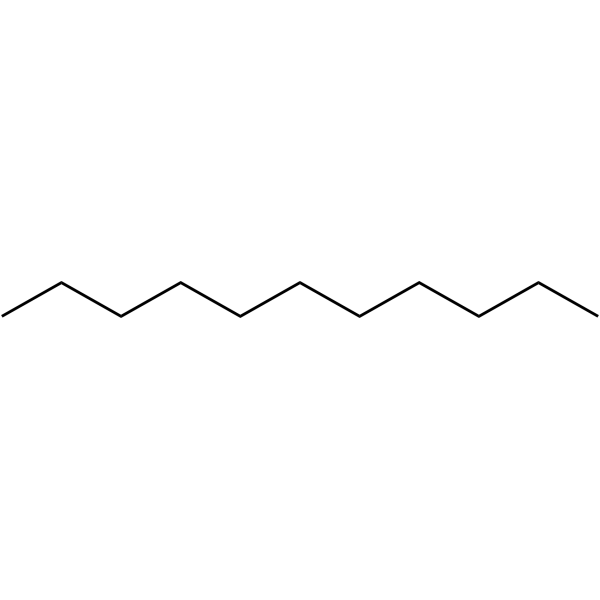
Undecane is a potent cAMP agonist with anti-allergic and anti-inflammatory activities. Undecane inhibits degranulation and the secretion of histamine and TNF-α. Undecane reverses the increased levels of p38 phosphorylation, NF-κB transcriptional activity and target cytokine/chemokine genes, including thymus and activation-regulated chemokine (TARC), macrophage-derived chemokine (MDC) and interleukin-8 (IL-8). Undecane can be used for the study of skin inflammatory disorders, such as atopic dermatitis .
loading...
    loading...
Cat. No.: HY-147385
CAS No.: 1957-01-3
Purity:  99.94%
Target:  

CCR

Research Areas:  

Inflammation/Immunology

CCR4 antagonist 3 is a potent chemokine receptor 4 (CCR4) antagonist with an IC50 value of 1.7 μM for [ 125I]TARC (thymus and activation regulated chemokine). CCR4 antagonist 3 inhibits binding of radiolabeled TARC and macrophage-derived chemokine (MDC) to CCR4 receptors on the surface of CEM cells. CCR4 antagonist 3 also inhibits the in vitro migration of CEM cells mediated by TARC (IC50 = 6.4 μM) .
loading...
    loading...
Cat. No.: HY-RS02086
Research Areas:  

Others

CCL17 Human Pre-designed siRNA Set A contains three designed siRNAs for CCL17 gene (Human), as well as a negative control, a positive control, and a FAM-labeled negative control.

loading...
    loading...
Cat. No.: HY-RS16826
Research Areas:  

Others

Ccl17 Mouse Pre-designed siRNA Set A contains three designed siRNAs for Ccl17 gene (Mouse), as well as a negative control, a positive control, and a FAM-labeled negative control.

loading...
    loading...
Cat. No.: HY-N8593R
CAS No.: 1120-21-4
Undecane (Standard) is an analytical standard of Undecane (HY-N8593).Undecane is a potent cAMP agonist with anti-allergic and anti-inflammatory activities. Undecane inhibits degranulation and the secretion of histamine and TNF-α. Undecane reverses the increased levels of p38 phosphorylation, NF-κB transcriptional activity and target cytokine/chemokine genes, including thymus and activation-regulated chemokine (TARC), macrophage-derived chemokine (MDC) and interleukin-8 (IL-8). Undecane can be used for the study of skin inflammatory disorders, such as atopic dermatitis .
loading...
    loading...
Cat. No.: HY-174744
Target:  

mRNA

Research Areas:  

Inflammation/Immunology

Human CCR4 mRNA encodes the human C-C motif chemokine receptor 4 (CCR4) protein, a member of G protein-coupled receptors family. CCR4 is a receptor for the CC chemokine - MIP-1, RANTES, TARC and MCP-1. Chemokines are a group of small polypeptide, structurally related molecules that regulate cell trafficking of various types of leukocytes. The chemokines also play fundamental roles in the development, homeostasis, and function of the immune system, and they have effects on cells of the central nervous system as well as on endothelial cells involved in angiogenesis or angiostasis.
loading...
    loading...
Cat. No.: HY-N8593S
CAS No.: 164858-54-2
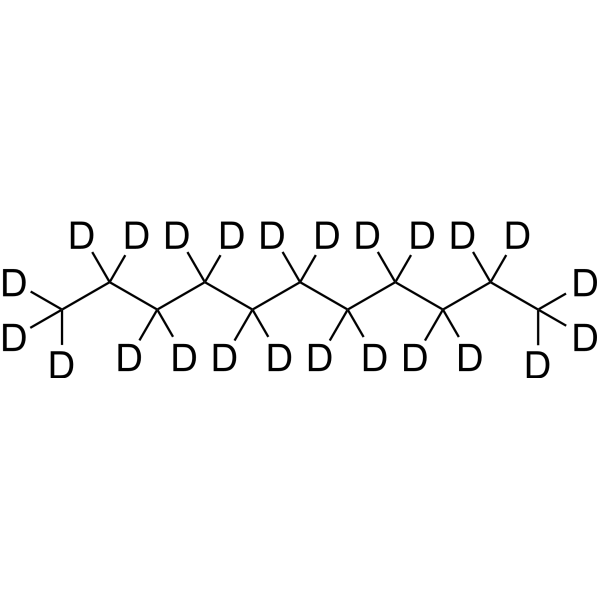
Undecane-d24 is the deuterium labeled Undecane (HY-N8593).Undecane is a potent cAMP agonist with anti-allergic and anti-inflammatory activities. Undecane inhibits degranulation and the secretion of histamine and TNF-α. Undecane reverses the increased levels of p38 phosphorylation, NF-κB transcriptional activity and target cytokine/chemokine genes, including thymus and activation-regulated chemokine (TARC), macrophage-derived chemokine (MDC) and interleukin-8 (IL-8). Undecane can be used for the study of skin inflammatory disorders, such as atopic dermatitis .
loading...
    loading...
Cat. No.: HY-B0640AR
CAS No.: 108929-04-0
Synonyms: WAL801 hydrochloride (Standard)
Epinastine (hydrochloride) (Standard) is the analytical standard of Epinastine hydrochloride (HY-B0640A). This product is intended for research and analytical applications. Epinastine hydrochloride (WAL801 hydrochloride) is a selective and orally active histamine H1 receptor antagonist, CD96/PVR inhibitor and mast cell stabilizer. Epinastine hydrochloride has high affinity for neuronal octopamine receptors in locusts (Ki = 2 nM) and honeybees (Ki = 1.1 nM). Epinastine hydrochloride inhibits TARC, IL-8, and IL-4. Epinastine hydrochloride activates anti-colon cancer immunity and inhibits Substance P (HY-P0201)-induced scratching behavior and increased vascular permeability. Epinastine hydrochloride can be used in the research of allergic diseases .
loading...
    loading...
Cat. No.: HY-P74532
Purity:  ≥ 95%, as determined by reducing SDS-PAGE.
Synonyms: CCL17; Chemokine (C-C Motif) Ligand 17; Prev. SCYA17; C-C Motif Chemokine 17; TARC; CC Chemokine TARC; ABCD-2; T Cell-Directed CC Chemokine; Small Inducible Cytokine Subfamily A (Cys-Cys), Member 17; A-152E5.3; Thymus And Activation-Regulated Chemokine; C
Species:  
Human
Source:  
Sf9 insect cells
loading...
    loading...
Cat. No.: HY-P76667
Purity:  ≥ 95%, as determined by reducing SDS-PAGE.
Synonyms: CCL17; Chemokine (C-C Motif) Ligand 17; Prev. SCYA17; C-C Motif Chemokine 17; TARC; CC Chemokine TARC; ABCD-2; T Cell-Directed CC Chemokine; Small Inducible Cytokine Subfamily A (Cys-Cys), Member 17; A-152E5.3; Thymus And Activation-Regulated Chemokine; C
Species:  
Rhesus Macaque
Source:  
Sf9 insect cells
loading...
    loading...
Cat. No.: HY-P74531
Purity:  ≥ 90%, as determined by reducing SDS-PAGE.
Synonyms: CCL17; Chemokine (C-C Motif) Ligand 17; Prev. SCYA17; C-C Motif Chemokine 17; TARC; CC Chemokine TARC; ABCD-2; T Cell-Directed CC Chemokine; Small Inducible Cytokine Subfamily A (Cys-Cys), Member 17; A-152E5.3; Thymus And Activation-Regulated Chemokine; C
Species:  
Human
Source:  
Sf9 insect cells
loading...
    loading...
Cat. No.: HY-P7292
Purity:  ≥ 95%, as determined by reducing SDS-PAGE.
Synonyms: CCL17; Chemokine (C-C Motif) Ligand 17; Prev. SCYA17; C-C Motif Chemokine 17; TARC; CC Chemokine TARC; ABCD-2; T Cell-Directed CC Chemokine; Small Inducible Cytokine Subfamily A (Cys-Cys), Member 17; A-152E5.3; Thymus And Activation-Regulated Chemokine; C
Species:  
Human
Source:  
E. coli
loading...
    loading...
Cat. No.: HY-P7293
Purity:  ≥ 95%, as determined by reducing SDS-PAGE.
Synonyms: CCL17; Chemokine (C-C Motif) Ligand 17; Prev. SCYA17; C-C Motif Chemokine 17; TARC; CC Chemokine TARC; ABCD-2; T Cell-Directed CC Chemokine; Small Inducible Cytokine Subfamily A (Cys-Cys), Member 17; A-152E5.3; Thymus And Activation-Regulated Chemokine; C
Species:  
Mouse
Source:  
E. coli
loading...
    loading...
Cat. No.: HY-P704902
Purity:  ≥ 95%, as determined by reducing SDS-PAGE.
Synonyms: CCL17; Chemokine (C-C Motif) Ligand 17; Prev. SCYA17; C-C Motif Chemokine 17; TARC; CC Chemokine TARC; ABCD-2; T Cell-Directed CC Chemokine; Small Inducible Cytokine Subfamily A (Cys-Cys), Member 17; A-152E5.3; Thymus And Activation-Regulated Chemokine; C
Species:  
Human
Source:  
HEK293
loading...
    loading...

