Search Result
Results for "
TNBS
" in MedChemExpress (MCE) Product Catalog:
3
Biochemical Assay Reagents
1
Isotope-Labeled Compounds
| Cat. No. |
Product Name |
Target |
Research Areas |
Chemical Structure |
-
- HY-108749
-
|
Cropure OL
|
Environmental Pollutants
Xanthine Oxidase
|
Cardiovascular Disease
Metabolic Disease
Inflammation/Immunology
Cancer
|
|
Olive oil (Cropure OL) is an oleaginous compound found in the fruit of the Olea europaea tree . Olive oil contains many phenolic components and exerts antioxidant activity. Olive oil exhibits hydroxyl radical scavenging, platelet aggregation inhibition and xanthine oxidase inhibitory activity. Olive oil can promote wound healing and relieve inflammation. Olive oil can be used for the research of inflammation, cancer, metabolic and cardiovascular disease, such as diabetic foot ulcers and inflammatory bowel disease .
|
-
-
- HY-P10587
-
|
JNJ-77242113; JNJ-2113; PN-235
|
Interleukin Related
STAT
IFNAR
|
Inflammation/Immunology
|
|
Icotrokinra (JNJ-77242113) is an orally available, selective antagonist of the IL-23 receptor. Icotrokinra inhibits IL-23-induced STAT3 phosphorylation in peripheral blood mononuclear cells (IC50=5.6 pM) and inhibits IL-23-induced interferon IFN-γ production in NK cells with an IC50 of 18.4 pM. Icotrokinra exhibits anti-inflammatory activity in a rat TNBS-induced colitis model. Icotrokinra can be used in the study of psoriasis, psoriatic arthritis, and inflammatory bowel disease .
|
-
-
- HY-P2818
-
|
Apase
|
Endogenous Metabolite
Phosphatase
Glutathione Peroxidase
Bacterial
|
Infection
Inflammation/Immunology
|
|
Alkaline phosphatase, Bovine intestine (Apase) is an orally active membrane-bound glycoprotein that catalyzes the hydrolysis of phosphate monoesters at alkaline pH. Alkaline phosphatase, Bovine intestine reduces myeloperoxidase activity and bacterial translocation. Alkaline phosphatase, Bovine intestine improves survival rate of mice infected with E. coli. Alkaline phosphatase, Bovine intestine improves TNBS-induced colon inflammation .
|
-
-
- HY-P991028
-
|
AZD0486; TNB-486
|
CD3
CD19
Interleukin Related
TNF Receptor
IFNAR
|
Cancer
|
|
Surovatamig (AZD0486; TNB-486) is a fully human anti-CD19/CD3 IgG4 bispecific antibody. Surovatamig triggers T cell activation, releases cytotoxic granules, and induces T cell-dependent cellular cytotoxicity and tumor cell lysis. Surovatamig can reduces release of pro-inflammatory cytokines including IL-2, IFNγ, TNF. Surovatamig can be used for the research of cancer, such as B cell non-Hodgkin lymphoma .
|
-
-
- HY-114041
-
|
RvE1
|
Endogenous Metabolite
|
Inflammation/Immunology
|
|
Resolvin E1 (RvE1), a potent endogenous pro-resolving mediator of inflammation, is derived from omega-3 fatty acid eicosapentaenoic acid (EPA). Resolvin E1 is endogenously biosynthesized from EPA in the presence of Aspirin during the spontaneous resolution phase of acute inflammation, where specific cell-cell interactions occur. Resolvin E1 possesses unique counterregulatory actions that inhibit polymorphonuclear leukocyte (PMN) transendothelial migration. Resolvin E1 also acts as a potent inhibitor of leukocyte infiltration, dendritic cell migration, and IL-12 production .
|
-
-
- HY-P2818E
-
|
Apase, Calf intestinal
|
Endogenous Metabolite
Phosphatase
Glutathione Peroxidase
Bacterial
|
Infection
Inflammation/Immunology
|
|
Alkaline Phosphatase (Apase), Calf intestinal is an alkaline phosphatase from Calf intestinal, and is one of the most active alkaline phosphatases. Alkaline Phosphatase, Calf intestinal is an orally active membrane-bound glycoprotein that catalyzes the hydrolysis of phosphate monoesters at alkaline pH. Alkaline Phosphatase, Calf intestinal reduces myeloperoxidase activity and bacterial translocation. Alkaline Phosphatase, Calf intestinal improves survival rate of mice infected with E. coli. Alkaline Phosphatase, Calf intestinal improves TNBS-induced colon inflammation .
|
-
-
- HY-114360A
-
|
|
Interleukin Related
TNF Receptor
|
Inflammation/Immunology
|
|
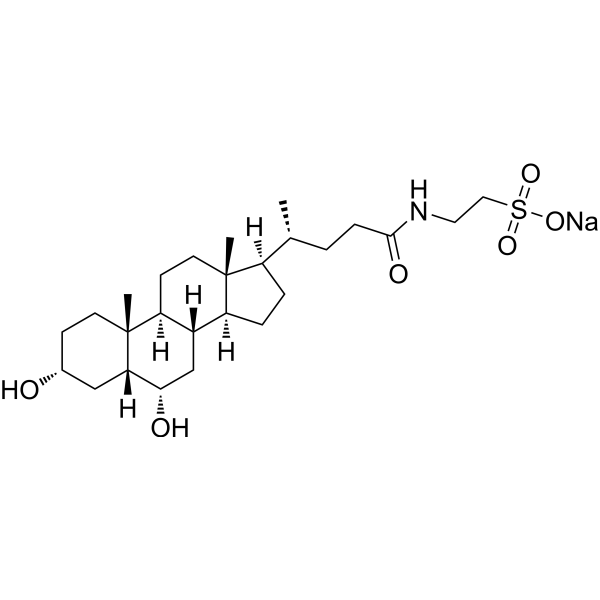
Taurohyodeoxycholic acid (THDCA) sodium is the taurine-conjugated form of the secondary bile acid hyodeoxycholic acid. Taurohyodeoxycholic acid can also reduce the activity and expression of myeloperoxidase TNF-α and IL-6, as well as colonic damage in TNBS-induced ulcerative colitis mouse model.
|
-
-
- HY-103182
-
|
|
Adenosine Receptor
|
Others
|
|
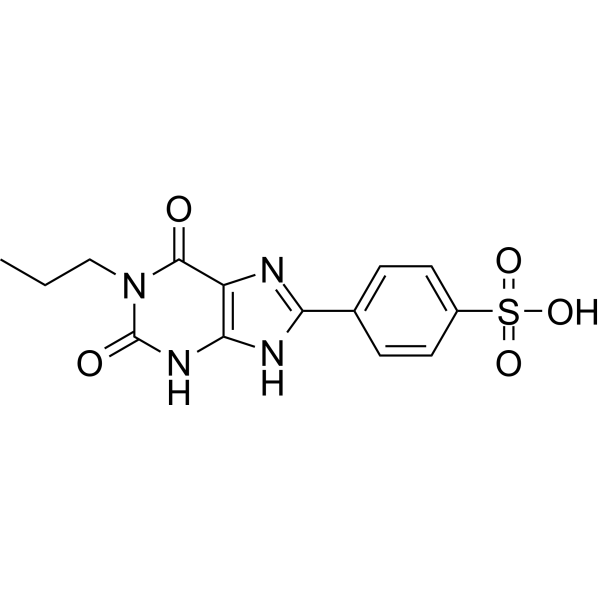
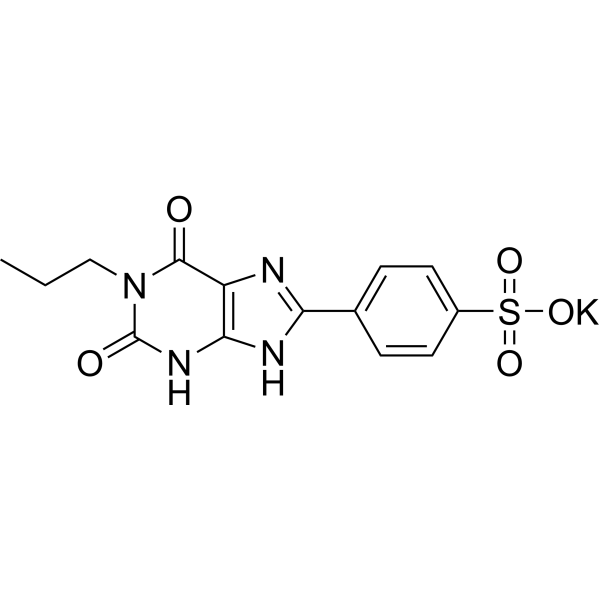
PSB-1115 is a selective A2B Adenosine Receptor antagonist. PSB-1115 inhibits the 2,4,6-trinitrobenzenesulfonic acid (TNBS)-induced contraction inhibition of acetylcholine (ACh) .
|
-
-
- HY-N0253
-
|
Kalopanaxsaponin B
|
Bacterial
p38 MAPK
NF-κB
Apoptosis
|
Infection
Inflammation/Immunology
|
|
Hederacoside C (Kalopanaxsaponin B) is an ingredient that can be obtained mainly from ivy leaves. Hederacoside C mediates inflammation by inhibiting activation of MAPK/NF-κB and its downstream signaling pathway. Hederacoside C has anti-inflammatory and antibacterial activity .
|
-
-
- HY-119347
-
|
|
IFNAR
STAT
|
Inflammation/Immunology
Cancer
|
|
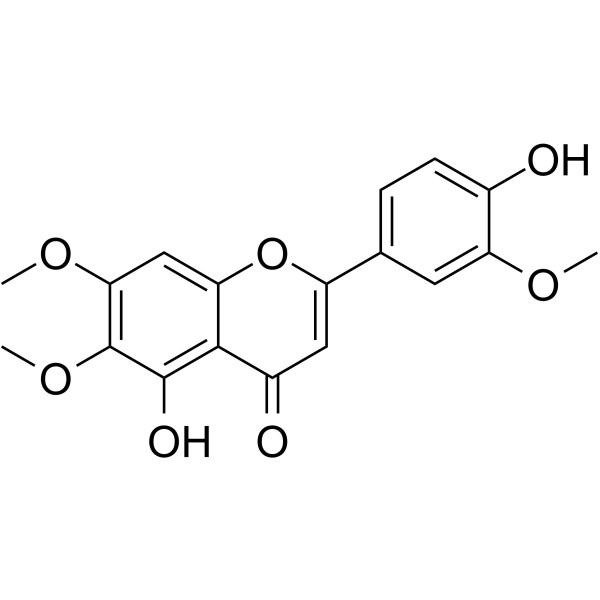
Cirsilineol, a natural flavone compound, selectively inhibits IFN-γ/STAT1/T-bet signaling in intestinal CD4 + T cells. Cirsilineol has potent immunosuppressive and anti-tumor properties. Cirsilineol significantly ameliorates trinitro-benzene sulfonic acid (TNBS)-induced T-cell-mediated experimental colitis in mice .
|
-
-
- HY-P2818C
-
|
Apase, microorganism
|
Endogenous Metabolite
Phosphatase
Glutathione Peroxidase
Bacterial
|
Infection
Inflammation/Immunology
|
|
Alkaline Phosphatase (Apase), microorganism is an alkaline phosphatase from microorganism, and is one of the most active alkaline phosphatases. Alkaline phosphatase, microorganism is an orally active membrane-bound glycoprotein that catalyzes the hydrolysis of phosphate monoesters at alkaline pH. Alkaline phosphatase, microorganism reduces myeloperoxidase activity and bacterial translocation. Alkaline phosphatase, microorganism improves survival rate of mice infected with E. coli. Alkaline phosphatase, microorganism improves TNBS-induced colon inflammation .
|
-
-
- HY-P2818A
-
|
Apase, Escherichia coli
|
Endogenous Metabolite
Phosphatase
Glutathione Peroxidase
Bacterial
|
Infection
Inflammation/Immunology
|
|
Alkaline Phosphatase (Apase), Escherichia coli is an alkaline phosphatase from Escherichia coli, and is one of the most active alkaline phosphatases. Alkaline phosphatase, Escherichia coli is an orally active membrane-bound glycoprotein that catalyzes the hydrolysis of phosphate monoesters at alkaline pH. Alkaline phosphatase, Escherichia coli reduces myeloperoxidase activity and bacterial translocation. Alkaline phosphatase, Escherichia coli improves survival rate of mice infected with E. coli. Alkaline phosphatase, Escherichia coli improves TNBS-induced colon inflammation .
|
-
-
- HY-P991372
-
|
RN927C antibody
|
TROP2
|
Cancer
|
|
Anti-TROP2 Antibody (RN927C antibody) is a human monoclonal antibody targeting Trop-2. Anti-TROP2 Antibody exerts in vitro inhibitory effects on a variety of tumor cell lines. Anti-TROP2 Antibody exhibits anti-tumor activity in mouse pancreatic PDX, ovarian PDX, lung PDX and triple-negative breast cancer (TNB) PDX models. Anti-TROP2 Antibody can be used for research on pancreatic cancer, ovarian cancer, lung cancer and triple-negative breast cancer .
|
-
-
- HY-P2818B
-
|
Apase, Chicken Intestine
|
Endogenous Metabolite
Phosphatase
Glutathione Peroxidase
Bacterial
|
Infection
Inflammation/Immunology
|
|
Alkaline Phosphatase (Apase), Chicken Intestine is an alkaline phosphatase from Chicken Intestine, and is one of the most active alkaline phosphatases. Alkaline phosphatase, Chicken Intestine is an orally active membrane-bound glycoprotein that catalyzes the hydrolysis of phosphate monoesters at alkaline pH. Alkaline phosphatase, Chicken Intestine reduces myeloperoxidase activity and bacterial translocation. Alkaline phosphatase, Chicken Intestine improves survival rate of mice infected with E. coli. Alkaline phosphatase, Chicken Intestine improves TNBS-induced colon inflammation .
|
-
-
- HY-103182A
-
|
|
Adenosine Receptor
|
Others
|
|
PSB-1115 potassium salt is a selective A2B Adenosine Receptor antagonist. PSB-1115 potassium salt inhibits the 2,4,6-trinitrobenzenesulfonic acid (TNBS)-induced contraction inhibition of acetylcholine (ACh) .
|
-
-
- HY-176771
-
|
|
Drug Intermediate
|
Inflammation/Immunology
|
|
Tapinarof prodrug-1 (Compound 31) is an orally active prodrug of Tapinarof (HY-109044). Tapinarof is an AhR agonist. Tapinarof prodrug-1 has an improving effect in the TNBS-induced mouse model of inflammatory bowel disease. Tapinarof prodrug-1 can be used in the research of inflammatory diseases .
|
-
-
- HY-N0253R
-
|
Kalopanaxsaponin B (Standard)
|
Reference Standards
Bacterial
p38 MAPK
NF-κB
Apoptosis
|
Infection
Inflammation/Immunology
|
|
Hederacoside C (Standard) is the analytical standard of Hederacoside C. This product is intended for research and analytical applications. Hederacoside C (Kalopanaxsaponin B) is an ingredient that can be obtained mainly from ivy leaves. Hederacoside C mediates inflammation by inhibiting activation of MAPK/NF-κB and its downstream signaling pathway. Hederacoside C has anti-inflammatory and antibacterial activity .
|
-
-
- HY-P10587A
-
|
JNJ-77242113 acetate; JNJ-2113 acetate; PN-235 acetate
|
Interleukin Related
STAT
IFNAR
|
Inflammation/Immunology
|
|
Icotrokinra (JNJ-77242113) acetate is an orally available, selective antagonist of the IL-23 receptor. Icotrokinra acetate inhibits IL-23-induced STAT3 phosphorylation in peripheral blood mononuclear cells (IC50=5.6 pM) and inhibits IL-23-induced interferon IFN-γ production in NK cells with an IC50 of 18.4 pM. Icotrokinra acetate exhibits anti-inflammatory activity in a rat TNBS-induced colitis model. Icotrokinra acetate can be used in the study of psoriasis, psoriatic arthritis, and inflammatory bowel disease .
|
-
-
- HY-119347R
-
|
|
Reference Standards
IFNAR
STAT
|
Inflammation/Immunology
Cancer
|
|
Cirsilineol (Standard) is the analytical standard of Cirsilineol. This product is intended for research and analytical applications. Cirsilineol, a natural flavone compound, selectively inhibits IFN-γ/STAT1/T-bet signaling in intestinal CD4+ T cells. Cirsilineol has potent immunosuppressive and anti-tumor properties. Cirsilineol significantly ameliorates trinitro-benzene sulfonic acid (TNBS)-induced T-cell-mediated experimental colitis in mice .
|
-
-
- HY-173624
-
-
-
- HY-129787
-
|
|
Cannabinoid Receptor
|
Neurological Disease
|
|
PF-03550096 is an orally active synthetic cannabinoid (CB) that selectively targets peripheral CB2 receptors with a Ki value of 7.9 nM. PF-03550096 has analgesic activity .
|
-
-
- HY-N11768
-
|
|
NF-κB
Interleukin Related
Toll-like Receptor (TLR)
|
Inflammation/Immunology
|
|
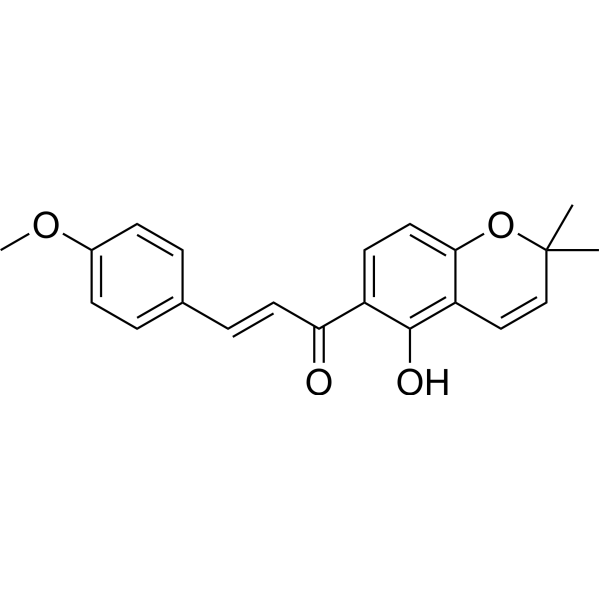
4-Methoxylonchocarpin is an orally active anti-inflammatory agent. 4-methoxylonchocarpin inhibits the binding of LPS to Toll-like Receptor (TLR) TLR4 to inhibit NF-κB activation and TNF Receptor and IL-6 expression. 4-Methoxylonchocarpin also inhibits the phosphorylation of TGF-beta activated kinase 1 and TNBS-induced expression of IL-1β, IL-17A, and TNF. 4-methoxylonchocarpin can improve 2,4, 6-trinitrobenzene sulfonic acid (TNBS)-induced colitis mouse model .
|
-
-
- HY-114360AS1
-
|
|
Isotope-Labeled Compounds
TNF Receptor
Interleukin Related
|
Inflammation/Immunology
|
|
Taurohyodeoxycholic acid-d4 (sodium) is a deuterated labeled Taurohyodeoxycholic acid (sodium) . Taurohyodeoxycholic acid (THDCA) sodium is the taurine-conjugated form of the secondary bile acid hyodeoxycholic acid. Taurohyodeoxycholic acid can also reduce the activity and expression of myeloperoxidase TNF-α and IL-6, as well as colonic damage in TNBS-induced ulcerative colitis mouse model.
|
-
-
- HY-103182R
-
|
|
Reference Standards
Adenosine Receptor
|
Others
|
|
PSB-1115 (Standard) is the analytical standard of PSB-1115. This product is intended for research and analytical applications. PSB-1115 is a selective A2B Adenosine Receptor antagonist. PSB-1115 inhibits the 2,4,6-trinitrobenzenesulfonic acid (TNBS)-induced contraction inhibition of acetylcholine (ACh) .
|
-
-
- HY-P2818F
-
|
Apase, Human (HEK293)
|
Endogenous Metabolite
Phosphatase
Glutathione Peroxidase
Bacterial
|
Infection
Inflammation/Immunology
|
|
Alkaline phosphatase (Apase), Human (HEK293) is an orally active membrane-bound glycoprotein that catalyzes the hydrolysis of phosphate monoesters at alkaline pH. Alkaline phosphatase reduces myeloperoxidase activity and bacterial translocation. Alkaline phosphatase improves survival rate of mice infected with E. coli. Alkaline phosphatase improves TNBS-induced colon inflammation .
|
-
-
- HY-P10587B
-
|
JNJ-77242113 (hydrochloride); JNJ-2113 (hydrochloride); PN-235 (hydrochloride)
|
Interleukin Related
STAT
IFNAR
|
Inflammation/Immunology
|
|
Icotrokinra (JNJ-77242113) hydrochloride is an orally available, selective antagonist of the IL-23 receptor. Icotrokinra hydrochloride inhibits IL-23-induced STAT3 phosphorylation in peripheral blood mononuclear cells (IC50=5.6 pM) and inhibits IL-23-induced interferon IFN-γ production in NK cells with an IC50 of 18.4 pM. Icotrokinra hydrochloride exhibits anti-inflammatory activity in a rat TNBS-induced colitis model. Icotrokinra hydrochloride can be used in the study of psoriasis, psoriatic arthritis, and inflammatory bowel disease .
|
-
-
- HY-12292G
-
|
|
NF-κB
STAT
GSK-3
β-catenin
Bcr-Abl
|
Cancer
|
|
IM-12 GMP is IM-12 (HY-12292) produced by using GMP guidelines. GMP small molecules works appropriately as an auxiliary reagent for cell therapy manufacture. IM-12 is an orally active anti-inflammatory agent that targets and inhibits the NF-κB and STAT3 signaling pathways. IM-12 activates the Wnt signaling pathway and promotes the nuclear translocation of β-catenin by inhibiting GSK3β, while also blocking the tyrosine kinase activity of p210BCR/ABL. IM-12 reduces the levels of IL-6, IL-17, NO, prostaglandin E2, iNOS and COX-2, and induces ER stress, Ca 2+ release, autophagy and apoptosis. IM-12 is heat-sensitive and does not induce autophagy in IM-resistant p210BCR/ABL T315I mutant cells. IM-12 is also a component of the 5iLA medium used for naive pluripotent stem cell research. IM-12 has been applied in studies related to carrageenan (HY-125474)-induced hind paw edema, TNBS-induced colitis, and acute and chronic myeloid leukemia .
|
-
| Cat. No. |
Product Name |
Type |
-
- HY-12292G
-
|
|
Fluorescent Dyes
|
|
IM-12 GMP is IM-12 (HY-12292) produced by using GMP guidelines. GMP small molecules works appropriately as an auxiliary reagent for cell therapy manufacture. IM-12 is an orally active anti-inflammatory agent that targets and inhibits the NF-κB and STAT3 signaling pathways. IM-12 activates the Wnt signaling pathway and promotes the nuclear translocation of β-catenin by inhibiting GSK3β, while also blocking the tyrosine kinase activity of p210BCR/ABL. IM-12 reduces the levels of IL-6, IL-17, NO, prostaglandin E2, iNOS and COX-2, and induces ER stress, Ca 2+ release, autophagy and apoptosis. IM-12 is heat-sensitive and does not induce autophagy in IM-resistant p210BCR/ABL T315I mutant cells. IM-12 is also a component of the 5iLA medium used for naive pluripotent stem cell research. IM-12 has been applied in studies related to carrageenan (HY-125474)-induced hind paw edema, TNBS-induced colitis, and acute and chronic myeloid leukemia .
|
| Cat. No. |
Product Name |
Type |
-
- HY-108749
-
|
Cropure OL
|
Biochemical Assay Reagents
|
|
Olive oil (Cropure OL) is an oleaginous compound found in the fruit of the Olea europaea tree . Olive oil contains many phenolic components and exerts antioxidant activity. Olive oil exhibits hydroxyl radical scavenging, platelet aggregation inhibition and xanthine oxidase inhibitory activity. Olive oil can promote wound healing and relieve inflammation. Olive oil can be used for the research of inflammation, cancer, metabolic and cardiovascular disease, such as diabetic foot ulcers and inflammatory bowel disease .
|
-
- HY-114360A
-
|
|
Biochemical Assay Reagents
|
|
Taurohyodeoxycholic acid (THDCA) sodium is the taurine-conjugated form of the secondary bile acid hyodeoxycholic acid. Taurohyodeoxycholic acid can also reduce the activity and expression of myeloperoxidase TNF-α and IL-6, as well as colonic damage in TNBS-induced ulcerative colitis mouse model.
|
-
- HY-12292G
-
|
|
Biochemical Assay Reagents
|
|
IM-12 GMP is IM-12 (HY-12292) produced by using GMP guidelines. GMP small molecules works appropriately as an auxiliary reagent for cell therapy manufacture. IM-12 is an orally active anti-inflammatory agent that targets and inhibits the NF-κB and STAT3 signaling pathways. IM-12 activates the Wnt signaling pathway and promotes the nuclear translocation of β-catenin by inhibiting GSK3β, while also blocking the tyrosine kinase activity of p210BCR/ABL. IM-12 reduces the levels of IL-6, IL-17, NO, prostaglandin E2, iNOS and COX-2, and induces ER stress, Ca 2+ release, autophagy and apoptosis. IM-12 is heat-sensitive and does not induce autophagy in IM-resistant p210BCR/ABL T315I mutant cells. IM-12 is also a component of the 5iLA medium used for naive pluripotent stem cell research. IM-12 has been applied in studies related to carrageenan (HY-125474)-induced hind paw edema, TNBS-induced colitis, and acute and chronic myeloid leukemia .
|
| Cat. No. |
Product Name |
Target |
Research Area |
-
- HY-P10587
-
|
JNJ-77242113; JNJ-2113; PN-235
|
Interleukin Related
STAT
IFNAR
|
Inflammation/Immunology
|
|
Icotrokinra (JNJ-77242113) is an orally available, selective antagonist of the IL-23 receptor. Icotrokinra inhibits IL-23-induced STAT3 phosphorylation in peripheral blood mononuclear cells (IC50=5.6 pM) and inhibits IL-23-induced interferon IFN-γ production in NK cells with an IC50 of 18.4 pM. Icotrokinra exhibits anti-inflammatory activity in a rat TNBS-induced colitis model. Icotrokinra can be used in the study of psoriasis, psoriatic arthritis, and inflammatory bowel disease .
|
-
- HY-P10587A
-
|
JNJ-77242113 acetate; JNJ-2113 acetate; PN-235 acetate
|
Interleukin Related
STAT
IFNAR
|
Inflammation/Immunology
|
|
Icotrokinra (JNJ-77242113) acetate is an orally available, selective antagonist of the IL-23 receptor. Icotrokinra acetate inhibits IL-23-induced STAT3 phosphorylation in peripheral blood mononuclear cells (IC50=5.6 pM) and inhibits IL-23-induced interferon IFN-γ production in NK cells with an IC50 of 18.4 pM. Icotrokinra acetate exhibits anti-inflammatory activity in a rat TNBS-induced colitis model. Icotrokinra acetate can be used in the study of psoriasis, psoriatic arthritis, and inflammatory bowel disease .
|
-
- HY-P10587B
-
|
JNJ-77242113 (hydrochloride); JNJ-2113 (hydrochloride); PN-235 (hydrochloride)
|
Interleukin Related
STAT
IFNAR
|
Inflammation/Immunology
|
|
Icotrokinra (JNJ-77242113) hydrochloride is an orally available, selective antagonist of the IL-23 receptor. Icotrokinra hydrochloride inhibits IL-23-induced STAT3 phosphorylation in peripheral blood mononuclear cells (IC50=5.6 pM) and inhibits IL-23-induced interferon IFN-γ production in NK cells with an IC50 of 18.4 pM. Icotrokinra hydrochloride exhibits anti-inflammatory activity in a rat TNBS-induced colitis model. Icotrokinra hydrochloride can be used in the study of psoriasis, psoriatic arthritis, and inflammatory bowel disease .
|
| Cat. No. |
Product Name |
Target |
Research Area |
Image |
-
- HY-P991028
-
|
AZD0486; TNB-486
|
CD3
CD19
Interleukin Related
TNF Receptor
IFNAR
|
Cancer
|
|
Surovatamig (AZD0486; TNB-486) is a fully human anti-CD19/CD3 IgG4 bispecific antibody. Surovatamig triggers T cell activation, releases cytotoxic granules, and induces T cell-dependent cellular cytotoxicity and tumor cell lysis. Surovatamig can reduces release of pro-inflammatory cytokines including IL-2, IFNγ, TNF. Surovatamig can be used for the research of cancer, such as B cell non-Hodgkin lymphoma .
|
-
(5)
-
- HY-P991372
-
|
RN927C antibody
|
TROP2
|
Cancer
|
|
Anti-TROP2 Antibody (RN927C antibody) is a human monoclonal antibody targeting Trop-2. Anti-TROP2 Antibody exerts in vitro inhibitory effects on a variety of tumor cell lines. Anti-TROP2 Antibody exhibits anti-tumor activity in mouse pancreatic PDX, ovarian PDX, lung PDX and triple-negative breast cancer (TNB) PDX models. Anti-TROP2 Antibody can be used for research on pancreatic cancer, ovarian cancer, lung cancer and triple-negative breast cancer .
|
-
(5)
| Cat. No. |
Product Name |
Category |
Target |
Chemical Structure |
| Cat. No. |
Product Name |
Chemical Structure |
-
- HY-114360AS1
-
|
|
|
Taurohyodeoxycholic acid-d4 (sodium) is a deuterated labeled Taurohyodeoxycholic acid (sodium) . Taurohyodeoxycholic acid (THDCA) sodium is the taurine-conjugated form of the secondary bile acid hyodeoxycholic acid. Taurohyodeoxycholic acid can also reduce the activity and expression of myeloperoxidase TNF-α and IL-6, as well as colonic damage in TNBS-induced ulcerative colitis mouse model.
|
-
| Cat. No. |
Product Name |
|
Classification |
-
- HY-108749
-
|
Cropure OL
|
|
Solvents
|
|
Olive oil (Cropure OL) is an oleaginous compound found in the fruit of the Olea europaea tree . Olive oil contains many phenolic components and exerts antioxidant activity. Olive oil exhibits hydroxyl radical scavenging, platelet aggregation inhibition and xanthine oxidase inhibitory activity. Olive oil can promote wound healing and relieve inflammation. Olive oil can be used for the research of inflammation, cancer, metabolic and cardiovascular disease, such as diabetic foot ulcers and inflammatory bowel disease .
|
| Cat. No. |
Product Name |
Target |
Research Areas |
Chemical Structure |
-
- HY-12292G
-
|
|
NF-κB
STAT
GSK-3
β-catenin
Bcr-Abl
|
Cancer
|
|
IM-12 GMP is IM-12 (HY-12292) produced by using GMP guidelines. GMP small molecules works appropriately as an auxiliary reagent for cell therapy manufacture. IM-12 is an orally active anti-inflammatory agent that targets and inhibits the NF-κB and STAT3 signaling pathways. IM-12 activates the Wnt signaling pathway and promotes the nuclear translocation of β-catenin by inhibiting GSK3β, while also blocking the tyrosine kinase activity of p210BCR/ABL. IM-12 reduces the levels of IL-6, IL-17, NO, prostaglandin E2, iNOS and COX-2, and induces ER stress, Ca 2+ release, autophagy and apoptosis. IM-12 is heat-sensitive and does not induce autophagy in IM-resistant p210BCR/ABL T315I mutant cells. IM-12 is also a component of the 5iLA medium used for naive pluripotent stem cell research. IM-12 has been applied in studies related to carrageenan (HY-125474)-induced hind paw edema, TNBS-induced colitis, and acute and chronic myeloid leukemia .
|
-
Your information is safe with us. * Required Fields.
Inquiry Information
- Product Name:
- Cat. No.:
- Quantity:
- MCE Japan Authorized Agent:

