1. Search Result
Search Result
Results for "

Tacrine

" in MedChemExpress (MCE) Product Catalog:

18

Inhibitors & Agonists

1

Screening Libraries

1

Natural
Products

1

Isotope-Labeled Compounds

Cat. No. Product Name Target Research Areas Chemical Structure
  • HY-B1488
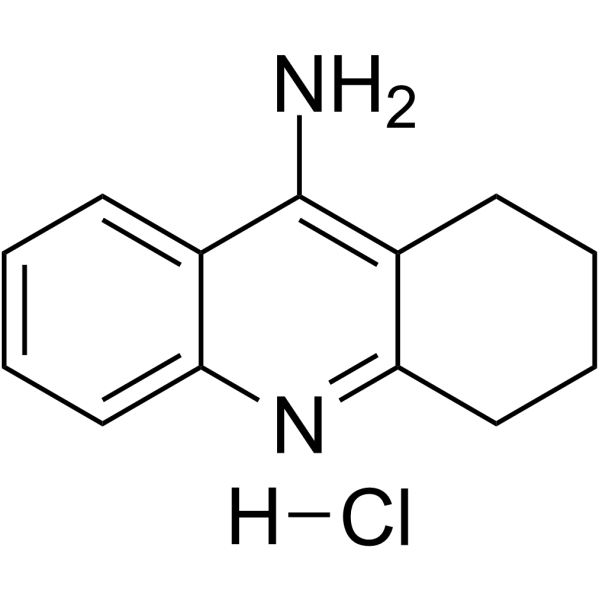
    Tacrine hydrochloride
    Maximum Cited Publications
    8 Publications Verification

    Cholinesterase (ChE) iGluR Neurological Disease
    Tacrine hydrochloride is a potent brain-penetrant inhibitor of both AChE and BChE, with IC50s of 31 nM and 25.6 nM, respectively. Tacrine hydrochloride is also a NMDAR inhibitor, with an IC50 of 26 μM. Tacrine hydrochloride can be used for the research of Alzheimer’s disease .
    Tacrine hydrochloride
  • HY-111338
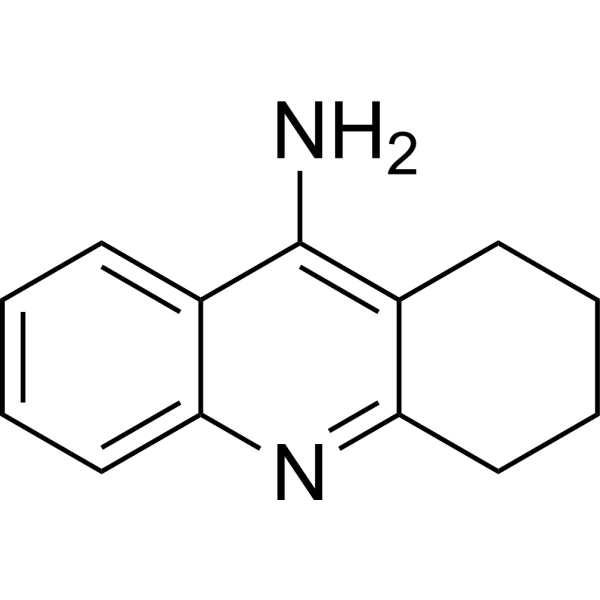
    Tacrine
    Maximum Cited Publications
    8 Publications Verification

    Cholinesterase (ChE) Neurological Disease
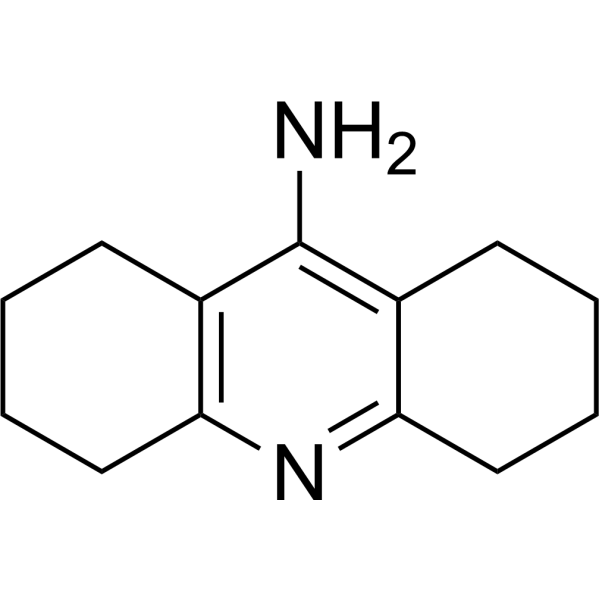
    Tacrine is an effective oral acetylcholine (AChE) inhibitor (IC50 = 109 nM) and also acts as an active substrate for CYP1A2. Tacrine can restore cognitive dysfunction in elderly rats. Tacrine can cause liver toxicity and is used in research related to Alzheimer's disease .
    Tacrine
  • HY-B2244
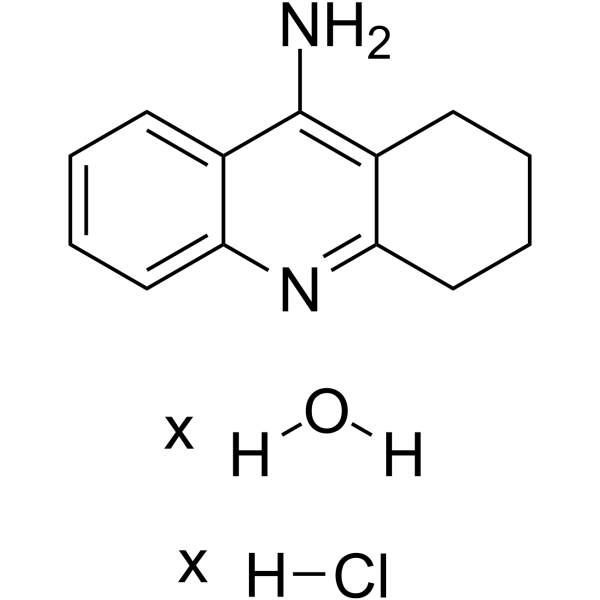
    Tacrine hydrochloride hydrate
    Maximum Cited Publications
    8 Publications Verification

    Cholinesterase (ChE) Neurological Disease
    Tacrine hydrochloride (hydrate) is an inhibitor of both acetyl (AChE) and butyryl-cholinestrase (BChE) with IC50s of 31 nM and 25.6 nM, respectively.
    Tacrine hydrochloride hydrate
  • HY-W027553

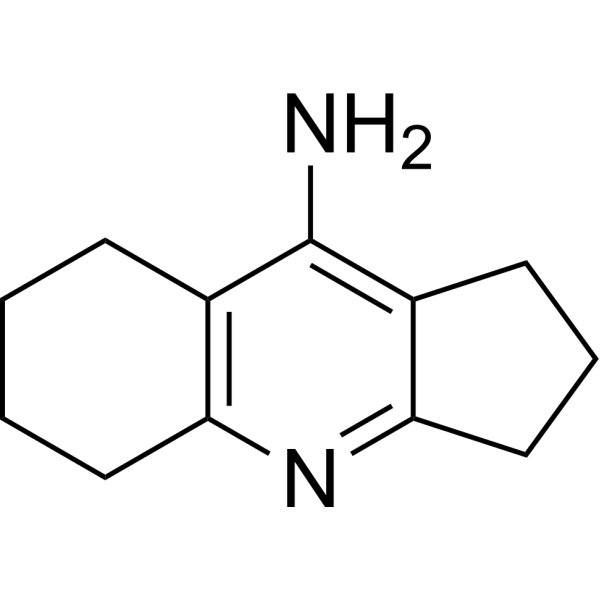
    NIK-247 free base; Amiridine free base

    Cholinesterase (ChE) Potassium Channel Sodium Channel Neurological Disease Metabolic Disease
    Ipidacrine is orally active and brain-penetrant AChE and BuChE inhibitors with IC50 values of 1 μM and 1.9 μM, respectively, which is also a partial agonist of M2-cholinergic receptors and a reversible cholinesterase inhibitor. Ipidacrine has a stimulating effect on neuromuscular transmission and excitation along the nerve fibres with a moderately anti-pain effect. Ipidacrine is an aminopyridines and is structurally similar to Tacrine (HY-111338). Ipidacrine is effective in various amnesia models, improves erectile function and inhibits K + and Na +-channels in the neuronal membrane in diabetic rats. Ipidacrine is promising for research of Alzheimer’s disease, ischaemic stroke, idiopathic neuropathy of the facial nerve, diabetes mellitus-induced erectile dysfunction and other deficits in central or peripheral cholinergic deseases .
    Ipidacrine
  • HY-120970

    Cholinesterase (ChE) GABA Receptor iGluR Neurological Disease
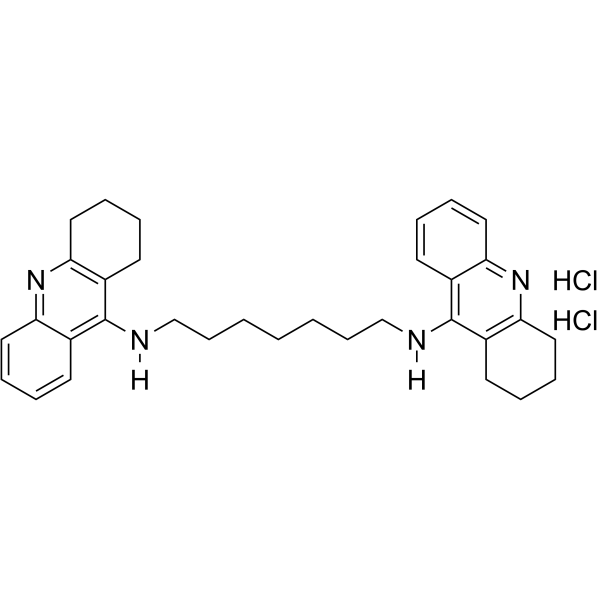
    Bis(7)-tacrine dihydrochloride is a dimeric AChE inhibitor derived from tacrine. Bis(7)-tacrine dihydrochloride prevents glutamate-induced neuronal apoptosis by blocking NMDA receptors. Bis(7)-tacrine dihydrochloride is a potent GABAAreceptor antagonist. Bis(7)-tacrine dihydrochloride has the potential for the research of Alzheimer's disease .
    Bis(7)-tacrine dihydrochloride
  • HY-151436

    CDK Cholinesterase (ChE) Apoptosis Cancer
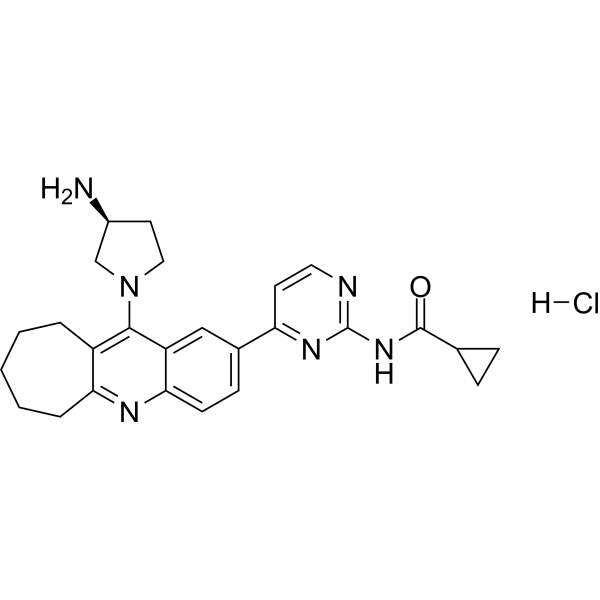
    ZLMT-12 (compound 35), tacrine derivatives, is a potent, orally active CDK2/9 inhibitor with IC50 values of 0.002 and 0.011 μM for CDK9 and CDK2, respectively. ZLMT-12 has a weak inhibitory effect on AChE (IC50=19.023 μM) and BChE (IC50=2.768 μM). ZLMT-12 has low toxicity and antiproliferative activity. ZLMT-12 induces apoptosis and arrests the cell cycle in the S phase and G2/M phase .
    ZLMT-12
  • HY-B1488R

    Reference Standards Cholinesterase (ChE) iGluR Neurological Disease
    Tacrine (hydrochloride) (Standard) is the analytical standard of Tacrine (hydrochloride). This product is intended for research and analytical applications. Tacrine hydrochloride is a potent inhibitor of both AChE and BChE, with IC50s of 31 nM and 25.6 nM, respectively. Tacrine hydrochloride is also a NMDAR inhibitor, with an IC50 of 26 μM. Tacrine hydrochloride can be used for the research of Alzheimer’s disease .
    Tacrine hydrochloride (Standard)
  • HY-111338R

    Cholinesterase (ChE) Reference Standards Neurological Disease
    Tacrine (Standard) is the analytical standard of Tacrine. This product is intended for research and analytical applications. Tacrine is an effective oral acetylcholine (AChE) inhibitor (IC50 = 109 nM) and also acts as an active substrate for CYP1A2. Tacrine can restore cognitive dysfunction in elderly rats. Tacrine can cause liver toxicity and is used in research related to Alzheimer's disease .
    Tacrine (Standard)
  • HY-B2244R

    Reference Standards Cholinesterase (ChE) Neurological Disease
    Tacrine (hydrochloride) (hydrate) (Standard) is the analytical standard of Tacrine (hydrochloride) (hydrate). This product is intended for research and analytical applications. Tacrine hydrochloride (hydrate) is an inhibitor of both acetyl (AChE) and butyryl-cholinestrase (BChE) with IC50s of 31 nM and 25.6 nM, respectively.
    Tacrine hydrochloride hydrate (Standard)
  • HY-W027553R

    NIK-247 free base (Standard); Amiridine free base (Standard)

    Reference Standards Cholinesterase (ChE) Potassium Channel Sodium Channel Neurological Disease Metabolic Disease
    Ipidacrine (Standard) is the analytical reference standard of Ipidacrine. This product is used for research and analytical applications. Ipidacrine is orally active and blood-brain-barrier-penetrant AChE and BuChE inhibitors with IC50 values of 1 μM and 1.9 μM, respectively, which is also a partial agonist of M2-cholinergic receptors and a reversible cholinesterase inhibitor. Ipidacrine has a stimulating effect on neuromuscular transmission and excitation along the nerve fibres with a moderately anti-pain effect. Ipidacrine is an aminopyridines and is structurally similar to Tacrine (HY-111338). Ipidacrine is effective in various amnesia models, improves erectile function and inhibits K + and Na +-channels in the neuronal membrane in diabetic rats. Ipidacrine is promising for research of Alzheimer’s disease, ischaemic stroke, idiopathic neuropathy of the facial nerve, diabetes mellitus-induced erectile dysfunction and other deficits in central or peripheral cholinergic deseases .
    Ipidacrine (Standard)
  • HY-143291

    Cholinesterase (ChE) Neurological Disease
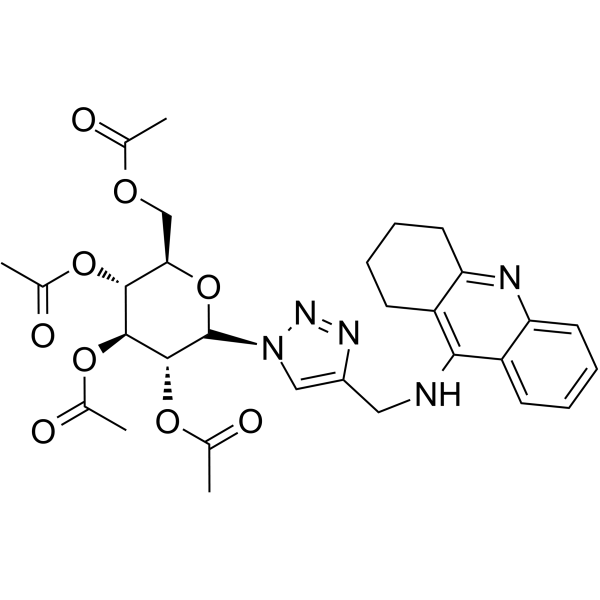
    AChE-IN-9 is a Tacrine (HY-111338) glycoconjugate tethered with acetylated β-Glucose. AChE-IN-9 is also an AChE inhibitor with an IC50 value of 0.4 μM, with lower hepatotoxicity on healthy cells. Tacrine is used in Alzheimer's research .
    AChE-IN-9
  • HY-P1123R

    Reference Standards ATP Citrate Lyase Free Fatty Acid Receptor Metabolic Disease
    Tacrine (hydrochloride) (Standard) is the analytical standard of Tacrine (hydrochloride). This product is intended for research and analytical applications. Tacrine hydrochloride is a potent inhibitor of both AChE and BChE, with IC50s of 31 nM and 25.6 nM, respectively. Tacrine hydrochloride is also a NMDAR inhibitor, with an IC50 of 26 μM. Tacrine hydrochloride can be used for the research of Alzheimer’s disease .
    MEDICA16 (Standard)
  • HY-135006A

    Cholinesterase (ChE) Neurological Disease
    Octahydroaminoacridine, a Tacrine analogue, is an acetylcholinesterse (AChE) and butyrylcholinesterase (BChE) inhibitor. Octahydroaminoacridine can be used for Alzheimer's disease (AD) research .
    Octahydroaminoacridine
  • HY-135006

    Cholinesterase (ChE) Neurological Disease
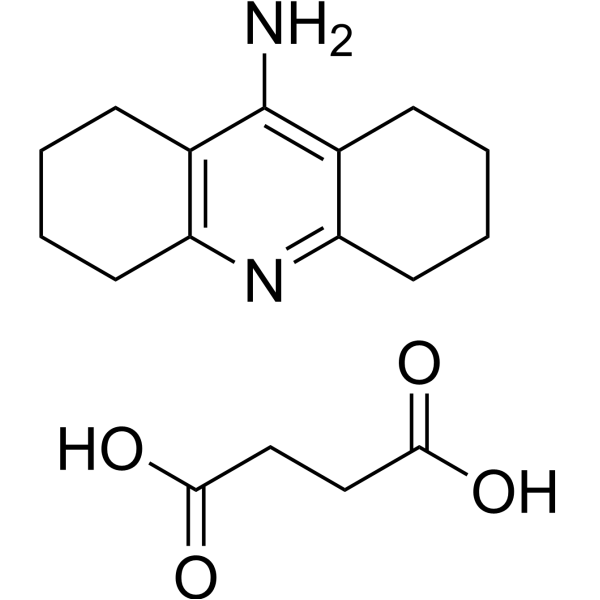
    Octahydroaminoacridine succinate, a Tacrine analogue, is an acetylcholinesterse (AChE) and butyrylcholinesterase (BChE) inhibitor. Octahydroaminoacridine succinate can be used for Alzheimer's disease (AD) research .
    Octahydroaminoacridine succinate
  • HY-121174

    Catharticin

    NO Synthase CDK Tyrosinase Reactive Oxygen Species (ROS) Metabolic Disease
    Alaternin (Catharticin) is an anthraquinone compound with antioxidant and hepatoprotective activities. Alaternin has an inhibitory activity against hydroxyl radicals generated in a cell-free chemical system (FeSO4/H2O2) with an IC50 value of 3.05 μM. Alaternin exhibits hepatoprotective activity against Tacrine (HY-111338)-induced toxicity in human hepatic HepG2 cells with an EC50 value of 4.02 μM .
    Alaternin
  • HY-W027553S1

    NIK-247-d9 free base

    Isotope-Labeled Compounds Cholinesterase (ChE) Potassium Channel Sodium Channel Metabolic Disease
    Ipidacrine-d9 (NIK-247-d9 (free base)) is the deuterium labeled Ipidacrine (HY-W027553). Ipidacrine is orally active and brain-penetrant AChE and BuChE inhibitors with IC50 values of 1 μM and 1.9 μM, respectively, which is also a partial agonist of M2-cholinergic receptors and a reversible cholinesterase inhibitor. Ipidacrine has a stimulating effect on neuromuscular transmission and excitation along the nerve fibres with a moderately anti-pain effect. Ipidacrine is an aminopyridines and is structurally similar to Tacrine (HY-111338). Ipidacrine is effective in various amnesia models, improves erectile function and inhibits K+ and Na+-channels in the neuronal membrane in diabetic rats. Ipidacrine is promising for research of Alzheimer’s disease, ischaemic stroke, idiopathic neuropathy of the facial nerve, diabetes mellitus-induced erectile dysfunction and other deficits in central or peripheral cholinergic deseases .
    Ipidacrine-d9
  • HY-182254

    Cholinesterase (ChE) Neurological Disease
    AChE/BChE-IN-35, Tacrine (HY-111338) derivative, is a brain-penetrant dual AChE/BChE inhibitor with an Electric Eel AChE IC50 of 123.66 nM, human AChE IC50 of 122.34 nM, and equine BChE IC50 of 488.00 nM. AChE/BChE-IN-35 undergoes LAT1-mediated active transport across cell membranes. AChE/BChE-IN-35 exhibits enhanced brain exposure with slower brain tissue elimination. AChE/BChE-IN-35 can be used for the research of alzheimer's disease .
    AChE/BChE-IN-35
  • HY-19689

    NIK-247; Amiridine

    Cholinesterase (ChE) Potassium Channel Sodium Channel Cardiovascular Disease Neurological Disease Endocrinology
    Ipidacrine (NIK-247; Amiridine) hydrochloride is orally active and blood-brain-barrier-penetrant AChE and BuChE inhibitors with IC50 values of 1 μM and 1.9 μM, respectively, which is also a partial agonist of M2-cholinergic receptors and a reversible cholinesterase inhibitor. Ipidacrine hydrochloride has a stimulating effect on neuromuscular transmission and excitation along the nerve fibres with a moderately anti-pain effect. Ipidacrine hydrochloride is an aminopyridines and is structurally similar to Tacrine (HY-111338). Ipidacrine hydrochloride is effective in various amnesia models, improves erectile function and inhibits K + and Na +-channels in the neuronal membrane in diabetic rats. Ipidacrine hydrochloride is promising for research of Alzheimer’s disease, ischaemic stroke, idiopathic neuropathy of the facial nerve, diabetes mellitus-induced erectile dysfunction and other deficits in central or peripheral cholinergic deseases .
    Ipidacrine hydrochloride

Inquiry Online

Your information is safe with us. * Required Fields.

Salutation


Country or Region *

Applicant Name *


Organization Name *

Department *


Email Address *


Product Name *

Cat. No.


Requested quantity *

Phone Number *


Remarks

Inquiry Online

Inquiry Information

Product Name:
Cat. No.:
Quantity:
MCE Japan Authorized Agent:

