
















Search Result
Results for "
Zwitterionic
" in MedChemExpress (MCE) Product Catalog:
31
Biochemical Assay Reagents
10
Isotope-Labeled Compounds
| Cat. No. |
Product Name |
Target |
Research Areas |
Chemical Structure |
-
- HY-15435
-
CHAPS
4 Publications Verification
|
Exosomes
Biochemical Assay Reagents
|
Others
|
|
CHAPS is a cholic acid-derived, sulfobetaine-type zwitterionic detergent and micelle-forming agent. CHAPS exhibits properties of weak cationic or nonionic surfactants in different solution systems, undergoes micellization, and forms small, loose hydrophilic aggregates that are temperature-dependent. CHAPS stabilizes mononucleosomes under different ionic strengths, reduces nucleosome sequence specificity, promotes sliding of histone cores along DNA, solubilizes Tamm-Horsfall protein to reduce its interference with urinary exosome isolation, and maintains vesicle structure and the activity of related proteins at the same time. CHAPS is used to recover native folded fusion proteins, enhance the binding capacity of GST fusion proteins, and restore GST enzyme activity. However, CHAPS cannot refold proteins denatured by urea, guanidine hydrochloride or heat, nor can it construct the structure of intrinsically disordered proteins. CHAPS is commonly used in research on the separation and purification of membrane proteins .
|
-
-
- HY-D0857
-
HEPES
Maximum Cited Publications
9 Publications Verification
|
Biochemical Assay Reagents
|
Others
|
|
HEPES, a nonvolatile zwitterionic chemical buffering agent, is broadly applied in cell culture. HEPES is effective at pH 6.8 to 8.2. HEPES is also a potent inducer of lysosome biogenesis .
|
-
-
- HY-108535
-
HEPES sodium
Maximum Cited Publications
9 Publications Verification
|
Biochemical Assay Reagents
|
Others
|
|
HEPES sodium, a nonvolatile zwitterionic chemical buffering agent, is broadly applied in cell culture. HEPES sodium is effective at pH 6.8 to 8.2. HEPES sodium is also a potent inducer of lysosome biogenesis .
|
-
-
- HY-W099581
-
|
SB3-14; DMAPS
|
Biochemical Assay Reagents
|
Others
|
|
Zwittergent 3-14 (DMAPS) is a zwitterionic detergent commonly used in biochemistry and molecular biology for the solubilization and purification of membrane-bound proteins and other hydrophobic biomolecules, which have both hydrophilic and hydrophobic moieties , so that it has good detergency properties, making it suitable for stabilizing membrane proteins in aqueous solutions. In addition, DMAPS has been used in various techniques such as electrophoresis and chromatography for the separation and analysis of biomolecules. The long The hydrocarbon chains provide it with good membrane penetration and solubilization capabilities, while the sulfonate and quaternary ammonium groups ensure water solubility and charge neutrality.
|
-
-
- HY-15435A
-
|
|
Biochemical Assay Reagents
Exosomes
|
Others
|
|
CHAPS hydrate is a cholic acid-derived, sulfobetaine-type zwitterionic detergent and micelle-forming agent. CHAPS hydrate exhibits properties of weak cationic or nonionic surfactants in different solution systems, undergoes micellization, and forms small, loose hydrophilic aggregates that are temperature-dependent. CHAPS hydrate stabilizes mononucleosomes under different ionic strengths, reduces nucleosome sequence specificity, promotes sliding of histone cores along DNA, solubilizes Tamm‑Horsfall protein to reduce its interference with urinary exosome isolation, and maintains vesicle structure and the activity of related proteins at the same time. CHAPS hydrate is used to recover native folded fusion proteins, enhance the binding capacity of GST fusion proteins, and restore GST enzyme activity. However, CHAPS hydrate cannot refold proteins denatured by urea, guanidine hydrochloride or heat, nor can it construct the structure of intrinsically disordered proteins. CHAPS hydrate is commonly used in research on the separation and purification of membrane proteins .
|
-
-
- HY-D0857S
-
|
|
Isotope-Labeled Compounds
|
Others
|
|
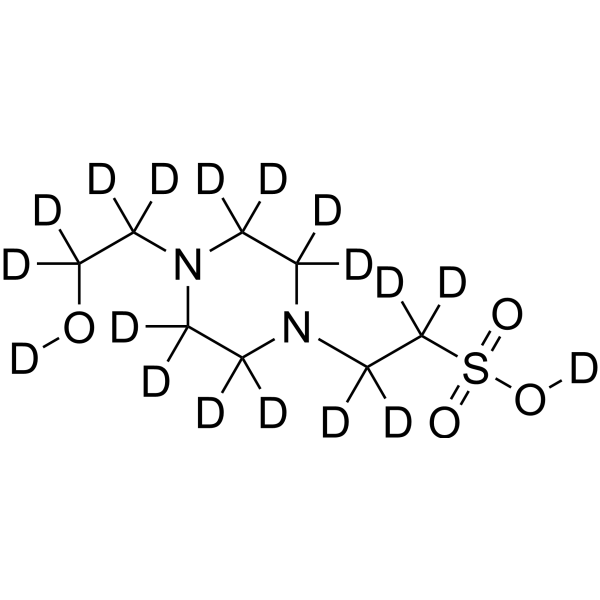
HEPES-d18 is the deuterium labeled HEPES . HEPES, a nonvolatile zwitterionic chemical buffering agent, is broadly applied in cell culture. HEPES is effective at pH 6.8 to 8.2. HEPES is also a potent inducer of lysosome biogenesis .
|
-
-
- HY-126377
-
|
|
Biochemical Assay Reagents
|
Others
|
|
Sulfobetaine 10, is a zwitterionic surfactant commonly used in biochemistry and biophysics. It is commonly used to dissolve membrane proteins and other hydrophobic molecules in aqueous solutions. Sulfobetaine 10 has both positively and negatively charged groups in its structure, which allows it to maintain a neutral charge in solution and reduces its tendency to denature proteins. It is considered a mild, non-denaturing surfactant and is widely used in protein research.
|
-
-
- HY-145794
-
|
|
Liposome
|
Cancer
|
|
ZA3-Ep10 is a zwitterionic lipid used in lipid nanoparticles formulation for in vivo RNA delivery.
|
-
-
- HY-D0874
-
|
|
Biochemical Assay Reagents
|
Others
|
|
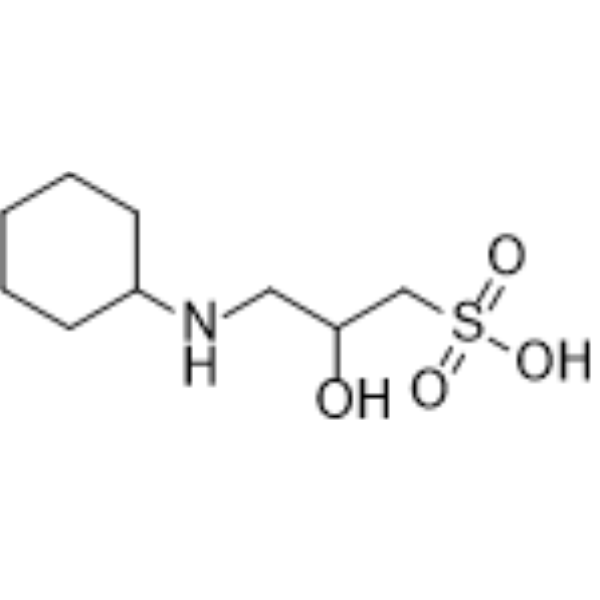
HEPPSO is a zwitterionic Good's buffer suitable for physiological pH conditions. HEPPSO forms high-order oligomers in aqueous solutions and can form a 1:1 complex with Cu 2+ via its hydroxyalkyl and tertiary amine groups. However, HEPPSO contains a structurally similar trace impurity lacking an alkanesulfonic acid side chain. The complex formed by this impurity and Cu 2+ has a very low Ka; therefore, HEPPSO may interfere with studies on copper speciation analysis in natural water bodies .
|
-
-
- HY-W012161
-
|
L-Alanyl-L-phenylalanine; H-Ala-Phe-OH
|
Endogenous Metabolite
Drug Intermediate
|
Others
|
|
Alanylphenylalanine (L-Alanyl-L-phenylalanine) is a dipeptide. Alanylphenylalanine forms a mononuclear Au (III) complex through bidentate coordination via its carboxyl oxygen atom and deprotonated amide nitrogen atom .
|
-
-
- HY-101850
-
|
|
Biochemical Assay Reagents
|
Others
|
|
MOPSO is a biological zwitterionic buffer with the useful pH range from 6.2 to 7.6. MOPSO has been employed as a buffer component of charcoal yeast extract medium .
|
-
-
- HY-109506S
-
|
129Y83-d62
|
Isotope-Labeled Compounds
Endogenous Metabolite
|
Others
|
|
DPPC-d62 is the deuterium labeled DPPC. DPPC (129Y83) is a zwitterionic phosphoglyceride that can be used for the preparation of liposomal monolayers . DPPC-liposome serves effectively as a delivery vehicle for inducing immune responses against GSL antigen in mice .
|
-
-
- HY-D0870
-
-
-
- HY-D0876
-
|
|
Biochemical Assay Reagents
|
Others
|
|
POPSO is a zwitterionic buffer, increases osmolality and shows marked inhibition of anion uniport. POPSO inhibits chloride uniport with an IC50 value of 24 mM. POPSO enhances copper uptake and toxicity in alga, impairs mitochondrial inner membrane. The working pH range of POPSO sesquisodium salt is 7.2-8.5 .
|
-
-
- HY-W105704
-
|
|
Biochemical Assay Reagents
|
Others
|
|
HEPBS is a zwitterionic buffering agent with a pH range (7.6-9.0) similar to that of biological systems. HEPBS can be used in the culture of cells .
|
-
-
- HY-W127620
-
|
|
Biochemical Assay Reagents
|
Others
|
|
Sulfobetaine-12is a zwitterionic surfactant, which means it has both positive and negative charges in its molecules. It is used as a detergent in various industries, including pharmaceuticals, cosmetics, and personal care products. Sulfobetaine-12Often used as a mild surfactant due to its non-irritating properties and ability to stabilize emulsions. Plus, it has antistatic properties that can be used to clean electronics and other static-prone surfaces.
|
-
-
- HY-W105506
-
|
s,s-Dimethyl-β-propionic acid thetine
|
Drug Intermediate
|
Others
|
|
Dimethylpropiothetin hydrochloride is a dimethylsulfide precursor. Dimethylpropiothetin hydrochloride can be isolated from the marine coccolithophore Hymenomonas carterae. Dimethylpropiothetin hydrochloride participates in the maintenance of cellular osmotic pressure .
|
-
-
- HY-D0866
-
|
N-(2-Acetamido)-2-aminoethanesulfonic acid
|
Biochemical Assay Reagents
|
Others
|
|
ACES (N-(2-Acetamido)-2-aminoethanesulfonic acid) is a zwitterionic buffer. The working pH range of ACES buffer is 6.8-7.2 .
|
-
-
- HY-D0872
-
|
|
Biochemical Assay Reagents
|
Others
|
|
DIPSO is a biological zwitterionic buffer with the useful pH range from 7.0 to 8.2. DIPSO can interfere meiotic regulation in mouse oocytes. DIPSO also has surfactant activity at 10 mM .
|
-
-
- HY-W127629
-
-
-
- HY-161993
-
|
|
Ketohexokinase
|
Metabolic Disease
|
|
BI-9787 is a zwitterionic inhibitior for ketohexokinase, with an IC50 of 12 and 12.8 nM for hKHK-A and hKHK-C. BI-9787 exhibits good metabolic stability in rat hepatocyte and good pharmacokinetic characteristics in rats .
|
-
-
- HY-165084
-
|
Soy PS sodium
|
Liposome
PAI-1
|
Cardiovascular Disease
Inflammation/Immunology
|
|
L-α-Phosphatidylserine sodium (Soy PS sodium) is a negatively charged phospholipid that acts as an allosteric activator to activate latent plasminogen activator inhibitor-1 (PAI-1). L-α-Phosphatidylserine does not directly alter the catalytic activity of t-PA, but regulates fibrinolytic activity solely by inducing conformational remodeling of PAI-1. L-α-Phosphatidylserine sodium is an antigen targeting phosphatidylserine (PS) and can induce the production of polyclonal antibodies. L-α-Phosphatidylserine is mainly used in studies related to immunology, fibrinolytic system and coagulation homeostasis .
|
-
-
- HY-W142596
-
|
|
Liposome
|
Others
|
|
1,2-DImyristoyl-rac-glycero-3-phosphocholine (DMPC), a zwitterionic phospholipid, is chosen as a simple eukaryotic cell membrane, mimicking the neutral charge of the surface membrane of eukaryotic plasma membranes .
|
-
-
- HY-W327886
-
-
-
- HY-D0878
-
|
|
Biochemical Assay Reagents
|
Others
|
|
TAPSO is a commonly used biological buffer and pH-stabilizing reagent, with an effective pH range of 7-8 and a pKa range of 7.5-9. TAPSO contains a Tris group, exhibits considerable reactivity, and can interact with zwitterionic glycine peptides .
|
-
-
- HY-W127621
-
|
|
Biochemical Assay Reagents
|
Others
|
|
Sulfobetaine-8is a zwitterionic surfactant, which means it has both positive and negative charges in its molecules. It is used as a detergent in various industries, including pharmaceuticals, cosmetics, and personal care products. Sulfobetaine-8Often used as a mild surfactant because of its non-irritating and ability to stabilize emulsions. Plus, it has antistatic properties that can be used to clean electronics and other static-prone surfaces.
|
-
-
- HY-W099581R
-
|
SB3-14 (Standard); DMAPS (Standard)
|
Biochemical Assay Reagents
Reference Standards
|
Others
|
|
Sulfobetaine-14 (Standard) is the analytical standard of Sulfobetaine-14. This product is intended for research and analytical applications. Zwittergent 3-14 (DMAPS) is a zwitterionic detergent commonly used in biochemistry and molecular biology for the solubilization and purification of membrane-bound proteins and other hydrophobic biomolecules, which have both hydrophilic and hydrophobic moieties , so that it has good detergency properties, making it suitable for stabilizing membrane proteins in aqueous solutions. In addition, DMAPS has been used in various techniques such as electrophoresis and chromatography for the separation and analysis of biomolecules. The long The hydrocarbon chains provide it with good membrane penetration and solubilization capabilities, while the sulfonate and quaternary ammonium groups ensure water solubility and charge neutrality.
|
-
-
- HY-109506S7
-
|
129Y83-d71
|
Isotope-Labeled Compounds
Endogenous Metabolite
|
Others
|
|
DPPC-d71 is deuterium labeled DPPC. DPPC (129Y83) is a zwitterionic phosphoglyceride that can be used for the preparation of liposomal monolayers. DPPC-liposome serves effectively as a delivery vehicle for inducing immune responses against GSL antigen in
|
-
-
- HY-D0870A
-
-
-
- HY-175410
-
|
1,2-Dioloeoyl-sn-glycero-3-phosphoethanolamine-C8; 1,2-DOPE-C8
|
Liposome
|
Others
|
|
DOPE-C8 (1,2-Dioloeoyl-sn-glycero-3-phosphoethanolamine-C8; 1,2-DOPE-C8) is a zwitterionic phospholipid derived from DOPE that has been used to generate lipid nanoparticles (LNPs) for in vivo delivery of mRNA .
|
-
-
- HY-15435R
-
|
|
Biochemical Assay Reagents
|
Others
|
|
CHAPS (Standard) is the analytical standard of CHAPS. This product is intended for research and analytical applications. CHAPS, a derivative of Cholic acid, is a zwitterionic detergent for solubilizing membrane proteins. CHAPS is used for stabilization of various protein-DNA complexes and can retain biochemical activity of proteins in solution .
|
-
-
- HY-W019895
-
-
-
- HY-W129790
-
|
DPC, 98%
|
Biochemical Assay Reagents
|
Others
|
|
N-Decylphosphorylcholine, 98% is a short-chain lipid-like zwitterionic detergent, used as a decontaminant for dissolving and purifying membrane proteins.
|
-
-
- HY-109506S3
-
|
129Y83-d9-1
|
Isotope-Labeled Compounds
Endogenous Metabolite
|
Others
|
|
DPPC-d9-1 is the deuterium labeled DPPC. DPPC (129Y83) is a zwitterionic phosphoglyceride that can be used for the preparation of liposomal monolayers . DPPC-liposome serves effectively as a delivery vehicle for inducing immune responses against GSL antigen in mice .
|
-
-
- HY-W509915
-
-
-
- HY-W643127
-
|
N-Tris(hydroxymethyl)methyl-4-aminobutanesulfonic acid
|
Biochemical Assay Reagents
|
Others
|
|
TABS (N-Tris(hydroxymethyl)methyl-4-aminobutanesulfonic acid) is a zwitterionic chemical buffering agent, is broadly applied in cell culture .
|
-
-
- HY-136962
-
|
Amidosulfobetaine-14
|
Biochemical Assay Reagents
|
Others
|
|
ASB-14 (Amidosulfobetaine-14) is a zwitterionic amidosulfobetaine surfactant with membrane protein solubilizing. ASB-14 can be used for the preparative extraction and solubilization of proteins .
|
-
-
- HY-W329112
-
-
-
- HY-D2286
-
|
|
Fluorescent Dye
|
Others
|
|
HBT-Fl-BnB is a fluorescent probe for the ratiometric detection of ONOO - in vitro and in vivo. HBT-Fl-BnB consists of an HBT core with Fl groups at the ortho and para positions responding to the zwitterionic excited-state intramolecular proton-transfer (zwitterionic ESIPT) process and a boronic acid pinacol ester with dual roles that block the zwitterionic ESIPT and recognize ONOO - .
|
-
-
- HY-W328408
-
-
-
- HY-W332454
-
-
-
- HY-W414406
-
|
|
Biochemical Assay Reagents
|
Others
|
|
CABS is a zwitterionic piperazine buffer reagent, which can be used as a buffer reagent for wetting agents, pesticide emulsifiers, and dispersants, and has been used in fluorescent dyeing applications .
|
-
-
- HY-W579346
-
|
|
Biochemical Assay Reagents
|
Others
|
|
POPSO sesquisodium is a water-soluble zwitterionic buffer. POPSO sesquisodium is commonly used in biological and biochemical studies to maintain the acidity or alkalinity (pH value) of solutions, especially within the physiological pH range of 7.0 to 8.5 .
|
-
-
- HY-109506S6
-
|
129Y83-d66
|
Isotope-Labeled Compounds
Endogenous Metabolite
|
Others
|
|
DPPC-d66 is deuterium labeled DPPC. DPPC (129Y83) is a zwitterionic phosphoglyceride that can be used for the preparation of liposomal monolayers. DPPC-liposome serves effectively as a delivery vehicle for inducing immune responses against GSL antigen in
|
-
-
- HY-109506S8
-
|
129Y83-d75
|
Isotope-Labeled Compounds
Endogenous Metabolite
|
Others
|
|
DPPC-d75 is deuterium labeled DPPC. DPPC (129Y83) is a zwitterionic phosphoglyceride that can be used for the preparation of liposomal monolayers. DPPC-liposome serves effectively as a delivery vehicle for inducing immune responses against GSL antigen in
|
-
-
- HY-109506S5
-
|
129Y83-d13
|
Isotope-Labeled Compounds
Endogenous Metabolite
|
Others
|
|
DPPC-d13 is deuterium labeled DPPC. DPPC (129Y83) is a zwitterionic phosphoglyceride that can be used for the preparation of liposomal monolayers. DPPC-liposome serves effectively as a delivery vehicle for inducing immune responses against GSL antigen in
|
-
-
- HY-109506S4
-
|
129Y83-d4
|
Isotope-Labeled Compounds
Endogenous Metabolite
|
Others
|
|
DPPC-d4 is deuterium labeled DPPC. DPPC (129Y83) is a zwitterionic phosphoglyceride that can be used for the preparation of liposomal monolayers. DPPC-liposome serves effectively as a delivery vehicle for inducing immune responses against GSL antigen in m
|
-
-
- HY-W009330
-
|
|
Biochemical Assay Reagents
|
Others
|
|
TAPSO sodium is a commonly used biological buffer and pH-stabilizing reagent, with an effective pH range of 7-8 and a pKa range of 7.5-9. TAPSO sodium contains a Tris group, exhibits considerable reactivity, and can interact with zwitterionic glycine peptides .
|
-
-
- HY-109506S1
-
|
129Y83-d9
|
Endogenous Metabolite
|
Others
|
|
DPPC-d9 is the deuterium labeled DPPC. DPPC (129Y83) is a zwitterionic phosphoglyceride that can be used for the preparation of liposomal monolayers . DPPC-liposome serves effectively as a delivery vehicle for inducing immune responses against GSL antigen in mice .
|
-
-
- HY-P11138
-
|
Lac705α
|
Biochemical Assay Reagents
Bacterial
|
Infection
|
|
Lactocin 705α (Lac705α) is a peptide component of Lactocin 705. Lactocin 705α can interact with zwitterionic DPPC bilayers. Lactocin 705α can induce the dehydration of the bilayer interfacial region. Lactocin 705α can be used in the research of bacterial infections .
|
-
- HY-101850R
-
|
|
Biochemical Assay Reagents
Reference Standards
|
Others
|
|
MOPSO (Standard) is the analytical standard of MOPSO (HY-101850). This product is intended for research and analytical applications. MOPSO is a biological zwitterionic buffer with the useful pH range from 6.2 to 7.6. MOPSO has been employed as a buffer component of charcoal yeast extract medium .
|
-
- HY-N16165
-
|
18:3 PC; Dilinolenoylphosphatidylcholine
|
Liposome
|
Others
|
|
1,2-Dilinolenoyl-sn-Glycero-3-Phosphatidylcholine (18:3 PC; Dilinolenoylphosphatidylcholine) is a phosphatidylcholine derivative and zwitterionic phospholipid. 1,2-Dilinolenoyl-sn-Glycero-3-Phosphatidylcholine serves as a component of oral liposomal compositions .
|
-
- HY-108535R
-
|
|
Biochemical Assay Reagents
Reference Standards
|
Others
|
|
HEPES sodium (Standard) is the analytical standard of HEPES (sodium) (HY-108535). This product is intended for research and analytical applications. HEPES sodium, a nonvolatile zwitterionic chemical buffering agent, is broadly applied in cell culture. HEPES sodium is effective at pH 6.8 to 8.2. HEPES sodium is also a potent inducer of lysosome biogenesis .
|
-
- HY-161993A
-
-
- HY-P3029E
-
|
|
Biochemical Assay Reagents
|
Metabolic Disease
|
|
Phospholipase A2, Naja mossambica mossambica (EC 3.1.1.4) hydrolyzes the β-ester bond of zwitterionic glycerophospholipids. Preferred substrates are phosphatidylcholine, phosphatidylethanolamine, and their plasmalogen analogues.
|
-
- HY-P3029D
-
|
|
Biochemical Assay Reagents
|
Metabolic Disease
|
|
Phospholipase A2, Honey bee venom (Apis mellifera) (EC 3.1.1.4) hydrolyzes the β-ester bond of zwitterionic glycerophospholipids. Preferred substrates are phosphatidylcholine, phosphatidylethanolamine, and their plasmalogen analogues.
|
-
- HY-P3029C
-
|
|
Phospholipase
|
Metabolic Disease
|
|
Phospholipase A2, Porcine (EC 3.1.1.4) hydrolyzes the β-ester bond of zwitterionic glycerophospholipids. Preferred substrates are phosphatidylcholine, phosphatidylethanolamine, and their plasmalogen analogues. Phosphatidylinositol and phosphatidylserine are also hydrolyzed. Phospholipase A2specifically recognizes the sn-2 acyl bond of phospholipids and catalytically hydrolyzes the bond releasing arachidonic acid and lysophospholipids.
|
-
- HY-P3029B
-
|
|
Phospholipase
|
Metabolic Disease
|
|
Phospholipase A2, Streptomyces violaceoruber (EC 3.1.1.4) hydrolyzes the β-ester bond of zwitterionic glycerophospholipids. Preferred substrates are phosphatidylcholine, phosphatidylethanolamine, and their plasmalogen analogues. Phosphatidylinositol and phosphatidylserine are also hydrolyzed. Phospholipase A2specifically recognizes the sn-2 acyl bond of phospholipids and catalytically hydrolyzes the bond releasing arachidonic acid and lysophospholipids.
|
-
- HY-W700634
-
|
|
Isotope-Labeled Compounds
Biochemical Assay Reagents
|
Others
|
|
Sulfobetaine-12-d25 is the deuterium labeled Sulfobetaine-12 (HY-W127620). Sulfobetaine-12is a zwitterionic surfactant, which means it has both positive and negative charges in its molecules. It is used as a detergent in various industries, including pharmaceuticals, cosmetics, and personal care products. Sulfobetaine-12Often used as a mild surfactant due to its non-irritating properties and ability to stabilize emulsions. Plus, it has antistatic properties that can be used to clean electronics and other static-prone surfaces.
|
-
| Cat. No. |
Product Name |
Type |
-
- HY-D2286
-
|
|
Fluorescent Dyes
|
|
HBT-Fl-BnB is a fluorescent probe for the ratiometric detection of ONOO - in vitro and in vivo. HBT-Fl-BnB consists of an HBT core with Fl groups at the ortho and para positions responding to the zwitterionic excited-state intramolecular proton-transfer (zwitterionic ESIPT) process and a boronic acid pinacol ester with dual roles that block the zwitterionic ESIPT and recognize ONOO - .
|
| Cat. No. |
Product Name |
Type |
-
- HY-D0857
-
HEPES
Maximum Cited Publications
9 Publications Verification
|
Biochemical Assay Reagents
|
|
HEPES, a nonvolatile zwitterionic chemical buffering agent, is broadly applied in cell culture. HEPES is effective at pH 6.8 to 8.2. HEPES is also a potent inducer of lysosome biogenesis .
|
-
- HY-108535
-
HEPES sodium
Maximum Cited Publications
9 Publications Verification
|
Biochemical Assay Reagents
|
|
HEPES sodium, a nonvolatile zwitterionic chemical buffering agent, is broadly applied in cell culture. HEPES sodium is effective at pH 6.8 to 8.2. HEPES sodium is also a potent inducer of lysosome biogenesis .
|
-
- HY-W099581
-
|
SB3-14; DMAPS
|
Biochemical Assay Reagents
|
|
Zwittergent 3-14 (DMAPS) is a zwitterionic detergent commonly used in biochemistry and molecular biology for the solubilization and purification of membrane-bound proteins and other hydrophobic biomolecules, which have both hydrophilic and hydrophobic moieties , so that it has good detergency properties, making it suitable for stabilizing membrane proteins in aqueous solutions. In addition, DMAPS has been used in various techniques such as electrophoresis and chromatography for the separation and analysis of biomolecules. The long The hydrocarbon chains provide it with good membrane penetration and solubilization capabilities, while the sulfonate and quaternary ammonium groups ensure water solubility and charge neutrality.
|
-
- HY-15435A
-
|
|
Biochemical Assay Reagents
|
|
CHAPS hydrate is a cholic acid-derived, sulfobetaine-type zwitterionic detergent and micelle-forming agent. CHAPS hydrate exhibits properties of weak cationic or nonionic surfactants in different solution systems, undergoes micellization, and forms small, loose hydrophilic aggregates that are temperature-dependent. CHAPS hydrate stabilizes mononucleosomes under different ionic strengths, reduces nucleosome sequence specificity, promotes sliding of histone cores along DNA, solubilizes Tamm‑Horsfall protein to reduce its interference with urinary exosome isolation, and maintains vesicle structure and the activity of related proteins at the same time. CHAPS hydrate is used to recover native folded fusion proteins, enhance the binding capacity of GST fusion proteins, and restore GST enzyme activity. However, CHAPS hydrate cannot refold proteins denatured by urea, guanidine hydrochloride or heat, nor can it construct the structure of intrinsically disordered proteins. CHAPS hydrate is commonly used in research on the separation and purification of membrane proteins .
|
-
- HY-126377
-
|
|
Biochemical Assay Reagents
|
|
Sulfobetaine 10, is a zwitterionic surfactant commonly used in biochemistry and biophysics. It is commonly used to dissolve membrane proteins and other hydrophobic molecules in aqueous solutions. Sulfobetaine 10 has both positively and negatively charged groups in its structure, which allows it to maintain a neutral charge in solution and reduces its tendency to denature proteins. It is considered a mild, non-denaturing surfactant and is widely used in protein research.
|
-
- HY-145794
-
-
- HY-D0874
-
|
|
Biochemical Assay Reagents
|
|
HEPPSO is a zwitterionic Good's buffer suitable for physiological pH conditions. HEPPSO forms high-order oligomers in aqueous solutions and can form a 1:1 complex with Cu 2+ via its hydroxyalkyl and tertiary amine groups. However, HEPPSO contains a structurally similar trace impurity lacking an alkanesulfonic acid side chain. The complex formed by this impurity and Cu 2+ has a very low Ka; therefore, HEPPSO may interfere with studies on copper speciation analysis in natural water bodies .
|
-
- HY-101850
-
|
|
Biochemical Assay Reagents
|
|
MOPSO is a biological zwitterionic buffer with the useful pH range from 6.2 to 7.6. MOPSO has been employed as a buffer component of charcoal yeast extract medium .
|
-
- HY-D0870
-
-
- HY-D0876
-
|
|
Biochemical Assay Reagents
|
|
POPSO is a zwitterionic buffer, increases osmolality and shows marked inhibition of anion uniport. POPSO inhibits chloride uniport with an IC50 value of 24 mM. POPSO enhances copper uptake and toxicity in alga, impairs mitochondrial inner membrane. The working pH range of POPSO sesquisodium salt is 7.2-8.5 .
|
-
- HY-W105704
-
|
|
Biochemical Assay Reagents
|
|
HEPBS is a zwitterionic buffering agent with a pH range (7.6-9.0) similar to that of biological systems. HEPBS can be used in the culture of cells .
|
-
- HY-W127620
-
|
|
Biochemical Assay Reagents
|
|
Sulfobetaine-12is a zwitterionic surfactant, which means it has both positive and negative charges in its molecules. It is used as a detergent in various industries, including pharmaceuticals, cosmetics, and personal care products. Sulfobetaine-12Often used as a mild surfactant due to its non-irritating properties and ability to stabilize emulsions. Plus, it has antistatic properties that can be used to clean electronics and other static-prone surfaces.
|
-
- HY-D0872
-
|
|
Biochemical Assay Reagents
|
|
DIPSO is a biological zwitterionic buffer with the useful pH range from 7.0 to 8.2. DIPSO can interfere meiotic regulation in mouse oocytes. DIPSO also has surfactant activity at 10 mM .
|
-
- HY-W127629
-
|
|
Biochemical Assay Reagents
|
|
MOBS is a zwitterionic compound and biological buffer. MOBS is compatible with common biological media .
|
-
- HY-W142596
-
|
|
Biochemical Assay Reagents
|
|
1,2-DImyristoyl-rac-glycero-3-phosphocholine (DMPC), a zwitterionic phospholipid, is chosen as a simple eukaryotic cell membrane, mimicking the neutral charge of the surface membrane of eukaryotic plasma membranes .
|
-
- HY-W327886
-
-
- HY-D0878
-
|
|
Biochemical Assay Reagents
|
|
TAPSO is a commonly used biological buffer and pH-stabilizing reagent, with an effective pH range of 7-8 and a pKa range of 7.5-9. TAPSO contains a Tris group, exhibits considerable reactivity, and can interact with zwitterionic glycine peptides .
|
-
- HY-W127621
-
|
|
Biochemical Assay Reagents
|
|
Sulfobetaine-8is a zwitterionic surfactant, which means it has both positive and negative charges in its molecules. It is used as a detergent in various industries, including pharmaceuticals, cosmetics, and personal care products. Sulfobetaine-8Often used as a mild surfactant because of its non-irritating and ability to stabilize emulsions. Plus, it has antistatic properties that can be used to clean electronics and other static-prone surfaces.
|
-
- HY-W099581R
-
|
SB3-14 (Standard); DMAPS (Standard)
|
Biochemical Assay Reagents
|
|
Sulfobetaine-14 (Standard) is the analytical standard of Sulfobetaine-14. This product is intended for research and analytical applications. Zwittergent 3-14 (DMAPS) is a zwitterionic detergent commonly used in biochemistry and molecular biology for the solubilization and purification of membrane-bound proteins and other hydrophobic biomolecules, which have both hydrophilic and hydrophobic moieties , so that it has good detergency properties, making it suitable for stabilizing membrane proteins in aqueous solutions. In addition, DMAPS has been used in various techniques such as electrophoresis and chromatography for the separation and analysis of biomolecules. The long The hydrocarbon chains provide it with good membrane penetration and solubilization capabilities, while the sulfonate and quaternary ammonium groups ensure water solubility and charge neutrality.
|
-
- HY-D0870A
-
-
- HY-W129790
-
|
DPC, 98%
|
Biochemical Assay Reagents
|
|
N-Decylphosphorylcholine, 98% is a short-chain lipid-like zwitterionic detergent, used as a decontaminant for dissolving and purifying membrane proteins.
|
-
- HY-W643127
-
|
N-Tris(hydroxymethyl)methyl-4-aminobutanesulfonic acid
|
Biochemical Assay Reagents
|
|
TABS (N-Tris(hydroxymethyl)methyl-4-aminobutanesulfonic acid) is a zwitterionic chemical buffering agent, is broadly applied in cell culture .
|
-
- HY-136962
-
|
Amidosulfobetaine-14
|
Biochemical Assay Reagents
|
|
ASB-14 (Amidosulfobetaine-14) is a zwitterionic amidosulfobetaine surfactant with membrane protein solubilizing. ASB-14 can be used for the preparative extraction and solubilization of proteins .
|
-
- HY-W329112
-
-
- HY-W328408
-
-
- HY-W332454
-
-
- HY-W414406
-
|
|
Biochemical Assay Reagents
|
|
CABS is a zwitterionic piperazine buffer reagent, which can be used as a buffer reagent for wetting agents, pesticide emulsifiers, and dispersants, and has been used in fluorescent dyeing applications .
|
-
- HY-W579346
-
|
|
Biochemical Assay Reagents
|
|
POPSO sesquisodium is a water-soluble zwitterionic buffer. POPSO sesquisodium is commonly used in biological and biochemical studies to maintain the acidity or alkalinity (pH value) of solutions, especially within the physiological pH range of 7.0 to 8.5 .
|
-
- HY-W009330
-
|
|
Biochemical Assay Reagents
|
|
TAPSO sodium is a commonly used biological buffer and pH-stabilizing reagent, with an effective pH range of 7-8 and a pKa range of 7.5-9. TAPSO sodium contains a Tris group, exhibits considerable reactivity, and can interact with zwitterionic glycine peptides .
|
-
- HY-101850R
-
|
|
Biochemical Assay Reagents
|
|
MOPSO (Standard) is the analytical standard of MOPSO (HY-101850). This product is intended for research and analytical applications. MOPSO is a biological zwitterionic buffer with the useful pH range from 6.2 to 7.6. MOPSO has been employed as a buffer component of charcoal yeast extract medium .
|
-
- HY-108535R
-
|
|
Biochemical Assay Reagents
|
|
HEPES sodium (Standard) is the analytical standard of HEPES (sodium) (HY-108535). This product is intended for research and analytical applications. HEPES sodium, a nonvolatile zwitterionic chemical buffering agent, is broadly applied in cell culture. HEPES sodium is effective at pH 6.8 to 8.2. HEPES sodium is also a potent inducer of lysosome biogenesis .
|
| Cat. No. |
Product Name |
Target |
Research Area |
-
- HY-P11194
-
|
|
Peptides
|
Others
|
|
Antifouling zwitterionic peptide is a zwitterionic peptide that shows good antifouling property. Antifouling zwitterionic peptide exhibits excellent biocompatibility. Antifouling zwitterionic peptide can be used for research on antifouling electrochemical biosensor for reliable detection of prostate specific antigen .
|
-
- HY-P11138
-
|
Lac705α
|
Biochemical Assay Reagents
Bacterial
|
Infection
|
|
Lactocin 705α (Lac705α) is a peptide component of Lactocin 705. Lactocin 705α can interact with zwitterionic DPPC bilayers. Lactocin 705α can induce the dehydration of the bilayer interfacial region. Lactocin 705α can be used in the research of bacterial infections .
|
| Cat. No. |
Product Name |
Category |
Target |
Chemical Structure |
| Cat. No. |
Product Name |
Chemical Structure |
| Cat. No. |
Product Name |
|
Classification |
-
- HY-145794
-
|
|
|
Cationic Lipids
|
|
ZA3-Ep10 is a zwitterionic lipid used in lipid nanoparticles formulation for in vivo RNA delivery.
|
-
- HY-W142596
-
|
|
|
Phospholipids
|
|
1,2-DImyristoyl-rac-glycero-3-phosphocholine (DMPC), a zwitterionic phospholipid, is chosen as a simple eukaryotic cell membrane, mimicking the neutral charge of the surface membrane of eukaryotic plasma membranes .
|
-
- HY-175410
-
|
1,2-Dioloeoyl-sn-glycero-3-phosphoethanolamine-C8; 1,2-DOPE-C8
|
|
Cationic Lipids
|
|
DOPE-C8 (1,2-Dioloeoyl-sn-glycero-3-phosphoethanolamine-C8; 1,2-DOPE-C8) is a zwitterionic phospholipid derived from DOPE that has been used to generate lipid nanoparticles (LNPs) for in vivo delivery of mRNA .
|
Your information is safe with us. * Required Fields.
Inquiry Information
- Product Name:
- Cat. No.:
- Quantity:
- MCE Japan Authorized Agent:

