18 Results for "

acidic buffer

" in MedChemExpress (MCE) Product Catalog:
Products (18)

18 Results for "acidic buffer" in MCE Product Catalog:

10
10 Publications Verification
Cat. No.: HY-B1610N
Sodium Citrate Buffer, 0.1M, pH 4.0 is an acidic, aqueous buffer solution. Sodium Citrate Buffer, 0.1M, pH 4.0 resists pH fluctuations, chelates metal ions, and regulates the redox potential of the system. Sodium Citrate Buffer, 0.1M, pH 4.0 is widely used in molecular biology, immunohistochemistry (IHC), and biochemistry .
loading...
    loading...
3
3 Cited Publications
Cat. No.: HY-D0227A
CAS No.: 1185-53-1
Synonyms: Tris HCl; Tris(hydroxymethyl)aminomethane hydrochloride
Research Areas:  

Metabolic Disease Cancer

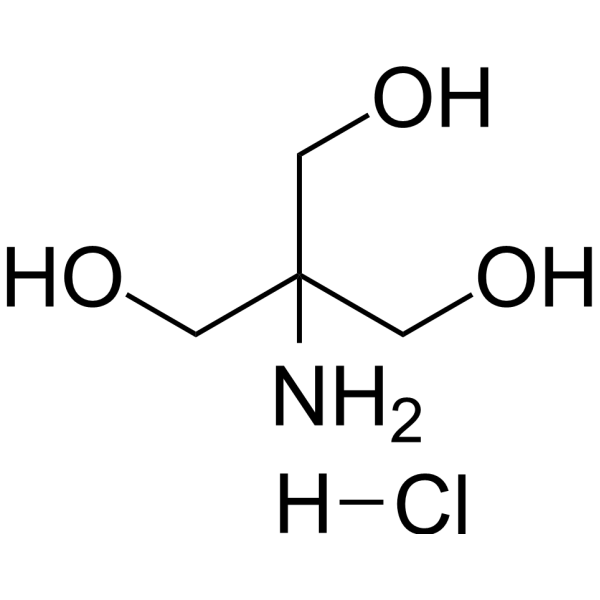
THAM hydrochloride (Tris HCl) is a biologically inert amino alcohol of low toxicity, which buffers carbon dioxide and acids in vitro and in vivo. THAM hydrochloride is an effective amine compound for pH control in the physiological range .
loading...
    loading...
2
2 Cited Publications
Cat. No.: HY-D0227F
CAS No.: 1185-53-1
Synonyms: Tris HCl (≥99%, reagent grade); Tris hydrochloride (≥99%, reagent grade)
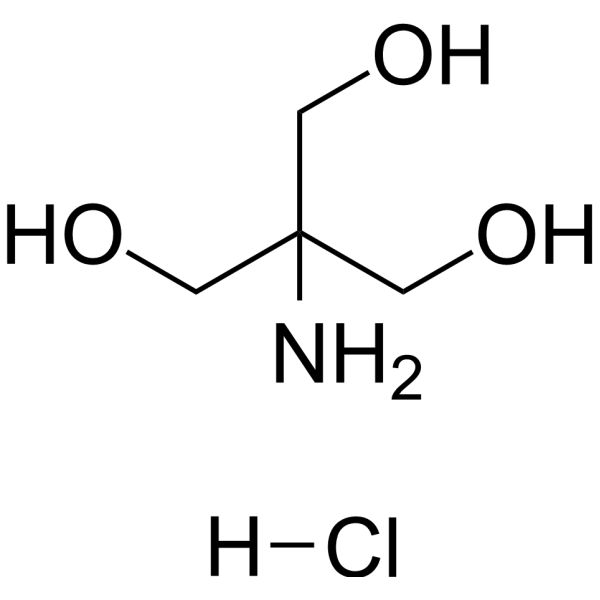
THAM hydrochloride (≥99%, reagent grade), also known as Tris-HCl, is a buffer commonly used in various biochemical and molecular biology applications to maintain a stable pH environment. Tris-HCl has unique chemical properties that allow it to resist changes in pH when acidic or basic substances are added, which makes it useful for stabilizing biological samples or reagents. It is commonly used in electrophoresis and protein purification procedures.
loading...
    loading...
2
2 Cited Publications
Cat. No.: HY-W393372
CAS No.: 72200-76-1
Synonyms: Tris maleate; Tris(hydroxymethyl)aminomethane maleate
THAM (Tris) maleate is a biologically inert amino alcohol of low toxicity, which buffers carbon dioxide and acids in vitro and in vivo. THAM maleate is an effective amine compound for pH control in the physiological range .
loading...
    loading...
1
1 Cited Publications
Cat. No.: HY-113165A
CAS No.: 6920-31-6
Purity:  ≥98.0%
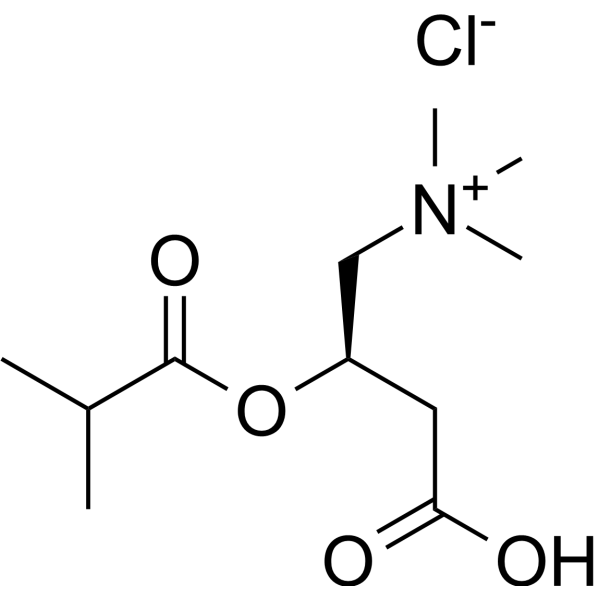
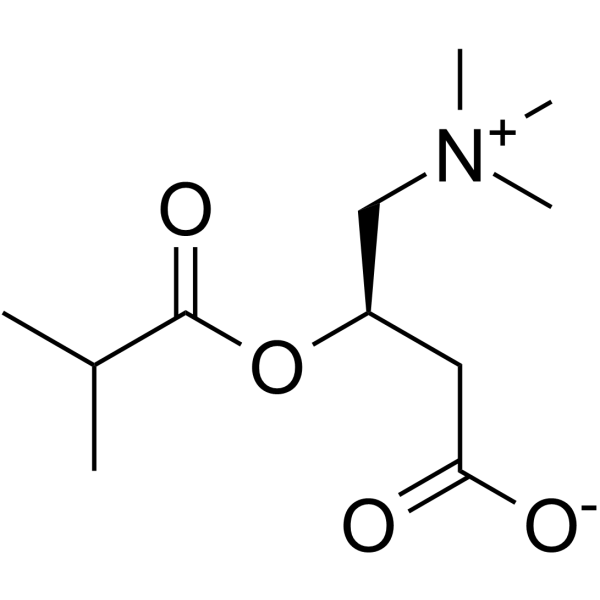
Isobutyryl-L-carnitine chloride is a biomarker. Isobutyryl-L-carnitine chloride is a product of acyl-CoA dehydrogenases involved in fatty acid β-oxidation, and it buffers the mitochondrial acyl-CoA/CoA ratio, oxidizes branched-chain amino acids, and supports the endogenous antioxidant defense system. Isobutyryl-L-carnitine chloride is a plasma biomarker of hepatic OCT1 transporter inhibition. Isobutyryl-L-carnitine chloride is a urinary biomarker of renal cell carcinoma, and its levels are elevated one year after nephrectomy compared with before nephrectomy. Isobutyryl-L-carnitine chloride can be used in research on renal cell carcinoma .
loading...
    loading...
1
1 Cited Publications
Cat. No.: HY-113165
CAS No.: 25518-49-4
Isobutyryl-L-carnitine is a biomarker. Isobutyryl-L-carnitine is a product of acyl-CoA dehydrogenases involved in fatty acid β-oxidation, and it buffers the mitochondrial acyl-CoA/CoA ratio, oxidizes branched-chain amino acids, and supports the endogenous antioxidant defense system. Isobutyryl-L-carnitine is a plasma biomarker of hepatic OCT1 transporter inhibition. Isobutyryl-L-carnitine is a urinary biomarker of renal cell carcinoma, and its levels are elevated one year after nephrectomy compared with before nephrectomy. Isobutyryl-L-carnitine can be used in research on renal cell carcinoma .
loading...
    loading...
Cat. No.: HY-W923277
CAS No.: 6106-20-3
Sodium sesquicarbonate hydrate is a kind of buffering agent that can stabilize pH value by neutralizing acidic substances without causing a sharp change in pH value. This property makes it widely used in many fields, especially in maintaining acid-base balance in organisms.
loading...
    loading...
Cat. No.: HY-113165AS
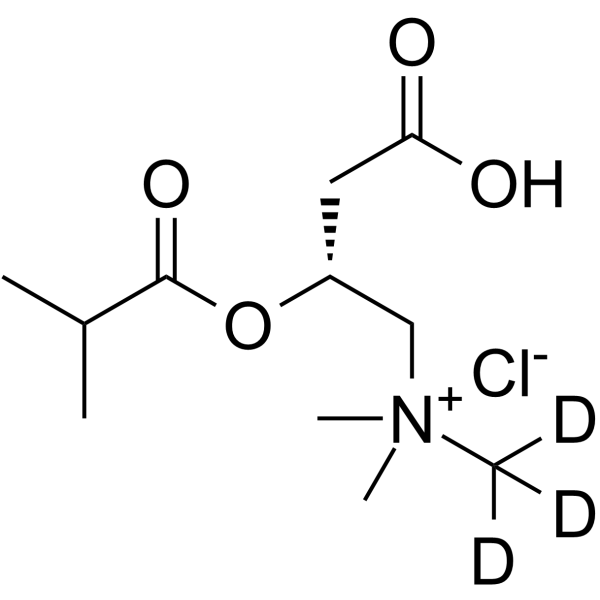
Isobutyryl-L-carnitine-d3 chloride is the d3-labeled Isobutyryl-L-carnitine chloride (HY-113165A). Isobutyryl-L-carnitine chloride is a biomarker. Isobutyryl-L-carnitine chloride is a product of acyl-CoA dehydrogenases involved in fatty acid β-oxidation, and it buffers the mitochondrial acyl-CoA/CoA ratio, oxidizes branched-chain amino acids, and supports the endogenous antioxidant defense system. Isobutyryl-L-carnitine chloride is a plasma biomarker of hepatic OCT1 transporter inhibition. Isobutyryl-L-carnitine chloride is a urinary biomarker of renal cell carcinoma, and its levels are elevated one year after nephrectomy compared with before nephrectomy. Isobutyryl-L-carnitine chloride can be used in research on renal cell carcinoma .
loading...
    loading...
Cat. No.: HY-D0227R
CAS No.: 77-86-1
Synonyms: Tris (Standard); Tris(hydroxymethyl)aminomethane (Standard)
THAM (Standard) is the analytical standard of THAM. This product is intended for research and analytical applications. THAM (Tris) is a biologically inert amino alcohol of low toxicity, which buffers carbon dioxide and acids in vitro and in vivo. THAM is an effective amine compound for pH control in the physiological range .
loading...
    loading...
Cat. No.: HY-D0897
CAS No.: 104484-71-1
Synonyms: N-(1-Naphthyl)-3-aminopropanesulfonic acid sodium
Research Areas:  

Others

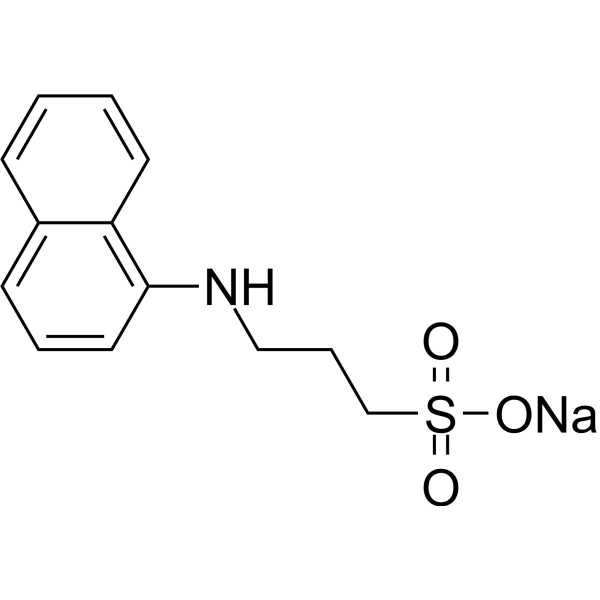
3-(1-naphthalenylamino)-1-Propanesulfonic acid sodium salt is a compound belonging to the class of sulfonic acids. It is commonly used in the pharmaceutical industry as a buffer and stabilizer for drugs and other medicines. 3-(1-naphthalenylamino)-1-Propanesulfonic acid sodium salt helps to maintain the pH and stability of the drug, thereby improving the efficacy and shelf life of the drug. It can also be used as a dispersant in the production of nanoparticles and other materials.
loading...
    loading...
Cat. No.: HY-D0227AR
CAS No.: 1185-53-1
Synonyms: Tris HCl (Standard); Tris(hydroxymethyl)aminomethane hydrochloride (Standard)
THAM (hydrochloride) (Standard) is the analytical standard of THAM (hydrochloride). This product is intended for research and analytical applications. THAM hydrochloride (Tris HCl) is a biologically inert amino alcohol of low toxicity, which buffers carbon dioxide and acids in vitro and in vivo. THAM hydrochloride is an effective amine compound for pH control in the physiological range .
loading...
    loading...
Cat. No.: HY-P2787
CAS No.: 164257-32-3
Target:  

Others

Research Areas:  

Others

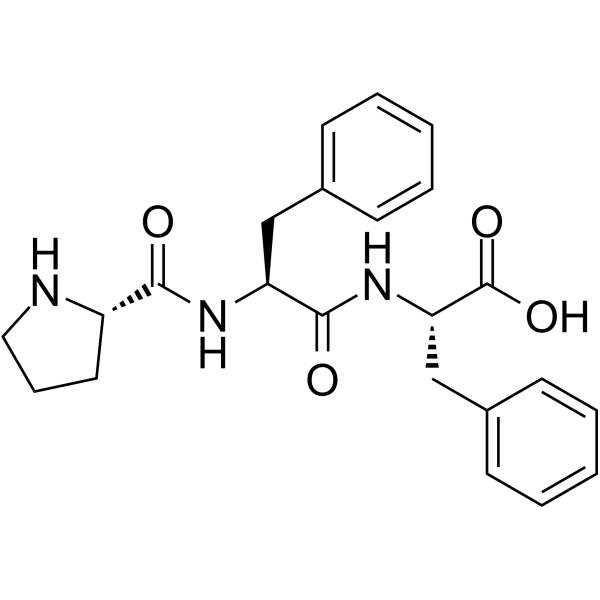
Pro-Phe-Phe is a tripeptide composed of canonical amino acids that self-assembles into helical amyloid-like assemblies. Pro-Phe-Phe self-assembles into a network of slender, unbranched helical fibrils in phosphate buffer at pH 7.4. Pro-Phe-Phe exhibits amyloid properties, as demonstrated by thioflavin-T binding and a characteristic amyloid kinetics curve .
loading...
    loading...
Cat. No.: HY-113165AR
CAS No.: 6920-31-6
Isobutyryl-L-carnitine chloride (Standard) is the analytical standard of Isobutyryl-L-carnitine chloride (HY-113165A). This product is intended for research and analytical applications. Isobutyryl-L-carnitine chloride is a biomarker. Isobutyryl-L-carnitine chloride is a product of acyl-CoA dehydrogenases involved in fatty acid β-oxidation, and it buffers the mitochondrial acyl-CoA/CoA ratio, oxidizes branched-chain amino acids, and supports the endogenous antioxidant defense system. Isobutyryl-L-carnitine chloride is a plasma biomarker of hepatic OCT1 transporter inhibition. Isobutyryl-L-carnitine chloride is a urinary biomarker of renal cell carcinoma, and its levels are elevated one year after nephrectomy compared with before nephrectomy. Isobutyryl-L-carnitine chloride can be used in research on renal cell carcinoma .
loading...
    loading...
Cat. No.: HY-W700788
Isobutyryl-L-carnitine chloride-d6 is the d6-labeled Isobutyryl-L-carnitine chloride (HY-113165A). Isobutyryl-L-carnitine chloride is a biomarker. Isobutyryl-L-carnitine chloride is a product of acyl-CoA dehydrogenases involved in fatty acid β-oxidation, and it buffers the mitochondrial acyl-CoA/CoA ratio, oxidizes branched-chain amino acids, and supports the endogenous antioxidant defense system. Isobutyryl-L-carnitine chloride is a plasma biomarker of hepatic OCT1 transporter inhibition. Isobutyryl-L-carnitine chloride is a urinary biomarker of renal cell carcinoma, and its levels are elevated one year after nephrectomy compared with before nephrectomy. Isobutyryl-L-carnitine chloride can be used in research on renal cell carcinoma .
loading...
    loading...
Cat. No.: HY-189545
Research Areas:  

Others

50 mM Sodium acetate buffer (pH 5.5, 150 mM NaCl) is a weakly acidic sodium acetate buffer containing physiological concentrations of sodium chloride; it is suitable for enzyme activity assays, protein resolubilization, and studies of biomolecular interactions at pH 5.5 .
loading...
    loading...
Cat. No.: HY-DY2019
Target:  

Fluorescent Dye

Research Areas:  

Cancer

Toluidine Blue Staining Solution (1%, Phosphate Buffer) is an alkaline quinonimine dye (vivo dye) with high affinity for acidic tissue components, staining nuclei blue and polysaccharides purple. Toluidine Blue Staining Solution (1%, Phosphate Buffer) shows heterostaining properties for mast cells, mucins and chondrocytes. Toluidine Blue Staining Solution (1%, Phosphate Buffer) can stain different components of plant tissues and cells in different colours. Toluidine Blue Staining Solution (1%, Phosphate Buffer) is also used as a diagnostic aid to identify malignant lesions, such as cancer .
loading...
    loading...
Cat. No.: HY-K3038

MCE Sodium Bicarbonate Solution (7.5%) is designed to adjust the bicarbonate buffering system of cell culture media. Under appropriate CO2 culture conditions, sodium bicarbonate helps maintain physiological pH, neutralizes acidic metabolites produced by cellular metabolism, and provides a stable environment for cell growth. It also supplies bicarbonate ions required for certain cellular metabolic processes.

loading...
    loading...
Cat. No.: HY-K3036

MCE IMDM (Iscove's Modified Dulbecco's Medium) is an enriched formulation modified from DMEM, containing high concentrations of glucose, sodium pyruvate, amino acids, vitamins, HEPES buffer, selenium, and other essential nutrients. It is designed to meet the nutritional requirements for rapid cell proliferation and high-density culture, supporting a variety of cell types, including Jurkat cells, COS-7 cells, and macrophages. The product specifications are based on the 500 mL format, and larger volume packages are provided as multiples of this standard specification.

loading...
    loading...
  • 1

