1. Search Result
Search Result
Results for "

amination

" in MedChemExpress (MCE) Product Catalog:

25

Inhibitors & Agonists

2

Fluorescent Dyes

4

Biochemical Assay Reagents

1

Click Chemistry

Cat. No. Product Name Target Research Areas Chemical Structure
  • HY-Y0006

    2-(Dicyclohexylphosphino)-2',4',6'-triisopropylbiphenyl

    Biochemical Assay Reagents Others
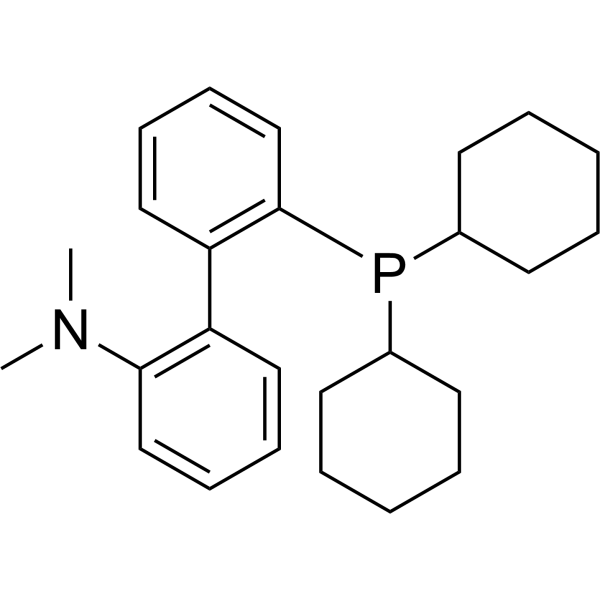
    XPhos is a dual aryl monophosphine ligand. XPhos is an efficient and stable palladium catalytic ligand. XPhos can be used for amination of aryl sulfonate esters .
    XPhos
  • HY-W590989

    GPhos Pd G6 TES

    Drug Intermediate Others
    GPhos Pd G6 (GPhos Pd G6 TES) is a palladium catalyst. GPhos Pd G6 catalyzes the Buchwald-Hartwig amination reaction and promotes C-N bond formation between aryl chlorides and amines. GPhos Pd G6 is a pharmaceutical intermediate used for the synthesis of various active compounds .
    GPhos Pd G6
  • HY-W008137

    Biochemical Assay Reagents Others
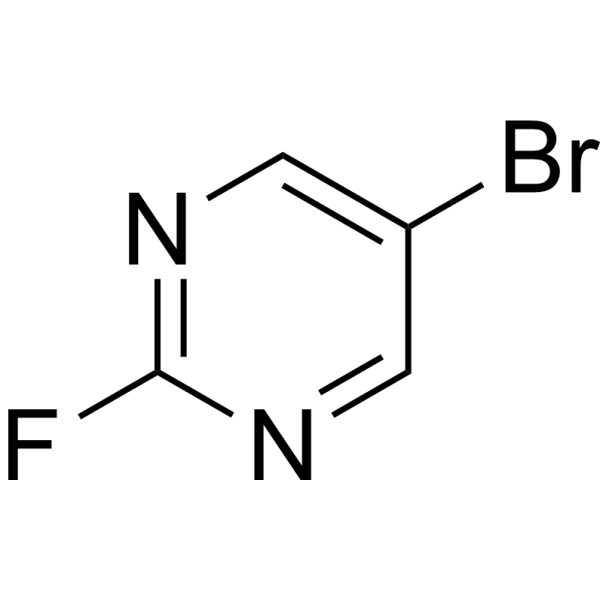
    5-Bromo-2-fluoropyrimidine is a polyhalogenated pyrimidine and chemoselective amination substrate.5-Bromo-2-fluoropyrimidine undergoes chemoselective amination at the C-2 position (C-F bond) with no amination at the C-5 position (C-Br bond) in the presence of a Cu(II)/PTABS catalytic system .
    5-Bromo-2-fluoropyrimidine
  • HY-D1336

    Fluorescent Dye
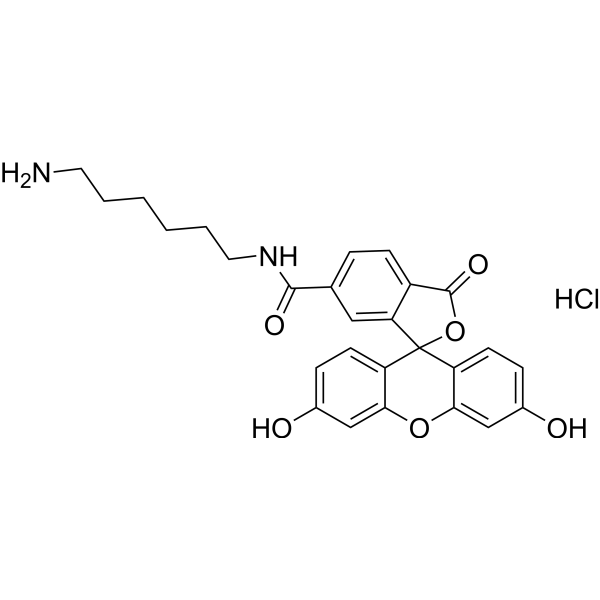
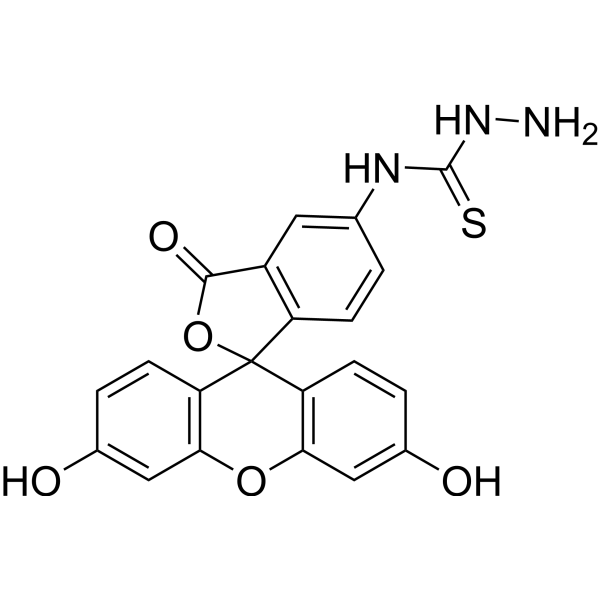
    FAM amine, 6-isomer is a fluorescein derivative with an amine group and contains an isomer of the fluorophore. Can be used to modify biomolecules through enzymatic transamination. Its fatty amine groups can also react with electrophiles such as activated esters. The amine can also be conjugated to carbonyl compounds (aldehydes and ketones) by reductive amination.
    FAM amine, 6-isomer
  • HY-I0259

    Fluorescent Dye Others
    8-Amino-2-naphthol is a photoactive charge transfer compounds, which can be used as fluorescent probe. 8-Amino-2-naphthol undergoes excited-state proton transfer (ESPT) to form a zwitterion under acidic conditions, where the photoacidity of its hydroxyl group is regulated by the protonation state of the amino group, enabling pH to act as an on/off switch for photoacidity. 8-Amino-2-naphthol is also utilized as chiral organocatalyst .
    8-Amino-2-naphthol
  • HY-W000438

    Amino Acid Derivatives Others
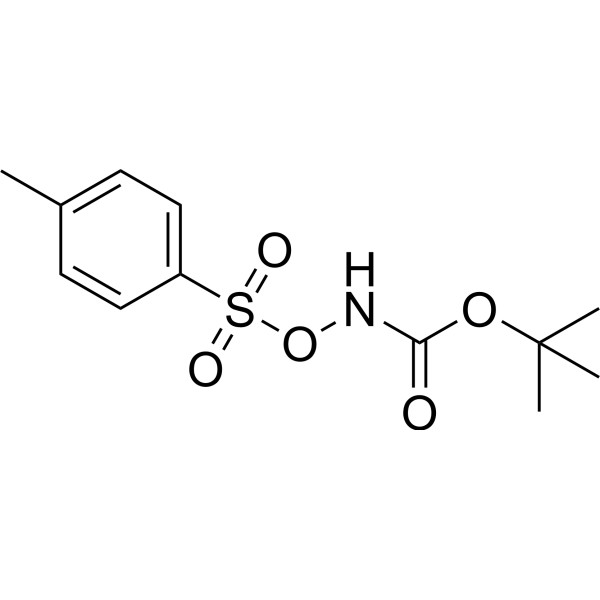
    N-Boc-O-tosyl hydroxylamine is a safe and efficient nitrogen source for N-amination of aryl and alkyl amines. N-Boc-O-tosyl hydroxylamine promotes electrophilic N-amination of aryl amines and alkyl amines to generate β-Boc-protected aryl hydrazines and alkyl hydrazines .
    N-Boc-O-tosyl hydroxylamine
  • HY-P2768

    LDH, EC 1.4.1.9

    Endogenous Metabolite Metabolic Disease
    Leucine dehydrogenase, Microorganism (EC 1.4.1.9) can be purified from Bacillus spheroides. Leucine dehydrogenase catalyzed the oxidative deamination of L-leucine, L-valine, L-isoleucine, L-norvaline, L-alpha-aminobutyrate, and L-norleucine, and the reductive amination of their keto analogues .
    Leucine dehydrogenase, Microorganism
  • HY-W003601

    Biochemical Assay Reagents Others
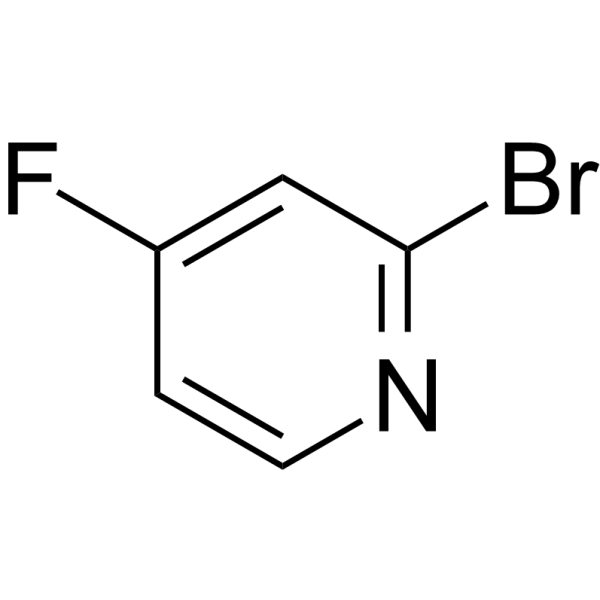
    2-Bromo-4-fluoropyridine is a synthetic halogenated heterocyclic organic compound and a key intermediate in the pharmaceutical and agrochemical industries. 2-Bromo-4-fluoropyridine can be used to synthesize bioactive molecules through cross-coupling reactions, such as Suzuki coupling or Buchwald-Hartwig amination.
    2-Bromo-4-fluoropyridine
  • HY-W040209

    α-NPO

    Fluorescent Dye Others
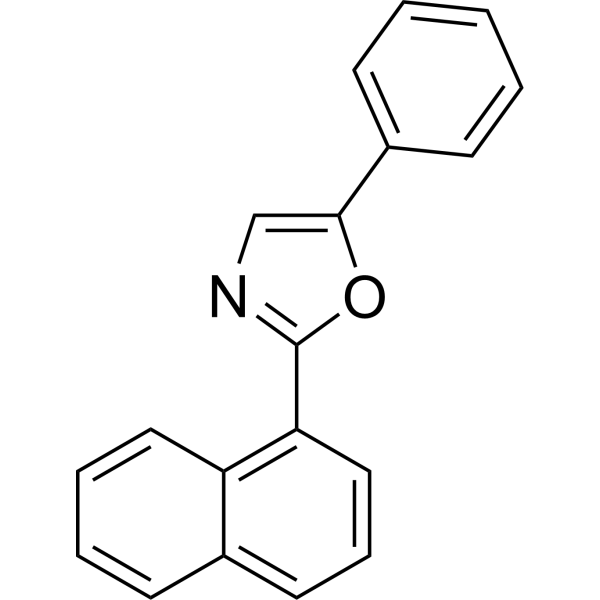
    2-(Naphthalen-1-yl)-5-phenyloxazole (α-NPO) is an organic fluorescent dye. 2-(Naphthalen-1-yl)-5-phenyloxazole has a nitrogen atom in its structure that can interfere with the nitrogen content from the amination step .
    2-(Naphthalen-1-yl)-5-phenyloxazole
  • HY-100707

    DNA-PK Apoptosis Inflammation/Immunology Cancer
    IC 86621 is a potent DNA-dependent protein kinase (DNA-PK) inhibitor, with an IC50 of 120 nM. IC 86621 also acts as a selective and reversible ATP-competitive inhibitor.IC 86621 inhibits DNA-PK mediated cellular DNA double-strand break (DSB) repair (EC50=68 µM). IC 86621 increases DSB-induced antitumor activity without cytotoxic effects. IC 86621 can protects rheumatoid arthritis (RA) T cells from apoptosis .
    IC 86621
  • HY-117293

    Drug Intermediate Others
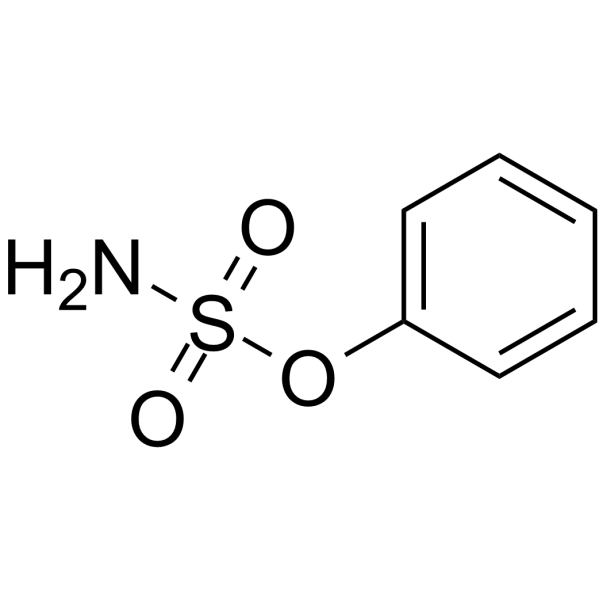
    Phenyl sulfamate is a nitrogen source that can be used in the amination of intermolecular .
    Phenyl sulfamate
  • HY-W021597

    Drug Intermediate Others
    N-Boc-5-bromoindole is formed as an intermediate for the synthesis of di-Boc-protected 5-aminoindole via a Buchwald-Hartwig amination with tBu-carbamate followed by regioselective bromination .
    N-Boc-5-bromoindole
  • HY-W145053

    Sodium chloro(4-methylbenzenesulfonyl)azanide hydrate

    Factor Xa Bacterial Infection
    ChloraMine-T hydrate (Sodium chloro(4-methylbenzenesulfonyl)azanide (hydrate)) is a common reagent in various synthetic processes. It has been used as a reagent in aminohydroxylation and allylic amination reactions, a nitrogen source in aziridination reactions of alkenes and alkenes, and deprotection of sulfur groups in sulfur-containing compounds. It has been used as a reagent in the synthesis of factor Xa inhibitors. ChloraMine-T hydrate (Sodium chloro(4-methylbenzenesulfonyl)azanide (hydrate)) (0.2% w/v) is also an antimicrobial agent that kills Staphylococcus epidermidis, Staphylococcus aureus, Enterococcus faecalis, Escherichia coli, Proteus mirabilis, and Enterococcus cloacae.
    ChloraMine-T hydrate
  • HY-W099634

    Heptadecan-9-one

    Biochemical Assay Reagents Others
    9-Heptadecanone (Heptadecan-9-one) is an aliphatic molecule with a central ketone on a C17 chain. The ketone may react with amines in reductive aminations to link this molecule to larger lipid structures.
    9-Heptadecanone
  • HY-W586329

    Ligands for E3 Ligase Others
    Thalidomide-4-carbaldehyde is a Thalidomide analogue with an aldehyde. Thalidomide recruiits E3 ligase for the ubiquitinylation and subsequent proteolysis of target proteins. The aldehyde is highly reactive towards amine nucleophiles through reductive amination among other reactions.
    Thalidomide-4-carbaldehyde
  • HY-W451211

    Ligands for E3 Ligase Cancer
    Thalidomide-5-carbaldehyde is a Thalidomide analogue with an aldehyde. Thalidomide recruiits E3 ligase for the ubiquitinylation and subsequent proteolysis of target proteins. The aldehyde is highly reactive towards amine nucleophiles through reductive amination among other reactions.
    Thalidomide-5-carbaldehyde
  • HY-W010685

    [Rh(dppb)(COD)]BF4

    Biochemical Assay Reagents Endogenous Metabolite Others
    [1,4-Bis(diphenylphosphino)butane](1,5-cyclooctadiene)rhodium(I) tetrafluoroborate ([Rh(dppb)(COD)]BF4) serves as a rhodium-based catalyst that facilitates regioselective hydrogenation and enantioselective reductive amination reactions.
    [1,4-BIs(diphenylphosphino)butane](1,5-cyclooctadiene)rhodium(I) tetrafluoroborate
  • HY-W800837

    ADC Linker Cancer
    t-Boc-N-amido-PEG4-Val-Cit is a protease-cleavable ADC linker featuring a Boc-protected amine, a hydrophilic PEG spacer, and a Val-Cit dipeptide. The Val-Cit dipeptide is cleavable by cell proteases and features a carboxylic acid which is free for coupling reactions with amines to form amides. The Boc can be removed under acidic conditions to reveal a free primary amine, which may be used in a variety of reactions such as coupling or reductive amination.
    t-Boc-N-amido-PEG4-Val-Cit
  • HY-W800618

    ADC Linker Others
    NH2-PEG3-Val-Cit-PAB-OH is a cleavable ADC linker featuring a primary amine, a hydrophilic PEG spacer, a Val-Cit dipeptide, and a PAB group. The benzylic alcohol on the PAB can be used to attach with reactive groups such as PNP for conjugation with drug payloads. The primary amine is free to perform a wide variety of reactions such as coupling with carboxylic acids, reductive aminations with ketones or aldehydes, or other more specialized uses such as in SNAr reactions or heterocyclic chemistry. The Val-Cit dipeptide is cleaved by cellular proteases within the cell to allow for efficient payload delivery via an elimination mechanism within the PAB structure.
    NH2-PEG3-Val-Cit-PAB-OH
  • HY-W800617

    ADC Linker Cancer
    NH2-PEG1-Val-Cit-PAB-OH is a cleavable ADC linker intermediate featuring a primary amine, a hydrophilic PEG spacer, a Val-Cit dipeptide, and a PAB group. The benzylic alcohol on the PAB can be used to attach with reactive groups such as PNP for conjugation with drug payloads. The primary amine is free to perform a wide variety of reactions such as coupling with carboxylic acids, reductive aminations with ketones or aldehydes, or other more specialized uses such as in SNAr reactions or heterocyclic chemistry. The Val-Cit dipeptide is cleaved by cellular proteases within the cell to allow for efficient payload delivery via an elimination mechanism within the PAB structure.
    NH2-PEG1-Val-Cit-PAB-OH
  • HY-W800619

    ADC Linker Others
    NH2-PEG4-Val-Cit-PAB-OH is a cleavable ADC linker featuring a primary amine, a hydrophilic PEG spacer, a Val-Cit dipeptide, and a PAB group. The benzylic alcohol on the PAB can be used to attach with reactive groups such as PNP for conjugation with drug payloads. The primary amine is free to perform a wide variety of reactions such as coupling with carboxylic acids, reductive aminations with ketones or aldehydes, or other more specialized uses such as in SNAr reactions or heterocyclic chemistry. The Val-Cit dipeptide is cleaved by cellular proteases within the cell to allow for efficient payload delivery via an elimination mechanism within the PAB structure.
    NH2-PEG4-Val-Cit-PAB-OH
  • HY-W800620

    ADC Linker Others
    NH2-PEG6-Val-Cit-PAB-OH is a cleavable ADC linker featuring a primary amine, a hydrophilic PEG spacer, a Val-Cit dipeptide, and a PAB group. The benzylic alcohol on the PAB can be used to attach with reactive groups such as PNP for conjugation with drug payloads. The primary amine is free to perform a wide variety of reactions such as coupling with carboxylic acids, reductive aminations with ketones or aldehydes, or other more specialized uses such as in SNAr reactions or heterocyclic chemistry. The Val-Cit dipeptide is cleaved by cellular proteases within the cell to allow for efficient payload delivery via an elimination mechanism within the PAB structure.
    NH2-PEG6-Val-Cit-PAB-OH
  • HY-167931

    Drug Derivative Metabolic Disease
    Cinnamohydrazide, an unsaturated carboxylic acid derivative, serves as a precursor to aspartame through enzyme-mediated amination to phenylalanine. This compound may offer potential benefits in the prevention and treatment of diabetes by facilitating insulin secretion, enhancing pancreatic β-cell function, inhibiting hepatic gluconeogenesis, promoting glucose uptake, amplifying insulin signaling pathways, delaying carbohydrate digestion and glucose absorption, and reducing protein glycation and insulin fibrillation.
    Cinnamohydrazide
  • HY-W800833

    Biochemical Assay Reagents Others
    Benzyl N-[2-(prop-2-enamido)ethyl]carbamate is a short aliphatic linker featuring a Cbz-protected amine and an acrylamide. Acrylamide is a Michael acceptor which is a good Michael acceptor which can be used in thiol-based bioconjugation or polymerization. Meanwhile, the Cbz protecting group can be removed using Pd-C hydrogenation to reveal a free amine that can participate in a wide variety of reactions such as couplings or reductive amination.
    Benzyl N-[2-(prop-2-enamido)ethyl]carbamate
  • HY-186077

    Drug Intermediate Biochemical Assay Reagents Others
    PEDA is a chemical intermediate. PEDA can participate in the CuAAC reaction to synthesize ethylenediamine analogs including Biot-EDA, Cy3-EDA, EDA-AG and EDA-m 7Gp3G, which are used for RNA modification .
    PEDA

Inquiry Online

Your information is safe with us. * Required Fields.

Salutation


Country or Region *

Applicant Name *


Organization Name *

Department *


Email Address *


Product Name *

Cat. No.


Requested quantity *

Phone Number *


Remarks

Inquiry Online

Inquiry Information

Product Name:
Cat. No.:
Quantity:
MCE Japan Authorized Agent:

