
Search Result
Results for "
antimicrotubule
" in MedChemExpress (MCE) Product Catalog:
-
- HY-13270
-
|
E7010
|
Microtubule/Tubulin
Autophagy
Apoptosis
|
Cancer
|
|
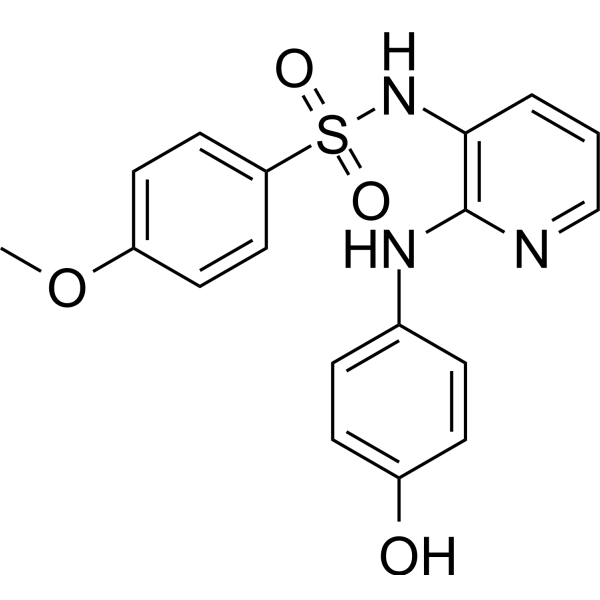
ABT-751 (E7010) is a novel, highly orally bioavailable sulfonamides antimitotic compound and tubulin binder. It prevents tubulin aggregation by binding to the colchicine site on β-tubulin, leading to cell cycle arrest in G2/M phase and inducing apoptosis, thus effectively preventing cell division. ABT-751 induces autophagy by inhibiting the AKT/MTOR signaling pathway. ABT-751 showed significant inhibition against various types of cancer cells, including lung, gastric, colon, and breast cancer .
|
-
-
- HY-13627
-
|
|
Apoptosis
Microtubule/Tubulin
Mitosis
|
Inflammation/Immunology
Endocrinology
Cancer
|
|
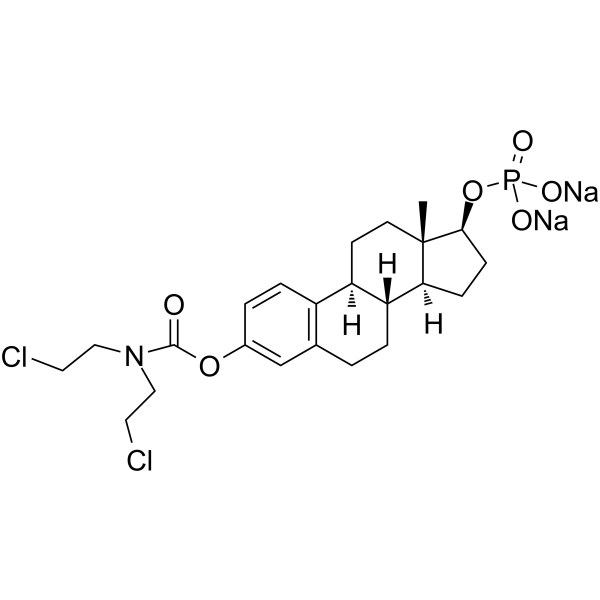
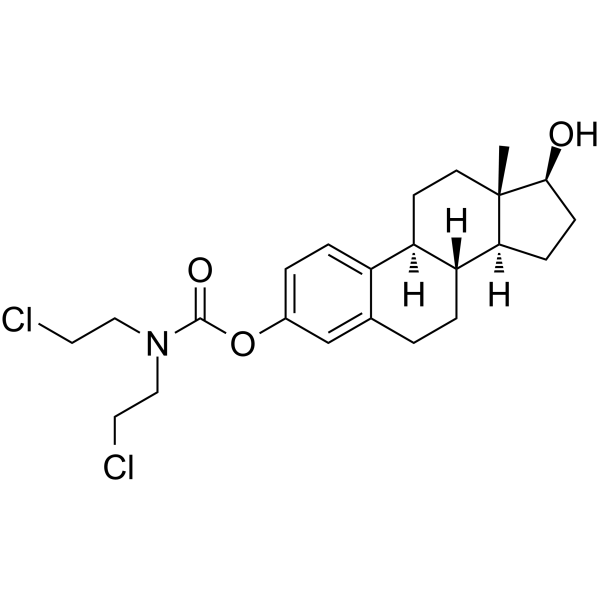
Estramustine phosphate sodium, an estradiol analog, is an orally active antimicrotubule chemotherapy agent. Estramustine phosphate sodium depolymerises microtubules by binding to microtubule associated proteins (MAPs) and/or to tubulin. Estramustine phosphate sodium can interfere mitosis, trigger cell death and induce apoptosis, which can be used for the research of cancer like prostate cancer .
|
-
-
- HY-139642
-
|
|
Drug-Linker Conjugates for ADC
|
Cancer
|
|
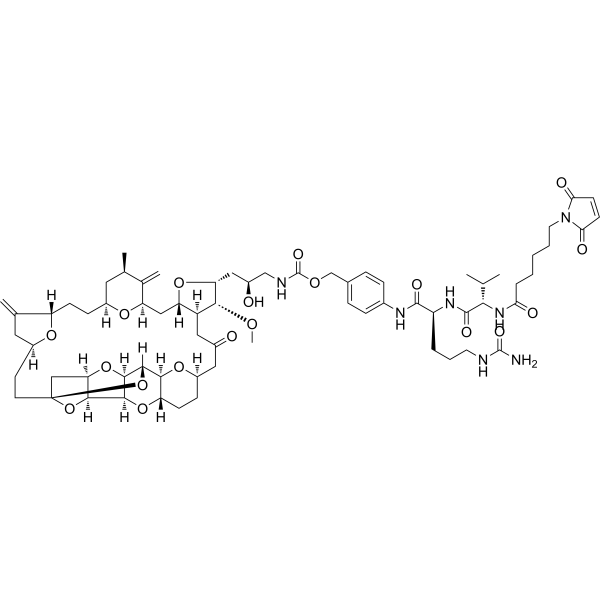
Mal-(CH2)5-Val-Cit-PAB-Eribulin is a agent-linker conjugate for ADC with potent antitumor activity by using the anti-microtubule agent, Eribulin, linked via linker Mal-(CH2)5-Val-Cit-PAB .
|
-
-
- HY-15995
-
|
TubA
|
Antibiotic
Microtubule/Tubulin
ADC Payload
Mitosis
|
Cancer
|
|
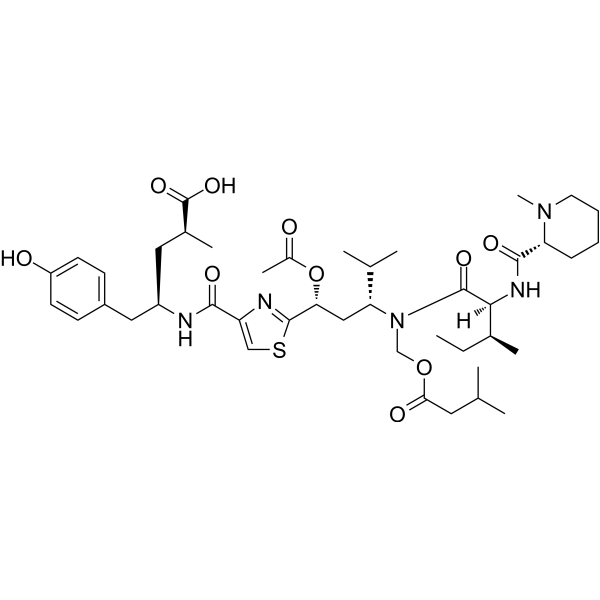
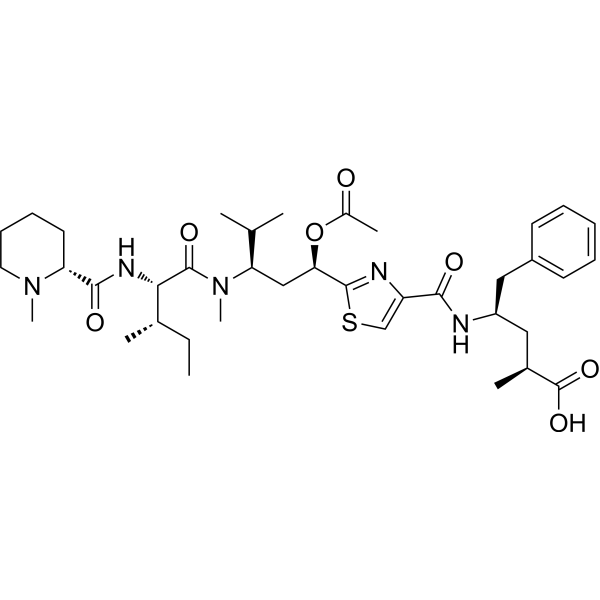
Tubulysin A (TubA) is an anticancer and antiangiogenic agent with anti-microtubule, anti-mitosis and anti-proliferative activity against a variety of cancer cells with IC50 values in the pmol range. It can induce apoptosis of cancer cells and has no effect on normal cells. Tubulysins are a group of potent cytotoxins consisting of nine members (A-I). Tubulysin A can synthesize ADC as ADC Cytotoxin .
|
-
-
- HY-P99956
-
|
VLS-101; MK-2140
|
Antibody-Drug Conjugates (ADCs)
Apoptosis
|
Cancer
|
|
Zilovertamab vedotin (VLS-101) is a novel antibody-drug conjugate comprising the humanized monoclonal antibody zilovertamab and and the anti-microtubule cytotoxin monomethyl vedotin. Zilovertamab vedotin binding to tumor cell ROR1 results in rapid internalization, trafficking to lysosomes, antibody–agent conjugate cleavage, and monomethyl vedotin release. Zilovertamab vedotin induces apoptosis. Zilovertamab vedotin can be used in research of cancer .
|
-
-
- HY-15584
-
|
HTI-286; SPA-110
|
Microtubule/Tubulin
ADC Payload
Apoptosis
|
Cancer
|
|
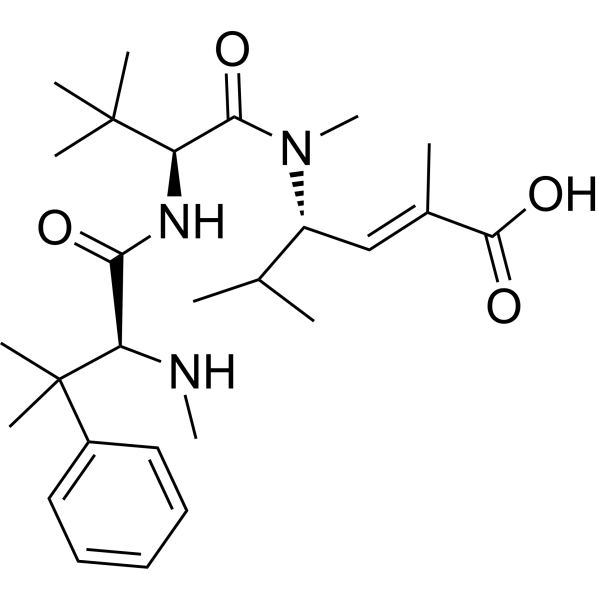
Taltobulin (HTI-286), a synthetic analogue of the tripeptide hemiasterlin, is a potent antimicrotubule agent that circumvents P-glycoprotein-mediated resistance in vitro and in vivo. Taltobulin inhibits the polymerization of purified tubulin, disrupts microtubule organization in cells, and induces mitotic arrest, as well as apoptosis .
|
-
-
- HY-103711
-
|
|
Microtubule/Tubulin
Apoptosis
Mitosis
|
Cancer
|
|
Estramustine, an estradiol analog, is an orally active antimicrotubule chemotherapy agent. Estramustine depolymerises microtubules by binding to microtubule associated proteins (MAPs) and/or to tubulin. Estramustine can interfere mitosis, trigger cell death and induce apoptosis, which can be used for the research of cancer like prostate cancer .
|
-
-
- HY-N7053
-
|
|
ADC Payload
Microtubule/Tubulin
|
Cancer
|
|
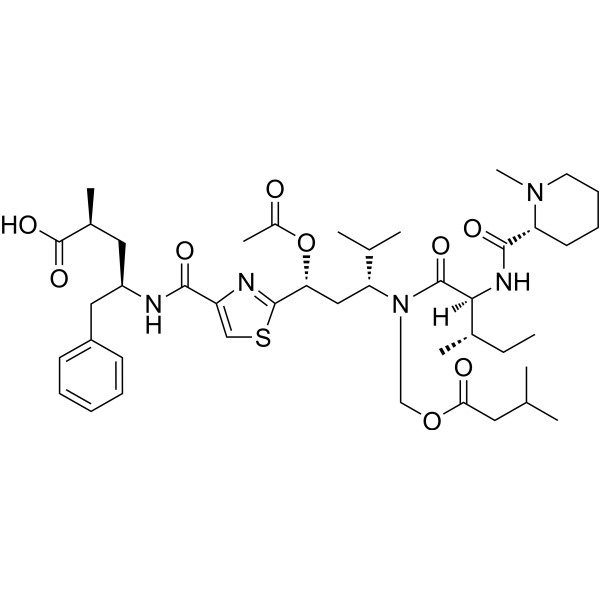
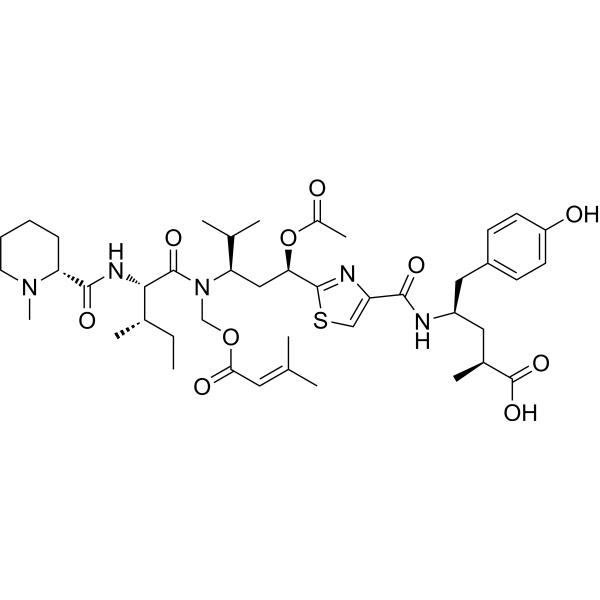
Tubulysin M is a highly cytotoxic anti-microtubule toxin (anti-microtubule toxins) that is synthesized as an ADC cytotoxin (ADC Cytotoxin). Tubulysin M can be isolated from the myxobacteria Archangium geophyra and Angiococcus disciformis. Tubulysin M displays extremely potent cytotoxic activity in mammalian cells, including multidrug-resistant cell lines, with IC50 values in the low nanomolar range. Tubulysin M inhibits microtubule/tubulin polymerization and leads to cell cycle arrest and apoptosis .
|
-
-
- HY-111939
-
|
BAY-NTN 6867
|
Environmental Pollutants
Microtubule/Tubulin
|
Others
|
|
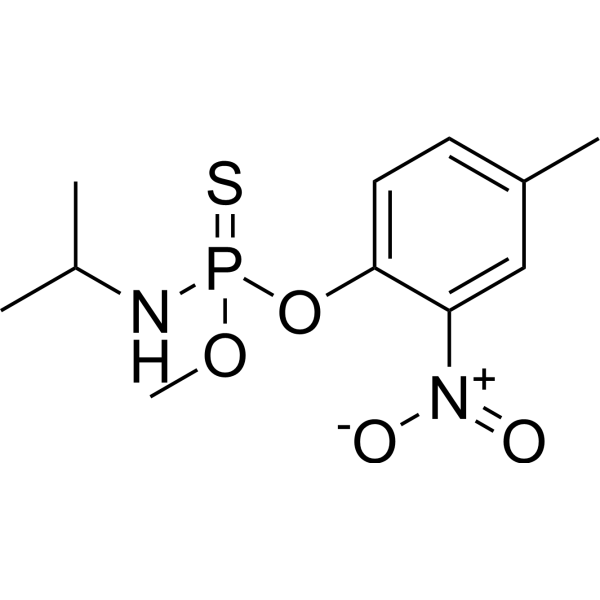
Amiprofos methyl (BAY-NTN 6867) is a phosphoric amide herbicide. Amiprofos methyl is a specific and potent antimicrotubule agent. Amiprofos methyl directly poisons microtubule dynamics in plant cells .
|
-
-
- HY-B1883
-
-
-
- HY-P99685
-
|
IMGN-289; J2898A-SMCC-DM1
|
EGFR
Antibody-Drug Conjugates (ADCs)
|
Cancer
|
|
Laprituximab emtansine (IMGN-289) is an immunotoxin targeting HER1. Laprituximab emtansine is an EGFR antibody-drug conjugate (ADC) consisting of the J2898A antibody, DM1 (anti-microtubule agent) and the SMCC thioether linker. Laprituximab emtansine can be used for cancer research .
|
-
-
- HY-N2348
-
|
|
ADC Payload
Microtubule/Tubulin
|
Cancer
|
|
Tubulysin D is a highly cytotoxic anti-microtubule toxin (anti-microtubule toxins) that is synthesized as an ADC cytotoxin (ADC Cytotoxin). Tubulysin D can be isolated from the myxobacteria Archangium geophyra and Angiococcus disciformis. Tubulysin D displays extremely potent cytotoxic activity in mammalian cells, including multidrug-resistant cell lines, with IC50 values in the low nanomolar range. Tubulysin D inhibits microtubule/Tubulin polymerization and leads to cell cycle arrest and apoptosis .
|
-
-
- HY-N7052
-
|
|
ADC Payload
Microtubule/Tubulin
|
Cancer
|
|
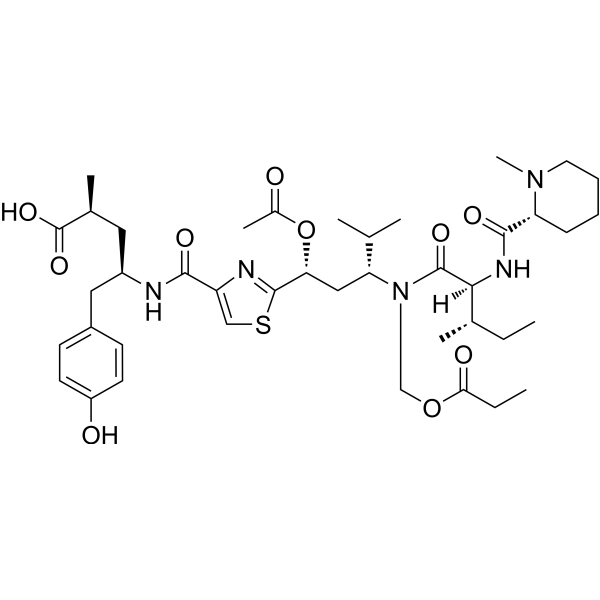
Tubulysin I is a highly cytotoxic anti-microtubule toxin (anti-microtubule toxins) that is synthesized as an ADC cytotoxin (ADC Cytotoxin). Tubulysin I can be isolated from the myxobacteria Archangium geophyra and Angiococcus disciformis. Tubulysin I displays extremely potent cytotoxic activity in mammalian cells, including multidrug-resistant cell lines, with IC50 values in the low nanomolar range. Tubulysin I inhibits microtubule/tubulin polymerization and leads to cell cycle arrest and apoptosis .
|
-
-
- HY-N7050
-
|
|
ADC Payload
Microtubule/Tubulin
|
Cancer
|
|
Tubulysin G is a highly cytotoxic anti-microtubule toxin (anti-microtubule toxins) that is synthesized as an ADC cytotoxin (ADC Cytotoxin). Tubulysin G can be isolated from the myxobacteria Archangium geophyra and Angiococcus disciformis. Tubulysin G displays extremely potent cytotoxic activity in mammalian cells, including multidrug-resistant cell lines, with IC50 values in the low nanomolar range. Tubulysin G inhibits microtubule/tubulin polymerization and leads to cell cycle arrest and apoptosis .
|
-
-
- HY-N2347
-
|
|
ADC Payload
Microtubule/Tubulin
|
Cancer
|
|
Tubulysin C is a highly cytotoxic anti-microtubule toxin (anti-microtubule toxins) that is synthesized as an ADC cytotoxin (ADC Cytotoxin). Tubulysin C can be isolated from the myxobacteria Archangium geophyra and Angiococcus disciformis. Tubulysin C displays extremely potent cytotoxic activity in mammalian cells, including multidrug-resistant cell lines, with IC50 values in the low nanomolar range. Tubulysin C inhibits microtubule/Tubulin polymerization and leads to cell cycle arrest and apoptosis .
|
-
-
- HY-15584A
-
|
HTI-286 trifluoroacetate; SPA-110 trifluoroacetate
|
Microtubule/Tubulin
ADC Payload
Apoptosis
|
Cancer
|
|
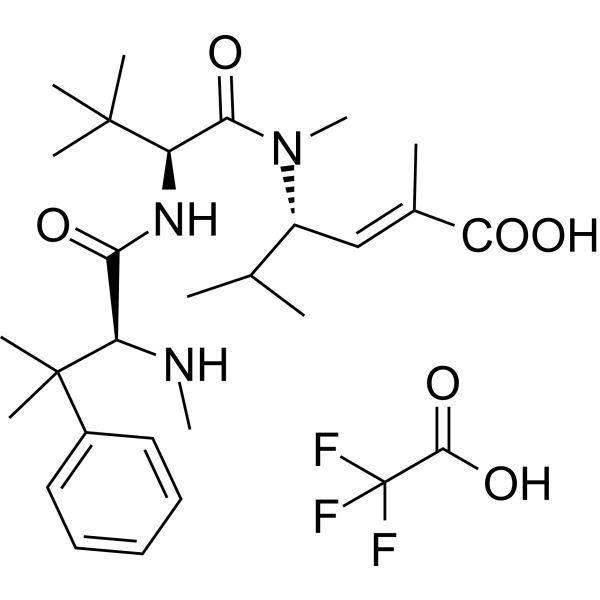
Taltobulin trifluoroacetate (HTI-286 trifluoroacetate), a synthetic analogue of the tripeptide hemiasterlin, is a potent antimicrotubule agent that circumvents P-glycoprotein-mediated resistance in vitro and in vivo. Taltobulin trifluoroacetate inhibits the polymerization of purified tubulin, disrupts microtubule organization in cells, and induces mitotic arrest, as well as apoptosis .
|
-
-
- HY-N2346
-
|
|
ADC Payload
Microtubule/Tubulin
|
Cancer
|
|
Tubulysin E is a highly cytotoxic anti-microtubule toxin (anti-microtubule toxins) that is synthesized as an ADC cytotoxin (ADC Cytotoxin). Tubulysin E can be isolated from the myxobacteria Archangium geophyra and Angiococcus disciformis. Tubulysin E displays extremely potent cytotoxic activity in mammalian cells, including multidrug-resistant cell lines, with IC50 values in the low nanomolar range. Tubulysin E inhibits microtubule/Tubulin polymerization and leads to cell cycle arrest and apoptosis .
|
-
-
- HY-N7049
-
|
|
ADC Payload
Microtubule/Tubulin
|
Cancer
|
|
Tubulysin F is a highly cytotoxic anti-microtubule toxin (anti-microtubule toxins) that is synthesized as an ADC cytotoxin (ADC Cytotoxin). Tubulysin F can be isolated from the myxobacteria Archangium geophyra and Angiococcus disciformis. Tubulysin F displays extremely potent cytotoxic activity in mammalian cells, including multidrug-resistant cell lines, with IC50 values in the low nanomolar range. Tubulysin F inhibits microtubule/Tubulin polymerization and leads to cell cycle arrest and apoptosis .
|
-
-
- HY-N7051
-
|
|
ADC Payload
Microtubule/Tubulin
|
Cancer
|
|
Tubulysin H is a highly cytotoxic anti-microtubule toxin (anti-microtubule toxins) that is synthesized as an ADC cytotoxin (ADC Cytotoxin). Tubulysin H can be isolated from the myxobacteria Archangium geophyra and Angiococcus disciformis. Tubulysin H displays extremely potent cytotoxic activity in mammalian cells, including multidrug-resistant cell lines, with IC50 values in the low nanomolar range. Tubulysin H inhibits microtubule/tubulin polymerization and leads to cell cycle arrest and apoptosis .
|
-
-
- HY-N15657
-
|
|
Apoptosis
COX
Caspase
Microtubule/Tubulin
Monoamine Oxidase
|
Cancer
|
|
Geiparvarin is an anticancer agent and an inhibitor of MAO-B (pIC50 = 6.84 μM). Geiparvarin exerts anti-tumor effects by downregulating COX2 expression and inhibiting angiogenesis. Geiparvarin blocks the cell cycle at the G1 phase and induces apoptosis of cancer cells. Geiparvarin has anti-microtubule activity and destroys the cytoskeleton to exert anti-proliferative effects. Geiparvarin has research significance for lung cancer, leukemia, and breast cancer .
|
-
-
- HY-111939R
-
|
BAY-NTN 6867 (Standard)
|
Reference Standards
Microtubule/Tubulin
|
Others
|
|
Amiprofos methyl (Standard) is the analytical standard of Amiprofos methyl. This product is intended for research and analytical applications. Amiprofos methyl (BAY-NTN 6867) is a phosphoric amide herbicide. Amiprofos methyl is a specific and potent antimicrotubule agent. Amiprofos methyl directly poisons microtubule dynamics in plant cells .
|
-
-
- HY-13627A
-
|
|
Apoptosis
Microtubule/Tubulin
Mitosis
|
Metabolic Disease
Inflammation/Immunology
Cancer
|
|
Estramustine phosphate, an estradiol analog, is an orally active antimicrotubule chemotherapy agent. Estramustine phosphate depolymerises microtubules by binding to microtubule associated proteins (MAPs) and/or to tubulin. Estramustine phosphate can interfere mitosis, trigger cell death and induce apoptosis, which can be used for the research of cancer like prostate cancer .
|
-
-
- HY-143660
-
|
|
Microtubule/Tubulin
Apoptosis
|
Cancer
|
|
LG308 is a novel synthetic compound with antimicrotubule activity. LG308 induces mitotic phase arrest and inhibits G2/M progression significantly which is associated with the upregulation of cyclin B1 and mitotic marker MPM-2 and the dephosphorylation of cdc2. LG308 also induces apoptosis and cell death. LG308 significantly suppresses tumor growth. LG308 with antimitotic activity has the potential for the research of prostate cancer .
|
-
-
- HY-130959
-
|
|
ADC Payload
Microtubule/Tubulin
|
Cancer
|
|
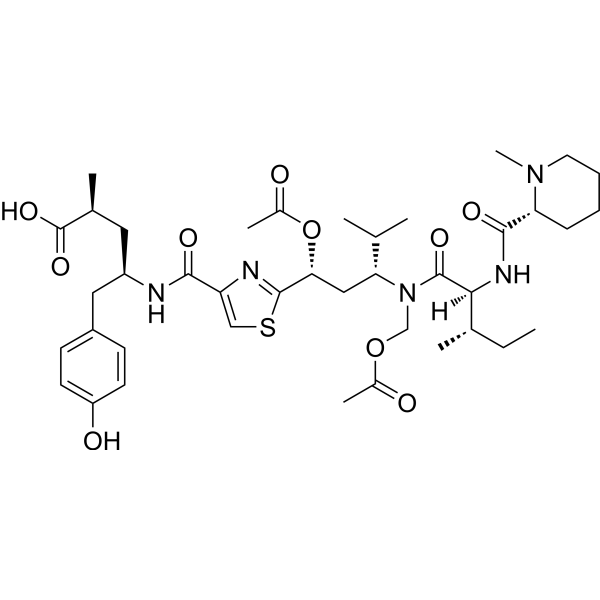
Tubulysin IM-2 is a microtubule/Tubulin inhibitor that can act as an ADC cytotoxin (ADC Cytotoxin) and an anti-microtubule toxin (anti-microtubule toxins). Used for ADC synthesis.
|
-
-
- HY-130960
-
|
|
ADC Payload
Microtubule/Tubulin
|
Cancer
|
|
Tubulysin IM-3 is a microtubule/Tubulin inhibitor that can act as an ADC cytotoxin (ADC Cytotoxin) and an anti-microtubule toxin (anti-microtubule toxins). Used for ADC synthesis.
|
-
-
- HY-130958
-
|
|
ADC Payload
Microtubule/Tubulin
|
Cancer
|
|
Tubulysin IM-1 is a microtubule/Tubulin inhibitor that can act as an ADC cytotoxin (ADC Cytotoxin) and an anti-microtubule toxin (anti-microtubule toxins). Used for ADC synthesis .
|
-
-
- HY-148193
-
|
|
ADC Payload
Microtubule/Tubulin
|
Cancer
|
|
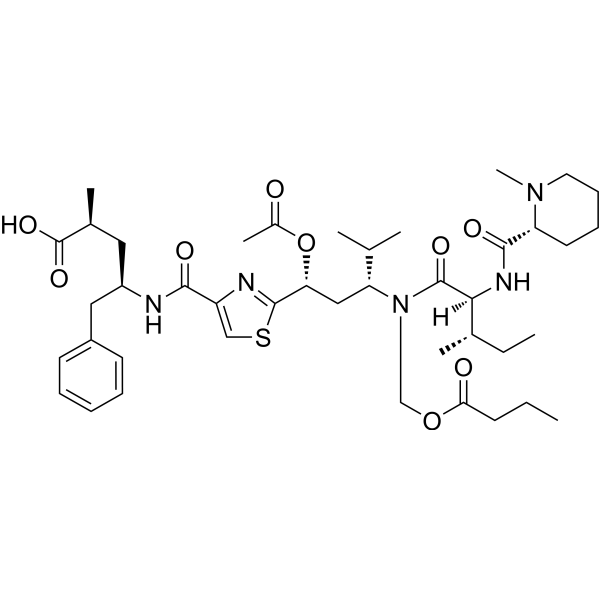
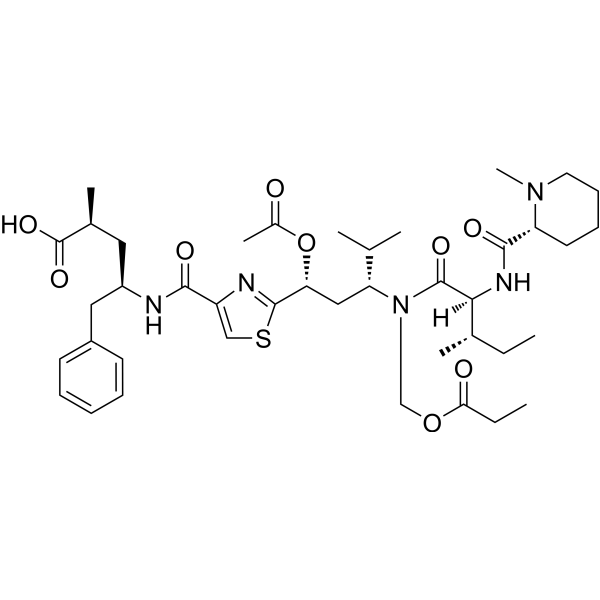
Tubulin polymerization-IN-38 is an analogue of Tubulysin (HY-128914), a potent anticancer agent. Tubulin polymerization-IN-38 inhibits tubulin polymerization (tubulin polymerisation), thereby inducing apoptosis (apoptosis). Tubulysin series products are potent anti-microtubule toxins (anti-microtubule toxins) and can be used as ADC cytotoxins (ADC Cytotoxin) to synthesize ADCs .
|
-
-
- HY-113074R
-
-
-
- HY-400684
-
|
|
Bacterial
|
Cancer
|
|
Tubulysin A intermediate-1 is an intermediate in the synthesis of the cytotoxic peptide Tubulysin A (HY-15995). Tubulysin A (TubA) is an antibiotic, anti-microtubule toxins, and apoptosis inducer isolated from myxobacteria. Tubulysin A has anti-angiogenic, anti-microtubule, anti-mitotic, and anti-proliferative activities. Tubulysin A arrests cells in the G2/M phase, effectively inhibits tubulin polymerization, and induces depolymerization of detached microtubules. Tubulysin A acts as an ADC cytotoxin (ADC Cytotoxin) to synthesize ADC .
|
-
-
- HY-128941
-
|
|
Drug-Linker Conjugates for ADC
|
Cancer
|
|
CCK2R Ligand-Linker Conjugates 1 is a ligand-linker conjugate, which conjugates to the cytotoxic antimicrotubule agents Desacetyl Vinblastine Hydrazide (DAVBH) and Tubulysin B Hydrazide (TubBH) via a hydrophilic peptide linker .
|
-
-
- HY-123707
-
|
|
Microtubule/Tubulin
|
Cancer
|
|
KPU-300 (compound 6b) is a tubulin inhibitor. KPU-300 has potent cytotoxicity with an IC50 value of 7.0 nM against HT-29 cells .
|
-
-
- HY-15584B
-
|
HTI-286 hydrochloride; SPA-110 hydrochloride
|
Microtubule/Tubulin
ADC Payload
Apoptosis
|
Cancer
|
|
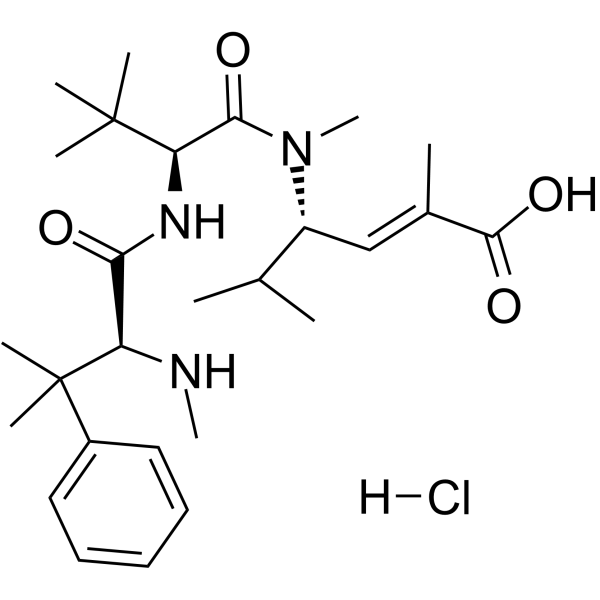
Taltobulin hydrochloride (HTI-286 hydrochloride), a synthetic analogue of the tripeptide hemiasterlin, is a potent antimicrotubule agent that circumvents P-glycoprotein-mediated resistance in vitro and in vivo. Taltobulin hydrochloride inhibits the polymerization of purified tubulin, disrupts microtubule organization in cells, and induces mitotic arrest, as well as apoptosis .
|
-
-
- HY-176743
-
|
|
Microtubule/Tubulin
Apoptosis
|
Cancer
|
|
Tubulin polymerization-IN-81 is a selective Tubulin inhibitor with an IC50 of 5.41 μM. Tubulin polymerization-IN-81 possesses a significant anti-proliferative activity, unique ROS-mediated apoptotic mechanism and potent anti-microtubule activity. Tubulin polymerization-IN-81 can be used in anti-tumor research .
|
-
-
- HY-P10844
-
|
|
Amino Acid Derivatives
|
Cancer
|
|
ANK peptide is a novel peptide designed based on the conserved residues of single ankyrin motif. ANK peptide is a synuclein-γ (SNCG) inhibitor that binds to SNCG and competes with SNCG-BubR1 interaction to enhance the sensitivity of breast cancer cells to antimicrotubule drugs such as nocodazole and paclitaxel. ANK peptide can be used in the study of cancer .
|
-
-
- HY-13270R
-
|
E7010 (Standard)
|
Microtubule/Tubulin
Autophagy
Apoptosis
Reference Standards
|
Cancer
|
|
ABT-751 (Standard) is the analytical standard of ABT-751. This product is intended for research and analytical applications. ABT-751 (E7010) is a novel, highly orally bioavailable sulfonamides antimitotic compound and tubulin binder. It prevents tubulin aggregation by binding to the colchicine site on β-tubulin, leading to cell cycle arrest in G2/M phase and inducing apoptosis, thus effectively preventing cell division. ABT-751 induces autophagy by inhibiting the AKT/MTOR signaling pathway. ABT-751 showed significant inhibition against various types of cancer cells, including lung, gastric, colon, and breast cancer .
|
-
-
- HY-13270A
-
|
E7010 hydrochloride
|
Microtubule/Tubulin
Autophagy
Apoptosis
|
Cancer
|
|
ABT-751 (E7010) hydrochloride is a novel, highly orally bioavailable sulfonamides antimitotic compound and tubulin binder. It prevents tubulin aggregation by binding to the colchicine site on β-tubulin, leading to cell cycle arrest in G2/M phase and inducing apoptosis, thus effectively preventing cell division. ABT-751 (E7010) hydrochloride induces autophagy by inhibiting the AKT/MTOR signaling pathway. ABT-751 (E7010) hydrochloride showed significant inhibition against various types of cancer cells, including lung, gastric, colon, and breast cancer .
|
-
-
- HY-121634
-
|
|
Polo-like Kinase (PLK)
|
Others
|
|
DAP-81 is an inhibitory agent targeting Polo-like kinases (Plks), a class of evolutionarily conserved serine/threonine kinases. DAP-81 dose-dependently increases the number of monopolar spindles in treated cells. High-resolution live-cell microscopy revealed that Plk activity is required for the assembly and maintenance of bipolar mitotic spindles. Plk inhibition destabilizes centromeric microtubules while stabilizing other spindle microtubules, leading to the formation of monopolar spindles. Further testing of compounds based on "privileged scaffolds" such as the DAP scaffold may lead to the discovery of new cell division probes and anti-microtubule agents.
|
-
-
- HY-B1883R
-
|
Kerb (Standard); RH 315 (Standard)
|
Herbicide
Reference Standards
|
Others
|
|
Propyzamide (Standard) is the analytical standard of Propyzamide. This product is intended for research and analytical applications. Propyzamide is a anti-microtubule herbicide .
|
-
-
- HY-P10844
-
|
|
Amino Acid Derivatives
|
Cancer
|
|
ANK peptide is a novel peptide designed based on the conserved residues of single ankyrin motif. ANK peptide is a synuclein-γ (SNCG) inhibitor that binds to SNCG and competes with SNCG-BubR1 interaction to enhance the sensitivity of breast cancer cells to antimicrotubule drugs such as nocodazole and paclitaxel. ANK peptide can be used in the study of cancer .
|
| 製品番号 |
製品名 |
Target |
研究分野 |
Image |
-
- HY-P99956
-
|
VLS-101; MK-2140
|
Antibody-Drug Conjugates (ADCs)
Apoptosis
|
Cancer
|
|
Zilovertamab vedotin (VLS-101) is a novel antibody-drug conjugate comprising the humanized monoclonal antibody zilovertamab and and the anti-microtubule cytotoxin monomethyl vedotin. Zilovertamab vedotin binding to tumor cell ROR1 results in rapid internalization, trafficking to lysosomes, antibody–agent conjugate cleavage, and monomethyl vedotin release. Zilovertamab vedotin induces apoptosis. Zilovertamab vedotin can be used in research of cancer .
|
-
(5)
-
- HY-P99685
-
|
IMGN-289; J2898A-SMCC-DM1
|
EGFR
Antibody-Drug Conjugates (ADCs)
|
Cancer
|
|
Laprituximab emtansine (IMGN-289) is an immunotoxin targeting HER1. Laprituximab emtansine is an EGFR antibody-drug conjugate (ADC) consisting of the J2898A antibody, DM1 (anti-microtubule agent) and the SMCC thioether linker. Laprituximab emtansine can be used for cancer research .
|
-
(5)
| 製品番号 |
製品名 |
Category |
Target |
構造式 |
入力情報は安全に管理されます. ※ 必須入力項目.
Inquiry Information
- 製品名:
- 製品番号:
- 数量:
- MCE 日本正規代理店:

