1. Search Result
Search Result
Results for "

apomorphine

" in MedChemExpress (MCE) Product Catalog:

32

Inhibitors & Agonists

1

Natural
Products

1

Isotope-Labeled Compounds

Cat. No. Product Name Target Research Areas Chemical Structure
  • HY-12723
    Apomorphine
    5+ Cited Publications

    (-)-apomorphine

    Dopamine Receptor Monoamine Oxidase Reactive Oxygen Species (ROS) JNK ERK Amyloid-β Tau Protein MMP Neurological Disease Inflammation/Immunology Endocrinology Cancer
    Apomorphine ((-)-Apomorphine) is a potent dopamine receptor agonist. Apomorphine also inhibit MAO-A and MAO-B. Apomorphine exerts neuroprotective effect and can relax rat corpus cavernosum. Apomorphine can inhibit ROS production, DNA fragmentation and inibit JNK and ERK1/2 phosphorylation. Apomorphine can enhance degradation of intracellular Aβ40 and Aβ42, reduces tau protein levels and inhibit MMP-9 expression. Apomorphine is a highly potent radical scavenger and iron chelator. Apomorphine can be used for the researches of dementia, parkinson's disease, alzheimer disease, breast carcinoma, and erectile dysfunction .
    Apomorphine
  • HY-N6973
    Boldine
    1 Publications Verification

    RANKL/RANK Apoptosis Inflammation/Immunology Cancer
    Boldine is an apomorphine isoquinoline alkaloid extracted from the root of the pheasant pepper (Litsea cubeba). Boldine is an oral effective antioxidant, anti-inflammatory, antitumor agent, and can inhibit osteoclast formation. Boldine induces apoptosis of human bladder cancer cells by regulating ERK, AKT and GSK-3β. Boldine ameliorates bone destruction by down-regulating the OPG/RANKL/RANK signaling pathway. It can be used in rheumatoid arthritis research .
    Boldine
  • HY-16996A
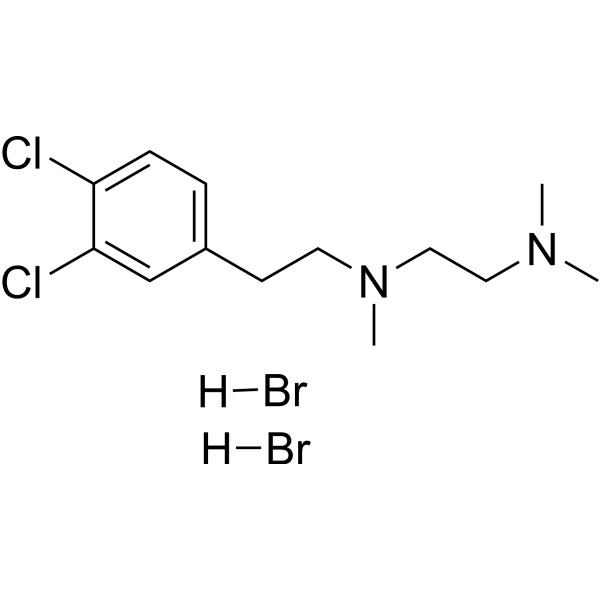
    BD-1047 dihydrobromide
    Maximum Cited Publications
    11 Publications Verification

    Sigma Receptor Neurological Disease
    BD-1047 dihydrobromide is a selective functional antagonist of sigma receptors. BD-1047 dihydrobromide attenuates Apomorphine (HY-12723)-induced climbing and Phencyclidine-induced head twitches .
    BD-1047 dihydrobromide
  • HY-111066A

    Dopamine Receptor Neurological Disease
    JNJ-37822681 dihydrochloride is a potent, specific, centrally active, fast-dissociating dopamine D2 receptor antagonist with a moderate binding affinity for the dopamine D2L receptor (Ki =158 nM), which has potential for the treatment of schizophrenia and bipolar disorder .
    JNJ-37822681 dihydrochloride
  • HY-B1017

    EN-1733A

    Dopamine Receptor Neurological Disease
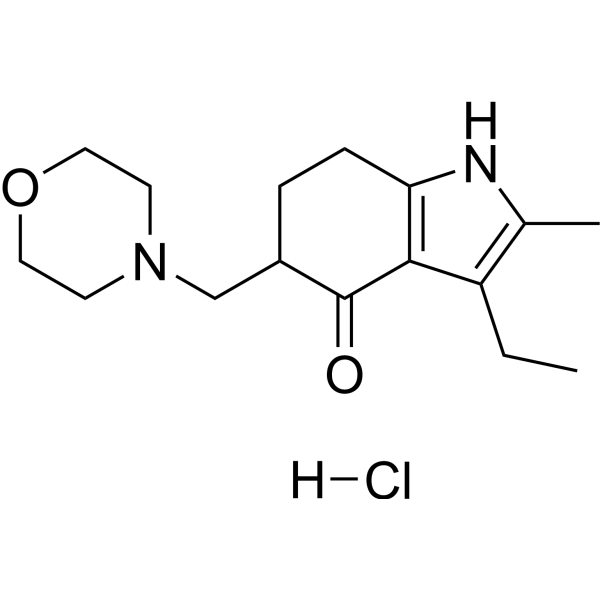
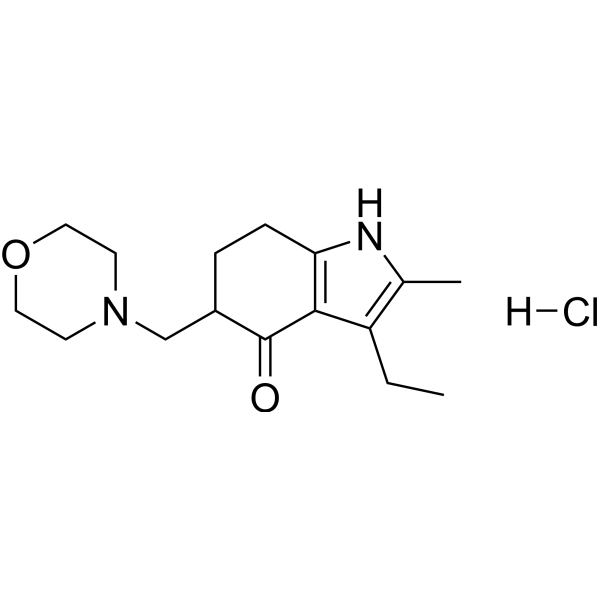
    Molindone hydrochloride (EN-1733A) is an orally active and brain-penetrant dopamine D2/D5 receptor antagonist. Molindone hydrochloride shows antipsychotic and antidepressant-like activities. Molindone hydrochloride suppresses spontaneous locomotion, and antagonizes apomorphine-induced emesis. Molindone hydrochloride can be used for the research of neurological disease .
    Molindone hydrochloride
  • HY-101313A

    (-)-Remoxipride hydrochloride

    Dopamine Receptor Neurological Disease
    (S)-Remoxipride ((-)-Remoxipride) hydrochloride is a selective dopamine D2-receptor antagonist with an IC50 value of 1.57 μM. (S)-Remoxipride hydrochloride can be used for the research of psychotic disorder .
    (S)-Remoxipride hydrochloride
  • HY-119468

    Dopamine Transporter Neurological Disease
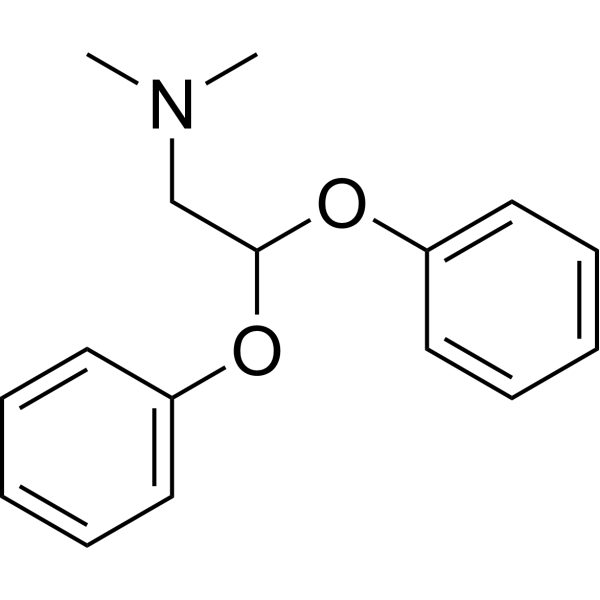
    Medifoxamine is an orally active monoamine reuptake inhibitor and antidepressant. Medifoxamine preferentially inhibits presynaptic dopamine reuptake. Medifoxamine acts as an intraocular pressure-lowering agent to reduce intraocular pressure, and also functions as a miotic agent to decrease pupil diameter. Medifoxamine exhibits characteristic properties of antidepressant compounds, including preventing hypothermia induced by Reserpine (HY-N0480) or Apomorphine (HY-12723), potentiating the toxic effects of Yohimbine (HY-N0127) in mice, and reducing immobility behavior in mice and rats in the "behavioral despair" model. Medifoxamine has no anticholinergic activity. Medifoxamine can be used in research related to depression .
    Medifoxamine
  • HY-W648166

    Dopamine Receptor Neurological Disease
    Dopamine D2 receptor antagonist-3 (Example 17) is an orally active and selective dopamine D2 receptor antagonist with a pIC50 of 5.52. Dopamine D2 receptor antagonist-3 exhibits antipsychotic activity in the Apomorphine (HY-12723) induced agitation in rats. Dopamine D2 receptor antagonist-3 can be used for psychiatric and neurological disorders research .
    Dopamine D2 receptor antagonist-3
  • HY-101313

    (-)-Remoxipride

    Dopamine Receptor Neurological Disease
    (S)-Remoxipride ((-)-Remoxipride) is a selective dopamine D2-receptor antagonist with an IC50 value of 1.57 μM. (S)-Remoxipride can be used for the research of psychotic disorder .
    (S)-Remoxipride
  • HY-19372

    Dopamine Receptor 5-HT Receptor Neurological Disease
    SSR-181507 hydrochloride is a dopamine D2 receptor antagonist and 5-HT1A receptor agonist. SSR-181507 antagonizes Apomorphine (HY-12723)-induced climbing in mice and stereotypies in rats. SSR-181507 hydrochloride can be used in the research of depression and anxiety .
    SSR-181507 hydrochloride
  • HY-106781

    Dopamine Receptor Neurological Disease
    OPC-4392 is a orally active presynaptic dopamine autoreceptor agonist and postsynaptic D2 receptor antagonist. OPC 4392 reverses the Reserpine (HY-N0480)-induced dopamine accumulation, inhibits Apomorphine (HY-12723)-induced stereotypic and climbing behaviors in mouse models. OPC-4392 can be used as antipsychotic agent .
    OPC-4392
  • HY-108985

    EGYT-3615

    Others Neurological Disease
    Trazium esilate (EGYT-3615) is an antidepressant, which influences the central dopaminergic system. Trazium esilate synergizes amphetamine, potentiates stereotypy and hypermotility. Trazium esilate blocks Apomorphine (HY-12723)-induced hypothermic and the stereotypy, and Bulbocapnine (HY-W436270)-induced cataleptic state. Trazium esilate enhances the effect of Norepinephrine (HY-13715) on isolated vas deferens of the rat .
    Trazium esilate
  • HY-12723R

    (-)-apomorphine (Standard)

    Reference Standards Dopamine Receptor Monoamine Oxidase Reactive Oxygen Species (ROS) JNK ERK Amyloid-β Tau Protein MMP Neurological Disease Inflammation/Immunology Endocrinology Cancer
    Apomorphine ((-)-Apomorphine) (Standard) is the analytical standard of Apomorphine (HY-12723). This product is intended for research and analytical applications. Apomorphine is a potent dopamine receptor agonist. Apomorphine also inhibit MAO-A and MAO-B. Apomorphine exerts neuroprotective effect and can relax rat corpus cavernosum. Apomorphine can inhibit ROS production, DNA fragmentation and inibit JNK and ERK1/2 phosphorylation. Apomorphine can enhance degradation of intracellular Aβ40 and Aβ42, reduces tau protein levels and inhibit MMP-9 expression. Apomorphine is a highly potent radical scavenger and iron chelator. Apomorphine can be used for the researches of dementia, parkinson's disease, alzheimer disease, breast carcinoma, and erectile dysfunction .
    Apomorphine (Standard)
  • HY-W726429

    (-)-apomorphine hydrochloride-d4

    Isotope-Labeled Compounds Others
    Apomorphine hydrochloride-d4 ((-)-Apomorphine hydrochloride-d4) is the deuterium labeled Apomorphine hydrochloride.
    Apomorphine hydrochloride-d4
  • HY-19019

    Dopamine Receptor Neurological Disease
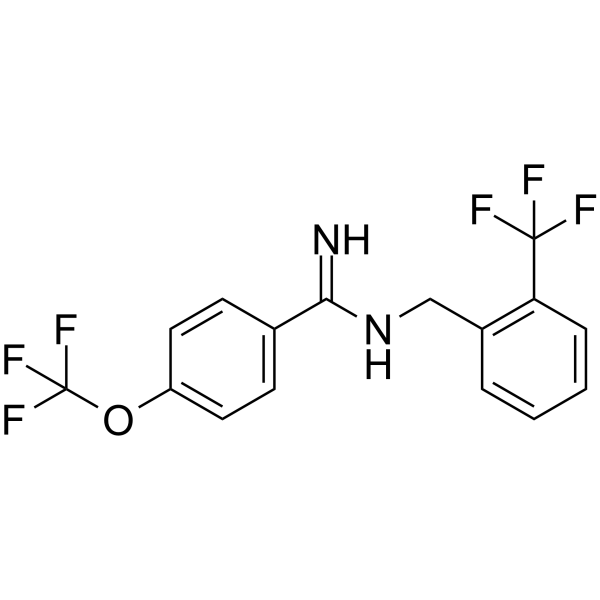
    Y-20024 hydrochloride is an orally active D2 receptor antagonist with blood-brain barrier permeability. Y-20024 hydrochloride can inhibit Apomorphine (HY-12723)-induced ADHD in mice. Y-20024 hydrochloride can inhibit Apomorphine-induced vomiting in dogs. Y-20024 hydrochloride has prolactin-promoting activity. Y-20024 hydrochloride can be used in research on neurological disorders such as ADHD and vomiting .
    Y-20024 hydrochloride
  • HY-119595

    R3201

    Others Neurological Disease
    Haloperidide (R3201) is a neuroleptic compound. Haloperidide is a potent and selective anti-emetic agent. Haloperidide antagonizes Apomorphine (HY-12723)-induced emesis in dogs .
    Haloperidide
  • HY-16996

    Sigma Receptor Neurological Disease
    BD-1047 is a selective functional antagonist of sigma receptors. BD-1047 attenuates Apomorphine (HY-12723)-induced climbing and Phencyclidine-induced head twitches .
    BD-1047
  • HY-120076

    Dopamine Receptor Neurological Disease
    CP-293019 is a dopamine D4 receptor antagonist, with a Ki value of 3.4 nM. CP-293019 can inhibit Apomorphine (HY-12723) induced hyperactivity in rats .
    CP-293019
  • HY-121100

    iGluR Neurological Disease
    BZAD-01 is a potent, selective and orally active inhibitor of NMDA NR2B subunit, with a Ki of 72 nM. BZAD-01 can improve postural asymmetry as well as Apomorphine-induced rotation .
    BZAD-01
  • HY-W151617A

    Dopamine Receptor Neurological Disease
    Desethoxy Quetiapine dihydrochloride (Compound 28) is an antagonist for dopamine D2 receptor with an IC50 of 1330 nM. Desethoxy Quetiapine dihydrochloride antagonises Apomorphine (HY-12723)-induced climbing and swimming disruption in mouse models .
    Desethoxy Quetiapine dihydrochloride
  • HY-B1573A

    AY-23,028; dl-Butaclamol hydrochloride

    Adrenergic Receptor Dopamine Receptor Neurological Disease
    (±)-Butaclamol hydrochloride (AY-23,028) is the antagonist for adrenergic receptor and dopamine receptor. (±)-Butaclamol hydrochloride antagonizes amphetamine or Apomorphine (HY-12723)-induced stereotyped behaviors and emesis, inhibits discriminative avoidance behavior, and induces catalepsy in rats models .
    (±)-Butaclamol hydrochloride
  • HY-111066AR

    Dopamine Receptor Neurological Disease
    JNJ-37822681 (dihydrochloride) (Standard) is the analytical standard of JNJ-37822681 (dihydrochloride). This product is intended for research and analytical applications. JNJ-37822681 dihydrochloride is a potent, specific, centrally active, fast-dissociating dopamine D2 receptor antagonist with a moderate binding affinity for the dopamine D2L receptor (Ki =158 nM), which has potential for the treatment of schizophrenia and bipolar disorder .
    JNJ-37822681 dihydrochloride (Standard)
  • HY-106781A

    Dopamine Receptor Neurological Disease
    OPC 4392 hydrochloride is an agonist for presynaptic dopamine receptor and an antagonist for postsynaptic D2 receptor. OPC 4392 reverses the Reserpine (HY-N0480)-induced dopamine accumulation, inhibits Apomorphine (HY-12723)-induced stereotypic and climbing behaviors in mouse models .
    OPC 4392 hydrochloride
  • HY-115895

    CI-686 free base

    Dopamine Receptor Adrenergic Receptor Neurological Disease
    Trebenzomine (CI-686 free base) is a centrally acting psychotropic compound. Trebenzomine has both neuroleptic and stimulant activity. Trebenzomine potentiates Methamphetamine-induced self-stimulation. Trebenzomine reduces septal hyperirritability, suppression of conditioned avoidance behavior, blocks Apomorphine (HY-12723)-induced emesis in dogs .
    Trebenzomine
  • HY-16996AR

    Sigma Receptor Neurological Disease
    BD-1047 (dihydrobromide) (Standard) is the analytical standard of BD-1047 (dihydrobromide). This product is intended for research and analytical applications. BD-1047 dihydrobromide is a selective functional antagonist of sigma receptors. BD-1047 dihydrobromide attenuates Apomorphine (HY-12723)-induced climbing and Phencyclidine-induced head twitches .
    BD-1047 dihydrobromide (Standard)
  • HY-B1017R

    EN-1733A (Standard)

    Reference Standards Dopamine Receptor Neurological Disease
    Molindone hydrochloride (Standard) is the analytical standard of Molindone hydrochloride (HY-B1017). This product is intended for research and analytical applications. Molindone hydrochloride (EN-1733A) is an orally active and brain-penetrant dopamine D2/D5 receptor antagonist. Molindone hydrochloride shows antipsychotic and antidepressant-like activities. Molindone hydrochloride suppresses spontaneous locomotion, and antagonizes apomorphine-induced emesis. Molindone hydrochloride can be used for the research of neurological disease .
    Molindone hydrochloride (Standard)
  • HY-106194

    Dopamine Receptor Serotonin Transporter Neurological Disease
    SLV310 is an orally active dopamine D2 receptor antagonist (Ki: 5 nM) and serotonin reuptake receptor inhibitor. SLV310 antagonizes Apomorphine (HY-12723) induced climbing behaviour and 5-HTP (HY-N0122) induced serotonin syndrome like behaviour in mice (ED50: 5.6 and 5.9 mg/kg, p.o.). SLV310 is an antipsychotic compound and can be used for schizophrenia research .
    SLV310
  • HY-111283

    (+)-AJ 76; (1S,2R)-AJ 76

    Dopamine Receptor Neurological Disease
    AJ-76 ((+)-AJ 76; (1S,2R)-AJ 76) is a dopamine autoreceptor antagonist. AJ-76 can increase the synthesis and turnover of dopamine in the rat brain, while having little effect on the synthesis and turnover of serotonin (5-HT) and norepinephrine. AJ-76 can also antagonize the sedative effects of low-dose apomorphine and has a weak antagonistic effect on postsynaptic dopamine receptor .
    AJ-76
  • HY-U00021

    Clotixamide

    Dopamine Receptor Neurological Disease
    Clothixamide (Clotixamide) is an orally active and brain-penetrant dopamine antagonist. Clothixamide can be used for the research of psychiatric disorders .
    Clothixamide
  • HY-167973

    GABA Receptor Neurological Disease
    GABA-palmitamide is a GABA-responsive compound. GABA-palmitamide exhibits a dose-dependent bidirectional regulatory effect on the stereotyped behavior induced by Apomorphine (HY-12723): high doses inhibit motor behavior, while low doses enhance stereotyped behaviors in the oral cavity. GABA-palmitamide can be used in research on behavior regulation .
    GABA-palmitamide
  • HY-123332

    Drug Derivative Neurological Disease
    YM-08050 is a new anti-psychotic and Benzamide (HY-Z0283) derivative. YM-08050 inhibits stereotyped behaviors, conditioned avoidance responses, or spontaneous movements induced by Apomorphine (HY-12723) or Methamphetamine .
    YM-08050
  • HY-101313B

    (-)-Remoxipride hydrochloride hydrate

    Dopamine Receptor Neurological Disease
    (S)-Remoxipride ((-)-Remoxipride) hydrochloride hydrate ((S)-Remoxipride hydrochloride hydrate) is a selective dopamine D2-receptor antagonist with an IC50 value of 1.57 μM. (S)-Remoxipride hydrochloride hydrate can be used for the research of psychotic disorder .
    (S)-Remoxipride hydrochloride hydrate

Inquiry Online

Your information is safe with us. * Required Fields.

Salutation


Country or Region *

Applicant Name *


Organization Name *

Department *


Email Address *


Product Name *

Cat. No.


Requested quantity *

Phone Number *


Remarks

Inquiry Online

Inquiry Information

Product Name:
Cat. No.:
Quantity:
MCE Japan Authorized Agent:

