1. Search Result
Search Result
Pathways Recommended: Metabolic Enzyme/Protease
Results for "

aromatase enzyme

" in MedChemExpress (MCE) Product Catalog:

16

Inhibitors & Agonists

1

Biochemical Assay Reagents

1

Inhibitory Antibodies

3

Natural
Products

Cat. No. Product Name Target Research Areas Chemical Structure
  • HY-133668

    Drug Metabolite Cytochrome P450 PPAR Endocrinology Cancer
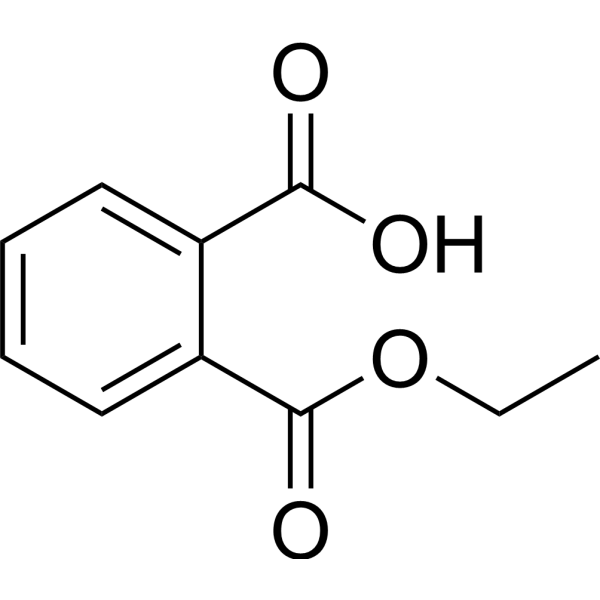
    Monoethyl phthalate is an orally active PDX-1 activator and the major hydrolytic metabolite of Diethyl phthalate (HY-Y0284) in vivo, with reproductive toxicity. Monoethyl phthalate targets aromatase (aromatase/CYP19A1) and PPAR to induce cell proliferation. The plasma protein binding rate of Monoethyl phthalate in rats and humans is lower than that of Diethyl phthalate. It exhibits significant enterohepatic circulation in rats and mainly accumulates in liver tissues. Monoethyl phthalate shows no estrogenic activity in estrogen-dependent human breast cancer cells. Monoethyl phthalate can be used in studies of reproductive toxicity and related environmental endocrine disruption mechanisms .
    Monoethyl phthalate
  • HY-B0237

    DL-Aminoglutethimide

    Cytochrome P450 Neurological Disease Endocrinology Cancer
    Aminoglutethimide (DL-Aminoglutethimide) is an orally active anticonvulsant with various endocrine-related side effects. Aminoglutethimide blocks multiple steroid hormone synthesis pathways by inhibiting several cytochrome P-450-dependent hydroxylases, such as aromatase, cholesterol side-chain cleavage enzyme, 11-hydroxylase, and 18-hydroxylase, with IC50 values of 0.3, 3.5, 120, and 20 μM, respectively. Aminoglutethimide reduces cortisol levels. Aminoglutethimide can be used in research on Cushing's syndrome, breast cancer, and other conditions .
    Aminoglutethimide
  • HY-N1993
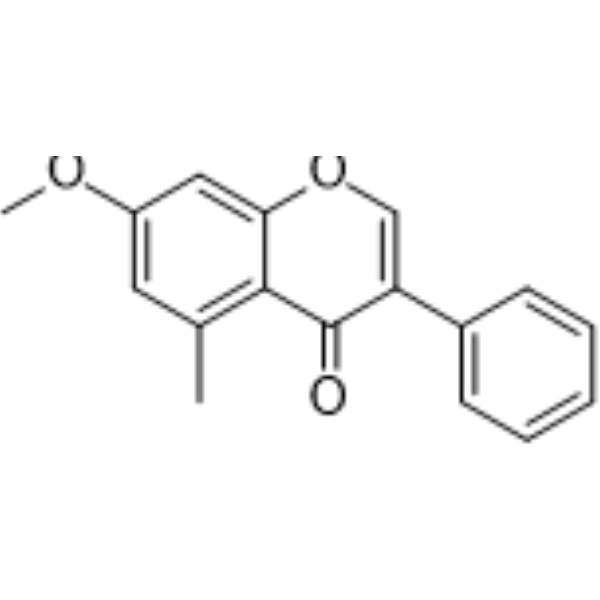
    5-Methyl-7-methoxyisoflavone
    3 Publications Verification

    Cytochrome P450 NF-κB Metabolic Disease Cancer
    5-Methyl-7-methoxyisoflavone is an orally active anti-oxidant with remyelinating activity. 5-Methyl-7-methoxyisoflavone inhibits the enzyme aromatase, interfering with the normal metabolic pathways of testosterone. 5-Methyl-7-methoxyisoflavone is a non-steroidal anabolic isoflavone, used as a anabolic agent. 5-Methyl-7-methoxyisoflavone shows better potency increasing muscle mass and endurance than Ipriflavone (HY-N0094). 5-Methyl-7-methoxyisoflavone can be used for fat loss besides the maintenance of low cholesterol level and strengthen bones. 5-Methyl-7-methoxyisoflavone is the inhibitor for NF-κB .
    5-Methyl-7-methoxyisoflavone
  • HY-148430

    Cytochrome P450 Cancer
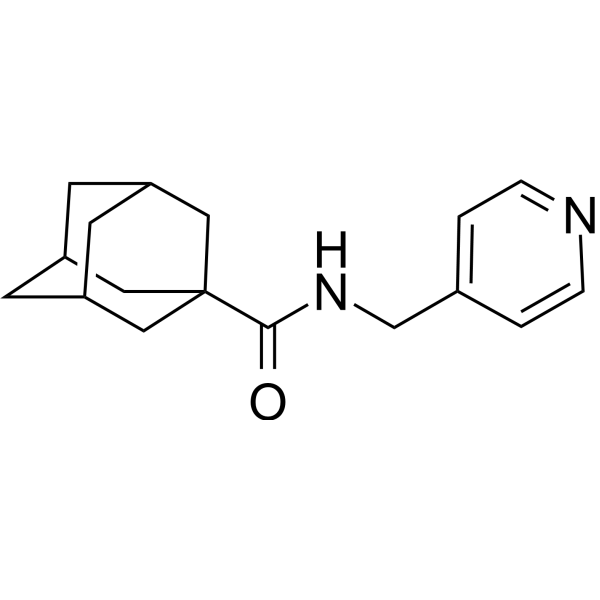
    4-Pyridylmethyl adamantanecarboxamide (Compound 11) is an Aromatase inhibitor with an IC50 of 1.5 μM against hAromatase. 4-Pyridylmethyl adamantanecarboxamide inhibits the C17,20-lyase activity of testicular cytochrome P45017α with an IC50 of 1600 nM, and also inhibits the 17α-hydroxylase activity of this enzyme with an IC50 of 7700 nM. 4-Pyridylmethyl adamantanecarboxamide can be used in the research of prostate cancer .
    4-Pyridylmethyl adamantanecarboxamide
  • HY-W020788

    CGA 154281

    Environmental Pollutants Glutathione S-transferase Estrogen Receptor/ERR Pregnane X Receptor (PXR) FXR Metabolic Disease Cancer
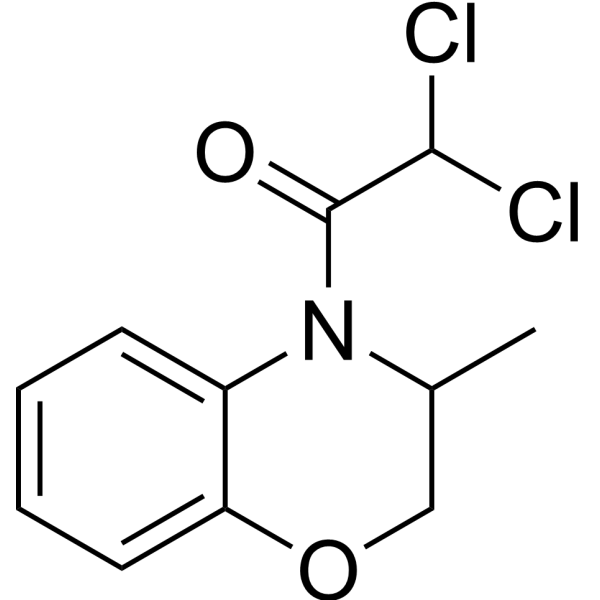
    Benoxacor (CGA 154281) is a herbicide safener and xenobiotic metabolism regulator. Benoxacor protects maize from the toxicity of metolachlor mainly by inducing detoxifying enzymes such as Glutathione S-transferase. Benoxacor also activates FXR, PXR and ERRα, and inhibits aromatase (aromatase). However, Benoxacor exhibits potential subacute oral toxicity and a high risk of hepatotoxicity in animal models. Benoxacor induces reactive oxygen species accumulation, interferes with embryonic heart development, and causes increased liver and kidney weights as well as alterations in gut microbiota in mice. Benoxacor can be used in studies related to hepatic steatosis, infertility, breast cancer and developmental toxicity .
    Benoxacor
  • HY-N9551

    Cytochrome P450 Parasite COX Lipoxygenase Infection Neurological Disease Cancer
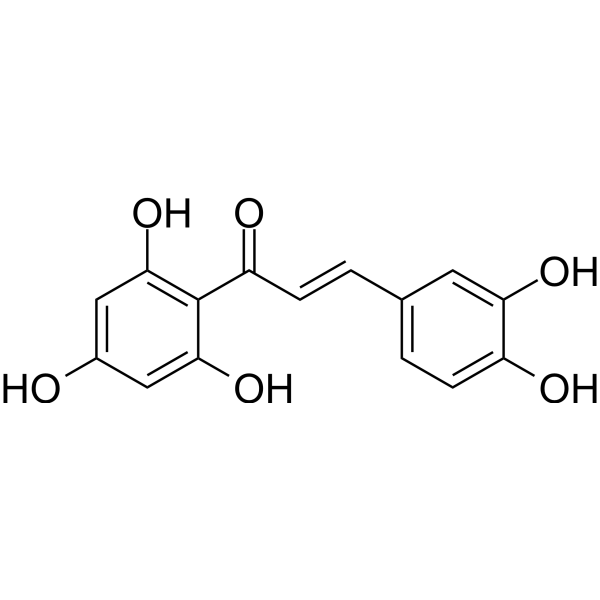
    Eriodictyol chalcone is an antioxidant that inhibits multiple key enzymes including 5-LOX (IC50=0.043 μM), aromatase/CYP19A1 (IC50=2.8 μM), PTPase 1B (IC50=1.26 μM), and COX (IC50=34 μM). Eriodictyol chalcone exhibits excellent free radical scavenging activity. Eriodictyol chalcone not only inhibits the growth of plasmodia and enhances the efficacy of Artemisinin (HY-B0094), but also reduces depression-like behaviors in animal models. Eriodictyol chalcone serves as a biosynthetic precursor for Aureusidin (HY-N9834). Eriodictyol chalcone is a potential dietary supplement and herbicide, and it can be applied to research on malaria, depression, breast cancer and other related diseases .
    Eriodictyol chalcone
  • HY-152249

    Antibiotic Bacterial Fungal Infection
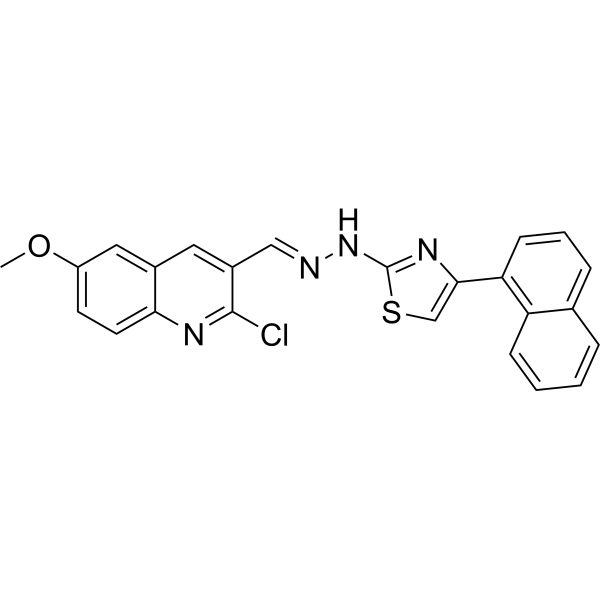
    Antibacterial agent 131 is a quinoline derivative. Antibacterial agent 131 has antimicrobial effect. Antibacterial agent 131 destroys the integrity of the fungal cells via blocking ergosterol production .
    Antibacterial agent 131
  • HY-W020788R

    CGA 154281 (Standard)

    Reference Standards Glutathione S-transferase Estrogen Receptor/ERR Pregnane X Receptor (PXR) FXR Others
    Benoxacor (Standard) is the analytical standard of Benoxacor. This product is intended for research and analytical applications. Benoxacor (CGA 154281) is a herbicide safener and xenobiotic metabolism regulator. Benoxacor protects maize from the toxicity of metolachlor mainly by inducing detoxifying enzymes such as Glutathione S-transferase. Benoxacor also activates FXR, PXR and ERRα, and inhibits aromatase (aromatase). However, Benoxacor exhibits potential subacute oral toxicity and a high risk of hepatotoxicity in animal models. Benoxacor induces reactive oxygen species accumulation, interferes with embryonic heart development, and causes increased liver and kidney weights as well as alterations in gut microbiota in mice. Benoxacor can be used in studies related to hepatic steatosis, infertility, breast cancer and developmental toxicity .
    Benoxacor (Standard)
  • HY-152250

    Cytochrome P450 Bacterial Infection
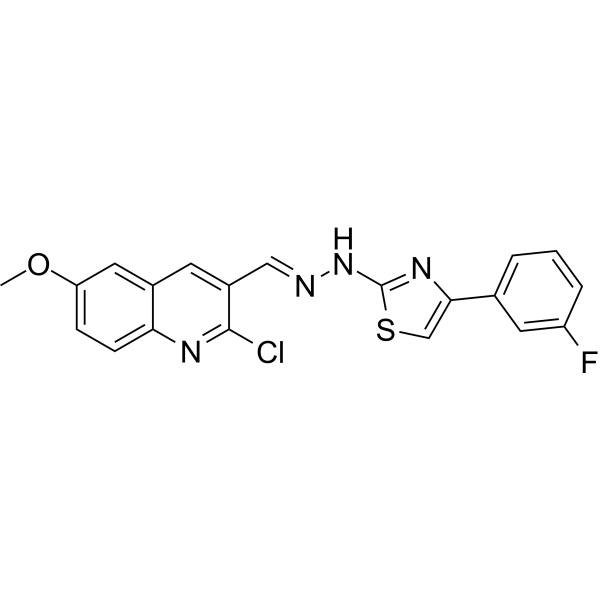
    Antibacterial agent 132 has anticandidal effects against C. parapsilosis (ATCC 22019) and C. krusei (ATCC 6258) with MIC90 values of <0.06 μg/mL and 62.50 μg/mL, respectively. Antibacterial agent 132 inhibits aromatase enzyme with an IC50 of 0.047μM .
    Antibacterial agent 132
  • HY-163884

    Cytochrome P450 Cancer
    BDE33872639 shows stable binding interactions with the aromatase enzyme and identifies as a non-blocker, demonstrating a reduced risk of adversecardiac effects in virtual screening .
    BDE33872639
  • HY-105163

    MPV-2213ad

    Cytochrome P450 Endocrinology
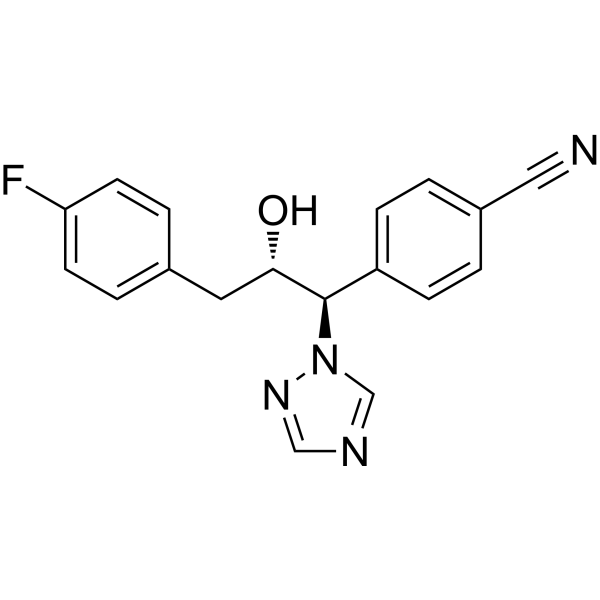
    Finrozole (MPV-2213ad) is a nonsteroidal, orally active and competitive aromatase enzyme inhibitor. Finrozole can be used for urinary symptoms research .
    Finrozole
  • HY-W699238

    Biochemical Assay Reagents
    S-(-)-Aminoglutethimide D-tartrate is an aromatase inhibitor with activity that blocks adrenal steroidogenesis. S-(-)-Aminoglutethimide D-tartrate can be used to inhibit steroid-related diseases. S-(-)-Aminoglutethimide D-tartrate is often used clinically to control certain types of cancer. S-(-)-Aminoglutethimide D-tartrate effectively reduces testosterone and estrogen levels through an enzyme inhibition mechanism.
    S-(-)-Aminoglutethimide D-tartrate
  • HY-182708

    Cytochrome P450 Metabolic Disease
    CGS 18320B is a human placental microsomal aromatase inhibitor with a Ki of 0.16 nM. CGS 18320B interacts reversibly with the enzyme's active site to block estrogen biosynthesis from androstenedione. CGS 18320B can be used for the research of aromatase inhibition and estrogen biosynthesis regulation .
    CGS 18320B
  • HY-182498

    Cytochrome P450 Estrogen Receptor/ERR Cancer
    (Z)-Norendoxifen is an aromatase inhibitor and estrogen receptor modulator. The IC50 value of (Z)-Norendoxifen against aromatase is 102 nM. The EC50 values of (Z)-Norendoxifen for ER-α and ER-β are 27.0 nM and 35.2 nM, respectively. (Z)-Norendoxifen can be used in breast cancer research .
    (Z)-Norendoxifen
  • HY-181163

    Caspase COX Cytochrome P450 Steroid Sulfatase Apoptosis Cancer
    Caspase-3/7 activator 4 is a caspase-3 activator and caspase-7 activator. Caspase-3/7 activator 4 inhibits key enzymes in estrogen biosynthesis, including aromatase (IC50 = 38.3 nM) and steroid sulfatase (IC50 = 12.7 µM), and selectively suppresses COX-2 (IC50 = 5.38 µM). Caspase-3/7 activator 4 shows strong antioxidant activity (DPPH: IC50 = 16.26 µM). Caspase-3/7 activator 4 inhibits estrogen synthesis, suppresses estrogen availability, reduces prostaglandin production, increases caspase-3/7 expression, induces G0/G1 cell cycle arrest, induces apoptotic cell death, reduces circulating TNF-α and VEGFR-II levels, restores hepatorenal function markers and histoarchitecture, restores antioxidant defense enzyme activity, reduces lipid peroxidation, exerts antiproliferative activity against breast cancer cells, exerts antitumor activity in the Ehrlich ascites carcinoma models. Caspase-3/7 activator 4 can be used for the research of breast cancer, ehrlich ascites carcinoma .
    Caspase-3/7 activator 4
  • HY-P992149

    GnRH Receptor Endocrinology
    Lutropin alfa is a recombinant human luteinizing hormone (LH). Lutropin alfa consists of non-covalently linked α and β subunits, and its activity is similar to that of natural luteinizing hormone. Lutropin alfa is used to stimulate follicular development in infertility .
    Lutropin alfa

Inquiry Online

Your information is safe with us. * Required Fields.

Salutation


Country or Region *

Applicant Name *


Organization Name *

Department *


Email Address *


Product Name *

Cat. No.


Requested quantity *

Phone Number *


Remarks

Inquiry Online

Inquiry Information

Product Name:
Cat. No.:
Quantity:
MCE Japan Authorized Agent:

