Search Result
Results for "
ascorbate
" in MedChemExpress (MCE) Product Catalog:
9
Biochemical Assay Reagents
8
Isotope-Labeled Compounds
| Cat. No. |
Product Name |
Target |
Research Areas |
Chemical Structure |
-
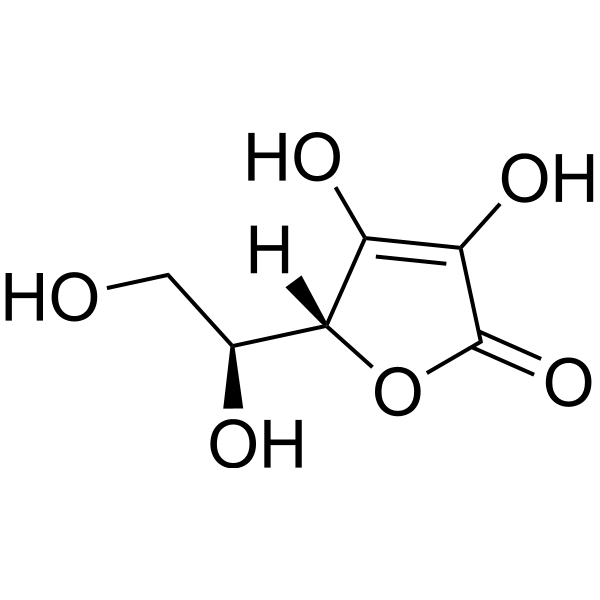
- HY-B0166
-
-
-
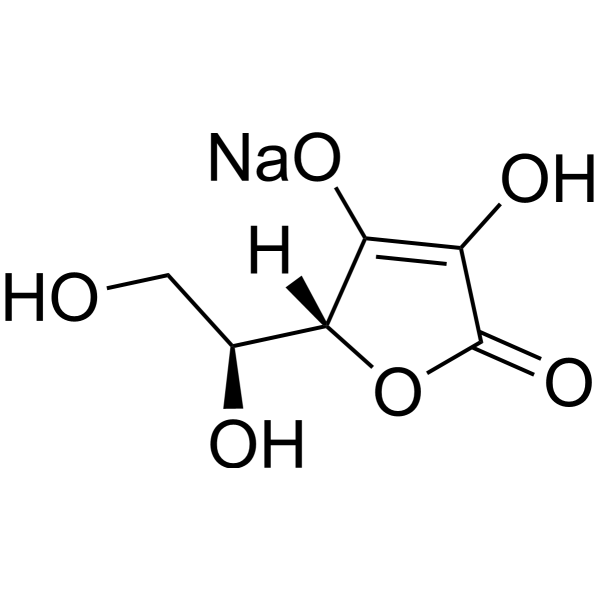
- HY-B0166A
-
-
-
- HY-W021042
-
|
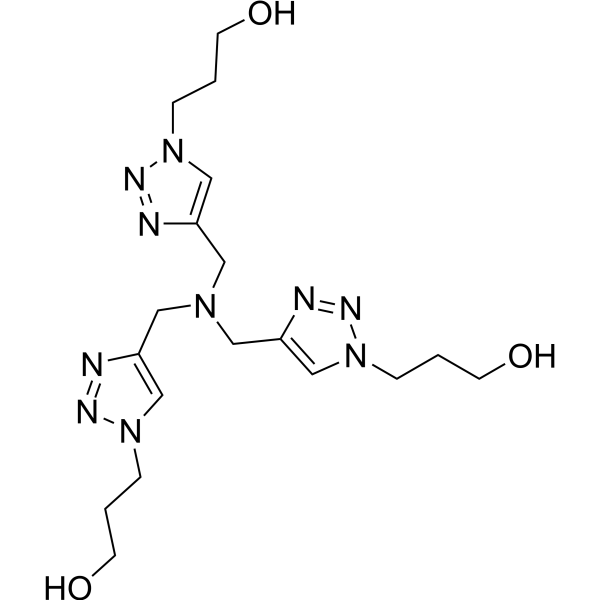
THPTA
|
Biochemical Assay Reagents
|
Others
|
|
Tris(3-hydroxypropyltriazolylmethyl)amine (THPTA) is an accelerating ligand in the copper-catalyzed azide-alkyne cycloaddition reaction (CuAAC) and protects cells from oxidants generated by copper-catalyzed reduction of oxygen by ascorbate. In addition, Tris(3-hydroxypropyltriazolylmethyl)amine can also protect the histidine moiety of biomolecules in a manner proportional to the ligand concentration .
|
-
-
- HY-B0166R
-
|
L-ascorbate (Standard); Vitamin C (Standard)
|
Reference Standards
Reactive Oxygen Species (ROS)
Calcium Channel
Apoptosis
Endogenous Metabolite
|
Neurological Disease
Metabolic Disease
Cancer
|
|
L-Ascorbic acid (Standard) is the analytical standard of L-Ascorbic acid. This product is intended for research and analytical applications. L-Ascorbic acid (L-Ascorbate), an electron donor, is an endogenous antioxidant agent. L-Ascorbic acid inhibits selectively Cav3.2 channels with an IC50 of 6.5 μM. L-Ascorbic acid is also a collagen deposition enhancer and an elastogenesis inhibitor . L-Ascorbic acid exhibits anti-cancer effects through the generation of reactive oxygen species (ROS) and selective damage to cancer cells .
|
-
-
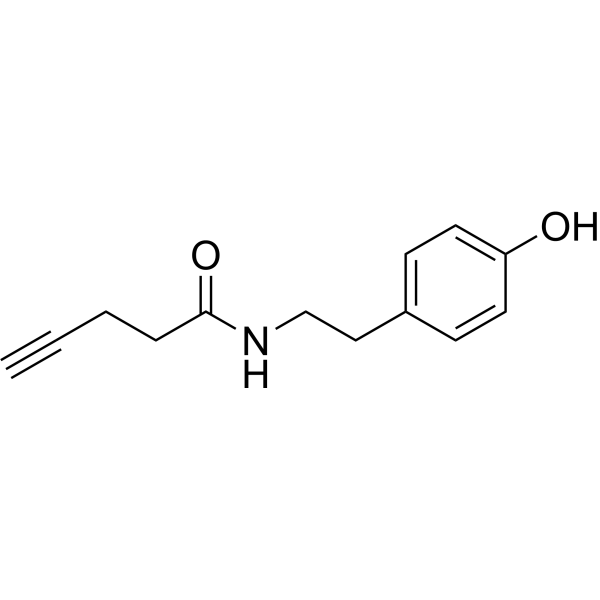
- HY-131442
-
|
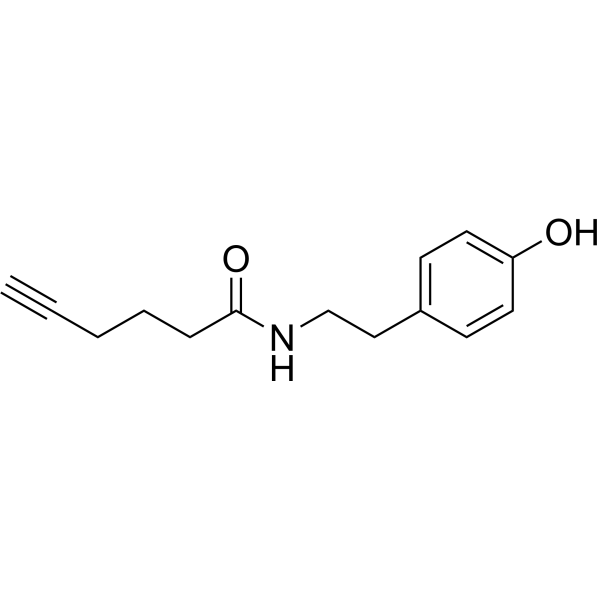
Alkyne tyramide; Alk-Ph
|
Biochemical Assay Reagents
|
Others
|
|
Alkyne-phenol (Alk-Ph) is a clickable ascorbate peroxidase 2 (APEX2) probe. Alkyne-phenol substantially improves APEX-labeling efficiency in intact yeast cells, as it is more cell wall-permeant than APEX2 substrate biotin-phenol (BP). Alkyne-phenol also facilitates the identification of APEX-labeling sites, allowing the unambiguous assignment of membrane topology of mitochondrial proteins . Alkyne-phenol is a click chemistry reagent, it contains an Alkyne group and can undergo copper-catalyzed azide-alkyne cycloaddition (CuAAc) with molecules containing Azide groups.
|
-
-
- HY-B2068
-
-
-
- HY-B0166G
-
-
-
- HY-W094510
-
|
|
Biochemical Assay Reagents
|
Inflammation/Immunology
|
|
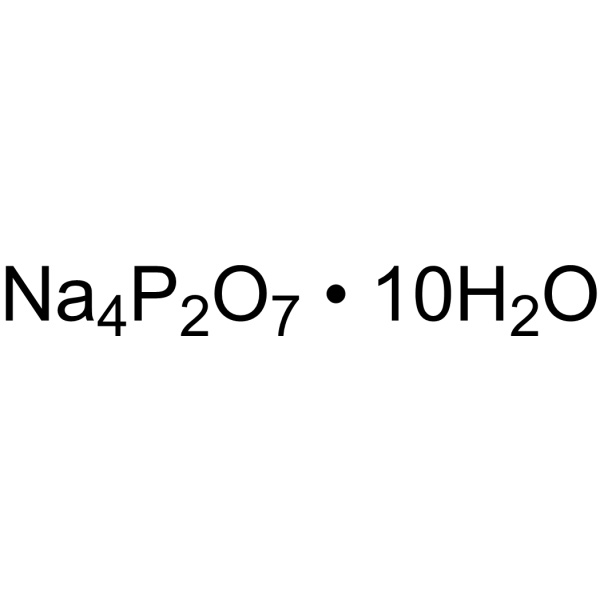
Sodium pyrophosphate decahydrate is a phosphate donor and mild chelating agent. Sodium pyrophosphate decahydrate serves as a phosphate source for Pseudomonas aeruginosa acid phosphatase and its Q6 variant, enabling phosphorylation of L‑ascorbic acid to L‑ascorbate‑2‑phosphate. Sodium pyrophosphate decahydrate facilitates 99mTc labeling of human polyclonal IgG. Sodium pyrophosphate decahydrate can be used in research on musculoskeletal infections .
|
-
-
- HY-B0166S
-
-
-
- HY-133079
-
|
tetra-isopalmitoyl Ascorbic acid; IPAA; Tetrahexyldecyl ascorbate
|
Prostaglandin Receptor
|
Endocrinology
|
|
Ascorbyl tetra-2-hexyldecanoate (tetra-isopalmitoyl Ascorbic acid; IPAA) is a lipophilic derivative of vitamin C (L-ascorbic acid). Ascorbyl tetra-2-hexyldecanoate (100 μM ) can prevent the decrease in viability of HaCaT keratinocytes induced by UVB, hydrogen peroxide, or tert-butyl hydroperoxide, and reduce the production of IL-1α and prostaglandin E2 (PGE2). Topical application of ascorbyl tetra-2-hexyldecanoate (1%) increases epidermal viability thickness, stratum corneum water content, and skin smoothness, and reduces skin roughness in hairless mice. Ascorbyl tetra-2-hexyldecanoate can be used to develop skin whitening agents in the beauty industry.
|
-
-
- HY-P2742
-
|
ASO, Cucurbit sp.
|
Endogenous Metabolite
|
Metabolic Disease
|
|
Ascorbate oxidase, Cucurbit sp., also known as vitamin C oxidase, is a REDOX enzyme involved in the regulation of extracellular matrix. Ascorbate oxidase catalyzes the reaction of ascorbic acid and oxygen to produce dehydroascorbic acid .
|
-
-
- HY-B0166S8
-
|
L-ascorbate-1; Vitamin C-13C6-1
|
Isotope-Labeled Compounds
Endogenous Metabolite
Reactive Oxygen Species (ROS)
Calcium Channel
Apoptosis
|
Cancer
|
|
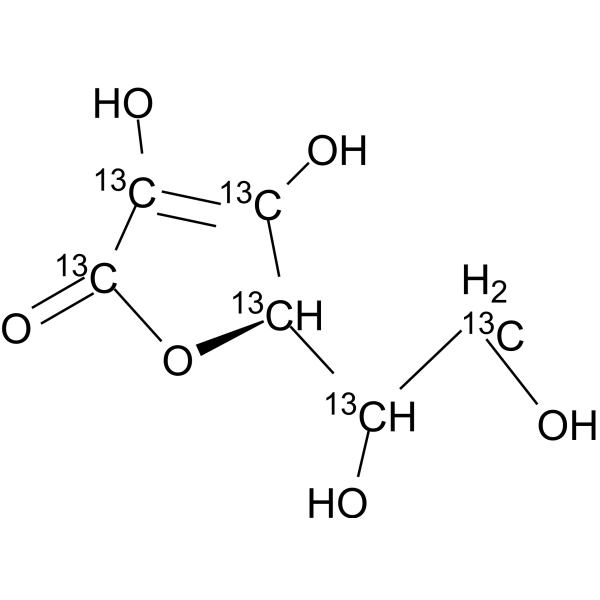
L-Ascorbic acid- 13C6-1 (L-Ascorbate-1; Vitamin C- 13C6-1) is a 13C labeled L-Ascorbic acid (HY-B0166) . L-Ascorbic acid (L-Ascorbate), an electron donor, is an endogenous antioxidant agent. L-Ascorbic acid inhibits selectively Cav3.2 channels with an IC50 of 6.5 μM. L-Ascorbic acid is also a collagen deposition enhancer and an elastogenesis inhibitor . L-Ascorbic acid exhibits anti-cancer effects through the generation of reactive oxygen species (ROS) and selective damage to cancer cells .
|
-
-
- HY-128075
-
|
|
Environmental Pollutants
Herbicide
|
Cancer
|
|
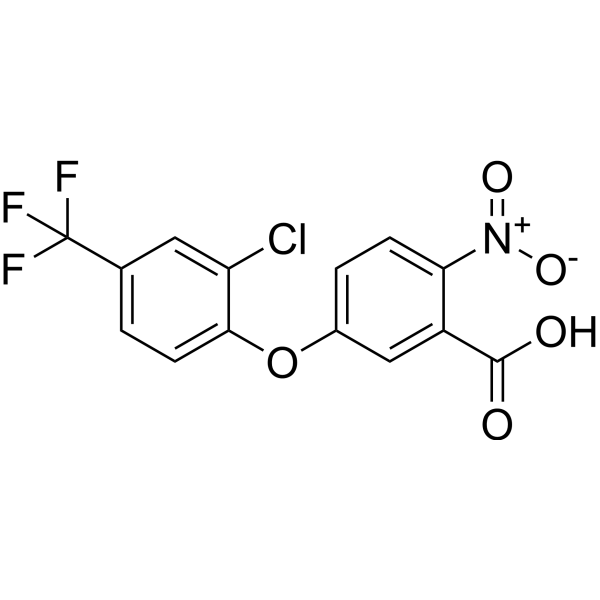
Acifluorfen, a protoporphyrinogen oxidase (PROTOX) inhibitor herbicide, promotes the accumulation of protoporphyrin IX (PPIX), and induces tumors in the rodent liver. Acifluorfen causes strong photooxidative destruction of pigments and lipids in sensitive plant species .
|
-
-
- HY-P2888
-
|
BOD
|
Biochemical Assay Reagents
|
Metabolic Disease
|
|
Bilirubin oxidase (BOD) is an electrocatalyst with oxygen removal activity. Bilirubin oxidase can catalyze the oxidation of bilirubin to biliverdin. Bilirubin oxidase participates in the metabolism of porphyrins and chlorophyll, and acts as a catalyst for oxygen reduction. Bilirubin oxidase can serve as a component of a single-enzyme oxygen removal system for reductase-based voltammetric biosensors .
|
-
-
- HY-B0166S6
-
-
-
- HY-B0166S1
-
-
-
- HY-W021267
-
|
|
Reactive Oxygen Species (ROS)
|
Inflammation/Immunology
|
|
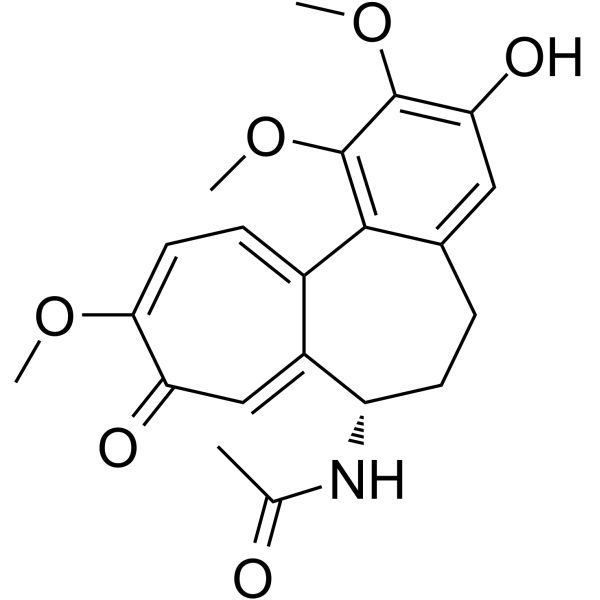
3-Demethylcolchicine, a colchicine metabolite and anti-inflammatory agent, exhibits potent tubulin-binding activity. 3-Demethylcolchicine inhibits carrageenan-induced rat paw edema. 3-Demethylcolchicine bears a hydroxyl group on its carbocyclic ring; this group participates in free radical scavenging processes, allowing it to act as a free radical scavenger. 3-Demethylcolchicine is applicable to studies related to carrageenan-induced paw edema .
|
-
-
- HY-W614753
-
|
|
Biochemical Assay Reagents
|
Others
|
|
Biotin-naphthylamine is a biotinylated biochemical assay reagent, which is a substrate for ascorbate peroxidase 2 (APEX2). Biotin-naphthylamine is utilized as a novel probe for labeling DNA and RNA .
|
-
-
- HY-155639
-
|
|
Biochemical Assay Reagents
|
Others
|
|
Tyramide alkyne is an alternative labeling substrate that can be coupled to detection or enrichment moieties via a Copper-catalyzed Azide/Alkyne Cycloaddition (CuAAC) “click” reaction. Tyramide alkyne can be used for ascorbate peroxidase 2 (APEX2) labeling .
|
-
-
- HY-16336
-
|
PCI 0120; Gadolinium texaphyrin; Gd-Tex
|
Reactive Oxygen Species (ROS)
|
Cancer
|
|
Motexafin gadolinium (PCI 0120) is a potent antitumor agent. Motexafin gadolinium is a specific texaphyrin in complex with gadolinium(III). Motexafin gadolinium increases intracellular ROS production. Motexafin gadolinium enhances sensitivity of tumor cells to ionizing radiation .
|
-
-
- HY-B0166GL
-
|
L-ascorbate (GMP Like); Vitamin C (GMP Like)
|
Reactive Oxygen Species (ROS)
Apoptosis
Calcium Channel
Endogenous Metabolite
|
Neurological Disease
Metabolic Disease
Cancer
|
|
L-Ascorbic acid (GMP Like) is the GMP Like class L-Ascorbic acid (HY-B0166). L-Ascorbic acid (L-Ascorbate, Vitamin C), an electron donor, is an endogenous antioxidant agent. L-Ascorbic acid inhibits selectively Cav3.2 channels with an IC50 of 6.5 μM. L-Ascorbic acid is also a collagen deposition enhancer and an elastogenesis inhibitor . L-Ascorbic acid exhibits anti-cancer effects through the generation of reactive oxygen species (ROS) and selective damage to cancer cells .
|
-
-
- HY-B0166S3
-
-
-
- HY-132927B
-
-
-
- HY-P2742A
-
|
|
Endogenous Metabolite
|
Metabolic Disease
|
|
L-Ascorbate oxidase, Cucumber belongs to the family of oxidoreductases acting on diphenols and related substances as donor with oxygen as acceptor. L-Ascorbate oxidase, Cucumber catalyses the oxidation of L‐Ascorbate (HY-B0166) with oxygen to dehydroascorbate with the generation of water. L-Ascorbate oxidase, Cucumber can be used in baking processes and cereal‐based processes .
|
-
-
- HY-B0166D
-
|
|
Drug Derivative
|
Others
|
|
Niacinamide ascorbate is a micronutrient with radioprotective properties. Niacinamide ascorbate works as an antioxidant along with vitamin C, vitamin E and other compounds to mitigate the risks associated with exposure to ionizing radiation. Niacinamide ascorbate helps reduce the likelihood of radiation-induced diseases such as acute leukemia, breast cancer, thyroid cancer and mutations, thereby protecting the human body from the harmful effects of radiation .
|
-
-
- HY-P2742B
-
|
|
Endogenous Metabolite
|
Metabolic Disease
|
Ascorbate oxidase, acremonium sp is a member of the multicopper blue oxidase family and primarily exists in plants as a free enzyme in the cytoplasm or bound to the cell wall. Ascorbate oxidase, acremonium sp has a high activity in catalyzing the oxidation of ascorbic acid to dehydroascorbic acid, regulating various cellular processes related to plant growth, protection, and development. Ascorbate oxidase, acremonium sp can be used to detect hydrogen peroxide .
|
-
-
- HY-B0166AR
-
|
Sodium ascorbate (Standard); Sodium L-ascorbate (Standard); Vitamin C sodium salt (Standard)
|
Reference Standards
Calcium Channel
Reactive Oxygen Species (ROS)
Apoptosis
Endogenous Metabolite
|
Cancer
|
|
L-Ascorbic acid (sodium salt) (Standard) is the analytical standard of L-Ascorbic acid (sodium salt). This product is intended for research and analytical applications. L-Ascorbic acid sodium salt (Sodium ascorbate), an electron donor, is an endogenous antioxidant agent. L-Ascorbic acid sodium salt selectively inhibits Cav3.2 channels with an IC50 of 6.5 μM. L-Ascorbic acid sodium salt is also a collagen deposition enhancer and an elastogenesis inhibitor .
|
-
-
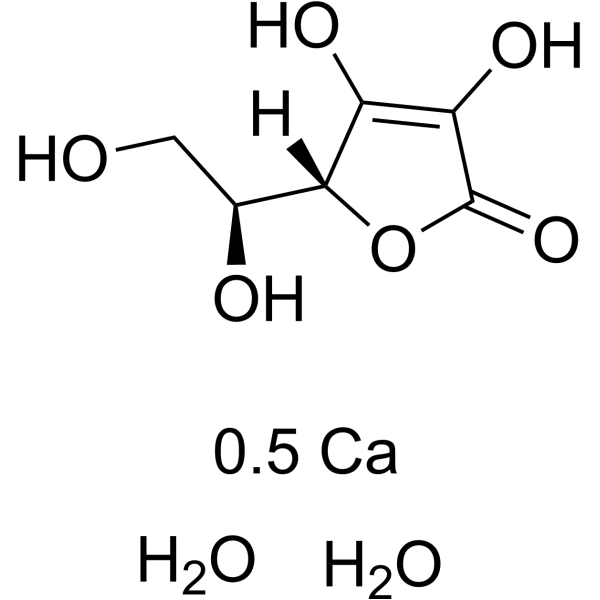
- HY-B0166C
-
-
-
- HY-B0166E
-
|
L-ascorbate magnesium; Vitamin C magnesium
|
Reactive Oxygen Species (ROS)
Calcium Channel
Apoptosis
Endogenous Metabolite
|
Neurological Disease
|
|
L-Ascorbic acid (L-Ascorbate) magnesium, an electron donor, is an endogenous antioxidant. L-Ascorbic acid selectively inhibits Cav3.2 channels with an IC50 of 6.5 μM. L-Ascorbic acid is also a collagen deposition promoter and elastin production inhibitor. L-Ascorbic acid exhibits anticancer effects by generating reactive oxygen species (ROS) and selectively damaging cancer cells .
|
-
-
- HY-B0166S2
-
-
-
- HY-B0166S5
-
-
-
- HY-148854
-
|
|
Drug Derivative
Collagen
|
Others
|
|
L-Ascorbate-2-sulfate disodium (page 46) is a pharmacologically acceptable salt of the L-Ascorbic acid (HY-B0166G) derivative. L-Ascorbate-2-sulfate disodium stimulates collagen synthesis and possess skin-care functions including an elimination function of active oxygen .
|
-
-
- HY-W127733
-
|
2-O-(2,3-Dihydroxypropyl)-L-ascorbic Acid
|
Biochemical Assay Reagents
|
Others
|
|
Glyceryl Ascorbate is a biochemical reagent that can be used as a biological material or organic compound for life science related research.
|
-
-
- HY-B0166CR
-
|
L-ascorbate calcium dihydrate (Standard); Vitamin C calcium dihydrate (Standard)
|
Biochemical Assay Reagents
Reference Standards
|
Others
Cancer
|
|
L-Ascorbic acid (calcium dihydrate) (Standard) is the analytical standard of L-Ascorbic acid (calcium dihydrate). This product is intended for research and analytical applications. L-Ascorbic acid (calcium dihydrate) (L-Ascorbate (calcium dihydrate); Vitamin C (calcium dihydrate)) is a biochemical reagent that can be used as a biological material or organic compound for life science related research.
|
-
-
- HY-B0166S4
-
-
-
- HY-N0153A
-
|
Naringoside hydrate
|
Cytochrome P450
Apoptosis
Mitophagy
|
Cancer
|
|
Niacinamide ascorbate is a vitamin complex that combines niacinamide (vitamin B3) and ascorbic acid (vitamin C). Niacinamide ascorbate reduces the risk of radiation-induced acute leukemia, breast cancer, thyroid cancer, and other somatic and genetic mutations following exposure to ionizing radiation doses .
|
-
-
- HY-128075R
-
|
|
Herbicide
Reference Standards
|
Cancer
|
|
Acifluorfen (Standard) is the analytical standard of Acifluorfen. This product is intended for research and analytical applications. Acifluorfen, a protoporphyrinogen oxidase (PROTOX) inhibitor herbicide, promotes the accumulation of protoporphyrin IX (PPIX), and induces tumors in the rodent liver. Acifluorfen causes strong photooxidative destruction of pigments and lipids in sensitive plant species .
|
-
-
- HY-118985
-
|
|
Endogenous Metabolite
|
Cancer
|
|
Acifluorfen sodium, a protoporphyrinogen oxidase (PROTOX) inhibitor herbicide, promotes the accumulation of protoporphyrin IX (PPIX), and induces tumors in the rodent liver. Acifluorfen sodium causes strong photooxidative destruction of pigments and lipids in sensitive plant species .
|
-
-
- HY-132927A
-
-
-
- HY-133794R
-
|
|
Reference Standards
Drug Metabolite
|
Cancer
|
|
L-Ascorbic acid (GMP Like) (Standard) is the analytical standard of L-Ascorbic acid (GMP Like). This product is intended for research and analytical applications. L-Ascorbic acid (GMP Like) is the GMP Like class L-Ascorbic acid (HY-B0166). L-Ascorbic acid (L-Ascorbate, Vitamin C), an electron donor, is an endogenous antioxidant agent. L-Ascorbic acid inhibits selectively Cav3.2 channels with an IC50 of 6.5 μM. L-Ascorbic acid is also a collagen deposition enhancer and an elastogenesis inhibitor . L-Ascorbic acid exhibits anti-cancer effects through the generation of reactive oxygen species (ROS) and selective damage to cancer cells .
|
-
-
- HY-P2742C
-
|
|
Endogenous Metabolite
|
Metabolic Disease
|
|
Ascorbate Oxidase, Zucchini (EC 1.10.3.3), belongs to the oxidoreductase family, using diphenols and related substances as donors and oxygen as acceptors. Ascorbate Oxidase participates in ascorbic acid metabolism. Ascorbate Oxidase uses a cofactor-copper. Its two substrates are L-ascorbic acid and O2, while its two products are dehydroascorbic acid and H2O.
|
-
-
- HY-177149
-
|
|
Drug Derivative
|
Neurological Disease
|
|
Allantoin ascorbate is a complexe of Allantoin (HY-N0543). Allantoin is a skin conditioning agent that promotes healthy skin, stimulates new and healthy tissue growth. Allantoin enhances cognitive functions by the mediation of PI3K-Akt-GSK-3β signal pathway. Allantoin ascorbate is slao a skin conditioning agent .
|
-
-
- HY-E71038
-
-
-
- HY-E71332
-
-
-
- HY-114625
-
|
|
Parasite
Mitochondrial Metabolism
|
Infection
|
|
Amquinate is a coccidiostat and a cytochrome b inhibitor. Amquinate blocks cytochrome-mediated electron transport near cytochrome b in mitochondria, acting downstream of coenzyme Q without affecting succinate dehydrogenase or NADH dehydrogenase. Amquinate inhibits succinate- and malate plus pyruvate-supported mitochondrial respiration in Eimeria tenella and does not affect L-ascorbate-supported respiration or any mitochondrial respiration in chicken liver mitochondria. Amquinate exhibits selective anticoccidial activity against wild-type Eimeria tenella. Amquinate can be used for the research of coccidiosis (Eimeria tenella infection) .
|
-
-
- HY-181464
-
|
|
NO Synthase
|
Cardiovascular Disease
|
|
CAY10565 (Compound 3d) is a nitric oxide (NO) donor. CAY10565 releases nitric acid via an acid-catalyzed ring-opening mechanism under acidic conditions. CAY10565 induces vasodilation .
|
-
| Cat. No. |
Product Name |
Type |
-
- HY-B0166G
-
|
L-ascorbate; Vitamin C
|
Fluorescent Dye
|
|
L-Ascorbic acid (L-Ascorbate) (GMP) is Ascorbic acid (HY-B0166) produced by using GMP guidelines. GMP small molecules works appropriately as an auxiliary reagent for cell therapy manufacture. L-Ascorbic acid is an inhibitor of Cav 3.2 channels .
|
-
- HY-B0166GL
-
|
L-ascorbate (GMP Like); Vitamin C (GMP Like)
|
Fluorescent Dye
|
|
L-Ascorbic acid (GMP Like) is the GMP Like class L-Ascorbic acid (HY-B0166). L-Ascorbic acid (L-Ascorbate, Vitamin C), an electron donor, is an endogenous antioxidant agent. L-Ascorbic acid inhibits selectively Cav3.2 channels with an IC50 of 6.5 μM. L-Ascorbic acid is also a collagen deposition enhancer and an elastogenesis inhibitor . L-Ascorbic acid exhibits anti-cancer effects through the generation of reactive oxygen species (ROS) and selective damage to cancer cells .
|
| Cat. No. |
Product Name |
Type |
-
- HY-W021042
-
|
THPTA
|
Biochemical Assay Reagents
|
|
Tris(3-hydroxypropyltriazolylmethyl)amine (THPTA) is an accelerating ligand in the copper-catalyzed azide-alkyne cycloaddition reaction (CuAAC) and protects cells from oxidants generated by copper-catalyzed reduction of oxygen by ascorbate. In addition, Tris(3-hydroxypropyltriazolylmethyl)amine can also protect the histidine moiety of biomolecules in a manner proportional to the ligand concentration .
|
-
- HY-B0166G
-
|
L-ascorbate; Vitamin C
|
Biochemical Assay Reagents
|
|
L-Ascorbic acid (L-Ascorbate) (GMP) is Ascorbic acid (HY-B0166) produced by using GMP guidelines. GMP small molecules works appropriately as an auxiliary reagent for cell therapy manufacture. L-Ascorbic acid is an inhibitor of Cav 3.2 channels .
|
-
- HY-W094510
-
|
|
Biochemical Assay Reagents
|
|
Sodium pyrophosphate decahydrate is a phosphate donor and mild chelating agent. Sodium pyrophosphate decahydrate serves as a phosphate source for Pseudomonas aeruginosa acid phosphatase and its Q6 variant, enabling phosphorylation of L‑ascorbic acid to L‑ascorbate‑2‑phosphate. Sodium pyrophosphate decahydrate facilitates 99mTc labeling of human polyclonal IgG. Sodium pyrophosphate decahydrate can be used in research on musculoskeletal infections .
|
-
- HY-W614753
-
|
|
Biochemical Assay Reagents
|
|
Biotin-naphthylamine is a biotinylated biochemical assay reagent, which is a substrate for ascorbate peroxidase 2 (APEX2). Biotin-naphthylamine is utilized as a novel probe for labeling DNA and RNA .
|
-
- HY-B0166GL
-
|
L-ascorbate (GMP Like); Vitamin C (GMP Like)
|
Biochemical Assay Reagents
|
|
L-Ascorbic acid (GMP Like) is the GMP Like class L-Ascorbic acid (HY-B0166). L-Ascorbic acid (L-Ascorbate, Vitamin C), an electron donor, is an endogenous antioxidant agent. L-Ascorbic acid inhibits selectively Cav3.2 channels with an IC50 of 6.5 μM. L-Ascorbic acid is also a collagen deposition enhancer and an elastogenesis inhibitor . L-Ascorbic acid exhibits anti-cancer effects through the generation of reactive oxygen species (ROS) and selective damage to cancer cells .
|
-
- HY-B0166C
-
|
L-ascorbate calcium dihydrate; Vitamin C calcium dihydrate
|
Biochemical Assay Reagents
|
|
L-Ascorbic acid (calcium dihydrate) (L-Ascorbate (calcium dihydrate); Vitamin C (calcium dihydrate)) is a biochemical reagent that can be used as a biological material or organic compound for life science related research.
|
-
- HY-B0166E
-
|
L-ascorbate magnesium; Vitamin C magnesium
|
Biochemical Assay Reagents
|
|
L-Ascorbic acid (L-Ascorbate) magnesium, an electron donor, is an endogenous antioxidant. L-Ascorbic acid selectively inhibits Cav3.2 channels with an IC50 of 6.5 μM. L-Ascorbic acid is also a collagen deposition promoter and elastin production inhibitor. L-Ascorbic acid exhibits anticancer effects by generating reactive oxygen species (ROS) and selectively damaging cancer cells .
|
-
- HY-W127733
-
|
2-O-(2,3-Dihydroxypropyl)-L-ascorbic Acid
|
Biochemical Assay Reagents
|
|
Glyceryl Ascorbate is a biochemical reagent that can be used as a biological material or organic compound for life science related research.
|
-
- HY-B0166CR
-
|
L-ascorbate calcium dihydrate (Standard); Vitamin C calcium dihydrate (Standard)
|
Biochemical Assay Reagents
|
|
L-Ascorbic acid (calcium dihydrate) (Standard) is the analytical standard of L-Ascorbic acid (calcium dihydrate). This product is intended for research and analytical applications. L-Ascorbic acid (calcium dihydrate) (L-Ascorbate (calcium dihydrate); Vitamin C (calcium dihydrate)) is a biochemical reagent that can be used as a biological material or organic compound for life science related research.
|
| Cat. No. |
Product Name |
Target |
Research Area |
-
- HY-138126
-
|
|
Peptides
|
Others
|
|
Dansyl-Tyr-Val-Gly is a substrate of peptidylglycine monooxygenase (PHM), with a KD of 22 μM for PHM. Dansyl-Tyr-Val-Gly can be used to investigate the catalytic mechanism, kinetics and inactivation characteristics of PHM .
|
| Cat. No. |
Product Name |
Category |
Target |
Chemical Structure |
| Cat. No. |
Product Name |
Chemical Structure |
-
- HY-B0166S
-
|
|
|
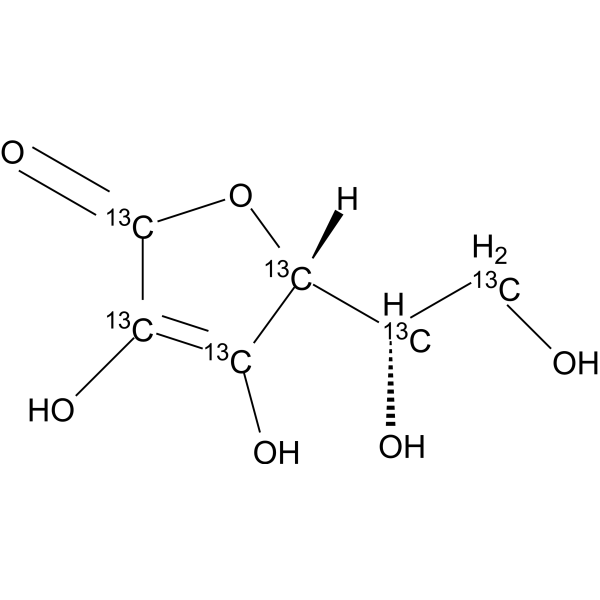
L-Ascorbic acid- 13C6 is the 13C-labeled L-Ascorbic acid. L-Ascorbic acid (L-Ascorbate), an electron donor, is an endogenous antioxidant agent. L-Ascorbic acid inhibits selectively Cav3.2 channels with an IC50 of 6.5 μM. L-Ascorbic acid is also a collagen deposition enhancer and an elastogenesis inhibitor . L-Ascorbic acid exhibits anti-cancer effects through the generation of reactive oxygen species (ROS) and selective damage to cancer cells .
|
-
-
- HY-B0166S8
-
|
|
|
L-Ascorbic acid- 13C6-1 (L-Ascorbate-1; Vitamin C- 13C6-1) is a 13C labeled L-Ascorbic acid (HY-B0166) . L-Ascorbic acid (L-Ascorbate), an electron donor, is an endogenous antioxidant agent. L-Ascorbic acid inhibits selectively Cav3.2 channels with an IC50 of 6.5 μM. L-Ascorbic acid is also a collagen deposition enhancer and an elastogenesis inhibitor . L-Ascorbic acid exhibits anti-cancer effects through the generation of reactive oxygen species (ROS) and selective damage to cancer cells .
|
-
-
- HY-B0166S6
-
|
|
|
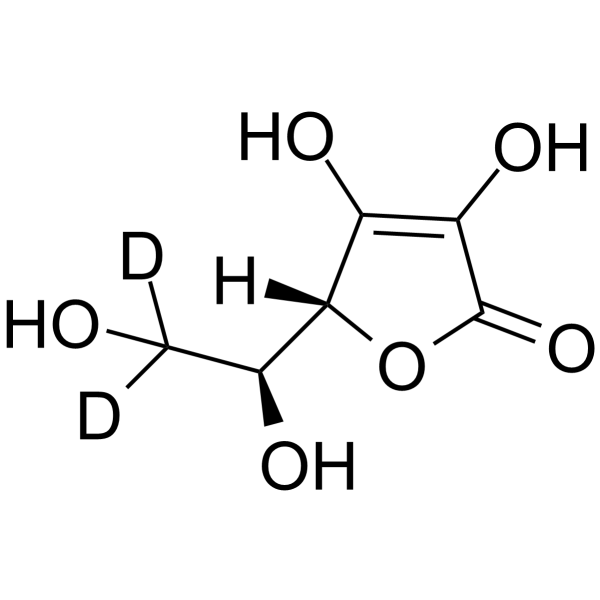
L-Ascorbic acid-d2 is the deuterium labeled L-Ascorbic acid. L-Ascorbic acid (L-Ascorbate), an electron donor, is an endogenous antioxidant agent. L-Ascorbic acid inhibits selectively Cav3.2 channels with an IC50 of 6.5 μM. L-Ascorbic acid is also a colla
|
-
-
- HY-B0166S1
-
|
|
|
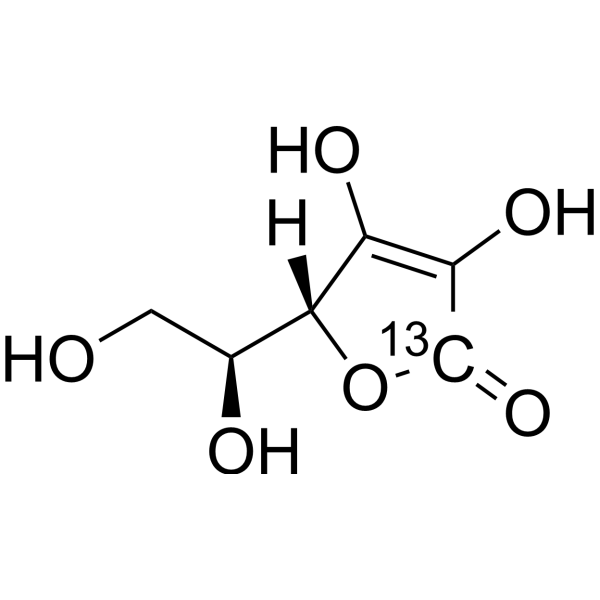
L-Ascorbic acid- 13C is the 13C-labeled L-Ascorbic acid. L-Ascorbic acid (L-Ascorbate), an electron donor, is an endogenous antioxidant agent. L-Ascorbic acid inhibits selectively Cav3.2 channels with an IC50 of 6.5 μM. L-Ascorbic acid is also a collagen deposition enhancer and an elastogenesis inhibitor . L-Ascorbic acid exhibits anti-cancer effects through the generation of reactive oxygen species (ROS) and selective damage to cancer cells .
|
-
-
- HY-B0166S3
-
|
|
|
L-Ascorbic acid- 13C-2 is the 13C labeled L-Ascorbic acid. L-Ascorbic acid (L-Ascorbate), an electron donor, is an endogenous antioxidant agent. L-Ascorbic acid inhibits selectively Cav3.2 channels with an IC50 of 6.5 μM. L-Ascorbic acid is also a collagen
|
-
-
- HY-B0166S2
-
|
|
|
L-Ascorbic acid- 13C-1 is the 13C labeled L-Ascorbic acid. L-Ascorbic acid (L-Ascorbate), an electron donor, is an endogenous antioxidant agent. L-Ascorbic acid inhibits selectively Cav3.2 channels with an IC50 of 6.5 μM. L-Ascorbic acid is also a collagen
|
-
-
- HY-B0166S5
-
|
|
|
L-Ascorbic acid- 13C-4 is the 13C labeled L-Ascorbic acid. L-Ascorbic acid (L-Ascorbate), an electron donor, is an endogenous antioxidant agent. L-Ascorbic acid inhibits selectively Cav3.2 channels with an IC50 of 6.5 μM. L-Ascorbic acid is also a collag
|
-
-
- HY-B0166S4
-
|
|
|
L-Ascorbic acid- 13C-3 is the 13C labeled L-Ascorbic acid. L-Ascorbic acid (L-Ascorbate), an electron donor, is an endogenous antioxidant agent. L-Ascorbic acid inhibits selectively Cav3.2 channels with an IC50 of 6.5 μM. L-Ascorbic acid is also a collagen
|
-
| Cat. No. |
Product Name |
|
Classification |
-
- HY-131442
-
|
Alkyne tyramide; Alk-Ph
|
|
Labeling and Fluorescence Imaging
Alkynes
|
|
Alkyne-phenol (Alk-Ph) is a clickable ascorbate peroxidase 2 (APEX2) probe. Alkyne-phenol substantially improves APEX-labeling efficiency in intact yeast cells, as it is more cell wall-permeant than APEX2 substrate biotin-phenol (BP). Alkyne-phenol also facilitates the identification of APEX-labeling sites, allowing the unambiguous assignment of membrane topology of mitochondrial proteins . Alkyne-phenol is a click chemistry reagent, it contains an Alkyne group and can undergo copper-catalyzed azide-alkyne cycloaddition (CuAAc) with molecules containing Azide groups.
|
| Cat. No. |
Product Name |
Target |
Research Areas |
Chemical Structure |
Your information is safe with us. * Required Fields.
Inquiry Information
- Product Name:
- Cat. No.:
- Quantity:
- MCE Japan Authorized Agent:

