

Search Result
Results for "
biotinylation
" in MedChemExpress (MCE) Product Catalog:
22
Biochemical Assay Reagents
| Cat. No. |
Product Name |
Target |
Research Areas |
Chemical Structure |
-
- HY-111496
-
|
|
Biochemical Assay Reagents
|
Others
|
|
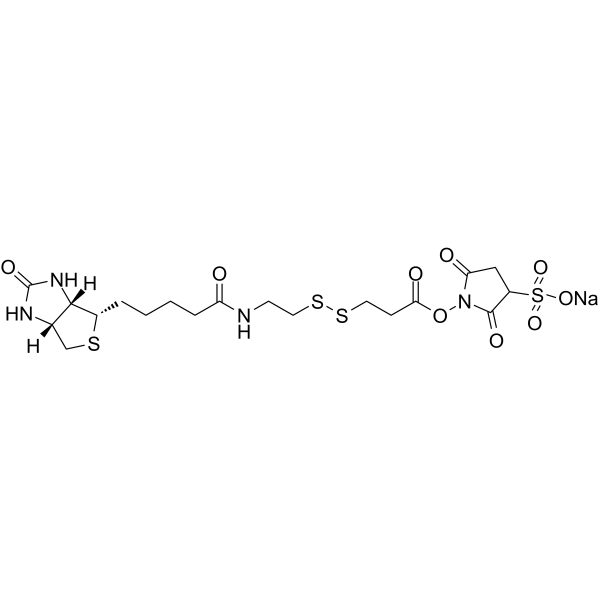
Sulfo-NHS-SS-biotin sodium is a long-chain cleavable and cell-impermeant amine-reactive biotinylation reagent. Sulfo-NHS-SS-biotin sodium can be used for the labeling and purifying of cell-surface protein .
|
-
-
- HY-130809
-
|
|
Biochemical Assay Reagents
|
Cancer
|
|
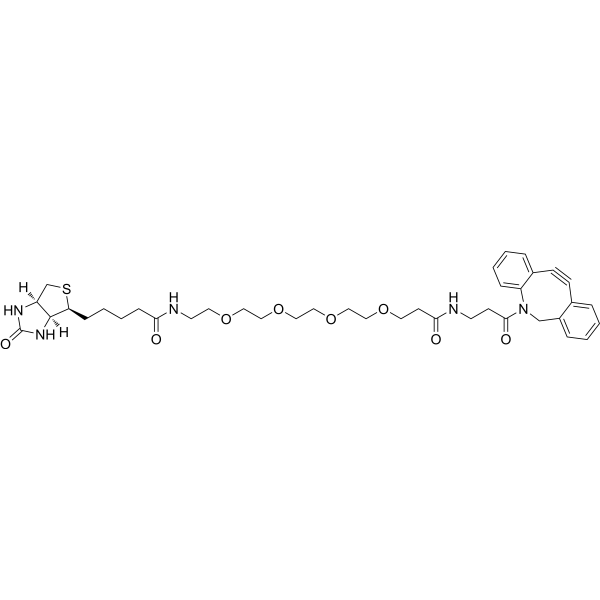
DBCO-PEG4-Biotin is an azadibenzocyclooctyne-biotin derivative containing a biotin group and 4 PEGs. DBCO-PEG4-Biotin is a versatile biotinylation reagent used for the introduction of a biotin moiety to azide-labeled biomolecules via copper-free strain-promoted alkyne-azide click chemistry (SPAAC) reaction . DBCO-PEG4-Biotin is a click chemistry reagent, it contains a DBCO group that can undergo strain-promoted alkyne-azide cycloaddition (SPAAC) with molecules containing Azide groups.
|
-
-
- HY-W808757
-
|
|
Biochemical Assay Reagents
|
Others
|
|
Biotin-maleimide is a biotinylated biochemical detection reagent that acts as a thiol-specific probe. Biotin-maleimide can also be used to prepare biotin-conjugated polychelators .
|
-
-
- HY-100215
-
-
-
- HY-P11307
-
|
|
Proteasome
|
Cancer
|
|
Biotin-epoxomicin is a Proteasome subunit binder. Biotin-epoxomicin serves as an affinity reagent for identifying proteasomal catalytic subunits, and facilitates affinity purification of active proteasomal subunits for LC-MS identification. Biotin-epoxomicin can be used to study solid tumors derived from B16 melanoma .
|
-
-
- HY-W332335
-
|
|
Biochemical Assay Reagents
|
Others
|
|
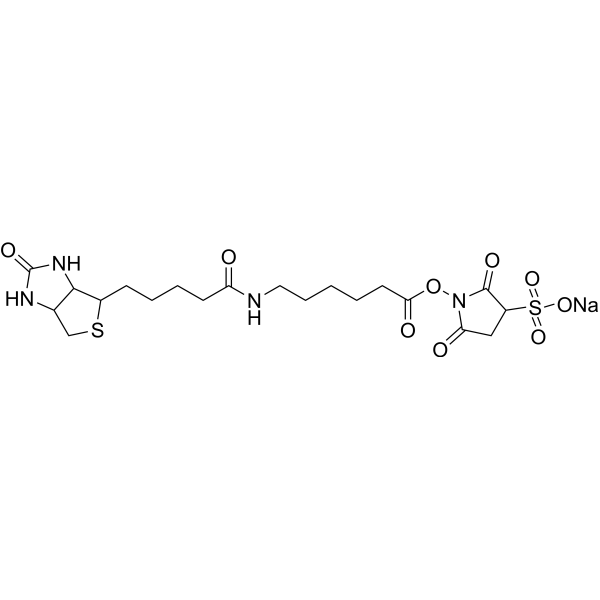
Sulfosuccinimidyl-6-(biotinamido)hexanoate sodium is a protein crosslinker, and is a biotinylation reagentcan for labeling cell surface proteins .
|
-
-
- HY-W040254
-
|
|
Fluorescent Dye
|
Others
|
|
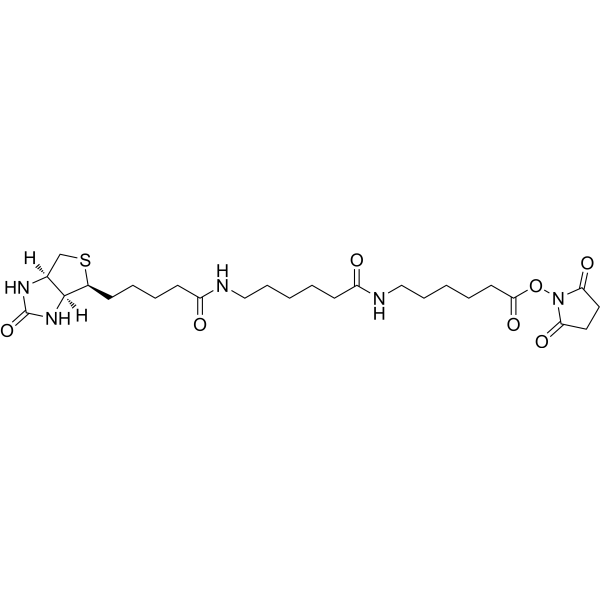
Biotin-LC-LC-NHS is a biotinylation reagent that contains an NHS moiety, which can react efficiently with primary amino (-NH2). Biotin-LC-LC-NHS enables simple and efficient biotinylation of antibodies, proteins, and any other primary amine-containing biomolecules in solution. Biotin-LC-LC-NHS can be used to biotinylate small molecules such as Paclitaxel (HY-B0015) for use in binding site characterization.
|
-
-
- HY-NP0149
-
|
SNA (Biotinylated)
|
Biochemical Assay Reagents
|
Others
|
|
Sambucus Nigra Lectin (SNA) (Biotinylated) is a terminal sialic acid (SA) residue-binding lectin with biotinylation modification. Sambucus Nigra Lectin (Biotinylated) binds specifically to terminal sialic acid residues on captured IgG and its subclasses .
|
-
-
- HY-173176
-
|
|
Biochemical Assay Reagents
|
Others
|
|
4-(2-Azidoethyl)phenol (Ph_N3) is a clickable APEX2 probe. 4-(2-Azidoethyl)phenol (Ph_N3) exhibits reliable labeling ability and enabled two biotinylation routes for downstream analysis .
|
-
-
- HY-D1635
-
|
Biotin-XX-SSE
|
Fluorescent Dye
Exosomes
|
Infection
|
|
Sulfo-NHS-LC-LC-Biotin (Biotin-XX-SSE), a biotin reagent, is used to label the proteins exposed to the external leaflet of intact exosomes and contains a larger spacer arm between the biotin and amine reactive linker. The size of this linker helps to overcome steric hindrance and increases labeling efficiency at the crowded exosome surface .
|
-
-
- HY-D0980
-
|
Biotinyl-3,6-dioxaoctanediamine; EZ-Link Amine-PEO2-Biotin
|
Biochemical Assay Reagents
|
Infection
|
|
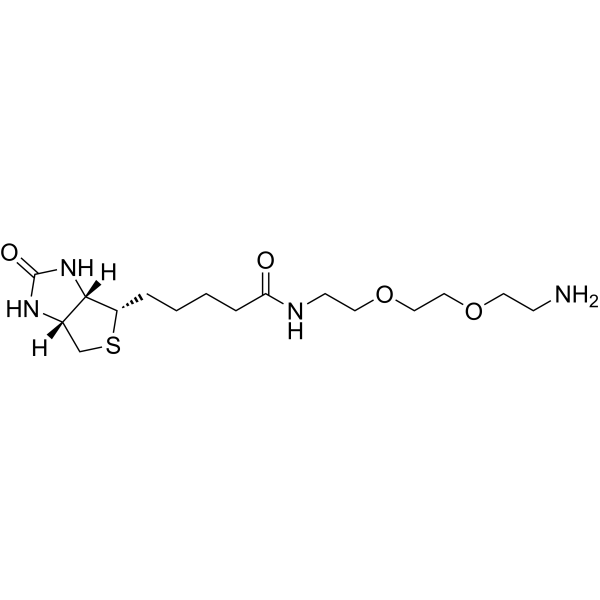
Biotin-DADOO (Biotinyl-3,6-dioxaoctanediamine; EZ-Link Amine-PEO2-Biotin) is a biotin-containing amine compound and a biotinylation reagent. As an amino component, Biotin-DADOO participates in the nucleophilic ring-opening reaction of epoxidized ω-double bonds during the synthesis of biotinylated inhibitor derivatives. Biotin-DADOO can be conjugated with carboxymethyl cellulose derivatives. Biotin-DADOO is involved in the synthesis of biotin-estradiol conjugates for enzyme immunoassays. Biotin-DADOO can be used in the research of influenza A .
|
-
-
- HY-P11306
-
|
|
Proteasome
NF-κB
|
Inflammation/Immunology
|
|
Biotin-(Oaa)3-epoxomicin is a biotin-labeled form of Epoxomicin (HY-13821), prepared by conjugating Epoxomicin with biotin via three hydrophilic oxaacetyl amino acid (Oaa) linkers. Biotin-(Oaa)3-epoxomicin is primarily used in proteomic studies for the capture, identification and target validation of proteasome complexes, to determine the intracellular targets of epoxomicin. Epoxomicin acts as a proteasome inhibitor and NF-κB inhibitor, which effectively blocks inflammatory responses in mouse ear edema assays. It inhibits proteasome activity via covalent binding to catalytic subunits including LMP7, X, MECL1 and Z, with the strongest inhibitory effect on chymotrypsin-like activity, and does not interfere with non-proteasomal proteases such as trypsin and papain .
|
-
-
- HY-137341
-
|
|
PROTACs
YTHDF
|
Cancer
|
|
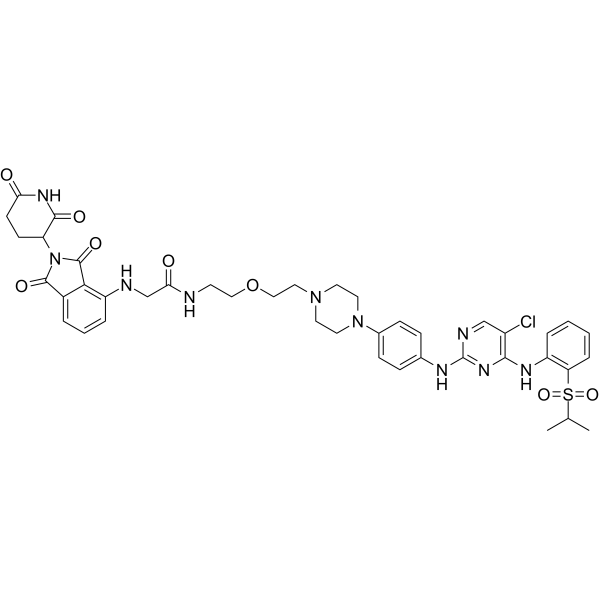
SK-3-91 is a PROTAC-type multi-kinase degrader that can jointly induce the degradation of the largest number of unique kinases (more than 125 unique kinases). SK-3-91 induces protein degradation through the ubiquitin biotinylation (E-STUB) pathway. SK-3-91 degrades YTHDF2. SK-3-91 inhibits cell proliferation and induces morphological changes. (Pink: TAE648 ligand (HY-169396); Blue: E3 ligase ligand (HY-131717); Black: Linker (HY-140819). The E3 ligase ligand and linker can form a conjugate (HY-169397)) .
|
-
-
- HY-116872
-
|
|
Bacterial
|
Infection
|
|
MAC13772 is a BioA inhibitor with an IC50 of 0.28 μM against E. coli and an IC50 of 0.269 μM against A. baumannii. MAC13772 inhibits bacterial growth by targeting the biotin biosynthesis pathway. MAC13772 can be used in studies related to bacterial infections .
|
-
-
- HY-P10620
-
|
|
Bacterial
|
Others
|
|
GGGYK-Biotin is a substrate peptide designed to study the substrate specificity of Sortase A. GGGYK-Biotin can be used to develop Sortase A variants with different substrate specificities .
|
-
-
- HY-P3576A
-
-
-
- HY-P2546
-
|
|
Neurokinin Receptor
|
Neurological Disease
|
|
Biotin-Substance P is the biotin tagged Substance P. Substance P (Neurokinin P) is a neuropeptide, acting as a neurotransmitter and as a neuromodulator in the CNS. The endogenous receptor for substance P is neurokinin 1 receptor (NK1-receptor, NK1R) .
|
-
-
- HY-156377
-
|
|
Drug-Linker Conjugates for ADC
|
Cancer
|
|
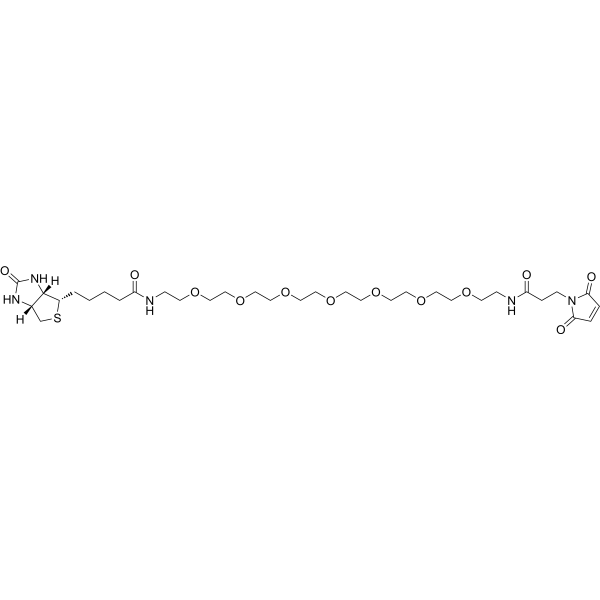
Biotin-PEG7-Maleimide is a biotinylation reagent that reacts with thiol groups (SH). Biotin-PEG7-Maleimide can be used as Drug-Linker Conjugates for ADCs .
|
-
-
- HY-174962A
-
|
|
Biochemical Assay Reagents
|
Others
|
|
mPEG2000-Biotin is a biotin-conjugated PEG derivative used for biotinylation of biomolecules or other surfaces. Biotin can be detected by biotin/streptavidin binding assays and is widely used for molecular target detection .
|
-
-
- HY-P10886
-
|
|
Gap Junction Protein
Claudin
|
Inflammation/Immunology
|
|
Zifogaptide is a gap junction protein channel regulator. Zifogaptide mimics the PDZ-binding motif at the C-terminal of Claudin C and competitively interferes with the interaction between Claudin–TJP1 (ZO-1) scaffold. Zifogaptide can promote epithelial cell migration, reduce scar formation, and accelerate wound healing. Zifogaptide can be used for radiation dermatitis, skin injuries, etc .
|
-
-
- HY-P5351A
-
|
|
Transmembrane Glycoprotein
|
Inflammation/Immunology
Cancer
|
|
Hyaluronan-binding peptide, biotin labeled TFA is a biological active peptide. (This peptide is a hyaluronan-binding peptide biotinylated through a C-terminal GGGSK linker. Hyaluronan (HA) is a nonsulfated glycosaminoglycan expressed in the extracellular matrix and on cell surfaces. HA plays a role in fertilization, embryonic development, wound healing, angiogenesis, leukocyte trafficking to inflamed tissues, and cancer metastasis. This peptide has been shown to block HA binding to CD44 receptors and inhibit T cell proliferation.) .
|
-
-
- HY-P2491
-
|
|
Fluorescent Dye
|
Cardiovascular Disease
Endocrinology
|
|
Atrial Natriuretic Peptide (1-28), human, porcine, Biotin-labeled, one of three mammalian natriuretic peptides (NPs), has endocrine effects on fluid homeostasis and blood pressure. Atrial Natriuretic Peptide has the potential for cardiovascular diseases research .
|
-
-
- HY-P4928
-
|
|
Amylin Receptor
|
Metabolic Disease
|
|
Biotinyl-Amylin (mouse, rat) is a biotinylated Amylin (mouse, rat). Amylin (mouse, rat) is a 37-aminoacid pancreatic protein that exerts control over several metabolic events such as glycemia and lacticemia .
|
-
-
- HY-P2136F
-
|
|
Apoptosis
|
Neurological Disease
Inflammation/Immunology
Cancer
|
|
Biotin-COG1410 TFA is a biotin labled COG1410 (HY-P2136). COG1410 is an apolipoprotein E-derived peptide and an apoptosis inhibitor. COG1410 exerts neuroprotective and antiinflammatory effects in a murine model of traumatic brain injury (TBI). COG1410 can be used for the research of neurological disease .
|
-
-
- HY-W440886
-
|
|
Liposome
|
Others
|
|
DSPE-PEG3400-Biotin is a phospholipid PEG for biotinylation. The amphiphilic property of the DSPE-PEG is useful for precision drug delivery and cancer therapy.
|
-
-
- HY-P11118A
-
|
CAPture peptide, biotin-CCDC61 (334-366) TFA
|
Biochemical Assay Reagents
|
Others
|
|
Biotinylated CCDC61 peptide (CAPture peptide, biotin-CCDC61 (334-366)) TFA is a biotinylated peptide derived from the centrosomal protein CCDC61. Biotinylated CCDC61 peptide TFA specifically isolates intact centrosomes .
|
-
-
- HY-160841
-
|
|
DNA Stain
DNA/RNA Synthesis
|
Others
|
|
Biotin-16-dCTP is a biotinylated deoxycytidine triphosphate that serves as an important DNA labeling substrate. Biotin-16-dCTP can be enzymatically incorporated into the 3' end of DNA probes via terminal deoxynucleotidyl transferase, forming a 1-3 nucleotide-long tail to achieve biotinylation of the probes. Biotin-16-dCTP enhances chemiluminescent detection of low-abundance targets such as specific tRNA isoacceptors through Northern blotting. Biotin-16-dCTP can also replace conventional dCTP to be integrated into single-stranded DNA generated by asymmetric polymerase chain reaction, which is applicable for bioconjugation or pull-down assays. Repeated freeze-thaw cycles of Biotin-16-dCTP should be avoided to prevent degradation of its function for probe biotinylation .
|
-
-
- HY-W110146
-
|
|
Biochemical Assay Reagents
|
Others
|
|
(3aS,4S,6aR)-Biotin-PEG4-Alkyne is an alkyne-activated biotinylation reagent. (3aS,4S,6aR)-Biotin-PEG4-Alkyne can be reacted with azides via a copper-catalyzed click reaction. Biotin-labeled biomolecules can be bound to avidin or streptavidin for further purification and detection .
|
-
-
- HY-137340
-
|
|
PROTACs
Casein Kinase
|
Cancer
|
|
WH-10417-099 is a CRBN-based PROTAC multi-kinase degrader that induces the degradation of the maximum number of unique kinases (over 125 unique kinases, such as CSNK1E and PI3Kγ) simultaneously. WH-10417-099 induces protein degradation via the ubiquitin biotinylation (E-STUB) pathway, exhibits synergistic effects with SB-405483 (HY-W1135319). The E3 ligase ligand and linker of WH-10417-099 can form the conjugate Pomalidomide 4'-PEG5-acid (HY-131647) .
|
-
-
- HY-101218
-
|
N-(+)-Biotinyl-6-aminohexanoic acid
|
Sialyltransferase
|
Others
|
|
N-Biotinyl-6-aminohexanoic acid (N-(+)-Biotinyl-6-aminohexanoic acid) can be used to perform biotinylation .
|
-
-
- HY-125501
-
|
Biotin-(AC5)2-hydrazide
|
Biochemical Assay Reagents
|
Others
|
|
Biotin-XX hydrazide (Biotin-(AC5)2-hydrazide) is a carbonyl-reactive biotinylation reagent which contains two aminohexanoic acid spacers. Biotin-XX hydrazide has higher efficiency of avidin-binding .
|
-
-
- HY-148958
-
-
-
- HY-P3844
-
-
-
- HY-P2549
-
-
-
- HY-181228
-
|
|
Biochemical Assay Reagents
|
Others
|
|
DBCO-PEG10-Biotin is an azadibenzocyclooctyne-biotin derivative containing a biotin group and 10 PEGs. DBCO-PEG10-Biotin is a versatile biotinylation reagent used for the introduction of a biotin moiety to azide-labeled biomolecules via copper-free strain-promoted alkyne-azide click chemistry (SPAAC) reaction. DBCO-PEG10-Biotin is a click chemistry reagent, it contains a DBCO group that can undergo strain-promoted alkyne-azide cycloaddition (SPAAC) with molecules containing Azide groups .
|
-
-
- HY-130809A
-
|
|
Biochemical Assay Reagents
|
Others
|
|
DBCO-PEG1000-Biotin is a click chemistry biotinylation that can enable copper-free click chemistry with azide molecules to form a stable triazole linkage .
|
-
-
- HY-P2510
-
|
|
Thyroid Hormone Receptor
|
Metabolic Disease
|
|
Parathyroid Hormone (1-34), human, biotinylated is a probe for the parathyroid hormone receptor, can be used for analyzing the interaction between parathyroid hormone and parathyroid hormone receptors in living cells and for purifying hormone-receptor complexes with affinity columns .
|
-
-
- HY-P3621
-
|
|
GCGR
|
Metabolic Disease
|
|
Biotinyl-Glucagon (1-29), human, bovine, porcine is a biotinylated glucagon. Glucagon is a peptide hormone, produced by α-cells of the pancreas, can increase concentration of glucose and fatty acids in the bloodstream .
|
-
-
- HY-P10569
-
|
|
EGFR
|
Cancer
|
|
Biotin HER-2 substrate peptide is a substrate of Her4 and Her2/neu tyrosine kinase with a Km value of 60 μm for Her2/neu kinase domain .
|
-
-
- HY-13443F
-
|
Lys27(Biotin)-Exendin 4
|
GCGR
|
Others
|
|
Exendin 4, biotin labeled is a biotin labeled Exendin 4 (HY-13443). Exendin 4 is a long-acting GLP-1 receptor agonist .
|
-
-
- HY-113930
-
|
|
Biochemical Assay Reagents
|
Others
|
|
3-[2-N-(Biotinyl)aminoethyldithio]propanoic acid is a SS-biotin that can be utilized in cellular proximity biotinylation assays to label interactors .
|
-
-
- HY-172356
-
|
|
Biochemical Assay Reagents
|
Others
|
|
Biotin-PEG-NH2 (Mn 3700) can be used for biotinylation of polymerized worm micelles for targeting and drug transfer to cells .
|
-
-
- HY-130893A
-
|
|
Biochemical Assay Reagents
|
Others
|
|
Biotin-EDA TFA is a nucleophilic biotinylation reagent used for the conjugation of various substrates and identification and quantification using biotin-conjugated fluorescent labels .
|
-
-
- HY-130809C
-
|
|
Biochemical Assay Reagents
|
Others
|
|
DBCO-PEG3400-Biotin is a click chemistry biotinylation that can enable copper-free click chemistry with azide molecules to form a stable triazole linkage .
|
-
-
- HY-130809H
-
|
|
Biochemical Assay Reagents
|
Others
|
|
DBCO-PEG40000-Biotin is a click chemistry biotinylation that can enable copper-free click chemistry with azide molecules to form a stable triazole linkage .
|
-
-
- HY-130809I
-
|
|
Biochemical Assay Reagents
|
Others
|
|
DBCO-PEG20000-Biotin is a click chemistry biotinylation that can enable copper-free click chemistry with azide molecules to form a stable triazole linkage .
|
-
-
- HY-130809D
-
|
|
Biochemical Assay Reagents
|
Others
|
|
DBCO-PEG5000-Biotin is a click chemistry biotinylation that can enable copper-free click chemistry with azide molecules to form a stable triazole linkage .
|
-
-
- HY-130809B
-
|
|
Biochemical Assay Reagents
|
Others
|
|
DBCO-PEG2000-Biotin is a click chemistry biotinylation that can enable copper-free click chemistry with azide molecules to form a stable triazole linkage .
|
-
-
- HY-174962B
-
|
|
Biochemical Assay Reagents
|
Others
|
|
mPEG5000-Biotin is a biotin-conjugated PEG derivative used for biotinylation of biomolecules or other surfaces. Biotin can be detected by biotin/streptavidin binding assays and is widely used for molecular target detection .
|
-
-
- HY-174962
-
|
|
Biochemical Assay Reagents
|
Others
|
|
mPEG1000-Biotin is a biotin-conjugated PEG derivative used for biotinylation of biomolecules or other surfaces. Biotin can be detected by biotin/streptavidin binding assays and is widely used for molecular target detection .
|
-
- HY-W800651
-
|
|
Biochemical Assay Reagents
|
Others
|
|
Biotin-SS-Amine hydrochloride is a cleavable biotinylation reagent. The amine group can react with carboxylic acids, activated NHS esters and other carbonyl groups. The disulfide bond in this linker can be cleaved using reducing agents such as DTT, BME and TCEP.
|
-
- HY-137425
-
|
|
Biochemical Assay Reagents
|
Others
|
|
N-Biotinyl-12-aminododecanoic acid is a compound formed by linking biotin and 12-aminododecanoic acid through an amide bond. N-Biotinyl-12-aminododecanoic acid is used as a biotinylation reagent to test the ligation activity of SimL .
|
-
- HY-156381
-
|
|
Biochemical Assay Reagents
|
Others
|
|
Biotin-PEG3-CoenzymeA is a non cell-permeable substrate based on biotin with a PEG linker. Biotin-PEG3-CoenzymeA can be used for biotinylation of living cells, Labeling in solution, interaction studies .
|
-
- HY-W250735
-
|
|
Biochemical Assay Reagents
|
Others
|
|
NHS-PEG4-biotinidase resistant biotin is a biotinylation reagent with a terminal NHS ester. The hydrophilic PEG spacer increases solubility in aqueous media. The NHS ester can be used to label the primary amines (-NH2) of proteins, amine-modified oligonucleotides, and other amine-containing molecules.
|
-
- HY-P2551
-
|
|
Amyloid-β
|
Neurological Disease
|
|
Biotin-β-Amyloid (17-40) is a N-terminal-labelled biotinylated amyloid-β(1-40) peptide. β-Amyloid (17-40) is a 24-residue fragment of the Aβ protein via post-translational processing of amyloid precursor protein (APP) .
|
-
- HY-P11118
-
|
CAPture peptide, biotin-CCDC61 (334-366)
|
Biochemical Assay Reagents
|
Others
|
|
Biotinylated CCDC61 peptide (CAPture peptide, biotin-CCDC61 (334-366)) is a biotinylated peptide derived from the centrosomal protein CCDC61. Biotinylated CCDC61 peptide specifically isolates intact centrosomes .
|
-
- HY-P2504
-
|
|
Syk
|
Others
|
|
Syk Kinase Peptide Substrate, Biotin labeled is a biotin-labled Syk kinase peptide substrate.
|
-
- HY-P3576
-
-
- HY-P3623
-
|
|
Fluorescent Dye
|
Others
|
|
Biotin-Glucagon-Like Peptide 1 (7-36) amide, human is a biologically active peptide. Biotin-Glucagon-Like Peptide 1 (7-36) amide, human can be used for the research of various biochemical studies.
|
-
- HY-P10566
-
|
|
BCL6
|
Cancer
|
|
BCOR(498-514), biotinylated is the minimal BCL6 binding domain with an KD value of 1.32 µM. BCOR(498-514), biotinylated blocks BCL6-mediated transcriptional repression and kills lymphoma cells .
|
-
- HY-P10372
-
|
|
Src
|
Cancer
|
|
pFYN peptide is a biotin-labled phosphorylated peptide substrate derived from FYN (a Src family kinase) .
|
-
- HY-W800679
-
|
|
Biochemical Assay Reagents
|
Others
|
|
Mal-Cyclohexyl-PEG3-Biotin is a PEG linker containing a maleimide moiety and a biotin group. Maleimides react specifically with sulfhydryl groups to form a stable thioether linkage when the pH is between 6.5 and 7.5. The biotinylation can react with amine molecules in the presence of activator EDC or HATU. PEG attached to the biotin gives an extended spacer arm that permits the biotin to reach into the binding pocket of the protein. The PEG moiety also increases solubility of Biotin-PEG conjugates considerably.
|
-
- HY-P4928A
-
|
|
Amylin Receptor
|
Metabolic Disease
|
|
Biotinyl-Amylin (mouse, rat) TFA is a biotinylated Amylin (mouse, rat). Amylin (mouse, rat) is a 37-aminoacid pancreatic protein that exerts control over several metabolic events such as glycemia and lacticemia .
|
-
- HY-W347315
-
|
|
Biochemical Assay Reagents
|
Others
|
|
6-(Biotinamido)hexylazide is a click chemistry biotinylation reagent that can react with alkyne molecule to form a stable triazole linkage.
|
-
- HY-172356A
-
|
|
Biochemical Assay Reagents
|
Others
|
|
Biotin-PEG-NH2 (Mn 5300) can be used for biotinylation of polymerized worm micelles for targeting and drug transfer to cells .
|
-
- HY-130809E
-
|
|
Biochemical Assay Reagents
|
Others
|
|
DBCO-PEG10000-Biotin is a click chemistry biotinylation that can enable copper-free click chemistry with azide molecules to form a stable triazole linkage .
|
-
- HY-100215R
-
|
|
Biochemical Assay Reagents
Reference Standards
|
Others
|
|
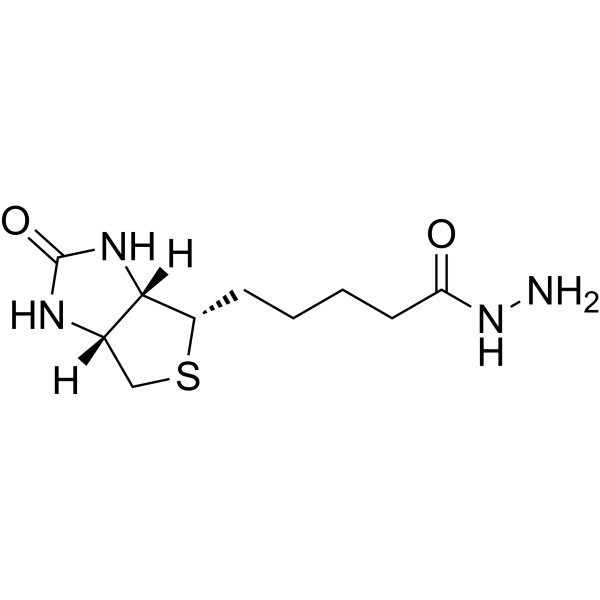
Biotin Hydrazide (Standard) is the analytical standard of Biotin Hydrazide (HY-100215). This product is intended for research and analytical applications. Biotin Hydrazide is a carbonyl-reactive biotinylation reagent, which is a carbonyl probe.
|
-
- HY-W590564
-
|
|
Biochemical Assay Reagents
|
Others
|
|
Bis-PEG3-biotin is a biotinylation reagent with two terminal biotin groups. PEG attached to the biotin gives an extended spacer arm that permits the biotin to reach into the binding pocket of the protein or macromolecule.
|
-
- HY-W590561
-
|
|
Biochemical Assay Reagents
|
Others
|
|
Fmoc-Asp(biotinyl-PEG)-OH is a biotinylation reagent with a Fmoc-protected amino group. The Fmoc group can be deprotected under basic conditions to obtain the free amine which can be used for further conjugations.
|
-
- HY-140531A
-
|
|
Biochemical Assay Reagents
|
Others
|
|
N-(Biotin-PEG4)-N-bis(PEG4-acid) hydrochloride is a branched biotinylation reagent for labeling. The carboxylic acid groups can react with primary amines in the presence of EDC and HATU to form stable amide bonds.
|
-
- HY-W591335
-
|
Biotin-PEG5-alcohol
|
Biochemical Assay Reagents
|
Others
|
|
Biotin-PEG5-OH (Biotin-PEG5-alcohol) is a biotinylation reagent containing a primary hydroxyl that can be derivatized. The PEG spacer provides greater solubility to labeled molecules compared to reagents having only hydrocarbon spacers.
|
-
- HY-W1123937C
-
|
|
Biochemical Assay Reagents
|
Others
|
|
Biotin-PEG-CHO (with a molecular weight of 5000) is a biotin-attached PEG derivative that can be used for biotinylation of biological molecules or other material surfaces. Biotin can be easily detected through the biotin/streptavidin binding test, and is widely used in molecular targeted detection.
|
-
- HY-P11461
-
|
Biotin-corticotropin releasing factor
|
Drug Derivative
|
Neurological Disease
|
|
Biotin-CRF, human, rat is a biotin-conjugated CRF (human, rat). CRF (human, rat) is a corticotropin-releasing hormone, paraventricular hypothalamic nucleus marker .
|
-
- HY-W353622
-
|
|
Biochemical Assay Reagents
|
Others
|
|
2,5-Dioxopyrrolidin-1-yl 4-(5-((3aS,4S,6aR)-2-oxohexahydro-1H-thieno[3,4-d]imidazol-4-yl)pentanamido)butanoate represents a special biotinylation reagent with a terminal NHS ester that reacts specifically and efficiently with amine-bearing compounds.
|
-
| Cat. No. |
Product Name |
Type |
-
- HY-111496
-
|
|
Fluorescent Dye
|
|
Sulfo-NHS-SS-biotin sodium is a long-chain cleavable and cell-impermeant amine-reactive biotinylation reagent. Sulfo-NHS-SS-biotin sodium can be used for the labeling and purifying of cell-surface protein .
|
-
- HY-148958
-
|
|
Fluorescent Dye
|
SNAP-Biotin is a biotin-labeled SNAP tag probe. SNAP-Biotin can be used for protein biotinylation .
|
-
- HY-W591335
-
|
Biotin-PEG5-alcohol
|
Fluorescent Dye
|
|
Biotin-PEG5-OH (Biotin-PEG5-alcohol) is a biotinylation reagent containing a primary hydroxyl that can be derivatized. The PEG spacer provides greater solubility to labeled molecules compared to reagents having only hydrocarbon spacers.
|
| Cat. No. |
Product Name |
Type |
-
- HY-W808757
-
|
|
Biochemical Assay Reagents
|
|
Biotin-maleimide is a biotinylated biochemical detection reagent that acts as a thiol-specific probe. Biotin-maleimide can also be used to prepare biotin-conjugated polychelators .
|
-
- HY-100215
-
-
- HY-NP0149
-
|
SNA (Biotinylated)
|
Biochemical Assay Reagents
|
|
Sambucus Nigra Lectin (SNA) (Biotinylated) is a terminal sialic acid (SA) residue-binding lectin with biotinylation modification. Sambucus Nigra Lectin (Biotinylated) binds specifically to terminal sialic acid residues on captured IgG and its subclasses .
|
-
- HY-D0980
-
|
Biotinyl-3,6-dioxaoctanediamine; EZ-Link Amine-PEO2-Biotin
|
Biochemical Assay Reagents
|
|
Biotin-DADOO (Biotinyl-3,6-dioxaoctanediamine; EZ-Link Amine-PEO2-Biotin) is a biotin-containing amine compound and a biotinylation reagent. As an amino component, Biotin-DADOO participates in the nucleophilic ring-opening reaction of epoxidized ω-double bonds during the synthesis of biotinylated inhibitor derivatives. Biotin-DADOO can be conjugated with carboxymethyl cellulose derivatives. Biotin-DADOO is involved in the synthesis of biotin-estradiol conjugates for enzyme immunoassays. Biotin-DADOO can be used in the research of influenza A .
|
-
- HY-174962A
-
|
|
Biochemical Assay Reagents
|
|
mPEG2000-Biotin is a biotin-conjugated PEG derivative used for biotinylation of biomolecules or other surfaces. Biotin can be detected by biotin/streptavidin binding assays and is widely used for molecular target detection .
|
-
- HY-W440886
-
|
|
Biochemical Assay Reagents
|
|
DSPE-PEG3400-Biotin is a phospholipid PEG for biotinylation. The amphiphilic property of the DSPE-PEG is useful for precision drug delivery and cancer therapy.
|
-
- HY-125501
-
|
Biotin-(AC5)2-hydrazide
|
Biochemical Assay Reagents
|
|
Biotin-XX hydrazide (Biotin-(AC5)2-hydrazide) is a carbonyl-reactive biotinylation reagent which contains two aminohexanoic acid spacers. Biotin-XX hydrazide has higher efficiency of avidin-binding .
|
-
- HY-130809A
-
|
|
Biochemical Assay Reagents
|
|
DBCO-PEG1000-Biotin is a click chemistry biotinylation that can enable copper-free click chemistry with azide molecules to form a stable triazole linkage .
|
-
- HY-172356
-
|
|
Biochemical Assay Reagents
|
|
Biotin-PEG-NH2 (Mn 3700) can be used for biotinylation of polymerized worm micelles for targeting and drug transfer to cells .
|
-
- HY-130893A
-
|
|
Biochemical Assay Reagents
|
|
Biotin-EDA TFA is a nucleophilic biotinylation reagent used for the conjugation of various substrates and identification and quantification using biotin-conjugated fluorescent labels .
|
-
- HY-130809C
-
|
|
Biochemical Assay Reagents
|
|
DBCO-PEG3400-Biotin is a click chemistry biotinylation that can enable copper-free click chemistry with azide molecules to form a stable triazole linkage .
|
-
- HY-130809H
-
|
|
Biochemical Assay Reagents
|
|
DBCO-PEG40000-Biotin is a click chemistry biotinylation that can enable copper-free click chemistry with azide molecules to form a stable triazole linkage .
|
-
- HY-130809I
-
|
|
Biochemical Assay Reagents
|
|
DBCO-PEG20000-Biotin is a click chemistry biotinylation that can enable copper-free click chemistry with azide molecules to form a stable triazole linkage .
|
-
- HY-130809D
-
|
|
Biochemical Assay Reagents
|
|
DBCO-PEG5000-Biotin is a click chemistry biotinylation that can enable copper-free click chemistry with azide molecules to form a stable triazole linkage .
|
-
- HY-130809B
-
|
|
Biochemical Assay Reagents
|
|
DBCO-PEG2000-Biotin is a click chemistry biotinylation that can enable copper-free click chemistry with azide molecules to form a stable triazole linkage .
|
-
- HY-174962B
-
|
|
Biochemical Assay Reagents
|
|
mPEG5000-Biotin is a biotin-conjugated PEG derivative used for biotinylation of biomolecules or other surfaces. Biotin can be detected by biotin/streptavidin binding assays and is widely used for molecular target detection .
|
-
- HY-174962
-
|
|
Biochemical Assay Reagents
|
|
mPEG1000-Biotin is a biotin-conjugated PEG derivative used for biotinylation of biomolecules or other surfaces. Biotin can be detected by biotin/streptavidin binding assays and is widely used for molecular target detection .
|
-
- HY-137425
-
|
|
Biochemical Assay Reagents
|
|
N-Biotinyl-12-aminododecanoic acid is a compound formed by linking biotin and 12-aminododecanoic acid through an amide bond. N-Biotinyl-12-aminododecanoic acid is used as a biotinylation reagent to test the ligation activity of SimL .
|
-
- HY-172356A
-
|
|
Biochemical Assay Reagents
|
|
Biotin-PEG-NH2 (Mn 5300) can be used for biotinylation of polymerized worm micelles for targeting and drug transfer to cells .
|
-
- HY-130809E
-
|
|
Biochemical Assay Reagents
|
|
DBCO-PEG10000-Biotin is a click chemistry biotinylation that can enable copper-free click chemistry with azide molecules to form a stable triazole linkage .
|
-
- HY-100215R
-
|
|
Biochemical Assay Reagents
|
|
Biotin Hydrazide (Standard) is the analytical standard of Biotin Hydrazide (HY-100215). This product is intended for research and analytical applications. Biotin Hydrazide is a carbonyl-reactive biotinylation reagent, which is a carbonyl probe.
|
-
- HY-W1123937C
-
|
|
Biochemical Assay Reagents
|
|
Biotin-PEG-CHO (with a molecular weight of 5000) is a biotin-attached PEG derivative that can be used for biotinylation of biological molecules or other material surfaces. Biotin can be easily detected through the biotin/streptavidin binding test, and is widely used in molecular targeted detection.
|
| Cat. No. |
Product Name |
Target |
Research Area |
-
- HY-P11307
-
|
|
Proteasome
|
Cancer
|
|
Biotin-epoxomicin is a Proteasome subunit binder. Biotin-epoxomicin serves as an affinity reagent for identifying proteasomal catalytic subunits, and facilitates affinity purification of active proteasomal subunits for LC-MS identification. Biotin-epoxomicin can be used to study solid tumors derived from B16 melanoma .
|
-
- HY-P11306
-
|
|
Proteasome
NF-κB
|
Inflammation/Immunology
|
|
Biotin-(Oaa)3-epoxomicin is a biotin-labeled form of Epoxomicin (HY-13821), prepared by conjugating Epoxomicin with biotin via three hydrophilic oxaacetyl amino acid (Oaa) linkers. Biotin-(Oaa)3-epoxomicin is primarily used in proteomic studies for the capture, identification and target validation of proteasome complexes, to determine the intracellular targets of epoxomicin. Epoxomicin acts as a proteasome inhibitor and NF-κB inhibitor, which effectively blocks inflammatory responses in mouse ear edema assays. It inhibits proteasome activity via covalent binding to catalytic subunits including LMP7, X, MECL1 and Z, with the strongest inhibitory effect on chymotrypsin-like activity, and does not interfere with non-proteasomal proteases such as trypsin and papain .
|
-
- HY-P10620
-
|
|
Bacterial
|
Others
|
|
GGGYK-Biotin is a substrate peptide designed to study the substrate specificity of Sortase A. GGGYK-Biotin can be used to develop Sortase A variants with different substrate specificities .
|
-
- HY-P3576A
-
-
- HY-P10244F
-
|
|
Peptides
|
Infection
|
|
Biotin-YVAD-FMK is an inhibitor for vacuolar processing enzyme (VPE), with a 64% inhibition at 5 μM. Biotin-YVAD-FMK is an irreversible substrate for caspase 1 .
|
-
- HY-P2546
-
|
|
Neurokinin Receptor
|
Neurological Disease
|
|
Biotin-Substance P is the biotin tagged Substance P. Substance P (Neurokinin P) is a neuropeptide, acting as a neurotransmitter and as a neuromodulator in the CNS. The endogenous receptor for substance P is neurokinin 1 receptor (NK1-receptor, NK1R) .
|
-
- HY-P10886
-
|
|
Gap Junction Protein
Claudin
|
Inflammation/Immunology
|
|
Zifogaptide is a gap junction protein channel regulator. Zifogaptide mimics the PDZ-binding motif at the C-terminal of Claudin C and competitively interferes with the interaction between Claudin–TJP1 (ZO-1) scaffold. Zifogaptide can promote epithelial cell migration, reduce scar formation, and accelerate wound healing. Zifogaptide can be used for radiation dermatitis, skin injuries, etc .
|
-
- HY-P5351A
-
|
|
Transmembrane Glycoprotein
|
Inflammation/Immunology
Cancer
|
|
Hyaluronan-binding peptide, biotin labeled TFA is a biological active peptide. (This peptide is a hyaluronan-binding peptide biotinylated through a C-terminal GGGSK linker. Hyaluronan (HA) is a nonsulfated glycosaminoglycan expressed in the extracellular matrix and on cell surfaces. HA plays a role in fertilization, embryonic development, wound healing, angiogenesis, leukocyte trafficking to inflamed tissues, and cancer metastasis. This peptide has been shown to block HA binding to CD44 receptors and inhibit T cell proliferation.) .
|
-
- HY-P2491
-
|
|
Fluorescent Dye
|
Cardiovascular Disease
Endocrinology
|
|
Atrial Natriuretic Peptide (1-28), human, porcine, Biotin-labeled, one of three mammalian natriuretic peptides (NPs), has endocrine effects on fluid homeostasis and blood pressure. Atrial Natriuretic Peptide has the potential for cardiovascular diseases research .
|
-
- HY-P4928
-
|
|
Amylin Receptor
|
Metabolic Disease
|
|
Biotinyl-Amylin (mouse, rat) is a biotinylated Amylin (mouse, rat). Amylin (mouse, rat) is a 37-aminoacid pancreatic protein that exerts control over several metabolic events such as glycemia and lacticemia .
|
-
- HY-P2136F
-
|
|
Apoptosis
|
Neurological Disease
Inflammation/Immunology
Cancer
|
|
Biotin-COG1410 TFA is a biotin labled COG1410 (HY-P2136). COG1410 is an apolipoprotein E-derived peptide and an apoptosis inhibitor. COG1410 exerts neuroprotective and antiinflammatory effects in a murine model of traumatic brain injury (TBI). COG1410 can be used for the research of neurological disease .
|
-
- HY-P11118A
-
|
CAPture peptide, biotin-CCDC61 (334-366) TFA
|
Biochemical Assay Reagents
|
Others
|
|
Biotinylated CCDC61 peptide (CAPture peptide, biotin-CCDC61 (334-366)) TFA is a biotinylated peptide derived from the centrosomal protein CCDC61. Biotinylated CCDC61 peptide TFA specifically isolates intact centrosomes .
|
-
- HY-P4752
-
|
|
Peptides
|
Others
|
|
KWKHGAEIVYKSPVV-{S(GlcNAc-β-D)}-GDTSPRHLSNVK-{K(biotinyl)}-NH2 is a polypeptide that can be found by peptide screening. Peptide screening is a research tool that pools active peptides primarily by immunoassay. Peptide screening can be used for protein interaction, functional analysis, epitope screening, especially in the field of agent research and development .
|
-
- HY-P3844
-
-
- HY-P2549
-
-
- HY-P4765
-
|
|
Peptides
|
Others
|
|
Neuropeptide Y-Lys(biotinyl) (free acid) (human, rat) is a polypeptide that can be found by peptide screening. Peptide screening is a research tool that pools active peptides primarily by immunoassay. Peptide screening can be used for protein interaction, functional analysis, epitope screening, especially in the field of agent research and development .
|
-
- HY-P5113A
-
|
|
Peptides
|
Others
|
|
Histone H3 (1-21)-Gly-Gly-Lys(biotinyl) amide TFA is a polypeptide that can be found by peptide screening. Peptide screening is a research tool that pools active peptides primarily by immunoassay. Peptide screening can be used for protein interaction, functional analysis, epitope screening, especially in the field of agent research and development .
|
-
- HY-P4634
-
|
|
Peptides
|
Others
|
|
(Lys(Me)327)-Histone H3 (21-44)-Gly-Lys(biotinyl) is a polypeptide that can be found by peptide screening. Peptide screening is a research tool that pools active peptides primarily by immunoassay. Peptide screening can be used for protein interaction, functional analysis, epitope screening, especially in the field of agent research and development .
|
-
- HY-P5115
-
|
|
Peptides
|
Others
|
|
(Lys(Me,Me)27)-Histone H3 (21-44)-Gly-Lys(Biotinyl) is a polypeptide that can be found by peptide screening. Peptide screening is a research tool that pools active peptides primarily by immunoassay. Peptide screening can be used for protein interaction, functional analysis, epitope screening, especially in the field of agent research and development .
|
-
- HY-P4636
-
|
|
Peptides
|
Others
|
|
(Lys(Me)34)-Histone H3 (1-21)-Gly-Gly-Lys(biotinyl) amide is a polypeptide that can be found by peptide screening. Peptide screening is a research tool that pools active peptides primarily by immunoassay. Peptide screening can be used for protein interaction, functional analysis, epitope screening, especially in the field of agent research and development .
|
-
- HY-P4614
-
|
|
Peptides
|
Others
|
|
(Lys(Ac)5,8,12,16)-Histone H4 (1-25)-Gly-Ser-Gly-Ser-Lys(biotinyl) is a polypeptide that can be found by peptide screening. Peptide screening is a research tool that pools active peptides primarily by immunoassay. Peptide screening can be used for protein interaction, functional analysis, epitope screening, especially in the field of agent research and development .
|
-
- HY-P2510
-
|
|
Thyroid Hormone Receptor
|
Metabolic Disease
|
|
Parathyroid Hormone (1-34), human, biotinylated is a probe for the parathyroid hormone receptor, can be used for analyzing the interaction between parathyroid hormone and parathyroid hormone receptors in living cells and for purifying hormone-receptor complexes with affinity columns .
|
-
- HY-P3621
-
|
|
GCGR
|
Metabolic Disease
|
|
Biotinyl-Glucagon (1-29), human, bovine, porcine is a biotinylated glucagon. Glucagon is a peptide hormone, produced by α-cells of the pancreas, can increase concentration of glucose and fatty acids in the bloodstream .
|
-
- HY-P4945
-
|
|
Peptides
|
Others
|
|
Biotinyl-(εAhx)-Gly-Arg-Gly-Asp-Ser is a polypeptide that can be found by peptide screening. Peptide screening is a research tool that pools active peptides primarily by immunoassay. Peptide screening can be used for protein interaction, functional analysis, epitope screening, especially in the field of agent research and development .
|
-
- HY-P10569
-
|
|
EGFR
|
Cancer
|
|
Biotin HER-2 substrate peptide is a substrate of Her4 and Her2/neu tyrosine kinase with a Km value of 60 μm for Her2/neu kinase domain .
|
-
- HY-P5351
-
|
|
Peptides
|
Others
|
|
Hyaluronan-binding peptide, biotin labeled is a biological active peptide. (This peptide is a hyaluronan-binding peptide biotinylated through a C-terminal GGGSK linker. Hyaluronan (HA) is a nonsulfated glycosaminoglycan expressed in the extracellular matrix and on cell surfaces. HA plays a role in fertilization, embryonic development, wound healing, angiogenesis, leukocyte trafficking to inflamed tissues, and cancer metastasis. This peptide has been shown to block HA binding to CD44 receptors and inhibit T cell proliferation.)
|
-
- HY-13443F
-
|
Lys27(Biotin)-Exendin 4
|
GCGR
|
Others
|
|
Exendin 4, biotin labeled is a biotin labeled Exendin 4 (HY-13443). Exendin 4 is a long-acting GLP-1 receptor agonist .
|
-
- HY-P5113
-
|
|
Peptides
|
Others
|
|
Histone H3 (1-21)-Gly-Gly-Lys(biotinyl) amide is a polypeptide that can be found by peptide screening. Peptide screening is a research tool that pools active peptides primarily by immunoassay. Peptide screening can be used for protein interaction, functional analysis, epitope screening, especially in the field of agent research and development .
|
-
- HY-P4627
-
|
|
Peptides
|
Others
|
|
(Lys(Me)29)-Histone H3 (1-21)-Gly-Gly-Lys(biotinyl) is a polypeptide that can be found by peptide screening. Peptide screening is a research tool that pools active peptides primarily by immunoassay. Peptide screening can be used for protein interaction, functional analysis, epitope screening, especially in the field of agent research and development .
|
-
- HY-P4929
-
|
|
Peptides
|
Others
|
|
Biotinyl-(Gln1)-Orexin A (human, mouse, rat) is a polypeptide that can be found by peptide screening. Peptide screening is a research tool that pools active peptides primarily by immunoassay. Peptide screening can be used for protein interaction, functional analysis, epitope screening, especially in the field of agent research and development .
|
-
- HY-P4026
-
|
|
Peptides
|
Others
|
|
K(biotinyl)-KEDVV-Abu-CS-Abu-SYKK-NH2 is a peptide that the primary structure is: Lys(biotinyl)-Lys-Glu-Asp-Val-Val-Abu-Cys-Ser-Abu-Ser-Tyr-Lys-Lys-NH2.
|
-
- HY-P2551
-
|
|
Amyloid-β
|
Neurological Disease
|
|
Biotin-β-Amyloid (17-40) is a N-terminal-labelled biotinylated amyloid-β(1-40) peptide. β-Amyloid (17-40) is a 24-residue fragment of the Aβ protein via post-translational processing of amyloid precursor protein (APP) .
|
-
- HY-P11118
-
|
CAPture peptide, biotin-CCDC61 (334-366)
|
Biochemical Assay Reagents
|
Others
|
|
Biotinylated CCDC61 peptide (CAPture peptide, biotin-CCDC61 (334-366)) is a biotinylated peptide derived from the centrosomal protein CCDC61. Biotinylated CCDC61 peptide specifically isolates intact centrosomes .
|
-
- HY-P2504
-
|
|
Syk
|
Others
|
|
Syk Kinase Peptide Substrate, Biotin labeled is a biotin-labled Syk kinase peptide substrate.
|
-
- HY-P3576
-
-
- HY-P3623
-
|
|
Fluorescent Dye
|
Others
|
|
Biotin-Glucagon-Like Peptide 1 (7-36) amide, human is a biologically active peptide. Biotin-Glucagon-Like Peptide 1 (7-36) amide, human can be used for the research of various biochemical studies.
|
-
- HY-P4078
-
|
|
Peptides
|
Others
|
|
(Arg)9 biotin labeled is a cell-permeable peptide. (Arg)9 biotin labeled can be used for drug delivery. (Arg)9 biotin labeled can traverse the plasma membrane of eukaryotic cells .
|
-
- HY-P10566
-
|
|
BCL6
|
Cancer
|
|
BCOR(498-514), biotinylated is the minimal BCL6 binding domain with an KD value of 1.32 µM. BCOR(498-514), biotinylated blocks BCL6-mediated transcriptional repression and kills lymphoma cells .
|
-
- HY-P10372
-
|
|
Src
|
Cancer
|
|
pFYN peptide is a biotin-labled phosphorylated peptide substrate derived from FYN (a Src family kinase) .
|
-
- HY-P4928A
-
|
|
Amylin Receptor
|
Metabolic Disease
|
|
Biotinyl-Amylin (mouse, rat) TFA is a biotinylated Amylin (mouse, rat). Amylin (mouse, rat) is a 37-aminoacid pancreatic protein that exerts control over several metabolic events such as glycemia and lacticemia .
|
-
- HY-P4620
-
|
|
Peptides
|
Others
|
|
(Lys(Me)24)-Histone H3 (1-21)-Gly-Gly-Lys(biotinyl) is a polypeptide that can be found by peptide screening. Peptide screening is a research tool that pools active peptides primarily by immunoassay. Peptide screening can be used for protein interaction, functional analysis, epitope screening, especially in the field of agent research and development .
|
-
- HY-P4616
-
|
|
Peptides
|
Others
|
|
(Lys(Ac)12)-Histone H4 (1-21)-Gly-Gly-Lys(biotinyl) is a polypeptide that can be found by peptide screening. Peptide screening is a research tool that pools active peptides primarily by immunoassay. Peptide screening can be used for protein interaction, functional analysis, epitope screening, especially in the field of agent research and development .
|
-
- HY-P11461
-
|
Biotin-corticotropin releasing factor
|
Drug Derivative
|
Neurological Disease
|
|
Biotin-CRF, human, rat is a biotin-conjugated CRF (human, rat). CRF (human, rat) is a corticotropin-releasing hormone, paraventricular hypothalamic nucleus marker .
|
-
- HY-P3574
-
-
- HY-P4934
-
|
|
Peptides
|
Others
|
|
Biotinyl-BNP-32 (human) is a polypeptide that can be found by peptide screening. Peptide screening is a research tool that pools active peptides primarily by immunoassay. Peptide screening can be used for protein interaction, functional analysis, epitope screening, especially in the field of agent research and development .
|
-
- HY-P4638
-
|
|
Peptides
|
Others
|
|
(Lys(Me)39)-Histone H3 (1-21)-Gly-Gly-Lys(biotinyl) amide is a polypeptide that can be found by peptide screening. Peptide screening is a research tool that pools active peptides primarily by immunoassay. Peptide screening can be used for protein interaction, functional analysis, epitope screening, especially in the field of agent research and development .
|
-
- HY-P4925
-
|
|
Peptides
|
Others
|
|
Biotinyl-(Arg8)-Vasopressin is a polypeptide that can be found by peptide screening. Peptide screening is a research tool that pools active peptides primarily by immunoassay. Peptide screening can be used for protein interaction, functional analysis, epitope screening, especially in the field of agent research and development .
|
-
- HY-KD1113
-
|
|
|
The Biotinylation Rapid Labelling Kit enables biotinylation of proteins. Based on NHS ester chemistry, the NHS ester-activated fluorescent dye reacts with primary amines in the antibody/protein to be labelled within a pH 7-9 solution, forming stable amide bonds to achieve conjugation with the antibody/protein. Typically, a single IgG molecule can bind 2-8 molecules of biotin. The entire procedure can be completed within two hours.
|
| Cat. No. |
Product Name |
|
Classification |
-
- HY-130809
-
|
|
|
DBCO
|
|
DBCO-PEG4-Biotin is an azadibenzocyclooctyne-biotin derivative containing a biotin group and 4 PEGs. DBCO-PEG4-Biotin is a versatile biotinylation reagent used for the introduction of a biotin moiety to azide-labeled biomolecules via copper-free strain-promoted alkyne-azide click chemistry (SPAAC) reaction . DBCO-PEG4-Biotin is a click chemistry reagent, it contains a DBCO group that can undergo strain-promoted alkyne-azide cycloaddition (SPAAC) with molecules containing Azide groups.
|
-
- HY-173176
-
|
|
|
Azide
|
|
4-(2-Azidoethyl)phenol (Ph_N3) is a clickable APEX2 probe. 4-(2-Azidoethyl)phenol (Ph_N3) exhibits reliable labeling ability and enabled two biotinylation routes for downstream analysis .
|
-
- HY-W110146
-
|
|
|
Labeling and Fluorescence Imaging
|
|
(3aS,4S,6aR)-Biotin-PEG4-Alkyne is an alkyne-activated biotinylation reagent. (3aS,4S,6aR)-Biotin-PEG4-Alkyne can be reacted with azides via a copper-catalyzed click reaction. Biotin-labeled biomolecules can be bound to avidin or streptavidin for further purification and detection .
|
-
- HY-130809A
-
|
|
|
DBCO
|
|
DBCO-PEG1000-Biotin is a click chemistry biotinylation that can enable copper-free click chemistry with azide molecules to form a stable triazole linkage .
|
-
- HY-130809C
-
|
|
|
DBCO
|
|
DBCO-PEG3400-Biotin is a click chemistry biotinylation that can enable copper-free click chemistry with azide molecules to form a stable triazole linkage .
|
-
- HY-130809H
-
|
|
|
DBCO
|
|
DBCO-PEG40000-Biotin is a click chemistry biotinylation that can enable copper-free click chemistry with azide molecules to form a stable triazole linkage .
|
-
- HY-130809I
-
|
|
|
DBCO
|
|
DBCO-PEG20000-Biotin is a click chemistry biotinylation that can enable copper-free click chemistry with azide molecules to form a stable triazole linkage .
|
-
- HY-130809D
-
|
|
|
DBCO
|
|
DBCO-PEG5000-Biotin is a click chemistry biotinylation that can enable copper-free click chemistry with azide molecules to form a stable triazole linkage .
|
-
- HY-130809B
-
|
|
|
DBCO
|
|
DBCO-PEG2000-Biotin is a click chemistry biotinylation that can enable copper-free click chemistry with azide molecules to form a stable triazole linkage .
|
-
- HY-130809E
-
|
|
|
DBCO
|
|
DBCO-PEG10000-Biotin is a click chemistry biotinylation that can enable copper-free click chemistry with azide molecules to form a stable triazole linkage .
|
| Cat. No. |
Product Name |
|
Classification |
Your information is safe with us. * Required Fields.
Inquiry Information
- Product Name:
- Cat. No.:
- Quantity:
- MCE Japan Authorized Agent:

