Search Result
Results for "
carbonyl compounds
" in MedChemExpress (MCE) Product Catalog:
8
Biochemical Assay Reagents
2
Isotope-Labeled Compounds
| Cat. No. |
Product Name |
Target |
Research Areas |
Chemical Structure |
-
- HY-Y1147
-
|
Maleic acid diethyl ester
|
Biochemical Assay Reagents
|
Others
|
|
Diethyl maleate (DEM) is an orally available, effective glutathione (GSH) depletor that crosses the blood-brain barrier. Diethyl maleate covalently binds irreversibly to GSH via glutathione S-transferase with an in vitro IC50 of 0.1-0.5 mM. Diethyl maleate selectively depletes GSH in liver, lung, and brain tissues, exacerbating oxidative stress and enhancing hyperbaric oxygen toxicity. Diethyl maleate promotes precursor amino acid uptake and in turn promotes GSH synthesis by upregulating the activity of the cystine-glutamate transporter XO -. Diethyl maleate can be used to study redox homeostasis and GSH protection mechanisms in oxidative stress-related diseases such as hyperbaric oxygen injury and metabolic diseases[1][2][3].
|
-
-
- HY-128429
-
|
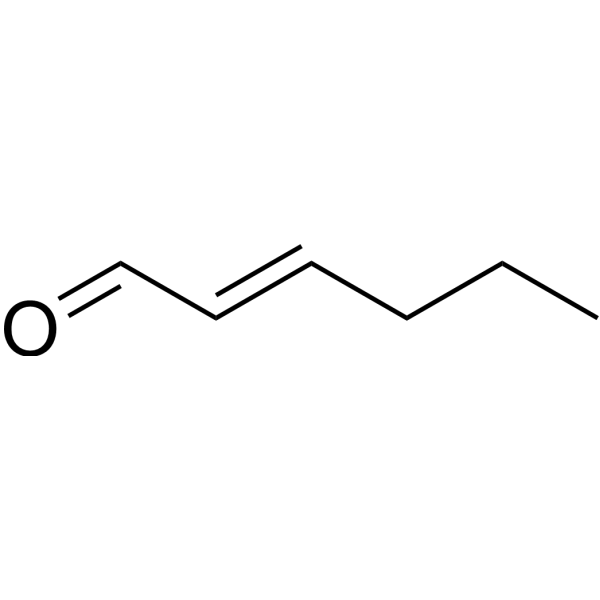
(E)-2-Hexenal
|
Environmental Pollutants
Biochemical Assay Reagents
Fungal
|
Infection
|
|
trans-2-Hexenal ((E)-2-Hexenal) is a volatile compound widely present in fresh plants, vegetables, and fruits, with a unique leafy aroma. trans-2-Hexenal has antifungal activity and can also inhibit the germination of soybean seeds and the growth of seedlings. In addition, trans-2-Hexenal can be used to determine low-molecular-weight carbonyl compounds that are reactive with biological nucleophiles in biological samples .
|
-
-
- HY-20128
-
|
|
Drug Intermediate
|
Others
|
|
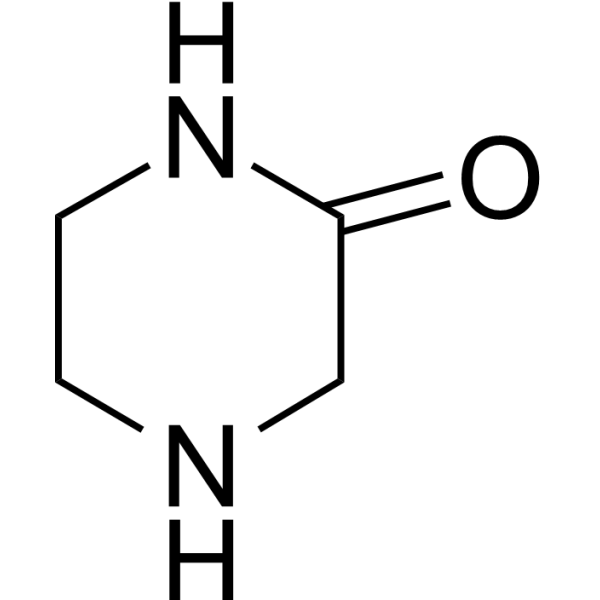
Piperazin-2-one is a piperazine ring derivative containing amide and ester carbonyl groups. As an important intermediate, Piperazin-2-one can be used for the synthesis of various active compounds .
|
-
-
- HY-40228
-
|
(R)-2-Methylpropane-2-sulfinamide
|
Biochemical Assay Reagents
|
Others
|
|
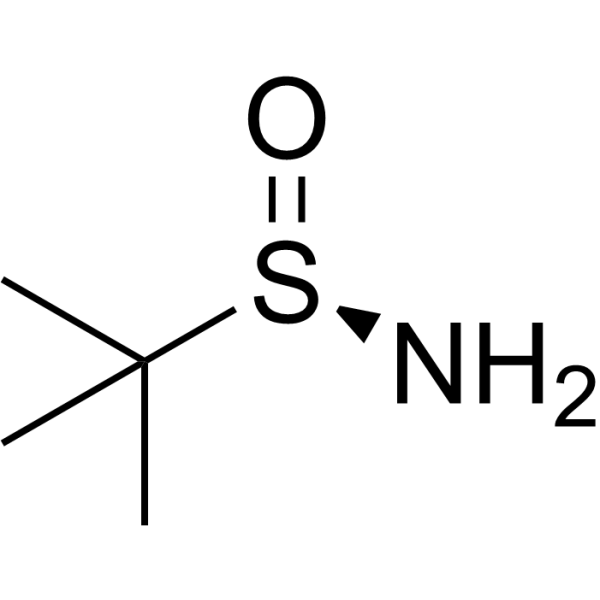
(R)-(+)-tert-Butylsulfinamide ((R)-2-Methylpropane-2-sulfinamide) is a chiral reagent commonly used in the asymmetric synthesis of compounds such as amines, amino acids, and amino alcohols. (R)-(+)-tert-Butylsulfinamide achieves stereoselective reactions by condensing with carbonyl groups to form sulfinyl imine intermediates, and after the reaction, this group can be removed under acidic conditions to obtain the target product .
|
-
-
- HY-W074541
-
|
Trimethylacetohydrazideammonium chloride
|
Biochemical Assay Reagents
|
Others
|
|
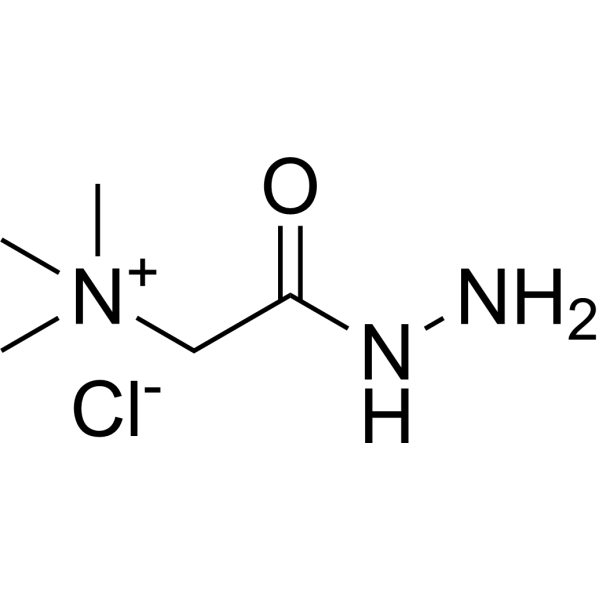
Girard's reagent T is often used in analytical chemistry as a derivatizing agent for carbonyl compounds. Girard's reagent T reacts with ketones and aldehydes to form stable hydrazones that can be readily analyzed by various techniques including chromatography and spectrophotometry. In addition, Girard's Reagent T has been used in the synthesis of a variety of organic compounds, including pharmaceuticals and agrochemicals.
|
-
-
- HY-W273413
-
|
NBD-H
|
Fluorescent Dye
|
Cancer
|
|
4-Hydrazino-7-nitro-benzofurazan hydrazine adduct (NBD-H) is a fluorescent reagent used for protein labeling .
|
-
-
- HY-W590569
-
|
|
Biochemical Assay Reagents
|
Others
|
|
Azido-PEG12-amine is a water soluble PEG compound. The azide group enables Click Chemistry. The amine group is reactive with carboxylic acids, activated NHS esters, carbonyls (ketone, aldehyde), etc. The hydrophilic PEG arm increases solubility in aqueous media.
|
-
-
- HY-D1336
-
|
|
Fluorescent Dye
|
|
|
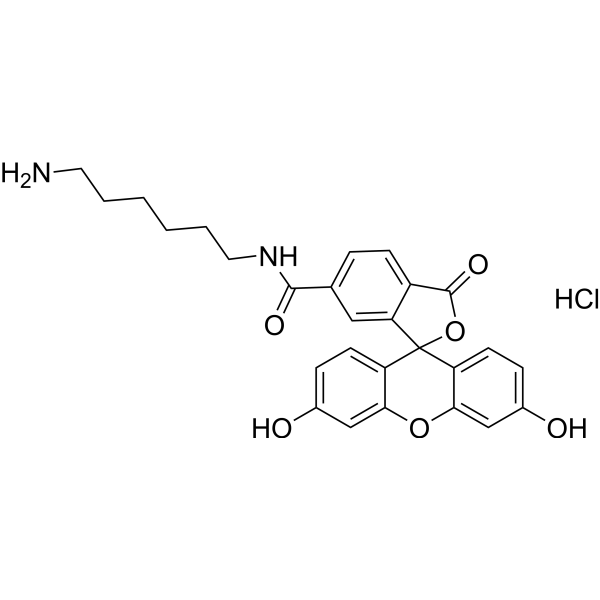
FAM amine, 6-isomer is a fluorescein derivative with an amine group and contains an isomer of the fluorophore. Can be used to modify biomolecules through enzymatic transamination. Its fatty amine groups can also react with electrophiles such as activated esters. The amine can also be conjugated to carbonyl compounds (aldehydes and ketones) by reductive amination.
|
-
-
- HY-W010341
-
|
|
Biochemical Assay Reagents
|
Others
|
|
2-Pyridinecarbohydrazide is a versatile heterocyclic building block widely used in medicinal chemistry and coordination chemistry, and it finds extensive applications in various synthetic fields. 2-Pyridinecarbohydrazide reacts with the reducing end of carbohydrates to enhance mass spectrometry ionization efficiency, enabling isomer-specific identification of monosaccharides, disaccharides, ketoses/aldoses, and quantitative mass spectrometry imaging of biological tissues .
|
-
-
- HY-W017425
-
|
Phenylhydrazine acetate
|
Biochemical Assay Reagents
|
Others
|
|
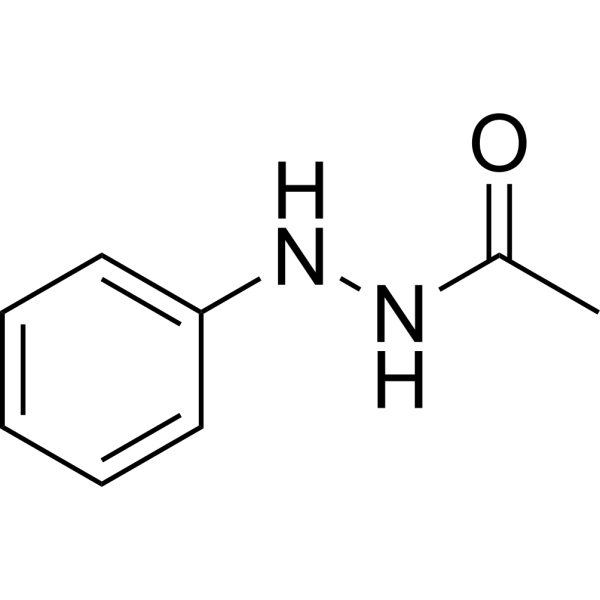
N'-Phenylacetohydrazide consists of a phenyl group attached to the acetylhydrazide functional group via a hydrazine bond. This compound is commonly used as a reagent in organic chemistry for the determination of carbonyl compounds such as aldehydes and ketones.
|
-
-
- HY-121206
-
|
|
Environmental Pollutants
Antibiotic
|
Infection
|
|
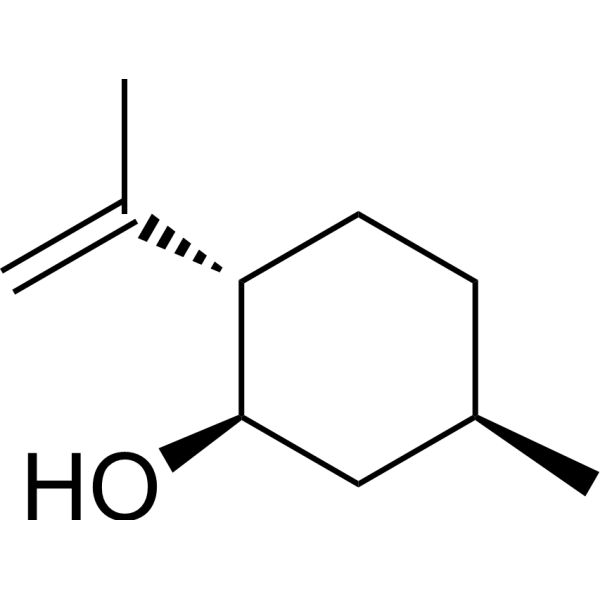
(-)-Isopulegol is prepared directly from the treatment of essential oil of citronella under solid supported acid catalysis and solvent-free microwave assisted ene-cyclisation. (-)-Isopulegol shows high activity in reacting with carbonyl compounds. (-)-Isopulegol can be used for antiviral activity research .
|
-
-
- HY-21983
-
|
|
Amino Acid Derivatives
|
Others
|
|
O-Acetyl-N-[(1,1-dimethylethoxy)carbonyl]-L-threonine is a compound containing both an amino group and a carboxyl group.
|
-
-
- HY-Y1361
-
|
D-(-)-Tartaric acid diethyl ester
|
Biochemical Assay Reagents
Drug Intermediate
|
Others
|
|
Diethyl D-(-)-tartrate (D-(-)-Tartaric acid diethyl ester) is a biochemical reagent that can be used as a biological material or organic compound for life science related research. Diethyl D(-)-tartrate can also react with fatty carbonyl compounds to form bis(sodium carboxylate) types of surfactants, which have good water solubility, strong ability to lower surface tension, and can be easily decomposed under acidic conditions .
|
-
-
- HY-W145090
-
|
p-Dimethylaminopyridine N-oxide
|
Biochemical Assay Reagents
|
Others
|
|
4-Dimethylaminopyridine N-oxide (p-Dimethylaminopyridine N-oxide) is an Efficient Oxidizing Agent for Alkyl Halides .
|
-
-
- HY-21206
-
|
|
Drug Intermediate
|
Others
|
|
1-(((4-Nitrophenoxy)carbonyl)oxy)ethyl isobutyrate is a drug intermediate for synthesis of various active compounds.
|
-
-
- HY-157445
-
-
-
- HY-W063820
-
|
|
Drug Intermediate
|
Others
|
|
(2S)-1-[(tert-Butoxy)carbonyl]-2-methylazetidine-2-carboxylic acid is a drug intermediate for synthesis of various active compounds.
|
-
-
- HY-128429R
-
|
(E)-2-Hexenal (Standard)
|
Fungal
Biochemical Assay Reagents
Reference Standards
|
Infection
|
|
Trans-2-Hexenal (Standard) is the analytical standard of Trans-2-Hexenal. This product is intended for research and analytical applications. Trans-2-Hexenal can be used for the determination of low-molecular-weight carbonyl compounds which are reactive with biological nucleophiles in biological samples .
|
-
-
- HY-146332
-
|
|
P-selectin
|
Cardiovascular Disease
|
|
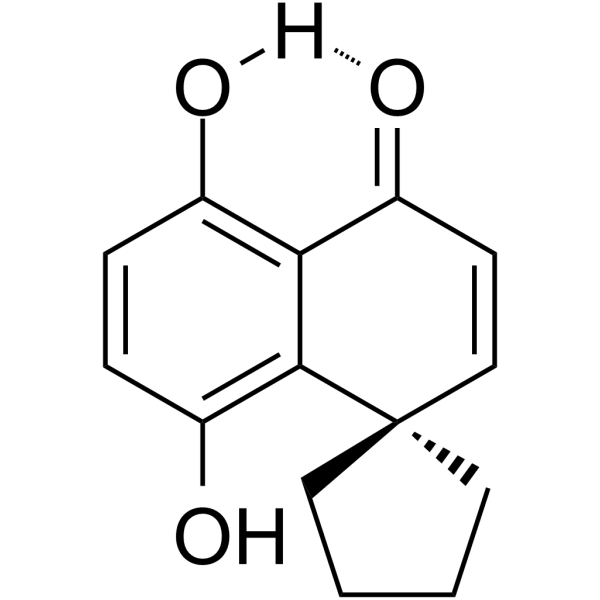
Collagen-IN-1 (compound 3), an ortho-carbonyl hydroquinone derivative, is a selective inhibitor on collagen. Collagen-IN-1 inhibits agonist-induced platelet aggregation in a non-competitive manner with an IC50 value of 1.77 μM. Collagen-IN-1 reduces the expression of P-selectin, activation of glycoprotein IIb/IIIa, and release of adenosine triphosphate and CD63 from platelet. Collagen-IN-1 has the potential for platelet-related thrombosis diseases research .
|
-
-
- HY-Z1081
-
|
4-((Benzyloxy)carbonyl)benzoic acid
|
Drug Intermediate
|
Others
|
|
Monobenzyl Terephthalate (4-((Benzyloxy)carbonyl)benzoic acid) is a drug intermediate for synthesis of various active compounds.
|
-
-
- HY-D0066
-
|
DCCH
|
Fluorescent Dye
|
Others
|
|
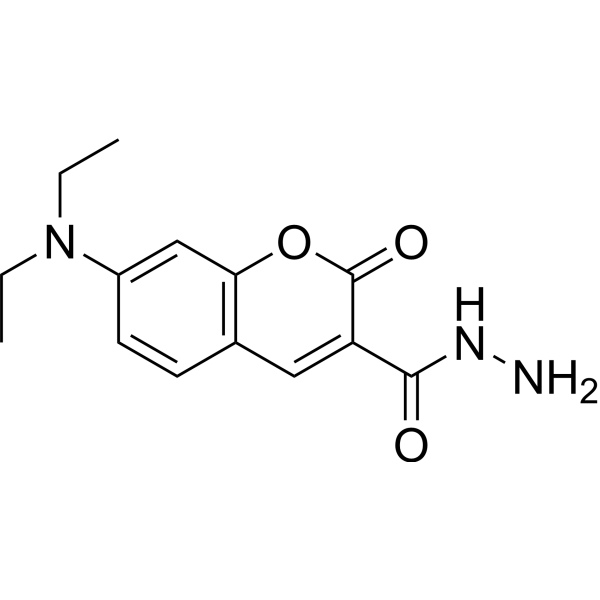
7-Diethylaminocoumarin-3-carbohydrazide is a coumarin. 7-Diethylaminocoumarin-3-carbohydrazide can be used to detect sugar chains and quantify biological carbonyl compounds .
|
-
-
- HY-78192
-
|
|
Biochemical Assay Reagents
|
Others
|
|
N-[N-[(1,1-Dimethylethoxy)carbonyl]-2-methylalanyl]-D-tryptophan is a biochemical reagent that can be used as a biological material or organic compound for life science related research.
|
-
-
- HY-34887
-
|
|
Drug Derivative
|
Others
|
|
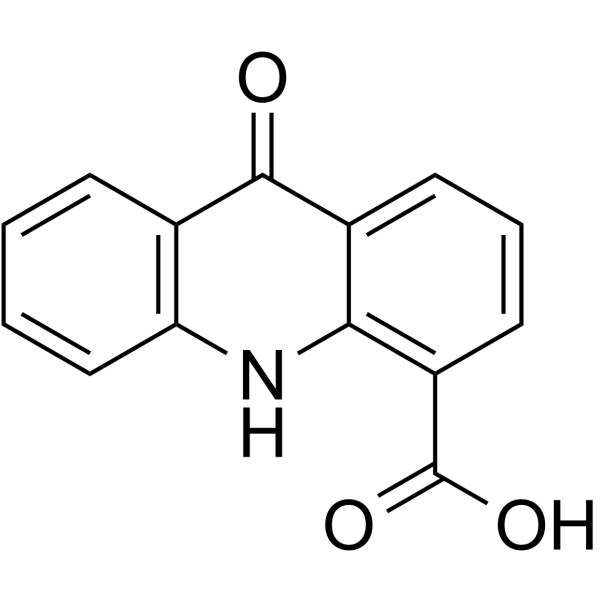
Acridone-4-carboxylic acid (ACA) (Compound 2c) is a heme-interacting acridone derivatives that prevents free heme-mediated protein oxidation and degradation. Acridone-4-carboxylic acid inhibits protein carbonyl formation with an IC50 of 43 μM .
|
-
-
- HY-43562
-
|
|
Drug Intermediate
|
Others
|
|
(2S,5S)-1-(((9H-Fluoren-9-yl)methoxy)carbonyl)-5-phenylpyrrolidine-2-carboxylic acid is a drug intermediate for synthesis of various active compounds.
|
-
-
- HY-77826
-
|
|
Epigenetic Reader Domain
|
Cancer
|
|
4-Chloro-N-methylpicolinamide (Compound 3) is a BAZ2A bromodomain inhibitor with a Kd of >500 μM. 4-Chloro-N-methylpicolinamide forms a weak hydrogen bond with the carbonyl oxygen of Pro1817. 4-Chloro-N-methylpicolinamide can be used in the research of invasive prostate cancer .
|
-
-
- HY-20128S
-
|
|
Isotope-Labeled Compounds
Drug Intermediate
|
Others
|
|
Piperazin-2-one-d6 is the deuterium labeled Piperazin-2-one (HY-20128). Piperazin-2-one is a piperazine ring derivative containing amide and ester carbonyl groups. As an important intermediate, Piperazin-2-one can be used for the synthesis of various active compounds .
|
-
-
- HY-151774
-
|
|
Fluorescent Dye
|
Others
|
|
TAMRA hydrazide (6-isomer) is a click chemistry reagent that can be coupled to carbonyl compounds. The dye hydrazide in TAMRA hydrazide (6-isomer) labels carbonyl compounds such as aldehydes and ketones. TAMRA in TAMRA hydrazide (6-isomer) is a xanthene red fluorophore that reacts with terminal alkynes .
|
-
-
- HY-W190921
-
|
|
Biochemical Assay Reagents
|
Others
|
|
t-Butyl 3-(hydroxypropoxyl)-propanoate contains reactive hydroxyl and t-butyl protected carboxyl moieties. The hydroxyl group can react to further derivatize the compound. The t-butyl carbonyl group can be deprotected under acidic conditions.
|
-
-
- HY-161998
-
|
|
Bacterial
Urease
|
Others
|
Urease-IN-16 (compound 4e) is a urease inhibitor, with an IC50 value of 132 μmol/L. Urease-IN-16 can coordinate with the nickel atom through the oxygen atoms of carbonyl or boronic acid groups. Urease-IN-16 shows great potential as an additive in the development of efficient fertilizers and medical applications .
|
-
-
- HY-W101722
-
|
|
PROTAC Linkers
|
Cancer
|
|
tert-Butyl (9-aminononyl)carbamate is an alkane chain with terminal amine and Boc-protected amino groups. The compound can be used as a PROTAC linker in the synthesis of PROTACs and other conjugation applications. Amine group is reactive with carboxylic acids, activated NHS esters, carbonyls (ketone, aldehyde) etc. The Boc group can be deprotected under mild acidic conditions to form the free amine.
|
-
-
- HY-41802
-
|
|
Drug Intermediate
|
Others
|
|
1-((Benzyloxy)carbonyl)-5-oxopiperidine-2-carboxylic acid is a drug intermediate for synthesis of various active compounds.
|
-
-
- HY-N12966
-
|
|
Others
|
Others
|
|
(±)9,10-DiHODE (compound 4) is a plant oxylipin compound that reduces the carbonyl group of α-ketoalcohols to form adjacent diols. They act as important signaling molecules in plants and play a role in regulating growth and flowering processes .
|
-
-
- HY-132270
-
|
|
Fluorescent Dye
|
Others
|
|
FAM amine, 5-isomer is a fluorescein linker that undergoes enzymatic transamination. The addition of the amine group makes the compound more reactive with carboxylic acids, activated NHS ester and other carbonyl groups.
|
-
-
- HY-151690
-
|
|
Fluorescent Dye
|
Others
|
|
FAM hydrazide, 6-isomer is a hydrazide derivative of fluorescein (FAM). FAM is a xanthene dye, a parent of fluorescein dye series. FAM hydrazide, 6-isomer can be used for the labeling of carbonyl compounds, aldehydes, and ketones .
|
-
-
- HY-132264
-
|
|
Fluorescent Dye
|
Others
|
|
FAM hydrazide, 6-isomer hydrochloride is a hydrazide derivative of fluorescein (FAM). FAM is a xanthene dye, a parent of fluorescein dye series. FAM hydrazide, 6-isomer hydrochloride can be used for the labeling of carbonyl compounds, aldehydes, and ketones .
|
-
-
- HY-42418
-
|
|
Drug Intermediate
|
Others
|
|
3-Methyl-N-{[(2-methyl-2-propanyl)oxy]carbonyl}-L-valyl-(4R)-4-hydroxy-L-proline is a drug intermediate for synthesis of various active compounds.
|
-
-
- HY-157447
-
|
|
Carbonyl Reductase
|
Cancer
|
|
CBR1-IN-4 (Compound 13p) is a human carbonyl reductase 1 (CBR1) inhibitor (IC50=0.09 μM). CBR1-IN-4 can be used in cancer research .
|
-
-
- HY-W800649
-
|
|
Biochemical Assay Reagents
|
Others
|
|
Aminooxy-PEG2-amine hydrochloride (compound L3) is an aqueous soluble crosslinker. The aminooxy group can be used in bioconjugation. It reacts with an aldehyde to form an oxime bond, if a reductant is used, it will form a hydroxylamine linkage. The amino group is reactive with carboxylic acids, activated NHS esters, carbonyls (ketone, aldehyde) etc. Aminooxy compounds are very reactive and sensitive; they cannot be stored for long term .
|
-
-
- HY-121206R
-
|
|
Antibiotic
Reference Standards
|
Infection
|
|
(-)-Isopulegol (Standard) is the analytical standard of (-)-Isopulegol. This product is intended for research and analytical applications. (-)-Isopulegol is prepared directly from the treatment of essential oil of citronella under solid supported acid catalysis and solvent-free microwave assisted ene-cyclisation. (-)-Isopulegol shows high activity in reacting with carbonyl compounds. (-)-Isopulegol can be used for antiviral activity research .
|
-
-
- HY-W348348
-
|
|
Biochemical Assay Reagents
|
Others
|
|
CbzNH-PEG3-CH2CH2NH2 is a PEG linker containing an amine group and a benzyl (Cbz) protecting group. The hydrophilic PEG spacer increases the water solubility of a compound in aqueous media. Amine group is reactive with carboxylic acids, activated NHS esters, carbonyls (ketone, aldehyde), etc. The benzyl protecting group can be removed via hydrogenolysis to form a free amine.
|
-
-
- HY-128429S
-
|
(E)-2-Hexenal-d2-1
|
Isotope-Labeled Compounds
Fungal
Biochemical Assay Reagents
|
Infection
|
|
trans-2-Hexenal-d2-1 is the deuterium labeled trans-2-Hexenal (HY-128429). trans-2-Hexenal ((E)-2-Hexenal) is a volatile compound widely present in fresh plants, vegetables, and fruits, with a unique leafy aroma. trans-2-Hexenal has antifungal activity and can also inhibit the germination of soybean seeds and the growth of seedlings. In addition, trans-2-Hexenal can be used to determine low-molecular-weight carbonyl compounds that are reactive with biological nucleophiles in biological samples .
|
-
-
- HY-W697750
-
|
Tiglaldehyde
|
Biochemical Assay Reagents
|
Cancer
|
|
trans-2-Methyl-2-butenal (Tiglaldehyde) is an adduct former that can be found in cigarette smoke, and very weakly inhibits growth of cancer cells and normal mouse cells. trans-2-Methyl-2-butenal forms adducts with glutathione (GSH) via Michael addition.trans-2-Methyl-2-butenal is an α,β-unsaturated carbonyl compound .
|
-
-
- HY-W150273
-
|
|
Biochemical Assay Reagents
|
Others
|
|
6-Aminocoumarin hydrochloride is a coumarin dye, which belongs to the donor-acceptor compounds as it contains a donor amine group and an acceptor carbonyl group .
|
-
-
- HY-N13179
-
|
|
Others
|
Others
|
Wilforic acid A is a triterpene compound that can be isolated from the Tripterygium wilfordii. Wilforic acid A shows a hydroxyl absorption band at 3402 cm -1 and a carbonyl absorption band at 1702 cm -1 .
|
-
-
- HY-W190904
-
|
|
Biochemical Assay Reagents
|
Others
|
|
2-Amino-1,3-bis(tert-butyldimethylsilanoxy)propane has a TBDMS, acid labile protecting group. TBDMS is used for the protection of alcohol groups. The primary amine is able to react with carboxylic acids, active NHS esters and other carbonyl compounds.
|
-
-
- HY-W1113139
-
|
|
Biochemical Assay Reagents
|
Others
|
|
H2N-PEG4-C3-OH is a PEG linker with a terminal amino group that can react with carboxylic acids, activated NHS esters, carbonyls (ketone, aldehyde), etc. Hydroxyl group can react with a variety of functional groups. PEG spacer improves the compound's aqueous solubility.
|
-
| Cat. No. |
Product Name |
Type |
-
- HY-W273413
-
|
NBD-H
|
Fluorescent Dyes
|
|
4-Hydrazino-7-nitro-benzofurazan hydrazine adduct (NBD-H) is a fluorescent reagent used for protein labeling .
|
-
- HY-D1336
-
|
|
Fluorescent Dyes
|
|
FAM amine, 6-isomer is a fluorescein derivative with an amine group and contains an isomer of the fluorophore. Can be used to modify biomolecules through enzymatic transamination. Its fatty amine groups can also react with electrophiles such as activated esters. The amine can also be conjugated to carbonyl compounds (aldehydes and ketones) by reductive amination.
|
-
- HY-D0066
-
|
DCCH
|
Fluorescent Dyes
|
|
7-Diethylaminocoumarin-3-carbohydrazide is a coumarin. 7-Diethylaminocoumarin-3-carbohydrazide can be used to detect sugar chains and quantify biological carbonyl compounds .
|
-
- HY-151774
-
|
|
Fluorescent Dyes
|
|
TAMRA hydrazide (6-isomer) is a click chemistry reagent that can be coupled to carbonyl compounds. The dye hydrazide in TAMRA hydrazide (6-isomer) labels carbonyl compounds such as aldehydes and ketones. TAMRA in TAMRA hydrazide (6-isomer) is a xanthene red fluorophore that reacts with terminal alkynes .
|
-
- HY-132270
-
|
|
Fluorescent Dyes
|
|
FAM amine, 5-isomer is a fluorescein linker that undergoes enzymatic transamination. The addition of the amine group makes the compound more reactive with carboxylic acids, activated NHS ester and other carbonyl groups.
|
-
- HY-151690
-
|
|
Fluorescent Dyes
|
|
FAM hydrazide, 6-isomer is a hydrazide derivative of fluorescein (FAM). FAM is a xanthene dye, a parent of fluorescein dye series. FAM hydrazide, 6-isomer can be used for the labeling of carbonyl compounds, aldehydes, and ketones .
|
-
- HY-132264
-
|
|
Fluorescent Dyes
|
|
FAM hydrazide, 6-isomer hydrochloride is a hydrazide derivative of fluorescein (FAM). FAM is a xanthene dye, a parent of fluorescein dye series. FAM hydrazide, 6-isomer hydrochloride can be used for the labeling of carbonyl compounds, aldehydes, and ketones .
|
| Cat. No. |
Product Name |
Type |
-
- HY-Y1147
-
|
Maleic acid diethyl ester
|
Biochemical Assay Reagents
|
|
Diethyl maleate (DEM) is an orally available, effective glutathione (GSH) depletor that crosses the blood-brain barrier. Diethyl maleate covalently binds irreversibly to GSH via glutathione S-transferase with an in vitro IC50 of 0.1-0.5 mM. Diethyl maleate selectively depletes GSH in liver, lung, and brain tissues, exacerbating oxidative stress and enhancing hyperbaric oxygen toxicity. Diethyl maleate promotes precursor amino acid uptake and in turn promotes GSH synthesis by upregulating the activity of the cystine-glutamate transporter XO -. Diethyl maleate can be used to study redox homeostasis and GSH protection mechanisms in oxidative stress-related diseases such as hyperbaric oxygen injury and metabolic diseases[1][2][3].
|
-
- HY-20128
-
|
|
Biochemical Assay Reagents
|
|
Piperazin-2-one is a piperazine ring derivative containing amide and ester carbonyl groups. As an important intermediate, Piperazin-2-one can be used for the synthesis of various active compounds .
|
-
- HY-40228
-
|
(R)-2-Methylpropane-2-sulfinamide
|
Biochemical Assay Reagents
|
|
(R)-(+)-tert-Butylsulfinamide ((R)-2-Methylpropane-2-sulfinamide) is a chiral reagent commonly used in the asymmetric synthesis of compounds such as amines, amino acids, and amino alcohols. (R)-(+)-tert-Butylsulfinamide achieves stereoselective reactions by condensing with carbonyl groups to form sulfinyl imine intermediates, and after the reaction, this group can be removed under acidic conditions to obtain the target product .
|
-
- HY-W074541
-
|
Trimethylacetohydrazideammonium chloride
|
Biochemical Assay Reagents
|
|
Girard's reagent T is often used in analytical chemistry as a derivatizing agent for carbonyl compounds. Girard's reagent T reacts with ketones and aldehydes to form stable hydrazones that can be readily analyzed by various techniques including chromatography and spectrophotometry. In addition, Girard's Reagent T has been used in the synthesis of a variety of organic compounds, including pharmaceuticals and agrochemicals.
|
-
- HY-W094507
-
|
|
Biochemical Assay Reagents
|
|
Sodium selenide serves as a valuable selenylation reagent in organic synthesis, facilitating the introduction of seleno groups to a wide range of organic substrates, including alkenes, alkynes, and carbonyl compounds, while also playing a crucial role in the synthesis of organoselenium compounds that are beneficial in numerous organic reactions.
|
-
- HY-W017425
-
|
Phenylhydrazine acetate
|
Biochemical Assay Reagents
|
|
N'-Phenylacetohydrazide consists of a phenyl group attached to the acetylhydrazide functional group via a hydrazine bond. This compound is commonly used as a reagent in organic chemistry for the determination of carbonyl compounds such as aldehydes and ketones.
|
-
- HY-Y1361
-
|
D-(-)-Tartaric acid diethyl ester
|
Biochemical Assay Reagents
|
|
Diethyl D-(-)-tartrate (D-(-)-Tartaric acid diethyl ester) is a biochemical reagent that can be used as a biological material or organic compound for life science related research. Diethyl D(-)-tartrate can also react with fatty carbonyl compounds to form bis(sodium carboxylate) types of surfactants, which have good water solubility, strong ability to lower surface tension, and can be easily decomposed under acidic conditions .
|
-
- HY-W150273
-
|
|
Biochemical Assay Reagents
|
|
6-Aminocoumarin hydrochloride is a coumarin dye, which belongs to the donor-acceptor compounds as it contains a donor amine group and an acceptor carbonyl group .
|
| Cat. No. |
Product Name |
Target |
Research Area |
-
- HY-21983
-
|
|
Amino Acid Derivatives
|
Others
|
|
O-Acetyl-N-[(1,1-dimethylethoxy)carbonyl]-L-threonine is a compound containing both an amino group and a carboxyl group.
|
-
- HY-78824
-
|
|
Peptides
|
Others
|
|
Glycine, N-[(1,1-dimethylethoxy)carbonyl]thio-L-phenylalanyl-, methyl ester (compound 3b) is a polypeptide compound containing sulfamide, can be used to synthesis peptide-agent coupling compounds .
|
| Cat. No. |
Product Name |
Category |
Target |
Chemical Structure |
| Cat. No. |
Product Name |
Chemical Structure |
-
- HY-20128S
-
|
|
|
Piperazin-2-one-d6 is the deuterium labeled Piperazin-2-one (HY-20128). Piperazin-2-one is a piperazine ring derivative containing amide and ester carbonyl groups. As an important intermediate, Piperazin-2-one can be used for the synthesis of various active compounds .
|
-
-
- HY-128429S
-
|
|
|
trans-2-Hexenal-d2-1 is the deuterium labeled trans-2-Hexenal (HY-128429). trans-2-Hexenal ((E)-2-Hexenal) is a volatile compound widely present in fresh plants, vegetables, and fruits, with a unique leafy aroma. trans-2-Hexenal has antifungal activity and can also inhibit the germination of soybean seeds and the growth of seedlings. In addition, trans-2-Hexenal can be used to determine low-molecular-weight carbonyl compounds that are reactive with biological nucleophiles in biological samples .
|
-
| Cat. No. |
Product Name |
|
Classification |
-
- HY-W590569
-
|
|
|
Azide
|
|
Azido-PEG12-amine is a water soluble PEG compound. The azide group enables Click Chemistry. The amine group is reactive with carboxylic acids, activated NHS esters, carbonyls (ketone, aldehyde), etc. The hydrophilic PEG arm increases solubility in aqueous media.
|
Your information is safe with us. * Required Fields.
Inquiry Information
- Product Name:
- Cat. No.:
- Quantity:
- MCE Japan Authorized Agent: