12 Results for "

catalyst system

" in MedChemExpress (MCE) Product Catalog:
Products (12)

12 Results for "catalyst system" in MCE Product Catalog:

1
1 Cited Publications
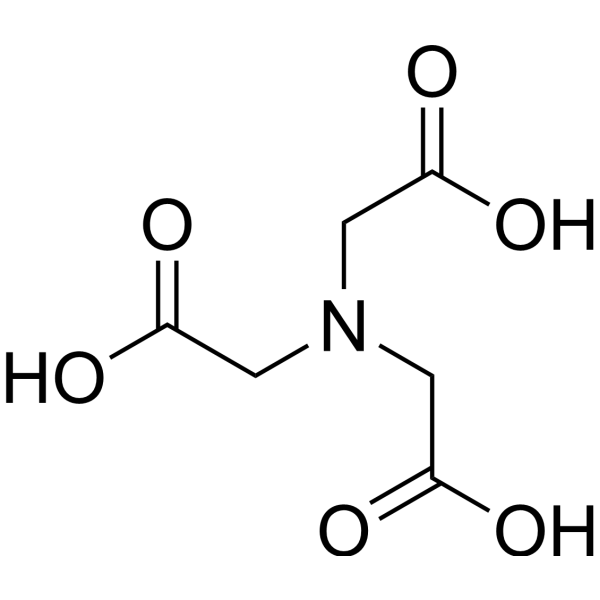
Cat. No.: HY-W030778
CAS No.: 139-13-9
Synonyms: Triglycollamic acid
Research Areas:  

Others

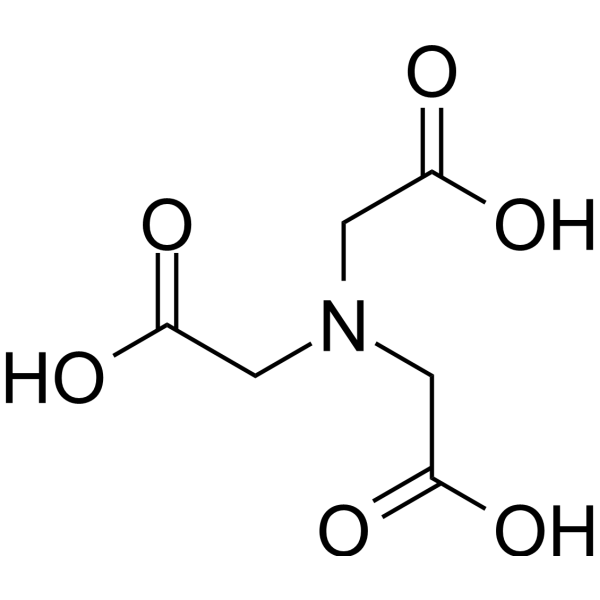
Nitrilotriacetic acid is an orally active chelating agent for metal ions. Nitrilotriacetic acid is an aminotricarboxylic acid that can sequester metal ions as water soluble complexes. Nitrilotriacetic acid reacts with strong oxidizing agents such as hypochlorite, chlorine, ozone, or oxygen in the presence of palladium/carbon catalyst. Nitrilotriacetic acid interacts with solid phases such as cell membranes and bone matrices in the mammalian system. Nitrilotriacetic acid is classified as an epigenetic rodent carcinogen .
loading...
    loading...
Cat. No.: HY-160523
CAS No.: 2695594-15-9
Research Areas:  

Others

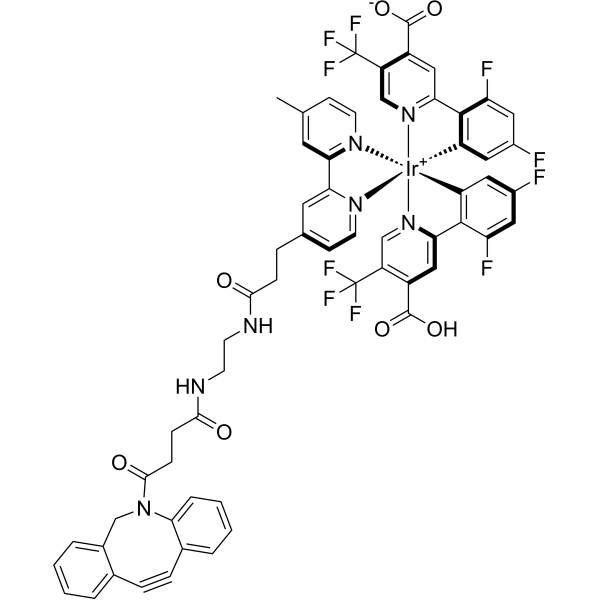
DBCO Ir catalyst is an iridium catalyst labeled with DBCO. DBCO Ir catalyst can be used for in situ labeling and imaging of biomolecules (e.g., proteins, nucleic acids) in living organisms or for constructing targeted drug delivery systems .
loading...
    loading...
Cat. No.: HY-P2888
CAS No.: 80619-01-8
Synonyms: BOD
Research Areas:  

Metabolic Disease

Bilirubin oxidase (BOD) is an electrocatalyst with oxygen removal activity. Bilirubin oxidase can catalyze the oxidation of bilirubin to biliverdin. Bilirubin oxidase participates in the metabolism of porphyrins and chlorophyll, and acts as a catalyst for oxygen reduction. Bilirubin oxidase can serve as a component of a single-enzyme oxygen removal system for reductase-based voltammetric biosensors .
loading...
    loading...
Cat. No.: HY-W073013
CAS No.: 14172-90-8
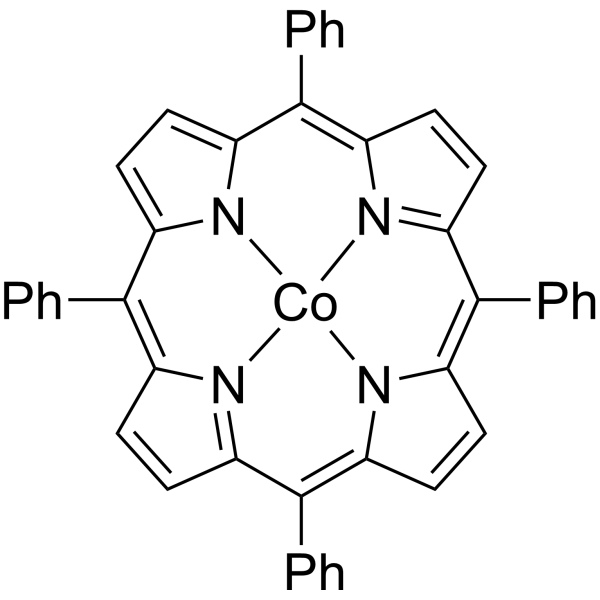
5,10,15,20-Tetraphenyl-21H,23H-porphine cobalt(II), commonly known as CoTPP or cobalt porphyrin, is a coordination compound. 5,10,15,20-Tetraphenyl-21H,23H-porphine cobalt(II) is widely used in various fields such as catalysis, sensing, and organic electronics because of its unique electronic and optical properties. An efficient catalyst for reactions including oxidation, reduction, and CH bond activation, moreover, it has been used as a fluorescent probe for detecting oxygen content in biological systems and as an active material in organic solar cells.
loading...
    loading...
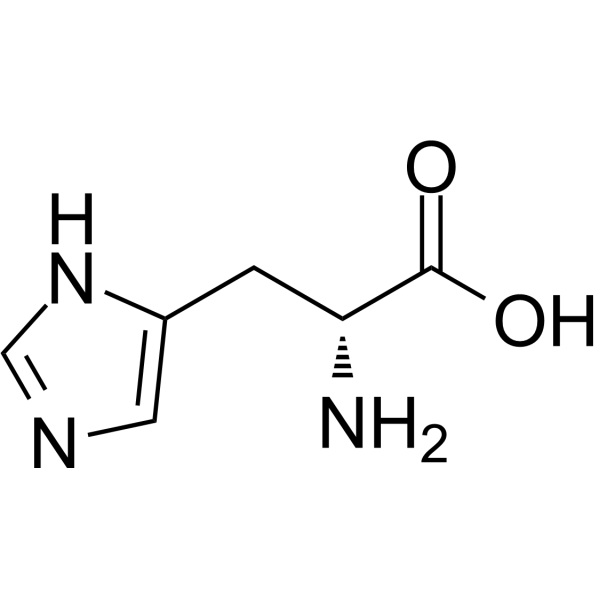
Cat. No.: HY-W012572
CAS No.: 351-50-8
D-Histidine is an anti-biofilm agent that targets bacterial quorum sensing systems (such as RhlI/RhlR pathway) and has antibacterial activity. D-Histidine works by non-covalently binding to bacterial regulatory factors or copper ion complexes, selectively inhibiting bacterial biofilm formation and motility. D-Histidine downregulates quorum sensing-related gene expression, reduces the synthesis of virulence factors (such as alginate and proteases), and interferes with bacterial membrane stability, inhibiting biofilm formation, promoting the disintegration of mature biofilms, and enhancing antibiotic sensitivity. D-Histidine is also an efficient catalyst for the salt-induced peptide formation (SIPF) reaction, which promotes the condensation of amino acids to form dipeptides (such as dialanine and dilysine) by forming a complex with copper ions (Cu 2+) .
loading...
    loading...
Cat. No.: HY-W012572A
CAS No.: 328526-86-9
D-Histidine hydrochloride hydrate is an anti-biofilm agent that targets bacterial quorum sensing systems (such as RhlI/RhlR pathway) and has antibacterial activity. D-Histidine hydrochloride hydrate works by non-covalently binding to bacterial regulatory factors or copper ion complexes, selectively inhibiting bacterial biofilm formation and motility. D-Histidine hydrochloride hydrate downregulates quorum sensing-related gene expression, reduces the synthesis of virulence factors (such as alginate and proteases), and interferes with bacterial membrane stability, inhibiting biofilm formation, promoting the disintegration of mature biofilms, and enhancing antibiotic sensitivity. D-Histidine hydrochloride hydrate is also an efficient catalyst for the salt-induced peptide formation (SIPF) reaction, which promotes the condensation of amino acids to form dipeptides (such as dialanine and dilysine) by forming a complex with copper ions (Cu 2+) .
loading...
    loading...
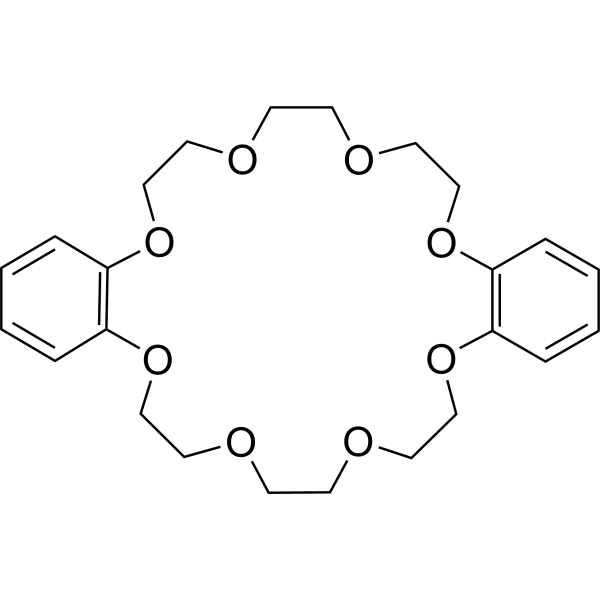
Cat. No.: HY-W073183
CAS No.: 14174-09-5
Dibenzo-24-crown-8-ether is a phase transfer catalyst that can reduce H 2PtCl 6·6H 2O and FeCl 2·4H 2O in a thermal system to synthesize 17 nm monodispersed iron-platinum (FePt) alloy nanoparticles .
loading...
    loading...
Cat. No.: HY-W800769
CAS No.: 2669097-24-7
BP Fluor 532 Azide Plus is a fluroescent agent with a terminal azide group. The fluroescent compound has a max absorption at 532 nm and emission at 554 nm. The BP Fluor 532 Azide Plus was designed with a copper-chelating system within its structure, enabling the formation of strong, active copper complexes that act as both reactant and catalyst in CuAAC reactions.
loading...
    loading...
Cat. No.: HY-W030778R
CAS No.: 139-13-9
Synonyms: Triglycollamic acid (Standard)
Research Areas:  

Others

Nitrilotriacetic acid (Standard) is the analytical standard of Nitrilotriacetic acid. This product is intended for research and analytical applications. Nitrilotriacetic acid is an orally active chelating agent for metal ions. Nitrilotriacetic acid is an aminotricarboxylic acid that can sequester metal ions as water soluble complexes. Nitrilotriacetic acid reacts with strong oxidizing agents such as hypochlorite, chlorine, ozone, or oxygen in the presence of palladium/carbon catalyst. Nitrilotriacetic acid interacts with solid phases such as cell membranes and bone matrices in the mammalian system. Nitrilotriacetic acid is classified as an epigenetic rodent carcinogen .
loading...
    loading...
Cat. No.: HY-W582827
CAS No.: 2361069-97-6
RuPhos Pd G1 methyl t-butyl ether adduct (MTBE) is a highly efficient catalyst with excellent cross-coupling activity. RuPhos Pd G1 methyl t-butyl ether adduct (MTBE) is widely used in organic synthesis and can be used to promote various reactions to build complex molecular structures. RuPhos Pd G1 methyl t-butyl ether adduct (MTBE) has good adaptability to temperature and reaction conditions, which enables it to exhibit excellent catalytic performance in different reaction systems.
loading...
    loading...
Cat. No.: HY-W012572R
CAS No.: 351-50-8
D-Histidine (Standard) is the analytical standard of D-Histidine (HY-W012572). This product is intended for research and analytical applications. D-Histidine is an anti-biofilm agent that targets bacterial quorum sensing systems (such as RhlI/RhlR pathway) and has antibacterial activity. D-Histidine works by non-covalently binding to bacterial regulatory factors or copper ion complexes, selectively inhibiting bacterial biofilm formation and motility. D-Histidine downregulates quorum sensing-related gene expression, reduces the synthesis of virulence factors (such as alginate and proteases), and interferes with bacterial membrane stability, inhibiting biofilm formation, promoting the disintegration of mature biofilms, and enhancing antibiotic sensitivity. D-Histidine is also an efficient catalyst for the salt-induced peptide formation (SIPF) reaction, which promotes the condensation of amino acids to form dipeptides (such as dialanine and dilysine) by forming a complex with copper ions (Cu 2+) .
loading...
    loading...
Cat. No.: HY-W800768
CAS No.: 2669097-42-9
Target:  

Fluorescent Dye

Research Areas:  

Others

BP Fluor 350 Azide Plus is a fluroescent agent with a terminal azide group. The fluroescent compound has a max absorption at 340 nm and emission at 440 nm. BP Fluor 350 Azide Plus is designed with a copper-chelating system within its structure, enabling the formation of strong, active copper complexes that act as both reactant and catalyst in CuAAC reactions.
loading...
    loading...
  • 1

