1. Search Result
Search Result
Results for "

catalytic active site

" in MedChemExpress (MCE) Product Catalog:

31

Inhibitors & Agonists

1

Fluorescent Dyes

1

Biochemical Assay Reagents

4

Peptides

2

Natural
Products

1

Click Chemistry

Targets Recommended:
Cat. No. Product Name Target Research Areas Chemical Structure
  • HY-11107
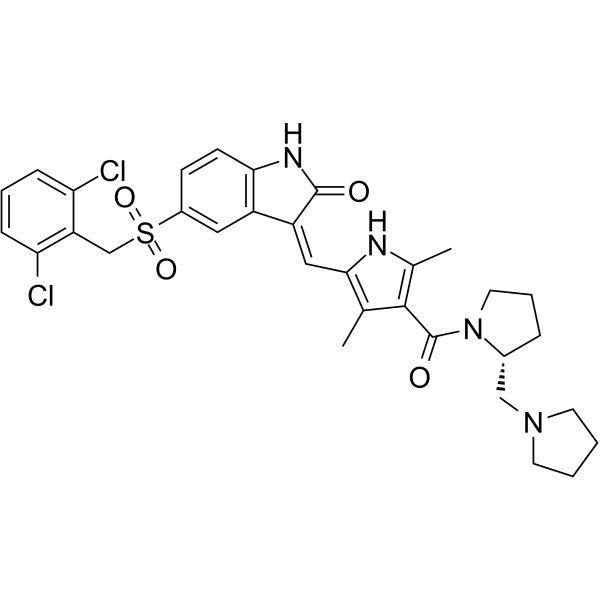
    PHA-665752
    10+ Cited Publications

    c-Met/HGFR Autophagy Apoptosis Cancer
    PHA-665752 is a selective, ATP-competitive, and active-site inhibitor of the catalytic activity of c-Met kinase (Ki=4 nM; IC50=9 nM). PHA-665752 exhibits >50-fold selectivity for c-Met compared with a panel of diverse tyrosine and serine-threonine kinases. PHA-665752 induces apoptosis and cell cycle arrest, and exhibits cytoreductive antitumor activity .
    PHA-665752
  • HY-157521

    Acyltransferase Neurological Disease Metabolic Disease
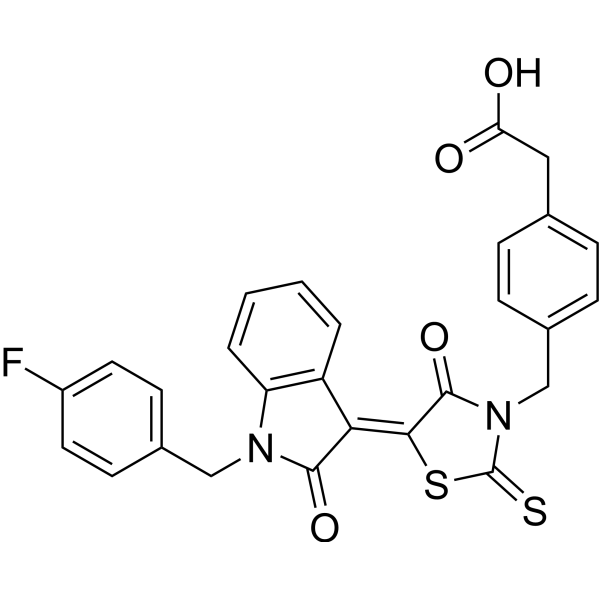
    AANAT-IN-1 is an arylalkylamine N-acetyltransferase (AANAT) inhibitor with a sheep AANAT IC50 of 9.9 μM. AANAT-IN-1 binds to the active site of sheep AANAT, interacting with amino acid residues via hydrogen bonds, hydrophobic interactions, ionic interactions, and water bridges, inhibiting the enzyme's catalytic activity. AANAT-IN-1 can be used for the researches of circadian rhythm-associated neuropsychiatric conditions, seasonal affective disorder, and other diseases associated with abnormally elevated melatonin levels .
    AANAT-IN-1
  • HY-171036

    Endogenous Metabolite Metabolic Disease
    GAPDH-IN-1 (Compound F8) is a GAPDH inhibitor (IC50 of 39.31 μM for GAPDH enzymatic activity). GAPDH-IN-1 forms a covalent adduct with an aspartic acid in the active site to displace NAD +, a cofactor of the enzyme, with concomitant enhancement of the cysteine-reactive probe reaction with the catalytic cysteine .
    GAPDH-IN-1
  • HY-P10422A

    ML-peptide, Multi-Leucine (ML)-peptide triacetate

    Autophagy Cancer
    Multi-Leu peptide (ML-peptide) triacetate is a potent inhibitor of PACE4 (Ki=22 nM). Multi-Leu peptide triacetate can competitively bind to the active site of PACE4 by simulating the substrate sequence of PACE4, thereby inhibiting its catalytic activity. Multi-Leu peptide triacetate can be used to study the specific mechanism of PACE4 in the development of prostate cancer .
    Multi-Leu peptide triacetate
  • HY-N10686

    Carboxylesterase (CES) Cancer
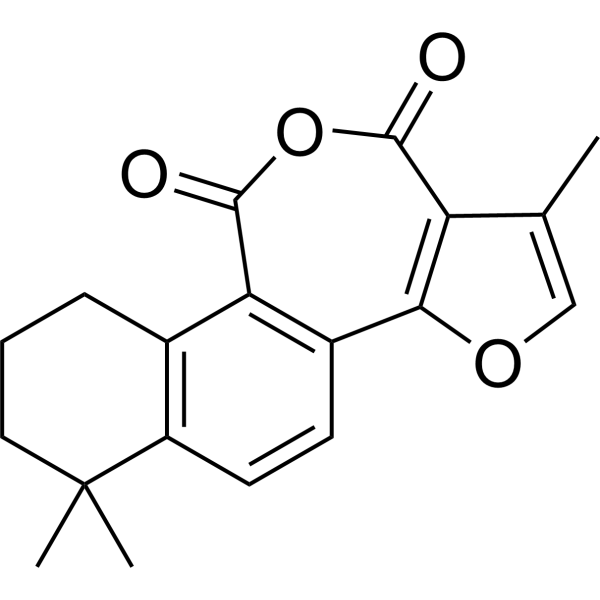
    Tanshinone IIA anhydride, present in root extracts of Salvia miltiorrhiza, acts as an inhibitor of human carboxylesterase (CE). Tanshinone IIA anhydride has a Ki value of 1.9 nM against hCE1 and a Ki value of 1.4 nM against hiCE. Tanshinone IIA anhydride forms a stable covalent complex with serine Ser221 at the active site of hCE1, blocking the catalytic cycle of carboxylesterase, and the activity of the inactivated enzyme cannot recover spontaneously. Tanshinone IIA anhydride is applicable in metabolism-related studies .
    Tanshinone IIA anhydride
  • HY-167920

    S-Sulfoglutathione

    Endogenous Metabolite Cancer
    Glutathione sulfonate (S-Sulfoglutathione) is a multifunctional bioactive compound that inhibits angiogenesis and tumor growth. Glutathione sulfonate is a competitive inhibitor of glutathione S-transferase and is involved in the detoxification process and the binding of a variety of exogenous and endogenous compounds. Glutathione sulfonate acts in the substrate binding site of Escherichia coli glutathione S-transferase, affecting the catalytic mechanism. The structural characteristics of Glutathione sulfonate contribute to its inhibitory effect by hydrogen bonding in the active center of the enzyme .
    Glutathione sulfonate
  • HY-D2188

    Deubiquitinase Cancer
    IMP-2373 is a low-toxicity activity-based probe targeting covalent pan-deubiquitinase (DUB), which modulates and monitors DUB activity via covalent binding to the catalytic cysteine and active site of DUB. IMP-2373 enables real-time tracking of dynamic intracellular DUB activity in physiologically relevant living cell systems, and quantitative analysis of activity changes induced by pharmacological inhibition or MYC dysregulation. IMP-2373 can be used for research on related diseases such as B-cell lymphoma .
    IMP-2373
  • HY-N15159

    Cyclic GMP-AMP Synthase STING Parasite Infection Inflammation/Immunology
    Cladophorol A is a cyclic GMP-AMP synthase (cGAS) inhibitor. Cladophorol A binds to the conserved adenosine nucleobase binding site within the cGAS active site to inhibit its catalytic activity. Cladophorol A effectively inhibits the overactivation of the cGAS-STING pathway with an IC50 of 370 nM. Cladophorol A inhibits asexual blood-stage Plasmodium falciparum with an EC50 of 0.7 μg/mL. Cladophorol A can be used for the researches of inflammatory disease and malaria .
    Cladophorol A
  • HY-10572A

    (R)-DMP 266; (R)-EFV; (R)-L-743726

    Reverse Transcriptase Infection
    (R)-Efavirenz ((R)-DMP 266) is a non-nucleoside reverse transcriptase inhibitor that acts by non-competitive inhibition of the viral enzyme. (R)-Efavirenz can be metabolized by CYP2B6 to 8-hydroxyefavirenz in a highly stereoselective manner. (R)-Efavirenz is promising to be a useful probe for the CYP2B6 active site and catalytic mechanisms .
    (R)-Efavirenz
  • HY-P10422

    ML-peptide, Multi-Leucine (ML)-peptide

    Autophagy Cancer
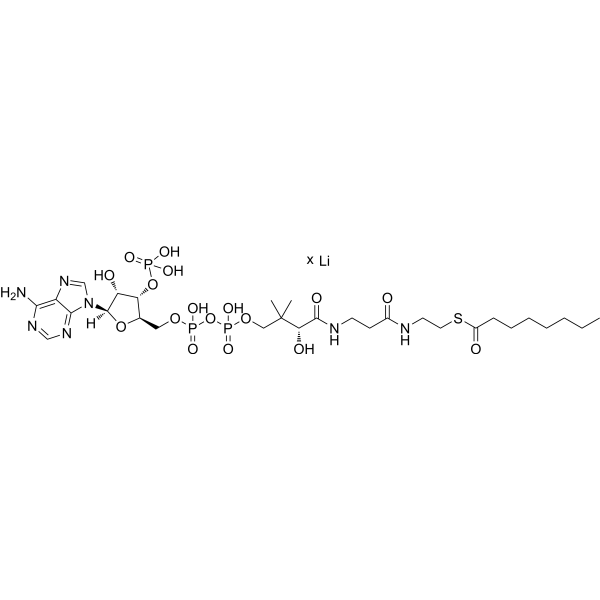
    Multi-Leu peptide (ML-peptide) is a potent inhibitor of PACE4 (Ki=22 nM). Multi-Leu peptide can competitively bind to the active site of PACE4 by simulating the substrate sequence of PACE4, thereby inhibiting its catalytic activity. Multi-Leu peptide can be used to study the specific mechanism of PACE4 in the development of prostate cancer .
    Multi-Leu peptide
  • HY-162094

    Acyltransferase Bacterial Infection
    CMX410 is an orally active and selective Mycobacterium tuberculosis Pks13 acyltransferase domain inhibitor and anti-bacterial agent. CMX410 reacts with the catalytic serine of the Pks13-AT domain to form a stable β-lactam ring, disables the enzyme’s active site, reduces trehalose monomycolate and trehalose dimycolate levels, triggers cell lysis, and reduces intracellular bacterial burden. CMX410 can be used for the research of tuberculosis .
    CMX410
  • HY-124308

    PKC Cancer
    PS315, a derivative of PS48 (HY-15967), is an allosteric PKC inhibitor by binding to the PIF-pocket of aPKC and inducing a displacement of the active site residue Lys111. PS315 inhibits the full-length and catalytic domain constructs of PKCζ (IC50=10 μM) and PKCη (IC50=30 μM). PS315 has anti-cancer activity .
    PS315
  • HY-175031

    HIV Protease Infection
    GRL-07524 (Compound 4e) is a potent inhibitor of HIV-1 protease (Ki = 0.22 nM). GRL-07524 contains oxaspirocyclic carbamates as the P2 ligands. GRL-07524 exhibits good antiviral activity with an EC50 = 210 nM. GRL-07524 binds to the HIV-1 PR active site in one of the four symmetry independent molecules along with key catalytic residues .
    GRL-07524
  • HY-157527

    Cholinesterase (ChE) Beta-secretase Neurological Disease
    hAChE-IN-7 (compound 5s) is a mixed inhibitor affecting both the catalytic active site (CAS) and peripheral anionic site (PAS) of hAChE. hAChE-IN-7 displays the balanced inhibitory effect on hAChE (IC50=69.8 nM) and hBuChE (IC50=68.0 nM), and exhibits inhibitory activity against β-secretase-1 (BACE-1) (IC50=3.6 μM). hAChE-IN-7 has the potential for Alzheimer's disease (AD) research .
    hAChE-IN-7
  • HY-149484

    Cholinesterase (ChE) Neurological Disease
    AChE/BChE-IN-15 (Compound 6d) is an AChE/BChE inhibitor, with IC50s of 20 nM and 220 nM respectively. AChE/BChE-IN-15 binds to both catalytic anionic site (CAS) and peripheral anionic site (PAS) in the active sites of AChE and BChE. AChE/BChE-IN-15 can be used for research of Alzheimer’s disease .
    AChE/BChE-IN-15
  • HY-150728

    Cholinesterase (ChE) Neurological Disease
    AChE-IN-22 (compound 10q) is a selective acetylcholinesterase (AChE) inhibitor against AChE and BuChE with the IC50 values of 0.88 μM and 10 μM, respectively. AChE-IN-22 can bind to both the CAS (catalytic active site) and PAS (peripheral anionic site) of AChE and has the potential for the research of Alzheimer's disease .
    AChE-IN-22
  • HY-P10808

    Angiotensin-converting Enzyme (ACE) Cardiovascular Disease
    RSRGVFF (FOXP3 inhibitor P60) is a mixed-type angiotensin-converting enzyme (ACE) inhibitor with blood-brain barrier permeability, boasting an IC50 value of 5.01 μM . RSRGVFF is capable of binding to both active and non-active sites of ACE and its substrate HHL complex, thus reducing the catalytic activity of ACE. RSRGVFF can be further utilized for research on lowering hypertension .
    RSRGVFF
  • HY-W728451

    FAAH Cardiovascular Disease Neurological Disease
    URB694 is a carbamate FAAH inhibitor that irreversibly carbamoylate the nucleophile catalytic serine in FAAH active site. URB694 exhibits antidepressant-like activity and cardioprotective effects. URB694 can be used to prepare 11C-Carbonyl-URB694 for in vivo positron emission tomography (PET) imaging studies of the brain FAAH .
    URB694
  • HY-158335

    Parasite Infection
    DXR-IN-1 (Compound 13E) is an inhibitor of 1-deoxy-D-ketose 5-phosphate reductoisomerase (DXR). DXR-IN-1 is highly selective for P. falciparum DXR (IC50=0.030 μM). DXR-IN-1 inhibits the growth of P. falciparum by binding to the active site of DXR and blocking its catalytic activity .
    DXR-IN-1
  • HY-132913

    Biochemical Assay Reagents Cancer
    Cyclopropenone probe 1 can specifically and efficiently modify a triple-negative breast cancer driver, glutathione S-transferase pi-1 (GSTP1), by covalently binding at the catalytic active site. Cyclopropenone probe 1 is a click chemistry reagent, it contains an Alkyne group and can undergo copper-catalyzed azide-alkyne cycloaddition (CuAAc) with molecules containing Azide groups.
    Cyclopropenone probe 1
  • HY-115373

    MMP Inflammation/Immunology
    RO314724 is a selective MMP-1 inhibitor. RO314724 chelates to the catalytic zinc ion within the active site of MMP-1 and forms a stable complex with MMP-1. RO314724 can be used for the research of osteoarthritis .
    RO314724
  • HY-181698

    MMP Inflammation/Immunology
    MMP13-IN-6 (Compound 10a) is a MMP-13 inhibitor with a Ki value of 40 nM against hMMP-13. MMP13-IN-6 can be used in the research of osteoarthritis and rheumatoid arthritis .
    MMP13-IN-6
  • HY-181851

    Cholinesterase (ChE) Neurological Disease
    AChE-IN-109 is a potent mixed-type cholinesterase inhibitor with significantly stronger inhibitory activity against AChE than BChE. AChE-IN-109 has IC50 values of 0.55 μM and 12.45 μM against AChE and BChE, respectively. AChE-IN-109 inhibits cholinesterases through a mixed-type mechanism, binds to both the catalytic active site (CAS) and peripheral anionic site (PAS) of AChE. AChE-IN-109 can be used for the study of Alzheimer’s disease (AD) .
    AChE-IN-109
  • HY-165360

    Thrombin Cardiovascular Disease
    JJ1 is a selective α-thrombin inhibitor with a Ki of 0.019 μM. JJ1 directly binds to the active site of α-thrombin to block its catalytic activity. JJ1 exhibits antithrombotic effects and prolongs activated partial thromboplastin time, prothrombin time, and tail bleeding time in mice. JJ1 can be used for the research of thrombotic diseases .
    JJ1
  • HY-182940

    Toll-like Receptor (TLR) Neurological Disease
    SARM1-IN-10 is an orally active SARM1 inhibitor with a pIC50 of 7.1 and a pKd of 8.3. As a base-exchange inhibitor, SARM1-IN-10 forms a NAD + adduct at the active site of the TIR domain of SARM1, blocks enzymatic function, and induces a unique rotameric state of W662 at the catalytic site of SARM1. SARM1-IN-10 acts as a paradoxical neurodegeneration inducer at low doses and an inhibitor at high doses, and it can exacerbate or protect against SARM1-mediated neurodegeneration depending on concentration. SARM1-IN-10 can be used in studies of peripheral neurodegeneration .
    SARM1-IN-10
  • HY-182333

    Cholinesterase (ChE) Neurological Disease
    AChE-IN-112 is an acetylcholinesterase (AChE) inhibitor with an IC50 of 0.41 μM. AChE-IN-112 scavenges various reactive oxygen and reactive nitrogen species, including DPPH, ABTS, NO, hydroxyl and hydrogen peroxide free radicals. AChE-IN-112 can be used for the research of Alzheimer's disease .
    AChE-IN-112
  • HY-181892

    Bacterial Infection
    LpxC-IN-17 (Compound a5) is a non-covalent LpxC inhibitor and Antibacterial agent. LpxC-IN-17 chelates catalytic zinc ions and forms extensive non-covalent interactions within the LpxC active site, thereby functionally inhibiting the enzyme. LpxC-IN-17 exhibits antibacterial activity against Gram-negative pathogens including Escherichia coli, Klebsiella pneumoniae and Pseudomonas aeruginosa. LpxC-IN-17 is applicable to research related to Gram-negative bacterial infections .
    LpxC-IN-17
  • HY-181175

    Glycosidase Metabolic Disease
    OMJ-4 is a mutant alpha-mannosidase modulator. OMJ-4 can restore mutant alpha-mannosidase's catalytic function, and induces changes in compactness and active-site flexibility to improve substrate accommodation. OMJ-4 acts as an inducer of substrate reactivity, increasing the reactivity of mannose disaccharide bound to mutant alpha-mannosidase. OMJ-4 reduces the activation energy required for the enzymatic reaction of mutant alpha-mannosidase. OMJ-4 can be used for the research of alpha-mannosidosis .
    OMJ-4
  • HY-183303

    Cholinesterase (ChE) Reactive Oxygen Species (ROS) Neurological Disease
    AChE-IN-116 is a selective acetylcholinesterase (AChE) inhibitor with an electric eel AChE IC50 of 1.60 μM and Ki of 1.72 μM. AChE-IN-116 exhibits weak ability to scavenge DPPH radical. AChE-IN-116 can be used for the research of Alzheimer's disease .
    AChE-IN-116
  • HY-182314

    JAK STAT Apoptosis Cancer
    JAK3-IN-20 is a selective and orally active JAK3 inhibitor with an IC50 of 0.7473 nM. JAK3-IN-20 forms a covalent bond with JAK3 Cys909, outcompetes ATP for catalytic site binding, and blocks JAK-STAT pathway activation. JAK3-IN-20 inhibits migration, proliferation, and tumor growth of Bortezomib (HY-10227)-resistant cancer cells. JAK3-IN-20 induces dose-dependent apoptosis. JAK3-IN-20 can be used for the research of Bortezomib-resistant multiple myeloma .
    JAK3-IN-20
  • HY-117641

    Ser/Thr Protease Cardiovascular Disease
    CP 81282 is a tripeptide aspartic protease inhibitor, with an IC50 of 1 nM against human renin and an IC50 of 11 nM against endopeptidase. CP 81282 is applicable to the research of hypertension .
    CP 81282

Inquiry Online

Your information is safe with us. * Required Fields.

Salutation


Country or Region *

Applicant Name *


Organization Name *

Department *


Email Address *


Product Name *

Cat. No.


Requested quantity *

Phone Number *


Remarks

Inquiry Online

Inquiry Information

Product Name:
Cat. No.:
Quantity:
MCE Japan Authorized Agent:

