
22 Results for "

central nervous system injury

" in MedChemExpress (MCE) Product Catalog:
Products (22)

22 Results for "central nervous system injury" in MCE Product Catalog:

8
8 Publications Verification
Cat. No.: HY-17417
CAS No.: 357-08-4
Target:  

Opioid Receptor

Research Areas:  

Neurological Disease

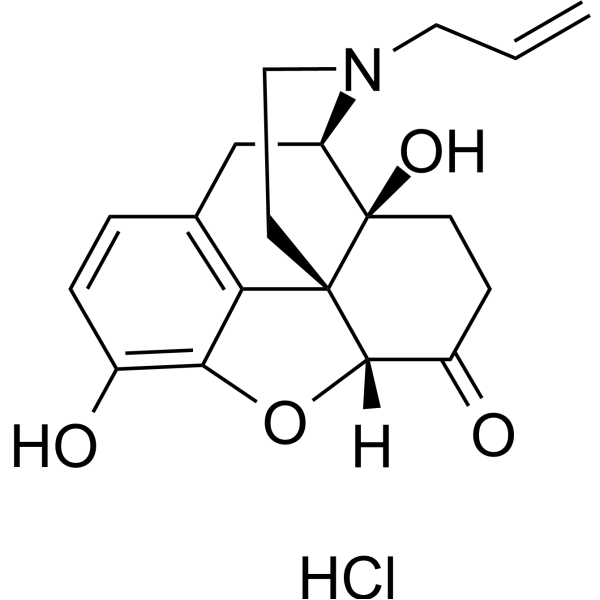
Naloxone hydrochloride is an orally active opioid receptor antagonist. Naloxone hydrochloride attenuates spinal cord stimulation‑associated anti‑hyperalgesic effects, antagonizes physiologic effects of endogenous opioid peptides linked to central nervous system injury sequelae, functions as a pressor agent to induce modest elevations in mean arterial blood pressure, exerts neuroprotective effects to improve post‑traumatic neurologic motor function, blocks opioid receptor‑mediated amnesic pathways, enhances memory consolidation, reverses Adrenocorticotropic hormone (ACTH) (HY-106373)- and epinephrine‑induced amnesia, and potentiates the memory‑facilitatory effects of ACTH and epinephrine .
loading...
    loading...
8
8 Publications Verification
Cat. No.: HY-17417A
CAS No.: 465-65-6
Target:  

Opioid Receptor

Research Areas:  

Neurological Disease

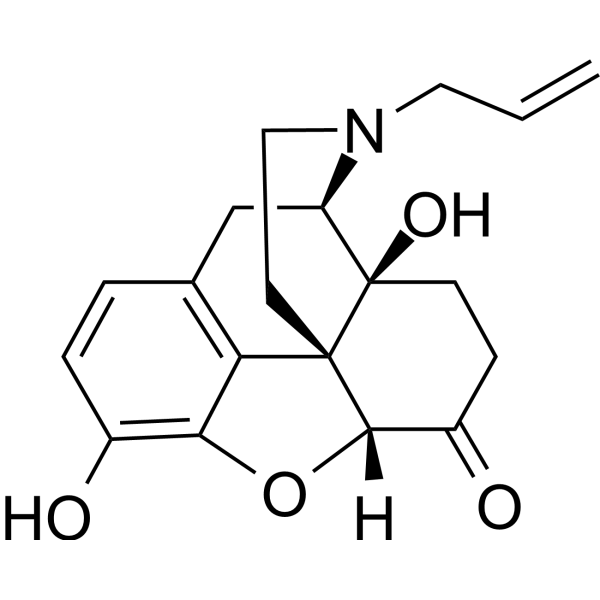
Naloxone hydrochloride is an orally active opioid receptor antagonist. Naloxone hydrochloride attenuates spinal cord stimulation‑associated anti‑hyperalgesic effects, antagonizes physiologic effects of endogenous opioid peptides linked to central nervous system injury sequelae, functions as a pressor agent to induce modest elevations in mean arterial blood pressure, exerts neuroprotective effects to improve post‑traumatic neurologic motor function, blocks opioid receptor‑mediated amnesic pathways, enhances memory consolidation, reverses Adrenocorticotropic hormone (ACTH) (HY-106373)‑ and epinephrine‑induced amnesia, and potentiates the memory‑facilitatory effects of ACTH and epinephrine .
loading...
    loading...
2
2 Cited Publications
Cat. No.: HY-19667A
CAS No.: 2922280-85-9
Synonyms: DPC 333 formate
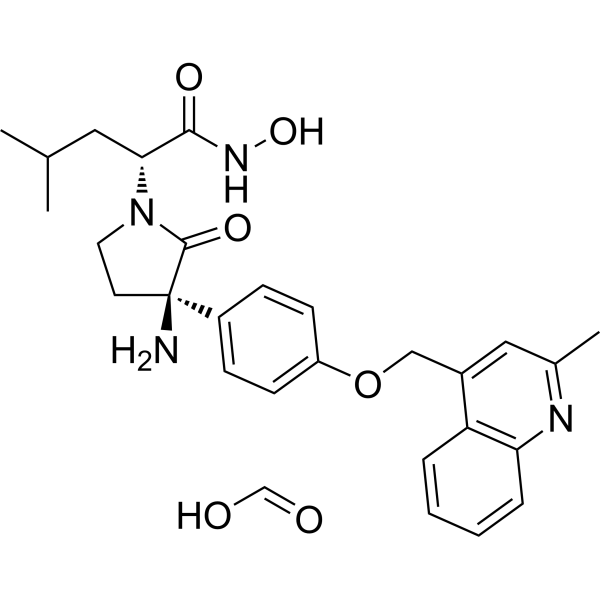
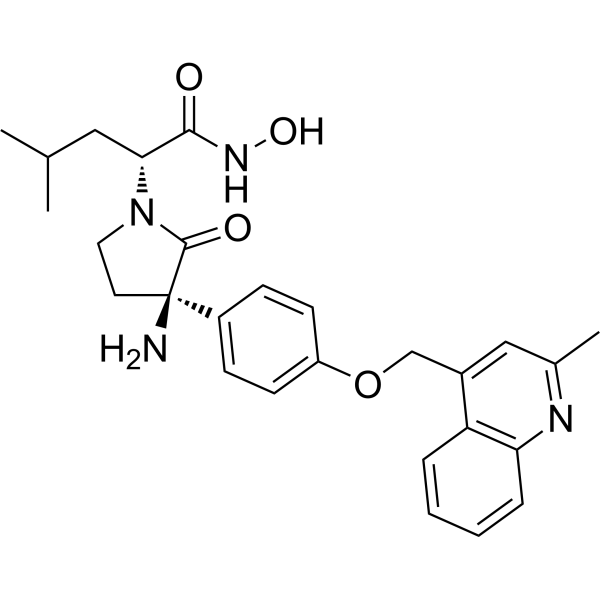
BMS-561392 formate (DPC 333 formate) is a selective ADAM17(TACE) inhibitor. BMS-561392 formate inhibits TNF-α secretion by regulating signaling pathways such as p44 MAPK and NF-κB. BMS-561392 formate also affects the survival of central nervous system-related cells including oligodendrocytes and microglia. BMS-561392 formate promotes microglial apoptosis, enlarges the injury area and exacerbates astrogliosis in a mouse spinal cord injury model. BMS-561392 formate can be used in research related to spinal cord injury and inflammatory diseases .
loading...
    loading...
1
1 Cited Publications
Cat. No.: HY-17609
CAS No.: 1024828-77-0
Synonyms: CR-845; FE-202845
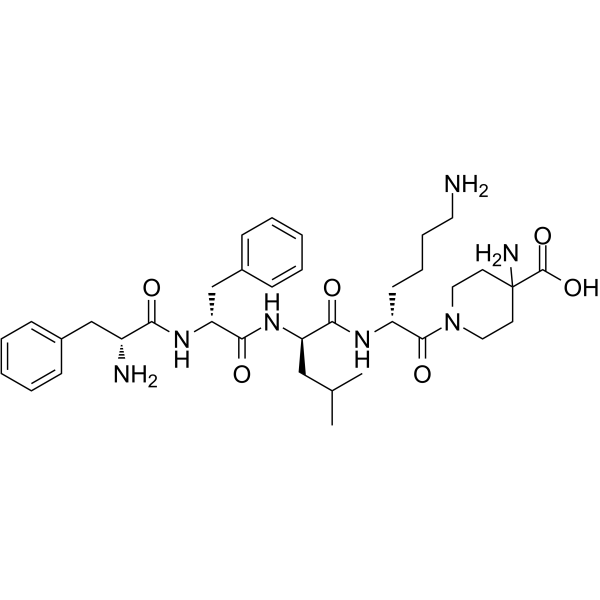
Difelikefalin (CR-845; FE-202845) is an orally active peripherally acting kappa opioid receptor agonist. Difelikefalin reduces acute kidney injury, decreases oliguria, maintains urine flow, inhibits cytokine expression, and improves survival in endotoxemia after ischemia/reperfusion. Difelikefalin suppresses pruritus signals and exhibits neuromodulatory antipruritic activity. Difelikefalin can be used in research related to acute kidney injury, chronic kidney disease-associated pruritus, and atopic dermatitis .
loading...
    loading...
Cat. No.: HY-N10546
CAS No.: 37758-47-7
Ganglioside GM1 is a type of glycosphingolipid, mainly found on the cell membranes of the central nervous system of vertebrates. Ganglioside GM1 exerts neuroprotective effects by reducing excessive activation of NMDAR, activating TrkA and ERK1/2, and inhibiting oxidative stress and cell apoptosis and autophagy. Ganglioside GM1 can be used in the research of diseases such as traumatic brain injury, Parkinson's disease, Alzheimer's disease, and Huntington's disease .
loading...
    loading...
Cat. No.: HY-19667
CAS No.: 611227-74-8
Synonyms: DPC 333
BMS-561392 (BMS-561392) is a selective ADAM17(TACE) inhibitor. BMS-561392 inhibits TNF-α secretion by regulating signaling pathways such as p44 MAPK and NF-κB. BMS-561392 also affects the survival of central nervous system-related cells including oligodendrocytes and microglia. BMS-561392 promotes microglial apoptosis, enlarges the injury area and exacerbates astrogliosis in a mouse spinal cord injury model. BMS-561392 can be used in research related to spinal cord injury and inflammatory diseases .
loading...
    loading...
Cat. No.: HY-P5142
CAS No.: 193981-10-1
Synonyms: ω-ACTX-Hv1; ω-Atracotoxin-HV1
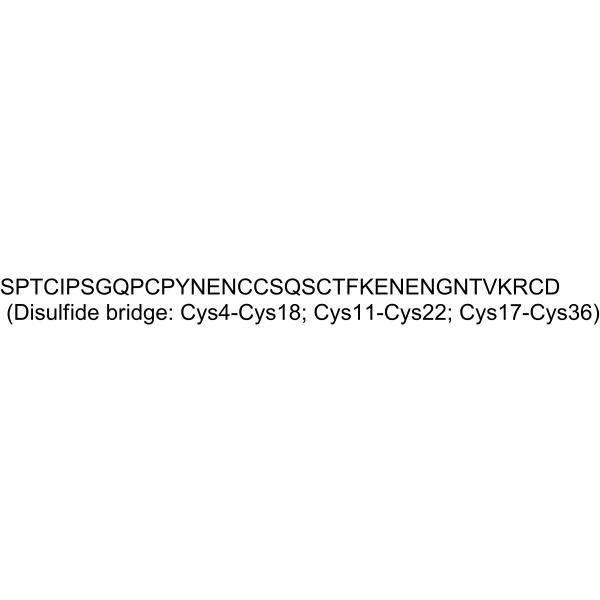
ω-Hexatoxin-Hv1a (ω-ACTX-Hv1; ω-Atracotoxin-HV1) is an orally active insecticidal neurotoxin containing an inhibitor cystine knot motif and a selective calcium channel inhibitor. ω-Hexatoxin-Hv1a blocks L-type voltage-dependent Ca 2+ channels and reduces intracellular calcium ion concentration, thereby decreasing apoptosis, necroptosis and oxidative stress, and promoting cell recovery and energy level elevation. ω-Hexatoxin-Hv1a causes larval paralysis and death by impairing neurotransmission in the central nervous system of insects. It shows high injectable toxicity against insects of multiple orders, but exhibits weak oral toxicity. ω-Hexatoxin-Hv1a is widely applicable to studies related to ischemia-reperfusion injury, atopic dermatitis, and ischemic injury of cardiomyocytes and neurons .
loading...
    loading...
Cat. No.: HY-17417R
CAS No.: 357-08-4
Research Areas:  

Neurological Disease

Naloxone (hydrochloride) (Standard) is the analytical standard of Naloxone (hydrochloride) (HY-17417). This product is intended for research and analytical applications. Naloxone hydrochloride is an orally active opioid receptor antagonist. Naloxone hydrochloride attenuates spinal cord stimulation‑associated anti‑hyperalgesic effects, antagonizes physiologic effects of endogenous opioid peptides linked to central nervous system injury sequelae, functions as a pressor agent to induce modest elevations in mean arterial blood pressure, exerts neuroprotective effects to improve post‑traumatic neurologic motor function, blocks opioid receptor‑mediated amnesic pathways, enhances memory consolidation, reverses Adrenocorticotropic hormone (ACTH) (HY-106373)‑ and epinephrine‑induced amnesia, and potentiates the memory‑facilitatory effects of ACTH and epinephrine .
loading...
    loading...
Cat. No.: HY-N10546A
CAS No.: 1007119-81-4
Research Areas:  

Neurological Disease

Ganglioside GM1 (bovine) ammonium is a type of glycosphingolipid, mainly found on the cell membranes of the central nervous system of vertebrates. Ganglioside GM1 (bovine) ammonium exerts neuroprotective effects by reducing excessive activation of NMDAR, activating TrkA and ERK1/2, and inhibiting oxidative stress and cell apoptosis and autophagy. Ganglioside GM1 (bovine) ammonium can be used in the research of diseases such as traumatic brain injury, Parkinson's disease, Alzheimer's disease, and Huntington's disease .
loading...
    loading...
Cat. No.: HY-N4267
CAS No.: 13060-14-5
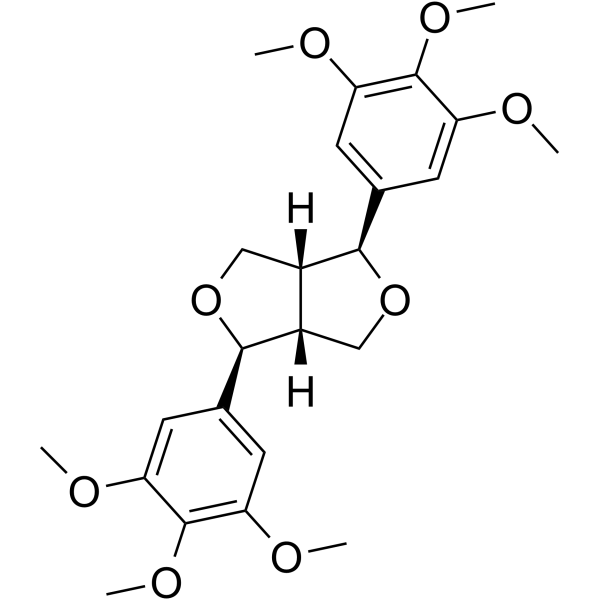
Yangambin is a PAF receptor antagonist and UGT1A1/UGT1A3 inhibitor, with an IC50 of 29.7 μM and a Ki of 17.1 μM against human UGT1A1, and an IC50 of 56.5 μM and a Ki of 66.8 μM against human UGT1A3. Yangambin blocks PAF-mediated responses, inhibits LTB4-mediated neutrophil infiltration, and suppresses inflammatory events and anaphylactic contraction. Yangambin acts as a central nervous system inhibitor to reduce spontaneous activity, and also exhibits analgesic, anticonvulsant, antileishmanial, vasodilatory and hypotensive effects. Yangambin blocks voltage-gated Ca 2+ channels, reduces the production of NO, TNF-α, IL-6 and PGE2 in cells, increases the production of IL-10, and exerts a protective effect against cardiovascular injury. Yangambin can be used in research related to allergies, cutaneous leishmaniasis, central nervous system diseases and cardiovascular diseases .
loading...
    loading...
Cat. No.: HY-159007
CAS No.: 58213-75-5
Synonyms: R,S-1,3-Butanediol acetoacetate diester
BD-AcAc2 (R,S-1,3-Butanediol acetoacetate diester) is an orally active, CNS-penetrant antiepileptic agent. BD-AcAc2 inhibits NF-κB, NLRP3 inflammasome, caspase-1/3, pyroptosis, apoptosis, and enhances autophagy. BD-AcAc2 exhibits antioxidant activity by modulating ROS, MDA, SOD, and GSH levels, and alleviates oxidative stress. BD-AcAc2 mitigates chronic colitis, counteracts Dextran Sodium Sulfate (DSS)-induced pathology, protects against central nervous system oxygen toxicity and acute lung injury, and exhibits anti-seizure efficacy. BD-AcAc2 can be used for the research of colitis, sarcopenia, acute lung injury, seizure, and obesity .
loading...
    loading...
Cat. No.: HY-17609S1
Synonyms: CR-845-d5 hydrochloride; FE-202845-d5 hydrochloride
Difelikefalin-d5 hydrochloride (CR-845-d5 hydrochloride; FE-202845-d5 hydrochloride) is the deuterated-labeled Difelikefalin (HY-17609). Difelikefalin (CR-845; FE-202845) is an orally active peripherally acting kappa opioid receptor agonist. Difelikefalin reduces acute kidney injury, decreases oliguria, maintains urine flow, inhibits cytokine expression, and improves survival in endotoxemia after ischemia/reperfusion. Difelikefalin suppresses pruritus signals and exhibits neuromodulatory antipruritic activity. Difelikefalin can be used in research related to acute kidney injury, chronic kidney disease-associated pruritus, and atopic dermatitis .
loading...
    loading...
Cat. No.: HY-17417AS
CAS No.: 1261079-38-2
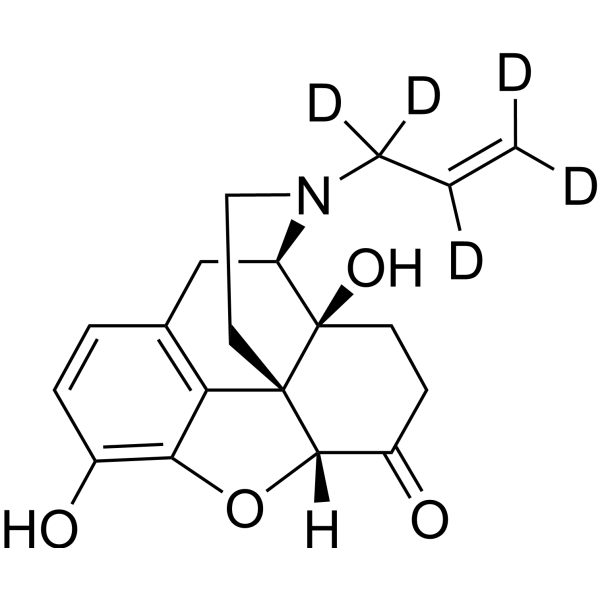
Naloxone-d5 is the deuterated-labeled Naloxone (HY-17417A). Naloxone is an orally active opioid receptor antagonist. Naloxone attenuates spinal cord stimulation‑associated anti‑hyperalgesic effects, antagonizes physiologic effects of endogenous opioid peptides linked to central nervous system injury sequelae, functions as a pressor agent to induce modest elevations in mean arterial blood pressure, exerts neuroprotective effects to improve post‑traumatic neurologic motor function, blocks opioid receptor‑mediated amnesic pathways, enhances memory consolidation, reverses Adrenocorticotropic hormone (ACTH) (HY-106373)‑ and epinephrine‑induced amnesia, and potentiates the memory‑facilitatory effects of ACTH and epinephrine .
loading...
    loading...
Cat. No.: HY-174339
CAS No.: 2522599-69-3
Neuroprotective agent 12 is an orally active and BBB-penetrable neuroprotective agent. Neuroprotective agent 12 has potent neuroprotective effects with robust anti-oxidation and anti-inflammation. Neuroprotective agent 12 significantly inhibits glutamate- and acrolein-induced cell death, reduces PDE4B expression but increases the HO-1, p-CREB and BDNF levels. Neuroprotective agent 12 exhibits potent neuroprotection in traumatic brain injury (TBI) mice model, promising for TBI and other central nervous system diseases .
loading...
    loading...
Cat. No.: HY-17609S
Synonyms: CR-845-d5; FE-202845-d5
Difelikefalin-d5 (CR-845-d5; FE-202845-d5) is the deuterated-labeled Difelikefalin (HY-17609). Difelikefalin (CR-845; FE-202845) is an orally active peripherally acting kappa opioid receptor agonist. Difelikefalin reduces acute kidney injury, decreases oliguria, maintains urine flow, inhibits cytokine expression, and improves survival in endotoxemia after ischemia/reperfusion. Difelikefalin suppresses pruritus signals and exhibits neuromodulatory antipruritic activity. Difelikefalin can be used in research related to acute kidney injury, chronic kidney disease-associated pruritus, and atopic dermatitis .
loading...
    loading...
Cat. No.: HY-17417AR
CAS No.: 465-65-6
Naloxone Standard is the analytical standard of Naloxone (HY-17417A). This product is intended for research and analytical applications. Naloxone is an opioid receptor antagonist. Naloxone attenuates spinal cord stimulation‑associated anti‑hyperalgesic effects, antagonizes physiologic effects of endogenous opioid peptides linked to central nervous system injury sequelae, functions as a pressor agent to induce modest elevations in mean arterial blood pressure, exerts neuroprotective effects to improve post‑traumatic neurologic motor function, blocks opioid receptor‑mediated amnesic pathways, enhances memory consolidation, reverses Adrenocorticotropic hormone (ACTH) (HY-106373)‑ and epinephrine‑induced amnesia, and potentiates the memory‑facilitatory effects of ACTH and epinephrine .
loading...
    loading...
Cat. No.: HY-17609C
CAS No.: 2803411-76-7
Synonyms: CR-845 acetate; FE-202845 acetate
Difelikefalin acetate (CR-845 acetate; FE-202845 acetate) is an orally active peripherally acting kappa opioid receptor agonist. Difelikefalin acetate reduces acute kidney injury, decreases oliguria, maintains urine flow, inhibits cytokine expression, and improves survival in endotoxemia after ischemia/reperfusion. Difelikefalin acetate suppresses pruritus signals and exhibits neuromodulatory antipruritic activity. Difelikefalin acetate can be used in research related to acute kidney injury, chronic kidney disease-associated pruritus, and atopic dermatitis .
loading...
    loading...
Cat. No.: HY-17417B
CAS No.: 51481-60-8
Target:  

Opioid Receptor

Research Areas:  

Neurological Disease

Naloxone hydrochloride is an orally active opioid receptor antagonist. Naloxone hydrochloride attenuates spinal cord stimulation‑associated anti‑hyperalgesic effects, antagonizes physiologic effects of endogenous opioid peptides linked to central nervous system injury sequelae, functions as a pressor agent to induce modest elevations in mean arterial blood pressure, exerts neuroprotective effects to improve post‑traumatic neurologic motor function, blocks opioid receptor‑mediated amnesic pathways, enhances memory consolidation, reverses Adrenocorticotropic hormone (ACTH) (HY-106373)‑ and epinephrine‑induced amnesia, and potentiates the memory‑facilitatory effects of ACTH and epinephrine .
loading...
    loading...
Cat. No.: HY-L212
128 compounds

Neuropeptides are small proteins produced and released by neurons through the regulation of secretory pathways, expressed in neurons and have transmitter or co-transmitter functions, and are used as nerve substrates. Neuropeptides are by far the largest and most diverse signaling molecules in the brain and have been implicated in the development of diseases and drugs. Neuropeptides are involved in inflammatory and immune diseases and have an impact on epithelial, vascular, and connective tissue cells proliferation and tissue repair. Studies have shown that neuropeptides are particularly important when the nervous system is challenged, such as stress, injury, or substance abuse. Substance P is a neuropeptide that acts as a neurotransmitter and neuromodulator in the central nervous system and is currently in clinical research and has been shown to be involved in inflammatory processes and pain.

MCE can provide 128 neuropeptides that can be used for scientific research.

Cat. No.: HY-P992060
Target:  

CD20 NF-κB

Research Areas:  

Inflammation/Immunology Cancer

Anti-Mouse CD20 Antibody (18B12) is a B cell depleting agent that targets mouse CD20. Anti-Mouse CD20 Antibody (18B12) not only inhibits the growth of mesothelioma, lung cancer and thymoma, but also significantly enhances the efficacy of adenoviral tumor antigen vaccines and induces tumor regression by increasing the number of tumor-specific CD8 + T cells. Anti-Mouse CD20 Antibody (18B12) reduces B cell infiltration into the central nervous system of mice with experimental autoimmune encephalomyelitis, and delays motor dysfunction and neuronal death after spinal cord injury by alleviating inflammatory responses and tissue damage. Anti-Mouse CD20 Antibody (18B12) is widely applicable to research in fields related to mesothelioma, lung cancer, thymoma, experimental autoimmune encephalomyelitis and spinal cord injury .
loading...
    loading...

