1. Search Result
Search Result
Results for "

cholestatic liver injury

" in MedChemExpress (MCE) Product Catalog:

11

Inhibitors & Agonists

2

Natural
Products

2

Isotope-Labeled Compounds

Targets Recommended:
Cat. No. Product Name Target Research Areas Chemical Structure
  • HY-109120
    Odevixibat
    4 Publications Verification

    A4250

    Apical Sodium-Dependent Bile Acid Transporter Metabolic Disease
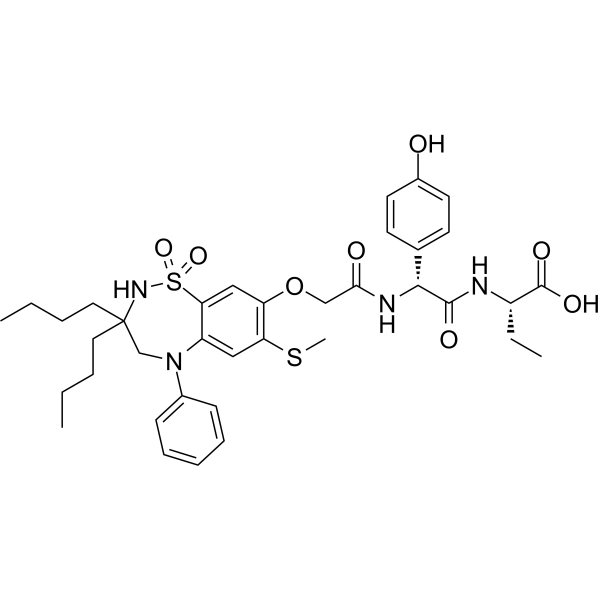
    Odevixibat (A4250) is a selective and orally active ileal apical sodium-dependent bile acid transporter (ASBT) inhibitor. Odevixibat decreases cholestatic liver and bile duct injury in mice model. Odevixibat has the potential for the treatment of primary biliary cirrhosis .
    Odevixibat
  • HY-N7121
    Erythromycin estolate
    1 Publications Verification

    Antibiotic Bacterial Aminotransferases (Transaminases) Flavivirus Dengue Virus Infection
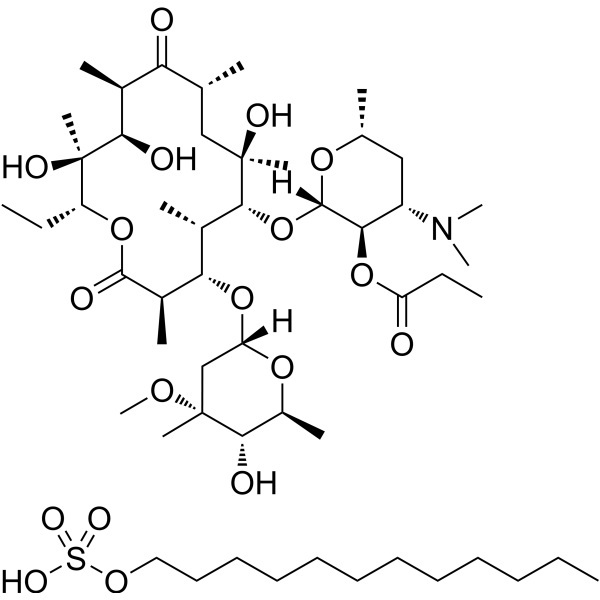
    Erythromycin estolate is the Erythromycin (HY-B0220) derivative , is a macrolide antibiotic used in the treatment of a wide variety of bacterial infections. Erythromycin estolate causes several cases of liver injury which mostly include cholestatic hepatitis. Erythromycin estolate toxicity is related to its inhibitory effect on bile acid transport .
    Erythromycin estolate
  • HY-109120S

    A4250-d5

    Apical Sodium-Dependent Bile Acid Transporter Isotope-Labeled Compounds Metabolic Disease
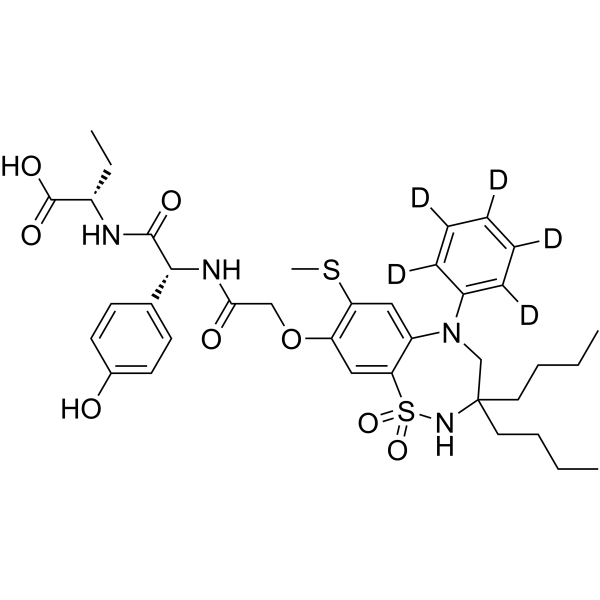
    Odevixibat-d5 is deuterated labeled Odevixibat (HY-109120). Odevixibat (A4250) is a selective and orally active ileal apical sodium-dependent bile acid transporter (ASBT) inhibitor. Odevixibat decreases cholestatic liver and bile duct injury in mice model. Odevixibat has the potential for the treatment of primary biliary cirrhosis .
    Odevixibat-d5
  • HY-109120R

    A4250 (Standard)

    Apical Sodium-Dependent Bile Acid Transporter Reference Standards Metabolic Disease
    Odevixibat (Standard) is the analytical standard of Odevixibat. This product is intended for research and analytical applications. Odevixibat (A4250) is a selective and orally active ileal apical sodium-dependent bile acid transporter (ASBT) inhibitor. Odevixibat decreases cholestatic liver and bile duct injury in mice model. Odevixibat has the potential for the treatment of primary biliary cirrhosis .
    Odevixibat (Standard)
  • HY-109120S1

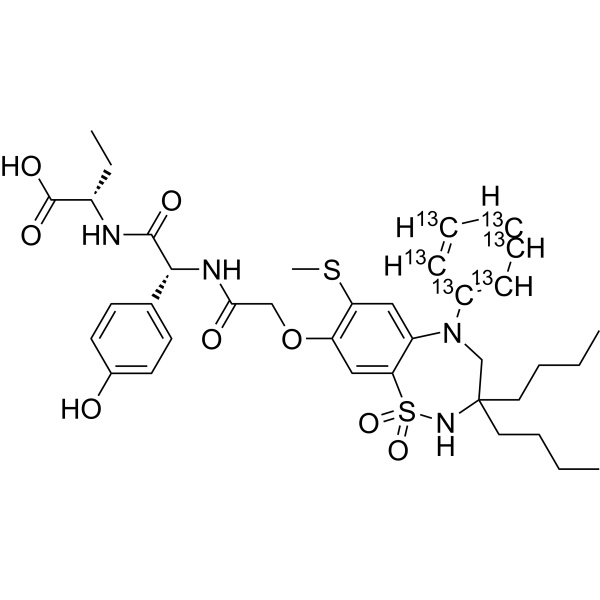
    A4250-13C6

    Apical Sodium-Dependent Bile Acid Transporter Isotope-Labeled Compounds Metabolic Disease
    Odevixibat- 13C6 is 13C labeled Odevixibat (HY-109120). Odevixibat (A4250) is a selective and orally active ileal apical sodium-dependent bile acid transporter (ASBT) inhibitor. Odevixibat decreases cholestatic liver and bile duct injury in mice model. Odevixibat has the potential for the treatment of primary biliary cirrhosis .
    Odevixibat-13C6
  • HY-109083A

    GS-9674 tromethamine

    Autophagy FXR Metabolic Disease
    Cilofexor tromethamine (GS-9674 tromethamine) is a nonsteroidal farnesene oxide receptor agonist with activity in improving markers of cholestasis and liver injury. Cilofexor tromethamine was shown to be well tolerated in patients without cirrhosis and resulted in significant improvements in liver biochemical parameters and cholestatic markers. Cilofexor tromethamine offers a potential inhibitory option for the management of primary sclerosing cholangitis .
    Cilofexor tromethamine
  • HY-156074

    Antibiotic Bacterial Flavivirus Dengue Virus Aminotransferases (Transaminases) Infection
    Erythromycin propionate, erythromycin (HY-B0220) derivative , is a macrolide antibiotic used in the treatment of a wide variety of bacterial infections. Erythromycin propionate causes several cases of liver injury which mostly include cholestatic hepatitis. Erythromycin propionate toxicity is related to its inhibitory effect on bile acid transport .
    Erythromycin propionate
  • HY-N7121R

    Antibiotic Reference Standards Bacterial Aminotransferases (Transaminases) Flavivirus Dengue Virus Infection
    Erythromycin estolate (Standard) is the analytical standard of Erythromycin estolate. This product is intended for research and analytical applications. Erythromycin estolate is the Erythromycin (HY-B0220) derivative , is a macrolide antibiotic used in the treatment of a wide variety of bacterial infections. Erythromycin estolate causes several cases of liver injury which mostly include cholestatic hepatitis. Erythromycin estolate toxicity is related to its inhibitory effect on bile acid transport .
    Erythromycin estolate (Standard)
  • HY-181088

    Phosphodiesterase (PDE) Interleukin Related Metabolic Disease
    PDE3/4-IN-4 is an orally active PDE3A and PDE4B inhibitor with IC50 values of 10 nM and 9.4 nM, respectively. PDE3/4-IN-4 shows selective activity relative to most other PDE family members. PDE3/4-IN-4 modulates the cAMP/PKA/CREB signaling pathway. PDE3/4-IN-4 inhibits pro-inflammatory factor IL-6. PDE3/4-IN-4 reduces expression of inflammatory markers in liver tissue. PDE3/4-IN-4 attenuates liver fibrosis. PDE3/4-IN-4 limits liver damage in cholestatic and sepsis-induced liver disease mice models. PDE3/4-IN-4 can be used for the research of liver injury, cholestatic liver diseases, sepsis-induced liver injury .
    PDE3/4-IN-4
  • HY-182350

    DUBTACs Deubiquitinase Metabolic Disease
    FXR DUBTAC modulator-1 is a deubiquitinase-targeting chimeric molecule (DUBTAC) that targets FXR, with a Ka value of 2.12e-5 M for FXR. FXR DUBTAC modulator-1 recruits the deubiquitinase OTUB1, binds to OTUB1 and forms a ternary complex with FXR, reduces the polyubiquitination level of FXR, prevents FXR degradation via the ubiquitin-proteasome pathway, and elevates the protein level of FXR. FXR DUBTAC modulator-1 can be used in the research of cholestatic liver injury .
    FXR DUBTAC modulator-1
  • HY-183692

    FXR G protein-coupled Bile Acid Receptor 1 TNF Receptor Heme Oxygenase (HO) Quinone Reductase Keap1-Nrf2 Cardiovascular Disease Inflammation/Immunology
    FXR agonist 18 is an orally active FXR agonist, with an EC50 of 10 nM against human FXR and an EC50 of 1360 nM against human TGR5. FXR agonist 18 inhibits inflammatory responses by reducing nitrite production, downregulating the expression of pro-inflammatory genes (Tnf, Adgre1, Cyp8b1, upregulating the expression of FXR, Hmox1, Nqo1, Nrf2, and enhancing antioxidant responses. FXR agonist 18 ameliorates liver fibrosis in mice, exhibits protective effects in mice with cholestatic liver injury, and shows anti-MASH efficacy. FXR agonist 18 can be used in studies of metabolic dysfunction-associated steatohepatitis .
    FXR agonist 18

Inquiry Online

Your information is safe with us. * Required Fields.

Salutation


Country or Region *

Applicant Name *


Organization Name *

Department *


Email Address *


Product Name *

Cat. No.


Requested quantity *

Phone Number *


Remarks

Inquiry Online

Inquiry Information

Product Name:
Cat. No.:
Quantity:
MCE Japan Authorized Agent:

