16 Results for "

drug susceptible

" in MedChemExpress (MCE) Product Catalog:
Products (16)

16 Results for "drug susceptible" in MCE Product Catalog:

66
66 Cited Publications
Cat. No.: HY-135748A
Poly (I:C):Kanamycin (1:1) sodium is an isometric complex of Poly (I:C) (HY-135748) and Kanamycin (HY-16566). Poly(I:C) sodium, a synthetic analog of double-stranded RNA, is a TLR3 and retinoic acid-inducible gene I receptor (RIG-I and MDA5) agonist. Poly(I:C) sodium can be used as a vaccine adjuvant to enhance innate and adaptive immune responses and induce apoptosis in cancer cells . Kanamycin is an orally active antibacterial agent (Gram-negative/positive bacteria) that inhibits translocation and causes miscoding by binding to the 70S ribosomal subunit. Kanamycin shows good inhibitory activity against Mycobacterium tuberculosis (susceptible and drug-resistant) and Klebsiella pneumoniae, and can be used in the research of tuberculosis and pneumonia .
loading...
    loading...
2
2 Cited Publications
Cat. No.: HY-W012531
CAS No.: 614-60-8
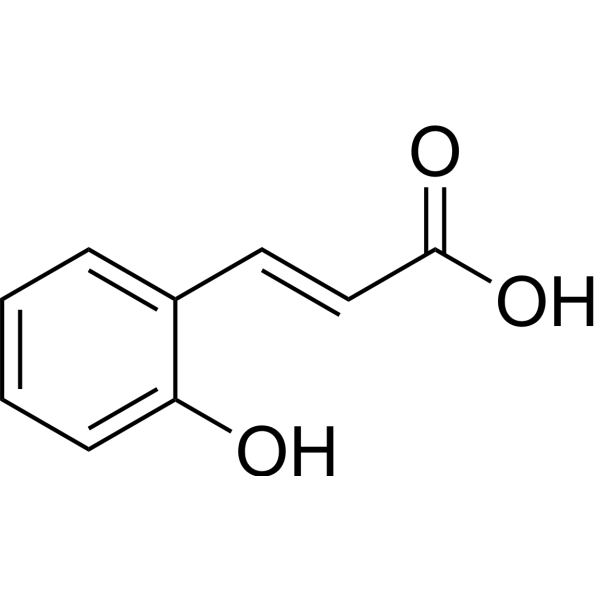
2-Hydroxycinnamic acid is a phenolic acid with antimicrobial and antioxidant properties. 2-Hydroxycinnamic acid has antimicrobial activity against Staphylococcus aureus and is not susceptible to drug resistance. 2-Hydroxycinnamic acid shows inhibitory effects on infection of HIV/SARS-CoV S pseudovirus with an IC50 of 0.3 mM. In addition, 2-Hydroxycinnamic acid has neuroprotective and antitumor activity .
loading...
    loading...
Cat. No.: HY-P11099
CAS No.: 1254540-73-2
Target:  

Transferrin Receptor

Research Areas:  

Neurological Disease Cancer

Cys-LT7 is a transferrin receptor (TfR)-targeting peptide ligand. Cys-LT7 binds to a TfR site distinct from endogenous transferrin, mediates conjugated Doxorubicin (HY-15142A) delivery to TfR-overexpressed tumor cells, and exhibits low toxicity to TfR-low-expressed normal cells. Cys-LT7 is an L-configuration peptide susceptible to proteolytic enzymes, leading to poor biostability in peptide-drug conjugates. Cys-LT7 can be used for the research of glioblastoma, hepatocellular carcinoma, lung carcinoma .
loading...
    loading...
Cat. No.: HY-144341
CAS No.: 920459-41-2
Target:  

Bacterial

Research Areas:  

Infection

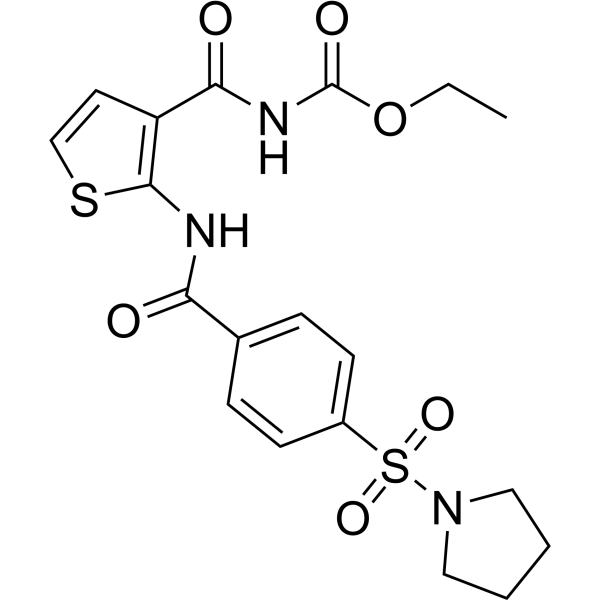
DprE1-IN-1 is a potent, orally active DprE1 inhibitor with favorable hepatocyte stability, low cytotoxicity and low hERG channel inhibition. DprE1-IN-1 displays potent activity against both agent-susceptible and clinically isolated drug-resistant Tuberculosis strains with MICs10 CFU reduction in macrophages.
loading...
    loading...
Cat. No.: HY-W012531R
CAS No.: 614-60-8
2-Hydroxycinnamic acid (Standard) is the analytical standard of 2-Hydroxycinnamic acid. This product is intended for research and analytical applications. 2-Hydroxycinnamic acid is a phenolic acid with antimicrobial and antioxidant properties. 2-Hydroxycinnamic acid has antimicrobial activity against Staphylococcus aureus and is not susceptible to drug resistance. 2-Hydroxycinnamic acid shows inhibitory effects on infection of HIV/SARS-CoV S pseudovirus with an IC50 of 0.3 mM. In addition, 2-Hydroxycinnamic acid has neuroprotective and antitumor activity .
loading...
    loading...
Cat. No.: HY-113619
CAS No.: 186293-38-9
Target:  

Bacterial

Research Areas:  

Infection

ABT-255 free base is an orally active anti-bacterial agent. ABT-255 free base exhibits potent in vitro potency (MIC = 0.016-0.031 μg/mL) against drug-susceptible and Rifampin (HY-B0272)- or Ethambutol (HY-B0535)-resistant Mycobacterium tuberculosis. ABT-255 free base shows efficacy against S. aureus, S. pneumoniae and E. coli and reduces viable counts of drug-resistant Mycobacterium tuberculosis in CF-1 mice. ABT-255 free base can be used for the study of pulmonary tuberculosis .
loading...
    loading...
Cat. No.: HY-123331
CAS No.: 90832-34-1
Target:  

Parasite

Research Areas:  

Infection

S 82-5455 is a floxacrine derivative that exhibits high activity against drug-susceptible strains of Plasmodium berghei induced in mouse and rat blood .
loading...
    loading...
Cat. No.: HY-155190
CAS No.: 1357796-08-7
Target:  

Bacterial

Research Areas:  

Infection

Antitubercular agent-39 (Compound P1) is a potent antitubercular agent. Antitubercular agent-39 is active against drug-resistant strains and drug-susceptible clinical isolates. Antitubercular agent-39 inhibits Mtb strain H37Rv with a MIC less than 1 μM .
loading...
    loading...
Cat. No.: HY-113619A
CAS No.: 181141-52-6
Target:  

Bacterial

Research Areas:  

Infection

ABT-255 hydrochloride is an orally active anti-bacterial agent. ABT-255 hydrochloride exhibits potent in vitro potency (MIC = 0.016-0.031 μg/mL) against drug-susceptible and Rifampin (HY-B0272)- or Ethambutol (HY-B0535)-resistant Mycobacterium tuberculosis. ABT-255 hydrochloride shows efficacy against S. aureus, S. pneumoniae and E. coli and reduces viable counts of drug-resistant Mycobacterium tuberculosis in CF-1 mice. ABT-255 hydrochloride can be used for the study of pulmonary tuberculosis .
loading...
    loading...
Cat. No.: HY-161984
Target:  

HDAC

Research Areas:  

Infection Others

HDAC-IN-76 (compound 6i) is a histone deacetylase (HDAC) inhibitor. HDAC-IN-76 IC50 values of 30 nM and 98 nM for Pf3D7 (chloroquine (HY-17589A) drug-susceptible strain) and PfDd2 (chloroquine (HY-17589A) drug-resistant strain), has a highly potent antimalarial activity against asexual blood-stage Plasmodium, respectively, and exhibits selective inhibition against parasites, with IC50 values of 7 nM and 9 nM for human HDAC1 and HDAC6, respectively, while inhibiting PfHDAC1 .
loading...
    loading...
Cat. No.: HY-W012531S2
2-Hydroxycinnamic acid-d4 is deuterium labeled 2-Hydroxycinnamic acid. 2-Hydroxycinnamic acid is a phenolic acid with antimicrobial and antioxidant properties. 2-Hydroxycinnamic acid has antimicrobial activity against Staphylococcus aureus and is not susceptible to drug resistance. 2-Hydroxycinnamic acid shows inhibitory effects on infection of HIV/SARS-CoV S pseudovirus with an IC50 of 0.3 mM. In addition, 2-Hydroxycinnamic acid has neuroprotective and antitumor activity .
loading...
    loading...
Cat. No.: HY-184411
CAS No.: 3104768-44-4
Target:  

Bacterial

Research Areas:  

Infection

TB-212 is a potent, orally active anti-tuberculosis agent. TB-212 exhibits activity against both drug-susceptible and drug-resistant Mycobacterium tuberculosis strains, with favorable safety profiles. TB-212 is applicable to the research of tuberculosis .
loading...
    loading...
Cat. No.: HY-181866
CAS No.: 2670430-25-6
Target:  

Bacterial

Research Areas:  

Infection

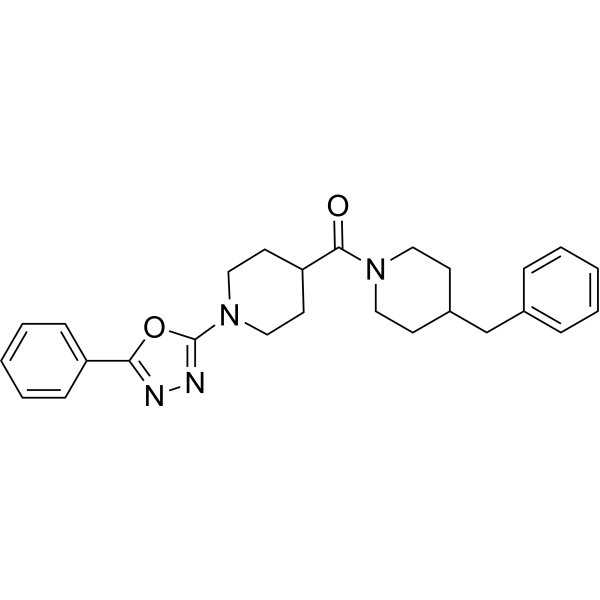
Antibacterial agent 328 is a enoyl-ACP reductase (InhA) inhibitor and antimycobacterial agent. Antibacterial agent 328 blocks mycolic acid biosynthesis in Mycobacterium tuberculosis. Antibacterial agent 328 acts on both drug-resistant and drug-susceptible Mycobacterium tuberculosis strains. Antibacterial agent 328 exhibits favorable pharmacokinetic properties, drug-likeness, and a safety-related selectivity index. Antibacterial agent 328 can be used for research on tuberculosis .
loading...
    loading...
Cat. No.: HY-L229
160 compounds

Kidneys are one of the vital organs in the human body. Due to their exposure to higher concentrations of circulating drugs or metabolites, they are highly susceptible to drug-induced renal injury (DIRI). According to statistics, drug-induced kidney injury accounts for approximately 20% of nephrotoxicity reports and can lead to acute kidney injury (AKI), chronic kidney disease (CKD), or even end-stage renal disease (ESRD). Early detection of drug nephrotoxicity is crucial for preventing irreversible kidney damage. Research into its mechanisms can help optimize clinical medication by adjusting dosages or avoiding combinations of nephrotoxic drugs. Additionally, predicting drug-induced nephrotoxicity in early drug development can reduce the risk of late-stage R&D failure.

MCE offers 160 nephrotoxicity compounds that have been clearly reported by the FDA to be associated with kidney injury. This library can be used for studying molecular mechanisms of nephrotoxicity or developing novel biomarkers.

Cat. No.: HY-187335
Research Areas:  

Infection

HadAB/InhA=IN-1 is a dual inhibitor of Mycobacterium tuberculosis InhA and HadAB with an InhA IC50 of 0.81 μM. HadAB/InhA=IN-1 inhibits InhA enzymatic activity in the FAS-II pathway of mycolic acid biosynthesis. HadAB/InhA=IN-1 undergoes EthA-mediated activation to covalently bind HadA and inhibit HadAB dehydratase function in the same FAS-II pathway. HadAB/InhA=IN-1 reduces mycolic acid-containing lipid and mycolic acid production, and accumulates standard fatty acids in Mycobacterium tuberculosis. HadAB/InhA=IN-1 exhibits antimycobacterial activity against drug-susceptible, ethA-deficient, and multi-drug-resistant Mycobacterium tuberculosis isolates. HadAB/InhA=IN-1 shows cytotoxic effects against human cancer and immortalized normal lung fibroblast cells. HadAB/InhA=IN-1 can be used for the research of tuberculosis .
loading...
    loading...
Cat. No.: HY-L179
39 compounds

Radiotherapy is a common treatment for various cancers, and more than 50% of cancer patients require radiotherapy during the disease treatment. With advances in radiation technology and a better understanding of tumor biology, the efficacy of radiation therapy has gradually improved, and more and more patients have benefited from it. However, even with the use of advanced radiotherapy techniques, there are still many malignant tumor cells with low sensitivity to radiation, leading to the radiation effect is not ideal. To solve this problem, radiosensitizers have received more and more attention. Radiosensitizer is a kind of drug that can enhance the radiosensitivity of tumor cells and improve the effect of radiotherapy. Radiation sensitizers act in a variety of ways, such as killing hypoxic cells, enhancing DNA damage, inhibiting DNA damage repair, and blocking cell cycle progression, making tumor cells more susceptible to radiation damage and death than surrounding normal cells.

MCE designs a unique collection of 39 compounds with definite reported radiosensitization. It can be used for drug combination research in anti-cancer treatment.

  • 1

